Jeff Lotman: Episode 459
Read the full transcript
Jeff Lotman
JEFF LOTMAN is the driving force behind Global Icons, the world’s leading brand-focused agency with over $5 billion in retail sales. Jeff is a leader in educating executives on the hidden benefits of licensing, and over the years, Global Icons has established an impressive client roster that includes Kleenex, Hostess, Lamborghini, NOKIA, and USPS, among others. He is also the owner of Fred Segal, LA’s iconic fashion brand. Jeff has spoken at many leading industry events, including Entertainment Marketing Conference, SPLiCE, and the Restaurant Industry Conference. He’s been profiled by the New York Times, the Los Angeles Times, CNBC, and FOX, and is a distinguished member of the Licensing Industry Merchandisers’ Association and the Licensing Executives Society.
📚 Books by Jeff Lotman
Transcript
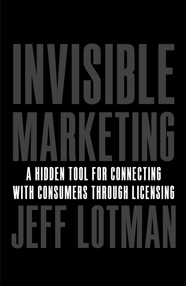
[0:00:27] NVN: One of my favorite things in life is running across someone who truly loves their job. As you’ll see in this episode, it’s clear that Jeff Lotman is one of those people. In his new book, Invisible Marketing, Jeff talks about how brands can tap into an entirely new realm of expansion through licensing. He’s not talking about the Mickey Mouse slapped-on-a-T-shirt type of licensing that this word often calls to mind, this is something entirely different. Lots of business and marketing books have big promises but, as you’ll see in this episode, Jeff’s strategy actually can open your brand up to an entirely new audience, you may have either never considered before or never known how to reach. There’s no doubt Jeff knows this industry inside and out. His company, Global Icons has a client roster that includes in the likes of Lamborghini, USPS, Kleenex, and Hostess. He’s also the owner of Fred Segal, LA’s iconic fashion brand. I am joined today by Jeff Lotman, the author of the new book Invisible Marketing: A Hidden Tool for Connecting with Consumers Through Licensing. Jeff, welcome to the show.
[0:01:37] Jeff Lotman: Thank you so much for having me.
[0:01:38] NVN: Yeah, I’m delighted to have you. Let’s start by sharing with the listeners a little bit about your company, Global Icons, and what you do?
[0:01:49] Jeff Lotman: Sure, I’m in the brand licensing business and it’s probably the most misunderstood business there is but what we do is we connect brand owners, people that own intellectual property with manufacturers that want to use those brands on products. Obviously help them get market share and sell products.
[0:02:06] NVN: Perfect. Now, you mentioned that what you do is very misunderstood, so let’s dive into that a little bit.
[0:02:14] Jeff Lotman: Sure, well, the issue that’s misunderstood is that licensing itself people get. If you know character licensing, and if you were at Disney, you understand that Mickey Mouse T-shirts is what people are selling – or Winnie the Pooh or so on and so forth – and the company actually licensed their image to manufacturers that use it. People understand that. But with brand licensing, it’s sort of invisible, which is why the name of the book is that. When it’s done effectively, you don’t even know it’s there. The only way – I know when I meet someone, they go, what do you do? Honestly, I usually just tell them I’m in marketing because when I tell them licensing, they don’t know what it means and I sort of have to give an explanation like “Well, do you know Flintstone Vitamins?” – which everyone obviously knows that example – “well, that’s an example of licensing. I mean, clearly Flintstones doesn’t make vitamins, but there’s a company that obviously has got the license from them and they want to manufacture vitamins and they use Flintstones on it.” We do that, but in the brand space. We represent everybody from Lamborghini, to the post office, to Nokia, to Fireball, to Emirates Airlines, to Vespa, and so on and so forth.
[0:03:11] NVN: That is one diverse set of companies that you’re working with, that’s pretty incredible.
[0:03:15] Jeff Lotman: Thank you. I actually started the company in a really bizarre way. No one has ever woke up and said, I want to be a licensing guy or gal. It’s just not the way it works, everyone has fallen into our industry. There’s barely even courses on this in certain colleges. It’s very strange. It’s not exactly all that really well known. I really fell into it because I was looking to do an animated project and trying to get the rights to recreate deceased Hollywood celebrities. In that process of trying to do that – because it’s the families that actually own the rights to those, their parent’s estates and images – there were two companies back then that really did that. One was called Roger Richman, one was called CMG Roger. The man unfortunately is long gone, a really great guy. Mark Rosser runs CMG, and that’s still in existence, also really great guy, and those guys have been around for a long time. I approached them to try to get the rights to use their characters, some of their dead celebrities, in an animated project, and they both said no to me, which, honestly, I understand why they did now. Back then, obviously I was not happy about it because I wanted not only the rights to use it in my project, I wanted the rights then to recreate new merchandise off the character that I created, which of course would infringe on their business. Not one to take no easily for an answer, I went out and I said, well how am I going to go still do this? And I found out that, actually, there’s something called a successor of interest which tells you who has the rights to someone after someone dies, and because all wheels are public, it was easy just to write a letter, the old fashioned way, and put a stamp on it and wait for it to come back and got copies of all these celebrity wills and then it told me who to contact and I reached out to them and it was amazing. Everyone really liked the idea of seeing mom or dad or grandma or grandpa back on screen but it was the Cagney estate that said to me, “Well, I’ll only give you the rights to the project if you also agree to represent me.” I’m like, okay. Global Icons was born because Marge, who was the caretaker of the estate, made me do it, which is kind of funny. All of a sudden, I went from 1 to like 30 dead people, everybody from Cagney to Dietrich to Gable, WC Fields, and the Three Stooges, Clark Gable, so on and so forth and it was a lot of fun. I mean, we did a lot of great deals and at one point, we did a Humphry Bogart Thomasville furniture deal, and it was selling hundred million dollars a year in retail sales of Bogart Furniture. A hundred million dollars a year of furniture of Bogart, and then unfortunately the deal, as most deals do, finally went away. That was sort of the industry I was in. But what happened was, eBay killed the collectible business because the bulk of the business for deceased celebrities is in things like plates and cups and companies that were – Franklin Mint which is back again, they were really big at one point at Bradford Exchange – and they used to sell these plates of like Three Stooges. Honestly, we could get like a half a million or even a three quarter million dollars in royalties, which is a percentage of sales from these things, but what happened was, at that time, there were all these collectible books that told you how much these things were worth. Every year, there was a new book that came out and of course, every year, they raised the price. You’re thinking, my god, this is great, I bought this plate for $30, it’s now worth $120. Well guess what? eBay comes along and everyone’s like, let’s dig those plates out of our bag, that my wife told me I got to sell, and they all put them online and, what happens? The market collapses because there was way too many plates for too small people that really wanted it. We realized that our industry was going away fast and we had to really get out. This is – I’ve been in business now for 23 years – this is probably every bit of 20 years ago now and on the Friday, as I called, I buried all the dead, and I had to fire all my clients and say, “Look, I love you guys” – because I’m a huge old Hollywood fan, that’s a real passion of mine – “but I can’t necessarily build a business long term with this.” I went from that into brand licensing, because licensing itself is 130 billion dollar a year industry, brand licensing is a 40 billion dollar a year industry, but dead celebrity licensing is like 150 million dollar industry. It’s a really tough business to be in and, let’s face it, I’d rather be a small fish in a big pond than a big fish in a really small pond.
[0:06:59] NVN: Yeah, absolutely. That’s fascinating. I love hearing the different ways in which life sort of leads people along these unexpected paths, and that’s a great one.
[0:07:09] Jeff Lotman: Thank you. It is true, it’s amazing. People really need to see that it is definitely – you got to love what you do and when you do that things come to you. I love it when I do, I can’t imagine anything different, and anybody in our industry, or most anybody our industry, will say the same thing. Because it’s fun and it’s different, and it’s nonstop deal-making, and you’re always doing things are different. One day we’re doing a stroller for BMW, the next day we’re doing Hostess-branded Twinkies cereal. It’s just such extremes. It’s a lot of fun.
[0:07:36] NVN: Yeah, I can see that. Let’s talk a little bit about – brands who may not have considered this licensing at this point, how can they expand through licensing? What’s the benefit here for them?
[0:07:48] Jeff Lotman: Sure. Well, the biggest benefit, there’s a couple of them. Number one is to raise brand awareness, but the really biggest benefit is that it really protects you from your competition, because it builds further walls around your brand. It’s very hard to get people to try your product or to continue to try your product, especially when everyone’s doing the same thing. In that they’re buying advertising or they’re buying media or they’re buying social media or they’re doing events. Basically, these are all what I call a third wall. You see them, and it’s in your area, and you see so many of these messages, how do you really break out? Sometimes of course, you do a really funny ad or a viral – something goes viral, but those are also really hard to do. The great thing about licensing is that we create a product that you buy, and you take home, and you use and you wear it, you eat it. You put it on your wall, you play with it, you let your kids use it. That’s incredible. I mean, to think about – to have your brand be in that experience is really amazing. At the same idea, by then having hour brand be seen in a different distribution channel – which I’ll explain in a minute – is even more impressive. What I mean by that is like, for example, we’ve represented Crock-Pot for a long time. Great client and have been around forever and everyone knows what it is. They’ve been sold forever, and they’re sold in the electric aisle, they’re sold against microwaves and toasters and coffee makers and – let’s face it, it’s kind of an aisle, it’s been there for a long time, you don’t normally go there unless something breaks. It’s not exactly high activity. But when they approached us, they wanted us to do food products. So we went out and we did a seasoning deal, that you could add seasoning while you’re Crock-Potting. We did an ingredient deal that allowed you to take some ingredients that were already for Crock-Pot. We even did a deal that, if you’re lazy and you don’t necessarily want to use your Crock-Pot, you can buy pre-made, frozen Crock-Potted dinners. The great thing about that was that, then, the Crock-Pot was being put out of the electrics aisle, into the consumable aisle, so now you could see an end cap where Crock-Pots and our seasoning is being sold. For Jardan, which owns Crock-Pot, this is a huge win for them because now, they’re standing alone from any other of their competitors. You don’t have to worry about how I’m going to price differentiate myself, how I’m going to put myself on sale. All of a sudden, consumers are like, “I’m in the food aisle, I’m about to buy a piece of fish. Why don’t I Crock-Pot it? Oh, here’s the seasoning. I’ll take the seasoning. My Crock-Pot’s old and dirty, I’ll buy a new Crock-Pot.” That is the benefit, it’s also why it’s invisible, because no one says to themselves, who is making the seasoning? Is Crock-Pot making the seasoning? And do you really care? Of course, you don’t.
[0:10:14] NVN: It’s interesting. As you were talking through that example of Crock-Pot, it strikes me that there is really a balance of both logic and creativity, and figuring out where to put this licensing, and how to bring these two brands together.
[0:10:29] Jeff Lotman: Exactly. There’s no two ways about it. But this is also where it becomes really difficult, because people don’t get it, especially a lot of certain brand owners and certain chief marketing officers. They’re really afraid because they’re afraid that it’s going to ruin their brand and they’re like, “Oh my god, I’m going to let someone else use my brand?” Well, first off, you have complete control over your brand. You have complete control of where it’s being sold. You’re in complete control over the packaging, the quality, the testing ,and so on and so forth. No one’s just going to run out and take it and do whatever they want. Number two, you’re going to build awareness, and you’re going to have – create market share, and you’re going to find your products in new places, and you’re going to get paid for it. Instead of you spending all these millions of dollars for advertising that may go nowhere, someone’s actually going to write you a check to use your brand. It seems like it’s a no brainer to me, but it’s amazing how confusing people get with this and how difficult it is to get over it. I think it’s because of the confusion between licensing and what I call promotional merchandise.
[0:11:24] NVN: Talk to me about that a little bit?
[0:11:26] Jeff Lotman: Promotional merchandise is when you’re out and you see something with the logo on it that just says like In-N-Out Burger, or the In-N-Out clock that you see at In-N-Out Burger, they’re actually making it themselves to sell to fans and that’s fine. Where real brand licensing is when you really take and you build some inherent qualities into a product that the brand has to make the product more valuable. Case and point. We represented BMW for a long time. Great brand and, let’s face it, their whole idea, they very much are a lifestyle brand. You know, “we are driven”, it was a great campaign they used for a long time. When we went out and we were talking to potential manufacturing partners, we insisted that they couldn’t just do a label slap – which is just basically taking someone’s IP and putting it on a product – that there had to be inherent things in that stroller that made it very BMW-ish. They agreed to really rebuild and do some really cool things. For example, the tires or the wheels on the stroller were literally mini BMW tires which are so cool. They basically matched it. The leather was real leather, coming right out of the BMW factory, so they really had the real leather. There were certain design elements and certain design cues, that you knew when you saw that stroller, it was clearly a BMW stroller. It was made by a company named Maclaren, who as you probably know, they do very high end strollers. They’re really a first class company, they do great products. It was interesting because the reason they came to us and why it worked well for them is that, at the time, men really weren’t buying strollers. They really were more being bought by women for their kids and they really thought there was an opportunity to build like a male-type stroller. That’s where the whole BMW connection came in. Normally they do things for one season, in and out of promotion, but it was so successful they held it for almost two years, they actually did an M-version, which is even a more expensive version. As an example of really great licensing and a really perfect way to do it is to build that connection into the brand, into the product, that really makes it unique and truly consumers get it, “Oh, I see why this is a BMW stroller.”
[0:13:25] NVN: Yeah, you know, on this podcast, I talk to a lot of people about marketing and I have certainly heard a lot about tapping in to new audiences. That is a great example of truly delivering on that promise. I am friends with a lot of enlightened males and I can’t say that I know one of them who has ever had an opinion about a stroller, but that would do it. That’s really fascinating.
[0:13:49] Jeff Lotman: Or if they were like, “Oh let us look at strollers, let’s go to the store and go shop for strollers” like, “Oh my god, I want that one. I want the BMW stroller!” At the time, mind you, I had little kids and I bought a BMW stroller, because it was super cool and you’re like, “Look at me, I got my BMW stroller.”
[0:14:03] NVN: Totally. When you are working with companies and in this book, how do help people think through exactly – well first of all, how to break into this and second of all, how to figure out how they can leverage licensing to tap into other markets. What is the process here?
[0:14:24] Jeff Lotman: So, to begin with it really starts off with the strategy. We need to understand from the brand who their current customers are, where their customers shop, what do they do, and then specifically is there another customer they’re really trying to get? Then, from that, we start to brain storm internally first, to look at, “Well, what products do those customers buy, and what are they shopping, and where are they going, and what are they doing?” From that, we start to put together a list of categories that we think that this brand could potentially connect to. Now, mind you, that list tends to be very long. Some of them are a little bit out there, and you need to go a little bit out there, because sometimes you find something that at first doesn’t make sense but ends up becoming a big hit – which I’ll get to a minute. Once you have that list, we then go back to the customer, the client, and we actually then sit down with them and talk about creating and narrowing down the strategy. We agree on what are the categories that make the most sense, and we talk about concentric circles, which really is the closer it is to the core brand, the more it makes sense. So for example, in the case of Ford, anything that has to do with auto-related accessories, like driving – eyeglasses, or accessories for a car, like floor mats and air fresheners. These things are like a no brainer. I mean that is so obvious – or toys, because obviously kids love to play with toy cars. These are the things that are in the closest to the core. As you start to go further and further out, it’s got to really make sense. Sometimes, you have to build on success initially, before it has the ability to really carry it out further otherwise these things really fall apart.
[0:15:52] NVN: I am curious if you have ever seen companies take things too far out of their audience, and what that looks like? Also how to prevent that.
[0:16:02] Jeff Lotman: Here is a good one. One of the great client of ours for a long time is Zippo. Zippo of course does lighters, they do very successful licensing. There was a product that sold that really made me scratch my head, but they actually had tremendous success with it. What they actually did is Zippo perfume – and you would think, Zippo perfume? Where is the connection right? But you’d be surprised that actually went ahead and it actually worked in Europe, it didn’t necessarily do well in the United States, but it really did work. So sometimes, certain products have to work into a certain market or to a certain audience, but there is a lot of really big fails out there. I mean there is a lot of food products that didn’t work, there is a lot of consumable products that didn’t work. Certain things just sometimes don’t make sense. Then you have what I call the runaway hits that, god, I wish that I had done, which is – everyone knows Vicks. I mean they have been around for a long time, their throat lozenges, it is the great cure-all. You know when you have a brand that is at the pinnacle of it’s category, that you think of that name in the top 1 or 2 or 3, you know you can license it out because people immediately get it. What they did, which was so smart, a woman named Nancy Bailey, who back then had a company called Baily and Associates, went ahead and they licensed the name to create a vaporizer. Not only was it a vaporizer, which was of course clever, it was a vaporizer in the shape of a triangle to mimic the Vicks actual brand, the way the shape of the mints were. And that thing has been going on, and going on, and going on – like that weird bunny – and going on and continues to sell. It is really quite amazing. Really, really quite amazing. Look at Google Glass as an example. I mean they thought it would be really great to go into that eyewear. I mean that didn’t really work. Life Savers actually went into juice cans, thinking that Life Saver-flavored mints, sort of make sense and they went into juice, like flavored seltzer water, and it just didn’t work. I mean you have a great brand. Life Savers is a brand for a long time. Fantastic company but that just didn’t work, the whole Life Savers candy/Life Savers drink.
[0:17:54] NVN: Well I think the other interesting thing along with that is I mean Life Savers is still Life Savers so it doesn’t seem like the damaged themselves by taking that change either.
[0:18:05] Jeff Lotman: No, exactly. It is not like people are going to go, “Oh my god I am never going to buy Life Savers again because I didn’t like buying the Life Savers soda.” It doesn’t really matter. In most cases, the only time you really can damage your brand is if you produce a product of quality that is subpar. That is really where it can come from. If you make a mistake and, for example, if you were to produce, like we did, these power washers for Ford to wash your car. Which of course makes sense when you start thinking about it. As a matter of fact, we worked in this whole category as we talked about looking at it strategically, of what makes sense, is what we call the man cave strategy – which at the time it didn’t even exist – which is people that like to work in their garage, and really work on their car. If you think about Mustang, Mustang is like the epitome of a lifestyle brand. It is not a car brand, it is truly a lifestyle brand. It is who you are, it defines who you are, and those people love to work on their car. So if you think about working on the car, again, certain categories made sense that they had never done before. Things like storage and flooring and wall art, and then of course you get into hand tools, and then of course once you got the hand tools to work, power tools can work. Once you get power tools to work, you could do generators and power washers. That is really another example that concentric circles. But the reason I bring up the power washer specifically is the amount of testing that we made that company go through, because let us face it, if that power washer ceased to work that is going to truly reflect on the brand. People are going to think to themselves, “Oh my god Ford is not making a great product. Why would I then feel good about their car?” So it is really important that when certain products are made, you got to make sure that testing are done. You got to make sure that safety is done. You got to make sure you are working with manufacturers that have been around for a long time. The last thing you want is to give someone your brand who doesn’t have the experience or is basically trying to build his company on your brand. Not necessarily a good thing, and that is where a lot of mistakes is going to happen.
[0:19:47] NVN: It is sort of iconic at this point, I would go so far as to say.
[0:19:51] Jeff Lotman: 100% and you see it everywhere. Then of course there is other things that they have then built around it, where there is these liquids that you can put inside of the vaporizer, and there’s all these other products that are basically all built around it. Of course other people are now selling other branded vaporizers because of it, but it is so great because certain really well-done licensing products can last a long time. I mean it really is something. Like for example, we represented Duraflame for a long time, and they clearly have done a really great job. They own that category of the wood log that you can burn in your fireplace. They were really looking for some other product categories, and we went at it and we found a company that wanted to create electric heaters with the Duraflame name. The cool thing was you have a manufacturer that was making electric heaters for a long time under the Kirkland brand, which of course is Costco. They were no-name, so basically what that meant was that if someone came in and said, “I going to sell you the same heater, Mr. Costco, at $2 less,” believe me, the odds are high, they are throwing out the guy selling the heater for $2 more. So they really wanted to look at getting a brand, because by having a brand and once you build an awareness, it also protects you from manufacturing standpoint. They then put the Duraflame name on it. At the time they were doing, call it 20, $30 million in sales themselves. They then built the company to close to $80 million in sales. It was an incredible success, and a great success for Duraflame and they sell still today an awful lot of these heaters. But that is an example of a really perfect, really great connective product that has really been going well. I bet they are going to be going for a long time.
[0:21:21] NVN: Now let me ask you, we are talking about these really huge iconic brands here for the most part. Are there any in roads for more mid-level or growing brands to break in with licensing like this?
[0:21:35] Jeff Lotman: Well sure. I mean look the great thing is to begin with, certain categories are easier than others and they’re faster like for example, food is a great category and you look at what’s happened over the last 10 years in terms of restaurants coming in the food space. Originally you had California Pizza Kitchen, which at the time they’re like, “Why would you take and sell a frozen pizza to people that you want to have them coming into your store and eat a pizza? Why would you take sales away?” But that clearly wasn’t what happened whatsoever. What ended up happening was their sales increased in their restaurants and they continue to sell a hell lot of pizzas. Why? When you are in a supermarket, you are not thinking to yourself, “I want to go out and dine tonight.” You are thinking about what am I going to take home and have for dinner or have later for dinner. So it is a very much of a different buying occasion, and it very much is, I am thinking about using a very differently. And that is why the pizza was so successful. Now you are seeing an awful lot of brands go into food space, like for example Fridays has been around for a long time. You are now seeing PF Changs has done very well. There is a lot of brands that are going into – restaurant brands that go into the food space, and it is a really great category.
[0:22:36] NVN: I think you made a really interesting point within that, which is that – I mean I take for granted that I am going to see CPK at the grocery store now. Of course I am, and I don’t really think twice about other brands either, beyond being excited when they pop up. It is interesting to think back, that these ideas seemed much more non-sensical when they first appeared than they do now when we get to this point later on down the line.
[0:22:59] Jeff Lotman: I know, it is really quite amazing and it’s really great. I mean you look at what Wolfgang Puck has done in terms of soups. I mean that is really been incredible. The other category that he scored, as an example when we are talking about food and restaurants, is in the cookware category. He has done so well on Home Shopping Network, but there is an example of a guy, I don’t know if you remember Wolfgang Puck, he is one of the greatest guys in the world. And he really is a truly good guy that it is hard not to like him. He is really is very earnest and honest and that’s why, once you put him on TV and he is actually selling his own cookware, the numbers that they do is incredible. You really get the fact here is a guy that cares about what he does, he really is real and this stuff really matters to him and when you have that really has a chance to make it really work well.
[0:23:41] NVN: You know everything is colored in light of the pandemic right now, obviously, and as you were talking, it strikes me that this idea is particularly interesting now as people are looking to try out new things that they may not have right now. Trying new in roads, looking for new collaborations, things like that.
[0:24:02] Jeff Lotman: Well 100%. Collaborations is a really interesting thing in it of itself and it can involve licensing and it may not. Certain times you have a brand that is really looking to borrow what I call the rarefied air of another brand because, let’s face it, why are you buying a brand? You are buying a brand because it really defines how you feel about yourself. I mean the reason you are buying one brand versus another makes you feel good. It makes you feel differently. And that is what I call the rarefied air, because otherwise, you could buy Johnny’s t-shirt instead of buying Zanny’s t-shirt, even if it is made by the same factory at the same mill with the same quality of cotton. If you saw it next to each other, you’re going to feel very differently if you are looking at something very high end or something that is not really high end. So because of that it really makes a big difference.
[0:24:47] NVN: Jeff you are so much fun to talk to. You’re like the equivalent of diving down a Wikipedia hole, in the best way. I can tell you really love what you do.
[0:24:58] Jeff Lotman: I do love what I do. It is so much fun. I mean again it is non-stop, and then besides deals it is also territories. I mean we ended up making – our company made a commitment many years ago to go global, and our offices are now in London and in Hong Kong and we should be up opening up Shenzen shortly. Obviously that got put on hold with what is going on right now. But it is just fun to look at brands. I love to think about where they go, and even to think about where they go around the world, and there are certain things that makes sense in certain territories that don’t make sense anywhere else. And that’s cool and of course you can also play with brands that are localized, that are only really known in a certain region. Then of course outside of the region you really want to know itself. It is sort of like again, going back to food brands, like if a restaurant brand sells Sonic who isn’t a global hamburger chain but it is well-known in a certain area. You can actually buy Sonic burgers at Costco in certain regions where those Costco’s exists so –
[0:25:45] NVN: All right, the book again is Invisible Marketing. Jeff Lotman, where else can listeners find you outside of the book?
[0:25:53] Jeff Lotman: In my home in [inaudible 0:25:53]. No I am kidding.
[0:25:56] NVN: For the near future.
[0:25:58] Jeff Lotman: I publish a fair amount on LinkedIn. I try to do things. I am definitely commenting on things, certain things. They’re serious. Every once in a while I do something funny, because it is good to be a little light in this world, and then occasionally I write articles. So I am around and of course the licensing shows and so on and so forth. Global Icons is www.globalicons.com. Again that is the company that I have been doing for 23 years and recently we bought Fred Segal which is an LA lens fashion retailer and that is really exciting. We are looking to expand that brand too, so those are the kind of areas that I have been hanging a lot in, hanging around in.
[0:26:31] NVN: Very cool, you’re just such a pleasure to chat to. I wish you the best of luck with the book and keep having fun.
[0:26:37] Jeff Lotman: Thank you, I will. I promise you that.
[0:26:40] NVN: Thanks for joining us for this episode of Author Hour. You can find Invisible Marketing on Amazon. For more Author Hour, hit the subscribe button on your favorite podcast service. Thanks for joining us, we’ll see you next time. Same place, different author.
Want to Write Your Own Book?
Scribe has helped over 2,000 authors turn their expertise into published books.
Schedule a Free Consult