Douglas Stone: Episode 462
Read the full transcript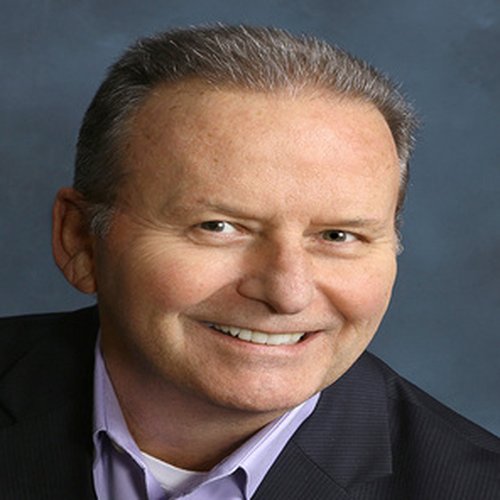
Douglas Stone
Douglas Stone is a wealth advisor with SeaCrest Wealth Management who brings more than two decades of experience to his work with affluent households. Seven years into his career he began questioning his industry's approach, and in 2009 he left the major wirehouse where he worked to become an independent advisor. For six years he discussed his self-taught, holistic approach to wealth management on Real Money with Doug Stone, a radio program on KMED 1440 AM in Medford, Oregon. Today he shares his knowledge through workshops, seminars, and speaking engagements. He is the author of Navigate the Investment Jungle.
📚 Books by Douglas Stone
Transcript
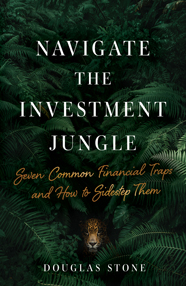
[0:00:34] NVN: What I enjoyed the most about my conversation with author Douglas Stone is that he made me really stop and think twice about some of the financial myths I’ve bought into in my own life. Simply because I’ve heard certain investment rules over and over again and accepted them as truth. In his new book, Navigate the Investment Jungle, Doug runs readers through the seven financial traps that so many of us get caught in and explains how we can better navigate them. More on these traps, especially in terms of how they relate to the market right now, in today’s episode. I am joined today by Douglas Stone, author of the new book, Navigate the Investment Jungle: Seven Common Financial Traps and How to Sidestep Them. Doug, I’m so happy to have you here today so that you can tell me how to side step financial traps, I would really like that.
[0:01:28] Douglas Stone: Thank you Nikki, it’s a pleasure to be with you today.
[0:01:32] NVN: Doug, I was really intrigued when I read your bio, and one of the things you say is that when you were working in the financial industry as a wealth advisor, you started to question the industry’s approach at some point. I’d love to just hear a little bit more about what you were questioning and sort of where you were at, at that point.
[0:01:57] Douglas Stone: Yeah, it was kind of an interesting journey for me because I went in, early on in the industry, with some of the major broker dealers, I won’t name them. I was excited because this is something that I always wanted to do. I’m still in the business, so I absolutely love what I do. But the other side of that is, I was a little, in let’s say shock and awe, of how the training program went. What I had learned and the relationships that I’d built with senior people there and the confidence – or I want to say – the illusion of confidence on how things really worked in the real world. I go into there about that process and how I sort of discovered, as time went on, the things I was being told and products that I was – I used the word, pushed to sell to the clients weren’t really doing the job. Then I realized that what I was doing wasn’t working. I even make a point in the book to point out that it was never a sales meeting that I went to where I realized that I wasn’t there to learn to be a better advisor for my clients. It was just – here’s what the marketplace is telling us, so we’ve developed this new product, and here’s how you sell it to your clients. I was a little dismayed by all of that, needless to say. I mean, having always wanting to do the very best you can for people and educate people. I found that I wasn’t being educated in that process. And then, after time went on and I saw the results – for instance, they would say things like, “If you were to put people in ABC mutual fund for example, you had to really help protect their downside risk.” That sounds really good because that’s what we want. We want to eliminate as much risk as we can in the market place. That’s what everybody wants. In reality though, that didn’t happen. I would go back and question that and say – well, let’s say for example the market was down 20% and this fund was down 17% for example. Well, their way of thinking was, yeah, I outperformed the market by 3 percentage points. Well, my clients still took a 17% loss. I’m not feeling real good about this at this point. I realized that there must be a better way or another way. I really started to do my own research. What I quickly found was that there was a different model. Of course I compared the two models, the first one being the retail model, and that’s predominantly what the majority of investors are exposed to. The institutional model is the flip side to that and, really, predominantly, I’m speaking in generalities here but that’s where pension funds and endowments and things like that. They put their money there. Well, the philosophy of the two models is completely different. One being the retail model, focuses heavily on modern portfolio theory. I did a little research about that – and that’s in the book as well – and what we find is, first of all, it’s exactly what it’s called. It’s a theory. In theory, sometimes they work and sometimes they don’t.
[0:05:48] NVN: Yes. Problematic when it comes to money for some people.
[0:05:52] Douglas Stone: Absolutely. It’s all based on how – they call it asset allocation – just how your money is divided up. The mistake that most people make, when I say this you’ll have to stop and think about it. Most people make the mistake of going in and allocating their dollars instead of their risk. That’s a very key point. When we get into markets like we’re just experiencing now, I think it’s – I know watching people’s reaction. A lot of people have lost a significant amount of money in their investment portfolios, just because they don’t understand risk and how it all works together. That becomes a problem and that was, the sort of, the genesis of the book you might say. How can I educate people to really understand what’s going on in the real world and how it really works?
[0:06:50] NVN: Yeah, finance is one of those areas that seems like it should be so cut and dry, and it’s really not. I realize that more and more every time I have the opportunity to talk to somebody like you. I want to ask one question though. Because this just points to me to perhaps, an interesting thing about how – what people expect from money and financial investments and how they react. When you were in the situation where you were – it sounds like more of a salesman for products than actually helping people make the investments that were right for them. If they were losing money, how are they retaining it as clients? Basically, my question is, are our expectations so low that we’re not phased by that and just keep going as investors?
[0:07:43] Douglas Stone: Yes, here’s why. We’re trained that way. Here’s what I mean. You ever heard this phrase? ‘Buy and hold’.
[0:07:51] NVN: Yes.
[0:07:52] Douglas Stone: Okay. Most people have heard that so that implies that you buy a security mutual fund, whatever the case may be, and you hold for 10 years, 20 years, whatever. The problem with that is, what if it’s not performing? And then how would you know that? I always point people back to, at the end of the day, your results are the most important criteria for gauging whether or not you're doing well or not.
[0:08:30] NVN: I’ve definitely heard that and reacted because I thought that was the right thing to do was just to hold.
[0:08:34] Douglas Stone: Yeah, of course. And in some cases, it works really well. Here’s the other part of that. I’ve even heard advisors say this, “Hold on to the boat, you’ll make it through the storm.” Well that sounds really good, except for it depends on how your boat’s constructed. I mean, we all heard of the Titanic, right? Was built to never go down, and it’s at the bottom of the ocean. Construction of a portfolio, liken that to the boat, is really important. If it’s properly built to withstand the squalls and the waves and the hurricanes of the sea and the ocean and all those things, it can withstand that. But if it’s not, you’ll quickly discover that what’s going on is not working for you. There’s the rub.
[0:09:26] NVN: Okay, interesting. It makes perfect sense, it’s just – you're right. That is the opposite of what I think most of us have probably been told.
[0:09:34] Douglas Stone: Yes. Here’s the other one, here’s another one. Ever heard this? ‘The more risk I take, the more potential reward’.
[0:09:41] NVN: Absolutely.
[0:09:43] Douglas Stone: Okay, what does that mean? That means, if I’m taking more risk, I should be compensated for that and sometimes it works, sometimes it doesn’t. But if it were to work every single time, the statement would be true. That’s why I came up with these seven different traps. For the most part, they can be true partially, or part of the time, and that becomes dangerous because we fall into these things without seeing the big picture. Something that’s partly true can lure us in to the point where we can be exposed to some financial destruction. That’s the whole purpose of the book. If I can save one person from making a huge mistake, and I give a lot of examples in there, all through the chapters on what to do and what not to do, and some examples of what people have done in real life, and how that doesn’t work for them.
[0:10:47] NVN: I have a few questions for you. My brain just sort of exploded with questions as you were talking. Now I have to back track a little bit here. First of all, these myths – absolutely. As I was going through your chapters, ‘hold on to the boat, you’ll get through the storm’ stood out to me as did, ‘I’m diversified, I’ll be okay’. I’m curious, when your clients come to you, and you’re telling them presumably something that’s quite different from the things that they’ve head so many times, they begin to take it for granted. How do people generally react? Are they open to thinking about this in new ways that makes sense once they’re explained? Or have a lot of us been programmed with these mottos so much that we just sort of blindly follow them?
[0:11:31] Douglas Stone: Well, that’s a great question, because it depends on the person and how ingrained that is. What I mean by that is, really, the definition of a closed-minded person means that they’re not willing to be exposed to new ideas and new things. What I try to do is walk them through and point out, in their very own portfolio, why it’s not working. I’ll give you an example. Pretty much today, the norm is – you have for most people’s portfolio, depending on their age of course, but they’ll have 60% of their portfolio in, let’s call it stocks or mutual funds or something along that, but exposed to the stock market. 40% in bonds. Well, that means that the majority of the risk is substantially in that 60% in the stock market. To even break it down, I have a graph in the book that explains all these stuff, but if you would just take what we call a balance portfolio. 50% in stocks, 50% in bonds. You would think, that sounds really good. Half my money’s in stocks and half in bonds. But they fail to realize that the risk of the stocks is almost four times more than the bonds. In a 50/50 portfolio for example, I’ve done the math on this, 95% of your risk comes from that 50%. Well, how does that sound? Does that sound balanced to you? No.
[0:13:03] NVN: Not particularly. Terrifyingly so right now, actually.
[0:13:08] Douglas Stone: That’s what a lot of people are experiencing right now, going through this, we’re like wow, I expected maybe 10 to 20% the client but maybe some people are looking at 40 to 50% decline or worse even, and they can’t understand why. Well that’s why. There’s a lot to this that I think the media, financial media and magazines, and so on and so forth,r don’t really explain how it all works for you. In the real world, you’ve got to always check your results and see if it’s really taking you where you want to go and if not, possibly, there’s something wrong.
[0:13:44] NVN: Let me ask you this. Do you feel like the average person, who is a generalist, is good at truly understanding their results, and being able to make smart informed decisions based on that?
[0:13:59] Douglas Stone: The quick answer? No. Here’s why. There’s this study that comes out every year, it’s called DALBAR, and I quote it in the book. For 20 year average, the average do-it-yourself and, let’s say, layman-type investor, their returns have generated about 2.5%. That’s pretty sad.
[0:14:25] NVN: Yeah.
[0:14:25] Douglas Stone: As opposed to working with a competent person, it’s up over four and a half percent. Almost double that. The reason for that is, as an investor, we get emotionally tied to our investments. Okay, here’s an example. Let’s say you had inherited stock position form your aunt Jeanie, she had for 25 years. Well, it may not be performing very well, but you have an emotional connection to that. You talk to your advisor and he says, really, you need to reduce that position there. Well, you don’t’ understand, Aunt Jeanie had this for 20 years and It’s done quite well. Well, that makes that sell decision become more difficult for you. Those are the kind of things that we talk about, those are the kind of things that happen. And/or, we get into a market like we just have are in now and have gone through, where we saw the Dow down to 18,000. How many people were really experiencing fear? Fear generates us to do an emotional response to do something and often times, we shouldn’t do anything, but we have that burning desire, we have to do something, because now I feel like everything’s out of control and I don’t have any control and so, we panic, and then people get in and they sell. Of course, when you sell a temporary decline, for a permanent loss, then you’re locked in. So a lot of it is just understanding the emotion of the markets and I explain to new clients that every five years we are going to get on average, we are going to go through a bare market and the bare market by definition is that there is a 20% decline or more. That is every five years. Every year, we could get two or three corrections, which by definition is a 10% decline. That’s normal. When you tell people that they go, “Really? That’s normal? I never noticed.” Well, because it quickly recovers. Now, in the age we live in now with all the social media, what is a predominant amount of what I call headline risk. So the treasury secretary tweets something, or the president tweets, or we have this comes out of the news, whatever. We see the markets reacting that way. Well that is blatant now. So you have to understand what headline risk is, what real market risk is, and how to set up your portfolio so you could withstand that and still have decent returns too. That’s the goal. Far too many people take way too much risk. Way too much.
[0:17:18] NVN: Yeah, it is always fascinating to me when someone says something that flies in the face of what we’ve all been taught. Then you stop and think about it for a second and realize, “Oh yeah that makes sense.” I have to tell you, I was cringing on this side of the mic when you were talking about how people hold onto stocks out of emotional reasons. I may or may not have some inherited from my grandma with a company that makes no sense but it’s been around for decades and decades. I always skip over it to sell and I think it wasn’t actually thinking through that, until you just said that, even though, of course – of course that is not a good way to make decisions.
[0:18:02] Douglas Stone: Of course, yeah but that is the emotional decisions that we as advisers can’t make. We have to educate our clients and say, “Here is why you don’t want to do that, and here is what the impact it may have on your future financial life. Is that okay with you?” If it is, then great, hold onto it. But if not, then we got to make a decision. That’s really what good advisers do, they hold your hand through that process, so that you can make an educated, competent decision and not just an emotional one.
[0:18:38] NVN: Yeah that makes so much sense. I mean I can see, just through that example and I am sure there are a ton of others, where emotion creeps in, in ways that you are not even aware of. It is so habitual. So panicking when the market goes crazy, I think that a lot of us can at least be aware that that panic is happening and we are in an emotional state, even if we do choose to react based on that. But I can see how there would be so many blind spots that we could just never catch in the first place.
[0:19:10] Douglas Stone: Absolutely, and it is all based on how your portfolio is constructed. That is the basis for that. If you understand what you have and why you have it, then it takes all the guess work out, really. I don’t want to complicate all of this, but there is only four basic economic cycles. That is growth, recession, inflation, disinflation. Well if you set up your portfolio to handle the majority of those four, you’ll be in a better place. That way you are not chasing the market. I see people do this all the time, “Well small cap stocks are doing really well this week. So, perhaps I should sell this and buy this fund, or this particular one here. Oh, well, wait a minute. I just heard on the news that housing is off to a good start. Maybe I should…” Well, you are chasing the market. You can’t do that and come out successful.
[0:20:08] NVN: I’m wondering if you have seen behaviors change. You were talking about how there – we live in such a headline driven society right now, and those headlines are coming at you 24/7 so it is easy to become reactive. Has something similar happened over the years too, based on the fact that we can all buy and sell and trade so easily, because it is all electronic and all it takes is a few clicks to make a rash decision?
[0:20:36] Douglas Stone: Absolutely. It even amplifies the problem to where we build up this false sense of confidence. What happens is, especially we’re into – like we just came out of a really long, ten-year bull market, meaning almost every single year, we had pretty decent returns. That gives people the confidence that they know what they’re doing. Here is what I always tell people, everything works until it doesn’t. So what do you have in your portfolio to protect yourself when we get these dramatic falls in the market? You have to know that. I’ve talked to people over the years, especially during the financial collapse, and they’ve said, “Oh yeah, Doug, I was –” and they were telling me how smart they are – “I got out just in time, right before the big crash.” I’m like, “Really? Good for you. That’s really cool. Good for you. And when did you get back in?” “Oh, well I am not in yet. It is too high” “Well, why did you wait so long?” “Well, I waited because I knew that there was this risk out here, there was this thing going on.” It’s just like now. If you wait to get back into this market when we get a vaccine, the Dow is going to be at 30,000 and you missed it. You’ve got to take the risk – and Warren Buffett cleverly and brilliantly said this, “Do the opposite of what everybody else is doing.” So if everybody is selling, you want to start buying. And if everybody is buying, you want to start pulling back, taking some profit back. That is the other thing that I see that people don’t do effectively when they have their benchmark asset allocation. Let us say it is 40% in stocks, 60% in bonds. Well you go through three or four years of really good markets? That 40% may grow to 65 or 70%. Now you got an over-abundance of risk attached to your portfolio because you didn’t take off that extra 20 to 30% and put it down on the safe side. That’s what happens. There is an old saying, have you ever heard of this one? Buy low and sell high? Nobody does it, but it sounds real good!
[0:22:55] NVN: It sounds like a great idea.
[0:22:57] Douglas Stone: In practice, not very many people did it. If they did, they would redefine their portfolio at those particular benchmarks on a regular basis. Maybe every six months, every year, whatever the case may be, depending on the market, but take those and readjust the allocation so that it is in line with your risk.
[0:23:18] NVN: Okay, so this is a lot of recalibration, it sounds like, on a regular habitual basis, is that right?
[0:23:26] Douglas Stone: It could be, depending on the markets. Like, the last 10 years yeah, we were having to readjust almost yearly because the markets were so good. If you get into a normal market, where I say normal – anywhere from eight to 10% returns – yeah maybe do it once a year, maybe every three quarters every year. It just depends what your allocation is.
[0:23:51] NVN: Okay, I obviously would like to – your book is bigger than this, although so much of what you are talking about seems to me to be very aligned with a lot of the things people are talking about right now, as we find ourselves in this economic situation. I know we haven’t been through this exact thing before. So there is no – we can’t predict the future. But what I am interested, is you were talking about how we were in a bull market for 10 years. Could some of what we are seeing be a correction at this? I mean where are we at exactly right now, do you think? Do you have any sense of that and where we’re likely headed?
[0:24:35] Douglas Stone: Oh yeah, we’re right now we are into a bare market. That is 20% decline or more, and we were down over 30% now at one point. So by definition, we’re in a bare market, which means it could take – and again, these are just general terms – yeah, bare market can last anywhere from six to 18 months, depending on what is going on. Now, we know that the Fed is pumping money into the system and yada-yada-yada. So all of that sort of helps but you have to know that I look at it like this: If I were going to buy something today, I ask myself, “Is this going to be more relevant five years from today?” That is the question you want to ask yourself, especially if you are buying an individual stock. Let’s say, I’ll just throw out a name, let’s say Amazon. Will Amazon be more relevant five years from today? Most likely, not sure. Most likely. Same thing with anything else. You can throw out a bunch of different things but you got to ask that question. So what that forces you to do is say, “Okay, I really don’t care what it does in the next six months, even 12 months, if it is going to be substantially more relevant five years from now.” We as investors because of the internet and social media, we have a very short time frame. We look at our statements, or even some people even look daily, “Oh how did I do today?” That is the wrong approach. That is a trading mentality. If you are an investor, you’re invested for 20, 30, 40 years or whatever the case may be. That is how you judge that. We trick ourselves into thinking, “Oh yeah, well you know the market is down today or up today and, oh boy, I lost money.” Well, is it positioned to be generating sufficient income and wealth for you in the next 10 years? It doesn’t matter what it does today.
[0:26:38] NVN: So in terms of right now and understanding that this means something different for everybody, but are most people better to just hang on where they’re at? And understand, this is an extenuating point in time we’re in, but it is still a point in time and at some point it is going to be 5, 10, 30 years down the line, so just hold tight.
[0:26:58] Douglas Stone: Right. It depends on the person number one and it depends on the risk that they are talking, number two. One of the simple things that we forget about, we all know this intellectually that is called compounding. We forget though that compounding is what really makes your money grow. The reason that is important is, if you have, let’s say, a 10% loss. You only need 11% gain to get back to where you were. But if you have a 50% loss, you are going to have a 100% return. So often times when people lose money, it takes a long period of time, sometimes years, to get back to where they started. So the idea is: reduce that. I have an illustration in the book on compounding and it shows two different portfolios. A low volatility portfolio and a high volatility portfolio. Over a 10 year period of time, the lower volatility portfolio out performed because of compounding. The lower volatility, you weren’t taking those 30 and 40% losses. Therefore you didn’t have to make the 45 to 47% returns to get back to where you were going. That is a really key point. I mean, like I said, everybody understands that intellectually but in practice they don’t do it.
[0:28:20] NVN: Yeah this doesn’t make for great podcasting when I am sitting here and letting what you say absorb into me, but that is exactly what I am doing right now. Again, it is common sense, but it is not a way that most of us has been programmed to think in when it comes to this stuff.
[0:28:36] Douglas Stone: No, not at all.
[0:28:38] NVN: So if there is one thing you could say to listeners right now that you would just like them to bear in mind at this particular moment in time. Perhaps it is something that you have already said in this conversation, what would that be? What would you really hope people takeaway at this particular moment?
[0:28:56] Douglas Stone: That sometimes the best things are simple and most elegant, when we try not to confuse and make them so complicated they defeat one another. Unfortunately, we’ve all been brainwashed in the fact that we have to have all of these really sophisticated asset classes and do all of these other things, when it can be very simple and cost effective to do it, what I’ll call, the better way and that is the institutional way.
[0:29:30] NVN: Excellent. Doug, thank you so much for taking the time to talk to me today. I am taking a lot away from this conversation. Again, the book is Navigate the Investment Jungle: Seven Common Financial Traps and How to Sidestep Them. Outside of the book, where else can listeners find you Doug?
[0:29:48] Douglas Stone: Well, I am developing my website right now, navigatetheinvestmentjungle.com and or you can contact me via email, dstone@seacrestwm.com.
[0:30:01] NVN: Excellent, Doug thank you so much for joining me today.
[0:30:05] Douglas Stone: Thank you Nikki, it was a pleasure.
[0:30:07] NVN: Thanks for joining us for this episode of Author Hour. You can find Navigate the Investment Jungle, on Amazon. For more Author Hour, hit the subscribe button on your favorite podcast service. Thanks for joining us, we’ll see you next time. Same place, different author.
Want to Write Your Own Book?
Scribe has helped over 2,000 authors turn their expertise into published books.
Schedule a Free Consult