Jeremy Burrows: The Leader Assistant
Read the full transcript
Jeremy Burrows
Jeremy Burrows is a Senior Executive Assistant to the CEO of Capacity and the founder of the Leader Assistant Podcast, the highest-rated podcast for administrative professionals. With over 19 years of experience in executive support, he has spoken at administrative conferences internationally and created Leader Assistant Live, one of the largest executive assistant conferences in the U.S.
★ Scribe Case Study
Jeremy Burrows Sold 40,000 Copies of His Niche Book and Increased His Speaking Fees by 10x
Lead generations, credibility and higher speaking fees are just a few of the things publishing a book can do for you. Read to find out more!
📚 Books by Jeremy Burrows
Transcript
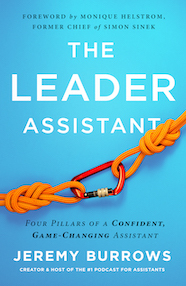
[0:00:23] CH: hey everyone, you are listening to Author Hour, the show where we interview authors about their new books. My name is Charlie Hoehn and I am one of the hosts of author hour and today’s episode is with Jeremy Burrows. He is the author of The Leader Assistant. Now, Jeremy is a long time executive assistant and the host of the number one podcast for assistants, The Leader Assistant Podcast. His passion is helping assistants and executives lead well without burning out. Anybody who has been an executive assistant knows, it is hard to not burn out, it is hard to take care of yourself. If you are an assistant of any kind really, you can benefit tremendously from this episode. A bit more about Jeremy, he has worked with CEO’s, professional athletes, Fortune 100 board members, billionaires, pastors and their assistants in both the nonprofit and for-profit sectors. He’s currently the executive assistant to the founder and CEO of Capacity, which is an AI SaaS company, and in this episode, he’s going to break down, what are the four pillars of a confident, game-changing assistant? Again, if you are an assistant, this is a must listen. It could save your job, it could save your career, it might even save your life. Now, here is our conversation with Jeremy Burrows.
[0:02:04] Jeremy Burrows: I’m actually in Denver Colorado right now, visiting my brother. The story that I start with in the book is a story of my two brothers and I and my Dad, hiking in Rocky Mountain National Park and we hiked up Flat Top Mountain, across Hallett Peak, for those that are familiar with some of them, the peaks in Colorado. We get to this glacier called Andrew’s Glacier, and we had planned all along to cross this glacier. We’d seen pictures online of people just kind of moseying across, just a bunch of snow-packed, thick snow, kind of walking across maybe even like a ski resort terrain. We get there and – but, mind you, it’s late August and so – we get there and there’s a sign that says, “Caution, do not, dangerous crossing,” or something like that. We decided to cross it and about halfway across, we realize that, man, it’s late August, this is like not snow-packed. This is more like icy, and streams of water rolling down the ice, because it was so hot that, you know, it melts the snow during the day and it’d refreeze at night. We just realized, well, we’re kind of not in a good spot right here. My dad kind of stopped us for a second and, “All right, I know we’re freaking out, our hands are wet and cold,” and we were having a hard time getting traction, “Let’s just say a quick prayer and keep going.” As soon as he got done saying the prayer, my brother slipped and fell probably 200 feet down the glacier. Slid into a crevasse, crack in the ice, and we couldn’t see him. We screamed for him and didn’t hear anything, honestly thought we’d lost him. Then we hear a faint “Get me out of here!” a few minutes later. He had landed on this little ledge in the crevasse, and this guy we were with went down and helped him climb out, so we were like all right, he’s safe, he’s alive, but we’re still all in the middle of this glacier, and who is going to fall next? If we do fall, we’re going to be so lucky or are we going to fall further into the crevasse and freeze to death? Anyway, I just all of a sudden was like, why did I get here, how did I get here, what was I thinking? I don’t have the right equipment, all the confidence I had, hiking up this mountain, is gone. Where do I go now? Just hated that feeling. Thankfully, we made it across and survived, otherwise I wouldn’t be here today and this book never would have been written. Fast forward – that was when I was 16 years old – fast forward about I think another 12 or 16 years. I was an executive assistant for a founder, had been at that company for 12 years, and I’d been his PA for 6 years and then suddenly, he gets fired. I’m like okay, well, maybe this is time to move on. I’ve always wanted to start my own business, I’ve always thought about getting out of nonprofit world into for-profit world. I sit down and I’m like, all right, let’s do this. I suddenly realized I had no network, no resume, no multiple streams of income. Essentially, I was like, how did I get here? I froze just like I had frozen on that glacier 16 years prior. I was like, what happened? That process, kind of took a bunch of time off, and tried to figure it out. I realized that I was working under a rock for 6 to 8 years, and just wasn’t thinking about taking care of myself, wasn’t thinking about maybe my network. Yeah, that’s kind of the turning point in my career, where I was like, “All right, this isn’t going to happen again. I’m going to make sure, just like when I was on that glacier, I’m going to make sure that I don’t get in a situation like this again.”
[0:06:24] CH: What happened after that? How did you go about systematically ensuring that that wouldn’t happen again?
[0:06:32] Jeremy Burrows: Yeah, I did what most people do when they’re in between jobs. I hopped on LinkedIn. That’s part of when I realized that I didn’t have a network, but I noticed that people were actually using LinkedIn and I was like wow, I didn’t know. I thought that was kind of like the ugly stepchild of social media that nobody uses, but it turned out that a lot of assistants especially were on it and using it. I just started reaching out to assistants. I just started searching ‘executive assistant’ on LinkedIn, and hitting the connect button, and hitting the add a note button, and just literally saying, “Hey, I spent the first half of my career not connecting with other assistants, so I’m going to make up for lost time and going to try to connect. I’d love to connect.” I just did that over and over again. I decided I wanted to help executives and their assistants, so I started blogging about my experience as an assistant –
[0:07:28] CH: Let me pause you there Jeremy, did that work? Reaching out on LinkedIn? I mean, people blast each other on LinkedIn all the time, did that actually make a dent?
[0:07:38] Jeremy Burrows: It did. It was quite surprising to be honest, but I also felt like I was genuine about it. I wasn’t just saying, “Hey, connect with me.” I was saying, “Hey, I’m an EA, you're an EA. I regret that I haven’t networked with other EA’s and so I’d love to change that and connect with you.” I think it kind of plucked at their heart string, if you will, to see that maybe I’m not connecting with EAs either. It was kind of that trust of the peer to peer, it wasn’t like I was a sales person who was trying to sell something to a CEO or whatever. I was just going peer to peer and say hey, let’s connect. But it definitely worked, I mean, I went from – it kind of took me a while to figure out the best rhythm, I guess, but I went from – this last 12 months or so, I went from about 2,000 LinkedIn connections to about 20,000 LinkedIn followers. Definitely helped.
[0:08:34] CH: Yeah, on a professional level, did those interactions lead to long term relationships?
[0:08:41] Jeremy Burrows: Yeah. Several of the relationships have either been with you know, other EA trainers that I now partner with, other EA advocates, and long time EAs that even contributed portions of my book. It led to a lot of job offers, a lot of job opportunities, speaking engagements in Chiang Mai, Thailand, and Hong Kong and Germany, so yeah. I definitely kind of initiated these relationships that I still have today and have cultivated.
[0:09:15] CH: Good for you. Yeah, you know, t here are so many people who blast out on LinkedIn and I think get frustrated with it and it’s exactly because you do – they do the opposite of what you did which was be honest, vulnerable, not try and pitch, and be sincere.
[0:09:34] Jeremy Burrows: Yeah. It’s what I tell EAs to do as well is like listen, just reach out to other EAs, like grab coffee with somebody in your town. You can literally search, if you see a sign across the street from your office of a different company, type in that company in LinkedIn. Search, add a filter, 'executive assistant title’ and boom. You’ll see five or 10 assistants that work in the building across the street and reach out to them and offer to buy them lunch or meet for coffee.
[0:10:02] CH: Yeah, you did LinkedIn, and you said you were doing some other things, like blogging. Of all the things that you were doing, what did you find to be the most effective at sort of future proofing yourself as an executive assistant?
[0:10:17] Jeremy Burrows: Yeah, great question. You know, I did some blogging, I did some new LinkedIn, I partnered with a lot of other people that had blogs or events and just tried to add value. Speak or do teaching/training sessions. As far as future proofing, I mean, kind of – if you want to segue, we can talk a little bit about AI, because I currently work for an AI company. I’m still full time EA, and we’re all about automation, and so I’m all about embracing automation. Using our tool at capacity and also using other tools like Zapier, or automations in Google or Gmail, yeah.
[0:11:01] CH: Yeah, that is a good segue into the book itself. You have these four pillars in the book that executive assistants need to have to do really well at their job. Pillar number one is embody the characteristics. Let’s talk about that one, tell me about embody the characteristics?
[0:11:22] Jeremy Burrows: Yeah, you know, you see a lot of blog posts if you're an EA and you research, or even if you’re an executive looking for an EA, and trying to figure out what to look for in an assistant. You see a lot of blog post and articles, resources that say, here are the top 11 characteristics that an assistant should have, or here are the seven rock star assistant qualities. On one hand, I think those lists are great, I think they’re helpful. So what I did was kind of did an essential characteristics list in the book to start this pillar, but what I really tried to do is focus on this kind of next level characteristics, or what I called game changing characteristics. Yeah. I have five of them in the book and they basically – again, I feel like they separate the kind of standard, if you will, assistants from the assistants who lead and really see themselves as a leader in their role.
[0:12:22] CH: What are some of the game changing characteristics?
[0:12:26] Jeremy Burrows: Yeah, one of them would be future proof. I think that this is a part of embracing automation, cultivating your emotional intelligence, all that kind of falls under the future proof characteristic. Another one is discerning. So it’s kind of a little bit of anticipating, and reading your executive’s mind, but it’s also a little bit of making the right call, even when there’s maybe not all the information that you would like to have. So there’s having good discernment. Then my favorite, kind of the biggest game changing characteristic pair, is humility and confidence. I like to talk about in the book, a little bit about this idea of a humble confidence. I think that true leader assistants embody humility and confidence, and they compliment each other and they don’t fight against each other. You’re not prideful, you're humble, but you’re also not a stepping stone for other people, or a door mat for other people to walk over.
[0:13:35] CH: 100%. As I was saying to you before we started recording, the reason I was really excited to talk to you about your book is because I was effectively in an executive assistant role for three years myself, and some of these things – just reading through, I’m like yeah, I did that pretty well and many of them I’m like I could have done that better. Future proof, really stands out to me as one that I didn’t even think about until the very end of my role, which is how much of this can be automated, how much of my brain and my processes can be made into a machine that runs without me, indefinitely into the future. That’s what you mean by future proof, right?
[0:14:19] Jeremy Burrows: yeah, that’s kind of half of it. Half of it is how much can you automate so that you can focus on things that add more value, like strategic thinking, and creative problem solving. But half of it also is the emotional intelligence side. It ties together, that’s why I kept it under one characteristic. But, the things – basically, I guess the short way to say it is to be more human, and to really embrace and develop your human skills. The things that you do that can be automated, you know, those repetitive processes and tasks that you do that can be automated or definitely not going to future proof yourself.
[0:15:03] CH: Future proof your job, you mean, right?
[0:15:06] Jeremy Burrows: Yeah, future proof your – well yes. Your job, but really, your career. If you see yourself as I want to be a senior executive assistant at a Fortune 100 company, you know. Or I would work my way up and be a chief of staff or director administration, whatever it is, you know, especially with this kind of world we’re living in with coronavirus and people, companies having to cut costs. They’re going to really look at, what are the tools we can bring on to take over these tasks that we’re paying people to do? The more tasks and the more emotional intelligence you can employ at your job, the more future proof you’ll be.
[0:15:57] CH: I love it. Let’s go on to pillar 2. Now, this is where you cover the tactics, the actual nitty-gritty of the job of an executive assistant. Stuff like time management, task and interruption management, calendars, meetings, emails, travel, all of these things that add up to the day to day. Which of these is your favorite to talk about? Which is one that you really like to geek out on?
[0:16:25] Jeremy Burrows: That’s a great question. I think kind of the overall theme is that the tools you use don’t matter if the tactics you employ are flawed. I really focus on tactics and not so much on tools. As far as which one, I really like calendar. I really think that is the root or the first thing that you can do as a leader assistant, is to really take that ownership of your executive’s calendar. I talk about this concept called the ideal week calendar, or the focus blocks, or the time blocks. The idea is that you proactively manage your executive’s calendar instead of reacting to every little request that comes on and just saying, “All right, I’ll put it here. I will fit it here, I’ll fit it here/” You can set up these guard rails to schedule meetings. That is probably one of my favorites because most assistants if not all schedule meetings for their executives and they think that it is just one of these like, “Oh computer can do this,” and yes, the computer can help with a lot of that, and a lot of automation is coming in that world and it is already happened. But to really step back and set up an ideal week for your executive, and then set up the tools that you use to match that ideal week, is what kind of separate assistance from the pack.
[0:17:50] CH: I love that. So you kind of touched on that a lot of executive assistants do this the wrong way, and may not even realize it, right? No one has ever taught them how to set up the ideal week for the executive. What are some of the mistakes, the most common mistakes that you see executive assistants making that are hurting their job or even putting them in danger of losing it?
[0:18:17] Jeremy Burrows: Yeah, I mean I think not saying no is probably the biggest. So just feeling like you don’t have the power or the authority to push back and say no to whether it is to your executive or on behalf of your executive, I think that gives a lot of assistants in trouble because they just let people keep giving them tasks or they let their executive just do what they want. There’s a lot of different issues that come with not being able to confidently pushback and say no.
[0:18:53] CH: Yes, I know multiple executives actually who’ve started the process of writing a book about the power of saying no and they abandon ship. They said no to the project eventually, but I digress. So pillar number 3 is engage in relationships. So this is networking or what does this entail?
[0:19:16] Jeremy Burrows: Yeah, it is a little bit of or a lot of networking. It’s also kind of a talk through the relationship with your executive. A lot of assistants have executives who micromanage, or who are resistant to the ways that the assistant is trying to lead them. So I try to work through that and help them walk through that. Really, I talk about this idea, this experience that allow assistants to have myself included called the dehumanization of assistants. It is this idea that a lot of the times coworkers, even friends and acquaintances, they kind of show that they care about you and they show that they seemingly want to be your friend but you find out later that they really just wanted to get close to your executive. I know you work with a higher profile executive, so I am sure you had experiences like that where you thought, “Oh this person is interested,” and then you find out they just wanted something from your boss.
[0:20:20] CH: Correct, yes.
[0:20:21] Jeremy Burrows: So I talk through that and help assistants process that, and just name it really. Honestly, I think self-awareness and naming it is a big step.
[0:20:30] CH: Let’s dive into that a little bit because for me that was something I didn’t realize until much later on. You know I grew up around people who there weren’t a lot of two-faced people around. So I was blissfully naïve thinking that people were just super kind and then as soon as my role ended I didn’t hear from them again. So talk to me about how you even spot that kind of behavior, when you are an assistant?
[0:20:58] Jeremy Burrows: Well, I think that you hit the nail on the head right there. I didn’t even spot it until after I’d left my last role and realized how many people kind of disappeared. That’s why I wrote about it because I wanted assistants that haven’t seen it to really just consider and ask themselves questions like, “Is this person truly wanting” – and I’ll step back and say that I don’t want this to be an encouragement to never trust anyone. I think that’s probably unhealthy either.
[0:21:31] CH: This is an endorsement officially from Jeremy. No I am just joking.
[0:21:34] Jeremy Burrows: Right but I do think that being aware of it and, like you said, about being blissfully naïve like I want to help assistants really be aware of what is going on and the different dynamics. Once you are aware of it, you can start working through it and processing it and not taking it personally, things like that.
[0:21:55] CH: Yes, excellent. So pillar number four was ultimately my personal downfall, which was exercise self-care. So I will speak for myself, I became so one with my job I guess in wanting to do such a phenomenal job and got addicted to the cortisol rush, and the excitement of, frankly, working on big interesting things with interesting great people. What came with that was using stimulants to work harder and be more productive, and not taking care of myself. Not really listening to my body’s pleas for self-care. So talk to me about these stressors and signs, this burnout creep that a lot of executive assistants deal with?
[0:22:47] Jeremy Burrows: Yeah, so just even sharing your story I think the issue is that burnout creeps up on us. It is not like we wake up one day and decide that hey, I am going to start working my way towards burnout. Like what happens is we wake up one day and say, “Wait, what is going on with me?” And it is creeping up and you realize, “Oh I am running too fast, I am running too hard. I haven’t taken a vacation in two years,” where I actually took a vacation and turned my phone off, and it just creeps up on you. So what I try to do is share a little bit of the story of my burnout, and how I got there and, through hindsight, how I see why I burned out. Then I talk about the stressors. So these things that keep you from or kind of pre-occupy your mind and really drive you towards burnout. You may not be burned out yet, but one of the stressors is like – I call it a mismatch with your executive, and there are different types of mismatches. One of them as an example, a passion mismatch. So this might be where, you started off the job, you are really passionate about working for this executive, you really were passionate about the mission of the company and the organization, and six months later or six years later, you realize that you are not passionate about it anymore. There could be different reasons why that is the case, but that could be stressing you out because you’re working so hard. You are taking care of this executive and supporting this organization that you don’t really believe in anymore. That can be one of those stressors that drives you to burnout.
[0:24:33] CH: Man, that really resonates, and that’s all I’ll say about that. It deeply resonates. That’s really cool. How did you get yourself out of burnout? What were the few big antidotes that helped you get out?
[0:24:48] Jeremy Burrows: Yeah, great question. I think initially what happened was I mean my executive got fired. So it kind of shown a light on what I was doing, where I was going, what was next, and made me step back and take a break and figure out what is going on. That is when I started seeing, “Oh wow, I’m really…” I kind of knew I was burning out but I saw more why or how. My wife was kind enough to be gentle in pointing out where it was that I was really burned out. She saw it a lot sooner than I did and tried to tell me but I didn’t listen. One of the antidotes is honestly just setting boundaries and taking time off. So one of the things I did with my current executive, when we first started working together, I said, “Listen, I am going to work my tail off supporting you. I believe what we are up to, and I believe what you are doing, and I am happy to do whatever I can. But, if you want this to be a long term sustainable working partnership, I am going to need consistent time off. I am going to need consistent time every weekend where I don’t have my phone on or I don’t have to be concerned that you are going to text me or call me and want me to do something that could awaited until Monday.” So we set up these boundaries and he takes a 24 hour straight no email, no Slack, no phone break, every weekend. His wife like to joke and say, “You know, you’re really awesome. You really help with anything and everything.” “You don’t really care what it is, you’re happy to help as long as it is not on Sunday, right?” and I’m like, “Yeah, pretty much.” She’s like, “You’ll do anything just don’t call me on Sundays is your motto,” and I’m like, “Yeah, pretty much.” So that was the antidote.
[0:26:40] CH: Yeah and the thing that I really took notice of there, is you have the double opt in, right? It wasn’t just the assistant asking for time off. It was both sides being like, “Look, we both need to do this if we want to preserve this relationship ongoing.”
[0:26:54] Jeremy Burrows: Right, yep exactly. That is part of the whole idea of the book is – it’s called The Leader’s Assistant, so the idea is that the assistant sees himself as a leader, the executive sees the assistant as a leader, but really the idea is that you’re leading your executive, and you want your executive to accomplish their goals without burning out and so that’s what a leader assistant does, day in and day out.
[0:27:22] CH: Do you know if Elon Musk has one of these executive assistants? Because he always seems to be on the verge of burnout.
[0:27:30] Jeremy Burrows: You know it’s funny, I’m pretty sure I included it in the book but I have read an article in the New York Times, a couple of years ago, about how Elon Musk at the time apparently hadn’t take a week off in like, I don’t remember what was, like 12 years or something stupid. It was because he had malaria or something, that was the only reason he had that time off. So I have this – I say, “Don’t be like Elon.” The point of the article, and I am pretty sure I talk about it in the book, I’d honestly have to revisit – but the idea is that the world doesn’t revolve around you. A guy like Elon feels all of this pressure and he’s driven, he’s smart, and he has all of these great ideas, and had these companies that are successful, but I think that a guy like him can be tempted to believe that the world revolves around him. That means he can’t take a two-week vacation, or log off for a few days, because he thinks everything is going to fall apart and that is what assistants do too. We feel like – and that is what they tell me all the time like – I can’t go on vacation because it is just going to be more work for me when I get back. I say, well it might be, but if you lead instead of just reacting and doing whatever comes across your desk as it comes, you can actually set up systems and processes. So that then you can take a vacation and come back and not be overloaded, but also so that when you are gone, your executive and team is still supporting – is supported by the tools or the AI bot that you set up while you are on vacation, etcetera.
[0:29:08] CH: Man, I love it and, again, I cannot emphasize how much a book like this would have helped me and the executive I worked with, not just for us and our working relationship but for the people that we serve. The people that we are impacting with our work. It could have made a huge difference and so I really hope – I talk to – I’m friends with the former executive assistant of a Fortune 10 company and she had all of these issues too. She had a doctor tell her, her reproductive organs were shutting down, and she was in her early 30s. It was because the job was so stressful. So this can truly be a lifesaving book, and I just really want to tip my hat again to you for putting it together. It is an important resource and one that I don’t think gets enough attention for the people who were doing a lot of the heavy lifting behind the scenes.
[0:30:07] Jeremy Burrows: Yeah, thanks Charlie. I appreciate it and I am excited to get it out into the world and help as many assistants and executives as well as possible.
[0:30:18] CH: Yeah, so beyond Amazon and where they can buy the book, are there any other links or places you’d like to send listeners to that they can check out your work and follow you?
[0:30:28] Jeremy Burrows: Yes, so as far as the book is concerned, you can download the first three chapters for free on leaderassistantbook.com and there is also some resources there and info on just exploring more of the topic further and then I host a podcast, The Leader Assistant Podcast. You can find that on obviously Apple Podcasts, or Stitcher, or Spotify, or you can find it at leaderassistant.com/podcast. In general reach out to me at leaderassistant.com and we’d love to hear from you and help however I can.
[0:31:09] CH: Excellent. The book is The Leader Assistant. You can grab it on Amazon and check out the links that Jeremy just said. Jeremy, thank you so much for being on Author Hour.
[0:31:18] Jeremy Burrows: Thanks Charlie, it’s been fun.
Want to Write Your Own Book?
Scribe has helped over 2,000 authors turn their expertise into published books.
Schedule a Free Consult