Paul James: Reverse Engineer Your Future
Read the full transcript
Paul James
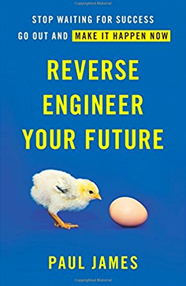
Paul James is an internet entrepreneur, business coach, and bestselling author. A former professional musician, he was an early pioneer in using social media to build a thriving fan community, then turned his experience in search engine optimization into a successful online business that helped local business owners expand their clientele. In his number one bestselling book Reverse Engineer Your Future: Stop Waiting for Success, Go Out and Make It Happen Now, Paul shares seven essential insights he used to overcome adversity on his path to business and financial success.
📚 Books by Paul James
Transcript
[0:00:29] Charlie Hoehn: You’re listening to Author Hour, enlightening conversations about books with the authors who wrote them. I’m Charlie Hoehn. Today’s episode is with Paul James, author of Reverse Engineer Your Future. Are you tired of taking detours on your road to financial prosperity? Paul knows that waiting around for a lucky break is a waste of time. He believes you have the ability to set your own path if you can think differently. In this episode, Paul will share the steps he took to transform his life from struggling musician to a seven figure sales income. Along with specific goals that you can set to unlock your passions and regain control of your life. And now, here is our conversation with Paul James.
[0:01:26] Paul James: I was driving to school one day, I was working and then I was going to school part time to become a nurse, or full time to become a nurse so I was working part time. I was driving to school in the middle of winter from my county, West Bend all the way to Milwaukee county and it’s about a 40 minute drive and I’m on the freeway and they don’t plow the streets really well out here when it snows and they don’t put a lot of salt on the road. They were actually putting sand down and I was just having, you know, kind of a bad day and all of a sudden I hit a patch of black ice and I went spinning doing circles and I just remember like the steering wheel going right and then the steering wheel going left and I just couldn’t like grab control over it and it was almost like that kind of felt like my life at the moment in time you know? Kind of things were just kind of spiraling in different directions and eventually I went flying into the ditch and I was just kind of like, in shock you know? Thankful that I was alive obviously. In shock and not knowing like you know, what actually to do and I can remember calling my mom up and asking her like – “Should I call the police or do I try to drive out of here?” I called the police, she recommended I do that and it took a while, no one ever came and I eventually just tried to just drive out of the ditch. The problem was I was facing oncoming cars when I was trying to come out of the ditch. I waited for an opportunity, somehow managed to get out of the car or out of the ditch and I’m back on the freeway and I’m driving and it was like, it just hit me right there and then, you know? It just felt like I was destined for more that I knew that you know, life could be great and that there was so many things that I could be doing that I had a passion for and I just needed to really figure it out. I felt like what I was doing now wasn’t what I was going to be doing maybe five or 10 years from now at that moment. That’s really kind of what led me into the book and led me into kind of the ideas inside of the book. You know, I think people out there, they feel like they’re destined for more or they’re maybe not happy where life is right now. Sometimes it’s just not clear how we figure it out and how we get there.
[0:03:42] Charlie Hoehn: Right. You spun out of control, you may be felt like you didn’t have a grasp on your life or potentially that you could have met your death in that moment. You mentioned that you felt like your whole life was like that thing was spiraling out of control. What kind of things were going on?
[0:04:03] Paul James: I was working at a heating and cooling company before this and work got slow which is what led me into nursing school in the first place, you know, I needed a new career path and I chose that career path because I was very interested in science and I liked helping people. I soon came to find out I didn’t like helping people that way but I liked helping people and I thought that you know, it would be a good choice for me. I would be able to get a good paying job from it and just you know, come out of school and really hit the ground running. Well, when I started school, the nursing shortage was big and people were hiring like crazy for it. At this point, I was getting close to the point where I was about to graduate you know? I had like a couple of semesters left and now, the job shortage wasn’t there anymore and it was hard to find a job and if you could find one, it wasn’t paying nearly what it was when I had started the schooling process and everything. That whole situation was very devastating, I had to move in to my brother’s garage because financially I was not doing well and I was kicking off a new marriage that way as well. Me and my wife were both in the garage and that’s kind of how we started our marriage. I kind of felt like a failure all the way around, you know, I was trying and trying but I just wasn’t – I just felt like I wasn’t catching a break.
[0:05:25] Charlie Hoehn: Where were you sleeping in the garage by the way? Were you sleeping on a hood of a car or yeah.
[0:05:30] Paul James: No, it was basically like this big empty room, it was like a 12x10 room and there was no bathroom, you know, no kitchen or anything like that but the garage wasn’t, you know, it wasn’t like a typical garage where it had cars in it and stuff, he had remodeled it into what we call the clubhouse. My brother and his family and friends.
[0:05:49] Charlie Hoehn: Sleeping in his house.
[0:05:51] Paul James: I was sleeping in the club house which was this you know, basically remodeled garage, big empty room and it had a pool table in the center of it. My brother moved the pool table into his living room so that we could live there which was awesome of him and very grateful for that. But at the same time, it was not a practical place to live, we had two pets and starting off a marriage in the cold Wisconsin winter, we’re running through the snow to use the bathroom in his house which was not fun at all.
[0:06:19] Charlie Hoehn: No, definitely not. Tell me what it was like to have a breakthrough, when was your breakthrough moment and how long did it take to get there?
[0:06:31] Paul James: My breakthrough moment was at that time driving, pulling the car to the ditch and driving and it was like, “I need to figure something out, I need to figure something out, I need to figure out what I want to do with my life” and kind of look at everything that’s going on and figure out how I can leverage this stuff. Figure out how I can leverage this struggles that are going on around me and pull out the positive things that came from them or the things that I may be learned from and figure out what I want to be doing. From that point, I kind of went back home that night and went on the computer and just kind of started researching and I had remembered some things that popped up from the past, some different advertisement sites, different courses, things that I knew of. I started researching things and I stumbled upon search engine optimization basically which is the process of getting someone or your website ranked on the first page of Google to get more traffic. I just kind of started learning more and more about that and it kind of led me to figuring out what I wanted to do which was basically that. Doing search engine optimization.
[0:07:37] Charlie Hoehn: Why did you want to do that?
[0:07:39] Paul James: You know what? I always had a passion for computers growing up, I can just remember always playing around on them whether it be playing video games or trying to mess around learning how to code, one of my friends growing up, his parents were big into eBay and I just remember like seeing them listing stuff around the house and he was learning how to program. I just like, always had that background and that influence around me and it peaked my curiosity. I just wasn’t sure really, prior to this point, how I could actually use it to make a living.
[0:08:16] Charlie Hoehn: Tell me what your book is about then? Specifically. You had this realization that you needed to figure out what you wanted your future to be like? You came across SEO and you dove into that. How did that lead to the book?
[0:08:35] Paul James: It led to the book because as I started getting going with things, I realized a pattern in my life, with search engine optimization, prior to that I was doing music and I was in a band and that kind of led me to coming across an ad that led me to search engine optimization actually because I was looking for ways to promote my band. I’d realized I had this common trait in myself that followed me through whether it was music, whether it was business and that was, I was looking for like a person or a moment that was going to shoot me into you know, the success and it was going to make me a ton of money or you know, give me everything that I wanted. I realized -
[0:09:20] Charlie Hoehn: Sorry to interrupt you. That’s like American idol syndrome if you can just get on American idol, you can be a success.
[0:09:26] Paul James: Exactly, I mean, as a musician, I’m thinking, well, “Why should I sit here and do this or that, I should be out there hammering ANR reps at record labels and explaining to them why they need to sign me,” right? I was trying to place my trust into that. Or while I was in business, I was trying to find someone who was much more successful than me and we convinced them to give me a chance and I just figured out after a while that that mindset is just not a good mindset because you can be your big break, you know, you can be the person that is going to be successful and help you get there but you have to really realize that and you have to use the struggles in your life and you know, some of the moments that happen and figure out how you can leverage those to making that happen.
[0:10:18] Charlie Hoehn: Yeah, tell me Paul, the listeners of this episode, a few months from now, if they think back to this episode, what is the one thing you want them to take away from your book? The one unique idea or the best story from the book, what would you pick?
[0:10:39] Paul James: yeah, I would say that in any type of thing that you’re doing, it’s never too late to change your mind and steer direction to figure out that maybe you had something wrong because I think that a lot of times, people don’t adapt. If you look at the music industry, I can remember a time when musicians relied on CD sales, right? To drive what they were going to do for a living like their career. Then we had, I think it was Napster was like the first major file sharing site where people were downloading music and now musicians were no longer getting paid for the CD’s that they sold and everyone was kind of in a panic but some people were smart about it and realized it, hey, maybe we should just give music out for free and will gain such a rapid fan base from the extra reach that we’re getting from all of this music that we’re going to have 10 times the amount of people showing up at our concerts. Those people are going to be buying T shirts and bracelets and merchandise. I would say, it’s being ready to steer and change course and adapt because things change and you know, stuff definitely changes and it’s those who adapt who are going to have the win and be successful. You know, you don’t have to place your trust in someone else to do it. It’s all within you if you can just kind of look at what’s going on and figure out an alternative way.
[0:12:06] Charlie Hoehn: I love that example because what most of us remember from that particular time is Metallica going after Napster and being so…
[0:12:19] Paul James: Exactly.
[0:12:20] Charlie Hoehn: When – at the same time, had artist like, I believe it was soldier boy who was seeding his music under popular musician’s names. Britney Spears, NSYNC, even Metallica and so when people would listen to download those songs and get soldier boys instead, he knew that a small percentage of them would actually listen and become fans of his and that’s exactly what happened.
[0:12:51] Paul James: He’s a great example of adapting because every time a new social media network goes up, even before he knows whether it’s going to be successful or not, he’s already there trying to grow his influence and trying to build his audience there.
[0:13:02] Charlie Hoehn: Yeah.
[0:13:03] Paul James: he’s planting seeds and there’s a chance that one of those seeds are going to sprout and grow.
[0:13:10] Charlie Hoehn: Yeah, let’s get a little bit tactical. What would you say to somebody who is in a position now where they’re looking to reinvent themselves, maybe they’re looking to get themselves into a career, maybe they’ve been out of work for a while, maybe they just got out of a relationship. What advice would you give to them? What would you tell them to do this week?
[0:13:34] Paul James: I would say, you really need to think about what it is you ultimately want? What it is you want to do with your life and what you want to do with your lifestyle and one thing that I did was I figured out exactly what I wanted. I mean, down to like what kind of house I wanted to live in, what kind of car I wanted to drive and I went as far as to actually test drive cars and look at houses, even though I couldn’t afford them. Because I actually wanted to know, I wanted to be certain, this is what I want. I figured out how much it was going to take income wise to be able to afford these things. Then I figured, is the lifestyle that I want to live, does it match what it’s going to take to get that. If you're in a service based business and you’re selling websites for example, you know, if you want to make eight grand a month and you have to sell eight websites a month for a thousand dollars to hit that goal, does that still suit the lifestyle because you have to figure out, you know, “how bad you really want it or do you need to change something?” Sometimes people have trouble figuring out what it is exactly they want and I think an easy way to figure out what it is you want is to start figuring out what it is you don’t want. Because it’s a lot easier to come up with that list first if we can figure out, you know, well I don’t want to be doing this, you know, I want to be able to vacation in Florida for a month out of a year so this is going to inhibit me from doing that. Well then, you can get a lot closer to figuring out what it is that you want by kind of eliminating that stuff right out of the bat. I would say that that’s a really good way to kind of figure it all out.
[0:15:17] Charlie Hoehn: Author Hour is sponsored by Book in a Box. For anyone who has a great idea for a book but doesn’t have the time or patience to sit down and type it out, Book in a Box has created a new way to help you painlessly publish your book. Instead of sitting at a computer and typing for a year, hoping everything works out, Book in a Box takes you through a structured interview process that gets your ideas out of your head and into a book in just a few months. To learn more, head over to Bookinabox.com and fill out the form at the bottom of the page. Don’t let another year go by where you put off writing your book. What would you say to people who may not entirely be clear on what they want and I’ll explain what I mean, I’ve noticed that people tend to inherit their wants either from their friends or from their family or society and it could be a little alienating on a subconscious level to find yourself going after goals that maybe you don’t necessarily feel very drawn to but you are doing it to keep up with some group of people, right? How would you suggest looking through that layer and discovering what you really want so you can reverse engineer your future?
[0:16:52] Paul James: Yeah, you know that was something that I really struggled with and something that I really talked a lot about in the book actually too is that I think my wife and I, we found that we were often doing stuff to please other people which at the end of the day leaves no one happy in the equation because you’re not going to be happy because you’re not doing what it is that you love and ultimately it’s not good because you’re going to have some sort of resentment towards that person. A good example is when I dropped out of nursing school, I think there was a lot of disappointment in the family that I was doing that. Everyone was really proud of me for going and doing that and then when I dropped out everyone was questioning whether or not I was making the right decision or not but I had to trust my gut and go with what I just felt was the right thing to do which was pursue the online business in the search engine optimization. And ultimately, it proved to be the right choice and everyone came around at the end. You know everyone realized, “Okay you know you really knew what you were talking about” and I think everyone was really happy about that I made that decision in the end and including myself. So I would say one really good way to figure out what it is you want to do is to go and pick up new hobbies and stuff like that. You know you don’t have to do that forever like for example I’m big into rock climbing. And when I got into rock climbing I thought I would hate it. I only went because my nephew said, “Hey do you want to go rock climbing and I thought it was a good opportunity to hang out with him but I turned out to really enjoy it. So if you don’t try new stuff and you put yourself out there, you’re not going to actually figure it out. You are not going to find out what it is you like or don’t like. So I would say go out there and try new things and pick out the good parts of the things that you like. And go with your gut instinct and pursue it even if maybe everyone is not on board right away because they will come around later.
[0:18:48] Charlie Hoehn: Yeah, I totally agree I think breaking it down into something more approachable something smaller that you can try maybe a new hobby and then assessing after, “did I actually like this? Did I want this? How did it make me feel?” So you can become more self-aware and know what it is that you really want when it comes to bigger things as well because I think everybody knows the phrase like do what you love and you’ll never work another day in your life. We know what to do, we just don’t know how to do it. Like how did you find the courage to stuck up for what you wanted when you had all your family and friends pushing back on you.
[0:19:31] Paul James: Right, yeah I mean for me it was it definitely came down to loving what I was doing. I was just so in tuned with it and I was finding myself after school every day reading everything I could about search engine optimization and spending my time doing that and ultimately I remember the first day, what I did was I had ranked a blog on anatomy and physiology. It was a topic I was taking in nursing school at the time and I ranked it in Google on – I think in Google I didn’t hit that rate but in Bing I hit the first page because I was new at the time while I was getting some traffic to it and I put some affiliate offers on the blog which at the time was a flash card offer and basically it allowed students who were taking that class, studying in that class to kind of pull out these flashcards while they were in line at the grocery store or watching TV during commercials and they could flip through and it was a lot of memorization. Memorizing the muscles and bones and stuff like that. So every times someone came to my site and bought one of these flashcards who were made by a doctor, I got paid $20 on them and I remember distinctly seeing my first $20 sale come in and I just remember thinking like, “You know, this is it” I know that this is possible. I see that there’s opportunity here that this is really something that is real and tangible now and I remember going to nursing school. And I am sitting there in class refreshing to see like if I got more sales and I remember getting some more sales and that was just it. That was the moment when I said you know, “I am done with nursing school” and went to a professor who was in charge of enrollments. I said, “You know I am done with this. I am dropping out” and I still remember her saying, “You know if you do this Paul you can never enroll here again in the nursing program. This is it”. It was kind of a scary thing at the time but I just knew. I think it is a good tribute to small wins that add up when once you start to make that first initial success, it just keeps snowballing and you just want to keep going and going and going. So I would encourage you to set small goals that you would be able to meet because once you hit that first goal it is going to be addicting and you’re going to want to hit the next one and the next one and the next one. It is not going to matter what anyone else thinks or says because you’re going to see the end goal. You’re going to see the bigger picture.
[0:21:56] Charlie Hoehn: I think that’s excellent advice and to just add to that a little bit I think what was great for you, what gave you the confidence was the fact that there was a little bit of money attached to it. You could see that, if I just scale this up, if I get better at this I can make this into a living and I think a lot of people tend to just totally dismiss how can I earn some money from this? What is a way that I could generate some income from what I am doing at least on a career level? They think if they really love this one thing that they do that it’s going to start with passion. I have to be passionate about it when really it’s like if you can think of some way and go directly for earning some income attach to this thing that you really enjoy then you could be in a really fantastic position a year from now.
[0:22:56] Paul James: Absolutely, yeah and I think a lot of times too, there’s a little bit of layering that goes on like you may have a passion for cars but not a passion for something else but there still might be a way to monetize that or make a living with that like I could have very well have had a passion for cars and not so much of the computer but I could have made a blog about cars and drove traffic to a search engine optimization and made a living writing about cars that I love.
[0:23:25] Charlie Hoehn: I think the key here is that you were doing things that you wanted to do not because anybody was telling you to do them or you felt obligated, you were in all your free time reading about SEO. I think people tend to overlook that simple observation that they can make about themselves if they stopped watching Netflix and binge watching Game of Thrones and they spend some time just being bored and allowing their interest to flourish in that time and seeing where they’re attention goes. And where it stays, yeah I think that’s a really critical observation. So the book hasn’t come out yet at the time of this recording but I am curious if you’ve had a chance to share your manuscript with your wife, with your family, your friends, have any of them implemented this stuff into their life?
[0:24:25] Paul James: I have, yeah and I have shared a lot of these principles with a lot of my customers as well even as I was writing the manuscript and it’s a big journey and a lot of people have had great success with implementing the things that I have shared with them and just really enjoyed it and stuff so yeah.
[0:24:46] Charlie Hoehn: Tell me a story about maybe a success story you’ve heard or just something about somebody using this advice.
[0:24:54] Paul James: Yeah so actually Lamont used it. He actually took what I was teaching and actually went in. He was working at a bank before working together with me and applying this stuff and I actually talked him into doing SEO. He had an interest for search engine optimization after going through and stuff and he actually went and built a search engine optimization business and within nine months he went actually quit his job. Just implementing the same strategies that I’ve been talking about in the book and he actually runs that business with his son now who is using the money to pay for college and that’s a really inspiring story and something that I was really proud of.
[0:25:34] Charlie Hoehn: Very cool, so what is the rest of this year look like for you?
[0:25:38] Paul James: The rest of the year looks like for me, I’m actually growing my YouTube channel which has been a lot of fun. I put out videos usually three or four times a week and they’re aimed towards people who are entrepreneurs or who want to be entrepreneurs. I have quite a wide audience from people who are younger and even people who are older as well and I just helped people with challenges that they face and kind of trying to figure out what it is they want to do. By showing them different things that I’ve tried and different experiences that I’ve had. So I’ve been doing that a lot working with a lot of clients with search engine optimization still and yeah, just doing that thing which has been a lot of fun.
[0:26:19] Charlie Hoehn: Nice, what is a parting piece of advice you have for aspiring authors? Because you have done information products, this was your first book. What would you suggest to people wanting to write a book?
[0:26:33] Paul James: I would say that you should definitely not overthink it. A lot of times people would think, I have heard the quote before, “Take action even if it is imperfect action” because a lot of times people sit there and they dwell on it and they think about how the reader is going to receive it and I mean that’s good but you don’t want to dwell on it so much to the point of where you never put it out. So I would say trust your gut instinct and just go out there and do it and put it together because you know, people need to hear what it is you have to say and there’s going to be people who ultimately love it and who are going to have their lives changed by it and maybe some people, you know, don’t like what you put out and that’s okay too. For the most part, you know, most people are just going to love what you have to say and you’re going to find people who resonate with it and just don’t overthink it to the point where you never put it out and you worry so much about what people think that you never do it.
[0:27:26] Charlie Hoehn: Yeah, I’ll second that, what you said and I’ll bring it down to something even smaller which just applies just as well. I was listening to an interview with Sheryl Sandberg, the COO of Facebook, she basically runs Facebook. She said, her number one productivity hack is to send imperfect emails the first time she opens an email because she underestimated how much time it was consuming for her to not respond and to put it off because she wanted to write a perfect message. I personally suffered from this, for many years, I still struggle with it sometimes but same thing applies to books is just do it, it’s not going to be perfect, you’re not going to be 100% happy with it, guaranteed, no much, no matter how long you spend on it and how good your team is that’s helping you, it will never be perfect so just do it, publish, move on.
[0:28:33] Paul James: Yeah, absolutely.
[0:28:36] Charlie Hoehn: how can our listeners connect with and follow you? You mentioned a YouTube channel which is, is that Paul James?
[0:28:42] Paul James: Yeah, my YouTube channel is I am Paul James and yeah, that would probably be the best place and then I also have a website which is pauljames.com.
[0:28:50] Charlie Hoehn: Great. To people listening, reverse engineer your future. Drop Paul a line. If you go through the exercise that we talked about in this episode and Paul, this was great. Thank you so much.
[0:29:09] Paul James: Yeah, thank you, I really appreciate it and I’m just so glad that you had me on here and I’m just really excited for people to go out there and just kind of figure out what it is they want to do and actually go and do it and pursue it.
[0:29:21] Charlie Hoehn: Yes sir, right on. Thank you so much Paul.
[0:29:24] Paul James: Awesome, thank you, take care.
[0:29:25] Charlie Hoehn: Many thanks to Paul James for being on the show. You can buy his book, reverse engineer your future on amazon.com. Thanks again for listening to Author Hour, enlightening conversations about book with the authors who wrote them. We’ll see you next time.
Want to Write Your Own Book?
Scribe has helped over 2,000 authors turn their expertise into published books.
Schedule a Free Consult