David Baldwin: The Belief Economy
Read the full transcript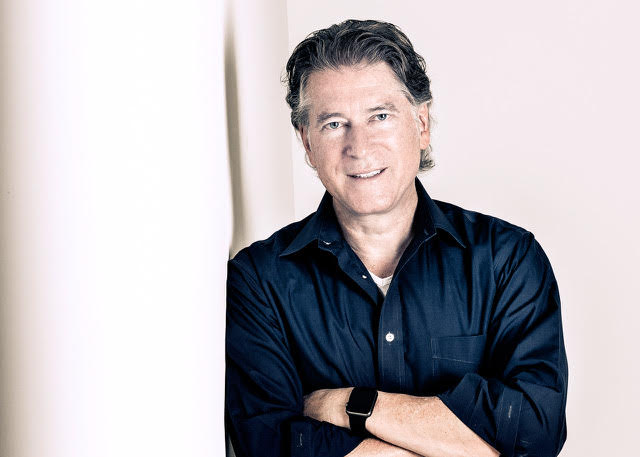
David Baldwin
David Baldwin is an award-winning advertising executive and the founder and chairman of Baldwin&, an independent advertising agency based in Raleigh, North Carolina. Over a career spanning more than 30 years in advertising, he has created campaigns for major brands and been recognized for creative excellence by Adweek and the One Show.
📚 Books by David Baldwin
Transcript
[00:00:33] Charlie Hoehn: You're listening to Author Hour, enlightening conversations about books with the authors who wrote them. I'm Charlie Hoehn. Today’s episode is with David Baldwin, author of The Belief Economy. David is a big deal in the ad world. He's won tons of advertising awards and he's even an Emmy Award Making Film Maker. But David isn't just about advertising, he's about doing good in the world. In this episode, we talk about the golden rule of marketing and the cultural shift that's changing how the world's biggest brands are marketing. By the end of this episode, you'll get a glimpse of how belief-driven brands will shape our future and how advertising is becoming more human. And now, here is our conversation with David Baldwin.
[00:01:41] David Baldwin: I have children, I have a 21-year-old and an 18-year-old. And the notion of my children as consumers is quite disturbing to me like the notion of thinking about them as consumers made me rethink everybody as consumers. The idea of consumerism and quantifying a human being as a consumer is this one dimensional, very disturbing picture of what a human being is. It's sort of, calls to mind, you know, locust descending on a field consuming and moving on, and my kids are my kids, you know, my family is my family and my, you know, we have mothers and fathers, and brothers and sisters and friends and neighbors and families and none of them are consumers. You know, and yet, when we sit in our offices as marketing people we talk about consumers. It's a little bit of a false diagnostic, you know, and so, but you know, when you just cradle your kids in your arm and you go: "hello little consumer", you know, it's just weird, it's weird, right? So, I think that honestly was probably the biggest fundamental shift for me as a marketer and an advertising person.
[00:02:49] Charlie Hoehn: So, you becoming a father, changed how you marketed and how you thought about the world of advertising and selling.
[00:02:58] David Baldwin: Yeah! For sure. I'm a capitalist through and through. I sell things for a living and yet, that relationship between myself and my kids and my family made me rethink how I do that and then having first hand sort of relationships with these kids coming up. They are one of my kids is on the cusp of millennial and iGen and the other one is fully — you know, iGen all the way and they have completely different relationships with brands than I did and then I - our generations do so —
[00:03:30] Charlie Hoehn: Tell me your story about that when does that really stand out to you?
[00:03:34] David Baldwin: Yeah! So, you know, what's amazing is my son is 21 he does not want to watch tv with me. He doesn't want to watch tv. He thinks tv is stupid. He is consuming all of his media on a mobile device all of it and sometimes - you know, laptop but so I have memories of being a kid and watching — you know, football game with my father — you know, sitting on his lap watching football or tv was a communal sort of camp fire that we all gather around and it's not anymore. Now, it is a content machine of which people can choose the content they want. They have absolute control over that and so its not a bonding thing in the same way so that was almost like a loss - you know, with my children where we had tv shows we watched when we were little and they sort of not interested anymore unless it's one of those kinds of cultural moments like Game of Thrones or - you know, where you can all get together watching it. It's better on a big screen and I can convince them to watch the tv — you know, and so, you know just that alone is a see change such a see change.
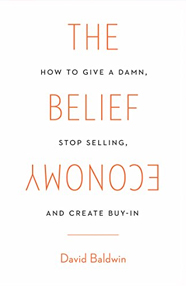
[00:04:38] Charlie Hoehn: Now, how did all of these, sort of, drive you to the principles in your book The Belief Economy which the subtitle is How To Give a Damn, Stop Selling and Create Buying. How did it lead to that?
[00:04:53] David Baldwin: Well, you know, as an advertising person you have some control over where you work on and I get very excited by companies and brands that are in a game bigger than just what they sell and so I've always looked for those kinds of opportunities, a great example of that is Burt’s Bees, which is a brand we work on for 6 years and the thing I loved about Burt’s Bees is they have what they called their greater good model and the greater good model is that they have a triple bottom line they have this kind of Venn diagram, it's good for you, it's good for us, it's good for all and everything they do has to live within that model and so the question is can you make money and do good things at the same time? And, you know, there's not a moral equivalents around good things, it's really can you make things better. Can you have a positive impact on whatever world you're living in. So, I get really excited by that because and I think as a creative person most people in my position in advertising are creative people and we tend to be wired around wanting to have some kind of positive impact and wanting to make a difference — you know, advertising people don't get up in the morning and say, “I think I'd like to create a cultural blight” - you know, and, and put that out everywhere. Like, we're really - we're not wired to want to do that we want to actually do things people enjoy and engage people and move them towards whatever, sort of, conclusions we want them to go on. So, I think that you have brands like that or a hint of what's to come and if you just look at whose consuming brands like that and there's brands like Burt’s Bees and Tom's Shoes were the business model itself is wired around positive impact. That's exciting but then I started saying well, but there's a lot of brands that aren't wired around positive impact and how can we help them create positive impact even if it's not what you would say kind of - you know, "doing good". You can still have a positive impact and you can solve a problem for people and I love the idea - Michael Porter is a Harvard professor who put forward an idea called shared value over 10 years ago and shared value is the notion that business is in a better position to solve societies problems, the world’s problems than NGOs and the government and churches because what business does is create solutions to a problem and then scales it. That's what they do, that's what a business does. So, when you start to think about solving problems, businesses can solve problems by creating positive impact and making things better and because it's tied to a profit motive it actually can make it work more efficiently than people giving money away to an NGO or to a non profit. Not to say not to do that, those things are wonderful but his idea was that we can do it faster and more efficiently for business. My feeling is, what if we look at advertising that way. What if advertising can start solve some of those problems as well and so you have company like Burt’s Bees that's incredibly related to their supply chain and everything that they do is coming through a lands of sustainability and things like that. But, what if your brand isn't and so we started to get very excited about — about that story of how do you help a brand make a difference and make things better and solve problems for people so that's where the book came from and so we call it giving damn at my company its our mantra at the agencies give a damn. So, I just love that idea and I love the action of it and I think it's, it happens to be the perfect era for that now for brands.
[00:08:25] Charlie Hoehn: If you had to pick one idea from this book that you would want people to take away would it be to give a damn?
[00:08:35] David Baldwin: I think it's, - there can be a new advertising or marketing golden rule and that is market to people the way you wanted to be marketed to. Nobody wants to be yelled at and sold to. And so, if you just if you don't leave your humanity at the door when you walk in to your office in the morning and remember that your speaking to human beings and that they have problems that they're trying to solve and they have thoughts and feelings and concerns that speak to those and collaborate and co-create with them to solve those problems with your product and you will win. You will sell more and you will solve problems and you will feel better about what you are doing they will feel better about you. It's not a mamby pamby kind of solution like there are some really amazing things happening right now in the world based around that. You know, one great example of that is what are — I did. They have an idea 2 years ago called OptOutside and the idea was what if we change the orientation about Black Friday, where Black Friday, the day after thanksgiving where families are together, we're encouraging everybody to go spend it in a store fighting over merchandise that's 40%, 50% off and so they came up with this idea called OptOutside and they — if you go outside instead and be with your loved ones and go outside and have an adventure which is completely tied around their belief system of what they sell, it's complete alignment around what they believe, what people believe, and they actually changed — they are currently changing the orientation around Black Friday. Suddenly, all these other companies followed them and started closing on Black Fridays, and they said "we're going to close on Black Friday". Tons of companies followed that, and it's at not a fundamental change, I think for what Black Friday is. And, so that's not a sustainability message that's not a, you know, let's do good message. That's a — “how do we solve a problem in people's lives where they're having to spend their day off fighting over a TV,” you know, that's-that's a little bit cheaper. So, to me, like, market the way you want to be marketed to, and think about how — what tools you have at your disposal — that, that to me is what this book is about.
[00:10:43] Charlie Hoehn: Hmm, yeah. So, it sounds like you're trying to preach the golden rule, but for marketing.
[00:10:49] David Baldwin: Correct. It’s actually more actionable and important than that because of who is coming in charge of the buying power. And the belief economy itself refers to the buying power of millennials and iGen, which is an astounding number. And one of the reasons is that, these generations are not just responsible for what they buy, they're incredibly influential for what everybody else buys. And it's partly because of how they share on social media and the way they - they talk and what we're seeing is a less of a reliance on advertising for your information and more of a reliance on word of mouth in your friends and your family. So, these are incredibly influential generations. Not to mention that these generations are also coming in to the workplace and they work for you. And so, you know, if you're a marketing company, half your marketing department or more is millennials, and iGen is coming right behind them. And so, they are wired around these ideas of making things better, solving problems, having some kind of a belief system. They're very wired to care about what they're doing and if you don't pay attention to that, you actually can get left behind. It's becoming table stakes to do these sorts of things. So, it's just an incredibly important time and so, not only are there — I guess it's a chicken and egg argument, are the tools leading to the behavior so the behavior is leading to the tools? I don't know. But the behaviors are there and the tools are there and now I have to do these things. So, I like to, kind of think of it as a brand as a verb. Think of your brand as a verb and what are the behaviors that you're creating and communicating, and that's - that's what gets people really excited.
[00:12:24] Charlie Hoehn: Yeah. So, you said something earlier that stood out to me which is basically that, companies are in this great position, businesses can really make an impact in the world for good, better than NGO's and you said that you believe that marketing can be used the same way and you gave a great example of REI —
[00:12:44] David Baldwin: Correct
[00:12:45] Charlie Hoehn: — doing opt outside. What are some other examples or even guidelines for doing marketing that has a kind of, impact?
[00:12:55] David Baldwin: Sure! you know, the best probably, example — I, they just named this campaign of the century as the Dove Campaign for Real Beauty.
[00:13:03] Charlie Hoehn: Oh, yeah, yeah, yeah.
[00:13:04] David Baldwin: Right? None of these is an accident. Paul Polman, the CEO of Unilever has said that, by — I think 2020 they — you know, every brand in their umbrella will have a mission to have social impact, positive social impact. So, it's again — I don't know what the chicken and the egg is, I don't know if Dove led him to believe that, or if he put that out there and Dove came from it, I don't - I don't have access to their internal documents. But if you look at that campaign, they're trying to change the conversation around beauty and the false sort of, beauty morales that our society has adopted where you have to be a certain size and a certain skin quality in order to be in a-featured in the net. And, I would in no way say Dove makes products at this point, that are - what I would consider to be business model healthy. I do think Unilever is paying a lot of attention to that and trying to get their business model in order. And so, they're totally seeing this and they saw this 10 or - you know, 10 or 15 years ago and so, I think the guidelines are to create, take - you know, if you think about marketing, typically, there's a document that has kind of a tone of voice, it usually has, kind of, here's our — here's our central thesis or idea, what we would call a stand, take a stand in the world. And, what we would say is take your sort of descriptors, and actually — descriptors and turn them into behaviors. Transform those into what - what are the behaviors that come from? So, for instance, if the brand is joyful, what's the behavior that actually creates joy that your brand can do to turn that into an action versus a descriptor? So, we do a lot of work with our clients like, say, what are the actions that come from those descriptors? And, just that very simple thing actually creates a belief system of how you live in the world and, what I would call-up with which you will not put, you know, one of the things that a brand believes that they are non-negotiable. And that no matter what product comes and goes underneath that brand, if it's a multi-product brand, that they will never go under. I'm going to use Burt's Bees again as, just a quick example. They will not make anything under, probably 96% or 97% natural. They just won't do it, and so they will find a way to do it and they'll — they'll figure out the margin and they'll do all those things to make that the case. They're on a journey to be a 100% natural across their entire line, so I don't know where they are on that journey right now, but that's something that, that brand believes and will always believe, and it's a non-negotiable thing. So, I would just say, so figure out your non-negotiables and turn your descriptors into actions and behavior.
[00:15:30] Charlie Hoehn: Yeah, so, an example that comes to mind, and tell me if I'm describing what you're talking about or if I'm slightly off-based here, but Moleskine Notebooks actually, they've extended their product line. They're now setting up, I believe, like cafes and stores. They have two different types of customers, basically, one is the super productive, ultra productivity type. The other is sort of, the creative adventuresome type of person. And so, every product that they put out now, reinforces their brand for those two people and they really encourage either productivity, or creativity and adventure. Does that kind of fall in line because I'm thinking that with Tom's as well, Tom's kind of does that, a little bit, too-
[00:16:28] David Baldwin: Yeah, absolutely.
[00:16:29] Charlie Hoehn: What I'm really asking I guess, Is your book primarily a focus on how we do our marketing messages or how we approach everything in our company including the products and services that we put out?
[00:16:42] David Baldwin: It's a great question, it's actually both. So, what I do is I have split the book in- when we talk about these two things, into two chapters and one of them is, there are brands that I call "Saints". Those are the Ben and Jerry's of the world and the Tom's Shoes and Patagonia. The brands that the business model itself was created to do something, to do something good and you know, I've been — I make the point about Ben and Jerry's that they seem to use their products to sell their political orientation, you know, and I — again, I do not have access to their internal documents but, when you look at everything they do they seem to be using their products to sell their point of view versus, the other way around, you know. Traditional marketing would be, use your point of view to figure out how to sell your products. And, they're coming from a much more authentic place, same with Patagonia you know, they did a campaign a few years ago called "Don't Buy This Jacket". And the whole idea was, don't buy a jacket if you don't need it, repair it; repair your old one. And, as part of that campaign, they actually had a mobile repair unit driving around the country that would - you could take your clothing to and they would fix it for you rather than sell you something new. And it came from a very, very honest place and it was the talked about holiday campaign of the year back when it came out. So, but then you also have companies — and I think it's really important that — I would encourage companies to put impact into their briefs, like, if you have a marketing brief, put what you're — what impact you're trying to create and then figure that out, you know. A great example of that right now is Always, which makes feminine hygiene products, is clearly trying to sell confidence. They're trying to use the notion of confidence, that you can be confident in yourself, which Dove tells completely into a product benefit, which is what that product does it tries to help you feel more confident in yourself. And they came up with the campaign called, "Like A Girl” and I don't know if you've seen it, I can describe it if you haven't. But Like a Girl's a very - Google it and for anybody listening. It's very powerful, it has created and open — ended conversation and collaboration with their customers and the people that have come to love them. That's all around positive impact with what that product creates. Now, they make a product - I have no idea what their - again, what their supply chain is, I'm not saying that they do bad things with their supply chain - I don't know. They may be incredibly sustainable, but they're creating shared value using their marketing and their communications in a way that's incredibly powerful and refreshing. And again, I think you have to do that now, I think that's becoming table stakes. One of the things that has happened, is we now have the tools to find out what a company's up to in about 30 seconds, right? So, if we see a company talking about anything in their - kind of their portfolio, what they make, what they do. All you have to do is Google it and you'll find out what people hated and are calling BS on them, because they are, you know, killing seals and the way they - they make their upholstery or something. You know, it's very, very easy to find that out.
[00:19:32] Charlie Hoehn: Right.
[00:19:33] David Baldwin: And so, you cannot — you can't BS anybody anymore. You really need to come from an authentic, real place about what you do. And so, I find that to be actually really refreshing, but it's also quite a challenge to many marketing people so -
[00:19:46] Charlie Hoehn: Right, So, I work for a company called Book In A Box, and one of the things that we've kind of, thrown around a number of times is, how can we deepen our social impact? And we have a number of ideas around this but, I'm curious from your perspective, what would you say so Book In A Box we help people with great ideas and great stories -
[00:20:08] David Baldwin: Right.
[00:20:08] Charlie Hoehn: turn them into books, people who otherwise, would not be able to write them or don't want to write them. What would you say, we could do to have that sort of, Tom's Shoes or REI type of effect what do you think based on the principles in the book we got to consider?
[00:20:25] David Baldwin: Sure, I would start to look at behavior so, I would look - if I were working on a brief for you, I would start to look at reading behaviors versus writing behaviors. I would start to look at, are people reading? Where are the gaps? You're-where your gap is, is always where your opportunity is. So, where are the gaps in reading? So, are young people reading more or less? Are older people starting to read more or less? What is the impact of eBooks? What is the impact of actually the physical impact of books? Are there too many books in the world? And then, I would start to look at maybe encouraging reading, because encouraging reading makes you a better writer. And so, I might look at - at reading encouraging reading and then having a kind of a two-pronged system where I'm encouraging writing and I'm encouraging reading at the same time. And then, that opens up an entire world of communication for you guys to start talking. Talking to authors about how to actually sell more stuff by encouraging - by you, encouraging reading. So, you know, again it's, what are the descriptors for, for what your company is all about and how do we create - codify a belief system that's real and authentic and then turn those into actions and behaviors. What we call this is being a belief-driven brand. There are a number of monikers for different kinds of brands but our feeling is that you operate from a belief system. So you become belief driven and it's, a belief-driven brand is simply a brand that believes in things bigger than what they make or what they do. So, what is the thing that's bigger than what you guys actually do? And once you start to narrow that down and focus on it, it opens, it actually opens the world. The world opens to you and you create all sorts of actions around - around that, so that's how I would look it - that's my 30-second assessment of what I would do with Book In A Box.
[00:22:11] Charlie Hoehn: Yeah, I'll have to really sit down and write that out and brainstorm. Author Hour is sponsored by Book In A Box. For anyone who has a great idea for a book but doesn’t have the time or patience to sit down and type it out, Book In A Box has created a new way to help you painlessly publish your book. Instead of sitting at a computer and typing for a year, hoping everything works out, Book In A Box takes you through a structured interview process that gets your ideas out of your head and into a book in just a few months. To learn more, head over to bookinabox.com and fill out the form at the bottom of the page. Don’t let another year go by where you put off writing your book. What else do you want readers to take away from your book? What are some of the other things?
[00:23:09] David Baldwin: I have a number of exercises and strategic kind of frameworks in the book that I think would be very helpful for marketers who are not oriented this way. There's a lot of marketers who are already oriented to this and so, for those people, I think this might add some tools to their toolbox. For marketers and clients and agencies who are not already oriented to this, I think it's a great start. And it's - they're very simple and you could conduct them with your clients, you could conduct them with your own people and your own internal strategic sessions. So, I've tried to make this book very actionable, and not just - you know, you used the word preach earlier. I think one of my biggest worries is that it seems like it's a - it's a sermon. It's not a sermon it is trying to layout what is happening in the market place and how things are changing. And if you're, you know, the 1st chapter in the book is called David Ogilvy Must Die and the reason is David Ogilvy, one of the pre-eminent figures of advertising in the 20th century was all about persuasion and selling and he was a genius and those techniques are starting to actually speak less relevant, because of the context and orientation around them. And so, nobody understands this more than the agency Ogilvy who did the Dove campaign, you know, and so if you actually look at what they do, they're actually all over this idea. So, you know, if I have a mission for this book, it's that we start to consider our impact as an industry and by that, I mean advertising and marketing. And that we realize that we can actually sell more things and make things better and solve problems by approaching our work this way.
[00:24:41] Charlie Hoehn: Yeah, it's a breath of fresh air, because I'll tell you David when I've first got into marketing in college I felt really conflicted because of a stand up routine by Bill Hicks.
[00:24:54] David Baldwin: I know the one you're talking about. it's a knife in the heart.
[00:24:54] Charlie Hoehn: - which - you know what I'm talking about. Yeah, it is a knife in the heart because you think, and for anybody who doesn't know what we're talking about, Bill Hicks basically goes on a rant where he says “marketers are evil and that they should kill themselves” and both you and I are marketers and I felt very conflicted about this because on the one hand, I understood that perspective, I understood why he said that which is because as a marketer you often find yourself creating gaps for people that they either can't fill or you're basically saying you can't be fulfilled and happy and content as a person unless you solve this issue that you didn't really even know you had, until I told you you had it and you have to purchase this thing that I'm telling you to purchase, in order to be fulfilled and content. And guess what? That's going to go on for the rest of your life and you're never going to feel fulfilled because I'm constantly going to create this gaps for you. This sounds like you're doing it, a much more - a way with real integrity which is, I don't — I'm not going to market to you anything that I wouldn't want to market myself - to have marketed to myself. And I'm going to do it in a way that's in my highest integrity with the full intention of creating the most possible good for others as a side effect in undoing a lot of this harm, that frankly a lot of the old message was doing.
[00:26:37] David Baldwin: That is, it's so, beautiful of a summation of this and in fact the only thing I would add to that is that we actually have to do that. We have to do that with the two generations taking control. Who are going to be in control with trillions of dollars of economy. There's just no choice here, we have to do that and they're also going to work for our companies, they're already working for our companies and that's why you see a lot of millennials hopping around jobs because they go in and they're not fulfilled and they don't see the companies being wired that way. But they're going to be in control, you know, millennials are now are 37 years old like the oldest millennials are 37 years old. They're in control, they're starting to take control of everything. And, so just project that out 10 years —
[00:27:16] Charlie Hoehn: Right.
[00:27:16] David Baldwin: -and then project that out another 20 or 30 where iGen is now firmly in control as well and you have two generations spanning 50-year-gap of people that really care in a wired, to care about what they're doing. So, it is a must, —
[00:27:29] Charlie Hoehn: Right.
[00:27:30] David Baldwin: - it is a must have and marketers have to listen to this and have to change.
[00:27:37] Charlie Hoehn: Agreed and I have noticed more with my generation than older generations and definitely, definitely the younger generation coming up behind me. I'm a millennial that we care about purpose and impact. How is this positively affecting and I think that's one of the strange side effects that happened as a result of growing up in material abundance is that you realize like, these things that other generations previously didn't really have and so, it was huge focus and it was an amazing thing to go through after World War II where we acquired unbelievable wealth. When you grow up around that, it's not as remarkable and you realize, Man, there are more important things to prioritize than just owning stuff and having stuff. So-
[00:28:35] David Baldwin: In fact, it's quantifiable right now that the millennial generation is way more concerned with experiences than money. They're more concerned with experiences than products. And that's why you're starting to see a lot of brands, they don't really care about brands like they will absolutely collaborate and co create with brands but the brand affinity, the notion of brand affinity as it was understood 20 years ago starting to go away and so you're starting to see. So —
[00:29:03] Charlie Hoehn: What do you mean by the —
[00:29:04] David Baldwin: The relationship with brands is changing, it used to be, you know, you had in the old days of positioning of recent trout positioning there was a concept of laddering what's known as laddering or positioning and the idea is that, any category can have, you know, really two brands that sort of, suck all of the attention into the category so you know, and so does you have Coke and Pepsi, and then there can be a third that’s Jack Trout and so their idea was that you either need to be number 1, number 2 or you're screwed. And that, when number 5 is doing advertising, number 1 and number 2 are actually getting the credit for it. And that's starting to completely fall away, because positioning is not as important now as point of view. So a point of view —
[00:29:48] Charlie Hoehn: What do you mean by that?
[00:29:50] David Baldwin: So, a point of view of a brand, a belief system is what is important to people not the position they occupy in the category. You can have a brand like Tom's Shoes occupy a huge place in people's lives that they, if they fundamentally believe it. Another one is Warby Parker, right? Warby Parker doesn't use traditional positioning. I would guess, they're much more about the experience they create that's based on a fundamental understanding of unboxing and the experience people have trying things on is very, very different than what might have happened 20 years ago where they spent 15 million to 20 million on a brand campaign saying this is cool. It's just a very different orientation and so people start to have a relationship, a collaborative relationship with Warby Parker where they love the experience versus a brand awareness score over, you know, Coke or Pepsi. So, it's just a very different thing, a colleague of mine brought a white paper a few years ago where he made the point that Avis positioning itself as number 2 never made it number 1 and so the idea of sort of, positioning themselves as "we're number 2, we try harder" It never made them number 1, they never beat Hertz and so just the idea of positioning yourself so solidly is starting to fall away. And there's a much bigger opportunity actually, again, treat yourself as a verb and a set of behaviors. A belief-driven brand is a, a brand that believes in something bigger than what they make and so that's - creates an opportunity to co-create and collaborate with people on with what you make and what you do. It's just more visceral than branding. So, that's why I think you're seeing a lot of bigger brands who are having real trouble with this younger generation, they don't care. You look at what's happening in casual dining right now. Those brands are just sucking wind in some cases because people don't - they don't care, they don't care about those brands anymore.
[00:31:42] Charlie Hoehn: How could they care about casual dining brands?
[00:31:45] David Baldwin: Well, again you know, you look at the - look at, if you go kind of fast casual you look at a Chipotle. So, Chipotle actually came out and did exactly what we're talking about. They came out and they have a supply chain that's all based around local suppliers. They have a supply chain that's about creating real — you know, serving you real food, that doesn't have additives, doesn't have preservatives, none of that is advertising. That is a - an experience that you get to have when you go to Chipotle. Then they're advertising — they've done a couple of really brilliant things where they came out 7 years ago, I'm not sure how long ago it was, but they came out with that campaign where they had the Willie Nelson song doing — Willie Nelson singing a Coldplay song and it was showing all of the farmers and I'm totally spacing on the tagline of that right now. But, all of it was very authentic to Chipotle. What Chipotle - you have this seamless experience as a customer of Chipotle between walking into that store, ordering the food, eating the food and the communications that were — and marketing that were coming at you, to the point where it didn't feel like marketing. Now, they had some other issues that hit the - in the market place with an E. coli scare and all those things that — you know, I don't know the current state of Chipotle right now, but they created a - they up ended the brand. They up ended the category. And so, you have a brand like people love the brand Chipotle the way they used to love - you know, Ivory Soap 40 years ago. It's a completely different relationship with that brand the people used to have. So, another example — you know, Panera sees it right now, Panera is going to 100% real ingredients, no preservatives. They see the same thing. That's not an advertising proposition. That's not some clever tagline. Now, there's opportunities to do very clever, engaging collaborative work around that, which will — you know, hopefully they'll do that. But, they clearly see — they see change happening and Panera seems to be doing really well right now.
[00:33:41] Charlie Hoehn: Is that just changing with the market's desires? I mean, is that just keeping up with the times or is that - do you think rooted in beliefs?
[00:33:52] David Baldwin: I think it's absolutely changing with the times and these times are that people are more rooted in authenticity beliefs and the access to all the information in the world in 30 seconds. So, anybody can get on — you know, one of the most, I think important things to realize in all these is the idea of greenwashing that you can't actually pull anything over on anybody. If you try, you will get called out, you'll get called out on Reddit, you'll get called out on all your social channels. There will be a hue and cry against you in your own, sort of, marketing if you're BS-ing people. So, yeah, I think it absolutely is seeing what's happening with the times, you know. Whole Foods is a pioneer in it, but Target and Walmart has the power of organic and they've made a fundamental shift in the last 10 years to supply organic and it changed the lands - this is a great example of shared value, it changed the landscape of the organic supply chain in the world, you know, because they committed to that. But if — they're just responding to market forces. So, it is both of those things — Have you ever seen the commercial for HeadOn? You know what I'm talking about?
[00:34:56] Charlie Hoehn: No. It's basically — I think it's like 15 — maybe 30 seconds and it just goes "HeadOn for headaches, HeadOn for headaches" and it's — it just yells at you the whole time. I always said that - you know, it's a commercial that sells a product that supposed to relieve the pain that its commercial creates. You know, it just gives you a headache to hear it. And there's so many ads like that and we have become - it's kind of like, name that tune where within - we've become - we're so good at pattern recognition as a species that we can tell if a commercial is crap and it's going to yell at you in about .5 seconds and we hit that skip button the minute we knew the second we can hit it. And so, I come across ads all day long where I go, "Ahh, that's a missed opportunity,” you know? And so, then you'll come across an ad like GEICO, where GEICO did their commercials that make you just laugh and they had fun with the form and it was just such a delight in your day to go like, "ohh, these guys just made my Youtube experience better because everyone is normally yelling at me". GEICO, I'm like, so amazed by their ads because they're all over the place. Their whole strategy is pattern disrupt, it's incredible.
[00:36:07] David Baldwin: I look at those brands and sometimes I'll write one down and then I go "we should call them" you know. If you can't get your business model to do that you can actually start to look from your communications and marketing down and actually still solve problems. And I think ultimately, that's a huge power that we wield as marketers and the fact that we can do it means we should do it. And so, you know, I think it's really important for us to not check our humanity on the way in to the office. You know, like let's not turn into marketers where we use the word consumers and we only think in demographics and we — you know, what's the little thing we can insert into people's heads and all that stuff, like let's get way more real and authentic with it and have a relationship with people and create impact in people's lives. That's - that to me is just so exciting, I think that could and should be the future of what advertising can be and with ad agencies, that's a value that we can bring. We're actually, I think, equipped to do that.
[00:37:04] Charlie Hoehn: What is the challenge that you can give to listeners this week? Maybe, somebody who is an employee at a company or even somebody who's — let's say, somebody who's listening to this is more of a contractor, freelancer who — they have their own business. What would you challenge our listeners to do this week related to your book?
[00:37:26] David Baldwin: I think the easiest thing to do is — is what you are already doing which is vote with your wallet because that would change everything. The way to make these things happen is to continue to use your dollars to make decisions. But, as far as the book goes — you know, I think represent these principles in your own work place and if you're working at a place that doesn't understand it, talk to them about it, help them understand it, show them what's happening, show them best practices and how you can create value. Take a marketing brief in your company and turn your descriptors into behaviors — you know, just do that fundamental simple shift and see — see what happens and then move that up the food chain. See what happens as you go up the command structure in your company from that same point. If you're in the gig economy and you're a freelancer, I think you have the ultimate choice of where you work. So ,I think you're already - you're already in power and you're empowered to do that. So, you can work for the companies that you want to work for and in fact that's a major concern, I think for companies that they want the best people and the best people are aligned around these things and they're in these generations. So, I would encourage you to remember what you respond to and remember what you love and the things that you engage with and go from there because that's the bread crumbs always go back to that golden rule of marketing the way you like to be marketed to.
[00:38:47] Charlie Hoehn: And, how can our listeners follow you, stay connected with you and reach out to you if they read The Belief Economy?
[00:38:55] David Baldwin: Yeah, so my agency, my advertising agency design firm is Baldwin& - it's called Baldwin& and it's at baldwinand.com and, a-n-d is & in the URL so it's baldwinand.com. You can follow me on Twitter at @davidlbaldwin is my Twitter handle, and I also have a Brewery, so I would encourage everyone to come to North Carolina and go to my brewery, as well so it's called -
[00:39:19] Charlie Hoehn: What's your brewery?
[00:39:21] David Baldwin: It's called Ponysaurus, horses combined with dinosaurs and ponysaurusbrewing.com is another way you can reach me and my email is actually in there, as well so there's multiple ways to get to me.
[00:39:32] Charlie Hoehn: And, Ponysaurus is driving belief is that, ponies need to breed with dinosaurs.
[00:39:39] David Baldwin: We actually are using our fundamental reason for existence is, how can we use beer to make our community better? And I don't know if you want to go off on this but I can give you great example of some things that we've done at the brewery.
[00:39:49] Charlie Hoehn: Yeah, so at the brewery - you know, there's a law here called the HB2 that was a bill that was put forward in North Carolina, it is known as the Bathroom Bill Nationwide for anybody who doesn't live here. But it was national news and the legislature here decided that they were going to make an issue out of not letting transgender people use bathrooms that weren't of their biological sex and so we thought - you know, what impact can we have on that as a brewery? And so, our brew master and another brew master in North Carolina got together and said, "Hey, what if we create a brand that collaborates with every brand - every brewery that will get involved in North Carolina and we create a beer that actually supports LGBT cue causes and gives money to that? And it wasn't specifically against HB2 it just came out at the same time, but it was called "Don't Be Mean to People" So we created a sub-brand of Ponysaurus Brewing called Don't Be Mean to People and it's still for sale to this day. It's our - one of our top sellers at the brewery and we did it with a brewery called Mystery Brewing and pulled in over 40 breweries in North Carolina and it ended up being national news This little brewery in North Carolina created a story nationally about again, “having impact, how do we make our community better? how do we support our community?” So we do all kinds of things from a business model standpoint at the brewery. We, us, we'll have a - come in to the brewery and we will provide you postcards and addresses of all the politicians in your - in your district and we will let you express yourself. We don't tell you what to say. We just let you express yourself to your politicians and we - actually will give you - you know, best practices and say don't be mean, don't be a jerk - you know. Be respectful and they'll listen to you. So we do things like that - That's great.
[00:41:34] David Baldwin: Yeah, so it's — it's putting into practice — we know who's buying beer and we - it is the craft segment right now is being driven - it's certainly being driven by the millennial population. So, it's just a way of living our values and walking the walk.
[00:41:49] Charlie Hoehn: I love it. I would love to have a Ponysaurus beer with you sometime, David, this was great. Thank you so much for being on the show.
[00:41:57] David Baldwin: Thank you very much. I appreciate it.
[00:42:00] Charlie Hoehn: Many thanks to David Baldwin for being on the show. You can buy his book The Belief Economy on amazon.com. Thanks again for listening to Author Hour, enlightening conversations about book with the authors who wrote them. We’ll see you next time.
Want to Write Your Own Book?
Scribe has helped over 2,000 authors turn their expertise into published books.
Schedule a Free Consult