Bob Gardner: Episode 486
Read the full transcript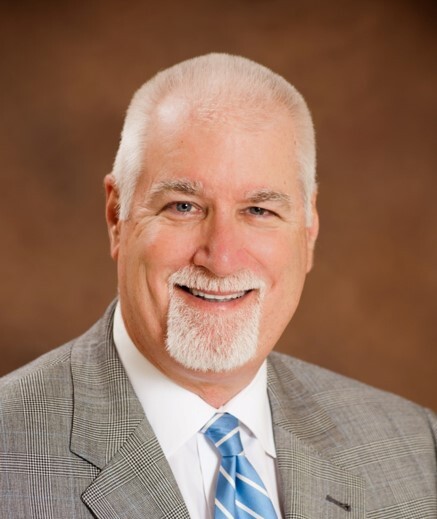
Bob Gardner
Bob Gardner, CLU, ChFC, RFC, has been a practicing financial advisor for more than three decades. As president of WSG Advisors, he focuses on comprehensive wealth management for retirees and pre-retirees. Committed to helping people live their ideal lives in retirement, he has conducted more than 320 seminars and workshops since 1997, along with more than 4,000 consulting interviews with individuals in or nearing retirement. A native South Carolinian, Bob and his family have lived on Hilton Head Island since 2004.
📚 Books by Bob Gardner
Transcript
[0:00:25] NVN: In the three plus decades he’s worked in the financial industry, author Bob Gardner has witnessed it all. Wildly fluctuating market, shrinking social security, and the decline of pension plans. In his new book, Income Bliss. Gardner maps out how you can plan for comfortable retirement that protects you from volatility. Whether you're making millions or living paycheck to paycheck, Gardner says you can thrive in retirement and in this interview, we talk about how you can make your blissful financial future a reality. I am sitting down today with Bob Gardner, author of Income Bliss and Bob, it’s such a pleasure to have you on Author Hour, thanks for being here.
[0:01:05] Bob Gardner: Thank you for having me, I look forward to it.
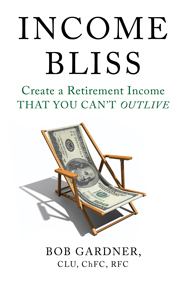
[0:01:08] NVN: I got to say, I love your cover first and foremost, it’s like a lounge chair slung with a bill of money and it just looks very relaxing and rich — all at the same time.
[0:01:20] Bob Gardner: I’d like to say I take credit for it but I can’t, it’s the staff that helped me write the book that came up with the idea which I thought was pretty well posed for what we’re trying to accomplish here. You know, if you do this right, you can enjoy your retirement, if you don’t do it right, you probably are not going to have much retirement to chat about. In fact, you’re probably going to end up working a lot longer than you think. It ended up looking pretty good.
[0:01:40] NVN: Yeah. Your book is geared toward people who have begun retirement or people who are planning for their retirement. Tell me a little bit about what inspired you to begin the journey of writing a book?
[0:01:54] Bob Gardner: I’ve been in the financial advisory business for almost 40 years. My business changed as well as I got older. We work with a lot of retirees and pre-retirees. I live most of the time in Hilton Head Island, South Carolina, which is a retirement community. Naturally, you’re going to have a lot of older folks — then people have moved from all over the country to enjoy the southern lifestyle, the ocean, the heat, the humidity maybe and things of that nature. But what really inspired me to do this is I find that people decide to focus on planning for retirement about an hour before they retire. It’s most times too late to really take advantage of some of the things that you can do. But to really make compound that mistake is that they do a lot of the incorrect things once they are retired so a lot of our job I guess is to really fix bad planning, lack of planning, poor advice, you name it. And that’s what I think we do very well and I saw that as this is not being taught in school. We thought it would be good to get the book like this in the hands of retirees, pre retirees and someone 30 or 40 years old so they can just start to look at what they may encounter later on if they don’t take action today. That’s really where the book came from, the idea.
[0:03:22] NVN: Let’s give the listeners an idea of your personal background. You’ve been working in finance for over three decades. What kind of changes have you seen?
[0:03:32] Bob Gardner: Well, I think, changes in two ways. One is the changes that you go through as an advisor because when I came into the business in the early 80s, there was no real financial planning career, I guess outside the major cities, Chicago, LA, New York, places like that. But in South Carolina where I practice, there was no such thing. You were either a stock broker or an insurance agent, that’s really the way you got into the business and I came in through the insurance side but I quickly found that you needed more ammo in your arsenal, you needed to do more things, you needed to take care of more problems for your clients. It’s a lot different dealing with the problems that a 30 year old has than a 60 year old because when you're young, you can make mistakes because you have time to overcome them. That’s why when you lose money in the market or you make mistakes, you know, that ends up costing a lot of money, it’s painful but you have time on your side. And when you’re within five years of retirement, we call it sort of retirement red zone. Five years before retirement to five years after retirement. You quickly find out that there’s no do overs. In fact, you can’t go back and you can’t create money if you’ve lost hundreds of thousands of dollars in the market. And we saw that of course in 2000 to 2002 with the .com crash and we saw that again with the banking crisis in 2008 and 2009. People are not prepared for those massive changes in the market and we get brave and up until March of this year, we ran the longest bull market in the history of the American market and we can see that nobody could see COVID-19 coming. There’s no question about that but we knew the market was a little bit over valued but when you add the issues with social issues we’re having, the virus and some of the other things. It does not bode well in the short-term then it’s a good time to be safe.
[0:05:28] NVN: Yeah, and so much of your book is focused around making sure that readers understand not just how to grow their wealth but really, how to protect it and how hard do you think that mindset shift is for people to make?
[0:05:41] Bob Gardner: This is a lot harder than people say, when you ask them that question, because we are taught — and 99%, I would venture to say, of advisors are accumulation advisors. They teach clients how to grow their money and I would say to you that that’s the easiest part because time’s on your side if you invest. There’s a million different investment tools out there and ways to invest and if you stay the course, you're probably going to make money. The problem is, when you start to distribute that money. And I equate it to climbing Mount Everest, and I would ask you this, “If you were going to climb Mount Everest and you were going to hire a Sherpa to guide you, would you want someone that has a lot of experience getting to the top? What is the goal?” Everybody says the goal is to get to the top but I would say the goal is to get back down, wouldn’t you?
[0:06:27] NVN: The goal is definitely to get home safely.
[0:06:30] Bob Gardner: I wanted someone who has had experience getting me down that mountain. That’s what retirement planning is like, you’ve had your whole life to save and grow your money so that you can utilize that money in retirement when there are no more working hours and there’s no time to make up on mistakes. Yet, typically, your typical advisor has no experience in doing that, they don’t’ know what they’re doing, they know how to accumulate money, they don’t understand risk and consequently, a lot of people that we’ve talked with, especially in Hilton Head is people who are taking way too much risk. And all of a sudden, when they come to see us, they’ve lost 20, 30, 40% of their wealth and you can’t get that back because you don’t have time. So you have to readjust their goals a little bit and one of the things I do in the book is I do have some stories about that. Actually, the first story that I have that opens the books up is about a client that was the poster child for this, to be honest with you. I can get into that later but basically, he made all the mistakes that we’re talking about and he compounded them by not listening to us when he had the chance to and he came back three years later and we did help them but not at the same level we could have had he taken our advice early.
[0:07:43] NVN: Yeah, you’re right about how important teamwork is and partnering with a financial advisor, how important that is. And that example that you lead the book off with really stuck out to me as someone who wanted to go off — and kind of do things their own way and do things by themselves. I wonder how often you find people think they can go it alone and don’t really realize the value of partnering with a financial advisor.
[0:08:10] Bob Gardner: People don’t like to spend money, especially on money. We all come wired from the factory with the idea that we can do this and that this is easy. I’m not going to say it’s hard but it’s difficult to maintain the discipline to do the right things when, you know, when bombs are going off around you and that’s kind of what happens to people, they’re long-term investors until we have a little dip in the market and then they panic and they do the opposite thing they should, instead of buying low and selling high. It seems like the reverse is true and you’re always better off working with a professional and I don’t care if they have our same philosophy or not. Working with a professional typically works better than someone doing it alone. Now there is the rare individual that does really well but I’m going to tell you in 30 some odd years in the business — and I have over 5,000 initial interviews with retirees and working with hundreds of them over the last 20 or 30 years. I can tell you the proof is in the pudding. The people who go it alone usually wind up on the outside looking in when it comes to enjoying their retirement years.
[0:09:18] NVN: What do you mean by that on the outside looking in?
[0:09:21] Bob Gardner: Basically, they do everything wrong, they listen to the pundits which is very dangerous, to be honest with you. They listen to Wall Street when the only people that Wall Street is concerned about are the people in Wall Street. I’ll give you a specific example, one of the things that’s touted in finance is something they call ‘systematic withdrawal’ from a portfolio and to make it simple for analysis is — let’s say that you own 10 stocks and you had a million dollars in those 10 stocks and you need $5,000 a month to live on. Every month, you sell enough stock to get the $5,000 that you need to assist in your retirement income. Well, if you think about that, that guarantees that you're doing the wrong thing at the wrong time every time and let me show you what I mean on that. When the market is up and you have to liquidate shares for the $5,000, you’re liquidating fewer shares when the market is up, correct? You don’t need to sell as many shares so when you should be taking a profit by selling more shares when the market is doing extremely well, you're doing quite the opposite. Now, let’s say you need to take your $5,000 withdrawal when the market is down. When the market is down, you have to sell more shares to receive the $5,000, so you were selling more shares at a loss. Which is stupid but people do it every day. If you follow that philosophy, you are consistently doing the wrong thing at the wrong time, every time. I can’t tell you how many people that I’ve seen follow these strategies and they come to see us — typically it’s too late. They dipped into their portfolio too much. They can never have the same lifestyle they had up to that time. That’s the same thing that happened to the first gentleman that we saw. He came to see us three years before he took action with us. We showed him a very boring strategy that always works and he said I can’t live on that amount of money. Now, I said, well, I said I’m telling you the truth, I’m giving you a reality dose here. And then when he came back to see us three years later, he’d lost almost 50% of his income, actually, 60%, I think it was. And he ended up crafting a plan for him that was much less than we could have gotten him, had he listened to us the first time around. But it took the pain of losing. He said his hair was falling out, his wife will not speak to him, he couldn’t sleep, I mean, all the classic things you hear when someone has lost quite a bit of money. He’s still a client and he’s happy he took action when he did that he was just — he would have listened to us years before and we are not the only ones that do is. We are not saying we’re the only advisory firm in America you should work with but we’re pretty good at what we do.
[0:12:09] NVN: And just to frame the severity of that client’s situation, you write how he basically sold all of his stocks at the bottom of the recession and so that accounts for some of that 60% loss, I assume.
[0:12:23] Bob Gardner: He actually sold his portfolio on either the lowest day of the market in March of 2009 or this day before the lowest day but he got out at the absolute bottom. And it was to the point where he just could not take it longer. And just give you an idea of the market rebounded that year and finished up over 20%. So had he just stuck around a little bit, which is what we would have told him. I said, “Look, let’s go and cement this loss by selling” — but it was too late by the time I’d seen him he’d be sitting in cash. And not only did he sell at the low, he missed the run up. So that is why he ended up about 60% down which is really peak at the trough what that bear market did from October of 2007 and March of 2009. It was a painful lesson that we had him as an example in the book but I could give you 10 like that just not that severity.
[0:13:19] NVN: One of the things you said just now about the reason that he chose not to go with you is that your plan wasn’t going to make him money fast enough and wasn’t going to give him enough to live on for what he wanted. How hard is it for people to identify realistic goals in retirement?
[0:13:37] Bob Gardner: People want more than what they want. So they don’t want to be reminded that they did not do the hard — the hard part in all of this is saving the money — is the discipline to put money aside when you are working to get the rent in, employers-sponsored plans or savings or investments, real estate, whatever it is you want to utilize. You can’t just be cavalier about that for 30 years and all of a sudden snap your fingers and everything is okay. And that’s what happens quite a bit is people do not have discipline. I always tell them, all of them, I say you know the hard work is the work that you have to do. We just assist you in making sure that you can distribute this money in the best method possible. Our plans are boring. I will be the first to tell you that. I don’t like leaving client’s money. I don’t like big surprises where they come to see me and say, “You know I thought we were going to get this.” That never happens with us. Because they do know they do see that our plans are going to work. Now, will another adviser promise them a plan that is going to work better? All the time but it never does or if it does it is short-term. We’re realistic. We use realistic goals. One thing about Income Bliss — the report gives you something to measure. As you know at the end of the book, we have a report in there. Just a sample report, it is an actual client. We change the name to protect the innocent but it is a plan that works for their life and nobody wants their money to expire before they do.
[0:15:04] NVN: You write about how there are three basic buckets that retirees need to plan to fill as they figure out their financial planning. Income liquidity and legacy, of those three, which one do you think is most overlooked or undervalued?
[0:15:20] Bob Gardner: Liquidity by far because if you don’t have liquidity — which is just money sitting on the side. And you have to invade the income plan itself, the plan is going to fail. For instance, I’ll give you my own example, my own liquidity story. When we moved to Hilton Head in 2004, we’ve never lived on the coast. We didn’t know what salt air does to appliances, really any equipment. So in the 7th year of our home, our three main air conditioning systems all went out. One went out early, the big one that the majority of the house and then right behind that we had a smaller unit that handled our end, the master bedroom and everything. And then the upstairs had its own unit and when we started finding out how much these things were to repair, we were shocked. So we made the decision that we’re going to get the top warranty we can have out there and we spent $50,000 on our air conditioning systems. And we have great warranties and we’ve had to use them. But quite honestly, nobody pencils into their retirement plan that in year seven, we are going to have to take $50,000 from somewhere to buy air conditioning systems for your home and everybody has their — you know it could be a wedding. I had a friend that spent $230,000 on his daughter’s wedding. You typically don’t keep that in a checking account. So when you start invading your plan for liquidity issues, your plan will fail. So we tell people all the time you need to have — you know there is no rule of thumb and it’s really a percentage of assets is a way we look at it but you certainly need a year to two years of income sitting on the side, even if it is earning a very low interest rate. Which everything is right now. So, legacy, if I may go ahead and cover legacy, income is easy, everybody wants the most income they can get. They are willing to try and do whatever they need to do to get the income. Legacy is kind of a reluctant goal, if you will. I can’t tell you how many people I’ve had that told me, “You know my kids are better educated than me, have great jobs. I don’t worry about leaving them money. As a matter of fact, I'd like my last check to bounce when I die. Can you do that for me?” And I say, “Sure, if you can tell me when you are going to die I can make that happen.” You know I have been in business for 30 some odd years. If somebody is worried about when they’re going to die, they need a shrink. They don’t need a financial adviser. So yeah, we could do that and that’s a joke and the reason people joke about that is they don’t want to address it because they know if they are going to talk, if we are going to talk with them about leaving a legacy that is going to require capital and they don’t want to commit to that but at the end of the day, the last thing we ask people and we are going down that trail is, you know the Federal Government has a plan for you. You can either leave your money to your children, your grandchildren, and charity or 350 million strangers. Or 400 million. Who knows how many people are actually here anymore. I don’t think we have a handle on that but that is the default plan for legacy in our country. Now what I find is most people don’t mean that but if they commit to that being a problem, then they’ve got to have the capital to solve it and they don’t want to do that.
[0:18:37] NVN: You write that your book is both for people who are living paycheck to paycheck and all the way up to people who are making millions. I imagine though that those two groups have different concerns and different ways of approaching their financial planning. What are some of the major differences you see?
[0:18:55] Bob Gardner: Well, if you live paycheck to paycheck, it’s really — your retirement is going to be similar at best. Because of your condition in that. It basically says you have no discipline. I don’t buy this, maybe I am wrong in some situations but I think anyone who’s had a decent job and they’ve maintained their employment, they have a wherewithal for a retirement that’s going to meet their needs. And we take care of the less fortunate. Maybe it is not the same a lot of money but we do have social programs Medicare and Medicaid, social security to take care of that but when you get into investing your own dollars and having a financially better retirement, doesn’t mean you have a great retirement, but it does mean financially you do then you know what it depends. If you have modest means you are typically going to be satisfied with the modest retirement. If you are very, very wealthy, obviously you want to keep that lifestyle in retirement and the sad thing I see, especially — the hardest people to work with are high-earners and low-assets, meaning they’ve lived very well. They made a lot of money but they haven’t saved any money. So those people have a shot coming towards them. When they do retire and they make all the excuses of, “You know, we have travelled in our entire lives. We won’t need to travel. You know we just go domestic. We won’t go international. I am not going to drive a Mercedes anymore. I am going to go back and drive an American car.” And you know, “We don’t need a house this big.” And basically, euphemism for failure they don’t know what they needed to do and what happens is now, they are paying the price for that. So by the same token, we have clients that are net savers on top of a very, very good retirement. They are actually saving money. I have one — I am thinking of a lady that I am thinking about right now who has more, much more in assets today than she had six or seven years ago when she started with us. And she does everything she wants. She goes on more cruises than I’ve been on, let me tell you and she enjoys life but she doesn’t waste money either. She owns a beautiful home but because of her pension plan and social security and some of the investments we have around her supply and income, she is doing extremely well. We have the other ones too. We have the ones who are hard to help because if they had not accumulated assets, you can’t pull a rabbit out of our hat.
[0:21:07] NVN: Well Bob, thank you. It’s been such a pleasure to talk about your book and what you’re doing. The book again is called Income Bliss and besides checking out the book, where can listeners find you?
[0:21:20] Bob Gardner: Well, they can find me in either our office here in South Carolina. Our website is www.wsgadvisors.com. My email is bgardner@wsgadvisors.com. I’ve had the same email for 24 years, which means I get a lot of garbage emails but I don’t want to change it and we have clients all over the country. We don’t really market to people in California, Montana, Texas or areas like that but we have people who move there. Arizona, I have a client just outside Tuscon as a matter of fact.
[0:21:51] NVN: Oh wow, my neck of the woods.
[0:21:53] Bob Gardner: Yeah, so we are here to serve and we have a specific philosophy, as you know from the book. So if people read the book and it’s a primer for people too. I think if you really read the book, you can actually execute most of the strategies that we talk about. We don’t get into products because products don’t matter. To be honest with you there are a million products out there and people are starving to death. So that proves right there. The same thing as diets. When there is a million diet books and people are overweight in America because they don’t do the two basic things that we all need to do, which is eat less and move more. Retirement planning is really very similar. We wanted to write a book that if you really wanted to you could follow that book and you would be in a better position financially than you were before reading the book. But I do think it makes sense to work with a planner because they would typically earn their money by making you more money and making it safer for you. And at the same time, a good planner earns his money that doesn’t cost you. Everybody equates cost with that. If you are working with a good planner, they’ll more than pay for themselves and that is what I hope we do and I think if you ask my circle of clients they would say yes to that.
[0:23:05] NVN: Fantastic. Well thank you Bob and thank you for your book.
[0:23:08] Bob Gardner: Thank you very much. I enjoyed it.
[0:23:11] NVN: Thanks for joining us for this episode of Author Hour. You can find Income Bliss, on Amazon. A transcript of this episode as well as all of our previous episodes is available at authorhour.co. For more Author Hour, subscribe to this podcast on your favorite subscription service. Thanks for listening, we’ll see you next time. Same place, different author.
Want to Write Your Own Book?
Scribe has helped over 2,000 authors turn their expertise into published books.
Schedule a Free Consult