Saqib Qureshi: Episode 488
Read the full transcript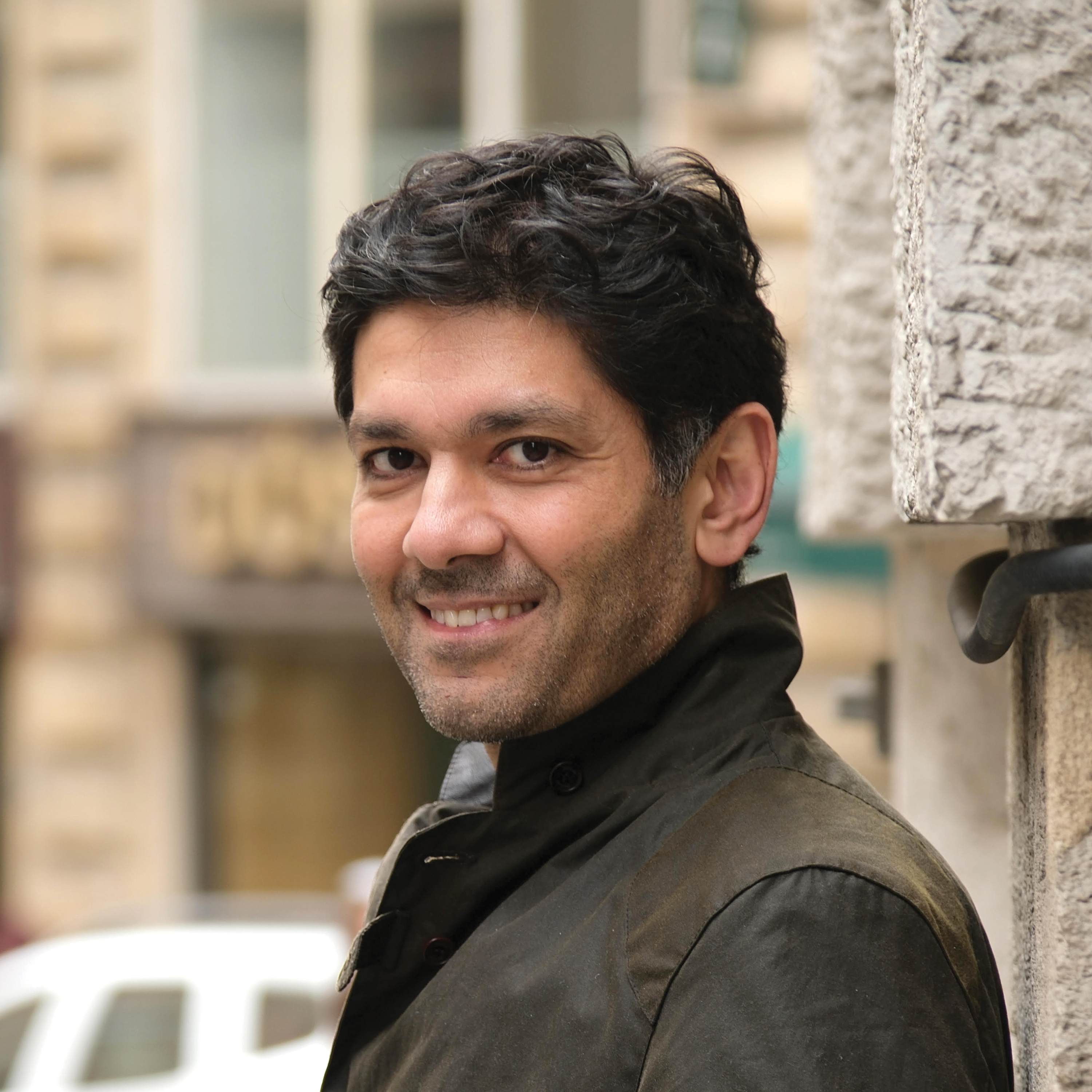
Saqib Qureshi
Saqib Qureshi is an investor, author, and entrepreneur who has worked across three continents in investment banking, academia, management consulting, and government. He has developed over $100 million in real estate and is an active angel investor across technology, healthcare, and fintech sectors.
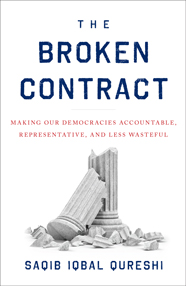
📚 Books by Saqib Qureshi
Transcript
[0:00:30] MR: A democracy should reflect the views of its citizens and be a direct connection between government and those that it serves, right? Why more than ever does it seem as if our government exists in its own bubble. Detached from us, its own citizens. It’s left many people fed up with the system they no longer trust. Saqib Qureshi in his new book, The Broken Contract, points out a lot of the problems with our current democracy, including the fact that there is no incentive for politicians to make government more accountable, efficient, or representative. Fortunately for us, Saqib provides many different approachable solutions we can implement to turn it around. After decades of working in government, management consulting and investment banking, as well as experiencing the dysfunctionality of democracies in different parts of the world. Saqib began a journey beyond the surface of democracy and into its roots. In today’s episode, he shares with us what democracy is, how we’ve gotten away from it and how we, as a people can reclaim it. Hey everyone, my name is Miles Rote and I am excited to be here today with Saqib Qureshi. Author of The Broken Contract: Making Our Democracies Accountable, Representative, and Less Wasteful. I like the sound of that. I think we need that in today’s world. Saqib, I’m excited you’re here, welcome to the Author Hour podcast.
[0:01:58] Saqib Qureshi: Thank you Miles, I’m excited to be here too.
[0:02:00] MR: I want to jump in and start talking about everything but first, let’s start by just giving everyone a little bit of background on who you are.
[0:02:07] Saqib Qureshi: I now live in Toronto with my wife and three kids and had quite an eclectic background in terms of experience and geographies that I have lived in. I spend six years in Dubai prior to my decade here in Toronto and — born in London, where I lived most of my life so geographically, I could have lived around a fair bit and I’ve had stints in investment banking, management, consulting, Ph.D., working the government and now, I work as an entrepreneur. I have my own business, we started back in 2011 developing real estate. I kind of look at things from a wide range of viewpoints and perspectives and I find that quite useful actually.
[0:02:53] MR: Yeah, so with that eclectic background and thinking about things from that level, what inspired you to write this book specifically?
[0:03:02] Saqib Qureshi: I think what really got to me was the realization that we as citizens are no longer, or we’re not at the center of our government. Kind of the realization that democracy is so much more than the simple act of voting. I came to the kind of conclusion that you have, essentially in the west, you’ve got systems of governance which are called democracy but you don’t really gravitate around the people. There’s almost a kind of a game being played out well away from us. We are pawns in that game but we’re not really the center of our own political process and as a result of that, there are a whole host of injustices that take place. Economic injustice being just one example but there are others as well where because the people really aren’t any really the center of their political fate, whatever transpires is kind of — really up to the politicians and civil servants that want to do what they want to do by and large.
[0:04:12] MR: yeah, before we jump into all of the different ways I think that’s happening. Let’s start by just really defining democracies so we have a solid foundation going forward as we have this conversation. How would you define democracy?
[0:04:24] Saqib Qureshi: Yeah, that’s the big question. To me, you know, democracy is really people power. Political power belonging to the people. By definition, what I’m saying is that you can have democracy and have no elections. You can’t have elections and yet have no democracy. Elections, people kind of treat us anonymously with democracy and I think that’s a mistake because elections are a means to. They’re a particular path that you could take to achieving the rule of the people. And the rule of the people, yes, we can have a debate as to what that might look and feel like but in essence, the citizens of a state or a province or a country being very much at the center of their political future. They must have political power and not subordinate that power or delegate that power or give it away to an unelected civil service and a bunch of career politicians. Democracy, like I say, is not necessarily tied to the act of voting. I think that’s the big mistake we’ve made or that we are making is that we’ve kind of said, well, we vote, therefore we’re democratic, you know? That’s part of the reason why you’ve got countries like North Korea who quite openly say, “We’re democratic.” And part of the reason we’ve got other countries in the western liberal framework who say the same thing. But you know, they’re kind of missing the woods through the trees here because the act of voting, and I say this again, is not the same thing as having political control.
[0:05:59] MR: Right. One way of thinking of it too is just because you have a democracy, doesn’t necessarily mean that it’s a functioning democracy. What would it take to then have a functioning democracy. If it were people-centric, then what does it even take to be functional?
[0:06:16] Saqib Qureshi: This is a huge debate and I don’t think it’s particularly practical to go back to the ancient Athenian model where [inaudible] — and granted that in the Athenian definition, citizens excluded women. It excluded a bunch of other people. Slaves, being another example but I don’t think it’s practical to have the entire government fabric being daily administered by ordinary people. We have our lives to lead. But what it does mean, I think for us, particularly in the western liberal framework, is that when we talk about democracy, we really kind of boil it down to accountability, representation, and essentially, not wasting our tax dollars. Those are kind of three key buckets that when we are talking about democracy, we are talking about people power. We mean, what was running our government for us has got to be accountable to us. Elected politicians as well as the bureaucrats. What we’re also saying is that the government and particularly the influential end of government needs to represent the people. Both in the sense of — be representative of Joe public but also representing constituents, actually advocating for them and not being browbeaten by party whips. And the political party system. And the third piece is around waste. You know, the amount of waste that takes place in government, both on big projects but also on an ongoing humming basis is catastrophic and we often lose sight of the fact that taxes aren’t just paid only by people who are rich and wealthy but taxes are paid by, in many cases, people who don’t have a home to live in. You know, homeless people, believe it or not, pay tax, they pay tax on basic products that they purchase, sales tax. There’s a massive moral responsibility to make sure that the tax dollars that are put together are spent efficiently and effectively and there ought to be some kind of recourse, some kind of correction when that doesn’t happen. I don’t think it’s feasible, let’s say in the US, to have 380 million people or 350 million people whatever it is, go out there and decide every single piece of legislation. Even in the internet, IT era that we live in, I think it’s a bit impractical. But I certainly think for instance, there’s no reason why ordinary Americans don’t define their budget, their federal budget. I don’t think that's a big ask and we can do it, everybody has a smartphone, you just type in what percentage of your total tax dollars need to go to defense and need to go to health and safety and need to go to, you know, law and order and all the rest of it and then that is a say. You have a very big say on a very simple point. You’ve kind of put your foot out. As it is, most Americans think that 30% of their taxes go to foreign aid, they’re so removed from the reality of their government and that they don’t even know what the government is spending their taxes on. That’s ironic because it’s like 1% of taxes or you know, 1% of the tax accumulated at the federal level goes to foreign aid and a huge chunk of that is really about American export, it’s not about really aiding the country’s on their own term or aiding the poorest end of humanity on its own terms. That disconnect is just so profound that you got to ask yourself that if you don’t even know what your government is spending your tax dollars on then are you really — do you really have anything comparable to what’s people power?
[0:09:58] MR: Yeah, I feel like the lack of transparency can be the thing that really makes it so hard for Americans, or even people of other countries, even have an understanding of these things. I feel like there’s even more — and correct me if I’m wrong, transparency with corporations and even those feel pretty privatized and guarded off. As far as ways, you offer a lot of great examples in the book of how we can reduce waste in government as well as many other recommendations to help us get back to democracy but before we jump into that, why do you think our democracy has failed us to begin with?
[0:10:38] Saqib Qureshi: You see, the thing is that our democracy is better now than it was a hundred years ago. We have greater accountability, we probably have more effective and efficient allocation to resources and almost definitely better representation in our legislatures, in our executives, in our judiciary, and the broader civil service should I say, than we’ve had a hundred years ago, 200 years ago. We’ve improved but I think, what’s changed in the last 20 years is by virtue of the internet and information technology and social media, we are way more aware of the gaps than we were 20 or 30 years ago. If you wanted to find out, let’s say, in 1980, you sat on your seat and you really wanted to find out, well, how many legislators in congress are women? You don’t sit there on your computer typing 10 words and see a bunch of authoritative news sources. No, what you do is that you may run off to the library. You may go to the local federal government office. Look through a bunch of bits and pieces and then come back, you know, the entire exercise takes hours. Now, it’s instant. We are way more aware of a major government piece of waste. We’re way more aware where there’s a lack of accountability. Somebody spends a hundred million dollars in the project, the project gets canceled, taxpayers will have to pay. Now we know a hundred million dollars was wasted. That 30 or 40 years ago, with a more compliant media, with less proliferation of technology. of social media, information technology. We didn’t know. It’s an important point to kind of make. We are no less democratic than we were a hundred years ago. Probably more. But we’ve hit a point where not only are we aware of the deficiencies but the deficiencies are costing us an awful lot and we’re aware of what they’re costing us. For instance, the globalization and free trade agreement that took place really in the 1980s would not have gone the route that they have in terms of generating wealth for the elite, had we had a political framework or a better democracy which involved more middle-class, more middle-lower class people than we have. You see, globalization has really benefited an elite, it’s done very little in terms of per capita real income growth for the vast majority of people in the west. And there’s a reason for that because the people who ran the political mechanics during that globalization process thought like, and were, typically quite wealthy people from wealthy families with wealthy connections. I think we are now seeing that being played out. But the people are getting frustrated but look, you know what? Our politicians don’t really — I mean, the entire system doesn’t feel as if we’re at the center of it. And we’re not really, financially, doing too well. We’re kind of just scraping where we were from 10, 20 years ago — whereas, a bunch of people are out there hitting close to a trillion dollars. Well, not a bunch but at least a few of them are now knocking on the door for a trillion dollars, you know? All of that kind of compounds the frustration that I think the average citizen now has and hence we are seeing a real collapse in the last 10 years, 15 years with respect to our appetite for the system that we call democracy, but is not really.
[0:14:07] MR: Yeah, I think you bring up such a good point with technology. There’s so many aspects to it and I guess that’s part of just living in a very technological, exponentially technological world but one of those things is, as you mentioned, it’s so easy to get access to information but one thing you talk about in your book is in 1992, there were 130 websites and today, there are more than 1.5 billion. So, when people do go to find their news, how do we know what’s right and what’s not and how is their perception of government even formed?
[0:14:42] Saqib Qureshi: Yeah, this is a real cow’s mess because every election cycle, we see the same polemic, we see each candidate making up things, twisting information. You’ll see a bunch of complete falsehood, you’ll see a bunch of semi-truths, a bunch of truths as well you know? It’s not as if they’re completely lying but there’s an awful lot of firehose detail which is thrown out to Joe citizen upon which that person is supposed to make a coherent decision. And it’s just — I think, you really got to ask yourself that given the proliferation of information sources and within that proliferation that I’m really referring to the proliferation of false news or news that doesn’t really care about where it’s accurate or not. The politicians are doing the same thing, because let’s face it, there is no downside now for lying. There’s literally — politicians can lie publically and face no consequences. We are in that reality right now. You’ve got to ask yourself, that if that’s possible, then what is the point of having an election process where you really are just making stuff up and getting away with it. It doesn’t really seem to stack up. I think you got to start penalizing. You actually do have to start penalizing for nonperformance. I mean, the UK has a prime minister who had been sacked several times for lying. And I employ people, I don’t really have the appetite to employ people who have been set several times for lying. How is it that we have allowed for this? And I think we’ve got to raise our game as citizens and say look, you know what? I don’t know if it happened, if this happened centuries ago or not but I can tell you that I don’t really want to have a political system, a democracy where all of the information is just a mess and politicians can lie without consequence, we’ve got to change this. Otherwise, we’re going to end up in a worse situation where we’ll have even less effective politicians, even less trustworthy politicians, dragging our political system down. An awfully bad sewerage system, you know? And then, we will just counter react, there will be extremities of responses. The likes of Hitler didn’t come forward in an environment of peace and stability. This is an important point to make. You don’t — your lunatic fringes don’t do well when things are good and proper, they do remarkably well when things are a shambles. That’s, I think, what we’re seeing — elements, at least in the fringes now of those extremities. People who are just like letting their frustration out, taking extreme positions, appealing to angry emotions, irrespective of the underlying realities, and pushing the agenda towards more and more difficult and uncompromising situations.
[0:17:37] MR: Yeah, everything you’re describing right now feels like a very good description of America. Now is this something that you’re seeing globally? You mentioned in the UK, they would get sacked for lying and there would be actions taken, so do you feel as though this is something systematically happening globally? Or is this more of an American problem?
[0:18:02] Saqib Qureshi: I focused in my book, on five countries, the US, the UK, Canada, Australia, New Zealand. I think the two countries where it’s happening more are the UK and the US. A lot less so in New Zealand and a lot less so in Australia and Canada. I think Brexit is really a wonderful manifestation of that — “Let’s shoot ourselves in the foot because it makes us feel good” reaction. You have the people who campaigned for Brexit made up a pack of lies. We know that. Now, they’ve made those lies up, they communicated those lies, and they’ve literally gone to the pub all cheery, happy, and all the rest of it. It will be for the British people to carry that can. They will carry that can and they will be a heck of a lot worse off for it. You’re kind of seeing this movement towards angry — I don’t want to say, removed from reality, but certainly kind of, “We don’t care what the facts are but we’re just going to get angry and annoyed and we’re frustrated because our incomes haven’t gone up and we’re frustrated by the foreigner, frustrated by not having a voice.” I think that is very much — we are several steps down the road from that in the UK and the US. I mean, Donald Trump can, I mean he, according to the Toronto Star, lies 8.6 times a day on average since his first day of office. Now, that is just an incredible statistic. You really got to ask yourself, how. If the Founding Fathers of the US, if they’ve been forewarned, one of your next presidents is going to end up lying 8.6 times a day. I think they might have collapsed. Really, honestly. There’s no way. We’re the check and balance to it. Who is stopping it?
[0:19:51] MR: Right. Part of the problem is, there is such distrust in our democracy that people don’t even have confidence to vote. I mean, that’s part of the issue.
[0:20:00] Saqib Qureshi: Yeah, there is a lot of distrust in our democracy and I totally agree with you and I think the fact that politicians, the career politicians, have mastered the art of being elected, of re-electing and being re-elected for the 5th time, for the 6th time does our democracy no favors. You know we are — fed up is the right word — with our political situation. Sort of with our governance. We rightly think that our politicians, by and large — I don’t want to use the word useless. But their track records and their previous existences and their previous professions aren’t much to brag about by and large. And we are also set out with them lying, spinning not accepting responsibilities for when things go wrong. It is a very fair state of affairs. I mean if I was running a business and it was — and it had the characteristics of the democracy that we have in Canada or the one that I have experienced in other parts of the world. That would be — you know what? This doesn’t stack up. It is just morally wrong, it is ineffective. One of the things that hits me quite often is this piece around, look, there are many, many people out there living in poverty in the US, in the UK, in Canada, Australia, and New Zealand. They end up subsidizing, they end up financing this mess because they still have to pay sales tax if not income tax. They still have to cough up to the politicians and to the civil servant irrespective of their own personal wellbeing. And that’s a tragedy I think that is often overlooked. The fact that, I think in the British parliament, only one person out of 600 odd MP’s has ever been homeless and that too was the individual who spent a week voluntarily. There may be a second person and also I think in the US congress as well in the senate and the house. I think it has been one person who has been homeless. And it gives you a flavor as to okay, you know what? How are you going to understand the problem of the homeless beyond an academic textbook exercise, if you haven’t any lived knowledge, any visceral knowledge of these issues. So the homeless and those in poverty, that community, really, I feel for them because they take the full weight. They take more of the weight than the upper-end than the upper economic end of western democracies in shouldering and financing our pseudo-democracy.
[0:22:33] MR: Yeah and so now that we’ve identified a lot of the problems and we could see that other countries are doing things better, let’s get into some of the ways that we can improve this democracy and maybe take it out of the realms of pseudo-democracy. So what are these other countries doing better? You mentioned the UK and the US struggling but other countries aren’t as much, why are they doing better than we are as far as being more representative and more democratic?
[0:23:00] Saqib Qureshi: So I think with the US, money talks. The way that the US Supreme Court has defined it, is that money within the political system is a function of freedom of speech. In Canada for instance, it is not actually very, very hard for an individual to donate. I think it is more on the five or $6,000 per year into the federal political process. I think it is a bit lower than that actually. So, whereas in the States, you can just pay whatever you want and obviously get your ambassadorship afterwards. You could pay whatever you want and you could buy all the airtime. And by definition, if you have contributed a million dollars or $20 million, you will have way more sway on policy than 100 other citizens who are ordinary middle-class earners. So the quantum of money that is swirling the American system in particular is simply alarming. And what is interesting is that no politician is incentivized to challenge that. Why? Because elected politicians, by definition, have a massive advantage in further fund raising. So if you turn up to your elected politician and say, “Hey look guys, we want to put a cap on the amount of money that goes into our political system because it is quite corrosive,” what you are saying is, “Hey guys, we want to reduce the one big huge advantage you have at every election time.” So you’ve got to be nuts as a member of the legislature to sign up for that. Your party, for instance, is going to blow you out of the water. So we know for instance that Americans want to see spending caps within their political parties. We know that from survey after survey after survey and there is a profoundly obvious reason why that is not effected. Why that very simple democratic will of the people is not put into play — it’s because the people who are already in a position to make that piece of regulatory or legislative change, it’ss not in their interest to do that. They absolutely have a huge advantage in fundraising and therefore outspending in the next election simply because they’re in the hot seat at this particular moment. So that is a huge piece in terms of you’ve got to put caps on spending. You’ve got to put caps on how much individual citizens can put into the political process. I would go so far that I’d actually ban organizations — like non-human being individuals from donating anything. I don’t see a good enough case that it overrides freedom of speech and this is where we have a very interesting challenge because you have to ask yourself, what are we protecting? Are you protecting people power or are we protecting the ability to finance whatever they want to finance? You know it is a very interesting clash here and I think I would protect the democracy. I would protect that in this particular instance because I think what you now have with the democracy, which is at least in the US, which is a really function of who writes the biggest checks.
[0:26:16] MR: Yeah. So first of all, this is a fairly new thing in the United States, isn’t that right? Wasn’t there limits on this before?
[0:26:24] Saqib Qureshi: I am not aware of when the limits were removed. I know the spending patterns in the last 20 years have gone through exponentially — a bit like the kind of revenue curve that a dot-com winner would like to see, frankly. And every year, I am just amazed at the quantum — not only that the president’s office, for instance, or the challenger to the president will spend but senators as well. Senators, in some cases 90 odd million dollars, I think in Texas was one in the last election. And that person as it happens got beat but you know $90 million on a senatorial campaign. You’ve got to ask yourself, “Are you spending that kind of money or are people giving that kind of money out of the goodness of your heart or their hearts?” It’s like, well no, obviously want something back from it. Something that dilutes or — corrupts maybe too strong a word but that probably may not be the worst word to use. The will of the people, what the people would want. And I think that’s a huge piece in the US around money but there are things we can do you know. It is not all doom and gloom. We can put caps on political spending and we can actually begin to track what our elected and unelected government officials do. I mean why can’t I see the daily diary of my MP. Why can’t I just see what he is up to or she’s up to? Actually in this case, in my particular case it would be a she. So why can’t I just see by double clicking on her diary? “Okay, so she’s got meetings today. Oh that is interesting, she’s got a meeting with this PR company, actually got a meeting with that potential big fat donor. Oh I actually got another meeting with another spin doctor. Okay, well that is nice to know.” Why can’t I just see what her Monday to Friday what her agenda is and granted, some of those meetings in some very specific cases, maybe, are very sensitive and confidential. Particularly with National Security issues for instance and you can block those. If an MP has a very specific sensitive role then bits and pieces can be blocked but I don’t see any reason why I can’t get online and double click that MP or senator’s agenda and see, “Okay yeah you know that is interesting this is what they’ve got in their diary.” And maybe even further, what did they actually achieved at the end of each meeting.
[0:28:41] MR: Right and then at the end of each term there is an excerpt in your book that I wanted to read part of. You opened it up by talking about, first of all, there is so much when it comes to “democracy” that is untouchable that we don’t actually elect but even the small percent that we are able to elect, they serve their terms and then they come back for re-election and we have no idea what they actually did or didn’t do the entire time they were there except for what to choose to share. And then of course even that fails to recognize that most of our representatives have almost no resources to actually follow through on the commitments that they wanted to do once they’re elected. So it just seems like this lose-lose situation and especially when you talk about money and politics, I feel like so many citizens are realizing and waking up to the fact that corporations have more say than they actually do as a part of their own government. But there is outrage and we can see some outrage but not as much as you would think with these things going on. Or at least that is my perception of it. Someone can cut you off in traffic and you can lose your mind over it but someone can contribute 20 million dollars versus your 10 dollars and really, do we have that same outrage? You know why do you think we aren’t more up and arms about some of these things?
[0:29:59] Saqib Qureshi: You know, I think a lot of it has to do with the wool being pulled over our eyes and not in a conspiratorial-conscious way but, I mean for instance, we seemed very comfortable that we have a democracy. Okay so yes, no, it’s all tickety-boo, we’re a democracy and those dictators are somewhere in some foreign territory don’t. You know but we are so used to kind of just that — we are so used to just telling ourselves that that we don’t actually question, okay what is democracy and what do we have? So there is a real, not historical luggage, but it is just the way we have become accustomed to seeing the reality that we live in. We think we have a democracy so therefore it should be good. But in actual fact when you can probe a bit further is that democracy that people power. Do we really have people power? The answer is obviously no, you don’t have it. And you can argue until the cows come home about alternative systems but right now we do not have people power. So, in answer to your question, you know, how have we allowed this and why didn’t we have outrage? It’s because, I didn’t think we are — I don’t think we are seeing it. I don’t think we are actually seeing the disconnection point. What we are seeing is evidence of anger and frustration and apathy about the system that we have. So democracy as an ideal or as a political system, should I say, has lost its luster for an entire generation of young western citizens. We simply, you know, the 20s and 30s group does not have that attachment to democracy that I think elder generations had. And I think that needs to start worrying, on a quite existential level, anybody who cares for our country as opposed to anybody who sat there twiddling their thumbs trying to win re-election. And I think, frankly my take, is unless the citizen body begins to connect the dots, I think we are going to end up with more volatile and more extreme politics over the next 10 to 15 years in the US. In the UK, maybe in Canada but I think Canada has smartly put together some measures. It’s not totally immune by any means but for instance funding caps, has put a few measures which insulate it from some of the stuff that is happening. But again, you know for instance I don’t want to put Canada out there as being a great beacon for this model going forward. I mean our MP listens to Justin Trudeau. Our MP doesn’t listen to — or in priority, does not prioritize individual constituents or the constituents you know. It’s the party whip that tells our MP what to vote on and when to vote.
[0:32:43] MR: Yeah and as you mentioned before, it is not all doom and gloom and even though we do have a very interesting road ahead of us it doesn’t mean things can’t get better or aren’t getting better in some ways. But something I really like in your book is, we are awake for 16 hours a day and if we just spent 2% of that day exercising then we can make a big difference over our health and wellbeing. And so even when it comes to the government, it doesn’t necessarily have to be these big things that we think of that change everything. But sometimes it’s just that efficient, consistent, every day change that can make all the difference. You offer quite a few things in your book about ways to improve government and one of them that I really liked is the idea of parallel competitive government departments. One thing about the government is because it is sort of monopolized, that doesn’t have a lot of competition. So what is an example of that and what do you mean by that, a parallel competitive government department?
[0:33:42] Saqib Qureshi: Okay, so our starting position is that monopolies are not good in the private sector. Our tolerance for monopolies is practically zero, okay? We have seen this time and time again — this is a cultural position that we have that monopolies in the private sector are bad news. Now I don’t see any good reason why monopolies in the public sector aren’t also bad news. I think any uncompetitive or noncompetitive environment does little to bring out the best performance in an individual or an organization. So that is my starting point. And so the next point is why has there been so little thinking done in this. Why have we spent so little time in figuring out how to effect, how to instill a competitive spirit within the public sector. There is no reason why we can’t do it. If we can have a competitive spirit brought into play in the private sector, there is no intellectual reason I can think of that we can’t have it in the public sector. Examples that we might consider, the example of public sector work that we may consider, with respect to competition would be, let’s say, the regulation of food and drugs. So you break the regulate through body into two, three, four competing bodies, and those two three four competing bodies compete at all levels including sourcing talent, including the health and safety of citizens, of residents, of whatever, okay? The organization that does well, it’s rewarded you know and the organization that doesn’t do well, well it is not rewarded. And I don’t really see why we don’t make the effort to put some thinking into this and experimenting with it because — it is no open secret but the public sector’s performance can pivot the private sector is so much weaker. I mean the number of sick days that you see in the public sector compared to the private sector in any western democracy, there is no comparison. I mean the federal government in Canada, I think the average employee takes off what, 18, 16 days per year because there are “sick.” 16 days of the year or whatever or 18. I don’t know the exact number but that is three or four weeks. That’s an awful lot of time to be taking off sick whereas in the private sector, the average private sector employee was that sick. I would imagine that there is a huge chunk of private modern businesses would collapse. You wouldn’t be able to cope with that kind of absenteeism but apparently the public sector obviously recruits people who are a little bit more ill, you know worst access to healthcare, worst access to good diet and exercises and all the rest of it. I get that. Obviously not but the point that I am making is that I don’t really see why you could not instill a competitive culture between organizations, breaking up these huge monopolies and given them very tightly governed objectives or indicators or kind of KPI’s or whatever to get them to do better. And not just, again, the people that they really owe this effort to are the people who are struggling to make ends meet yet are still paying taxes.
[0:37:13] MR: Right and it is such a good point and I love the idea of it and there are so many different ways I think we can look at what has worked in the private sector and apply that to the public sector and it feels just so obvious on the surface but of course there is always more to these things. But there are so many things in your book that you provide to help us get back to thinking about and even taking action on reclaiming our democracy. So thank you for writing this book. I think it is very timely with everything going on right now. I feel like the coronavirus has really put a spotlight on all of our cracks and faultiness within our democracy — or at least continues to highlight those. So it is a wonderful, timely book that I really recommend for people and writing a book is no joke. So first of all congratulations but if readers could take away one or two things from your book what would it be?
[0:38:07] Saqib Qureshi: I think the two things would be, number one, we think we have a democracy and we don’t. And number two, that we as citizens owe it to ourselves to step up to the plate and help fix that. It is our citizen responsibility to kind of step up a bit and demand that we have a democracy.
[0:38:26] MR: I love that. Saqib, this has been such a pleasure and I am so excited for people to check the book out. Everyone, the book is called The Broken Contract: Making Our Democracies Accountable, Representative, and Less Wasteful and you can find it on Amazon. Besides checking out the book Saqib, where can people find you?
[0:38:44] Saqib Qureshi: I have a blog, drsq.com is the blog that goes up typically every week and the details of the book are on that blog as well.
[0:38:58] MR: I love it. I encourage everyone to check that out as well as the book and you’ll find many different ways to start thinking about democracy differently and even realize that the way you thought of democracy in the first place was wrong to begin with. So Saqib thank you again and everyone check out the book.
[0:39:16] Saqib Qureshi: Thank you very much. Thank you Miles.
[0:39:19] MR: Thank you everyone for joining us for another episode of the Author Hour Podcast. You can get Saqib’s book, The Broken Contract: Making Our Democracies Accountable, Representative, and Less Wasteful on Amazon. You can also find a transcript of this episode and all of our other previous episodes on our website at authorhour.co. For more Author Hour, subscribe to this podcast on your favorite subscription service and thank you again for joining us. We’ll see you next time, same place, different author.
Want to Write Your Own Book?
Scribe has helped over 2,000 authors turn their expertise into published books.
Schedule a Free Consult