Jon Bostock: The Elephant's Dilemma: Break Free and Reimagine Your Future
Read the full transcript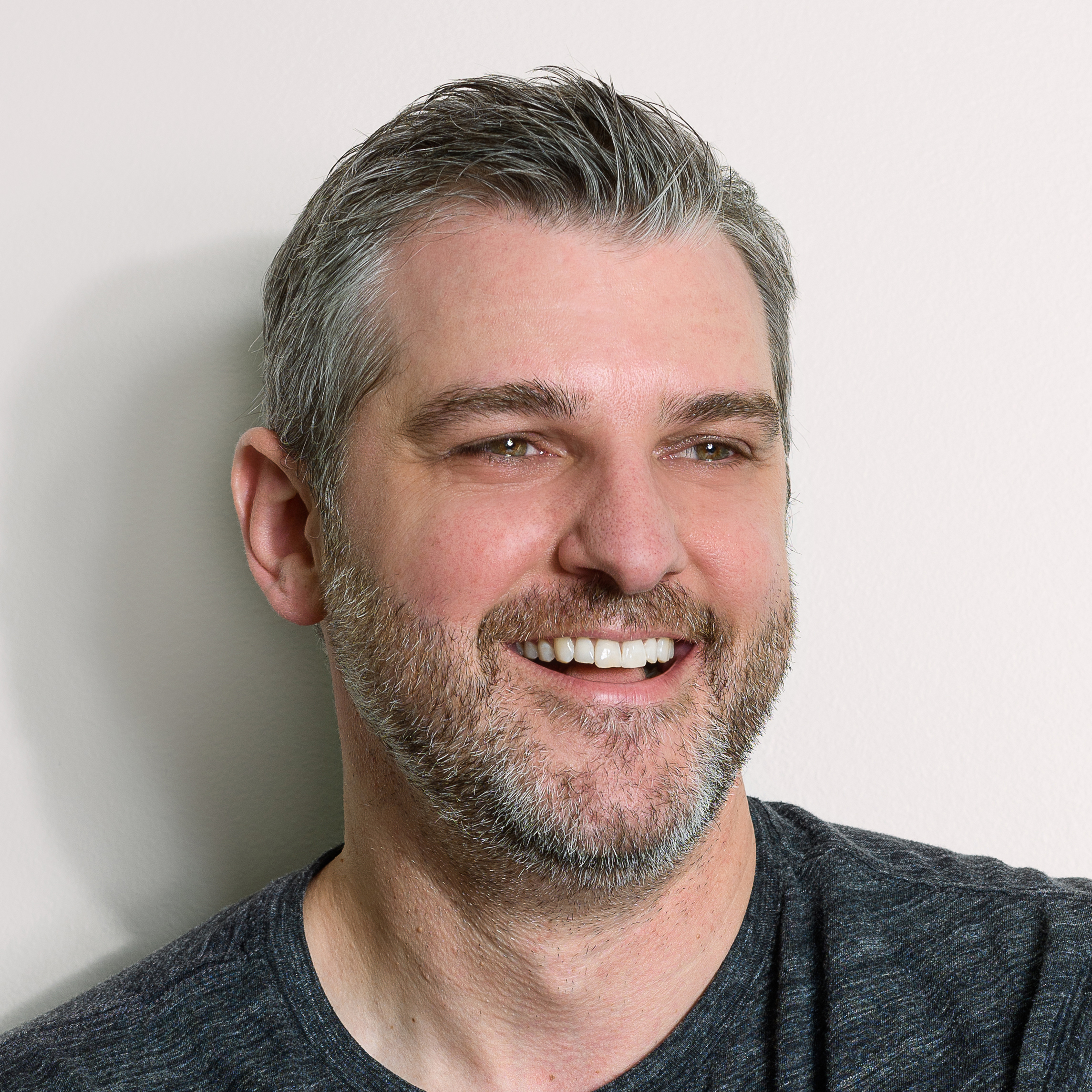
Jon Bostock
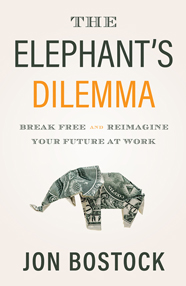
Jon Bostock spent more than a decade at General Electric in marketing, product management, and general management roles across multiple GE businesses before becoming COO of Big Ass Fans, where he helped restructure the company and shepherd its landmark sale. He went on to found Truman's, a company built to reduce waste in the consumer cleaning products industry, and later joined Gridiron Capital as Operating Partner and CEO in Residence before becoming CEO of Leaf Home. In his book, The Elephant's Dilemma: Break Free and Reimagine Your Future at Work, Bostock shares his story of business success and challenges readers to break free from complacency, live a more fulfilled life, and leave a legacy for future generations.
📚 Books by Jon Bostock
Transcript
[0:00:25] MW: You know the moments of inspiration that come out of nowhere? Maybe it’s an idea for a product that will change people’s lives, or a new way to solve an old problem. No matter the epiphany, this surge of excitement is often as fleeting as the good ideas we abandon too quickly. But what if you took a chance? What if you use that momentum and actually saw your ideas through? In his new book, The Elephant’s Dilemma, Jon Bostock shares how he took a chance with his fascinating story of business success. He shows how most of us are chained to our current reality, and don’t even realize it, but we can break free and reimagine our future, even if it’s doing the same job but thinking about it through a different lens. There’s no better time to do just that, than today. His book is an urgent battle cry, asking us to step forward, live a more fulfilled life, and live a legacy for future generations. In today’s episode, Jon share’s his story of how he did it and how we can do it too. Hey everyone, welcome back to the Author Hour podcast. My name is Miles Wrote and I’m excited to be here today with Jon Bostock. He’s the author of The Elephant’s Dilemma: Break Free and Reimagine Your Future. Jon, I’m excited you’re here. Welcome to the Author Hour Podcast.
[0:01:41] Jon Bostock: It’s awesome to be talking today. It’s such an incredible time in our world, and I’m just so excited to be able to, not only talk through the book, but just talk about all the things that we can do to rethink the way we work, and to rethink the way we live our lives.
[0:01:59] MW: Yes, me too. And your book is so timely for everything that’s going on in the world. Before we jump into it, first, tell us a little bit of background on who you are, and the story that brought you here. I know there’s also a pretty interesting story with you working at GE and working on microwaves.
[0:02:17] Jon Bostock: Yeah, I think that often times is the most boring part of my life, and often times it’s the part that I get asked about the most. I think a lot of people find it to be super interesting. For me, I grew up in an environment that I actually think is the most interesting part. I grew up in a really small town called Amherst, Massachusetts, and it’s incredibly diverse town. In fact, if you look at the challenges it faces today, being a college town, it faces some of the most unique challenges, really, anywhere in the world as it relates to the challenges that we face with the pandemic, the challenges we face from a broader economic perspective, and really, the challenges we face related to social issues. I grew up in really an amazing ecosystem where my family came from different parts of the world, through serendipitous events, found themselves in this small called Amherst, then that’s where I was raised. I was really raised in this environment that embraced different cultures. It thought about how to be creative but how to be kind and how to effectively look at the community as a place that ultimately drives us forward, and serves as a way to make our entire world a better place. I grew up there and found my way through high school, at a very small school in Vermont, and went to an amazing college in Greensburg North Carolina called Guilford College and, ultimately, wanted to do something to change the world. As most people who want to change the world do, they try to become an entrepreneur, or they try to start a nonprofit, or something to really make an impact. For me, I tried to become an entrepreneur and start my own company, and I failed miserably. I found myself going back to business school, as a lot of failed entrepreneurs do, and during that time, I met someone who was very influential within the General Electric company. GE at the time was a very large company. I would have never ever thought that someone from a small town with a diverse upbringing and a different way of looking at the business world would end up in a company like GE, but I found myself starting with the company in an executive program that allowed me to see different parts of the business. Ultimately, as you eluded to, I landed in the appliance business and, actually, led the microwave product line, which is – looking back on it – such an odd place to find yourself in the world. But I was there and had a wonderful time doing it. Obviously had many different roles within GE, but that was a really defining moment, as I think about my career, and think about the way I looked at what I do, and how it could contribute to the broader society.
[0:05:16] MW: Yeah, let’s talk a little bit about that, because that’s why I really wanted to lead with this, because I think it says so much about you and what your book represents. It’s that you don’t become complacent in a place that you’re in. When you were there, working on microwaves with GE, you're also reading about obesity and also how microwaves may be contributing to obesity, and you wanted to do something about that.
[0:05:39] Jon Bostock: Yeah, that’s right. If you think about my core desire, from my childhood, it was that I wanted to make an impact and here I found myself actually in a job. I found myself working for a large company, leading a product line that, frankly, exists in everyone’s house in America. I think the stat is, there’s more than one microwave, statistically, in every household in America. It’s a product that most people know about, most people have. If you look at it at the surface, you can’t imagine there to be a way to impact the world for good. It’s a commoditized product, it is ultimately simplified to the point that the supply chain is incredibly lean. The price points are incredibly low, and there’s not a lot of technology or innovation that comes out of the product, but there I was, still wanting to make an impact on the broader world, and thinking about, “How can I contribute?” Even as the leader of this product category and, you’re right, I looked at macro trends. I remember seeing a report talking about obesity rates in the US, and the fact that that was leading to a tremendous inequality, not only in the healthcare system but just in the quality of life for so many people. What hit me was that, as you looked at the reasons why our nation was facing these challenges, microwave ovens were listed front and center. They were listed front and center because microwaves had typically been positioned as a conduit between the individual and unhealthy foods. What I challenged our team and myself to do was to rethink the narrative. Not only the narrative from a marketing perspective, but the narrative around how we make healthy foods accessible through, whether it be goofy things like convenience buttons on microwaves, or simple menu offerings to help educate people on how to eat healthier foods. We actually set out and we partnered with a lot of different organizations to tell our story. We worked with people to help them understand how to use the microwave as a tool to eat healthier foods, prepare healthier foods for their family faster, and in ways that everyone would enjoy. It was really the first step for me, where I took a look at what I was doing and said, “You know, regardless of the role you’re in, regardless of the company, you can make an impact, and you can play a significant role in the broader community that we’re a part of.”
[0:08:31] MW: I totally agree and I love this story so much. When I read it in the book, it was because it’s just something that you wouldn’t think of, and you just came out of the box and looked at things differently. I imagine that’s what helped inspire this book on some level, but I want to hear it from you, what did inspire you to write this book?
[0:08:50] Jon Bostock: Yeah, to me, it feels very small but you’re absolutely right that it was a step. As I think back to my 11 years at GE, there was almost an annual event where I found myself wondering what path I was taking and how that path would contribute moving forward. I don’t mean contribute to my own personal wealth, what I mean is, how will the world look at the time that I spent on it, and what will I have done that will have contributed more broadly? As I looked at that once a year event, what I wanted to do is start taking steps to allow me to ultimately get to a point where I could look back and say, “I’ve shifted something on a very large scale, and it’s because I was willing to take the risk to do it.” At that time, as I was going through tis period in my career, where I was thinking through, “How can I transform, how can I start taking bigger leaps?" and look, the microwave was one. It was a small step and then I took bigger steps after that. My grandmother passed away and what hit me at that moment was that I had just taken a leap, and I finally developed the courage to leave GE. I went to a company and really faced an extraordinary challenge of making that company more sustainable. Then, ultimately, we sold it which is a whole unique and exciting story on its own, but my grandmother passed away during this time, and I found myself, sitting at the funeral, looking around the room, thinking that she has filled the room with a diverse group. She has filled the room with people of all faiths who were celebrating her life. Yet, my grandmother took an extraordinary leap. She left Belarus before the war, to find a better path for her and her family. She left with nothing and, in fact, she took a journey through Russia and Japan and ultimately found her way to the United States, and had nothing. When you think about the fact that she took a significant leap, a leap that, today, most of us can’t imagine taking leaps like that, and most of us can’t imagine taking on risk like that, but she did it. Not only did she do it, she still had the concept of making sure that people were united, and people looked at each other, and thought about how they can be more kind, and how they can embrace diversity, and how they can make the broader community stronger. It really hit me that, all those years, when I was at GE and had those moments where I couldn’t imagine leaving because I felt tethered to the environment, she had done it. Other ancestors had done it, other people take leaps, they take on risk, and our risk profile had shifted so dramatically that we were stuck. We were stuck in a box and we couldn’t think about how we can make broader impacts, because the spectrum had shifted so far in the wrong direction. It really hit me, it was the sum of all of these parts. It was the sum of discussions, where I was talking to people who were stuck. I myself found myself stuck, and I sat in that room and thought, “There has to be a way to tell the story more broadly, about the fact that people can take leaps, they have permission.” No matter what you do, you can look at what you have in front of you as a method of making the world a better place. That’s when I was really inspired to tell the story on a broader scale because I myself felt tethered, and I myself felt like there was more than I could do. I knew that I started small with the microwave bit, and I took bigger steps, and bigger leaps. What I think is so important to remind people that you don’t need to start by taking the biggest step, you simply need to start by taking a step.
[0:13:10] MW: Yes, I love the terminology that you use as far as feeling tethered. It’s such a wonderful analogy, and it really gets back to the title of your book, which is The Elephant’s Dilemma. What is the elephant’s dilemma? Tell us that analogy and what it means?
[0:13:27] Jon Bostock: The concept is rooted in a tale of a very young, but strong elephant, and the fact that that elephant could really grow up to become anything it wants, because it is so big and so strong. But in this case, the elephant is taught to be in a circus, and it’s taught to be tethered to an object that ultimately allows for more control. While the elephant grows and the elephant develops into what it should have developed into, which is a very strong being, unfortunately, because it was raised in a way that it did not know it could break free, that elephant finds itself psychologically tethered later in life. We often times find ourselves in the same situation, as we think back to where we’ve started. Most of us went to high school and went to college and got a great job, and, slowly, we feel as though we’re tethered to that desk. We get to a point that we could never ever imagine leaving. But the reality is, when we were in high school, we could have chosen any path. When we were in college, we could have chosen any path, we could do anything we want to do, but then we find ourselves 10, 20, 30 years into a career and we feel tethered. We feel as though we can’t break free. This book in the title is simply a battle cry to remind people that our ancestors have taken leaps. Our ancestors were not tethered. We’ve become tethered because of the way we’ve structured society, but every single one of us has those moments where we look at our lives and say, “We should be doing more. We should be contributing to society in a better way. We should be contributing to our communities in a better way,” and that’s us tugging at the chain. That’s us tugging at this idea that we’re tethered to something. The reality is, every single one of us is strong enough to break free. Every single one of us is stronger than we think we are, and every single one of us has permission to do something that makes a positive impact.
[0:15:49] MW: Yes, I love the analogy so much. You’re so right, we get tethered to these things, whether it’s our work or – more than that too, we can get tethered to ways of speaking to ourselves, or ways of thinking, or ways of ideas that keep us limited, and unable to think that we can do something else with thinking a different way. One of my favorite things that you talked about in the book is, it doesn’t have to be something extreme. You don’t have to go on to be the next Elon Musk, but you can look outside of your bubble and see that you can do something good for the world. Often times, people think that it’s one or the other. You make the choice to go and do something wonderful for the world or you decide to live like the corporate world, and try to work up the corporate ladder, but I think you were such a beautiful example of showing that you can do both. That those aren’t mutually exclusive, and that you can live a life where your work can also be such that you're doing something good in the world. You’re doing that now with Truman. Of course, after GE, you went on to that other company, Big Ass Fans, which I’m a huge fan of by the way, and then you moved on to Truman’s, and you revolutionized cleaning products in homes. So, tell us a little bit about that, how you continue to find ways to make a difference in the world while still engaging in business?
[0:17:09] Jon Bostock: Well that’s right, and I think the interesting part of that journey is that I could have never built Truman’s right after graduating college, and I could never have built Truman’s after GE. I think the headline of the message is that you have to start by taking a step that is appropriate for you as an individual. The Elon Musk’s of the world show up in newspapers, and they show up online, and you see these individuals propped up, and they clearly do represent innovation. But innovation can happen at the local level, kindness can happen at the local level, and us making positive contributions can happen within the block that we live in. So I think often times, while we look at people like Elon Musk or even the example of Truman’s, my new startup, that is a leap that is best taken when you’ve started taking smaller steps. So, you’re right, I went into a very tough environment at Big Ass Fans, helped to restructure the company, and we sold the company. That action gave me the confidence to partner with someone, who I met at Big Ass Fans, and create a company called Truman’s. What we saw in the market place was an industry that needed to be radically transformed for the good. If you think about the way the market is structured, ultimately we need to use better and less materials, and when I say better, I typically mean more sustainable. Materials that have a better life cycle. We need to have products that have less of an impact on our supply chain. That’s important because if they have less of an impact they’re more accessible to people. So the average person can afford the product if it is of lower cost, and can move through the supply chain in a much faster and efficient way. We felt like cleaning was a category that everyone needed access to, but it really wasn’t set up for the everyday person. It wasn’t set up in a human and authentic way and so we definitely took the lead. My co-founder and I said we’ve reached the point where, taking that next step, taking that big leap and really trying to transform a category, is something that we are ready for, and we did it. We’re incredibly proud of the work that Truman’s has done over the past year. We have been recognized through a lot of the different media outlets, but I think the most important part of this journey is that we’ve been a part of many, many, many companies, telling stories around products that will make a greater impact over the next 10 to 20 years. We have been a part of a transformative process that ultimately looks at the products we make, and the supply chains that facilitate those products, in a way that ultimately will pay it forward, so that our kids and our kid’s kids won’t look back and say, “This was a generation that was irresponsible. This was a generation that did not consider the downstream implications of their actions.” I am just incredibly proud of getting to a point that we can talk about Truman’s in a way that inspires others to make better choices. Look, we’re always excited when we see a customer falls in love with the company, but I think what we are most excited about is when we see another company making the right decisions, and that company was inspired by an action we took.
[0:20:50] MW: Yeah, I love that and you talk about group think in your book too. What you’re describing to me is basically stepping out of group think, because everyone in the cleaning industry, like the Windex’s of the world, were all doing things in a very similar way and you came at it from a completely different perspective. Again, kind of out of the box, and not in that group think way of thinking. You tell a chilling story in the book about group think and why it’s dangerous in general. Can you share some of that with us?
[0:21:19] Jon Bostock: Yeah, you know I think group think – it leads to a lot of terrible outcomes, not only from a social perspective, but from a pure action perspective. In the book I explore concepts around group think as it relates to business, but also tragedy, and one of the very unfortunate events that really made an impact in my life was a plane crash – and it gets into extraordinary detail in the book, but ultimately what happened was a crew was making decisions based on information that they interpreted to be a certain way. When they interpreted that data set in the same way, they developed the thought process that ultimately informed their reactions and decisions thereafter. That happens to us in everyday work. You talk about Windex as an example, their decisions are based on the data that is in front of you, and the data sets that you believed to be true. When you sit in a room with likeminded individuals, you look at it in the same way, and you assume the outcomes will always be consistent. In that case, in that story, unfortunately group think caused that plane to crash. The most chilling part for me was that when a third party, in this case the captain, entered into the environment, because group think was not established in that moment, the individual is able to identify other variables, other data points that could help inform the situation, but it was too late in the case of the plane. It is not too late for business and it is not too late for us to look at broader metrics, to look at different opinions, to break outside of our bubble and say, “Are we taking an action that is leading to an undesirable outcome?” That is the biggest risk we face as it relates to group think. Our inability to see what is right in front of us because we’ve convinced our self that the dataset is telling us one thing, when all we need to do is get an outside opinion and we’ll realize that there is a much better outcome if we consider other variables.
[0:23:37] MW: And I think this book can be that outside opinion to pull us away from group think. I can’t stop thinking about how the environment that we are living in today, with everything going on with the coronavirus and in the pandemic, on top of the fact of our attention-based economy, and how everything is really based around click bait, which really polarizes us. You talk about group think and we see this day after day on all of our media that we consume. We are given the information that confirms the bias that we already have, that leads us further down into thinking into that group, and it is really hard to pull ourselves out of that. Your book is really about stepping away from that and breaking free from that and then creating your own perspective. Is that right? Would you look at it in that way?
[0:24:30] Jon Bostock: Yeah, that is absolutely right. The thing I love about what you just said is politics has put us into a box, but the best example of breaking free, and using diversity of thought, and not getting stuck in the concept of group think, relates to coffee. I talk about it in the book but I think it is something that everyone can understand. Decades ago, a cup of coffee was a commoditized good. A cup of coffee was something that you got when you sat at a diner, and they poured you a cup of coffee for about 50 cents, and you would get as many pours as you wanted. Howard Schultz came in and reimagined what coffee could be. Howard Schultz is behind a company called Starbucks and, what I love about your example is, regardless of your political party, and regardless of your political beliefs, statistically you’ve been in a Starbucks. You can certainly appreciate the concept that an individual can take a category that, with group think, would have remained a 50 cents complimentary good at the diner and instead, not only became a premium offer that ultimately improved the health of the supply chain by providing fair market wages throughout the supply chain, but it also provided a very positive environment for people in a community to gather. The concept of Starbucks extends way beyond just the fact that you can charge more for a cup of coffee and, really, the concept has become another meeting point where you can get work done. Where you can have a great conversation, where we have yet one more place in our society where we can connect on a one-to-one level. There is a lot of good that has come out of that. Now there’s obviously counter arguments but the bottom line is that it is the most pure example of how, if we allow ourselves to never imagine what something could be, Starbucks would have never been around. If we find ourselves only imagining that what we know and what we see every day is as good as it is going to get, we will never be a part of making something greater. If we really, really want the world to be a better place, then we have to understand that there is always a better way to do something. There are no limitations and people do not need permission to make the world a better place.
[0:27:01] MW: So true. In addition to that, we can’t just talk about it. I know in your book you talk about Monday morning quarterbacking, and I’ll let you explain what that means, but the idea that we talk about these things changing for the better, or how we could make them better, but not actually doing anything about it. So if you could share with us what Monday morning quarterbacking is, and then maybe one or two things people today could do, given everything that is going on, that could help them break free.
[0:27:31] Jon Bostock: Yeah, my nine year old is the best example of Monday morning quarterbacking. I play video games with him because it is a way to connect but, of course, I am not nearly as talented as he is. I will take an action in his game and try to do something that he described, and I will fail miserably, and he’ll sit there and explain how it could have been so much easier had he done it. That is a great example. It is the most simple example of Monday morning quarterback. It is obviously much more complex in the business setting but, essentially, the idea is that we all do things, and we all make decisions, and we take actions, and someone then is positioned to say why what we did was not done right. They look at it in hindsight but, the reality is, the magic is when you are willing to take the risk in the first place. When someone sees what happened – I love my nine year old but he saw me make the mistake, so half the time I think, you know maybe he’s just saying he would have gone the other way because he saw what happened to me. That’s the same thing in business and it’s really the same thing in our communities. When we have an idea, the magic is in presenting that idea. The magic is in taking that first step and making the leap. Those individuals who often find themselves in a position to criticize us, it’s really not fair, and it is not fair to the individual because it is not kind, but it is also being done in a way that isn’t helpful. They are taking the information that they have because they saw the action take place. And they’re criticizing it because of the knowledge they have at hand. In reality, we need more people to be supportive and work with people to say, “Here is what I observed. I understand what you are trying to accomplish, let’s collaborate and make it better.” If we actually had a society that was set up to, in real time, help us improve on actions and, where we fall, we have a society that actually helps us get back up, and go in the right direction and is supportive of the leaps that we’re trying to take, we will be better off. We need more people to be supportive. I talk about it in the book, in the context of the Monday morning quarterback. The example of my nine year old is a very, very funny example, but I would imagine if you take a step back and you think about, in your life, how many things you do that are new or different or uncomfortable, and find yourself being criticized by someone based on those actions, the next time you do that, you may be held back. The concept of being tethered gets reinforced. We need to actually change our thinking and we need to break free, but we also need people to support us in that endeavor. We need to surround ourselves with people who, ultimately, want to help us drive innovation forward, and want to help us break free and reimagine the way we work.
[0:30:41] MW: So true. Jon, I am so excited about this book, and I am so glad that it’s coming out during this time. If readers could take away just one or two things from your book, what would it be?
[0:30:50] Jon Bostock: The first thing is every single one of us has permission to do this, and they have permission on their own. They can take the very first step within anything they want to do and make a meaningful impact. You can look at any environment you’re in and find a way to make the world a better place. We have so many opportunities to do that. There are so many defects that we face as a global community that we can work to solve for. I think the very first thing that, hopefully, everyone takes away is that you have as an individual permission. There is no governing body over innovation. There is no governing body over being kind or doing good. You as an individual have to believe in yourself, that you have the permission, and you as the individual have to know that, if you are going to start taking steps, you have to start by taking the first. Also remember that our ancestors did this, and they didn’t do it five, six, 7,000 years ago. Many of them did it a couple of decades ago. Our neighbors took risks early in their lives to come to the United States. We live in a world where people have taken on extraordinary risk and we have found ourselves tethered to things that do not exist. Everyone has permission, everyone can do good, and everyone can change the world.
[0:32:22] MW: Amen, everyone you have to check the book out, The Elephant’s Dilemma: Break Free and Reimagine your Future. You can find it on Amazon. Jon, besides checking out the book, where can people find you?
[0:32:33] Jon Bostock: I am on Twitter @jabostock, and on LinkedIn at Jon Bostock.
[0:32:40] MW: Jon, thank you so much for joining us. This has been such a pleasure and thank you to everyone listening at home. I hope this episode has inspired you to look at things a little bit differently. Stay safe out there, we’ll see you next time. Thanks again for joining us for another episode of the Author Hour Podcast. You can get Jon’s book, The Elephant’s Dilemma: Break Free and Reimagine your Future at Work on Amazon. You can also find a transcript of this episode and all of our other previous episodes on our website at authorhour.co. For more Author Hour, subscribe to this podcast on your favorite subscription service and thanks again for joining us. We’ll see you next time, same place, different author.
Want to Write Your Own Book?
Scribe has helped over 2,000 authors turn their expertise into published books.
Schedule a Free Consult