Jessica Burdg: Episode 491
Read the full transcriptJessica Burdg
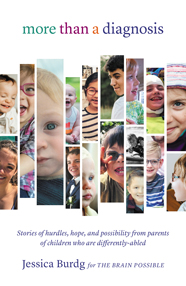
Jessica Burdg is a journalist and writer. Her book More Than a Diagnosis: Stories of Hurdles, Hope, and Possibility from Parents of Children Who Are Differently-Abled gathers sixteen profiles of families raising differently-abled children, drawn from her ongoing blog series Stories of Hope. The book's proceeds benefit a nonprofit that supports these children and their families.
📚 Books by Jessica Burdg
Transcript
[0:00:32] NVN: Writer Jessica Burdg asked 16 families what it was like to raise differently-abled children and she’s collected these 16 unique poignant profiles in her new book, More Than a Diagnosis. Stories of hurdles, hope, and possibility from parents of children who are differently abled. The children of these families have conditions ranging from autism to, ADHD, and rare genetic conditions to traumatic brain injuries and even cerebral palsy. Each story illuminates the raw pain and the powerful hope these families have found in their lives. In this interview, we talk about the experiences that drew Jessica to this work and we pull out some of the beautiful lessons these parents and their children have to teach us. Today, I’m here with Jessica Burdg, welcome to author hour Jessica.
[0:01:22] Jessica Burdg: thank you for having me.
[0:01:25] NVN: I am beyond excited to talk about your book, not only because I know you personally and I’m so thrilled for this feat that you’ve accomplished but also, because the mission behind this book is so incredible and beautiful and I wonder if you want to start off just describing for listeners what the book is and what it’s for?
[0:01:47] Jessica Burdg: Sure. The book is a collection of profiles of families with children who are, what we call, differently-abled. I’ve interviewed all of these families. Kiddos have a variety of different diagnoses, you know, from autism to spina bifida, to epilepsy. There’s lots of different challenges that these kids have and their families have dealt with but the common theme is really one of resilience and hope and yeah, it’s just a collection of these profiles — all of which originated on a blog series that I had done for The Brain Possible called ‘Stories of Hope’. So, the book kind of came together as compilation of those existing blog stories and then I did several more to round out the manuscript.
[0:02:40] NVN: Let’s talk about The Brain Possible for a moment. Give us an intro to what that organization is?
[0:02:46] Jessica Burdg: The Brain Possible is an offshoot of Who is Carter — Who is Carter Foundation. Both organizations support kids and their families. Kids who have brain injuries or who are differently-abled. We say differently-abled instead of special needs. The Brain Possible piece is sort of the resource arm of Who is Carter. I think Emily Abbott, the founder, you know, way back when we were conceptualizing this, because I worked with the founders for quite a while. Kind of wanted it to be like Angie’s List/Wikipedia, so to speak. A place where parents who had questions specific to whatever their child was facing could come and find community, could find blog articles, could find stories of hope, could find practitioner information, what toys would be best. There’s a lot of information about holistic forms, of like, holistic medicine. A lot of different kinds of treatments so it’s just — The Brain Possible is a coming together of resources that we lay out for parents and I am proud to be the editorial chair of that foundation.
[0:04:04] NVN: That’s so awesome, especially because as I was reading through your book and coming across, first of all, these just astoundingly gorgeous stories of resilience from all of these various families dealing with a whole range of particular challenges and celebrations. One of the most common threads that I saw each of the parents speaking to was, they didn’t necessarily articulate how alone they felt in having a differently-abled child. But they all said the power of connecting with someone who had a similar situation and could actually really identify with what they were going through.
[0:04:46] Jessica Burdg: Yeah, that’s intentional. When I approached this project, back in — even when it was just a little baby blog series, I paid very close attention to making sure that I ask the parents not only what they wanted the world to know about their child but also, what’s it like to be a special needs parent? What it’s like to be a parent of a differently-abled child? Where does self-care — how does self-care look for you? What’s been the most challenging thing for you, personally? I really wanted this to be about the kids and their families. And I think that’s one thing that makes these stories a little bit different than kind of what’s available resource wise. Because it’s not — we’re not saying, “Ignore the hard stuff and only focus on the beautiful things. We’re not saying, “Here’s a list of all the challenges.” These stories are in the middle. These stories are real life and I really focused on showing the whole journey or as much of it as parents were willing to share, which was usually quite a bit. The goal is that if, say, a parent has a child who has got a diagnosis of epilepsy or autism or something, when they come and read Gabe’s story or Piper’s story, they’re going to see an authentic journey reflected, not one that’s too far on challenges or too far on only the good stuff. That’s really what we wanted was to reflect what life is really like for the kiddos and the people who care for them.
[0:06:26] NVN: One of my very favorite moments from the stories was in Piper’s story actually where the parents talk about having to take Piper — basically an emergency evacuation off an island and as their plane is taking off in the dark, they realized that all the lights on the runway just looked kind of funny. They’re a little bit disordered and then you found out later that the hotel from where the plane had taken off had actually called all these people on the island to come in and shine their headlights so that the plane had enough light to take off. I just thought that was such a beautiful illustration of people really coming together and demonstrating care and support for one another.
[0:06:26] Jessica Burdg: Another thing that stood out to me about Piper’s story, besides that beautiful runway piece. She mentions that Piper got a drug called Epidiolex, I’m probably not saying that correctly but it was a new drug that they were testing and when she said that, it stuck out of my mind because before I came to work at Scribe, I freelanced, I wrote monthly features for this magazine called Laboratory Equipment Magazine and I had actually done the profile on the pharmaceutical company releasing that particular drug because it was considered an orphan drug or orphan medication which means that it’s given special attention and pushed through because it treats very specific conditions for which there aren’t other treatments. When she said that, it was kind of like a full circle thing, like, I remember writing about that and talking to the pharmacist and the scientist and then here I am now just randomly talking to a mom whose daughter used it, you know? I had no idea. That was pretty crazy.
[0:08:24] NVN: Yeah, that’s incredible. I didn’t realize that. Especially the freelance, right? Sounds like you have been kind of in this community, in this work for a long time.
[0:08:37] Jessica Burdg: Well, actually, how I got started in — well, the orphan drug article is just, you know, how it goes. When you’re a freelancer, they tell you to do it and you do it. Yeah, I certainly had a lot of interesting assignments there but I kind of got into, I’ve always enjoyed working with kids and I worked with Matt Abbott on his book Who is Carter, which was the book that launched the Who is Carter Foundation, so I became very good friends with the Abbotts quite quickly. The story was about their son Carter who passed away from complications from a brain injury. In working on that book, I interviewed not just Matt but Emily and Emily’s parents and it was quite an indoctrination, I guess. I started volunteering for Who is Carter directly after. I helped build the websites or the content for the website, all that sort of thing. Articles and then when Emily was launching The Brain Possible, I kind of came on board there too and started the ‘Stories of Hope’ series. I’ve always had — definitely a heart for it. For helping people who maybe sometimes are — or feel or can be perceived as you know, on the edges of things, you know? On the edges of what’s “normal” or “accepted” or “perfect”. That’s always kind of been my thing and when I got to working with the Abbotts, this just was such a natural thing for me. I have made such good friends with these families, these moms, these dads, it’s really been a huge gift to me to work on this project and work with the foundation because I have learned a lot about what matters. What’s important. I’ve learned a lot about grace and gentleness and it’s given me — and this is going to sound cliché but I really mean it. It’s given me a lot more than I’ve given in terms of my volunteer work with both these foundations.
[0:10:54] NVN: That’s amazing. I was really struck by how several parents throughout their stories. I heard this a couple of times or read this a couple of times from parents saying, it really is almost hurtful and heartbreaking when neurotypical families, neurotypical people look at my children and look at how I parent and then say, “I’m sorry and I couldn’t do that.” It really opened my eyes to how many misconceptions, I think, so many of us have about what it even means to really live a full life with children who are differently-abled. I’m curious what lessons you may have learned in the course of these interviews with families.
[0:11:39] Jessica Burdg: Okay, one thing in particular. You mentioned the saying, ‘I’m sorry thing’ which I totally — that was an interesting conversation for me to have with, I think that was Sammy’s parents. But I also learned a lot about how to — some things that we say when we think we’re being helpful or we think we’re being politically correct or we’re just trying to have a conversation, you know? When people say, “I understand”. if someone were to — if a parent of a kiddo with — who is differently-abled, would tell me about this challenge that they had, you know, in the first couple of interviews, I would say “Oh, I understand, I’m a parent too.” I wouldn’t say that part but I would say, “I understand.” Not coming from a way of trying to take away for many things that they’re going through but just to sort of — more of a soothing thing but as I continue to do this, I started to check my words a little bit, I started to realize what I didn’t understand. I did not understand. I will never understand. Even having spoken to all these families, I continue to talk with them, other families. I will never understand but I am becoming a better listener. My eyes are open wider and I think they were already pretty open but I think we can always do better, be a little bit more gentle on the world and I am really big on gentleness. And this project reaffirmed that, for me, that if we just move through the world a little more softly, a little more patiently, and with our eyes open and our hearts open to what we don’t understand, not letting that be a disqualifier for meeting someone or engaging with someone. It should be an invitation not a disqualifier then I think that is one major lesson that I already knew I think but definitely these conversations have reinforced that big time.
[0:13:52] NVN: What moments from those stories that you’ve heard from parents have stuck with you?
[0:13:58] Jessica Burdg: There wasn’t one of these interviews that I did not cry in, or parents didn’t cry in. And so it is like I am doing my day job and then I have an interview for this and I get on the phone for my day job after and I’m just a weepy mess and they’re like, “what’s happening?” But no, I mean I was usually okay by then. But it really is astounding to me. Astounding how these parents, with no financial compensation, they have a million things to do for themselves, for their families, for their children. And they are taking time out of their day to schedule with me, to talk to me — a stranger, and then I am asking them about their most challenging moments in their lives and they just tell me. They just tell me because at the beginning of every interview I would obviously introduce myself and to tell them about the project and at the end of the day, we’re trying to provide resources and hope for the different labeled community, differently-abled community and that was enough. You know, the idea that it might help somebody else was enough for them to go deep. We go very deep sometimes. So I just want to say that’s the big answer to your question is the fact that they talk, the fact that they share what they shared is monumental in and of itself. But I think one of the most striking stories for me in here is Gabe’s story. He is the first one we put in here and actually one of the last, his mom was the last one that I interviewed for this book. But he is the first story up and he, Gabe is autistic but he is so much more than that and when I was speaking to his mom, she shared her story, which is a harrowing story. Gabe’s dad passed away when she was pregnant, when Nicole was pregnant with Gabe. So she was left caring for a child who was developing a little bit, you know slower than some of his peers, didn’t have a diagnosis yet but she could tell something was off and she was doing it alone. Their family wasn’t there, she didn’t have a lot of close friends. So you know I can’t imagine going through something like that and then recently, she also found out that she was diagnosed with breast cancer. So it is like this sequence of challenges. Again, the astounding thing was we were talking about all of these things that could break, you know anyone of those things could break someone, right? But she is saying how much Gabe has taught her about what it really means to be alive like the little things and out of all of those tragedies really, she was grateful. And I think that’s kind of the message that I got from a lot of these parents is they don’t dismiss the challenge — challenges of these situations at all but they just approach them. And I want to lump everybody in but generally, the ethos here is they approach them with this sort of understated grace and looking at the beautiful things without ignoring the pain of the hard things, which thereby makes the beautiful things all the more beautiful. So that’s really what I love about this project and continue to love about it.
[0:17:40] NVN: Do you see the project will continue?
[0:17:43] Jessica Burdg: Yes, the project is continuing. We want to get this book out first, which it comes out August 11th — and then we will continue to do — I’ve got several interviews, families in queue so maybe they’ll be a book two, I don’t know but for now, we’re the one.
[0:18:02] NVN: That’s fantastic. Yeah, I was so struck by how many of the parents remarked that their children had taught them so much including how the parents could care better for themselves. That seems like such an important component for any parent, learning how to navigate life this way.
[0:18:21] Jessica Burdg: Yes, 100%. That was really important to me to cover in these interviews was the self-care piece. I think a lot of times when we talk about children who are differently-abled or children who have challenges rightfully so much of the conversation is, again, rightfully focused on that child, right? But I really wanted to lean in here on what it’s like to be the parent of a child who is differently abled because the parents coming to this, these articles to look for that hope. To look for that feeling of being seen wholly for their journey. That is probably what — yes, they want to hear about all of the positive things and the treatments and all of that but they are people too and those self-care pieces, everyone had a different answer about how they went about it. Some admitted that they should do it more often, some say it was a huge priority for them but no one denounced its importance and especially in these situations. You know you can’t — it’s the whole oxygen mask thing that everyone always says. You have to put yours on first. So that was important for me to specifically ask.
[0:19:33] NVN: Tell me a little bit more about what your work was like at Ronald McDonald House? Sounds like that was impactful.
[0:19:41] Jessica Burdg: Oh yes. So when my oldest daughter was born, she was premature and she had a collapsed lung and then pneumonia in the other lung. And so, we spent quite a bit of time in the NICU and I stayed at a Ronald McDonald House near the hospital during that period of time. So I was very close to that foundation and also the march of dimes and also the hospital. So a couple of years later when Ella was healthier, a little bit older, I worked as the family room manager for the Ronald McDonald House in that hospital. Children’s Mercy Hospital in Kansas City, Missouri where we — well, what happened would be families whose children were in crisis, whether that be in the PICU, the pediatric intensive care unit or the NICU, the neonatal intensive care unit. They were being stabilized or they were needing overnight care or they were being life-flighted in from X-Y-Z location. So it was kind of like a mini-hotel. We would have volunteers come and I would coordinate meals. I would make the sleeping rooms, so I would make beds for everyone, check them in, make sure they had everything they needed when doctors called. I would give them the privacy room. Just sort of a space to — a quiet space, a human space sort of in the midst of this huge crisis. I never put that together actually but I think I learned a lot in that role that prepared me for talking to these families because I just kind of try to meet everybody where they are. And if you go into a situation knowing where someone is, could be, and is very challenging and you approach it more gently and I think that is why I was — that is why people are more open to talking with me and that sort of thing. So yeah, I think that’s a great question. I genuinely never put that together until just now, so.
[0:21:47] NVN: Yeah. Well then it really ties in with this overall theme of vulnerability that runs throughout your book. You know there is your ability to hold space for these families that you have interviewed and there is also their willingness to be really vulnerable about their experiences because they know how impactful that could be to another family, to hear a story that is like theirs.
[0:22:10] Jessica Burdg: Absolutely and that is what I hope people take from this book. You know, really, this book is for the parents and I say that very explicitly and I really, really mean that. It’s for these parents and the parents that their stories can touch. But for everyone, I just hope that sort of vulnerability and that sort of holding space for people can become the rule, not the exception when we communicate with one another and try and listen. Especially when we don’t understand. That is really what I would hope would come from this.
[0:22:50] NVN: I have to say it’s — that whole premise is so beautifully modelled by your writing and by the way that each of these families tells their stories so thank you. Thank you so much for bringing that together.
[0:23:04] Jessica Burdg: Yeah, again it was really my — it is really a gift to me to be able to do it and to still become, still be friends with these families. I still see Beau’s updates on his mom’s Instagram and we message hearts back and forth and every little, you know, all of the little milestones, little goals. So yeah, I feel like my family has just grown from doing this project. So I am very proud of it. I am very proud that all of the proceeds go back to the foundation. Go back to Who is Carter, which is the foundation that funds The Brain Possible and all of those same places and same people and yeah, just really, really excited for the parents to get this book in their hands and everyone else too.
[0:23:50] NVN: Yeah, well thank you so much. It’s been such a pleasure talking to you and being able to put this book out in the world is such a feat. Once again, the book is More than a Diagnosis, and besides checking out the book, where can people find you?
[0:24:07] Jessica Burdg: Okay, so my personal website where I have all of my, this book and then my additional writing of bylines is jessicaburdg.com and the website specific to this book where we hope to have updates from the family’s featured. So if you are interested in a particular family story, you know, there may be updates posted any sort of additional information on therapy mention in the book that sort of stuff, thebrainpossible.com/more-than-a-diagnosis and there’s dashes in the more than a diagnosis.
[0:24:47] NVN: Dashes between the words.
[0:24:49] Jessica Burdg: Yeah, okay.
[0:24:50] NVN: And that will be in our shownotes as well on the website so people will be able to check that out.
[0:24:55] Jessica Burdg: Oh so I don’t even have to do all of that.
[0:24:56] NVN: Yeah.
[0:24:58] Jessica Burdg: Thanks for telling me.
[0:24:59] NVN: I put you through the torture on perfect. All right, well thank you so much Jessica, it’s been such a pleasure to have you.
[0:25:08] Jessica Burdg: Yeah, thank you Emily. I appreciate it very much.
[0:25:11] NVN: Thanks for joining us for this episode of Author Hour. You can find, More than a Diagnosis, on Amazon. A transcript of this episode as well as all of our other previous episodes is available at authorhour.co. For more Author Hour, subscribe to this podcast on your favorite subscription service and thanks for listening. We’ll see you next time, same place, different author.
Want to Write Your Own Book?
Scribe has helped over 2,000 authors turn their expertise into published books.
Schedule a Free Consult