Brita Long: Episode 495
Read the full transcript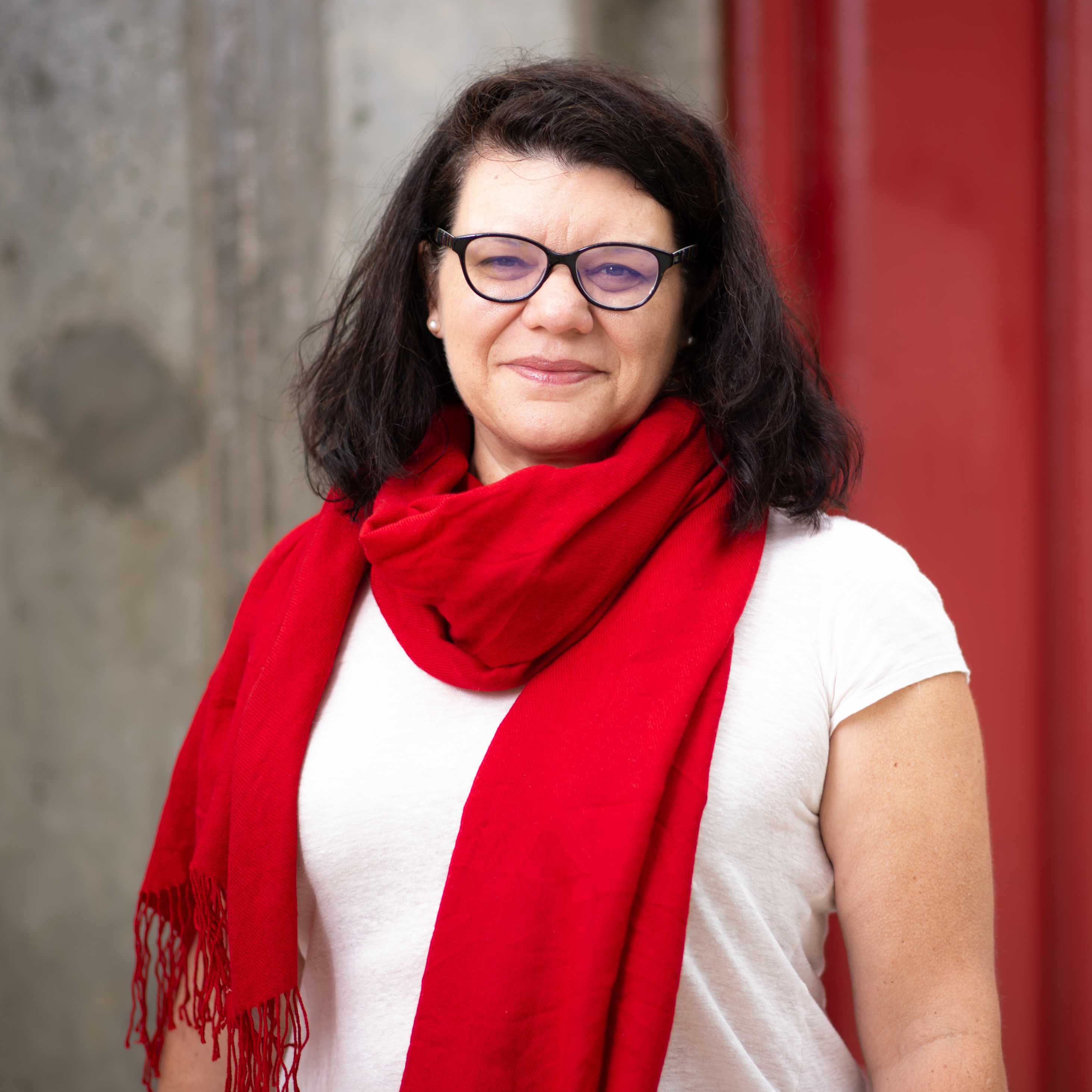
Brita Long
Brita Long is an attorney, Amazon bestselling author, coach, and entrepreneur. After more than two decades practicing law, she saw how complexity, a lack of purpose, and a mismatch between people’s stated priorities and their daily choices weighed on their lives, and she turned her focus to helping others simplify and live with intention.
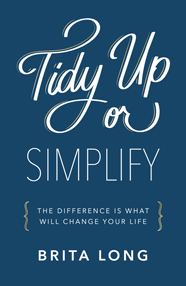
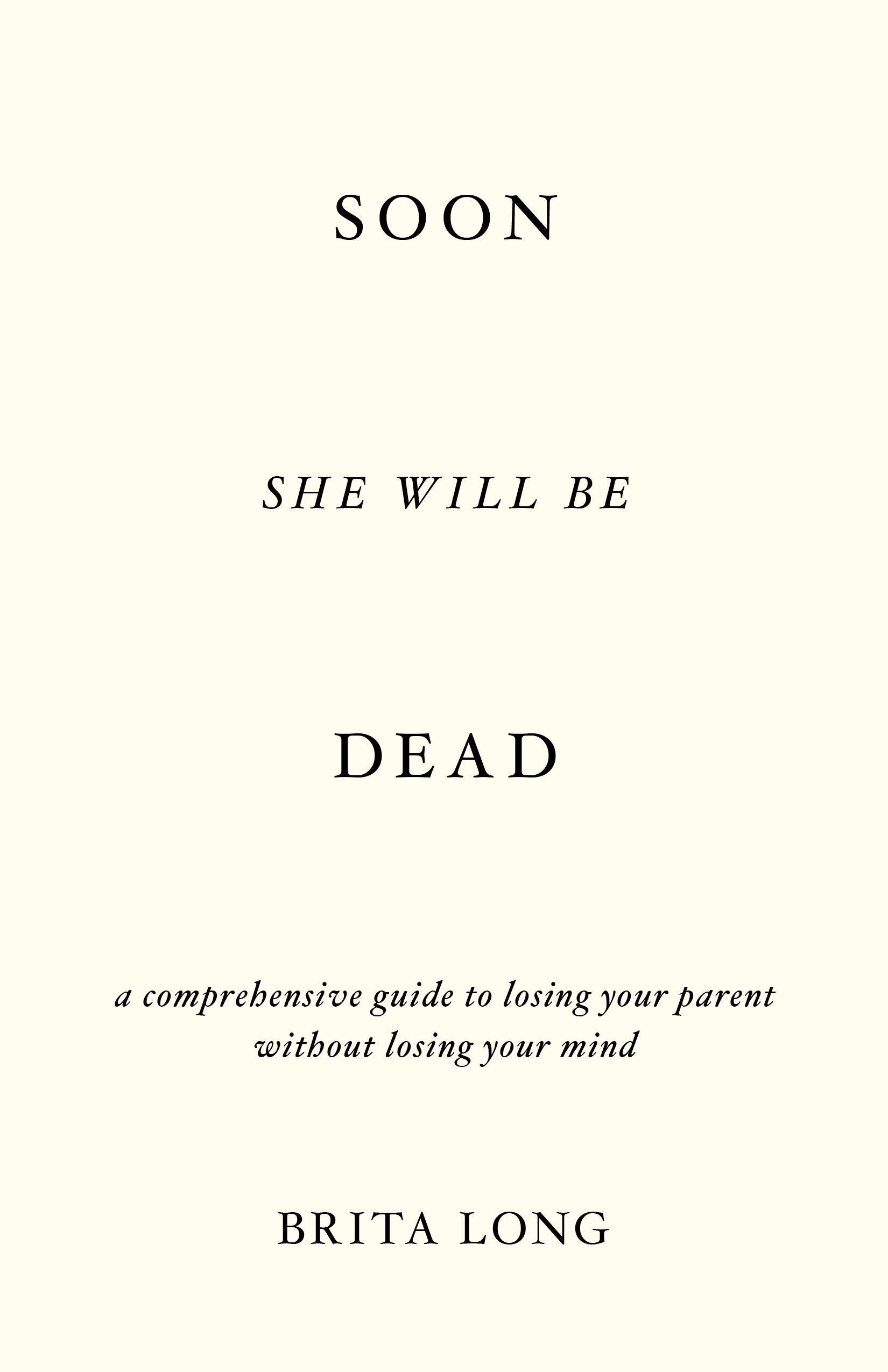
She is the author of Soon She Will Be Dead: A Comprehensive Guide to Losing Your Parent Without Losing Your Mind, and Tidy Up or Simplify: The Difference Is What Will Change Your Life.
📚 Books by Brita Long
Transcript
[0:00:24] EG: When author Brita Long realized she had too much stuff in her life, she tried countless methods to purge the things she didn’t need. Only to find herself buying more things to fill the space she’d carved for herself. She realized that at the root of her problem with stuff was really a deeper question of what she actually wanted and needed in her life. Brita details her system for getting rid of unneeded stuff for good in her new book, Tidy Up or Simplify: The Difference is What Will Change Your Life. All right, I’m here with Brita Long, Brita, I’m so excited to talk to you today. Not just because I know how impactful your book is going to be to so many people but also because you and I have a long-standing professional relationship and I’m so excited for celebrating this milestone with you.
[0:01:15] Brita Long: Thank you and yes, I feel very close. This is good that you’re interviewing me.
[0:01:25] EG: Yeah, I wanted to start off by asking, I think you’ve explained this to me before but I think it’s so interesting that you have written three books. The first one of which was The Happier Attorney which was specific for advice for attorneys on how to run their business. The second book was Soon She Will be Dead and that taught readers how to navigate the death of a parent which you went through personally. And then this third book is a completely different topic. Tidy Up or Simplify and you’re really tackling how to simplify your life for real instead of just throwing away a few things and learning how to fold clothes better. What drew you to write about this subject?
[0:02:12] Brita Long: I had recently gone through the process that I write about and I had been on a journey to simplify, minimize my life for a few years and in that process, I tried a lot of different things and they didn’t work, they would work for a short time period but they would not work long-term. My life during that time kind of fell apart and I didn’t know how that was related to property and stuff but I knew that it was related somehow. I just got to the point where I kind of threw up my hands, literally, and figuratively and just was open to another solution. Like my way, Brita way, was not working. Brita way to just go full-steam ahead and try to think, think, think of solutions and try this approach and that approach and just go faster and faster — clearly, was not working. I just had to start from scratch and that caused me — and I just had a need to get rid of the stuff. Again, I couldn’t explain it at the time but I knew that I needed to just kind of cleanse my life of the stuff and so I just started doing that and through that process, it really changed my relationship with stuff. It changed how I viewed things and it then, in part, was a prompt to change my relationship with myself as well. The changing your relationship with stuff, I think, is a good first step to starting a larger conversation about having a healthier relationship with yourself and others because A, everybody has too much stuff. I remember, I used to live in Seattle and I remember driving to work one day and Seattle has a very large homeless population. I would go by two specific camps every day and I would look at these homeless camps and they had too much stuff, you know? They’re literally homeless and they had so much stuff and when I really started examining what my unhealthy relationship with stuff had caused me, it was very painful. Because you had to admit, wow, ouch. It wasn’t what I wanted in my life.
[0:05:00] EG: As you started this journey of discovering what the role of stuff played in your life and you’re coming to these uncomfortable realizations, what were some of the things that you were having to face and realize?
[0:05:17] Brita Long: Just how much I had purchased and how much money I had used to buy things to impress other people. I had, at the time, thought, I always had this idea of ‘when’. When I have this sort of house, I will feel relaxed. I will feel like I made it. I can start pulling back on the throttle a little bit. Okay, I had the house, well now, when it’s renovated fully. Okay. Well now, when I have the antique furniture. When. Looking back at the hundreds of thousands of dollars that were spent in this search, this almost desperate search to get this feeling that you know, you would get. I would get whatever and I would have the feeling for a little bit. I mean, it feels good to bring home whatever but it doesn’t last. Then I would go through the cycle where I wanted a simpler life so I would get rid of stuff and then I’d get more stuff back. And it was nicer stuff, it was more expensive stuff. But it was stuff nonetheless. You know, just always chasing that feeling that you never quite grab. Or you grab for two seconds and then it’s out of your hands and really trying to set a standard that, looking back now, was kind of ridiculous. I remember someone told me that some socialite in New York never served guests with the same dish sets. I entertained a lot at that time. Here I went, at one point, I had — I think it was nine or 10, full sets of dishware. I mean, talking 10 to 20 place servings. And these were nice, these are not – they were fine china and it was insane. It was absolutely insane but somehow it was important to me, you were going to think more of me, you were going to think that I was more sophisticated, more successful, more whatever if you came to my house and there was Easter dinnerware. And then you came three months later and there’s summer. Are we eating inside? Here’s your summer inside. If we’re eating outside, here’s our summer outside. I mean, it was just constantly trying to fill this cup that had no bottom and that was hard, when to realize. I mean, it was very hard at the same time, it was beautiful because when you realize, that’s what you’re doing then you can stop.
[0:08:14] EG: What was behind, just to give a little glimpse of that microcosm, what was behind the many sets of dishware? Was it status, was it wanting to do the perfect thing? What was that to you?
[0:08:27] Brita Long: I think it was a combination of sophisticated, classy people have different kinds of dishware. They have beautiful dishware. Some of it was people-pleasing. You want your guests to feel great in your home, some of it certainly was status. It felt great to have these sets of dishes that were expensive until one of your friends breaks one. And it made me feel better, it made me feel more successful. I didn’t feel poor, I had made it. If there’s a question about that, look behind me at my nine sets of dishes. Fine dishes. I never felt that, so I needed these other things around me to tell me, I guess. You know, going back to deep wounds that I didn’t even realize were there but trying to make them feel better which doesn’t work with the stuff.
[0:09:30] EG: Yeah, I think that something that’s so beautiful and honest about your book is how willing you are to really call that into question at every turn, you know? Every object you have around you, why do you have it? I loved that moment that you share in the introduction. I think it is where you’re talking about collecting kitchen gadgets and then you start looking around your house and you realize, I have three butter curlers for different occasions. Actually, I had to Google what a butter curler was.
[0:10:05] Brita Long: Is that odd?
[0:10:06] EG: I’d never came across one before but yeah.
[0:10:10] Brita Long: Emily.
[0:10:12] EG: My new degree to which. I know, I’m very unsophisticated.
[0:10:15] Brita Long: My goodness, there will not be a celebratory dinner at Emily’s house.
[0:10:22] EG: You would be horrified. I am still waiting on — my dad is making me a dining room table and so I still have like a hand me down really crappy table that I cover with the tablecloth and it only seats four. There are no sophisticated dinners at my house right now. But I have joy all the same, you know?
[0:10:39] Brita Long: Exactly. I had butter curlers. Three of them.
[0:10:45] EG: One for the Queen, as you wrote.
[0:10:49] Brita Long: One that was very modern, sophisticated, you know, for the very chic, too cool to smile dinner parties and another one was just for your everyday use.
[0:11:02] EG: Did you use it every day?
[0:11:04] Brita Long: I never used one of the butter curlers. Not once. Because, the butter has to be at a very particular temperature and I mean yeah, not once.
[0:11:14] EG: So then, there has to be a butter dish and then the temperature control for said butter dish, yeah, it’s all a very — it’s all a complex system of stuff happening there.
[0:11:26] Brita Long: Yes, absolutely. If you have a butter curler and you use it, there’s nothing wrong with that. I have made my own butter and I enjoy that, and it tastes amazing by the way. If you enjoy something like that and you get joy out of it, fine. But if you're doing it so that people can say, “My gosh, Brita entertains so well, did you see she had butter in these little designs?” That’s part of what I was going for, you know? I hate using this name because you know, for other reasons. I loved it when people were like, Brita, she’s so Martha Stuart. I mean, it was just so — yeah, Martha Stuart, who didn’t have $500 in savings but you know, there’s a $3,000 French mirror.
[0:12:30] EG: Well, you know, at certain points in her life, the real-life Martha Stuart might not also have had $500 savings either, yeah. I was so taken by one of the early exercises that you offer in your book which is to really go through an inventory, your stuff, you recommend to start small, start with one category of things that you know you probably have too much off and then make the ‘do not love pile’, which I love that your advice is not to throw out the items that you put in that pile yet. That seems like a really important frame to set. To give permission to really let that whole process happen. How did you come across that guideline?
[0:13:16] Brita Long: Well, that’s partly why I wrote the book because when I was trying to simplify and purge, you know, I read the blogs, I read the books, I looked at the videos. And there were two categories. Either they were completely extreme, you know, you have to live in a tiny house, you have to get rid of your car. I mean, literally, I say in the book and it’s true. I saw one on foraging for berries. Okay, that may work for some, that’s not going to work for me. Or, it was the kind of the normal immediately, go — like you would see on TV. Immediately, somebody shows up to this house and you just start getting rid of stuff. I had done that. I had done that over and over again and it didn't work. It was dealing with the leaves of the plant, not the root. When I did my work, I got to the root. That’s why we don’t purge for a long time, we don’t get rid of anything for a long time. Because, if you just start getting rid of stuff and people want to do that. That is the tendency they will start reading and they’re like, “I’m already starting to get a pile.” And I’m like, “Stop! I’m serious, you have to do the internal work first and not just get rid of the stuff, otherwise, you are just going to get it back.” It might be in six months or a year and it might be different stuff but until you do the hard uncomfortable work your relationship with stuff is not ever going to change fundamentally. We don’t get rid of stuff at the beginning at all and it freaks people out, quite frankly. when you start talking about getting rid of their stuff. I’ve had friends who wanted to work with me on this and the first conversation they’re like, “I just want you to know I am not getting rid of my books.” I’m like, “Whoa, did I suggest you get rid of anything?” No, I mean people get very freaked out about it because they haven’t done the work. So we don’t get rid of anything until we do the work and then it’s easy.
[0:15:36] EG: Right because the work is unwinding the attachments in the first place, yeah and the stuff that you recommend taking after you’ve made that ‘do not love pile’ is looking at it and tallying up how much the stuff in that pile costs and I’ve read that and I was just absolutely horrified. I was like, “Brita, I am not going to do this but maybe I am going to do this.”
[0:16:05] Brita Long: I know because you know! you know and you just throw up a little bit in your mouth.
[0:16:12] EG: Yep that is how you know where the work lies, right? Yeah.
[0:16:17] Brita Long: Right? I mean you know because the numbers are astronomical. I mean, I never take apart the nine dishes set. You would never have walked into anyone of my homes and ever thought I had a stuff problem, ever. I never had to quote, “too much stuff lying around.” It was never cluttered, it was always organized and clean. Seriously, no one would ever walk into my house and say she has too much stuff but I did because most of my stuff wasn’t serving me. I didn’t totally love it. I had my cookbook collection so that people would know how much I loved cooking and it was fun to leaf through some of the cookbooks but when you really went through them — okay, there are two recipes on there. I mean I had a biscuit cookbook that I got in Charleston, South Carolina. And this biscuit, I think there’s probably only one in the world so it is easy to look up. It is a good two-and-a-half-inches thick and don’t get me wrong that book is amazing for a little bit. And you know I gained 20 pounds. No one needs 40 recipes for biscuits. No one. And you know each cookbook, I mean cookbooks are not $10 you know? They are usually hard-covered books, 30 bucks, 35, 40 and I had well over a hundred. I am not a chef but it looked good. But yeah, when you total them up you’re like, “Oh ouch,” because you realize okay, I’m not doing anything with this. I don’t really love these and that is a plane ticket to wherever. I mean, not that you can go right now but you know that is a plane ticket to Europe, that’s a mortgage payment, wherever it is when you total it. And again, this is stuff that you don’t truly love, you don’t use. It is not serving you, it’s just taking up space but it is costing you and it has cost you and you have to do that because otherwise you’re like, “Oh it is only a $30 book. It’s $30 who cares?” It’s you know $200, it’s whatever.
[0:18:37] EG: Right and bypassing that really uncomfortable accounting and inventory of, you know, our past since, like, bypassing that is the reason why the habit grows back and we just think it is no big deal to buy another small thing.
[0:18:53] Brita Long: Exactly yeah but in the book it’s not — I want to make it clear. The book is not about you not having stuff or you having only four shirts or 20 books or any of that other nonsense. It is having whatever serves you, whatever you love. So you know if that’s 50 pairs of shoes, fine. That’s not up to me to tell you but it is being really honest with yourself but then having each one of those 50 pairs of shoes really serve you, you really wearing them. You really love them, they don’t hurt your feet, you know whatever other category. So it is not about let’s just get rid of all of your stuff.
[0:19:34] EG: It’s making sure what is in your life is meaningful and valuable to you and you write about how one of the big hurdles is denial and really starting to unwind denial. Denial is such a funny thing, right? Because it is one of those things that we literally can’t see until there is some kind of impetus that puts it in front of our faces. How do people start working with that when it comes to their stuff?
[0:20:04] Brita Long: It is — I think that it is hard to see in your head but I think there is always part of you somewhere that knows the truth. And for me, when I start feeling like I need to defend something that’s an instant ding-ding-ding — something is wrong here because if something is truly serving you, you don’t need to defend it, right? You know, let’s say you’re a baker, okay? And you have multiple baking pans, you don’t have to defend that. You would never have the feeling that you needed to defend having those baking pans because it is your freaking job, right? You don’t feel any defense about having a computer, that’s your job that absolutely serves you. So when you start getting that, “Well you know I really need that because, you know…” And you’re hesitating for even the reasons — that’s your first clue that you’re full of it because it is either a ‘hell yes’ or it’s a no. And your ‘hell yes-es’ are self-explanatory and you feel them in your gut, there is no question and the rest — so when in doubt, it is probably a no. When you start hesitating, when you’re like, “Well…” that is probably a no.
[0:21:35] EG: I think that is what I love about saying “Make a pile of the things that you don’t love but don’t get rid of them,” because if that’s the parameter. I am going to put in that pile, things that I have doubt about, right? Like anything that I am on the fence might as well put it on the pile and experiment and see what that feels like.
[0:21:51] Brita Long: Right and just see what it feels like and know that it is a process. You know, you might not be ready to get rid of everything in your pile. Okay, well just leave it there. That’s okay, get rid of what feels good. You know I don’t want it to be traumatic and again, when you do the work it is not going to be traumatic. When you really do the work because you truly don’t want the extra stuff. It is like going through an airport with one too many bags. That is a miserable experience, an absolutely miserable experience, once you’re conscious of it. So once you do the work you don’t want anything that is really not serving you so then it makes it really easy to be like, “Yeah, nope, nope, nope.”
[0:22:40] EG: Yes, so is that your experience when it comes to thinking about making purchases now after you’ve done the work? Like how do you feel when you consider buying an object? What is that process like for you now?
[0:22:53] Brita Long: I mean, it is much slower now and much more deliberate now. I don’t feel the same tug, the same pull, and I really have no desire to get stuff that is extra or that really is not a ‘hell yes’ and so I got to a point where I literally needed clothing and my process now is I kind of put — and this is online now, put things in the basket and then I sit for a couple of days and then I go back as okay and it doesn’t matter what the price is, it doesn’t matter if they’re designer. It doesn’t matter, none of that matters. Is this is a ‘hell yes?’ Do I love this? Like do I want to wear that until it is thread barren and that is a ‘hell yes’ or it’s gone. I don’t buy it. It’s completely changed my buying habits and the best part about it is that compulsion is gone. That feeling of, “Oh I need to get it” is gone. You don’t want extra in your life. You don’t want it. It is a completely different experience.
[0:24:14] EG: One of my favorite chapter titles in your book is “What the hell do you want?” I think that’s such a great question, of course, to ask once you’ve done the accounting of what it is that you don’t want and I also think that for many people it is a hard question to answer. Did you find it hard to answer at first?
[0:24:36] Brita Long: Oh yes because for years that was part of the problem. Well it was a big part of the problem. I quote “Wanted what I was supposed to want” and that really wasn’t what I wanted. You know we are supposed to want the big house and we’re supposed to want it filled with all of this stuff and what I really, really wanted was a small house. Not a tiny house but I really wanted small and I would get into — you know you go to somebody else’s house that’s a different style and it is nice but it is not really you but you’re like, “Oh I want that and that and that because it looks so nice in their house.” And you get it but it is not even you. Absolutely, to really hone in on what I actually wanted, and it’s pretty simple but it is very specific and not to settle for less because that was part of the problem. You know if you want one thing and you settle, you’re never going to be satisfied. Get what you want otherwise you are just going to spend a whole lot of time and a whole lot of money trying to get these substitutes and you just continue with this cycle.
[0:25:58] EG: That is incredibly clarifying, thank you and I am so glad that you have written a book to detail the process of how people can really come to grips with letting go of their stuff and then really do it for good. Congratulations on writing this book, what are a couple of things that you want people to take away from it?
[0:26:19] Brita Long: That I think the most important thing is to realize, like the title says, this is not about tidying up, this is not about getting rid of your stuff, this is about fundamentally changing your relationship with stuff. And what that, in turn, can do for your life is unfathomable. I mean it can change everything in your life and it is not about — it is really about creating the life that works for you and that you want and it doesn’t mean it needs to be a small life. My ideal life includes two homes because I can’t — for the life of me, I can’t figure out where I want to live. So it is going to include two homes and that’s okay. They’re not going to be million dollar homes or maybe they will. I don’t know. They’re not going to be big but really figuring out what you want and then only have the things in your life that serve what you want. You don’t have things in your life for guilt or because somebody gave them to you or they’re family items or any of the other reasons. It is when you get to this point, it is like putting on that old pair of slippers that is just so comfortable except that in this case, they’re beautiful. They are comfortable and they’re beautiful. They’re perfect because you are creating your life for you.
[0:27:55] EG: That’s fantastic. So the book again is, Tidy Up or Simply, and besides checking out the book Brita, where can people find you?
[0:28:05] Brita Long: britalong.com is my website and also on Facebook.
[0:28:10] EG: Fantastic. Well thank you so much for joining us today. It’s such a pleasure talking to you.
[0:28:15] Brita Long: Thank you.
Want to Write Your Own Book?
Scribe has helped over 2,000 authors turn their expertise into published books.
Schedule a Free Consult