Sohee Jun: Episode 499
Read the full transcript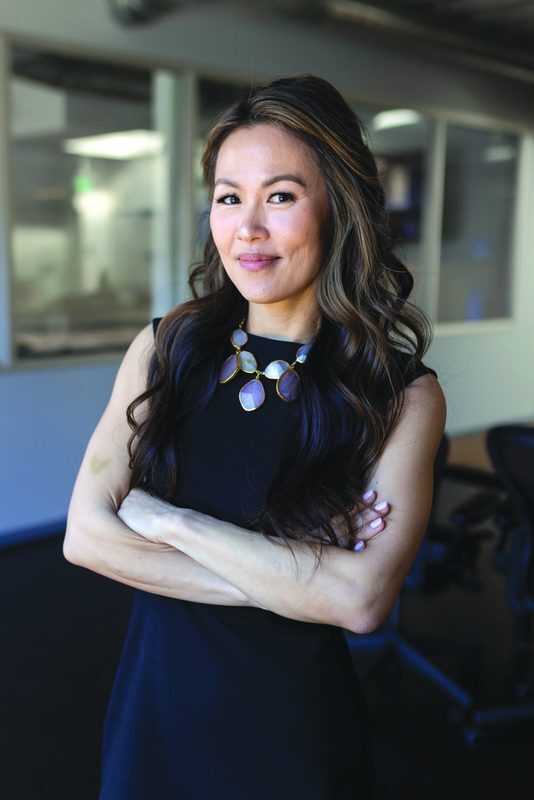
Sohee Jun
SOHEE JUN is an expert on the challenges that face working women in today’s complex world, as well as a sought-after executive coach, keynote speaker, and leadership development facilitator. Sohee has over twenty years’ experience in the corporate world, including serving as the executive director of organization development and change management at Warner Bros. Entertainment. Today, she helps leaders change themselves from frustrated executives to insightful, impactful, and inspired humans. She has worked with many Fortune 500 companies in high-powered industries such as entertainment, gaming, financial services, and engineering. Sohee inspires women to reject societal limitations and instead ask for what they want and need—at home, at work, and in motherhood—during the ever-changing seasons of our lives.
📚 Books by Sohee Jun
Transcript
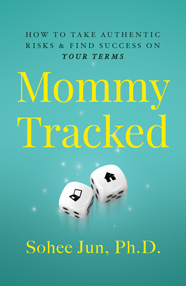
[0:00:25] EG: Author Sohee Jun has a stacked resume as a sought-after executive coach, keynote speaker and leadership development facilitator and most notably, she’s also a mom. She writes about the myth of mommy work-life balance and how to create an authentic life around your own values in her new book, Mommytracked: How to Take Authentic Risks and Find Success on Your Own Terms. In our conversation, Sohee describe the downfalls of the cultural conversations we have around being a professional working mom, how we can embrace more authentic ways of living across the different seasons of our lives, and how we model motherhood to each other. I gained so much insight from Sohee’s vulnerability and I know you will too. Today, I’m joined by Sohee Jun who has written the book Mommytracked: How to Take Authentic Risks and Find Success on Your Own Terms. Sohee, it’s so great to talk to you today.
[0:01:19] Sohee Jun: My gosh, thank you for having me, I’m so excited to be here.
[0:01:23] EG: I’m so excited to share all the wisdom that’s in your book which is for a demographic of people that need it so much, you’re speaking directly to moms who are really struggling with that myth of work life balance. I’m curious, how did you arrive at this as a book topic. When did you know that this was so important to share?
[0:01:48] Sohee Jun: You know, it’s really funny that story. It came bout, I want to say about two and a half years ago, I was in my corporate world and having a one-on-one sit down with one of my employees. We got talking about kind of side tracked about our passions and kind of what we care about and what lights us up on the inside. As I was sharing my story with her, she kind of just reflected back from me, she’s like, well, that sounds like a story you should tell and I go, my gosh, you're absolutely right. Being a working mom and trying to balance and what does that even mean and how do I, is this even the path that I want to be on? I feel like there’s something else and we were talking about all of those things and she says, that’s what you should share, that’s really what prompted me to put my story together which is really woven around the risks and trials that I took.
[0:02:42] EG: That’s beautiful and of such great service to help moms not only see what skills and attributes they already have in themselves that can help them figure that out but also to see a model for how it was done, really on a big scale. I mean, you have done consulting in the corporate world for many years, right?
[0:03:04] Sohee Jun: Yeah, my career spans 20 years and as I love to say, I have the honor of working with and for really great companies in entertainment, engineering, financial, startups. I’ve had, I’ve spent my decades in doing consulting, coaching and organization development work within companies. And then I’ve also made the jump to do my – I started my own firm and really, you know, be of service in a different way, in a way that felt authentic to me. That’s the path I’m on now in terms of owning my own firm and being a leadership coach and working with high performing women, yeah, that’s where I am today. What changed for me is really the stuff that I write a bout in the book which is that I had this yearning, pretty early on in my career that the traditional path just didn’t feel right for me, it felt very confining and that became so much more amplified and so much bigger in my head and in my heart when I had kids. Now I have three wonderful children and having gone through that experience, I knew I wanted a different way of living that incorporated both my family life and my work life and the work that I love to do. It was really about finding that path which led me to starting my own consulting firm and really helping other high-performing women and going into organizations where I know that women want coaches and want support, either to do more in their corporate life or to figure something else out or everything in between. Yeah, it was, when I had kids and I really just questioned everything.
[0:04:45] EG: Yeah, chapter one of your book is debunking the mommy balance myth, how did you come to think of that as a myth?
[0:04:54] Sohee Jun: Gosh, I could go forever on this topic. I think I’ll start by saying that I think we all do it to ourselves. We women perpetuate the myth that is out there in terms of what we’re told by others, in terms of how we speak about being a mom and a working mom and everywhere that we go. One of the things that I point out loud and clear as an example is, you know, I would go to a lot of conferences for the companies that I work for. Anytime there was a really successful woman on a panel, sure enough, the question that always gets asked is, how do you do it all? I really started to question that like how do you do it all? That kind of just sat with me through the years and it made me question how am I perpetuating that in my life? Is it serving me, is it really what I want to be doing in my life and my living authentically and how am I being a role model to others in that way? Is it a service or a disservice to working women? In thinking through all that, you know, I started to see how many messages through social media, through mommy networks or working women in the corporate world that we get about gosh, we just have to do it all. We have to be the great mom that packs all of the perfect lunches and we’re there at drop off and pickup and we also have to spend time with our partners and we also need to look great and we also need to achieve high levels of success in our work world and the work that we do. I just really got finely attuned to that and saw how much we talked about it and tried to kind of chase this goal. It made me question, is there an end to that? What is the achievement on that, what does that look like? It really made me question if that even is realistic. You know, I dare say that it’s not, it’s not in a realistic achievable goal because it keeps you going and forever chasing this elusive balance.
[0:07:05] EG: What have you replaced that myth with? What’s the picture of what looks and feels authentic to you now in your life?
[0:07:14] Sohee Jun: Yeah, how I define that is with the word integration. What integration really means is, looking at the values of our life to what do we value the most, what are those top things that we want to prioritize and how does that fit in to our lives now for the season of life that we’re in. Keeping in mind that everything is fluid and I think that’s one of the traps that we women and people get into in terms of thinking things are not changeable and it’s concrete. But if you look at the span of anyone’s life, things change and evolve over time and that’s okay and that’s expected and that’s normal. For the milestone and the phase of life that you’re in, what are your values and how are you integrating that into your life, how is it showing up? If it’s not, how do we adjust to make that be at the forefront that you feel much more integrated with the values and priorities and that you’re living your life in that way versus through all the shoulds. That’s another big thing I have to tell you Emily, is that, we walk around with a lot of shoulds. A lot of things that we think we should be doing and/or what we tell each other about what we should be doing as working moms or just as highly ambitious women. It’s about taking that noise out of our heads for a moment and reflecting on okay, for this season of my life, if I have three young children, what do I value most, what’s priority to me and how can I make that integrated into my life now. That make sense?
[0:08:52] EG: It totally does and I’m wondering if you’d be willing to paint a picture for us about what’s a time in your life when the way you were operating actually didn’t align with your values?
[0:09:06] Sohee Jun: Yeah, didn’t align with my values. I would have to say, it started out when my kids were really young. Right now, they’re 10, nine and six and I’m talking when they’re just born at one or two, three. Kind of the early years. I was working at a big corporate company at the time and I was grinding and what that looks like is, burning the candle on both ends, trying to be everything at home and trying to not miss any milestones at home and also, trying to overachieve at work. That meant, taking on as many projects as I could, that meant trying to stay late but also feeling guilty about staying late and wanting to be at home but when I was at home feeling guilty about being at home and not working.
[0:09:53] EG: It’s a vicious cycle there.
[0:09:56] Sohee Jun: It is very vicious and we fall into it and we – moms I think, you know, they say, you’re not a mom until you feel that guilt. You definitely do walk around with that and so that was a cycle I was on and I really had to pause, but I didn’t pause, I have to tell you honestly, I didn’t pause until my body told me to pause and often times, that happens as well with really ambitious women which is, if you are not going to take a step back and reflect, I, the body will tell you by getting sick or whatever ailments come up as a result of really burning the candle on every which end as possible. You know, I was always over exhausted. I was not getting enough sleep and as I mentioned in constant guilt and I had to really stop. My body told me I was just – I couldn’t function, I was just too tired so I took a step back and said okay, well, in this season of my life, what’s important, what does integration look like, what would it look like if I tried something different. I thought about it and took the risk of working out a different schedule at work and at that time, this was not a common thing. Not a lot of women were asking for hey, you know, can I do part time, can I do job share, can I do four day workweek or reduced workweek. For me, it looked like a reduced work week and I took the risk of asking for that and took some steps to make that happen.
[0:11:28] EG: What did it feel like to take that risk?
[0:11:31] Sohee Jun: That is such a good question. Because it is scary, it is absolutely scary and I have to say, even to this day, taking a risk, there’s a little bit of, you get the butterflies, you get the – is this the right thing, should I be doing it, it gets easier over time, for sure, but especially the first big risk, the one that you know you should do that feels super scary and you’re sweating it out and you don’t know how you’ll be perceived, really, that’s what came out for me is when I was thinking about taking a risk like that, how I’d be perceived at work, you know? Will I be looked at as not professional or not up for the challenge or not ambitious, as lazy? How will I be looked at by my coworkers, all of these things came up for me. That really made me challenge the thoughts in terms of does that matter for my life and what takes priority. Yeah, and guilt and a lot of fear about if this is the right thing, given my career up to that point and having achieved a PHD and all of that stuff. It all kind of gets big and really amplified in the head and especially the heart as you think about taking risks that are scary to you.
[0:12:52] EG: What was the moment when you knew that risk was the right one to take?
[0:12:57] Sohee Jun: Yeah, I mean, for me, that felt like, it felt much more natural and by that I mean, I felt less pressure all around. First of all, having asked for it and taken and being able to do it, that was a big win in and of itself. And being able to communicate to my boss at the time to say listen, I still want to be here at the company, I’m still very committed and I want to be a part of the big exciting projects and I also want to be more present at home. Really speaking my truth and asking for it, just lightened my load. It was almost as though, this big 30 pound bag of potatoes that you’re carrying around with you because it feels so scary and then once you speak your truth, it becomes so much lighter. After that, it felt much more free and much more authentic and I felt less pressured on both ends because I was able to be present more at home in a way that was important to me and also, to focus at work in a different way because now that I had a reduced work week, I was really much more focused at work. Not to say that people have a normal schedule are not focused but you become uber focused.
[0:14:19] EG: Yeah, it seems like what I’m hearing is that one of the big benefits of speaking a truth in this way too is that, then you actually know that you have support on both ends of that. You know that your employer is signing on for how you want to manage this. It sounds like that just totally takes a load off.
[0:14:38] Sohee Jun: It really does and then about the ability to really hone in on okay, what do I need? So, you start with, “Okay, what do I value? What are my priorities? And then from that, what do I need in this current situation?” And being able to articulate that to someone is very freeing and it gives you energy to then know that you are definitely on the right path.
[0:15:03] EG: And you have spoken so far about it feeling risky to go to your work and say, “I need more family time.” Were there also risks that you took in the other direction where you realized you wanted to or that you needed to step away from some aspect from your family life in order to accomplish what you wanted professionally?
[0:15:23] Sohee Jun: Yeah, you know there is always give and take and so for me it was about, “Okay, how can I shift things around at home so that I have the support there when I need it to be able to show up at work in a way that I need it?” so I was fortunate enough to have – they say you know raising kids takes a village, it really does. It is the same with the book too. I have to tell you –
[0:15:45] EG: Oh yeah.
[0:15:48] Sohee Jun: Writing a book takes a village and it is about being able to ask for support and I think that women often times we feel like we need to do it all especially in today’s world where getting a lot of support or asking for that is really hard for us. That is an interesting thing to look at in it of itself but being able to say, “Hey, I need you, partner, to be there from six to 9 PM because I have to be at a work event in the evening.” So it is about that give and take. It is never going to look perfect and in fact I talk about that in the book, which is there is no perfectionism. It is really about anchoring yourself to the priorities and then shifting things as you need to both at home and in your work life to make it more integrated. So for me, it was asking my partner, “Hey you know I am at work at these hours” and or I have an offsite that I need to be up for three days, which will make me be there really early. It means I have to be there at night to do the team building events. So that will take me away from my kids and home but he was there to support me at that time. So it is about asking for support in the ways that are important.
[0:17:02] EG: And it sounds like a real paradigm shift too from putting the center of your life at what you do for other people, whether that is at work or with your family and shifting that center to inside yourself and checking in with your values first.
[0:17:17] Sohee Jun: Yeah and I think that when you do that it benefits others, right? Because there is that saying you know, happy mom means happy children and happy home and I think there is some truth to that that you know when women feel like they’re living very inauthentically and or grinding at work or you know really so kilter from what they value and what they want their life to look like, they’re not really present at home and they are not giving their best output at work either. Whatever that work looks like so it is really a disservice all the way around if we feel we’re so off center from what is important and what matters in this season of our life.
[0:17:56] EG: And within all of that, one thing I love about your book is you have an entire chapter devoted to self-care. How did you learn how important that was on this journey?
[0:18:08] Sohee Jun: Self-care is such a topic these days and for me, it was really through two huge monumental essence in my life. One back in I want to say 2007 is when my dad passed and it was very suddenly and he passed. There is a car accident and so that for me really kind of shook me to the core and I was about 30 at the time and immediately after his passing, I went back to work probably three days after and that was driven both by what I thought should happen, right? I am a good employee. I need to go back to work, I’m needed there. I want to show my dedication and loyalty to my role and to the company and that was at a total disservice to me and my health and my mental and emotional wellbeing at the time. I was in between meetings crying, I was trying to get myself together throughout the day and you know trying to grieve at the same time and really unleashing at home and it just was I was leaking all over the place and it was not just healthy at all. It wasn’t until probably three or four weeks, maybe a month or two where I started getting stomach pains because I was still grinding at work and not taking care of myself and it wasn’t until the doctor said, “You know, have you had any major stress in your life?” and I go, “Well, my dad just passed” and he goes, “Well, this is why you are probably having stomach pains. Your body is telling you” and so this is one of the things why I say in the book there is so much wisdom in our bodies. And so if we don’t listen to it, if we don’t take care of it and take care of ourselves things will not keep running the way that we want them to and I look at self-care from five different aspects. It is not just about what we see on social media, right? Like about, “Have you done the pedicure and have you done the massage?” which, those things serve a purpose, but I am really talking about the emotional self-care, the psychological self-care, the spiritual self-care of course the physical self-care. All of those things that make us whole human beings and really attending to that and figuring out, “Okay, where are there gaps?” and for me at that time is really allowing the emotional-spiritual care, allowing time for that and really allowing myself to grieve.
[0:20:33] EG: Did it ever feel like a risk to practice self-care when you needed it?
[0:20:38] Sohee Jun: Oh yes, absolutely. I would say that occurred. It felt like a risk and really talking to other moms about it. You know sometimes we can be unite, I would say I probably have been judgmental at times as well. I am not immune to that in terms of you know, “Oh wow, it must be a luxury to care for yourself. So there is kind of this, it can be what I call toxic conversations that we do to ourselves, in our mommy communities or professional working mom communities. And it does a disservice because we all need to do self-care especially around this time when the world has gone a little bit crazy and we’re in some uncharted territory during this time. Self-care, it should be at the top or our list but yeah at the beginning, as I was a new mom trying to figure out can I go outside for a walk and I feel guilty for doing and leaving my baby to other moms saying, “Oh I don’t have help” or I don’t have time to do self-care and then you feel guilty for even thinking about that. So there is a lot of things go on that add guilt to what should be something that is natural and should be a priority.
[0:21:54] EG: Yeah, I especially appreciate what you are saying about how we talk to each other about what we do and really how we model to each other the kind of lives that we want to live. You spoke earlier about all of the should’s, you know all of the should come from what we have seen other do and then how we are reflecting on what we think we should do and I so appreciate the central message of yours that it really is about tapping into your own values and figuring out like how do I want to live my life and that becomes the model for all the people around you.
[0:22:28] Sohee Jun: Yeah, absolutely and I hope that I am serving as model in some way and that women who take those risk, we need to amplify that and we need to share that way more to highlight how it isn’t one track and it doesn’t look one way and in order to follow ambition doesn’t mean that you just climb the corporate ladder. If you do want to do that authentically and it is what your passion is about I think that is fantastic, we should amplify that as well. But it is in sharing stories that are positive about women that take risks and really hone in on, “Okay, this is what I desire for my life.” It may not look like the traditional path or what my friends are doing but this is what feels genuine to me and honoring that and I think that we need to share more of those stories.
[0:23:16] EG: I also love how throughout the book you talk about the ways that we’re conscious of how we are living through all the seasons of our lives and I am curious what kind of seasons have you seen come and go in your own life?
[0:23:31] Sohee Jun: Yeah, I think certain I recall being in my 20’s and really wanting to get as much experience as I could having just obtain my PHD in organizational psychology, wanting to work in a lot of different companies and getting exposure to different cultures in terms of companies and wanting to climb and get the promotion. That was a specific season in my life in which I didn’t mind working all the time like round the clock. Yes, I made time for fun and hung out with my partner and my friends. But really my career was at the forefront and I was happy to do that because there was no other competing priority and then when I decided and we decided to have children that for me marked a different season and entering into a different season of my life in which things started to shift in terms of priorities and so it took a little bit of time as you will see in the book and as readers in the book for my actual day to day to catch up with that change in season. But what it eventually did in terms of allowing me to spend a little bit more time with my kids and allowing me to still work and do what I love, I felt much more integrated and even within that season I have hit different milestones in terms of when my kids were little that looked a little bit different than when my kids at the age of their now and my schedule in life looks a little bit more different too. So within big milestones, there could be shifts within that and it is about allowing ourselves to feel okay. In changing courses and moving fluidly throughout our lives and I think that that’s where we get stuck is I’ve had this career and I’ve obtained this kind of level or role or position or whatever that looks like and I can’t move and there is a lot of women that feel that way that they can’t make changes for whatever reason and so what I ask is that they really slow down and I challenge that in terms of okay, well, what are the things that you can do to feel much more integrated even if it is not about changing your job. And it doesn’t have to be that. It is if one person says, “You know I like my life the way it is but I want to infuse a little bit more creativity because I am a creative person” it is really looking at, “Okay, how do we make those shifts to make more room for the creative stuff that really lights you up” and so it doesn’t have to be big things. It could be little things. It could be little things as well that make a big impact.
[0:26:09] EG: I love that. Well, Sohee, so as you said writing a book takes a village. I am so grateful that you have decided to be the leader of that village and follow through on this book and be able to share your message and share your model to the world. If there were one to two things you wanted people to take away from your book, what are they?
[0:26:32] Sohee Jun: Wow, one to two things.
[0:26:38] EG: I assured you there weren’t going to be tests on your book but yeah, what are the big messages?
[0:26:46] Sohee Jun: So I think one big thing is that it’s okay to take risks and that risk should align to what’s priority for you in the season right? So it doesn’t have to look like jumping off your career. It could be as I mentioned, as small as you know what? I am going to start a new workout because it is important for me to take care of my physical health. So whatever that risks looks like, identify that and then take the micro actions to do that and integrate that into your life. It is all about that. It is the more that we practice taking risks that are aligned to our values the happier and more energized will be and the easier it will be to keep doing that. So that is one big message and then the second big message is that there is no one way. There really isn’t. It isn’t – we shouldn’t confine ourselves to what one path we think we’re on or what that looks like or whatever is the right path. There is no right path. The path is what feels authentic to you and what gives you energy and it is really about tuning into that.
[0:27:53] EG: Well thank you, Sohee. It’s been such a pleasure talking with you. I am so excited about what you’re doing and so excited your book is out in the world. Again, the book is called Mommytracked and besides checking out the book, where can people find you?
[0:28:07] Sohee Jun: Well, they can find me on my website, www.soheejunphd.com or I am on LinkedIn as well, with my first and last name and I am on Instagram as well. Thank you.
[0:28:21] EG: Great, yeah thank you.
[0:28:23] Sohee Jun: This has been wonderful, thanks.
[0:28:27] EG: Thanks for joining us for another episode of Author Hour. You can find, Mommytracked on Amazon. A transcript of this episode as well as all of our other previous episodes is available at authorhour.co. For more Author Hour, subscribe to this podcast on your favorite subscription service. Thanks for listening. We’ll see you next time, same place, different author.
Want to Write Your Own Book?
Scribe has helped over 2,000 authors turn their expertise into published books.
Schedule a Free Consult