Josh Itzoe: Episode 505
Read the full transcript
Josh Itzoe
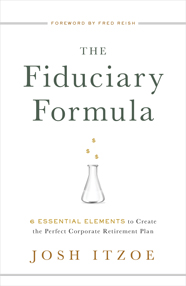
Josh Itzoe is the founder and CEO of FiduciaryWor(k)s. He was previously a co-founder, partner, and chief strategy officer at Greenspring Advisors, where he built and led the corporate retirement practice, growing it to nearly $4.5 billion in assets representing close to 50,000 participants. A Certified Financial Planner and Accredited Investment Fiduciary, he was named a Financial Times Top 401 Retirement Advisor three times and hosts the Fiduciary U podcast. Itzoe is the author of two books, Fixing the 401(k) and The Fiduciary Formula: 6 Essential Elements to Create the Perfect Corporate Retirement Plan.
📚 Books by Josh Itzoe
Transcript
[00:00:19] MR: For years, companies have struggled to create reliable and responsible 401(k) plans for their employees. So much so that companies have been sued tens of millions of dollars for improperly handling the 401(k) plans. How could this be possible? Don't companies want the best retirement plans for their employees? Well, of course. Most CEOs and business leaders want that for their employees, but navigating the complexities of 401(k) plans can be challenging. That's where author Josh Itzoe comes in. In his new book, The Fiduciary Formula, Josh provides a simple and easy-to-understand guide on how to build a retirement plan any company can be proud. Covering everything from plan design, fees, and investments to participant support and provider management, The Fiduciary Formula is a roadmap for making successful decisions for any company. In today's episode, Josh walks us through each element of his formula and how it can benefit not only the employees but the companies as well. Enjoy. Hey, everyone. My name is Miles Rote, and I am excited to be here today with Josh Itzoe, author of The Fiduciary Formula: Six Essential Elements to Create the Perfect Corporate Retirement Plan. Josh, I'm excited you're here. Welcome to the Author Hour podcast.
[00:01:47] Josh Itzoe: Well, thanks for having me, Miles. I'm excited to spend some time with you.
[00:01:51] MR: Yeah, of course. Let's jump right into you. Tell us a little bit of background of who you are and really what inspired you to write this book.
[00:02:00] Josh Itzoe: I am a Co-founder, Partner, and Chief Strategy Officer at Greenspring Advisors. We are one of the country's most well-known retirement plan consulting firms. We work with about 125 companies around the country to help them manage their 401(k) plans for their employees, and we’re coming up on 16 years that we founded the firm. I worked for a big investment firm, a global firm before that. I had a lot of experience in working in the 401(k) industry for 15+ years. I really wanted to write the book to help companies do a better job of creating and managing and optimizing their retirement programs for their employees, and so that was really the impetus to write The Fiduciary Formula. It’s actually the second book I wrote. I wrote a book in 2008 called Fixing the 401(k) and I had been intending to write The Fiduciary Formula which was really kind of call it version two of that first book with a lot more experience and a lot more I think data and evidence to kind of support some of the methodologies and ideas that I like to implement for clients. I'd been meaning to write it since 2015 and had gotten sidetracked like many things in life do. Then over the past year, I really realized that now is the time to write this book and I hope it does a lot of good for Americans all around the country.
[00:03:16] MR: Yeah. It’s such an important subject. When you really zoom out and think about how important it is that companies get their 401(k)s dialed in, it affects every employee and, of course, their lives and then their families. As you mentioned from your first book, this is something that companies are actually pretty bad at. Why is it that companies have had such a difficult time with their 401(k)s and developing ones that actually serve their employees?
[00:03:47] Josh Itzoe: Well, I think that's a great question and I would say it's probably what I would call errors of omission and not volition. I don't think companies intend not to have a really highly optimized dialed in as you describe it, 401(k) plan, but it's not a really high priority for lots of companies. That’s not to say that their 401(k) plan is not important, but most companies are focused on running their business, and I think in a lot of cases there's a lot of confusion. There's a lot of complexity. Most employees think of 401(k) plans probably pretty simple. They log on to their website and see what's the balances in their account. Maybe they select some investments and that's kind of the extent of it. But in reality, there's a lot of complexity that goes into running these plans effectively. But even more than that, there's a really strong need for making strategic thoughtful decisions in terms of how these plans are designed, that they’re designed for success, that they implement the latest and greatest research and best practices. Most companies because they're so focused on running their business, a lot of times they just kind of drop the ball when it comes to their 401(k) plan. That's not to say that every company is like that, and what I would say is that over the past probably five years or 10 years, what we've seen is more and more companies started to wake up and say, “Hey, this is a really important priority, and we need to get more focused on it.” But there's a lot of confusion. There's a lot of complexity. Most 401(k) plans are sold. They’re not bought and I think that creates challenges over time. I think the increased focus also is companies actually have a legal obligation to manage these plans well, and they can be subject to lawsuits and litigation. There's been a lot of high-profile companies. Lockheed Martin a couple years ago, they had to pay their employees almost $65 million for mismanaging their plan. Lots of big companies and educational institutions, colleges have been getting sued over the past decade because they've mismanaged these plans, and so there's a much more intense focus on getting it right. This book is really meant to be kind of a playbook or a guide or a roadmap to help companies do that.
[00:05:58] MR: Yeah, and it sounds like it is complex, and I can imagine the complexity. In this book, you essentially have come up with a formula to help people and to help businesses and CEOs and leaders choose the 401(k) that would be best for their company and their employees, which is so important. In my very small experience in this world, I’ve worked for several companies where I just did very little research into the 401(k) and felt like it was better to go at it on my own and not even invest in a 401(k) with the company. Is that something that you've seen is commonplace where they can be so bad that it's not even worth investing in?
[00:06:38] Josh Itzoe: I would say I have seen that though that's a pretty rare case that I've seen in my career. I've seen lots of broken, messed up, ineffective retirement plans. Most of the time, what I would say is for any employee – Again, employees aren't necessarily the – They're not the target audience for this book. But most companies, many companies offer some type of incentives like a matching retirement contribution which essentially is free money, and they’re trying to incent their employees to participate. What I would say is even a poor plan if you're going to get free money as an employee, it makes sense at least to save enough to maximize whatever the company is going to give you. But what I think you're speaking to is something very common, and it's the fact that the vast majority of employees actually in many ways have very little power or control in determining whether or not they have a good 401(k) plan. Employees really only have the ability to determine do I sign up and participate. If so, how much do I contribute? How much money do I save every pay period? Third, how am I going to invest my money given the set of options or investments that have been provided to me by the company? That is the extent of what employees have power over. It’s really usually three to five to seven people within the company. Typically, they make up what's called the retirement committee and they have – They’re known as, we’re called fiduciaries, which is obviously in the title. The word fiduciary is a very important word under the law, and it essentially means that those people, those decision-makers, that small handful of people of usually executives or business leaders that they have a legal obligation to make decisions about the plan on behalf of their employees that they believe are in their best interest and that are going to give them the greatest opportunity to retire with dignity and not in despair. Because employees have very little power and very little control, in a lot of cases they don't know whether or not they have a good plan and they may not. The pressure really comes down to that small handful of decision-makers, generally that retirement plan committee. They determine how much money is going to be contributed into the plan, like what type of matching there's going to be. They make all the decisions around the fees associated with the plan, and fees can be really insidious. Fees can take a huge bite out of employees’ overall retirement savings over time, and that's where a lot of the litigation over the past 10 or 15 years is focused is around really high and excessive fees. That committee, those fiduciaries, they are the ones who select what fees. They determine what vendors to use. They select the investments. They determine how to design the plan to help employees to simplify the experience of participating and saving money over time. They determine what vendors are going to be hired to provide support services and whatnot. That’s why I think this book is so critically important is because if that small handful of people, those three to seven people in every company that are empowered to make 95 or 98% of the decisions on behalf of all of their employees and friends and colleagues, and really the decisions that small group of people make has a tremendous impact on the outcomes that their employees achieve. Like you said, their families as well over time. And so that's why I wrote this book is my heart, my passion, my desire is really to teach and to educate and to lead and to advise that small group of people. If I can help or our firm can help that small group of people make really good decisions, it’s going to have a far-reaching impact. We advise north of about $4 billion in retirement assets at our company, and that represents about 50,000 employees, north of 50,000 employees across our client base. If you think about that, we’ve got about – I don't know. I'd roughly estimate probably 400 retirement plan committee members across our client base, so probably three to four, if you will, per client on average. Those 400 people are making hugely consequential decisions that impact 50,000 people directly. But then when you factor in family members, spouses, kids, and so on and so forth, you can start to see what a huge impact good decision-making can have relative to bad decision-making.
[00:11:14] MR: Absolutely. A lot of these executives and business leaders, they’re busy running their business, and often times they don't have this kind of knowledge and background into these things, and so they can be easily misled and misguided as far as 401(k) plans go. Thank you for taking your time to write a book like this and help guide them in the right direction and put a plan together. Let's talk about your formula. You created a formula that helps these executives, these business leaders distill this information and look for the things that they need to look for in order to create the best 401(k) plan. So, tell us about The Fiduciary Formula.
[00:11:59] Josh Itzoe: Absolutely. I wasn't a very good high school chemistry student, but one of things I remember is that elements are really the kind of the simplest complete chemical substances, and they form the basic chemical building blocks of matter. Many of us probably remember the periodic table. So, each element corresponds to a single entry on the periodic table. Currently, there's I think 118 known elements in the universe. When two or more elements bond together chemically, it’s called a chemical compound, and a chemical compound is depicted using a chemical formula. One that everybody knows is H2O. H2O which is water is a compound made up of hydrogen and oxygen, and the ratio of hydrogen atoms to oxygen atoms in water is always two to one, so each molecule of water contains two hydrogen atoms bonded to a single oxygen atom, and that is represented by the formula H2O. Hopefully, everybody's either – They’re probably having brain damage right now that they’re thinking about high school chemistry. But the way I really think about helping companies make the best decisions about their 401(k) plan is to really think of it like a formula, and what I've come up with in The Fiduciary Formula is really six what I call fiduciary elements, and they form the basis of every high quality, high performance corporate retirement plan like a 401(k). Each element is part of what I call the periodic table of fiduciary elements. Fiduciary governance is the first element, and really what that means is making sure, just like these business leaders that you pointed out, they’re focused on running the business. It's really putting in place the structures and the best practices to run the 401(k) plan in a similar fashion that they run their business, so wanting to have call it a leadership team. That’s the retirement plan committee and that committee is meeting on a regular basis, and that they are paying attention to the latest trends and best practices and research that they should be. It’s really equipping that small group of decision-makers to be in a position to make really thoughtful, well-informed decisions, and to do it on a consistent basis to meet on a regular basis to make sure that they're moving the plan towards the outcomes they hope to achieve. The second element is what I call plan design. Very simply, that is the ways that they set the plan up to make it easy to help employees save for retirement. That’s really built around what's called behavioral finance or behavioral economics which is really a psychological area of research around how people make financial decisions, and there’s a tremendous amount of research I cited in the book. That's one of things I'm really proud of with this book is it's very evidence-based but there's a lot of research around ways that you can optimize the way a plan is designed to help people join the plan more easily, to save it a meaningful level, to contribute more money over time, to invest appropriately. I’ll give you a quick little example. Many plans historically and still probably about 40% of 401(k) plans in the country require when an employee gets hired that they have to actually sign up for the plan. They have to fill out the paperwork and they have to make a decision affirmatively to join the plan. If you look at plans that are designed that way, what we call a voluntary enrollment plan, somebody has to make the choice, the participation rate or very simply the percentage of employees who actually join the plan and those types of plans, it's somewhere between 55 and 60%. Well, there's a better way to do it. It's called automatic enrollment. It's simple. When an employee joins, instead of requiring them to opt into the plan, you basically automatically put them in the plan unless they decide to opt out. To give you a great example why that's so effective, when you look at plans that are designed that way in the country and that makes up about 60% of the plans in the country, the participation rates are somewhere around 90%. Just that little tweak of requiring somebody to opt out of the plan instead of actually having to make a decision to join the plan can increase the level of participation, and the plan can create the kind of number of people who use it by about 30 or 40%. There’s a lot of research around plan design and there are a lot of ways if a company really wants to do the best thing for their people. They really start to implement and take a hard look at the way the plan is designed, and then they leverage features and best practices to make it easy for people to save and participate instead of throwing up behavioral roadblocks. That's the second element.
[00:16:55] MR: Can I just say, Josh, yeah, like one of my very things about your book which you alluded to is how much research you've done and behavioral psychology that’s in this. When you talk about building a plan like this, it's so important to understand how humans think and function so that we can leverage those things to our benefit, as opposed to those working against us. One of the things that you mentioned in your book is a study where participants saw like a 70-year-old picture of themselves and then they saved much more money because they alluded or they rather saw themselves as a 70-year-old, as opposed to saving for someone that's just like a random picture of some 70-year-old. Talk just maybe a little bit more about that, the importance of understanding those elements so that we can leverage them in the right way.
[00:17:45] Josh Itzoe: Yeah. Miles, you bring up a great point. Most people in our lives don't have a knowledge gap. We’re living in a time and an era where there is more information and knowledge that's readily accessible than at any point in history. That's good but it's also not so good. What I would say is that 50 years ago, even maybe 30 years ago that there was real value in access to information, and there was power and access to information. That's why people hated to go buy cars, because you would go into the dealership 30 years ago and you’d have the car salesperson and they would have all the information. It's called information disparity, right? They would have all the information and you would have no idea about what the invoice price was or what the dealer price was or what the markups were, and so you were at an informational disadvantage and the dealer had all the power. Most people walked away from the carbine experience. They dreaded it. They rather go to the dentist. What happened over the past decade or so and with the Internet, you have things like TrueCar now where I bought a new truck about a year and a half ago. When I did a year’s worth of research, when I went into the dealership, like I knew more about that truck and what the dealer had paid for than they do. I negotiated a great deal because the playing field was level. Now, that being said, that information was out there but I had to do a lot of work in order to find it. What I would say is that most people have a – They don't have a knowledge gap. They have a behavior gap. They have a very hard time – It’s not knowing the right things to do. It’s actually doing them, and people have a really hard time harnessing their behavior. That's a great study that you brought up. It was done several years ago by a researcher and a team. The lead researcher, I think his name was Hal Hirschfeld, and he wanted to find out why people didn't save for retirement, and so he created a really fascinating social science experiment. I love social science research, and so I spend a lot of time reading studies because I'm fascinated about people's behavior. But in this study, he had two groups of people and what he did was the first group, he gave them like virtual reality goggles. He did it with both groups. But the first group, he basically had them see an avatar, a digital representation of themselves, their current age. Then they had a digital avatar of like a researcher that they kind of spoke to in virtual reality. Afterwards, they were given hypothetical $1,000. The researcher said, “Hey, you can do four things. You can spend it on something nice, you can I think put it in a savings account, you can put it in a retirement account, or you can plan an event.” I think those were the four things. The people who saw what I call kind of their current self-avatar, a digital representation of what they look like now, I believe they saved about $80 for retirement. The second group of people, they did the exact same thing, except instead of seeing a digital representation of themself now, they used technology to age people, what they would look like when they were like 70 years old, what they called the future self. Those people saved over $170 for retirement. More than twice with the people who saw their current self was. What's fascinating about that is thatA people have a really hard time, especially the younger you are. It's really hard to imagine yourself in the future in retirement. When people are detached from their future selves, they’re much less likely to plan and save for something that's 30 or 40 years away. But when they were reminded of what it could look like for me to be older, there was something behaviorally and psychologically and emotionally that caused them to say, “Well, I need to save more because I'm going to have to take care of myself when I'm 70 years old.” What was fascinating is the second part to that, they did a second experiment because they wanted to see whether that was just individual aging or whether it was aging in general, and so they did the exact same experiment, except in this time they saw their future self. The one group saw their future self and then the other group saw just some random 70-year-old. Not surprisingly, the people who saw their future self-saved a lot more than somebody who just saw you know some random 70-year-old person. What the retirement industry has spent a lot of money trying to do is you get your nice shiny brochure, and it's got the really attractive elderly couple running down the beach holding hands. Well, it's no wonder stuff like that doesn't help people save for retirement. It's literally the researcher said that just either being disconnected from your future self or seeing some random 70-year-old person, it’s like literally giving money to a stranger. People aren’t going to do that. That’s really deep in the weeds, but I would say that I think the book has a lot of examples like that, and borrows from a lot of that research and research like that to make the case that there is a better way to make decisions about how you design your plan. Therefore, by doing that, you can help your employees really get out of their own way. There are ways to use features and strategies that help them get over those behavioral roadblocks that they may be facing.
[00:23:23] MR: That's amazing. I'm so glad that you touched on that, and it's such an important part of your book because that’s something that resonates with me so much is that disconnection of future self, as far as thinking about finances, so it's amazing. Sorry to tie you up on that one where the plan doesn’t work.
[00:23:39] Josh Itzoe: No worries.
[00:23:39] MR: It’s so important and I love it so much. Let’s talk about the third element of The Fiduciary Formula, fee structure.
[00:23:47] Josh Itzoe: Fee structure. That is really just helping companies. There's a lot of confusion and quite frankly a lot of wasted money within the retirement industry because fees are not either negotiated or structured as effectively as they should be. Quite frankly, I’ve often said throughout the years is that behind Vegas, the retirement industry is like the second-best gaming operation out there. That element is entirely focused around helping the fiduciaries, the committee members, the decision-makers really get a clear sense of what the fees associated, what the plan are that ultimately 90 or 95% get past through the plans, so they get paid by employees. As an employee, you really want to make sure that your company is helping to negotiate the best deal on your behalf because it makes a huge impact on your retirement savings over time. It’s really focused on helping optimize and align and negotiate and streamline the fees associated with a corporate retirement plan. The fourth element is what I call investment process, and it's just helping those decision-makers select the right mix of investments, being able to monitor those investments over time, being able to select not just the right investments but the right number of investments going back to some of that behavioral theory. Generally speaking, research has shown that too many investment options create suboptimal outcomes for employees because they get paralysis by analysis. The more – Once you get over like 10 or 12 investment options in a plan, what you start to see is that for each additional option, it has a negative impact on people's participation in the plan and it increases the probability that people will not invest anything in like stocks or equities over time. There are some really fascinating research and, again, best practices to help make sure the company is running through a process to select the right investments that they then make available to employees to make their own investment decisions from there.
[00:25:52] MR: That’s amazing, yeah. More choice does not necessarily mean more freedom.
[00:25:56] Josh Itzoe: There is no doubt about it. Unfortunately, again, it goes back to dispelling some of the myths. In most cases, people think that more choice unlimited choice is better because it gives you more optimality, and that's only true to a certain point. It’s really, really important. I think what the retirement industry has done for 30 years has really tried to make individual employees better investors. While that's a noble pursuit, I think what we found and I cite some of this research is something around 60 to 80% of employees say they don't have the time, the will, or the skill to make their own investment decisions. They actually would prefer to hand over the keys of making investment decisions to some type of professionally managed approach. Again, there's a lot of strategies and ideas to do that, but we’ve tried as an industry. We’ve tried to force people to teach them to be better investors when the vast majority say, “I don't even want to do that. I just want to have somebody do it that I trust do it for me.” There are some thoughts and strategies and ideas around selecting and monitoring and structuring the investments in the most effective and efficient way possible so that you create a good user experience for your employees. The fifth element is what I call participant support, and so this is some really fascinating I can think research around and some ideas around things like financial wellness and financial well-being. Our research has shown that, and it is supported by a lot of other industry research, but that financial stress levels of employees are off the charts. We did a survey, a study in 2019. We had almost 1,900 people participate and 45% said they experienced financial stress on a regular basis. When you looked at those 45%, it was dramatic how it impacted. They were 17 times more likely to be worried about running out of money. They were 16% less likely to actually be saving for retirement. They were like five times more likely to be worried about debt, and it actually impacted. They were – I think it's something like a third more likely to feel like their employer didn't care about them or to feel like that their employer's benefits were not as good as like competitors’ benefits. It's really fascinating. We believe that financial wellness and financial well-being are related, and so we’ve got some strategies looking at the research and then prescribing some strategies for how companies can address the financial stress issue with their employees. This is all pre-COVID-19, so I can – We’re getting ready to embark upon the 2020 version of the survey, and I suspect those stress levels are going to be more elevated, given what we’re in the midst of with this pandemic. Lastly is just the sixth element is what I call provider management, and that's just helping companies know what to look for and really hire the right experts, whether that means an advisor like our firm at Greenspring Advisors, whether that means like a record keeper like a Fidelity or a Vanguard or a T. Rowe Price, the big financial institutions, whether that's hiring things. Some plans, once they get over 100 employees, have to be audited by CPA each year. I’ve got some really great strategies and recommendations to make sure that companies know how to do the right due diligence and know what to look for to get the right business partners and experts, because that's what the law actually says is that if a company doesn't have the in-house expertise and most don't is that to fulfill their duties under the law they need to hire experts. Unfortunately, lots of people in the industry are what I would call dabblers and not necessarily experts. If you’re a company and you're not getting expert advice, so you don't know what to look for, then it’s unlikely you're going to get really good advice and get really good outcomes for your people. When you take those six elements, those are the only six that matter. If companies can follow kind of the prescribed methods and ideas and best practices and can interact with some of the research that I provide, what I'm hoping it does is that they’re inspired to kind of follow the advice. If they do that and they take those six elements and they combine them together in the formula, if you will, that they're just going to have a much-improved high quality, high performance plan. It’s going to take care of their people. Their people are going to feel less stressed. They're going to be progressing more successfully towards retirement. Ultimately, I think in this future COVID-19 world is that employees, especially top employees, are going to be looking to align with companies and engage with companies and work for companies that are really focused on their best interest and not just the bottom line. That's what I hope is that this teaches companies how to have a perfect corporate retirement plan for their people.
[00:30:56] MR: That’s amazing and it's so important too not just for the employees. But when you zoom out and look at this on a just practical level, companies and CEOs have not only a legal obviously requirement to do this, but this can significantly improve their business. When you have a business full of employees who feel excited and good and clear and transparent about their retirement and know what they're getting and know that they have valuable plan, they feel empowered to stay at the company, to work harder, to be proud of their company, to talk about their company. It's really – It would behoove any business leader not to take this more seriously and try to have the best 401(k) for their employees.
[00:31:45] Josh Itzoe: Yeah. I think I could not agree with you more. Somebody who own – We’re 25 people. We’re a small company but it started with two of us, and I totally agree. At the end of the day, every company will tell you that culture matters and that their people are their most important asset. I would argue that in some cases, it’s not just saying the right things. It’s doing the right things. One of the reasons I think that more companies pay attention I think their benefits historically, I would say that the most important benefit that a company focuses on is healthcare insurance. That's the highest priority and partly I think that's probably what's been most top of mind for employees in many cases. But what's interesting, again, think about incentives, company spend a tremendous amount of cost every year on health insurance and health insurance premiums. Certainly, employees contribute to that as well. But there's a big financial incentive for companies to be diligent about the health plans that they select because it's impacting the bottom line. Does that make sense?
[00:32:53] MR: Right. No, absolutely.
[00:32:55] Josh Itzoe: What's interesting is because companies in most 401(k) plans is 90 or 95% of the fees, the cost of the plan can actually be run through the plan. There hasn't historically been a huge financial incentive for companies to do the same type of due diligence or give the retirement plan the same type of focus and attention. Now, that is changing. But yet to your point, I think that’s just one when you start to think about behind-the-scenes or underneath the water line. It's all about kind of incentives. But I do believe that more and more companies, we have a moral imperative to take care of our people. If you take care of your people, ultimately your people are going to take care of your customers. If your people take care of your customers and your customers are satisfied, you're going to have a really good business. There is a virtuous cycle. Like I said, most companies that I’ve come across, there are very few companies in my career and I've worked with hundreds of companies where I've come across where I feel like the leaders truly don't care about their people at all. I’ve come across some of those companies but not many. I think in most cases it's a lack of knowledge. One of the anecdotes in the book – I’m a product of the ‘80s. I’m in my mid-40s, and one of the things I loved when I was a kid before Netflix and Amazon Prime was Wednesday afternoon cartoons. I would come home from school and I would watch cartoons and one of my favorite was G.I. Joe. In the ‘80s, at the G.I. Joe cartoons, at the end of each episode, you would get one of the characters like Duke or Lady Jane. They would come out and they did what was called a public service announcement, right? You’d have like the little group of kids playing baseball in their backyard and one of them hits a homerun but it breaks the neighbor's window and everybody scatters and you got the one kid who like is looking around deciding what to do. Duke would come out and would talk about having integrity and owning up to mistakes. At the end, Duke would say, “And now you know.” Then the kid would say, “And knowing’s half the battle.” In my opinion, this book I'm hopefully in some ways – It’s like that public service announcement for companies. Hopefully, it teaches those decision-makers who have this incredibly important responsibility to their friends and their coworkers and their employees. If they can know the right things, the rest is up to them. Knowing is half the battle, but it's actually what you do. One of my favorite quotes is by Teddy Roosevelt. He said that knowing what's right doesn't mean much unless you do what's right. The Fiduciary Formula is all about hopefully creating a resource to help companies do the right thing.
[00:35:28] MR: Josh, this has been such a pleasure. Thank you for all that you do and for making this a priority in your life and really impacting tens of thousands of people, if not more. We’re grateful. Everyone, check out the book. It's called The Fiduciary Formula: Six Essential Elements to Create the Perfect Corporate Retirement Plan. You can find it on Amazon. Josh, besides checking out the book, where can people find you?
[00:35:51] Josh Itzoe: I think the best place, they certainly can go to our company website, greenspringadvisors, A-D-V-I-S-O-R-S.com. But I think the best place to go for the book, we’ve created another resource called fiduciaryu, the letter U.com. We’re launching a podcast as well that's focused around this topic. You’ll be able to learn more about the book there as well. I think that's probably the best place to go, www.fiduciaryu.com. Then you'll be able to connect with me on LinkedIn or Twitter Instagram, be able to find our corporate site as well. But I really have enjoyed being on the podcast. I'm so grateful for the opportunity to tell the story and I’ve had a great time, Miles, so thank you so much.
[00:36:30] MR: Of course. Thank you, Josh. I really love your book and I definitely recommend it. Take care. Thanks again for joining us for this episode of the Author Hour podcast. You can get Josh Itzoe’s book, The Fiduciary Formula: Six Essential Elements to Create the Perfect Corporate Retirement Plan, on Amazon. You can also find a transcript of this episode, as well as our previous episodes on our website at authorhour.co. For more Author Hour, subscribe to this podcast. Thanks again for joining us. We’ll see you next time, same place, different author.
Want to Write Your Own Book?
Scribe has helped over 2,000 authors turn their expertise into published books.
Schedule a Free Consult