Mike Brown: Episode 511
Read the full transcript
Mike Brown
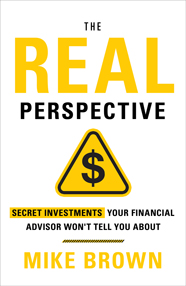
Mike Brown is a financial advisor and the co-founder and managing member of Red Fox Capital, a private commercial real estate investment fund. He brings more than twenty years of experience challenging investors to look beyond Wall Street, and he completed the Certified Commercial Investment Member (CCIM) curriculum. In The REAL Perspective: Secret Investments Your Financial Advisor Won't Tell You About, he explains why adding private commercial real estate to a portfolio can help investors avoid common traps and pursue long-term returns.
📚 Books by Mike Brown
Transcript
[0:00:41] EG: Here’s something your financial advisor probably won’t tell you. Investing in Wall Street alone actually isn’t a sustainable long term strategy for accruing lifelong wealth. Author Mike Brown has released a new book to divulge all the secrets your financial advisor might not be telling you, especially how to create healthy diversity in your investments with commercial real estate. The book is, The Real Perspective: Secret Investments Your Financial Advisor Won’t Tell You About. In this interview, Mike shares some of the best advice from the book for how to create a thriving investment plan. Mike Brown, welcome. I’m excited to sit down with you today and talk to you about your new book, The Real Perspective.
[0:01:22] Mike Brown: Thanks Emily, I’m glad to be here.
[0:01:24] EG: I’m particularly excited because I got to see your book in its early stages right when you were first starting to think about writing a book about this topic. What drove you to realize it was time to share this knowledge?
[0:01:39] Mike Brown: Well, you know, it’s a message that’s really not out there in the general public and over my years of experience working in both commercial real estate investments and the wealth management business, I saw the two industries just knocking heads with each other and your traditional financial advisor knew little to no information about the commercial real estate side and was hesitant or prohibited from their companies to allow clients to invest in other assets, namely commercial real estate and from the commercial real estate perspective, they had their head in the sand and stayed off the traditional Wall Street products and only invested in real estate. I thought it to be a natural fit to bring the two worlds together and in doing so, we’re able to drive returns for our clients and create more safety and diversification.
[0:02:34] EG: You got into commercial real estate, you write, because you were able to apprentice under a mentor at first. What was that like?
[0:02:43] Mike Brown: Well, it was a small firm, commercial real estate, it’s kid of been an apprenticeship type position, like residential real estate where you get your license and they throw you out there and sell houses. We’re a small boutique firm where we had a chance to go hands on everything. We would work with clients, we would do development projects, setting county town hall meetings and try to have our clients to get through approvals and investment real estate, clients build their wealth through looking and acquainting and improving properties. We did a whole array of things that I wouldn’t have gotten under different experience where we worked with industrial properties office, retail, land development and it was a great experience.
[0:03:29] EG: Do you think that it’s important for people who are dipping their toes into commercial real estate for the first time to find a mentor like you did?
[0:03:37] Mike Brown: Absolutely. It’s a complicated business and there are so many aspects to it, every contract, every deal, every property we look at is different, there’s some similarities but overall, it’s a very complex animal.
[0:03:52] EG: The subtitle of your book is Secret Investments Your Financial Advisor Won’t Tell You About and I loved how you wrote about going to school to become a financial advisor and how they literally told you not to talk about these kinds of options, it was considered selling away a client.
[0:04:13] Mike Brown: Yeah, it was quite alarming to me – that conflict of interest that came up so quickly. The last firm I was with and I told them that I was actually writing this book we’re talking about today – they told me I could not publish it, there is no way it would be published. I said well, “I’ve got to find a different way.” This message needs to get out there and the average investor is being hurt by this. I left and started my own independent firm where we could bring wealth management and commercial real estate investing and give clients good holistic across the board comprehensive financial planning.
[0:04:51] EG: Was that scary to make that transition?
[0:04:54] Mike Brown: Of course, it is but I knew I had no choice. It was the best thing for my clients and I did not feel right selling the messages that I was being told at my firm at the time so it was easy in that regard that I can’t put family and friends and colleagues into these investment products, knowing it’s not the best for them.
[0:05:17] EG: How many advisers would you estimate actually give advice on diversifying or allocating a portfolio with commercial real estate in it.
[0:05:27] Mike Brown: Well, interesting, I think if you asked the traditional financial advisor, they would probably say, “We all do.” What they really are doing is recommending stocks that hold real estate holding. Real estate investment trust stock which is nothing but a stock, it correlates directly with the Wall Street markets. I would argue that it’s not a diversification. Most financial advisors say, “We’re completely diversified,” but in reality, they’re only diversified within the wall street portfolios and that is what’s harming the general public and the investor community.
[0:06:05] EG: The difference of course being that if you invest in a stock of a company that is putting together commercial real estate deals, you’re not actually seeing the full on profits of an individual deal, you’re only seeing the success of that particular company.
[0:06:22] Mike Brown: That’s right, I’ve invested personally in a number of these real estate investment REIT stocks. I’ve lost money in all of them and I’ve never known particularly where these properties are located or how they’re being managed and they just typically trade alongside the SMP 500. EG: It’s kind of all the same. What does your own personal asset allocation look like these days? What we like to look at is a complete uncorrelated allocation. I remember reading the quote and I think I have it in the book from Ray Dalio, one of the most successful hedge fund managers out there and he said, ‘Owning 15 uncorrelated investments can reduce your overall risk by about 80% and then you’ll increase your return risk ratio by a factor of five,’ so doing this, you’re getting returns five times greater by reducing your risk. What we try to do is, when I have a new client come into the office, I take their current investment portfolio and I’m running an analysis through our computer systems and we have three buckets and one bucket is what we call the Wall Street bucket. Those are all your investments that are correlated to Wall Street. Most likely, your 401(k), IRA, retirement plans fit into that bucket. Then we have a bucket called alternatives and that’s where real estate, commodities, gold, silver, things like that, and then with a third bucket is, uncorrelated to Wall Street, cash, typically cash, CDs, things you have at the bank and it is alarming to see most of our clients come in at about 90% correlated to Wall Street products inside that first bucket. What we have to do is reallocate these portfolios. Typically, we would say that you don’t want anything more than 50% of your portfolio correlated to Wall Street markets. For example, we’ve gone back to a group called Tiger 21. Which is a group of elite business people, the initial network to be a member is 10 million dollars. They did a study that I thought was very interesting and where they said, for individuals with up to three-million-dollar net worth, they allocated into real estate about 25%. As the net worth increased up to let’s say, 10 million, they saw the allocation under real estate up to 45%. We said look, they always say the rich get richer. It’s true, they’re investing smarter and doing things that the average investor’s not doing. That’s how we approach looking at a client’s asset allocation and trying to disperse it into these new buckets.
[0:09:04] EG: You also have a quote from Andrew Cardigan which he says that 90% of millionaires become so by owning real estate.
[0:09:12] Mike Brown: It’s true and you’ll find time and time again, these quotes through people through history. Like they say in real estate, they’re not making anymore of it.
[0:09:20] EG: How many people do you think are out there that could be taking advantage of commercial real estate investments but they aren’t?
[0:09:27] Mike Brown: I would say, anybody that has a 401(k), an IRA, money in retirement that wants to look at a different approach could take a serious look at this. To put a number on it, I would say, the majority of Americans today.
[0:09:45] EG: Wow. I think for many of us, I know this was my misconception was that commercial real estate is really an option for the wealthy but it sounds like you’ve found ways to make it a lot more accessible for many more people.
[0:09:58] Mike Brown: True, I think that’s one of the misconceptions with commercial real estate is that it’s too big, it’s too complex, I don’t understand it, I don’t have the money to buy a five million dollar building and that’s not true.
[0:10:11] EG: I love this phrase that you use in your book and I remember you saying it when we were having discussions about your book idea early on, that your mantra is, “Think global invest local,” describe what that means?
[0:10:26] Mike Brown: Well, we really developed that through a lot of our clients where we only buy real estate assets in our local geographic area for a number of reasons. First of all, we can get to it, we can see it, our clients and investors can see the properties, they can drive by it and say “Hey, I own that property.” Also, geographically – local, you know the markets. I think we talked in the book about we had private equity groups in Miami that called us one time to ask about a particular building, that they bought but have never seen it, and did not know anything about their tenants and I just don’t think that’s a good way to approach an investment. Not having any access to it, not understanding the nuances of the local markets. That’s really what we mean by invest local.
[0:11:16] EG: Is it usually the case that people who invest in commercial real estate also are pretty tied into the deal in terms of really paying attention to all the information coming in and out or do most people rely on a fund manager for that?
[0:11:30] Mike Brown: They typically rely on us as fund managers, we try to communicate with our group on a quarterly basis, just starting out, we communicate it monthly and a lot of our clients says look, I know you guys are handling it, stop calling us all the time, but we try to keep transparency alive and well and we believe that’s important.
[0:11:51] EG: I was also blown away by this fun fact you had in your book, it may be a very common one that lots of people know and this is just a factor of my own financial literacy but you write that McDonalds is not a restaurant chain, it’s actually a real estate business. When you described how that works, it just sort of blew my mind like suddenly, this invisible world of how commercial real estate works was a lot more visible to me and I wonder, first, can you describe a little bit how that works, the McDonalds is not what we think it is.
[0:12:27] Mike Brown: I try to throw some fun facts in. I mean, this is not exactly the most exciting subject in the world so we try to put some fun things in for readers but yeah, Ray Croc, I remember seeing something – he was speaking at a lecture hall. I think it was Columbia Business School and he told the students, “I am not in the hamburger business. I am in the real estate business,” and I thought that was very interesting. They bought some of the best corner lots throughout America and the world and he goes, “Look, we flip hamburgers to pay the rent and keep building our assets and real estate. That is where the real money is.” And way back when in small business growing up, I was always told, “Control your own real estate because that is where the true wealth is when you sell your business,” and I think Ray Croc had hit the nail on the head.
[0:13:15] EG: And are there particular ways in which understanding the way he set up that business model influences the way that you think about commercial real estate?
[0:13:26] Mike Brown: Well absolutely. I think you know, first of all, he showed us how to scale the business and the importance of having good tenants on your real assets and having a viable business that works for both parties is one of the big lessons I think I have learned there.
[0:13:43] EG: Right, you may not want to share this but are there any notable failures that you’ve made along the way of learning how to work this way?
[0:13:49] Mike Brown: Absolutely. I think if you have a 100% success ratio you’re not on this business. I remember, not this extreme but I remember an old real estate developer told me, “You are not a real developer until you’ve been bankrupt twice,” and that was shocking to hear. I’ve never been bankrupt, thank goodness but we’ve definitely been caught in recessions and business cycles where we had to re-evaluate and reposition properties and cash flow became difficult. But that experience has made our investing model better. We try to position ourselves in properties that can withstand those downturns and sometimes thrive and release that back. So with experience and awful downturns, it just makes you a better investor.
[0:14:39] EG: Yeah, you paint a really good picture of the history of Wall Street investing especially in your book and how lucrative it was at one point and why it really isn’t serving people anymore. It was really helpful because it challenges that narrative I think we have in this culture about Wall Street will just live forever.
[0:14:59] Mike Brown: Right, unfortunately yeah I do beat up in Wall Street pretty good but I also make it clear that you still need Wall Street in your life. We still need those investments in our portfolios and the one thing I hate to hear is the Wall Street guys say everything needs to be in Wall Street or real estate guys says everything needs to be in real estate because I just don’t believe that. We talked about having a diverse, uncorrelated investment portfolio to be successful. But the Wall Street guys, being inside the companies watching what management was telling us to do as financial advisers just became unbearable and what’s scary I think in the future is that most Americans have the majority of their retirement accounts tied up in the 401(k)s and if you really look at a 401(k) it is most likely going to be comprised of mutual funds and I think I put a stat in there that say that 96% of mutual funds don’t beat the market or even come close to even make any average to the market and that is sad.
[0:16:05] EG: Doing your due diligence is such an important topic in your book. You devote an entire chapter to it. When it comes to due diligence around understanding who you’re working with and who is managing your money and I am wondering what do you see as the most common miss steps people make in their due diligence?
[0:16:25] Mike Brown: Well, you know I have seen a lot of clients come in and simply got a rapport with somebody and sign on the dotted line and turnover their hard earned money to someone that they really haven’t checked out and someone who they really haven’t understood their investment philosophy but it all goes back to the old Bernie Madoff days, where transparency and due diligence become utmost important with people in their investment world. And just because you have a rapport with somebody that is a good thing but you also need to know what they have done in the past in the real estate perspective. Have they flipped homes? And they were maybe successful flipping the houses and now they want to venture into maybe putting an office building deal together or self-storage facility together and that is two different things and you need to know what their experiences in and as far as the wealth management side, were you in a big firm where they were pushing specific products down your throat or do you have experience of being able to look at alternatives and have some color in your past that can bring that experience to your individual client.
[0:17:36] EG: I think you have been spying on my meetings with my financial adviser. I am unfortunately one of those people who I just developed a rapport with someone. I trust him because he teaches me well about financial concepts I don’t understand but I am ashamed to say I really haven’t looked much into what his track record has been and what results he’s gotten from other people. I only know what he has done for me.
[0:17:59] Mike Brown: Everyone I talk to has a financial adviser and they all have good intentions but they’re only providing you what they have to offer and they are always able to say, “Hey, you know the stock market just crashed again but don’t worry, it is not a loss. It is just a paper loss. We just kicked the can,” and we shared charts in the book about what that really means and it is eye awakening to see just because of the dips in the markets, it takes a lot more to get you back on par and there are other methods out there that can really help and stabilize and grow your wealth without risking your hard earned money.
[0:18:39] EG: And I will say a huge kudos to you for including all that math in your book. I say all that math, it is not really like a dense read or anything but you were able to walk through those calculations about what happens to investments in Wall Street long term and what happens to your overall pot of cash basically after fees. These are all things I had never really gotten that big picture view on before and it was frightening and so thank you for your book because it is definitely going to help me change my habits.
[0:19:14] Mike Brown: I think my next book will be how to fire your financial adviser.
[0:19:18] EG: Yeah, I can be a guinea pig. No, I think mine is okay but I definitely need to do some more research into that. Thank you so much.
[0:19:27] Mike Brown: You know it comes back to I think building rapport like the women in your life, you hear them the relationships they’ve built with their hair dressers and for god sake, even if they get a better haircut time and time again, they can’t break up and it is crazy.
[0:19:42] EG: Yeah, I had one more technical question to ask you, which is in the last chapter of your book, you talk about the difference between residential real estate and commercial real estate as being the difference between forced saving in the case of residential and forced appreciation in the case of commercial real estate. Can you unpack that a bit?
[0:20:04] Mike Brown: Yeah, I think forced savings was a concept that was created back after when the World War 2 guys came back and people really started creating mortgages. It was when the mortgage industry was created. I mean before that, people pay cash for their homes and that concept, forced savings, you are paying your mortgage, you’re creating equity in your home and it became the go to American Dream. When you look at a commercial property, forced appreciation is where we can take an asset, and doing a few tweaks, we can drive the evaluation so much higher. For example, you know residential homes, guys out there investing in residential properties, it is a tough go because appreciation in residential properties is not that much and if anything goes wrong during that year of investment for example, your HVAC goes out, your tenants typically turnover on an annual basis, you got to repaint, you got to put a carpet, you got all kinds of issues and the cash flow margins are so think for the investor from the rent they are getting plus the mortgage they are carrying. So you can easily wipe out your entire profit with the tenant turnover. On the other flip, the forced appreciation, we could take a for example, a multi-family apartment complex or an industrial property and simply raise the rent 25 cents and we do escalators in our leases. So it is a 3% rise anyway every year but tweaking these little things drive the net operating income which is how commercial real estate is valued. So we can increase the evaluation of the properties through many different ways unlike the residential world.
[0:21:49] EG: Because you have that many more tenants, that many more clients that you’re working with?
[0:21:53] Mike Brown: Yeah and we work on an income approach to appraisals and valuations. So if I can drive the income on the property, we can create the overall evaluation much faster. In a residential property, if for example, the individual is paying $1,000 in rent a month there is really not a lot of wiggle room there. I can’t just come in today and say, “You’re rent is going to be $1,500,” so that is the stark difference between two asset classes.
[0:22:21] EG: Yeah, thank you. That makes a lot of sense. Well this has been such a great conversation to have with you Mike. I’ve learned a lot and I know that readers are going to learn so much when they dig in and find out all the details in your book. If you wanted people to take away one or two key lessons from your book, what are they?
[0:22:40] Mike Brown: Well, I would say take a hard look at your finances and investments and understand that you have a great relationship with your current adviser but what does that relationship costing you? Is it costing your ideal retirement vacation? Is it costing you your children’s college tuition? I don’t know what that means to you but aside from the fact that you have a wonderful relationship with your advisers, step back, take a not emotional look. Let us take a look at where you stand today. Are you misallocated? And take a logical approach to the next step and we’d be more than happy to help you in that regard if you need to but I think that is what I want people to take away from the book.
[0:23:27] EG: It has been such a pleasure talking to you. Again, the book is called, The Real Perspective, and besides checking out the book, where can people find you?
[0:23:36] Mike Brown: Well, you can look at our real estate investment firm website, which is redfoxcapital.co. We are upgrading our wealth management website right now to reflect some of the changes with the new release of the book but I can be reached through there at mike@brownbuildingwealth.com and send me an email. I would be happy to get back with anybody that has any questions or like a free comprehensive evaluation of their current status.
[0:24:12] EG: Thank you so much Mike.
[0:24:14] Mike Brown: Thank you, I appreciate it Emily.
[0:24:17] EG: Thanks for joining us for this episode of Author Hour. You can find, The Real Perspective, on Amazon. A transcript of this episode as well as all of our other previous episodes is available at authorhour.co. For more Author Hour, subscribe to this podcast on your favorite subscription service. Thanks for listening. We’ll see you next time, same place, different author.
Want to Write Your Own Book?
Scribe has helped over 2,000 authors turn their expertise into published books.
Schedule a Free Consult