Chad Slagle: Winning in Retirement: When Every Day is Saturday
Read the full transcript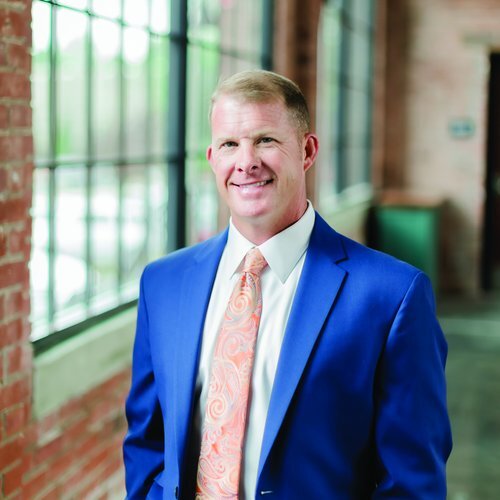
Chad Slagle
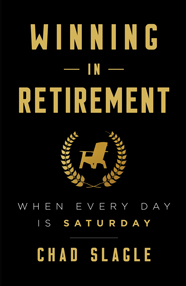
Chad Slagle grew up in a small Illinois farm town, where he learned the value of hard work early. That work ethic carried him through college football, ten years of coaching high school football, and the launch of his own financial firm, which he started out of the back of his truck. He is the president and founder of Slagle Financial, with offices across Illinois and Missouri, and the host of The Chad Slagle Show: Coaching You To and Through Retirement. He is the author of Winning in Retirement: When Every Day Is Saturday, a practical guide filled with action items, client stories, and life lessons for the next phase of life.
📚 Books by Chad Slagle
Transcript
[0:00:23] MR: For many people, planning for retirement can feel like a huge mystery and with all the countless books that discuss technical investing and all the technical terms that come with it, it can feel overwhelming and confusing. And then there’s Chad Slagle and his new book, Winning in Retirement: When Every Day is Saturday. You see, Chad isn’t like other financial planners, he grew up in a farm, played football in college and coached high school football for a decade and as you’ll see in today’s podcast, when he talks planning for retirement, he communicates effective strategies and clear relatable language that not only helps you understand investing and finances but makes you feel excited about it. Plus, his new book is packed with action items, stories from clients and life lessons that will show you what’s possible for the next phase of your life and handy the roadmap to get there. In today’s episode, we cover the importance of building a plan early, the three buckets you should keep your money in and a simple formula that will change how you think about investing. Enjoy. Hey everyone, my name is Miles Rote and I’m excited to be here today with Chad Slagle , author of Winning in Retirement: When Every Day is Saturday. Chad, I’m excited you’re here, welcome to the Author Hour podcast.
[0:01:54] Chad Slagle: Well, first of all Miles, thank you very much for having me. I look forward to sharing the book with you and hopefully sharing some insight for your listeners.
[0:02:03] MR: I’m excited too and before we jump into the book, let’s actually start with a quote that you have from your book that really I think, provides some insight as to how you came about writing this book. Here’s a quote from your book. “Everything I learned about business was learned on a farm or in a locker room.” I think that’s so interesting with a book like this. Maybe tell us how that came to be.
[0:02:28] Chad Slagle: First of all, you’re product of your environment — where you grew up, how you grew up, the lessons you learned growing up. And really, everything I learned about life, about hard work was growing up in a small farming community. My mom has actually 12 brothers and sisters, I always had a job every summer, whether it was on the hog farm or whether it was cutting weeds out of beans, whether it was putting up hay bales or straw bales. That was kind of my childhood when I wasn’t in school, I was working. First of all, that gave me a very good work ethic. And then the other part of, I think about being no matter what you do, whether it’s financial planner, whether it’s a plumber, whether it’s an architect. I think you have to have a good work ethic. But I also think you have to have a plan in whatever you're doing. And the planning part comes in, of course, from playing sports growing up in high school. Of course, playing sports and then going to college and playing football in college and then of course, coaching high school, football for 10 years that are pretty high-level. It helped me realize how important planning is and how important it is to have a game plan if you want to be successful in anything that you do, whether it’s running a business, whether it’s running a team or really, you know, you have to have a game plan in running your family as well and what that looks like. Really, I think, I’m a product of my environment. Where I grew up, how I grew up, and the lessons I learned growing up in that small farming community and growing up in a locker room.
[0:03:52] MR: Yeah, one of the most important parts of your book is really about creating a plan and then the structures essentially to stay on track with that plan. And before we jump into that, let’s just first hear how you essentially went from coaching football into this whole world. Because I know you essentially started it out of the back of your truck as you were coaching football.
[0:04:13] Chad Slagle: Well, the reason I went to college of course, number one, was to play football. Number two was to get a degree. And my whole game plan growing up and going to college was, I was going to be a police officer. So, my major was sociology, criminology, that was my plan. However, when I got out of college, about three weeks out of college, I figured I had to have a job. And my summer job previous to graduating was actually putting in concrete foundations, very hard work. On Monday, I was going to accept this job and go back to my old job of putting in foundations and doing flat work and concrete work. However, I answered an ad in the paper the Thursday before. And it was for sports-minded individuals and it was sales, basically. I actually thought, when I first — before I went to the interview, I thought it was selling sporting equipment, I felt well, I can do that. Come to find out, it was actually going door to door selling medical supplements and long-term care insurance to people who were retired. I took that job and within a few months, I just realized that I was good with people who are retired. When I sat down with an individual, I would sit down and treat them like I was talking to my grandparents. It was very easy for me to do but then I also feel I was making a difference for them, whether it be saving them money, whether it be helping them in case something happens. They had to go to a nursing home or need some kind of home healthcare. I was solving a problem for them. So it was a very easy transition for me but it wasn’t easy, again, like I said, I worked 80 hours a week going door-to-door, meeting with people, two hour drives, one way. It wasn’t easy but it’s kind of how I built my practice and there’s an old saying that I think is in the book and it says, “If you do what is easy, your life will be hard but if you do what is hard, your life will be easy.” I learned a lot of lessons from the two or three years that I did that before we opened our office. And it kind of grew from there. As you mentioned before, Miles, I actually did start this business out of the back of my Chevy pickup truck.
[0:06:07] MR: That’s so amazing. What does it look like now when you are meeting with clients and day to day, what does it look like as far as helping people into this world?
[0:06:18] Chad Slagle: Well, a lot of the people now, of course, they come into our offices, we have seven different offices throughout Illinois and Missouri. Of course, with the pandemic, a lot of video chats, a lot of Zoom, a lot of Webex that we’ve been doing. But now, it’s more of the people coming to our office and meeting with us and then now it’s not just about the Medicare sets and long-term care. Now, it’s about having a holistic financial plan and making sure all the bases are covered so people can be successful in retirement. Whether it’s with your health insurance, whether it’s with long-term care. But most importantly, it’s their assets and making sure that that money lasts throughout the rest of their lives.
[0:06:54] MR: Amazing. Thank you for the work you do in that sense. I think it’s so important, especially in today’s world. But you talk really about — and we’ve already mentioned the importance of a plan and in your book, you discuss how we’re not actually rational agents and rational actors and oftentimes, we act on emotion and that’s part of what is so important about having a plan. Let’s dig in to that a little bit more as far as what it looks like sitting down and creating a plan with your clients?
[0:07:22] Chad Slagle: Well, unfortunately, a lot of people today — with a lot of the things that are going on, you know, with the market dropping 37% in March and the fear that is out there. Everybody’s scared. So unfortunately, they are reacting with emotion. But the thing is, you have to make sure you have a guide, you have to make sure you as an investor, as a retiree, you want to make sure you’re investing with logic, not emotion. The first thing we do when we sit down with a prospective client is just to really visit with them, find out where they’re at, what concerns they have, what questions they have. And then of course, we want to find out what their goals are, what kind of lifestyle do you want to have in retirement? When do you plan to retire? If you are retired, again, what kind of lifestyle, what kind of hobbies do you want to have in retirement, what kind of income do you have to have coming in to support that lifestyle? And then really, once we figure out where people are at, what their goals are and what they want, then we just kind of build the plan from there. And again, it’s not cookie cutter. Everybody is different, everybody has different goals, everybody has different lifestyles that they want to live. It’s really just we fit it around each and every client — the plan that they have.
[0:08:30] MR: As far as my understanding, this is a newer need because before, a lot of people had a pension and then you know, in a lot of ways, that was figured out. But that’s not the case in today’s world, is that right? You know, I’ve been in the business over 25 years and I’ve really seen the transition from depending on your employer and the government and the form of social security to take care of you to now. You’re pretty much on your own, you know, 20, 30 years ago, 80% of American workers had a pension. You worked real hard, whether you wanted to or not, they took that money out of your paycheck every pay period, they set that money to the side. And then when you retired, you really didn’t need to do any financial planning, 20, 30 years ago really, the only decision you had to make was one. Either I’m going to take 100% for myself or something happens to me, I’m going to make sure my spouse is taken care of as well. That’s really the only financial planning you had to do and once you set that plan up, it was set in stone, it was irrevocable but it did last throughout the rest of your life. And if you set it up properly, it lasted the rest of your spouse’s life. However, today, less than 20% of American workers have a pension. That number is dropping all the time so now, it’s — I hope you saved up enough money, I hope you have enough money in your 401(k) and other company plans or other savings plans. Because when you retire today, Mile,. It’s like having 25 to 35 years of unemployment. Now, you have to figure out yourself. You’re not a financial advisor, whatever job you did, you’re really good at it. But now, when you retire, you have to figure out how this money is going to last throughout the rest of your life and by the way, if you make a mistake, it might not last. That’s a very scary thing for somebody who is getting ready to retire or somebody who is already retired.
[0:10:07] Chad Slagle: Well, at 37, it can feel like a scary thing for me. Even hearing you say that and it really makes me think about the fact that not only are we having less pension than maybe ever but also, we’re living longer than we ever have. And so you're talking about 25, 30 years as you said of essentially planning for unemployment. Yeah, I think the other thing that’s so important that I explain to a lot of our clients today is, you know, you’ve worked 30 to 40 years, you have these goals, you have these dreams, go out there and enjoy the money. The other problem we see with a lot of retirees today is they’re afraid to spend the money, they’re afraid to go out and if they want to have that condo with the lake, if they want to buy that camper, that RV, if they want to have that second home in Arizona, that grandkids and they want to have that one big trip every year, they take them on. Unfortunately, these are the goals and dreams that they have but a lot of people are afraid to have these goals and have these dreams and really make them come true because they’re afraid to spend the money. The problem is, the reason they’re afraid to spend the money as you just mentioned, they don’t know how long they’re going to live, they don’t know if the market’s going to go up or down, if their money’s invested in the market so they don’t know if it will last. But, by having a plan setup, they can have that second home, they can have that RV, they can take that family to Disney world or to the Grand Canyon. Or that one big trip each and every year, if they have a plan and if they setup properly and they will know, with that plan, that that money — even though they spend it on that trip or that second home, if it’s setup properly, they will have enough income to last throughout the rest of their life. I would say, that’s one of the most gratifying things with us in our firm as being able to see our clients enjoy retirement. Because again, you only get one chance at this and you might as well enjoy it while you’re here.
[0:11:50] MR: Yeah, do you find yourself even having to coach people into that and realizing that, “Hey, this is the time where you can really enjoy these things.” Your subtitle is, “When Every Day is Saturday,” and hearing you say all this makes me feel like part of the reason you put that in there is to help people realize that they should think of retirement as something like that, where you can enjoy it every day. Do you find that it's hard with clients in getting them to a place where they feel like they can enjoy their everyday life?
[0:12:21] Chad Slagle: It is hard helping them realize that you can have these things and a lot of people are scared, again, because they don’t have the plan and they’re afraid to pull the trigger on something like that. But one thing I share with my clients all the time. And even myself at 47 years of age is you either can work to live or live to work. You can be a workaholic and again, where I grew up in the small farm town, you basically worked each and every day really until you passed away. There really wasn’t retirement back then, in the environment, and how I grew up. But you can have those goals and the dreams that I talked about and that is one thing that we talk about. You have to think about when you retire, what kind of income stream do you have to have coming in? Now most people think when I say that, well I got to have enough to pay the everyday bills, to pay our taxes, to pay our mortgage or rent or whatever we have and that is really all that we have but that is not all that you should think about when it comes to retiring. You have to think about what kind of lifestyle do you want to have in retirement because as we talk about when every day is Saturday, you know Monday through Friday, you get up in the morning. You go to work, you come home, you have dinner, you go to bed, you get back up and you do it all over again. So you do that five days a week but come Saturday, you get up, you have your coffee, maybe you go to Walmart or Home Depot, maybe you go to the movies, maybe you go out to eat, maybe you can go shopping. Those are the days when you really have fun and live that lifestyle that you want. So what you have to think about in retirement, when you retire, every day is Saturday. So what kind of income stream do you have to have coming in to support that lifestyle that you want to have in retirement? That is how we work backwards into the plan that people want to have for retirement. It is really thinking about that lifestyle and what you want to do in retirement. When you retire, when you’re working your job. Got you out of bed every morning. It gave you a purpose. It gave you something to do. It gave you somewhere to go. When you retire though, you have to have those hobbies. You have to have something that is going to get you out of bed every morning and get you going and if you don’t, you’re probably going to fall into a deep depression and you are going to be sad in retirement. And retirement doesn’t have to be like that again if you have that game plan to be able to give you the income to support that lifestyle.
[0:14:29] MR: I love that and to be honest, it’s not something I’d really have thought of in that context and in that way and really embodying that idea of living everyday. Like a Saturday and having things to do and ways to enjoy your life can likely extend people’s lives as opposed to feeling like there is no purpose. There is no rut. And not having things to do or feeling afraid to spend their money. So it is such a different orientation of thinking about retirement. I really like that. You talked about how really, since we don’t have pensions, it is a whole different game now and we have to have a guide. We have to learn new things and in your book, you discuss different worlds of money and how there are three worlds of money; the banking world, the insurance world and the Wall Street world. What do those mean?
[0:15:14] Chad Slagle: Well again, in order to be successful in retirement, in my opinion, and again, a lot of times financial planning and retirement planning, people think it is a lot more difficult. And it really is. And what I mean by that is if you look at your money as a whole, when you retire, whether it would be your IRAs, your 401(k)s, other brokerage accounts, other savings accounts you may have, you look at it as a whole. When you get closer to retirement or when you do retire, you want to take that money and you want to separate it into three different buckets. The secure bucket, the growth bucket, and that dream bucket — or that extra bucket. So you want to make sure you have enough money sitting in that secure bucket where number one, just like it says it is secure. It is safe. If there is a 20 to 30% correction to market, you know that you cannot lose that money. So that money is safe. It is liquid if you need to get to it but also if you need an income stream, that money has to be coming from the secure bucket. Because we can’t let a 20 to 30% correction of the market affect our income stream if it is going to last throughout the rest of our lives. So the money sitting in that secure bucket is safe but also the money in that secure bucket is what’s going to give you the income stream that is going to last throughout the rest of your life, no matter whether that the market goes up or it goes down. Once you have that setup, then we can have some money sitting in the growth bucket. And when we talk about the growth bucket, of course, there’s growth. So in order for it to grow, we are going to have to take some risk. So it is there for the long-term. It is there to keep up the rate of inflation and the cost of living. But the good thing about the money and the growth bucket, if the market has a correction, if the market is down like it was in March of this year, it’s not a big deal. Why? Because you don’t have to go in and lock any loses. You don’t have to go in and sell many shares of stock or mutual fund at a loss. Why? Because you have the income coming in that you need sitting in a secure bucket. So once you have the secure bucket set up, the growth bucket setup, then you have that extra bucket, which is that dream bucket. Maybe that is money you have to set aside for that one big trip that you take your kids and grandkids on every year. Maybe it is money you have set aside for that second home or that RV. Or maybe that is money you have set aside for the unknown. So like long-term care. Or maybe that is money you have set aside to be able to be left to your beneficiaries in the most tax advantageous manner. So those are the three buckets that we talk about. And then you break it down further from there into what you just talked about, Miles, in my opinion, in order to be successful in today’s economic environment, you have to have a little bit of money in all three worlds. The banking world, the Wall Street world, and the insurance world. The problem is today though, a lot of advisers may only work in one world. They may only work in the Wall Street world. So when you walk into their office and you are getting ready to retire, if all they work with is stocks, bonds, mutual funds, if all they work with are the vehicles in the Wall Street world, then they are going to put your money at risk and hope they come up with a game plan where the market stays steady. And you need to make sure that hopefully that money lasts throughout the rest of your life. We talk about that as a ‘maybe’ income plan. But you want to make sure that you have maybe some insurance in there. Maybe you have some annuities in your portfolio that will give you that guaranteed income stream you can ever outlive. And if you need money to be safe and liquid, where you can get to it right now, it has to be sitting in a short-term CD or a money market account. So again that is why we talk about. You have to make sure you have a little bit of money in all three worlds, the banking world, the insurance world and the Wall Street world. And you have to make sure you’re working with an adviser that works in all three worlds. So they have all the tools to do what is in your best interest, not what’s in the company’s best interest.
[0:18:39] MR: And how common is that? Are there guides like that that are really focused on all three worlds like that?
[0:18:46] Chad Slagle: Well, I would say it is more common today than it was 10 or 15 years ago. You know when we talk about annuities. You know annuities, there is good and there is bad annuities. There are annuities that go up and down with the market. There’s annuities that charge high fees. But there are also annuities that are safe that you can set up with an income, with a lifetime income benefit ride. It is going to give you an income stream that you can never, ever outlive. So annuities are becoming more and more of a common thing today where 10, 15 years ago, they were not. Because again, 10, 15, 20 years ago people had a pension but now when you retire you don’t have a pension. So you have to go out and build your own family pension, your own private pension. And the only way to do that to give yourself an income stream you can never outlive is by having some of your money sitting in a fixed annuity to give you that income that you can never outlive.
[0:19:33] MR: This is great. Okay, so we have talked about a plan and we’ve talked about ingredients within that plan like having the different buckets and using the different money worlds. So how do we stick to our plan? What happens when stuff hits the fan and how do we stick to that plan, what does that look like?
[0:19:52] Chad Slagle: Well, the thing that we tell people all the time is you want to make sure that when the market has a 30, 40% drop, it doesn’t affect you. In other words, emotionally it does affect us, right? We are scared we lost 30 to 40% of our portfolio but the way that you do that is you want to be proactive with the game plan that you build, not reactive. Because when you retire, you’re going to be 25, 35 years in retirement, the market is going to go up and the market is going to go down. We’re going to have crashes like where the market goes down 37%. But the way you set your portfolio up, so that it does not affect you, is by using what we call the 100 age rule — is you take 100 minus your age. So if you’re 60 years of age, you take 100 minus 60 and you come up with 40. So 40% of your money should be at risk or in that growth bucket that we talked about. But the other 60% should be secure and safe. As you get older, that changes a little bit. So if you are 70, it would be 70 in the safe bucket, 30% in the risk bucket. That’s kind of a place to start. That is kind of a 30,000 foot view but once you really get down into the weeds and really look at it — it is not cookie cutter. You have to think about what is your risk tolerance, what are your income needs, what are you lifestyle goals, what are your family dynamics, what are your liabilities? A part of that is part of your assets and you have to think about, in retirement, what does that look like to you? You know just because you’re 60 it doesn’t automatically have to be 60 in the safe side and 40% in the risk. There’s a lot of other variables you have to take into consideration. But it is a good place to start.
[0:21:20] MR: The language that you are speaking in is so easy to grasp. And I have done a lot of financial podcasts and investing podcasts and that is not often the case. So you have really a gift of being able to communicate these things to readers and help them understand these things, a very simple graspable way. So I really appreciate that and thank you for this book and writing a book is no joke. So first of all congratulations. If readers could take away one or two things from your book Chad, what would they be?
[0:21:50] Chad Slagle: I think first thing is game plan. You have to have a game plan no matter what you do. You know Miles, you and I are talking before we came on here, we both grew up playing football even at the earliest times, you know and I was eight, nine, 10 years old out in the backyard or when it was snowing. What we would do is you just didn’t line up and throw the ball. What did you do? You got the guys back in the huddle, you got the finger out and what did you do? You drew a place in the dirt, right? “You go here and you do this” so even back then, in the simplest terms, you had a plan before you ever threw the ball at eight-nine years of age, right? In my opinion, it is just the same way with retirement planning. You have to have a plan but unfortunately, we talk to so many people each and every day. They are two months from retiring, they are six months from retiring and the whole game plan the whole time which is good has been all about growing the money. And just throwing as much money as we can in, we are going to keep taking risks, and when we retire, then we are going to build a game plan. The problem is, if you wait until that time, if you think about that, if you think about somebody that had a game plan to retire in March of this year and in February, the market was at an all-time high. And we talk about the market, the Dow Jones at 30,000. They have a million dollars sitting there, within a month the market dropped 40%. So their million dollars, they thought they could retire on, now is down to $600,000. And the reason that happened is because they did not build a plan. So again, I think financial planning and retirement planning doesn’t have to be hard. It doesn’t have to be difficult but you do have to build a plan whether that is drawing one on the dirt or whether that is building a big one on your computer, and with all kinds of print outs, however you want to do it. You have to have a game plan when it comes to retirement. And understand, you can’t take this money with you. You need to spend it, you need to enjoy it. You want to leave something to your kids and you put that in the plan to be able to leave something to them but you can’t take this money with you and you should enjoy it. So those would be the two or three things I think people should take away from the book.
[0:23:47] MR: Chad, this has been such a pleasure and I am so excited for everyone to check the book out. Everyone, the book is called, Winning in Retirement: When Every Day is Saturday, and you can find it on Amazon. Chad besides checking out the book, where can people find you?
[0:24:02] Chad Slagle: You can find us at our website, which is of course, www.Slaglefinancial.com. You can also go to chadSlagleshow.com. We have a TV show that runs throughout Illinois and Missouri every weekend called The Chad Slagle Show, of course, coaching you to and through retirement.
[0:24:21] MR: Thank you. Everyone, make your plan. You have inspired me Chad to make a plan so thank you and thanks for all that you do. Until next time.
[0:24:31] Chad Slagle: All right Miles, it’s been a pleasure. Thank you very much for having me.
[0:24:34] MR: Thank you. Thank you again for joining us for this episode of the Author Hour Podcast. You can get Chad Slagle ’s book, Winning in Retirement: When Every Day is Saturday, on Amazon. You can also find a transcript of this episode as well as our previous episodes on our website at authorhour.co. For more Author Hour, subscribe to this podcast and thanks again for joining us. We’ll see you next time, same place, different author.
Want to Write Your Own Book?
Scribe has helped over 2,000 authors turn their expertise into published books.
Schedule a Free Consult