Jeff Moody: Episode 525
Read the full transcript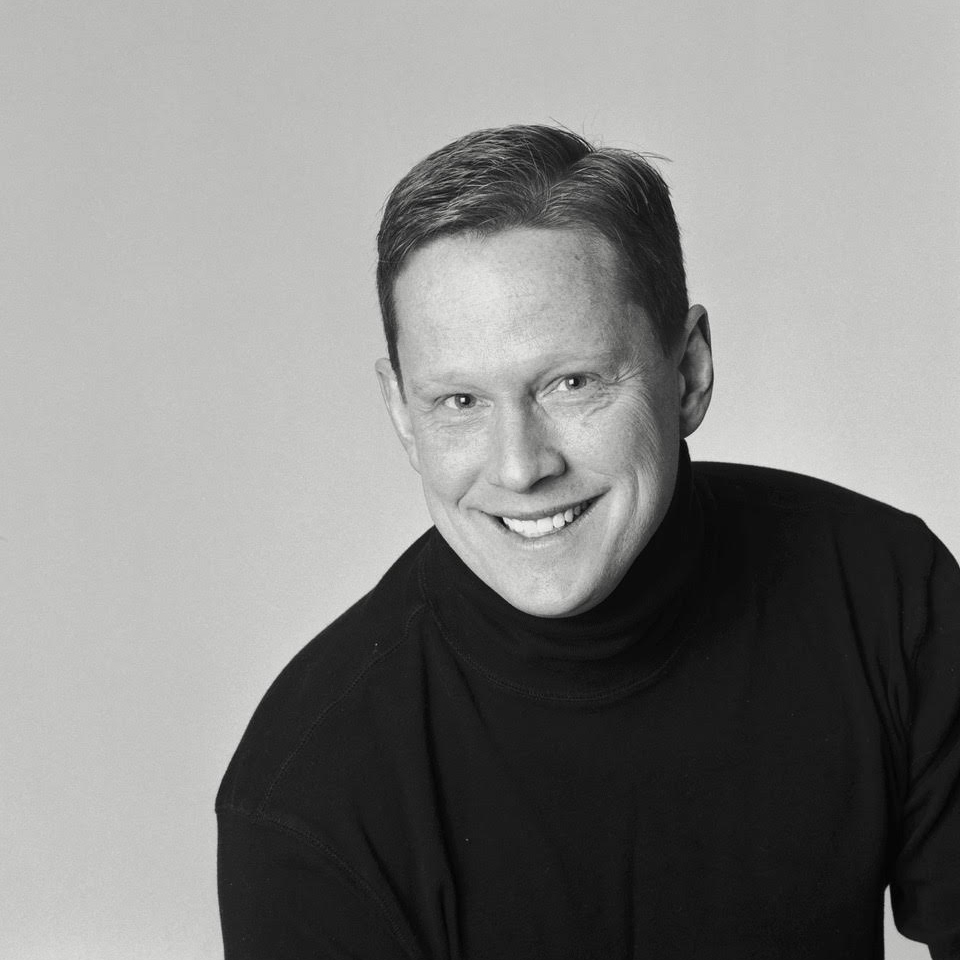
Jeff Moody
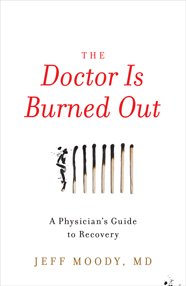
Dr. Jeff Moody is a board-certified, UCLA-trained urologist with more than twenty years of experience and a graduate of the University of Iowa College of Medicine. Having lived through the diagnosis, treatment, and recovery of burnout himself, he wrote The Doctor Is Burned Out: A Physician's Guide to Recovery, an insider's look at the drivers and effects of physician burnout and a path forward to recovery. He also sponsors a monthly Physician Burnout Support Group.
📚 Books by Jeff Moody
Transcript
[0:00:26] MR: The demands of doctors are high and the pressure to always perform at their best is ever present. Long hours, heavy responsibility, and constant pressure to be perfect is enough alone to drive doctors to burn out. But that’s just the tip of the iceberg. Dr. Jeff Moody experienced this firsthand. After being burned out for an extended period of time, he experienced thoughts of suicide the jolt woke him up to the knowing that something had to change. But what, and how? In his new book, The Doctor is Burned Out, Dr. Moody identifies the factors that lead to burn out and then offers mental exercises, paradigm shifts, and critical habit changes that can help physicians create a new you while enjoying a more satisfying, joyful life. In today’s episode, Jeff shares with us why burn out exists, what often leads doctors to burnout and why they often don’t have anywhere to turn when they’re ready to seek professional help. Enjoy. Hey everyone, my name is Miles Rote and I’m excited to be here today with Dr. Jeff Moody. Author of The Doctor is Burned Out: A Physician’s Guide to Recovery. Jeff, I’m excited you’re here. Welcome to the Author Hour podcast.
[0:01:56] Jeff Moody: Miles, you are a gentleman and a scholar, I’m excited to be here, this is a big deal. It’s fun to get to talk about something that you’ve been working on for a couple of years.
[0:02:05] MR: Yeah, congrats on really coming out with this book. I’m really so excited for everyone to check it out. And before we dive in, to what’s inside, tell us a little bit about you and your background?
[0:02:16] Jeff Moody: Well, I am a full-time practicing urologist, which is like a doctor who does kidney stones and prostate cancer on those types of things. And I live in Colorado, I have three awesome kids and a beautiful wife. And in spite of all that great stuff, I got really-super duper burned out about five years ago to the point where, actually, the medical term is — I had some suicidal ideation. I thought about killing myself just for a brief instance and then as soon as that happened, an electric shock went through my body and said, “Something has to change.” That kind of began my journey to getting better, you know. I learned a lot and I wrote a lot of books and I did a lot of work on a lot of it hurts my life. When I finally felt like I was kind of recovered or recovering from burnout — because I really think of it more like, almost like an addiction versus something that you recover from, it’s not a cure per se. Because, there’s always going to be things that will light you up or you know, trigger you and get you back in a little bit of a burnout mode. When I was finally getting to the point where I was recovering, I was like, “You know what? Somebody else may benefit from this.” Initially, what was written in the book, you know, was probably 80% was therapy for myself, you know, to just get things out of my brain and on paper and then I kept working on it. Learned about Scribe and came to Austin for the workshop and Tucker grilled me mercilessly for two days and told me that I have maybe one of the most impactful books that he’s ever read. Just because of the secondary effects, you know, “I helped a doctor who then helps more patients,” and kind of the ripple effect from those things. It’s been quite a journey and it’s been a lot of fun and it’s been very transformational for me.
[0:04:06] MR: Amazing. You mentioned, there’s so much I want to talk about and everything you just said. But I’m going to rewind to the beginning because I think it’s a really interesting thing that happened when you had that suicidal ideation, you mentioned something going off in your body where it’s like, “Something had to change.” Now, that doesn’t happen with a lot of people, that’s something that people could burrow themselves deeper into. What do you think it was that initiated that sense of ‘something has to give?’
[0:04:33] Jeff Moody: Part of it for me was when I got to that point, I was like, at that shock, I think really was fear. I was like, “Oh my god, is this what this has come to?” And I just thought, if that’s what’s happening right here, right now. A, that’s not a path that I want to go down and B, there has to be a different way of doing what I do and doing what a lot of doctors do.
[0:04:58] MR: You mentioned that you're a urologist. I remember seeing in your book that you have a chart of all of the different specializations and being a doctor and the rate of burnout for each one. And urology I think was at the top if I’m not mistaken.
[0:05:12] Jeff Moody: You know, I hate to say it but we’re number one, we are the number one most burnout specialty — no, that tends to vary from year to year. But that was 2018 data. I think last year, I think we were number one or number two again. I think part of the issue, just specifically for urology but clearly this is a field wide problem for medicine but specifically, urology, the year I started my training which was 1992. They had to cut like 25% of the training spots because it was going to be this horrible oversupply of urologists and too many urologists just running around, needlessly, operating on people and helping people. In the last 25 plus years, there’s been about a thousand urologist who haven’t been trained that would have otherwise been trained. I get about five job offers a day because there is — surprise, a horrible shortage of urologists across the country. I think part of it is just a numbers game that was kind of on the wrong side of the supply standpoint for urologists. But also, you know, what’s happened in the last 25, 30 years in the United States. Has it gotten younger and healthier? No, it’s gotten much older and much more ill. A lot of urologic diseases, prostate cancer, bladder cancer, kidney stones and things tend to skew more to the older population. It’s kind of a demographic tidal wave that’s coming towards us as well from a disease standpoint.
[0:06:37] MR: Right, that makes sense, let’s define burnout in general so what does that mean to be burned out?
[0:06:45] Jeff Moody: Well, that is really the question but that actually, this is an interesting question because there’s a little bit of a debate in the burnout community about burnout as a misnomer. Burnout blames the person and blames the doctor, maybe it should be called moral injury, maybe it should be called a human rights violation. I think there are definitely levels of burnout that qualify from those definitions. But you know, I always kind of say, “I don’t care what you’re called, I don’t care if you call it Fred.” I think the issue is, it is a problem no matter what it is named. And the classic psychiatric or psychological definition is emotional exhaustion, depersonalization, and a lack of personal accomplishments. The way I kind of think of that is like, I don’t care about you and I don’t care that I got anything done today. You just get so – your compassion bucket gets emptied almost completely is, I guess, the way I think of it.
[0:07:42] MR: Right, which is the last thing we want in our physician.
[0:07:45] Jeff Moody: You want your doctor to actually give a hoot about you? To take care about you? I guess that is part, we’re supposed to know things and be nice to you and do the right thing and actually care about you. That is the ideal doctor.
[0:07:59] MR: As someone that is a patient, I want my ideal doctor to feel that way, obviously, not for now and I want them to feel good, I want them to feel compassionate. What are these burnout drivers? You mentioned three in your book. Maybe we can talk about those a little bit in detail.
[0:08:16] Jeff Moody: I think there are a number. I mean, if you really talk about it, I think — and I do — speaking on this topic obviously. When I survey the audience members, “What are the things that drive your burnout? Is it seeing patients and doing surgery?” Virtually 0% of doctors say that actually, doing the work of being a doctor is what burns them out. The thing that 100% of physicians, when I survey them, say that burns them out is electronic medical record. Which is this kind of perverse data collection program which I implore thee, designers and the software makers of these things that you know, actually try to use this thing and see what you think of it. Because, also, it’s been frustrating because electronic records have been out for 10 to 20 years. And there really has not been improvement in the user-friendliness of them. I would think at this point you know, if Google can tell me where the best rutabaga is, I would think that the electron medical record — and these are not cheap programs, these are typically 10 to 20 to $50,000 per doctor to implement these. Could actually then improve them and get to the point where, “Man, this thing almost reads my mind,” that’s what I would love to happen. But we call it a click-fest. You do a lot of clicking and you have a lot of kind of, I always call it menial, very low, a lot of repetition and a lot of lack of really getting the right information in and out of the system and in an efficient manner. The other issue is these electronic medical records will generate gigantic notes, like a 10 or a 12-page note. To a point where, realistically, we don’t even read the notes when we get these notes from other doctors. Because you can’t find the one or two bits of information in 12 pieces of paper in any reasonable amount of time. So we’re like, “Well, I’ll just talk to the patient, you know?” You forget what the note says, we try to be very intentional with how we use our AMR like, in general, we don’t have computers in our exam rooms. Because we, like, we actually like our patients and interact with our patients. Whereas, you know, I know a lot of patients will go see their physicians. There’s a terminal in the room, the doctor stares at the computer screen, tapping away, looks over, maybe, occasionally. But you know, the appointment is with the computer versus with the doctor because the problem for the doctor is, if they don’t do that then, they’re adding hours to their day later trying to get that data inputted. It's very much a Catch-22 situation. AMR is a big driver of burnout, I think talking about the book that there are some perverse incentives in general and any other industry in the world, if you do something better and more efficiently, you’re rewarded for that. In medicine, you're actually typically penalized for that. An example I use in the book is kidney stones. If I have a patient with a kidney stone and I go in and I take it out in one fell swoop in just one operation, boom, they’re done and I get paid for doing that operation. But sometimes, it would be more to — say my patient has stones on both sides, you can do one side and then wake the patient up and then come back and do the other side. Then you actually get paid twice. If I go the extra mile and I do both sides at the same time, I actually get paid less. It’s kind of this perverse. You ought to give me a bonus. I’m saving the hospital some money, I’m saving the patient on their anesthetic, it’s safer, you ought to be like thanking me and no, you just — pay me less. That part can be frustrating too for people. I think there’s just a lot of other drivers for burnout that can be specific to the situation. Maybe it’s a resource issue in a hospital system. Maybe it’s a compensation plan that hospital systems use for their doctors. Sometimes it can be expectations like you know, patients every day expect more and if you don’t meet their expectations, you’re going to hear about it on Google, you know? Five minutes after the appointment. “I didn’t like the carpet in their office.” Okay, I hope the care was okay. It’s the — expectations just continue to rise for patients which I think is not unreasonable but I think also, we have to focus on what’s important.
[0:12:21] MR: Sure. I think that’s a great point. Have you found since patients are typically walking into offices more armed with more information, not to say the information is accurate or inaccurate but more information? Do you find that that contributes to this burnout with patients coming in with maybe a ton more to offer or questionable information to offer?
[0:12:42] Jeff Moody: In general, I am all in favor of patients being more informed and more interested in their own care. You know, one of the things we kind of say, “I can’t care more about your disease than you can.” I can help you but you’re going to be the one driving this bus and getting yourself better. It’s a kind of — I always feel like for me, I like to think of me and the patient as kind of a team. And we’re kind of coordinating and cooperating against the disease but as far as you know, patients coming in with your neighbor, we can always tell a particular patient is an engineer because they will come in with about 50 pages of information. God bless the engineers, they’re very intelligent but they really like to get into the details. And studies show, I think, WebMD, the studies show that more than 50% of people, when they go online, they’re going online for medical information. And I think that’s great and the thing — what I typically would end up doing with patients is, if they come in with some data or a website that says “Rutabagas will cure prostate cancer” and I’m like, “You know, I don’t have any evidence that it doesn’t work but I don’t have any evidence or a scientific paper that I think won’t do, that it does work. We’re going to kind of stay focused on the things that we know are pretty effective and if you want to do that in addition to, go for it, god bless you, I don’t think that’s harming anything.” But people start to get a little persnickety about when they bring in the data, I pull up my coffee cup, have a coffee cup that a patient and actually gave to me, it says, “Don’t confuse your Google search with my medical degree.”
[0:14:13] MR: That’s great. We have obviously patients coming in with health problems but what about the health problems of physicians, given all of this burnout. Is this a problem, just even speaking in the United States. But maybe even worldwide where physicians are suffering from health problems?
[0:14:31] Jeff Moody: Well, I mean, you know, burnout itself I think is more of a result of — many multiple different factors could lead to burnout. But the stress of burnout and — can lead to you know, high blood pressure and, maybe you know, coronary disease and those types of things. And yeah, it’s definitely an international problem, studies in the UK showed that they have high rates of physical and mental health issues. And that’s one thing I would like to highlight for the readers as well or the listeners as well that mental health is a giant issue. And I think a giant component is. And one of the reasons why I wrote the book is I want to start normalizing the conversation around burnout and stress and mental health and it is okay for physicians to access mental health services. Because there are certain mechanisms in place to help physicians who have, perhaps, substance abuse problems and other types of problems that are called physician health programs. Which in general do a good job with those or kind of court order or mandated issues but if somebody has just depression or anxiety or some of those things, they are not great ways for physicians to access those services in a way that is beneficial for the physician, and then also not perceived in terms that it is harmful from a medical licensure standpoint. Or some of those other things. Because multiple times a yea,r we have to answer these 150, 100 question long questionnaires. “Do we have any mental or physical ailments that will preclude you from practicing medicine?” — “Are you using drugs?” — “Do you use drugs or alcohol?” You know it is a very in-depth questionnaire. And I think the concern for physicians is — does that lead to a situation where if they answer in the affirmative to some of those things, would that affect their ability to practice medicine or their license or their livelihood? So then you tend to close those things off. Like you say, “Well, I’m a little depressed but I am going to ignore that and I am not going to do anything about it” I know multiple physicians who when they access their mental health care, they pay cash for it. They don’t run it through insurance. They don’t want anyone to know. I know people who will drive to a different city to access that care because they don’t want anyone to know here.
[0:16:42] MR: This is blowing my mind. You would think that doctors would have access to the greatest type of care in that sense.
[0:16:49] Jeff Moody: Well I have heard of this kind of the superman or superwoman complex, where there is that fear that license your action, you know a study that 60% of surgeons who had suicidal ideation would not and did not seek mental health care because it fears of actions against their license.
[0:17:10] MR: Unbelievable.
[0:17:11] Jeff Moody: So then unfortunately, it turns into this pressure comfort. You are under all of this stress and all of these weird horrible things happen with your patients and you are trying to help them. And you are having stress but then you can’t do anything to help your stress or your mental health issues because it could affect your ability to practice medicine potentially.
[0:17:29] MR: And of course, I mean, how does that affect the patients then of course, right? I mean, because of mental exhaustion. I mean and the performance of doctors must decline significantly.
[0:17:39] Jeff Moody: Well, I can tell you there are multiple studies that show that burnout doctors provide worse care. It is a fact. They’re a higher malpractice risk. Patients who are cared for by burnout doctors in the ICU settings or intensive care unit have a higher death rate. It is a fact, I mean it affects patient care and patient safety — lives. So that is the other reason why I feel so strongly about this is that it is not just, “Oh you know, buck up and get over it” kind of a thing. This is a systemic issue that really affects quality of care.
[0:18:11] MR: Wow, I had no idea about any of this so this is amazing, thank you.
[0:18:15] Jeff Moody: Hey, read my book. It’s all in there. You’ll know more than you ever wanted to know.
[0:18:21] MR: Just bringing attention to these things is so important. And so, if physicians then are running up into all of these different problems, it sounds like kind of everywhere they turn they hit a wall with these. But what are some solutions? How can physicians get out of this cycle of burnout?
[0:18:40] Jeff Moody: Well and kind of the paradigm or the idea — but I thought about this is like we end up in all — you know everybody in the world, ends up in a box called “their life’ of their own creation. Either by something they did or something they didn’t prevent. So they end up in this box and so as they go through the book, we talk about ways to reconstruct or build yourself a new box. And again, for me it is a multi-factorial — where many different things cause burnout. So it is like, “Well, let’s attack pieces at a time.” And, you know, you can either go big or you can say, “What is the number one thing that has caught driving my burnout?” Then you think about that as you think of an action you can take and you give yourself a deadline. Because that giving yourself a deadline actually triples your chances of actually achieving that goal. And then once you get that done then you take the next thing on the list then the next thing. So that if you want to go big, the way that I went about it was like, “You know I had horrible insomnia.” So I was like, “Let’s get some better sleep.” And you actually get some better sleep then you’d probably make better decisions, feel better, feel like working out, eat better, you know? So for me, it was more kind of an environmental, nutritional care, self-care kind of a package first. And then you know I think that I really think is important that I talk about in the book is that A, you have to give yourself permission to do those things and you have to make it a priority, okay? So yes it is actually okay for you to take 30 minutes and work out every day. And make that a priority but you have to give yourself permission first to do it. And then figure out if there is an efficient way to do that for you and then that makes you feel better, then you get better sleep, then you make better decisions, then your mental health is better. It is kind of, for me, instead of being a downward spiral, which I think most physicians get in when they really get into the depths of burnout, this becomes an upward spiral of improvement and recovery.
[0:20:37] MR: Yeah, it has that compounding effect and as you mentioned, you can choose first to tackle the problems that will take care of the most solutions and like you mentioned, sleep. That essentially will take care of many other problems by solving that one problem.
[0:20:54] Jeff Moody: I have my electronic medical record was just consuming hours of my day. And so finally I figured out, “Well, there is this one little task that I repeat 20 times a day. Well, can I have somebody else do that for me?” And in 15 minutes, one time, I taught somebody else how to do that. And boom, it saves me 30 minutes a day every day for the rest of my life. So those kinds of small things but they turn into big needle movers for the rest of your life and your career. Those are things that I really, really try to get our clients to focus on.
[0:21:23] MR: Yeah and those are the things too, we don’t realize how it’s going to positively impact our lives and change our lives once they happen. Just, like, food for example, you can eat bad food for a year. And then you are just so used to that way of being that you could eat good food for a month and be feeling really good. And that you really had no idea that you could feel so good because you have been feeling bad for so long. Another thing you do talk about are agreements. Like basically just the importance of setting up agreements whether with yourself or other people and setting boundaries to be able to have autonomy over your life. So what does that look like?
[0:21:59] Jeff Moody: I love Eleanor Roosevelt. I love her, she is just a quote machine but one of my favorite quotes from her is that “No one can make you feel inferior without your own consent” — and I kind of in the same way I’m like, no one can force you to do something without either your agreement or your lack of disagreement. Or whatever it is. You know, where are you going to work, how much you’re going to work for? What are the important drivers in your life? What are the priorities in your life? Those are things that you all control and you all either agree or fail to disagree to. So I think it is important — and I try to make this very simple and I like that people just list their agreements and then just think, “Is this an agreement that brings me joy or is this an agreement that brings me pain?” And you know sometimes it’s both like coaching a kid’s soccer team, you know it is wonderful but it can be painful too. But like agreeing to marrying your wife. That is a great agreement or your spouse, maybe I agreed to a position where I am paid less because I am gender different from the person who does the exact same job as me. And that’s an agreement that you shouldn’t agree to but then you know, once you do then that is a little bit made until you realize that that is probably an agreement that’s affecting you negatively. So, I like to have people have a little more active role in the creation of their life instead of just passively taking what comes. And in medicine unfortunately, the training system, which is a focus of a whole other book for me — but the training system really trains you to just take whatever is doled out. And that’s what you get. That’s the way it is and you can’t change it. And this is the way medical school works and this is the way residency works. And you just have to take what is given. So I think that’s unfortunately sometimes where a little bit — where people learn how to make these kind of lack of positive agreements. A lack of a disagreement and then it kind of seeps into the rest of their life and the rest of their decision making.
[0:24:06] MR: And one thing that you talk about to help improve our agreement and ways to set up our life is really being able to identify your values that can essentially be like guardrails for our choices in life in the agreements we’ve made.
[0:24:20] Jeff Moody: It’s huge, it is one of the things that’s like, you sit down and just in probably five minutes on a piece of paper, you’re like, “What are the things that are important to you?” Number one and “Are your agreements lining up with those things?” You may say, “Oh my family is top priority.” well, you are home one night a week for dinner. So maybe you need to change your agreements around that, maybe you need to agree to be home every night for dinner and be with your family. And maybe that means you need to change the agreements you have at work, like, I am not going to be on call every other day. I am not going to work until 8 PM every night. You have to get your values and your agreements in alignment absolutely.
[0:25:04] MR: Yes, I totally agree and I must say Jeff, one of my favorite things that surprised me in this book is the idea and importance you talk about of loving yourself. And I think this can feel like such a scarier ‘woo-woo’ thing maybe in the physician world. Or talking about these things. So tell us why it is important to love yourself and what that means to you?
[0:25:25] Jeff Moody: Kamal Ravikant wrote a fabulous book called —
[0:25:27] MR: Love Yourself Like Your Life Depends on It, yes. Yes, it is driving me crazy too, such a good book.
[0:25:34] Jeff Moody: It does because your life does depend on it and the problem is, again, I am not trying to blame everything on our training program. But between medical school and residency and you know everything else, you’re really — I do feel it is an abusive system. And you are taught that you’re never enough and you’re never right enough. And what if you miss something? And it is a very much kind of a fear-based, on high-alert at all times kind of training system. And there is not a lot of positive reinforcement. There is very little positive reinforcement. At least from the training system itself. A lot of patients will — and, you know, that is what keeps me going, a lot of times is the patient is giving you positive reinforcement. But the problem is, I feel like a lot of people get torn down to the point where maybe they’re not even at ground level. They are kind of like underground. And my point is when you are in a hole stop digging. So stop beating yourself up and let’s turn that around and let’s talk about simply loving yourself. And then having good, positive feeling about what you do and who you help. And think about all of the positives you bring to people’s lives every day. And once you have started to rehabilitate your psyche, and you are on the upswing, then you’re like, “Hey, you know what? I am worth it to exercise.” I am worth it to take the time to eat well. I am worth it to spend the time with my family. And prioritize things and then act on those priorities. Because — you have to start with something. You know, the point where you are not beating yourself up. You have to turn that around and for me the quickest way, the easiest way to do that was to just repeat “I love myself, I love myself, I love myself.” Even if you don’t believe it — Kamal’s point in his book is it starts to give you a new groove in your brain. And a better way to think and start to rewire your brain in a positive direction.
[0:27:30] MR: Yes, I love it and I couldn’t agree more and speaking of having to love yourself, I think you had to do probably a lot of that and writing a book, congratulations. It’s no joke and if readers Jeff, could takeaway one or two things from your book, what would it be?
[0:27:46] Jeff Moody: Burnout is not your fault and it is a result, not something that you did or didn’t do. And it requires a plan and a concerted effort and that is why I really try to give people a lot of options for ways to get themselves better. So it is something that you can recover from and it is definitely possible and you just have to start.
[0:28:10] MR: I love it. Jeff, this has been such a pleasure and I am so excited for people to check out the book. Everyone, the book is called, The Doctor Is Burned Out: A Physician's Guide to Recovery and you can find it on Amazon. Besides checking out the book, where can people find you?
[0:28:25] Jeff Moody: One of the things I felt super strongly about after writing the book is I’m like, “You know what? I want to let people access services in ways that are easy and meaningful for them.” so we have an online course at jeffmoody.com. Then we have burnout breakthrough live streams on YouTube and Facebook. We are going to be doing consulting for groups and hospital systems. I speak, there are different ways that people can access that information. So we are here to serve people who are burned out.
[0:28:56] MR: Amazing. Jeff, thank you so much, jeffmoody.com. Jeff, thanks again, this has been so much fun.
[0:29:06] Jeff Moody: Miles, you are a gentleman and a scholar still.
[0:29:10] MR: Thanks again for joining us for this episode of the Author Hour Podcast. You can get Dr. Jeff Moody’s book, The Doctor Is Burned Out: A Physician's Guide to Recovery, on Amazon. You can also find a transcript of this episode as well as our previous episodes on our website at authorhour.co. For more Author Hour, subscribe to this podcast and thanks again for joining us. We’ll see you next time, same place, different author.
Want to Write Your Own Book?
Scribe has helped over 2,000 authors turn their expertise into published books.
Schedule a Free Consult