Andrew Gaule: Purpose to Performance
Read the full transcript
Andrew Gaule
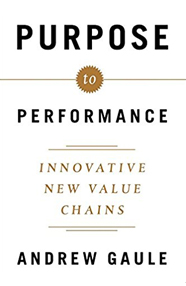
Andrew Gaule is an expert in strategic innovation and corporate venturing and the CEO of Aimava, where he advises global organizations on corporate venturing and open innovation. He is the author of Purpose to Performance: Innovative New Value Chains and Open Innovation in Action, and has spent well over a decade helping leading corporations build innovation and venturing programs.
📚 Books by Andrew Gaule
Transcript
[0:00:46] Charlie Hoehn: You’re listening to Author Hour, enlightening conversations about books with the authors who wrote them. I’m Charlie Hoehn. Today’s episode is with Andrew Gaule, author of Purpose to Performance. Have you wondered where your company might be vulnerable to disruption? Without strategic objectives or culture that nurtures innovative ideas, your organization will miss huge opportunities, and that’s where Andrew comes in. Andrew is an expert in the world of strategic innovation in corporate venturing. He’s led programs for corporations in the United States, Europe, Russia and Asia. In this episode, Andrew is going to share how you can use his method to embrace innovation and catapult your business into a new era of success. Now, here is our conversation with Andrew Gaule.
[0:01:53] Andrew Gaule: I guess the seed that was planted for me and the influence for me why I started this journey was because back into the 1990s, early 2000 when we had the dotcom era. That dotcom start – I was working in a large corporate and trying to get my corporates to just get a look at Netscape and Mosaic. I got the worst mark at my MBA paper when I was doing my MBA at the backend of the 90s on a paper on how we were going to take our business online, online information, health and safety information, take orders online. Then really, the ultimate was doing – how we were going to take automatic replenishment of our customers’ tanks and provided the product to them. It’s just like the organization didn’t see it. I could see this technology was going to change. I’m going to change the business model and that for our business. I started in 2000, started a new business to bring corporates together on how they could see those technologies, how they could see the business model changing. For the last 17 years that we’ve been in that space working with fantastic corporate and individuals who were seeing the technology and seeing the future. Their organization is maybe like the rabbits stuck in the headlights of this oncoming truck with these technologies and startups, and that’s one of the illustrations I’ve got within the book of the – in one of the early chapters. For me, that was the thing I’ve – I could see that future, but how are we going to get corporates to make that change? And for the last 17 years I’ve been working with corporates and training and running collaborations in those areas, and that’s what really brought it to me then to bring it into this book. To bring together the ideas and bring together the lessons and the learning and the interviews I’ve done there with over a 100 executives and startups and technology players in this space.
[0:03:45] Charlie Hoehn: Can you tell me what a typical training with a corporation or executive looks like where you’re showing them new technologies?
[0:03:57] Andrew Gaule: Yeah. I’m going to say “training.” It’s really about how we go on the journey together. What I outline within the book is sort of saying – the first bit of the purpose to performers, what’s the purpose? What’s the strategic objective? Where are you seeing these changes happening? Are you seeing online technologies? Are you seeing social media? Are you seeing new entrants like Uber coming into taxis and Airbnb coming into hotels? Smartphone devices disrupting the retail area. What’s the purpose? What’s the threat that’s coming to you? Then are you using the right processes, so internal idea generation, investing in startups, building incubators, doing acquisitions? Are you using the right process for the right job? Central to the five P’s of purpose and performance – is people. Have you got the people who are curious and can see the future? As I just talked about what I felt I was seeing. Then are you working with partners? Because by definition, you’re going to do things which are outside of the scope of what are you thinking as of the moment. Are you working with the right partners, the right startups, the right funds, the right incubators? Then finally, the fifth piece is performance. Are you going to see the strategic insights? Are you going to bring those into the business? Are you going to get the financial returns? In terms of this getting an organization to understand, getting to have that common language and that common vision. It’s no good just saying, like I see a lot of corporates, their chief executive or their chairman stands up in the investing meeting and says, “We’re going to be innovative.” What does that mean? Why are you going to be innovative? How are you going to do it? How are you going to engage the people? So you get to that next level of detail and that’s the core of what we talk about within the book really. And what we illustrate with is lots of stories of fantastic corporates that I think are leading the way in that.
[0:05:49] Charlie Hoehn: Tell me what is the one big idea, or the story from your book? Would it be the five P’s?
[0:05:58] Andrew Gaule: No. That’s the basis of this stuff. I think what I’ve tried to outline now within the book is this new thinking. That this is the new stuff really was what I term “innovative new value chains.” As I outline in the book, there is about 1,600 corporates who now claim to have done corporate venturing over the last six years, and there’s about 900 did transactions in last year.
[0:06:20] Charlie Hoehn: What is corporate venturing?
[0:06:21] Andrew Gaule: Corporate venturing is large corporates like GE, Unilever, BP investing in early stage businesses. Interesting new technology startups in Europe, in California, in Shanghai or wherever that – where they’re making the minority stake investment, which encourages and supports that startup. But the corporate then is going to get advantage as well and get insights and help those startups to grow and maybe give them access to customers or give them access to technologies to scale up working together. Corporate venturing is the core too that, you know a lot of corporates have been trying. But the key message I want to give within the book is saying it’s not just a matter of spraying some money around and doing minority stake investments. It’s how do you strategically think about how do you create new technologies, new startups and change the business model within your corporate? One of the key examples that I give within the book, an interview that I did with Bill Torrento, who heads up Merck Global Innovation Fund. Merck, it’s the US arm of the Merck pharmaceutical business, and he’s been leading the fund for doing investments in digital health areas, which is outside the scope of what health businesses normally do. Normally, health businesses are pharmaceuticals or they’re big hospital machines. Bill has been looking for new health digital technologies, new from a purpose and strategy point of view. Been doing minority stake investments and interesting startups in cardiac health, consolidating data and services for their patients and clients in the home. What he did was brought together three of those businesses to create a new entity for cardiac health. To me, that’s an innovative new value chain; it connects different technologies, different startups in a new way of servicing the customer. We see that now and I’m working with corporates in automotive, in oil, in consumer, in insurance and financial services businesses, where joining these technologies are – so census, new data, artificial intelligence is going to change the value chain for those industries. I think we’ve got a challenge, because it’s not an automotive business anymore. It’s a mobility business. It’s not a health or sickness business, it’s now a wellness business. We’re seeing some fundamental changes in what we define as these industries, and that’s why I termed it innovative new value chains, because it’s not an industry, it’s not a business model, and it’s not just a different way of selling – repackaging a product for a service. This fundamental change is happening here. That’s the key message. That’s the key something that I want to bring out within the book, and by illustrating it with corporates who are at the leading edge of this who are still learning and still bringing things together.
[0:09:27] Charlie Hoehn: Can you explain a little bit more what you mean by new value chains? Because I think I get it, but this is a pretty big concept from – it’s a shift from what we’re used to being taught.
[0:09:43] Andrew Gaule: Yeah. I illustrated one there with the health example with Merck where previously, they would sell an active pharmaceutical ingredient in a tablet, which is prescribed by the doctor, or they would sell a big hospital machine. Now what we’re talking about is in that – is saying, well actually, because this patient now has got a cardiac health monitor on them, we know when we can help to change their behaviors, we know and help them with exercise, we know and help when they do need the pharmaceuticals. The business could be remunerated by the health provider, by the health service, by the insurer, by the patient, by the patient’s family – depending on better outcomes. That’s when the illustration there where how you’re remunerated to the customers in the top of technology you’re changing, is changing from the product that you are delivering. If I use the example from the automotive sector, the automotive industry has been about you aspiring to own a particular brand of car. And then you buy this big physical asset or you might lease it, but you’re buying a big asset. Now with car sharing, now with autonomous vehicles, now with location-based devices, the next generation of consumers are coming along, “Well actually, I don’t need to own a car. When I need a car, I’ll just click my phone and then Uber arrives. In a few years’ time you click your phone and a car share will arrive.” Now previously, they sold you an expensive BMW. What’s the role of BMW in the future? What’s the role of the big oil companies in the future? We’re on hydrocarbons and we’re on – and there aren’t as many cars and they’re being electric-driven. These new technologies, the startups that are coming and disrupting those areas, are going to change what this value chain is going to be. Industries are going to move from putting products on the shelves, selling products, selling services, and it’s going to change the way those things are happening. Who’s going to win in those spaces? Is it going to be Tesla? Is it going to be Amazon? Is it going to be iPhone? Is it going to be Alibaba Electronic? Is it going to be 10 second to over China? Who is going to be the winners in these new marketplaces and who is going to provide those services? What we’re seeing is these corporate venture units, the innovation units within corporates, they are doing investments that try and get their heads run the stuff. But they can’t just do that by doing one-off investments. They’ve got to think strategically about it. They’ve got to understand what’s happening in the moment. They’ve got to orchestrate these new value chains is my hypothesis that I outline, within just a 100-note pages, to give a view of a framework for organizations to think through how they’re going to be disrupted and what the value chains within their sector.
[0:12:43] Charlie Hoehn: This book is really for corporate executive heads of major companies, that need to be thinking a lot about the innovation that’s about to hit them in the face, that’s already started. We’re not even close to the crest of the wave, I think. It’s only just really begun.
[0:13:09] Andrew Gaule: We’re only just beginning. In terms of – to answer your first question and in terms of who is it for, I think it’s almost – like the story that I had. When I was in the corporate, I could see the future, but I didn’t have a way of articulating or bringing it together. In fact, just half hour ago, I was on a phone call with somebody who I’ve known for a number of years and he’s within the corporate with a similar sort of view, and he’s now on the executive board member. He’s going to be responsible for innovation. They haven’t got a common language, they haven’t got a framework, they’re not thinking about how this business mold has changed and are still thinking just in terms of, “Well, that’s an interesting piece of technology.” I think it’s for individuals and organizations who see the innovation change happening. It’s for the people who are currently corporate venture units, incubator units and running innovation projects, and they’re feeling, “Well, I’m not really shifting the dial and being strategic.” It’s for those individuals. As you said, the giants for – it’s also for the executive board members who are saying, “Well, how is this really going to be strategic?” It’s really interesting, because I’ve been using these things as a central – for 15, 17 years with corporate. I do get it a number of times that when you run these executive board members through this five P’s process and talk about these disruptive technologies and changes, a number of them come back and say, “Do you know what? This is the first time we’ve got a real strategic discussion for our business and for our industry.” These are top 100 listed companies, global companies. Because what they normally count as strategic is, “Shall we buy it by this brand in this country? Shall we launch a similar product to the product that we launched last year? Shall we do another variant on the hydro-carbon car? Have we got more pharmaceuticals coming through our pipeline? What they’re not addressing is how these technologies could really disrupt the value chain that they’ve currently got. It’s for those individuals – so executive board members, people running innovation units, people within corporate who are really believing that this industry is going to change, and are they going to have a Kodak moment? Is the industry and their business going to be so disrupted that their business isn’t going to be around? Or more importantly, are they going to miss the next big billion-dollar opportunities? Because the next thing is going to be done by the mobile phone company or by the social media company or something like that.
[0:15:34] Charlie Hoehn: Right. Let’s pretend that you and I are sitting in a board room together. I’m an executive for Exxon, one of the top I think three or four companies in the world. We have basically our own economy. We have so many billions of dollars and we are a megaship that can coast indefinitely into the future. Our job is just to keep that machine going. While there are large hints of disruptive forces in the future, it’s also – we’re also one of the biggest companies in the world with unfathomable amounts of money. What do you say to someone like that, who’s in a position of look, this is all well and good, but we are so large and so powerful and we’re making. We’re succeeding on levels of business that literally every other business on the planet can’t even fathom, minus Apple and Google.
[0:16:55] Andrew Gaule: I think there’s a couple of personal, a couple of things I would say there is the – that having the Kodak moment where your industry is so disrupted by a technology that you go from, in the Kodak example, going from your picture price within about five years going to becoming bankrupt. I think that’s going to be a rare occurrence, because in your example the business will turn, “Yeah, but we’re going to use hydrocarbons for the next 20 years. We’re going to be able to grow in these countries.” These markets are growing. Certainly within the lifespan of the chief executive or the senior executives, yes they’re going to have it – then they’re going to say, “Well, yeah. I’m going to live out my time until I retire, so why would I bother about it?” It was the cynical back the other way. I think the fundamental thing for me is that we are now seeing technologies and startups, which can fundamentally change industries and create billion dollar – multi-billion dollar opportunities for new industries on new ways of doing things. The examples and you are talking about within the oil industry, then around car sharing, the electric vehicles and stuff like that. These are going to start impacting your industry. If you don’t innovate and change, you’re going to miss out on some multi-billion dollar opportunities that come along, and you could keep milking your current business and that’s fine. But are you going to see where this future is and what that coming is about. I think that one area, that if you got all this money and you got all these people and resources, shouldn’t you be spending a few hundred million dollars in a small team to give you that scouting opportunity to see those technologies and to be thinking about the future? I think it’s fine for organizations then to say, “Well, yeah. We’ve looked at that, but we’ve decided we’re not going to go down that track and compete in that area, and we will start divesting in these areas and our shareholders will start shifting their capital to other places.” If they start shifting their capitals to other places, that’s going to impact your share price and impact your bonuses, etc., like that. Looking into that future is good for the organization. It gives you the best place of allocating your resources, your investments, your people and looking for your future strategy. By being involved in that mix and by thinking about, and the executives are thinking about new innovation teams thinking about, that’s the best way of understanding it. Not by just getting a consultant’s report about what’s happening generally. You got to be in that mix to understand it. My case for why they should do it and spend that time is because you should be thinking about that, for the interest of your people, for the future of your business and helping your share price. Also, I think as the example I was giving in health and automotive and stuff like that – this is good for the planet. If we end up with better outcomes, better health, lower use of resources, better engaged customers, better engaged employees, then I think that’s good for the planet and good for society and that as well. If we get these really interesting technologies and startups, that corporates can help scale and implement, then that’s great in that as well. So we should be doing this together, not competing. We should be doing those things in there anyway. The executives will say, “We’re big and important, and we’re going to survive in that anyways.” Yeah, that’s great, but ultimately those dinosaurs are going to go and we’ve seen lots of stats about organization that were in the top 100 Dow Jones lists 50 years ago, a 100 years ago and now not there. Data is going to be the new oil. That’s where the value and the assets are going to be, not in the physical things.
[0:20:45] Charlie Hoehn: Author Hour is sponsored by Book in a Box. For anyone who has a great idea for a book but doesn’t have the time or patience to sit down and type it out, Book in a Box has created a new way to help you painlessly publish your book. Instead of sitting at a computer and typing for a year, hoping everything works out, Book in a Box takes you through a structured interview process that gets your ideas out of your head and into a book in just a few months. To learn more, head over to bookinabox.com and fill out the form at the bottom of the page. Don’t let another year go by where you put off writing your book. Andrew, tell me about the biggest success that you’ve seen personally with one of your clients. If you can’t disclose their company name, that’s fine. But I’d love to hear how this process has played out since you’ve been doing this for so long.
[0:21:47] Andrew Gaule: I think a good example of a corporate I’ve been working with, it’s in the oil and automotive sector. From an executive board level, they get that future, that things are changing. From the innovation team, they’ve had a good track record now going back about 10 years, where they’ve been doing active investment. What they’ve reached is that level of maturity and understanding that they need to connect these different things. So be it around in-car sensors, be it around being able to service the vehicle, be it around how the vehicle is paid for and protected and insured. About joining those different technologies, joining different startups and that together. Then when they’ve engaged with their core business, the core business are shifted from selling their physical product into selling services, and into becoming more embedded with the customer, the business-to-business customers, in that particularly. Because if they don’t do that, then, as also I’m explaining earlier, the new technology players, the data companies, the devices companies are the ones who will end up taking control – their business will become commoditized. We’ve also seen that within the utility electricity energy space. One of the corporates I was working with, they had a partnership with Nest, the Google acquired smart home sensor. Now Nest originally start as a smart thermostat within the home, but of course, that was part – the reason why Google acquired it was because the wide-up thing that they’re doing with Alexa there and the central hub for control and that within the home. The interesting thing within that one is that where you were an electricity provider, which is already a commodity, now if the customer is actually acquiring heat and warmth and comfort and security and health and entertainment. The electricity could not be provided via Google or via the person though of the organization that controls that hub set within the home. So you’ve now lost that contact with the customer. You’ve lost that relationship. I think it’s really – it’s really interesting that those two examples I’ve been working with, it’s really about – the organization gets it, their venture teams start getting it. And they start thinking about how these things join up and how it’s going to change the processes and the opportunities within the business. Because one of the illustrations you talked about earlier, the oil tanker, you keep the organization, the big organization keeps going. It’s how to these scouts and pilot ships find those new opportunities and new worlds, and just how do they bring those back to the organization is an important part. Where I’ve really worked well and what I found exciting with companies is they start seeing those in that dynamic and that communication changes within the business, and we illustrate that within the book in a number of places in different industries.
[0:24:50] Charlie Hoehn: What is the biggest opportunity that you see in a particular industry that it almost frustrates you that they aren’t tackling it with more enthusiasm?
[0:25:03] Andrew Gaule: Great question. Yeah, there’s a number of corporates that I’m working with the individuals who, like I was saying, that are seeing the light and is like, “Guys, why are we not moving so fast? Why aren’t we doing that yet?” To me, there’s a number of cases now where we’re seeing things happening in China with new technologies and new business models and new infrastructure and new vehicles and things like that. Where these things are growing at scale and it’s like almost, well I’m taking a number of clients to Shanghai and Beijing and other parts of China and say, “Look at these guys. This is what the future is. It’s already here and they’re doing it. Now how can we bring that back and how can we bring that into other parts of society, other countries, other companies?” To say we can improve transport, we can improve health, we can do these things by bringing these things together. Technology is not the barrier and startup isn’t the barrier. I am seeing that in consumer products, where it can radically improve people’s health, it can radically improve people’s outcomes and their pleasure. But the incumbents within the industry and the current process it just means, it’s going to take us years to change that. But the boards of some of these companies are now changing and these things are coming together and being seen. I think these things are going to accelerate. I’m seeing similar stories in plenty of areas in China. It’s about getting the alignment of the people, which is central to this and getting the people aligned to get these things happening. I think we’re going to see these coming in a number of different industries in that now.
[0:26:50] Charlie Hoehn: What is the number one hope that you have for this book? What do you most hope will happen now that Purpose to Performance is out in the world?
[0:27:04] Andrew Gaule: I would like people to spend probably in a couple of hours. It’s not a very heavy book. It’s quite readable. It’s got enlightening examples, not with – I would hope that people, after spending a couple of hours of looking through that, drawing the parallels to their business and their industry get the aha moment and say, “Oh right, I can see this from my industry.” They can also delve into the podcasts and the backup material, which is in the resources, then get examples. So they can go back to their organization and say, “Look, this is what I think, how we’re going to be disrupted, how we could use technologies. Here is an example from another industry where I see parallels.” Then they get things to move within their business. They create the examples, they create the startups and they get a new thing moving. To me, that would be really exciting if we start seeing new health solutions, new transport solutions, new consumer products, new services and that coming, because we’re joining technologies and startups more effectively and these corporates can bring these things to scale, and get these things implemented a lot better faster. To me, that would be a fantastic outcome if we manage to get people engaged and doing that.
[0:28:26] Charlie Hoehn: Andrew, what is the rest of this year look like for you?
[0:28:30] Andrew Gaule: We’ve got book launches and I’ve got programs with corporates now with the book launch. At the end of September, we’re in California for running programs at IBM, GE, and Plug and Play with some leading corporates coming together to discuss their value chain. IBM is there, because we took out the data and the data firm GE, because they’re a fantastic example of a corporate, which sees software is going to change their industry. So we’re looking at it from a health perspective and we’re looking at it from an industrial internet of things. We’ve got insurance speakers in that as well. From there, I think go into October with the book launch in Moscow, and then in early November we’re doing a program at Williams, the Formula One site, because they’re doing some really interesting things in technologies, data, new materials and bring corporates together around that. We’re doing a session in the book launch in London. Then into November, we’re doing a book launch in Shanghai and Beijing. We’ve got busy initiatives around the book. I used to joke Charlie, that I spent my early mornings and evenings writing the book and working with clients through in the day. My weekends were spent launching a venture called Upstart for startups. Which is about children doing entrepreneurship within corporates. Children being the adults into the work environment. We’ve got these children in four or five hours building consumer businesses, doing online YouTube videos, building adbots in Minecraft, running Formula One races. The inspiration for that came, because when I’ve been working with a number of these corporates, they’ve been seeing the things that I can do in my 11 and 15-year-old daughters and they said, “I wish my daughters would do things like that.” I turn around to them and say, “Well, I wish you would do these things, because to get your innovation working in the organization, you need to get these things moving.” We actually created this thing, and on weekends now we do these upstarts for startup programs and we’re doing one in Silicon Valley on the 30th of September in one of the corporates and bringing a bunch of the adults and their children together to build these little ventures. You see the adults looking and seeing that these children can build these little ventures and sell things for charity and create YouTube videos and do online things, in just a few hours. Why is our corporate not doing this?
[0:31:09] Charlie Hoehn: That is an amazing concept. Just so I have this right, the kids are building things alongside their parents, but it’s the kids that are really spearheading the development and it’s just for fun?
[0:31:24] Andrew Gaule: Yeah. I said it came out of – what I’ve been working with corporates and as I’ve talked during the rest of this podcast around getting them on workshops, getting them doing these things. At the end of these events I would just say, “Oh, look. I’ve got this prize here for people at the end of it.” They’d open it up and it will be a greeting card, or it would be cakes or it would be a bird feeder. I’d say, “Look, my children are making these things for charity.” My nine-year-old as she was at the time, created a YouTube video channel on cooking and baking. They would look at this and say, “God, your nine-year-old does this baking and creates the video and edits it.” I post it up there just to make sure it’s safe and all the rest of it. It’s taking some of the organizations nine months to use the PowerPoint to go to their board. So we’re looking at this nine-year-old can do that. Why don’t we do in these things? It came from that and we’ve now got about 20 different ventures these children can choose from to make; everything from making lavender bags and greeting cards and running puppets, doing entertainment things at puppet shows or Formula One races and doing digital things. They get the choice of doing those things. The younger children do it with the adults, so the age group, we did it for children in Shanghai. We did 30 children doing it in Chinese, and the 30 children plus their adults, we did it in Shanghai in April. We are down to six-year-olds. The six-year-olds we working with some of their adults to do some of these things, to run a bank and to build these things. The older children, the teenagers, they compete against the adults. They don’t need the help of the adults, but we say that the adults come with the children and that’s an important part of the dynamic, because the children if – a number of these children got on to create some businesses. You know some online selling of clothes, some online of making things. So they need the adults as almost like a bit of support and a bit of money. But we get the adults to compete against them. The adults can choose a box, one of our upstart’s boxes and they have to come up with a brand, produce the product and sell it. Do you think you can beat a 12-year-old? Some of these executives of course can’t and don’t think like that. It’s fascinating seeing that. That’s a bit of a challenge, a bit of an alternative. So what I do is the day job, but you can see the passion or the connection to this stuff as well.
[0:33:45] Charlie Hoehn: Yeah. It’s funny. That reminds of the TV show, and don’t take this the wrong way. But the comparison I see is Are You Smarter Than a 5th Grader? I could see a show that’s saying like, “Are you a better entrepreneur than a 5th grader,” so to speak? Yeah, I love that idea.
[0:34:12] Andrew Gaule: When you see the look on the parents, the adult’s faces, when they see these children on what they’ve created. They create these – what we do actually – this is as much for the adults as for the children. I have one example. We get them to build a billboard advert in Minecraft. Of course, the adults are normally, “Well, I don’t like my children playing online. I don’t like them playing these games and stuff like that.” But in the information sheet we give the children and the adults, we say, “Well, do you realize how much Minecraft got sold to Microsoft for? Do you know how much Google makes on advertising?” That’s the lesson skill we’re teaching these children. These children are creating these things. In 20 minutes, they build a billboard advert for the Heart Foundation or charities, the charity they want to support. Then they get the adults to pay for – to assimilate paying for the advertiser that they would do for their companies. These adults turn around when we have done – it’s only taking these children an hour and a half to create the concept, build it and then start selling it to the adults. I turn around and say, “Why does it take us nine months to use the PowerPoint about this idea you got for your company?” Sort of, type thing. It’s fascinating to see. I think we’re going to see the generation of these children we’re talking about who have been born since 2000, since I started doing what I’m doing. What they’re doing now online is very different to what I was looking at as I started this interview, when I started in ’99, 2000. The children who weren’t born then have a very different way of thinking about technology and business models, and it keeps me connected to that. I think it’s fascinating.
[0:35:46] Charlie Hoehn: Big time. Well, Andrew this has been great. How can our listeners connect with you and follow your work?
[0:35:53] Andrew Gaule: Yeah. Purpose to Performance is available on Amazon and lots of other book distributors. I’m on Twitter @agaule. Through the aim of our website, we’ve got all our contact details there, so a simple search for “Andrew Gaule” should inform you. It’s quite an unusual name, so the chances are you’re going to come up with me. I’ll be delighted to hear from people who are going on the journey and trying to start the journey. From a corporate C-suite executive, people running innovation or interesting startups, that feel that they need corporate collaborators. It’s all those things that we can hopefully work together and make a better world.
[0:36:38] Charlie Hoehn: Wonderful. Thank you so much, Andrew.
[0:36:41] Andrew Gaule: Thank you. My pleasure. Thank you.
[0:36:43] Charlie Hoehn: Many thanks to Andrew Gaule for being on the show. You can buy his book Purpose to Performance on Amazon.com. Thanks again for listening to Author Hour, enlightening conversations about books with the authors who wrote them. We’ll see you next time.
Want to Write Your Own Book?
Scribe has helped over 2,000 authors turn their expertise into published books.
Schedule a Free Consult