Dung Duong: Shifting Optics
Read the full transcript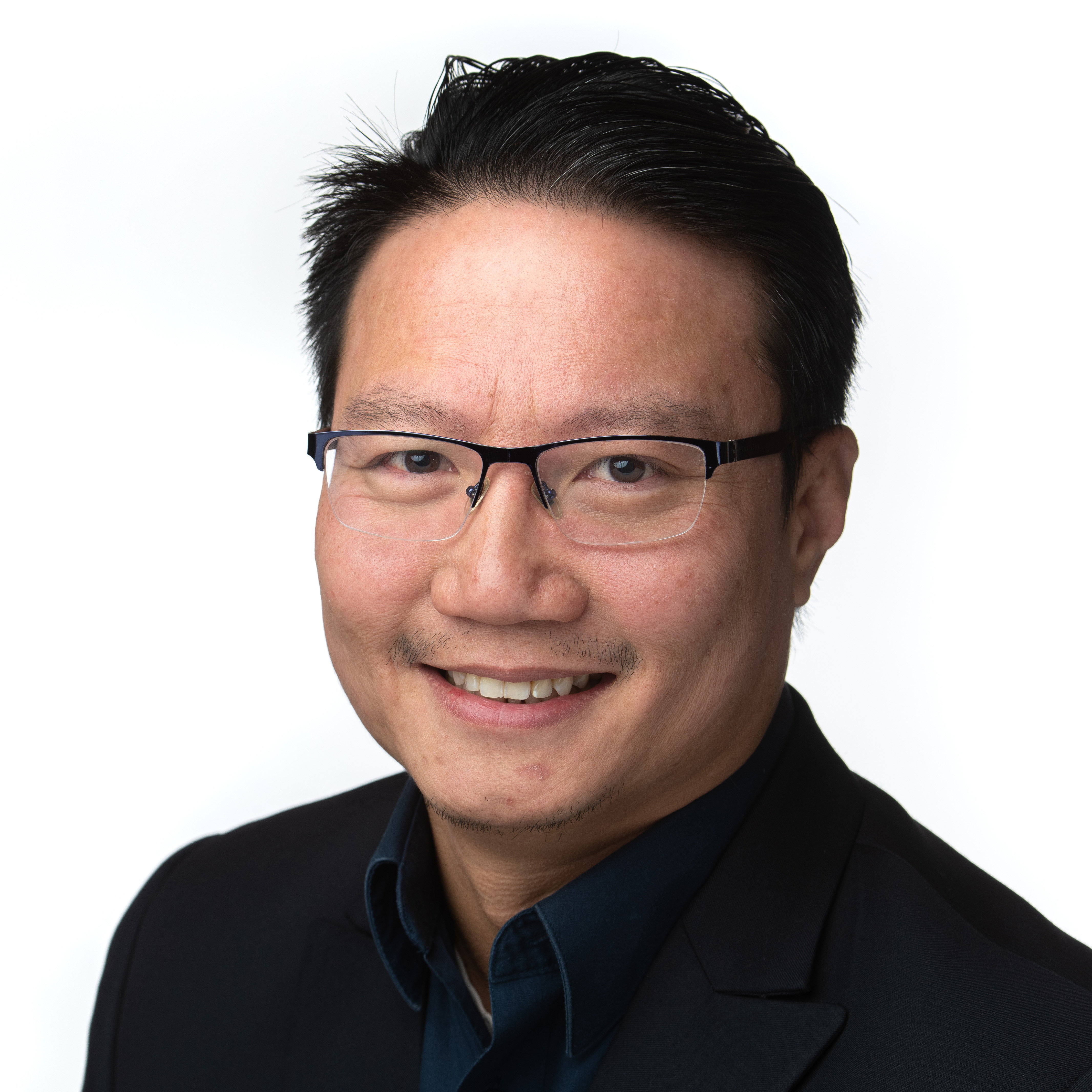
Dung Duong
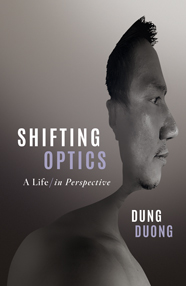
As a child, Dung Duong fled a third-world country, lived in refugee camps, was jailed, and found himself homeless before immigrating to the United States and growing up in poverty. A strong student and gifted engineer, he went on to find success as an entrepreneur and investor. An optic engineer by training, he is dedicated to making the world a better place and supports his wife's nonprofit, Perspective Charity, which works to give children the opportunity to become impactful doers, contributors, and leaders regardless of their economic or social situation. He wrote Shifting Optics for his three children, Anastasia, Athena, and Radiant.
📚 Books by Dung Duong
Transcript
[0:00:22] DA: As a child, Dung Duong fled a third world country, lived in refugee camps, was jailed and found himself homeless before immigrating to the United States. A strong student and gifted engineer, he eventually found success as an entrepreneur and investor. In his new book, Shifting Optics. Dung shares his stories on his recollections and a desire to make the world a better place. Told with a wink and a smile, he offers up his life story to show there’s always light in the darkness. There’s always a tomorrow and there’s always a way to move forward and approve the world in our own unique way. Hey listeners, my name is Drew Applebaum and I’m excited to be here today with Dung Duong, author of Shifting Optics. Dung, I’m excited you’re here, welcome to the author hour podcast.
[0:01:08] Dung Duong: Thank you.
[0:01:10] DA: Can you kick us off, tell us a little bit about your professional background?
[0:01:15] Dung Duong: I graduated with two degrees, one in optics and another one in civil engineering. There’s this whole story about why I went down via the ‘two-degrees-path’ but I won’t bore you there. My entire professional career dealing with optics and mechanical systems — pretty much, I spent my first two years trying to get understanding of fundamentals behind optics and mechanicals. I quite quickly became a principal engineer at a company called Applied Science Fiction. From that, I built a pretty good core foundation of understanding engineering in general but specifically optics mechanical systems, and particularly optics. I use that to really help me throughout my career. I’m a fundamentalist, as far as it comes to engineering, I really try to get back to everything down to foundational, fundamental sort of principles. That’s really allowed me to come up with pretty innovative ideas throughout my career. Starting back from the Applied Science Fiction days to LTN, Luminex, to starting my own company, Illumitex. And helping with Blooming, BML turned into Bloomings, all that drives back to core principles, applying core principles and really making the technology come out of that.
[0:02:30] DA: Who should read this book, Dung?
[0:02:32] Dung Duong: When we first started, the target audience was a kid probably in his 20s, 30s, his or her, 20, 30s, who is doing well in the profession but looking for what’s next. Pretty complacent but doing well. My point in all this was really to look at my kids and seeing where my kids would be at this time, when they’re in their 20s and 30s. Where, presumably they’re doing well at whatever they’re doing and looking out for more. This book was tailored to give the audience a little bit perspective. Going back to my experiences, the hardships and the stuff I went through, obviously it won’t be germane to the next generation. But my hope is that they can look at my stories, see what I’ve been able to do with what I’ve had and apply it to their own stories and background. Give them perspective of where I came from, not the problems they face or whatever sort of things they faced would be even close to germane to what I did. But certainly, hopefully, they can gather some perspective and really look at the big picture. The world and see how they themselves would impact the world and use that for their own benefit.
[0:03:42] DA: Talk to us about the title Shifting Optics.
[0:03:45] Dung Duong: My professional career has been dealing with optical systems, mechanical systems but mainly optics. So, for me, it was an interesting little parallel to go to having a title where it has my profession in it, as well as looking at perspective. I grew up a lot differently than what my kids will. Obviously with being a boat person, with going through the poverty and growing up in areas that probably are not as nice as my kids are in right now. I worry that they don’t have their perspective in life that they need. More of a worldly perspective. Seeing what’s out there. I think I just saw something from the Bill and Melinda Gates foundation where a lot of people live on less than a dollar-90 a day. And that just came in today I think. For me, I see my kids and the next generation, a lot of kids here as well, growing up in a bubble. In a situation where they may not see the bigger picture, see what the world really is beyond our gated community, beyond the privilege that they have. And I’m sort of, very much hoping that they can get a sense of understanding of a big world or the bigger world. So that they themselves can apply whatever they have been training or whatever their passion about to making this world — or improving this world in some ways. They don’t have to come up with inventions. They don’t have to be Nobel laureates or any of that. But in their own way, having impact that’s greater than themselves. Because I want to give them perspective of a different life. One that their dad went through and probably — I should tell you about this, it’s not — my story is not unique unfortunately. There’s a lot of other — I always talk to one influencer just last night, [inaudible] who is the present of [inaudible]. Stories of immigrations, stories of leaving a country, there’s a lot out there. And mine is, by far, not the worst. There’s a lot of stories that are much more tragic in some ways and much more — people deal with a lot, a harder hardship than I did. I’m hoping that my little story can help my kids or the next generation see the bigger picture. So that they themselves can cope with and do something beyond themselves. And help them through their own problems because once you have a bigger picture in mind, you know, a goal set that is beyond yourself, hopefully because you deal with a day to day basis can be overcome more easily.
[0:06:14] DA: Let’s dive into the book — and your book and your writing, even when you’re talking about your struggles, they read in almost a playful and fun tone. It’s such a great read and I think it’s really interesting how you sort of reset and start each chapter with a paragraph on your experience escaping Vietnam. And you always bring everything back to the beginning. Can you tell us that story about how you and your family left Vietnam?
[0:06:40] Dung Duong: Certainly yeah, we left Vietnam and then they — I wouldn’t say forced but certainly the circumstances of the situation in Vietnam were not conducive to raising my sister and myself. My mom’s parents were, fairly afterwards, they owned four houses back in Saigon or Ho-Chi-Minh City now. It was Saigon. But being rich or being affluent at the time and communism took over, it was not necessarily the best sort of things. I think there was a soldier that essentially lived in my parent’s house for three months. And so camping out and trying to figure out where we hid our jewelry or wealth. So the situation wasn’t conducive for us in that day. And I think looking back, could have stayed? Probably. Would our lives have been different? Obviously. So I think my parents — we left the first time. And I think that’s where — part of that chapter talks about having left and what we had to go through to leave. My parents obviously decided to leave. They had to go through different channels to get the right person. We had to leave in darkness both figuratively and literally because that’s truly leaving a country, truly escaping from a regime. And we did that. We got on a little small boat, left in the middle of the night or in the dawn, I think. And then just slowly made our way to a larger boat. And obviously, the experiences of being on a larger boat were pretty traumatic. Being a small kid, I doubt I remember as much as my sister who was three years older than I. Of course my parents remember a lot more. But that first trip didn’t go all as well as we had hoped because we actually saw land, the wind shifted, and we got blown back out to sea. And for several days there — I think it was seven days we went without — really without any food or water. A bad memory I have has always been one person who pretty much got seasick. And then to this day, I go out and fishing, I get seasick all the time. But how he ended up passing away was pretty difficult. I see, you know, he’s just curled up, I still have the images, flash images as I was growing up of a person with a green face. And obviously it wasn’t green but you know, a green face looking at me and just curled up in a ball. I think his story ended, unfortunately, pretty tragically when we hit a floating island, we all came deboarded and next morning, we came back on a boat, he wasn’t there. Unfortunately, there were some gaps. And actually even that first boat trip where we finally did hit land, it was back in Vietnam. I spent several days or weeks in prison. And before my dad was — and then, we were let go and my dad stayed there for like 69 months or something like that. Yeah, that first trip didn’t go as well as we anticipated. It was pretty eye opening in a lot of ways.
[0:09:41] DA: You mentioned your sister and your sister plays a major role in your life, still now. Can you talk about your relationship with her?
[0:09:48] Dung Duong: Yeah, I think my sister and I have a fairly normal relationship, you know? I tease her all the time and she teases me all the time too. Growing up, we were never that combative. She would probably have a different story. But my sister’s always been my anchor. My parents, when we first got to US, my parents spent pretty much all day online trying to make ends meet. They were working constantly. My mom especially. In a lot of ways, my sister raised me, right? Along with other people who lived in our house when we were renting part of the house out. We were fairly close. I talked to her about all my problems and stuff like that. And I think in some ways, she does as well. Our kids play together, she’s fairly accomplished herself, she’s done well, she works for the FDA now. Married and her husband works as a doctor for the University of Maryland. I get updates of COVID and get from a doctor perspective on how COVID is doing. How we’re handling it from a government standpoint and the action has been for that. But my sister and I have always been fairly tight, she helped raise me definitely. I played all the girly games and beat her at all the girly games — hop-scotch and whatnot. All her friends and I probably don’t get — I think we get along but I think they see that I was always there pestering them, I guess, I had nothing else to do. Certainly, her skills sets and my skill sets are different. Her EQ is probably much higher than my EQ. I have a little bit of IQ on her but I think her EQ is definitely higher than me.
[0:11:17] DA: We’re going to send this to her.
[0:11:20] Dung Duong: Good, I didn’t get through [inaudible].
[0:11:26] DA: Now, you brought up COVID and can you talk about some of the tech you’ve been involved in? Because you casually throw out in the book that you try to get funding for a handheld diagnostics instrument that could test and identify a strain of respiratory illness which would be a gamechanger right now. Tell us about that and some of the other incredible tech you’ve been a part of?
[0:11:50] Dung Duong: I’ve been fortunate in my life with companies needing, I guess, a person with my talent at the right times. I’ve got to play with a lot of stuff from government programs and future combat systems. To working on unrelated optical systems for — one of which was at Luminex we’re looking at respiratory video. At the time we were looking at handheld diagnostic device. I was in a process of miniaturizing a lot of the technology. And I think we were — the internal program was looking at exactly respiratory illness because there’s a lot of different types of influenza. There’s the common cold, which is rhinovirus but there’s, I was 20 different things we were looking at. Luminex technology allows for multiplexing, so you’re able to test for a number of different strains at one time. It was funny, back in 2006 and 2007 — I think is when we worked on it. That they were working on this handheld diagnostic platform and I was definitely integral in laying out the optics and having understanding of how to put this together. And I left to start Illumitex. It was a hard decision at the time and I think most people view it as, well, kind of like — we started this company and finally got funding. Moving over was simple. But to me, it wasn’t because — there’s, at Luminex, we’re doing some pretty clever things with the technology and helping the world. But I finally made a decision to move into Illumitex. I wasn’t even employee number one in my own company. Certainly, an employee, I think I was like five or six — or some of that when I started it. I think I’ve been fortunate in my career to have been around some very good people and very good technologies and been able to help them progress that technology. Unfortunately, in this case, when I went over to the help my own company, Illumitex, I don’t really know what happened. And since they hadn’t come out with that device, handheld device. I’m assuming that it didn’t move forward as much as I would like.
[0:13:49] DA: What do you think your favorite innovation you’ve been a part of has been? And what do you think the most important innovation you’ve been a part of has been?
[0:13:59] Dung Duong: That’s a good question. Favorite innovation is probably when I first started to come out in college. At the time, I was looking at trying to image fill through a target media without developing. So it’s like a dense, dark, diffused piece of film. I think everyone, well, maybe not intending on this but most people in film know that without development, it just looks like a gray not a gray but a balance blot, it’s hard to see through. We had to develop and luminate to look through that, get the great new image behind that. Coming out of college, there was a — just graduated college and I actually had several full rides ready for me. I accepted a full ride at the University of Arizona. I was having a lot of fun in Austin, so deciding to stay was a big deal at the time. And then Dr. Shoemaker didn’t like that at all. He was Dean of the office at the University of Arizona. But I would say to my favorite would definitely have to be that illuminator. Because I tested every light source at the time for brightness and tried to figure out how much lighting to really put on zone. Getting to the flexis there to be as high as possible. We were very successful with that. We developed some illuminators that nearly burned film when it’s going through. So we had to get the latent image but the film was literally burning because there is so much light hitting it as it is passing by the illuminator. So I think that would have been my favorite. I think as far as important — I think just looking up what the Bill and Melinda Gates Foundation put out about how many people live, put less than a dollar-90 US dollars per day, and with COVID, the food crisis business is there. And there is certainly a need — the world will need additional food and where it comes from is going to be interesting. FARM2050 is an initiative. And again, it talks about how much food is being produced and they’re perishable — at which point you need a new process. The prediction is 2050 and it won’t be 2050 it is going to be somewhere much later than that. But certainly it is coming. As population grows, as the amount of food production is going to go down due to climate change change. At some point, those two graphs are going to cross. And what can we do to really either push out that line to a point where we can produce enough food efficiently, even in the face of declining crop window to support an entire population. So I think as far as important, it is going to be standard innovations I have done on the agriculture side. So certainly one of the things I’ve been fairly into as [inaudible 0:16:33.1] and being able to get the most light out of the LED as possible. And that is not only — Illumitex next trying to get LED and probably EQE IQE portions, whereas later in my career, it’s really about the light and maximizing how much light gets to the crop. And evolve being systems and fixtures to allow for that efficient transfer of light to the plants itself. Will vertical farming be the end all? No, it will not be to feed the world. But there will be vertical farming, definitely we’ll see a initiative still going and field crows all contributing to the food crisis that’s pending. And I think US saw that with the food crisis, with COVID, even though US is always saying we have enough nukes and enough farming and that we can protect the food out here. So there is enough food that everyone here can be in abundance. But the rest of the world isn’t as fortunate. So how to make growing food, essentially, cheap enough so that they can really influence and help the world, instead of having all of the people hungry everyday, we can figure out some ways to really get them enough nourishment.
[0:17:43] DA: Now, you did great in school. You have been doing incredibly well in your professional life but there were some shenanigans along the way, which I enjoyed. Which are really fun reading the book. So people need to hear one of my favorite stories in the book. Tell us about the Bone Brawl.
[0:18:05] Dung Duong: Oh the Bone Brawl! Okay, so that was once where, literally I was — when I first started with Martial Way, I think Larry, he’s the founder of Martial Way that teaches. The sensei, the mentor. The teacher. And he and I built up a pretty good relationship. I was certainly, I wouldn’t say I was his best dude by any means but I was definitely one of the better ones. I was only going to their [inaudible 0:18:32.1] — I was never going there to fight. Or be a professional fighter. What’s funny — at the Bone Brawl, I came there to watch. I watched a couple of my friends, I didn’t bring any of my gear, I didn’t train for it. I didn’t bring any of my gear, I didn’t really anticipate that I would be fighting that night. And I showed up to the Bone Brawl with that same sort of mentality. “I’m here to watch, I’m early.” But one thing led to another and then Larry and a few other folks really convinced me to fight that night. I can’t believe a guy with no gear — and then one of my friends come up and say, “Yeah, I have the gear necessary. That you need to fight” and then being a guy, you understand there are certain things you need to protect, having these duct taped to put that on was an interesting experience if nothing else. And the fact is I thought I did fairly well. I went to the ring being the first fight, having not trained for it, having just finished a big meal at this warehouse. At the end of the fight, I thought I had won. My hands were raised, I was walking around the — I think it was more of the ring model pumping out, I thought I’d won. But my opponent was actually there, in the ring, just sitting there with his mouth piece still — not in place, right? Because he had spit it out. It was a good experience. It was one of those that I wouldn’t say help build character but it is just one of those things — kind of off the beaten path for me. It was fun, it was one of those experiences I would never forget.
[0:20:08] DA: What Dung has not mentioned yet is that he was on a date at the time and had just come from dinner to watch these fights. And then was a fighter.
[0:20:16] Dung Duong: Yeah, I ate — you know I am one of those guys who don’t like to, having been a boat person, I don’t like to waste food. So you know those warehouse portions aren’t exactly small either. So I filled my stomach thinking I was there to watch and low and behold, I am in the ring fighting. I think it was in the book — it covers a little bit more some of the details, like how Ollie and I made a pact not to hit each other’s face, which he thoroughly did not comply. As soon as the bell rings, he kicked me in the face. But you know besides those minor throws, he and I still hugged at the end. But that was interesting and actually it helped me. After that first fight, the first round there is so much nerve. You are just going in not knowing what to expect. These long shorts that weren’t mine, it was one of my friends. You know, of course duct taped and everything. And to walk in the ring and get kicked in the face right away is an eye-opener. And I really had the tunnel vision happening. Because really my peripheral vision was going away. I can literally see it going away. And it narrowed just to my opponent. And I think that was the first time getting knocked out but thank goodness, I didn’t get knocked out and was able to finish the fight. But that experience does also help me later one because having stepped in the ring, the first time I just feel nervous. The second time, when I did stick fighting, I went first in that. Some months later because all the nerves are gone, you are more prepared to deal with the situation. You know all of that apprehension builds up the first time. But once you get through it again, all that apprehension goes away. And I think that looking at that from analogy to the business world and everything else, the good news is you are never going into a boardroom where people are trying to kill you, right? Almost literally. So, after that, it became a little easier for me to come into situations that are unknown. And still be able to go through it without all the apprehension that goes into it. Now I am still a terrible public speaker. I still get all of the nerves and apprehensions of public speaking but going into boardrooms and presentations, I am a lot more comfortable having gone through — stepped into a situation where a ton of people are watching. And getting kicked in the face right away.
[0:22:41] DA: Yeah, you can draw parallels from that experience in your life to starting your own company where there is excitement at first and then all of a sudden immediately you are going to get kicked in the face. Round two comes and you got your feet under you, you get used to it and then the success comes from that point.
[0:22:59] Dung Duong: Absolutely, that is one of the parallels I am hoping people draw from the book is how they can take that — some things, the stories I tell and apply it to their own lives. People who know me know that I joke around way too much, probably say some of — the wrong things and most of the time. And trying to be funny — but all in the spirit of trying to be funny, I say the wrongs things a lot. I probably offended some people, something I sincerely apologize for that. If you are one of those guys and you are listening and you are one of the people I offended at one time or another. But, to me, it is all about really keeping an eye on the bigger picture. Really trying to figure out what your goals are and going forward to those goals. And sometimes life takes a slightly different path to get to your goal like the Bone Brawl — that I think everything in life is a learning experience, a journey that you have to walk and you have to face and that you have to be able to get as much as you can out of it. But those experiences, some of people can say, “Hey, Bone Brawl you said this is a fun thing or playing crappy jokes and talking and trying to get that fun” — but it is all — build your own character in a lot of ways. Build whatever you want to build.
[0:24:08] DA: Can you talk to us a little bit about charity work that you and your family take part in?
[0:24:13] Dung Duong: Yeah, so after the liquidation have in 2018, one of the things that I wanted to do was start to give back a little bit. And do something that is fruitful for not just for myself but for the world. My wife got me starting to volunteering. So I volunteered for a daycare and volunteered for organizations. In school, I get a lot of that but after college I didn’t do much of that at all. And my wife really got me started on this. And in Dallas, within this community, they have a scholarship program. And the scholarship programs allowed for giving — essentially there was a trust that allowed for some money to be given to these top students in Dallas. And I was part of that committee. But really from that from my experiences, looking at my kids and who they play with, looking at our limited gated data community. We thought about how to expand this and really do this to this in more of a — much bigger society and one of the things we did is start prospective journey. Really actually my wife started the journey I am just here to help. But really offer the world sort of a — we’re starting in Vietnam but really the whole goal is to be more global. But to give underprivileged children with potential, the avenue to reaching their full potential. That is one side of it. And the other side of it is often helping kids over the US understand or see the bigger picture of another kid who is growing up in poverty with the town. And hopefully by seeing the kids over in the US, or the families over the US can help the child over in Vietnam, as I said, today. But we hope we expand to other regions in the years to come. And really allowing both families, both child to eventually make an impact in the world. Because what we want to see is kids growing up in the US with all the resources and really not applying to themselves to their full potential. Whereas a kid over in impoverished country having the talent but not having the resources to reach their full potential. So hopefully by connecting one to the other both will have a higher probability of impacting the world and helping society out.
[0:26:40] DA: Yeah, that is really great work and Dung, writing a book is no joke. So first of all congratulations.
[0:26:46] Dung Duong: Thank you.
[0:26:47] DA: And if readers could take away just one thing from your book, what would you like it to be?
[0:26:54] Dung Duong: My goal has always been for the real community perspective to get to all of us. The story is really not about me. I am hoping the story is a way, a path towards them understand their own lives and how they have gotten to where they are at — in order to take that perspective and really applying it to helping them grow out somehow. Making an impact in the world. And impacting the world is not solving some huge problem out there, right? Not being a build [inaudible] to try to do the vaccine, you know. It is not about that. It is about helping a neighbor out, yourself out even, however you can. Seeing the bigger picture so that it is not always just you. It is not always about focusing on, “Hey, what can I do to make myself better? What can I do?” Well you should do but what can I do to make myself more healthier, make myself more famous. It is about “How do I take all of that and empower myself to help those around me do better.” The message of the book, hopefully will be, if you get nothing from it. There are some funny things. You can laugh at me as much as you want but hopefully, at the end of the day, you can see that you yourself have the power and resources to do better and hopefully you will.
[0:28:08] DA: Dung, it has been such a pleasure and I am so excited for people to check out this book. Everyone, the book is called, Shifting Optics, and you can find it on Amazon. Besides checking out the book Dung, where can people find you?
[0:28:21] Dung Duong: Email is probably the best way, my wife’s charity is listed in the book. So I think there is contact information on the website. I should have an email address in the book but yeah, email is the best way to get a hold of me and anything to do to pass along the book launch and if you want to contact me, just email me. I will respond.
[0:28:41] DA: Awesome Dung thank you so much for coming on the show today.
[0:28:43] Dung Duong: Thanks a lot sir.
[0:28:45] DA: Thanks for joining us for this episode of Author Hour. You can get Dung Duong’s book, Shifting Optics, on Amazon. Also, you can also find a transcript of this episode and all of our other episodes on our website at authorhour.co. For more Author Hour, subscribe to this podcast on your favorite subscription service. Thank you for joining us, we’ll see you next time. Same place, different author.
Want to Write Your Own Book?
Scribe has helped over 2,000 authors turn their expertise into published books.
Schedule a Free Consult