Matthew Bertulli: Anything, Anywhere
Read the full transcript
Matthew Bertulli
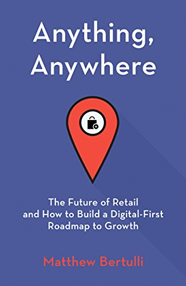
Matthew Bertulli is the co-founder and CEO of Demac Media, a commerce agency now known as Bounteous Canada, and a co-founder of Pela, the maker of compostable phone cases. Over more than a decade he has helped build and grow well over a hundred eCommerce businesses that have together generated billions of dollars in online sales. In Anything, Anywhere: The Future of Retail and How to Build a Digital-First Roadmap to Growth, he lays out how retailers and brands can compete and win in a digital-first world.
📚 Books by Matthew Bertulli
Transcript
[0:00:35] Charlie Hoehn: You’re listening to Author Hour, enlightening conversations about books with the authors who wrote them. I’m Charlie Hoehn. Today’s episode is with Matthew Bertulli, author of Anything, Anywhere. Have you ever tried to make a living by selling things online? Matthew has done just that and in this episode, he’s going to teach you how. Specifically, he will give you his personal playbook for making a six to seven figure income by selling products and advertising them on Facebook. Even if you find the eCommerce world intimidating or overwhelming, this episode will give you the confidence and knowledge you need to succeed. Now, here is our conversation with Matthew Bertulli.
[0:01:35] Matthew Bertulli: I started my company, my main company, 10 years ago and before that, I’ll call myself a person in a little bit of denial, okay? I say that because I spent my entire life, I quite literally grew up in a retail family and I was raised in the back room of our family’s retail stores. That was my babysitter as a kid. You know, when I was getting into that sort of like those years where you’re going to go university and try to figure out what you’re going to do with your life. I was really into software and computers. I was a self-taught programmer and I’m thinking like, “I’m never going to go into this retail thing because that’s what my family does, that’s super boring and nobody wants to do that.” I went down this what I thought was the path of, I’m going to be a software engineer. This was when I was like 19, 20, right? You know, when I look back in my career up until the point where I started DMAC Media, all I ever did was just get software development jobs in some form of freaking retail. It never really clicked that – I never really got that far from what I was raised in. Then when I started working at a company called Net Suite, before we went public, it really hit me like “Jeez, I’ve never really left this industry. I never really left the space, it’s actually something I really enjoy. I love everything trade and commerce,” right? I just happened to be a software and tech guy at a time when everything commerce was just this huge upheaval, right? I’ve been building DMAC for almost 10 years now. And some other companies that have spun out of it, that’s laid the foundation for everything, right? I no longer live in denial. Now I’m all in on anything that has to do with trade, with commerce, with retail, with manufacturing. The world of physical stuff is sort of my happy place and once I kind of accepted that, the whole book thing just became super easy –
[0:03:43] Charlie Hoehn: Yeah.
[0:03:44] Matthew Bertulli: To get my head around.
[0:03:45] Charlie Hoehn: Yeah, why is it your happy place? Tell us, where does this passion for it really stem from?
[0:03:53] Matthew Bertulli: That’s actually a really good question. I’ll tell you why I do what I do. That’s important to know and for me, I like retail and I don’t just like it for the sake that it’s like – it’s the bedrock of the economy and like, you know, most other businesses bolt on to the world of physical stuff. Like that’s not it for me. What I like about it is, because of its sheer size, it is a great vertical or a great industry to have a large amount of impact in. Because it is so damn big. What I mean by that is, what most people don’t know about me is I’m also a bit of a tree hugger, right? One of my passions in life is mountain biking and hiking. Anything outside. I grew up in northern Ontario where I spent my entire life like – my entire childhood was spent on the water, near the water, on a trail, in the bush. The planet is important to me and I see commerce now as especially eCommerce which is the version I focus on as this great way to make retail better, to help it evolve, you know, to improve the supply chain, to reduce packaging, to make better stuff, to make better everything. Because commerce is so big, I like that me, as the individual, I can have a pretty good impact on this planet, leave it a better place than I found it because it’s an industry that needs change and I can actually help it. That’s where it comes from.
[0:05:29] Charlie Hoehn: Yeah, walk us through what an average company’s supply chain and average retail companies are doing that maybe we applaud as “Hey, they’ve got a great brand, they’ve got great products” that you think, “Man, I could go in there and really improve things.” What would the before, after look like?
[0:05:49] Matthew Bertulli: You know, I think what’s happening right now, and really what I tend to do and what I’m involved in is a lot of digital born direct to consumer brands is what I’m really sinking my teeth into right now because – the old guard, right? What we’re all hearing about in the news is you know, your brick and mortar retailers and some of your manufacturers that were born decades ago, they’re closing up shop, right? Their business models are old, they’re dying and frankly, the vast majority of those mid-size and larger retailers, they’re not willing to throw away the old way of doing things. They’re just going out of business. Where I focus my time and sort of my study. Because that’s how I look at it, I’m just like a student of retail, is there’s a whole bunch of these companies now that have started in the last decade and I call them digital born because they were born in this era of commerce that seem to be okay at figuring out like, “This is my customer, I know it’s a narrow definition of a customer and I’m probably not going to build a billion-dollar brand but maybe I’ll build a 20 or 30-million-dollar brand.” While these entrepreneurs and these retailers – because they’re still retailers are good at that where they fall down is adapting and using some of the old ways of doing things, right? A digital born brand, a lot of them that I know, they’re terrified of wholesaling, right? They see that as, “Well that’s what the other guys did and that’s why they’re failing” and that’s not true, right? Just like, they don’t want to sell to other people who then sell their product to customers, that scares the hell out of a digital born commerce or retailer.
[0:07:45] Charlie Hoehn: Why? Just because of the margins are thinner?
[0:07:47] Matthew Bertulli: I think it’s just because supply chain is scary you know? When they’re having to actually – think of it this way, it’s the reverse problem you know? A manufacturer from the 90’s has no problem at all, wrapping their head around shipping pallets of product out to a Walmart or a Target, right? They’re scared of shipping a single thing to a customer. Because they think like, “How the hell am I going to service that?”
[0:08:13] Charlie Hoehn: It’s not a bulk order.
[0:08:14] Matthew Bertulli: Right. “Holy shit, what do I do with this?” It’s the reverse problem, you got all these kids, these young, hungry entrepreneurs building great brands and they’re super comfortable selling to their customer, like their person that they are serving. But when retailer comes along that wants to buy 5,000 of their thing, they think, “Well how the hell do I do that? Now I got to service this business and I don’t want to do that, I’m really about servicing my customer.” It’s a part of the old guard, it’s a part of the old commerce operating system that still applies today that is super valuable to a modern day digital born brand and that’s just one example of something like when I talk to an entrepreneur who has built a company and is trying to go from like one to 50. That’s usually something that I point out, I’m like “Yeah, you’re trying to do it all on your own and there’s this huge network of merchants out there that want to help you and that they need your help. Why not actually use them?” You’re going to get there a hell of a lot faster.
[0:09:23] Charlie Hoehn: Your book is called Anything, Anywhere. What would you say is the number one idea or takeaway or story from your book that our listeners can hold on to and carry with them or potentially even take action on this week?
[0:09:43] Matthew Bertulli: The idea for anything anywhere is a bit abstract, right? It’s foundational. It’s that we’re quickly coming to this place where all of us can buy anything you want anywhere we are. It’s much further than – You got to think of it further than the mobile phone, always being in your pocket and you can just click and buy something. It’s bigger than that now. It’s going to be that if you’re in a restaurant and you like the chair you’re sitting on or the light fixture you’re looking at that you will be able to buy that right there, right? At that moment. A lot needs to change in order for that to happen but it’s happening really quickly. That’s the idea. Now, when I unpack that into something that people can action on, I start to – that’s where we need to get into the nitty gritty of things, right? You know, most people reading this book are probably going to be mom and pop retailers or brands, you know, owner operated entrepreneurs. Trying to grow their business from like a million to 20, you know? This isn’t for like the big, huge companies. The big takeaway from the book is to start thinking less about all of the noise and by noise I mean, there’s a million things that we can all Google and find to do to grow our business, that’s not the problem now, right? Figuring out what to do, not the problem now. That knowledge is free, the real challenge is when do you do these things, right? If you-
[0:11:28] Charlie Hoehn: Can you explain what you mean by that?
[0:11:30] Matthew Bertulli: Yeah, the way I illustrate it, like when I find I’m up on stage and I’m talking about this is, on a start of a business and grown a business. Especially for like – if you’re a Shopify store owner, it’s really easy to get an app for that. The famous Apple thing where if you want to add an email platform or a loyalty thing or you want to – I don’t know, use Amazon for fulfillment and there’s all these little pieces now that are really accessible to the average entrepreneur, the average retailer. What I mean by, it’s less about the what, it’s more about the when. That the order in which you actually do those things is really important, right? You don’t want to spend money on something or time, like for example, if you’re an entrepreneur in your brand and you’re not very savvy with inventory management and you’re more of a brand person. The first thing you do should not be going and selling your product on Amazon marketplace. That is a nightmare of an ecosystem to navigate. It is more about operations and logistics than it is about brand.
[0:12:44] Charlie Hoehn: Really?
[0:12:45] Matthew Bertulli: Yeah.
[0:12:45] Charlie Hoehn: Well yeah, I can definitely see that it’s more about logistics and it’s nothing about brand because everybody’s brand is effectively –
[0:12:55] Matthew Bertulli: It’s meaningless.
[0:12:56] Charlie Hoehn: Vaporized by being on Amazon.
[0:12:59] Matthew Bertulli: I think people have to play to their strengths and they not only just their strengths but they have to look at their business, so if they’re a million-dollar business now and they’ve done it all in their own. Moving into Amazon may not be the next logical step. That might be three or four jumps away.
[0:13:15] Charlie Hoehn: Yeah, that’s actually phenomenal advice. If you are really good at marketing and branding. Going to amazon and figuring that out, it may be an exercise that’s fun to give a shot but your odds of succeeding are low unless you are catering to a specific market where there are very few competing products.
[0:13:40] Matthew Bertulli: Right. I guess the point is, when I talk about sequence and when, it’s making – I like to make entrepreneurs stop and think about – you know, should they be doing that one thing now or should it be something they do later and to start thinking about stacking those bricks up.
[0:13:59] Charlie Hoehn: Okay, let’s break this into a real case study then, let’s say theoretically, let’s say I have a product, my strength is more in marketing and branding. What do I need to do first and where does Amazon fall into that sequence?
[0:14:15] Matthew Bertulli: Yeah. I’m doing this right now with my own brand. You want to use that as a sort of a case study?
[0:14:20] Charlie Hoehn: Yeah, let’s do it.
[0:14:22] Matthew Bertulli: Okay. I have a brand called Pela Case. Pelacase.com. We are and here you go, when I talk about a competitive market, we are an iPhone case brand.
[0:14:35] Charlie Hoehn: Good luck.
[0:14:36] Matthew Bertulli: Yup. Now, here’s where and this is purely a branding and positioning play. We are however a biodegradable compostable iPhone case. The product is very much built for people who don’t want to buy plastic garbage that they throw out, they’d like something that winds up zero waste. When you’re done with your phone and you’re going to get a new one, you’re going to be done with your case, you can actually just throw it in a backyard compost and this thing disappears. That’s the stick, right? Great, we have our customer. Now we’ve taken this in 12 months from zero to a seven-figure brand and we did that almost entirely on basically what was one channel and that was Facebook. By proxy Instagram because Facebook owns Instagram.
[0:15:32] Charlie Hoehn: Just through advertising and sending them to pelacase.com or were you having landing…
[0:15:39] Matthew Bertulli: Yeah, that’s part of it.
[0:15:40] Charlie Hoehn: All that stuff?
[0:15:40] Matthew Bertulli: A lot of influencers on Instagram, a lot of reach out on Facebook media company. I don’t know if people know this but there are media businesses that are entirely on Facebook, right? Up Worthy, your viral threads and your zincs. There’s tons of them. We said, “Okay, we’re a small company, we have a limited amount of resources, we have constraints, we’re pretty good on the acquisition side and we’re pretty good brand storytellers and copywriters and we can get photography done and design.” Let’s play to our strengths, right? We also wanted to build some momentum so that we knew that when we were ready to enter maybe an Amazon marketplace or Pinterest or wholesale, that having a really strong channel, one strong digital channel would give me leverage to start that wholesale conversation. I’ll get to that because we actually are doing that now and our Facebook presence, and our Instagram presence and our fan base are the reason we’re even in the door with big retailers, right? In the last 12 months, right? We’ve gone from zero to a seven-figure brand and we did that purely with one channel, while everything that we read is telling us that you got to be on Amazon, you’ve got to be in – you’ve got to be on Pinterest or your Google paid ads. You should be retargeting, where’s your email marketing man? All this other crap; that every single – if you Google anything or you go on any blog that talks about how to build a business, they tell you that you’ve got to do all this stuff and I’ve done none of it.
[0:17:24] Charlie Hoehn: Wow.
[0:17:25] Matthew Bertulli: None of that other stuff. I will, right? We totally will, it’s on our road map, we’re starting to test some of it but we didn’t run out and buy 20 apps and to do all this other crap because it was not going to be effective, unless we had this first channel as our jump off point.
[0:17:40] Charlie Hoehn: That’s smart. Author Hour is sponsored by Book in a Box. For anyone who has a great idea for a book but doesn’t have the time or patience to sit down and type it out, Book in a Box has created a new way to help you painlessly publish your book. Instead of sitting at a computer and typing for a year, hoping everything works out, Book in a Box takes you through a structured interview process that gets your ideas out of your head and into a book in just a few months. To learn more, head over to Bookinabox.com and fill out the form at the bottom of the page. Don’t let another year go by where you put off writing your book. Let me ask you this because this stuff that kind of drives me and my friend’s nuts that never gets talked about. So sometimes you talk to an Amazon fulfillment retail order person and they’re like, “Yeah I sold a million dollars’ worth of product,” which was amazing but they lost money. So this is what drives me nuts right now, in the top podcast of all of iTunes there are Amazon fulfillment ones talking about how you can make five figures a month but they’re talking about revenue. They’re not talking about profit so when you –
[0:19:13] Matthew Bertulli: Yeah and who gets a shit about the top lying there?
[0:19:15] Charlie Hoehn: Who cares, right? Yeah it’s just a massive waste of time if you’re losing money. So were you able to be profitable or how quickly were you able to be profitable and did you have to raise money to start this?
[0:19:26] Matthew Bertulli: No, this is entirely bootstrapped. Now let me be completely fair to everybody listening like I seeded the company with money.
[0:19:34] Charlie Hoehn: Sure.
[0:19:35] Matthew Bertulli: Right? But not a ton, you know?
[0:19:37] Charlie Hoehn: Right, yeah what I’m really asking Mathew is, did you go raise money from investors?
[0:19:43] Matthew Bertulli: No.
[0:19:44] Charlie Hoehn: Good.
[0:19:44] Matthew Bertulli: No, not at all and profitable in life before.
[0:19:47] Charlie Hoehn: I don’t know investors who would invest in an iPhone case at this point?
[0:19:53] Matthew Bertulli: No, they probably wouldn’t especially not like a tree hugger eco-friendly. It has not been done yet. This is the first one so.
[0:20:02] Charlie Hoehn: I’m really surprised at that. That’s amazing and good for you for finding that niche, that’s awesome.
[0:20:08] Matthew Bertulli: Well listen I didn’t find it either. I bought half the business two years ago because I loved the idea.
[0:20:16] Charlie Hoehn: Yeah, how did you buy the business?
[0:20:17] Matthew Bertulli: I met this guy at Mastermind Talks too and he had a great product idea but he didn’t know how to build a company. So I am like, “Why don’t I partner up with you and I’ll put the capital up to hire the person?” So the bigger story is what we did is we just found a young woman, her name is Santa, who tried to build her own business and it didn’t work out for a whole bunch of reasons. But she wanted to do it again, she just didn’t have the capital or the idea at the time. So we’re like, “Well we’ll hire you. Come up with a plan saying that that you’ve got incentive to do this but you’re going to grow this brand for us,” right? So that’s the only investment that we’ve made and the whole thing was just to get a person to do this.
[0:21:05] Charlie Hoehn: Nice.
[0:21:05] Matthew Bertulli: Yeah and so is it profitable? Hell yeah, now what we’re doing is every profit dollar we get, we’re just pumping it right back into growing the business because right now it’s a bit of a rocket ship. But it’s only doing that because we just were super focused on this one channel. That’s the growth strategy.
[0:21:26] Charlie Hoehn: Yeah, that’s really smart and you’re totally right. I can see how everybody gets spread too thin. Their efforts gets diminished because they are focusing on the wrong things at the wrong time and they’re trying to do all the things all at the same time. It makes it so hard.
[0:21:41] Matthew Bertulli: Or even worse, the right thing at the wrong time you know? That’s the frustrating thing, is like I often encounter retailers and commerce brands or entrepreneurs where I’m like, “Yeah that is actually the right thing. You should be doing that eight months from now,” you know?
[0:21:56] Charlie Hoehn: Yeah so let’s lay out the sequence then, the road map, tell me if I am wrong if this is not the road map for pretty much any product that’s just starting off. Is you build the page basically, the website that shows what the product is, the story it’s telling, maybe a little bit of a brand just to get started and making it easy for customers to either sign up or pre-order or whatever. Then you advertise that on Facebook to the people that you’re trying to go for, you measure how effective that is and do you mind me asking what the margin is on your product? Are you making two-x, three-x, five-x?
[0:22:41] Matthew Bertulli: So it’s in the world of retail so the gross margin on a product is probably around 75% gross margin.
[0:22:48] Charlie Hoehn: Okay, great. Right, so okay once you know kind of, “Alright here’s how much we can make per advertisement” or per click or whatever, here’s what our return is once you are making a dollar fifty per dollar that you’re spending you can basically scale as much as you possibly can and just keep dumping money into advertising until it stops working. So once you’ve hit that point, when do you decide to do the next step in the process? Which is either, “Let’s talk to wholesalers,” or “Let’s list this on Amazon.” What comes after you’ve hit a certain threshold on building the brand on its own, once you have that asset in place?
[0:23:33] Matthew Bertulli: I think the threshold is a little different for everybody. Now for us, for Pela since let’s just keep using this as the case study. I think the key message is and the key strategy is we’ve got one product, we have one channel, we have one customer, one profile and we have one sort of like funnel that we are putting them through. So that’s that whole, “I spend a dollar I need to make three and if I can do that consistently and repeatedly that’s a good business,” okay? It scales up if the margin is there. So it’s got to be your own product, it can’t be somebody else’s because then there is no margin. So that’s the basic idea so that one channel, one product, one customer, one funnel and go and iterate there until – I do it until I see a decent amount of traction, in that it’s starting to be less work for the revenue that we’re getting. Once we are comfortable and we’re feeling pretty good, then I want to move on to something else. Because a lot of companies especially the ones that I know of, where everybody falls down is they get way too comfortable in that one channel and they never create more leverage elsewhere right? So they got one leg to stand on and what you’re hearing about and what you and your friends are experiencing around frustration is that a lot of people are doing this on Amazon, which is a channel they don’t even own and a customer they don’t even own. It’s the Amazon’s customer and that when somebody else comes along and kicks them, they fall over and the business is done. That is actually not a long – I am interested in building real businesses and real brands. That’s way more fun and you sleep better at night. So I move on when we are comfortable like right now, we’re getting pretty comfortable with this one channel that we have. So we started to have – we are having two discussions. So already we’re starting the Amazon, down the Amazon path. I have the like for everybody listening, again I’m cheating a little bit. I have DEMAC Media here on the side with a 100 employees and a whole bunch of engineers. So the Amazon thing doesn’t scare me as much because I can manage the technical side of that really easily, which is totally cheating. I get it. I’m also on the other side, we’re pursuing wholesale now and we’re talking to telecom companies. And people listening or anybody with retail principle are like, “Why are you talking to telecom companies? Go after Apple, go after Radio Shack or Circuit City or pick somebody who sells phone cases.”
[0:26:22] Charlie Hoehn: Isn’t Circuit City out of business? It’s a good thing you’re not listening to those people.
[0:26:27] Matthew Bertulli: I don’t know, whoever is still around yeah. You know, “Go after the retailers because the retailers have customers,” yeah. however the retailers are also going to compete with me online and I don’t want that yet right? Whereas if I can get a Rogers or a Bell or a Sprint or a Verizon or one of these guys to buy and sell to their customers through their distribution chain, now I have no channel conflict. So again, more leverage right? So I am getting into wholesale without creating the channel conflict headache that most brands encounter when they also sell to direct to consumers themselves.
[0:27:04] Charlie Hoehn: Interesting, yeah.
[0:27:05] Matthew Bertulli: Make sense?
[0:27:06] Charlie Hoehn: Yeah it makes total sense.
[0:27:07] Matthew Bertulli: So even the wholesale move, it took us some time to figure this out and now that we figured it out we’re like, “Well duh.” But that took months of saying, “Who the hell can we sell this to in large quantities?” So wholesale quantities and obviously at less margin because they need to make theirs but who can put this in front of a bigger customer base without causing us an immense amount of headache in channel conflict. So when I want to run a promotion, I don’t want them yelling at me because I am running a promotion and they aren’t, right?
[0:27:42] Charlie Hoehn: Yeah, exactly. So let’s say you did get purchased by Sprint. Great, what now?
[0:27:52] Matthew Bertulli: Like if we get into Sprint?
[0:27:53] Charlie Hoehn: Yeah.
[0:27:54] Matthew Bertulli: Yeah.
[0:27:55] Charlie Hoehn: Yeah, I’m sorry not acquired but.
[0:27:58] Matthew Bertulli: Yeah not get acquired by Sprint? Yeah, that would be weird. Yeah so after wholesale, I’ll tell you like we still don’t have very robust email marketing channel. We still do nothing on Google for SEO or PPC, like we got some natural stuff that happens for SEO but there’s been no focus there. Nothing on Pinterest and no popups, no presence ourselves. We sell globally direct on our own site but we’re still only just basically a North American company, that’s the majority of our business.
[0:28:38] Charlie Hoehn: And are the majority of your sales individual orders or do you get bulk orders?
[0:28:43] Matthew Bertulli: So we do, we are getting like we just did a bulk order for a large company who bought a thousand cases for an event they’re sponsoring and they wanted to give out gifts to everybody attending. So we get that stuff and that definitely helps, those big orders. So that stuff just comes in organically. So we are not chasing promotional channels, we don’t attack any of those. We are just getting them organically. So our next logical step is going to be push Amazon marketplace pretty hard. That’s going to be a good win for us now that we have brand and we have some presence so we have a customer because we can manage the inventory really well because we have the technology capabilities, right? Then it’s wholesale.
[0:29:26] Charlie Hoehn: What are the tools that you’re using on backend to run your business?
[0:29:30] Matthew Bertulli: We’re a Shopify e-com platform, big mans obviously. So Shopify is the core, we use a whole host of stuff that decorates and plugs into Shopify. So for the Amazon Shopify piece we use Ship Station. That manages most of the inventory or it manages the order management so like when orders come in from Shopify, we send them over to Amazon FBA and Amazon fulfills them. When orders come in through Amazon, we can also pull those down and bring them into Shopify. Shopify has got a pretty good Amazon integration and then we have some of our tech as well that we built just to pull and push data around. So that’s a little bit of an unfair advantage but I’m going to use it because I have it and then on top of that, we have a bunch of other stuff that is pretty common. Like we have an email platform that we don’t really use. We use Zen Desk for customer support because it consolidates everything. What else do we use?
[0:30:30] Charlie Hoehn: That’s pretty lean man, that’s awesome.
[0:30:33] Matthew Bertulli: Yeah, I don’t like buying a lot of stuff just because I find that digital stuff is no different than physical stuff. It just sort of weighs you down.
[0:30:41] Charlie Hoehn: Yeah, it’s so true and how much does it cost to run your business per month on just those tools?
[0:30:49] Matthew Bertulli: So our software cost in total are, I can tell you the exact number actually, so right now about 2,000 bucks a month.
[0:30:58] Charlie Hoehn: I’d imagine that scaled up, where did it start? What’s an entry level for people who are interested in it?
[0:31:05] Matthew Bertulli: 200 bucks a month like we were basically a Shopify store and nothing else. You know like a couple of Shopify apps to help us to collect emails and you know some customization of the site. It started out just like any other startup, super lame.
[0:31:23] Charlie Hoehn: And how much should somebody spend on Facebook ads to get a feel for whether they have the right positioning by product if they found the right market? How much would you advocate giving a shot?
[0:31:38] Matthew Bertulli: We started spending about 30 bucks a day, 40 bucks a day just to test and then when we find the campaigns that work we start to scale them up bit by bit. So we don’t start throwing, we don’t go from 20 bucks to hundreds of dollars a day right? It’s like 20 to 30, 30 to 50, 50 to 70, 70 to a hundred and we clip it up and it’s like every two days, we’re improving it. So we typically test campaigns for about a week to see if they work. If we’re getting the return on ad spend, we start to scale them up until they don’t work and then we bring them back down. So that channel just requires a lot of testing, that’s it.
[0:32:19] Charlie Hoehn: Yeah, totally. This is so valuable Mathew. I mean to anybody who wants to give this stuff a shot, I mean you have a road map that you give out basically in your book, how much in your book entails this exact type of thing showing people how you get started in this and what else is there in the book that’s worth diving into?
[0:32:42] Matthew Bertulli: Yeah, so I think the book itself is less about these really specific things like I definitely drop some names and some tools and some tactics and it’s more about framework and operating system right? The idea is like, “What’s my playbook? How do I think? How do we think as a team and is it the only way?” Good god, no. It’s just our way, right? I am not saying it’s even the best way it’s just our way. So if it’s valuable and somebody reads it and says: “Yeah, okay I like that.” I mean everything that I’ve ever read and every tool that we use in our companies or operating system, it is an adapted version of whatever the hell we read, right? Our version works for us, it’s not verbatim somebody else’s. So, the book was always designed around okay, here’s the approach that we take and here are the questions that we ask to figure out should I do this first or should it be second or third or fourth and the answers vary for everybody. They really do, the book is just meant to give you a bit of a guide to say like, “Hey you should be asking these questions.”
[0:33:54] Charlie Hoehn: Right.
[0:33:54] Matthew Bertulli: Right, that’s the importance.
[0:33:56] Charlie Hoehn: Yeah, so tell me your absolute favorite. Your book has been out for a while, tell me your favorite success story or email that you’ve gotten from somebody who’s applied the principles in the book?
[0:34:09] Matthew Bertulli: I’ve got two that jump out because they have happened recently. I have a longstanding client, he is going to remain nameless because he’d be pissed if I dropped his name and company. Just because it’s actually pretty big company that likes to stay under the radar. He read the book on a flight over to Paris with his family and I’ve been working with him for over seven or eight years and he sent me a one line email. It was like, “Holy shit, I really should start listening to you more.” He and I we meet regularly for lunch, like he does a lot of what I talked about. He is not an idiot. He’s actually a really good operator but getting that it just made me laugh like, “Yeah this is awesome.” Then the second one was a guy I actually coached who owns a paid search agency and he sent me a really nice note saying that he got a couple of things out of it. He is not even in the industry and he still read it. So I thought that was pretty cool, like somebody who I’ve been working with for a long time and I know quite well and he knows me quite well, enjoyed it and then somebody who’s not even directly in retail also got something out of it. That was very satisfying for me.
[0:35:19] Charlie Hoehn: That’s great. So give our listeners a challenge, what is one thing you want them to do this week that could potentially change their life and make them see the power of anything anywhere? What is the one thing you can tell them to go do?
[0:35:37] Matthew Bertulli: Stop looking at your analytics every day and build a list of seven numbers, seven metrics, that you look at weekly that will help you make forward looking planning decisions. So not reactive, right? We all jump from fire to fire, lily pad to lily pad too much because most of us look at our business way too closely, every single day and it probably hurts us more than we think.
[0:36:06] Charlie Hoehn: That’s good advice, get out of being reactive basically.
[0:36:13] Matthew Bertulli: That’s the gist, it’s hard to do.
[0:36:15] Charlie Hoehn: It is really hard. So Mathew this was phenomenal, how can our listeners connect with you, follow you, maybe drop you an email and thank you for the podcast?
[0:36:26] Matthew Bertulli: I make it really easy on people, there is just not a whole bunch of places. We set up just a basic landing page with some links to everything else. So go to mattbertulli.com and it links out to the rest of my inter webs stuff. So like DEMAC, Pela Case, Instagram, Medium.com, writing everything. Everywhere that I am goes on that one site, it will hook you up with everything else.
[0:36:53] Charlie Hoehn: Love it. Thank you so much man, this was excellent.
[0:36:56] Matthew Bertulli: Yeah this was fun, thanks for having me on.
[0:37:00] Charlie Hoehn: Many thanks to Mathew Bertulli for being on the show. You can buy his book, Anything Anywhere on Amazon.com. Thanks again for listening to Author Hour, enlightening conversations about books with the authors who wrote them. We’ll see you next time.
Want to Write Your Own Book?
Scribe has helped over 2,000 authors turn their expertise into published books.
Schedule a Free Consult