Baro Hyun: Episode 540
Read the full transcript
Baro Hyun
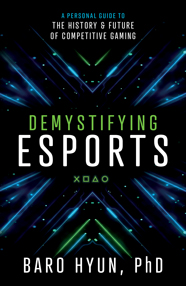
Baro Hyun is an esports business advisor who founded an esports advisory practice at a Tokyo-based Big Four consulting firm, serving clients that include the Japanese government. Having grown up in South Korea, an early center of the esports industry, he draws on that background in his work and has taught esports business at Keio University since 2018. He is the author of Demystifying Esports: A Personal Guide to the History and Future of Competitive Gaming.
📚 Books by Baro Hyun
Transcript
[0:00:26] DA: Anyone under 45 grew up with video games as a natural part of their lives but older generation have had minimal exposure to gaming. Without firsthand experience, it can be difficult to understand why the industry is booming and why your children and grand children love esports so much. In his new book, Demystifying Esports. Baro Hyun bridges the generation gap by exploring the history of competitive gaming, the growth of the industry and its explosion as a global phenomenon. Hey listeners, my name is Drew Applebaum, I’m excited to be here today with Baro Hyun, author of Demystifying Esports, Baro, I’m excited you’re here, welcome to the author hour podcast.
[0:01:07] Baro Hyun: Thank you for having me, Drew.
[0:01:09] DA: First, can you tell us a little bit about your professional background?
[0:01:13] Baro Hyun: Yes, I’m an engineer by training. I’ve been working as an RND engineer for 10 years in different industries like from aerospace to automotive. Then I switched into management consulting about three and a half years ago when I moved to relocate to Tokyo. Since then, I have been in this management consulting side of the business and about two years and a half ago, I started an esports advisory at this firm and that’s how it all began.
[0:01:43] DA: Now, can you tell us what is esports and then maybe give us some of the numbers around it?
[0:01:51] Baro Hyun: Yeah, sure. Simply put, esports is competitive gaming basically. I know a lot of us you know, growing up with video games, we have a lot of experiences as a personal entertainment but esports is something more in the sense that there’s a competition, right? That competition between people online or in the video game world makes it way more entertaining as a viewing content, just like sports, people watching sports like your basketball match or American football match, whatsoever, you know, it’s very entertaining that thrill and et cetera. Esports at the core is really competing within the video gaming space. And the numbers, it’s crazy, right now, what I can tell right now is that the prize money that goes inside to DC esports tournaments is still millions, the values of DC’s professional teams, I know t here’s a numbers ranking that was out by Forbes, end of last year. The top team is about 400 million worth.
[0:02:49] DA: Wow.
[0:02:50] Baro Hyun: Yeah, it’s crazy and then the size of the industry is going like over like two digits year on year and this is a global phenomenon that only like you know, a local markets, we’re talking about of course the united states, we have China as a market as well, Korea also like in Europe, in Germany, UK or Southeast Asia, South America, it’s all around the places.
[0:03:15] DA: Can you tell us your esports story?
[0:03:19] Baro Hyun: Sure, the reason why I wanted to write this book is that, I’m Korean myself. I was born in Korea, raised in the states but I spent most of my elementary school to college years in Korea, in the 90s. That’s when esports really took off with this game called StarCraft by Blizzard in the states. This was in the 90s. Nobody knew that this was going to be this big when it was happening. You know, we were all kids just playing StarCraft with friends but then you know, things got really crazy, we have this like broadcasting and et cetera. Later on it got really big and I was honestly, I wasn’t anywhere close being a professional at all, I was just one of those lay people side, just liked to play games with my friends and basically, that experience really was the foundation of my being involved in the esports advisory at my clerk.
[0:04:11] DA: You have like one really touching story and it’s towards the end of the book but I want to bring it up early because I just want to talk about it. Tell us about your experience playing video games remotely with your son, both of your sons.
[0:04:29] Baro Hyun: Yeah, thank you, thanks for bringing that up. For personal reason, I’ve been living by myself in Tokyo and my kids are in the country side with my in-laws in a place called Tokoshima in Japan. And I’ve been you know, commuting maybe every three weeks, once in a while, that’s pretty much I can interact with them. My elder one is he’s eight and my young one is six, both boys and since they go to know about Fortnite, they’ve been fanatic about it and one day, they invited me to play and I used to play like some FPSs back in the days like rainbow six and I wasn’t serious at all. I was like, okay, I should give it a try, good things that everything is online nowadays. We play in the same team, there is something called a Team Rumble or there’s something called Squads, you're basically playing the same team and it’s fantastic because for example, when I talk – I usually often do like a video call with my kids and you know, every time I try to make up a conversation, there’s like, what did you do at school? They don’t want to engage, you know? They don’t’ remember, if I ask, what did you have for lunch today, they don’t even give that effort to remember it for example. Then we started playing Fortnite and then you know, there’s leveling and I’m not good at all but they’re playing with their switches and playing with my iPad and you know, it’s really simple just to let, whether they’re online or not. So if they’re online or usually they give me a hit up on a message, dad, let’s play a round. There’s a voice chat within the game, it’s a conversation that’s really dynamic, you know? It’s like, kill that, pick this up, you know? Whatever that, I fall down on the ground and the Squad mode then they take covers of me, try to save me and then they’ve been really good at those games so I’m pretty helpless in that whenever I’m sometimes I’m good and try to protect them or whatsoever then I become like this heroic figure all of a sudden, they love it, they love their dad so much. Having that experience together has been really worthwhile and really just like that for me as a dad to connect with my kids who has been remotely a couple of years now. Every time I meet them now it’s like, it’s all about Fortnite like you know. Only within that aspect too, it’s been very good for me.
[0:06:53] DA: I feel like so traditionally and this is the case you write about with your mother in law in the book that video games are deemed bad and some are spending too much time or you’re staring at a screen but look at this instance where it’s a bonding method between your children and yourself.
[0:07:10] Baro Hyun: Yeah, exactly. You know what? Thanks for bringing that up. For us who grew up with gaming, when gaming – video gaming started at pretty much it was like a personal entertainment like home entertainment, right? You engage into this console and you’ll be playing that for hours and that’s probably the perception that so called our parent’s generation have about video games but since then, it got evolved so much both in technologically and also as a content. Right now, we can voice chat like we do over phone and you know, it’s more, it can serve us as perfect communication tool, some places, they use it as an educational tool. Also, run a couple of esports event within our firm as a company event and it’s also a great communication tool for connecting with other employees because there’s always someone who is very enthusiastic playing games but they never had that chance to you know, bring that outside that they’re like a gamer. In that sense, it has been a very good medium for me to reach out to new people and having that interaction.
[0:08:21] DA: Can you talk to us about the evolution of esports because you and I were speaking a little bit before we started and we both grew up playing the games that you just mentioned. We played Street Fighter, we played on our Nintendo, super Nintendo and the early PlayStation and it was meant for one person and growing up, I did have a friend who used to say no, you’re better, you play and I’ll watch. I never understood that. Now there’s a whole industry of this. How did it go from those simple consoles back then to this multimillion-dollar industry?
[0:08:55] Baro Hyun: Right, that’s I guess, that’s exactly what I tried to answer in this book because that’s what happened in Korea back in the 90s. Just to give you a nutshell, in the early 90s, south Korean gaming industry was more or less the same as like say, the Japanese and US gaming market, it was heavily based in consoles like you said, super Nintendo, PlayStation, whatsoever. Or like the game arcades. If someone is playing a good Street Fighter in the arcade, it’s people get around and watching it play. That was pretty much the scale that we’re talking about back then. But then, in the middle of the 90s, at least in south Korea that the personal computers, the PCs were getting more popular and a lot of the household start to have those PCs at home, if you have kids in the house so there’s always a chance for them for playing games on the PC. They start playing PC games at home and then we had that hit on a game called MMORPG which is basically an online RPG, a game playing with multiple people. That’s how people got into like playing online games and then at the – or 97/98, it was that game called StarCraft by Blizzard that was a mega hit and for some reason, everybody loved it in Korea, everybody started playing it to the level that even if someone, people don’t own a PC at home, they still want to play it so there was a new business that came around a time called PC Bang. It was basically a game dedicated net café. You can play – they have the great PCs equipped there and you can play as much as you want by the hours you want to pay. That’s when people start to play even at a bigger scale like StarCraft with their friends, after school, like myself after school, I would just go at like drop by a PC bang for a couple of hours. You know, that’s how the community got bigger within Korea and then one day, a couple of years later, all of a sudden, a local cable channel decided to go completely on gaming and esports so they just completely just broadcasting esports 24/7 and yeah. It was like you know, you switch on a television and all of a sudden you have StarCraft, people playing seriously is like, what’s going on, it’s like, am I dreaming, right? It was like a tournament like a legit tournament. From the very beginning, there was like people playing one on one and you have a so called professional casters and you know, commentators, speaking constantly on what’s happening and you know, with that comment, the viewing experience is even more entertaining. With the help of that cable channel, it got even bigger and then it went professional. We had more players being involved and we have so called the so called professional esports players that came out who are involved in the professional team and this happened because there was an incident in 2004 where there was a esports tournament finals and surprisingly, the people gathered up for that event was hundred thousand people. Yeah. I mean, can you imagine it, it was in 2004 and it was not even Seoul, the capital of South Korea but it was a place called Busan which was a town in the southern part. A lot of people traveled down to Busan just to watch that and ended up being like hundred thousand people and what’s interesting is that the same day that the tournament final was held was the same date that the baseball, All Star baseball match was happening at the same town. A lot of the people expected that that will go to see the all star baseball match but then actually ended up being into the StarCraft finals. There was a huge milestone for the industry and since then, a lot of the corporate sponsor got really serious so we have big name sponsors like Samsung or SKT which is a telecom company, et cetera. Got into about the big sponsorship behind these professional teams, then we got more star players since then. We have some local, if anybody knows about StarCraft scene, we have some star players that came off from that era. Slayer boxer is whatsoever. Then you know, it really got bigger, bigger and that was about in the 2000 and then around 2010, we had a fixed scheme scandal that kind of shook down the industry and so the industry as a whole in Korea kind of got damaged and we’d lost a lot of teams, a lot of teams, a lot of people laid off, etcetera. Around that time was already the international market like China or the US was already taking off with esports. So that’s when the stage was stolen in a sense, yeah.
[0:13:42] DA: So besides players winning these tournaments that are around the world, what kind of business is involved in e-sports?
[0:13:51] Baro Hyun: Right, so that’s a great question. So I think in order to understand esports business, it is better to enter it from a sports perspective. I know it is a completely different market but the reason why it is easier to understand what sports business is that so the core part of what differentiates esports in general in the ordinary video game market is that it’s read the viewing part, the viewing contents. The viewing content sells. So the spectatorship is really the business part and in that sense, sports is also the same, the spectatorship creates a lot of a business and based on that it creates a new entire business ecosystem. So, for example, in the traditional gaming scene, you would have to be able to make a game to have a solid business but after you move to e-sports it is really about viewing. So you don’t need to create the game yourself. So supposed that there was a game, there is a lot of way of being involved for example. You can be the event organizer, so you can organize the tournaments or leagues, etcetera. So with the permission of the game publisher of course, then you have within that tournaments you’re going to have to have different teams, professional teams and these teams own professional players and you know having those, we also have sponsors. Corporate sponsors who wants to have their brands out into this either leagues or events or the teams or the players. Also nowadays, back in the nice in Korea was about cable channel but nowadays, this is more about the online platform for example, Twitch or YouTube that is more common. So those on a platform also as a huge business within the e-sports scene because a lot of the players they also broadcast themselves as a gamer or even also the event themselves also being broadcasted through those platforms and you know, also like PC Bangs like with the facility business basically and the café, that is also part of the business. There’s a lot, I mean I can go on forever like this but the bottom line is that it is very close to the traditional sports business market in terms of the business ecosystem.
[0:15:59] DA: Now, so the esports is pretty popular right now and if you’ve probably heard a bit about you know investors are involved with teams in some way and the bigger firms have started their own team or they have invested in teams. I have seen this on ESPN. I have seen Madden games and others. Do you think it’s peaking right now and this bubble will pop or do you think that esports will have legs and roll for decades to come?
[0:16:27] Baro Hyun: That’s a really good question. So I think one point I was trying to make in my book is that. So history repeats and based on my experience in South Korea there was a bubble and the bubble popped at some point and as a consultant, a business consultant working in this field for the past few years, I could see a lot of risk involved at the same time. Along the line with there is a lot of growth. So I think, personally I think, if there is no good governance or compliance being installed behind this industry, we have a very good chance that we’ll have a bubble pop at some point. But until then, I think the industry will grow of course as it’s been doing so far even within the COVID pandemic situation but at some point, I think it is sort of a fate that the bubble will pop at some point but the bottom line is that that is not the end of the story. So even after the bubble got popped in the case of South Korea, it wasn’t that the industry died. You know it actually grew from there as well. So it became a part of the society. So people embraced esports as part of their corporate culture or part of their personal experience like playing basketball games with your friends. It is very common to go to a play a round of StarCraft with your friends after work nowadays. So I think in a nut shell, in the big picture it is a cycle, if that answers your question.
[0:17:51] DA: Yeah. Now let’s say I’ve read your book, let’s say my mom reads it, let’s say your mother in law reads it and they say, “Okay, you know what? I am going to check out this e-sports thing” where can they tune in and what kind of games are they watching?
[0:18:06] Baro Hyun: That’s a good question. So yes, so it is really – I realize it is really hard say for my mother in law to say get and be involved in gaming but the good news is that because my sons are playing very heavily, they start to watch them play, you know? So, that is sort of their experience and the hardest part for them to enter these game is knowing the rules and if it is a game like say a FIFA or a Madden or MBA 2K, people already know the rules of the sports game that they are playing. So it’s second nature for them to watch them but if it like StarCraft match or if it’s Hearthstone or whatsoever, the rules can be very, very new and sometimes it could be very intimidating to them. So I would suggest for them to be involved maybe if they want to start watching the game either start from something that relate to sports because they already know the rules or something like FPS or Battle Royale because it is pretty clear that you kill the foe with a headshot as a team. So it is pretty clear, so that is a good way of starting it but also for example, they don’t have to abide by esports games for example like personal entertainment games like RPGs, you know action-adventures. They are just still very entertaining to watch as well and we have a lot of streamers online who is broadcasting them playing these action adventure or RPG games and millions of people watch them including my wife. She doesn’t for example, she doesn’t play. She never touched a controller in her life but she watched, recently she’s been watching this game called The Ghost of Tsushima, which I am pretty into it nowadays. It is like that so I guess back to your question is that there is so many ways of being involved into video games nowadays. You not only need to play, you can just watch and even the option of watching, you have a lot of options too. So, either you can watch a hardcore professional player playing games or you can watch these streamers playing more on a casual but more entertainingly. So there is a lot of different ways I would say.
[0:20:16] DA: Yeah, I love that you mentioned that because a lot of people think all video games is button mashing but there is actually some really compelling storylines that go on and it does feel like you are just watching an extended movie sometimes.
[0:20:27] Baro Hyun: Exactly especially the games nowadays like the graphics are so good, the storylines are crazy. It is really like close to a movie level you know, as you said.
[0:20:36] DA: Yeah, for a lot of people if you have watched The Witcher on Netflix, you know that started as a video game.
[0:20:42] Baro Hyun: Nicely, yeah exactly.
[0:20:45] DA: So you know those stories came from a video game. I have one last question for you and I am pretty interested in this and what does it take to be a professional gamer and are there younger folks today who are training of sorts and you know are there scholarships out there? Does that happen?
[0:21:05] Baro Hyun: Oh yeah, absolutely. So that is a great question. So being a professional e-sports player, I mean I wasn’t one myself so I couldn’t speak so much but I have seen a lot around me because from back in the 90s, my schoolmates, there a lot of people who tried out. Some eventually made it, a lot of people did not but you need the same like almost the same commitment and you know your self-management and the training that you’ll need to become a professional sports player I would say. Because for example, at least what happened in Korea was that if you want to get into the professional team of course you had to be good but then there is words of mouth within the game. So if you are really good then your ID will be caught up by the gaming coach of say some professional team. The coach will contact you and try maybe do a tryout and if they like you, then they are going to do another round of interview and that usually takes a full day. And what they try to found out is that whether this person is he a team player because at the end of the day, being a part of the esports team, you have to be a team member. So you do a collaboration. A lot of the games are a team effort so you have to have a certain good communication skills at the same time, a good decision maker, etcetera. So it is not like if you’re just good by yourself then it’s all good. It is more of a team coordination. So you have to have that and a lot of the top teams they have these certain like tier system. So if you’re tier one, top tier player then you can go play in the professional leagues but if you’re in the lower tier like say, if you are an apprentice for example, you’d be the sparing match for the top tier player but until you reach the top tier, you will never get a chance to actually to go out into the official scene, which means that you will and this is back in the 90s, you won’t be able to get fully paid or etcetera. So you have this training setup at the same time but nowadays, you know there is a lot going on. For example at least in the United States, there is a huge scene of what I call the minor league scene in esports. So of course, there is a lot of tournaments that I refer to as a major league but there is a good minor league scene for example in the college scene. There is a league called Collegiate StarLeague by Double Gin and they have this different layer of tiers of leagues. Where a lot of different teams from school can get involved and if they win the league, they get their prize as a form of scholarship for example. Time has changed since the 90s of the South Korea what it was like and you know, if you’re good at gaming you can actually earn a good source of income and also you can have a scholarship at school. It’s like you know, if you’re good at basketball or football then yeah, you can get into a great school as well.
[0:23:54] DA: I mean the traditional sports analogies are there.
[0:23:57] Baro Hyun: Yeah, exactly.
[0:24:00] DA: Yeah, that’s amazing. Honestly, this book is eye opening. I feel like anyone if you’ve heard of it or if you’re wondering about it, this is a book for you. Writing a book not easy, so first of all congratulations for doing it and getting it done.
[0:24:13] Baro Hyun: Thank you.
[0:24:14] DA: If readers could take away one thing from this book, what would it be?
[0:24:18] Baro Hyun: Great question, so the reason why I wrote this book is to bridge the generation gap between me and below like my kids who grew up with gaming and even more and I am sure it is going to be the same for the generation after and the generation above me who had the minimal gaming experience if not at all and it is really not a bad thing than you think and depending on how you approach it. So I wanted to share that experience that how gaming got this big and why people call it esports nowadays. And behind it, it is really not about that playing games for a long time and where the negative connotation started but it is really about that professionalism and there is a huge business. There is a lot of commitment, there is a lot of story, etcetera so it is bigger than what you would perceive so far. So that is really the one thing why I wrote this book. So I hope you get to know about it and that’s why the title, Demystifying Esports.
[0:25:24] DA: Baro, it’s been such a pleasure. I am excited for people to check out this book. Everyone, the book is called Demystifying Esports and you can find it on Amazon. Now Baro besides checking out the book, where can people find you?
[0:25:35] Baro Hyun: Yes, so if you like to be involved professionally, I am working fulltime as esports advisory. So please look me up at LinkedIn, that’s my main social network or just shoot me an email at the email address that I left at the book at the end of it. If you just want to say hi or share your thoughts that will be great. So either two ways.
[0:25:54] DA: Awesome Baro, thank you so much for coming on the podcast today.
[0:25:57] Baro Hyun: Thank you, Drew.
[0:25:58] DA: Thanks for joining us for this episode of Author Hour. You can get Baro Hyun’s new book, Demystifying Esports, on Amazon. Also, you can also find a transcript of this episode and all of our other episodes on our website at authorhour.co. For more Author Hour, subscribe to this podcast on your favorite subscription service. Thank you for joining us, we’ll see you next time. Same place, different author.
Want to Write Your Own Book?
Scribe has helped over 2,000 authors turn their expertise into published books.
Schedule a Free Consult