Dr. Paul Anderson: Cancer
Read the full transcript
Dr. Paul Anderson
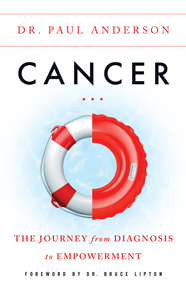
Dr. Paul Anderson is a nationally recognized educator and clinician with decades of experience treating cancer and complex chronic illness. He served as head of the interventional arm of a human trial funded by the U.S. National Institutes of Health, overseeing research into integrative therapies for cancer patients. In his book Cancer: The Journey from Diagnosis to Empowerment, he guides readers through what to expect after a diagnosis and helps them navigate the experience from both a mental and an emotional perspective.
📚 Books by Dr. Paul Anderson
Transcript
[0:00:36] Dr. Paul Anderson: Devastating, there’s no other word to describe the feeling when you or someone you love is diagnosed with cancer. On any given day, you might rotate between feelings of disbelief, anger and grief. You may even feel like you’ve lost control over your own life. While your diagnosis may raise any number of negative feelings, here’s the good news. You don’t have to feel lost or confused, in his new book, Cancer, the Journey from Diagnosis to Impairment. Dr. Paul Anderson clearly outlines what you can expect throughout your cancer journey. More importantly, he demonstrates how to cultivate that mental outlook that will help you reach your best outcome. When it comes to healing, mind does matter. Hey listeners, my name is Drew Applebaum. I’m excited to be here today with Dr. Paul Anderson, author of Cancer. Dr. Andersen, thank you for joining, welcome to the Author Hour podcast.
[0:01:22] PA: Thank you for having me. You’re welcome, can you kick us off a little bit, can you tell us a little bit about your professional background?
[0:01:30] Dr. Paul Anderson: Yeah, in my background, I started in the world of family medicine, a long time ago. Prior to that, I was actually in the world of laboratory medicine doing technician and scientific work. All told I’ve been around medicine since 1976, been around a while. When I decided to go back and finish medical school, going to practice, I thought, “Well, I want to be a kind of a general practitioner, family doctor, et cetera.” and that’s what I did to start. What happened though in the very early times of doing that was, I started to do what we now would call in medicine, palliative oncology care for people who were going through say, cancer treatment. Or maybe finished cancer treatment. Or were not candidates for standard cancer treatment. And they needed quality of life care and maybe recovery from treatment, et cetera. I want to make the distinction that my world was palliative oncology which is all of the care around the person who is going through cancer, not the medical or radiation oncology part. Which is actually to say, giving them chemotherapy or dosing their radiation, et cetera. That was almost serendipitous, I had some background that made that happen and what happened was, very early on, many years ago, people started saying, “Well, you can go and Dr. Anderson will help you with healing up after chemo or dealing with radiation burns et cetera.” That really started that world and back then, it really wasn’t a lot of palliative oncology done. That set me off into doing a lot more of this and eventually, about 12 years ago, I got involved in the National Institute of Health cancer study, doing this work with people and actually tracking it in a federally funded study. And then just did more and more of this clinically. That’s the thumbnail sketch. Now, was there an inspiration for the book, why was now the time to write it?
[0:03:43] PA: Yeah, the book itself really came from one big process. And that process was a partner and I wrote a book prior called Outside the Box Cancer Therapy, Dr. Mark Stengler and I. And that book was a little more, was really focused on — “What are you doing about the cancer process itself?” The medical part. In doing that book, I started to look back over about 30 years of patient interactions and see, not just the formal studies that we had done in publications and things which are great but also, I started thinking about, well, is there — are there things beyond the medical treatments that make or break a case with people with cancer? In other words, are there things that don’t have anything to do with how you’re treating your cancer that make you likely to have a better outcome or worse outcome? That, as I finished, the first book, I started to think beyond the physical part of medicine. And I really started to see these themes come about where people who found a way to deal in the better mental emotional space with this horrible diagnosis of cancer seemed to do better over time with whatever therapies they were doing, et cetera. Their quality of life was certainly much better than the people that I saw who got stuck in a particular place. I’d say, confusion or anger, that sort of thing. I thought you know, Mark and I put just a little bit in the other book about this. And this is really, this is a whole book because everybody who goes through cancer or has a loved one going through it, tackles these issues and so that’s really what led to the book.
[0:05:30] Dr. Paul Anderson: Now, who is the book for, is it for patients only, is it for family members of patients, is it for other doctors?
[0:05:38] PA: Yeah, I wrote it in a way to target, first the patient but really, the patient and any loved one or caregiver that they have. Because what you see is that, if it’s you’re, let’s take an easy example, it’s your spouse, you don’t have cancer and now they do. You both are going through that experience. And, you know, the shock and all of the things that you go through. It’s really written for both the patient and the loved ones. And in the pre-publication process, I’ve sent it to a lot of doctors to read and they’re very excited about it as far as a tool to help their patients along. It’s really written to the average person.
[0:06:18] Dr. Paul Anderson: Now, we’ll talk about the patients and what you talk about in the book in a moment. But I have an interesting question. I think for you is, we know that it’s really hard for the patient to hear a cancer diagnosis but what does the doctor go through when they are telling a patient of their diagnosis?
[0:06:38] PA: Yeah, it’s part of the job but unfortunately. I’ve had to do that a fair amount in my practice and it’s something that, like any other thing in medicine that’s unpleasant to do. But it’s part of the job, it’s something that you really have to grow into and of course, when you're in your training and schooling, you know, people mentor you and you see how they do it. But the first time that it happens, it’s you and the patient eyeball to eyeball. It doesn’t matter what the other people did, it’s the kind of thing where what I noticed over time was, you know, the very first time I had to do it on my own, away from training and all that. It was extremely difficult because it was some patient I knew very well from my practice. And, you know, they were young and had a young child and all this. And it hits you very hard and that really doesn’t change. But what changes is your perspective on it. And the perspective that you, for whatever, whichever tactical reason, you’re the person giving the information. This is critical information to give in a caring and you know, in a loving and inclusive way and it's part of what we do. So the best thing to do is to do it in the best way that you can. A lot of that is taking a moment and taking yourself out of the equation,because it makes you feel unpleasant, and realizing this is about that person and being there for them. That’s 30 years’ worth of journey there but it never gets easier. But it gets a little, I think you do it better.
[0:08:14] Dr. Paul Anderson: Now, let’s flip it around, what usually happens and what are the emotions that people feel when they get that initial diagnosis?
[0:08:23] PA: Because of the way I try to set the book up to be very easy to access for anybody at any level of understanding of things, what I try to do is use the most common emotions that come up for people as a launching point to how to — the subtitle is “The Journey from Diagnosis to Empowerment.” So, how do go from the — most people, it's shock, disbelief or anger. Those are some of the more common things right at the top and they mirror and I talk about this in the book. They mirror but not exactly, Elisabeth Kübler-Ross’s Stages of Grief. Because you know, you’re grieving a diagnosis. They really do follow that though, you start out in some level of shock, disbelief and probably some anger, those are the big three. And then, what you do from that point though, because that’s common, that’s a human thing. You get a bad bit of news like this and you're going to go through that. The most important thing is recognizing that that’s normal and you honor that. But at a point, you have to start working towards a better position to take on this bad diagnosis that you’ve got.
[0:09:41] Dr. Paul Anderson: Now, you mentioned, when they leave your office or any office after diagnosis, they will have some sort of a road map medical-wise. But how do they make a roadmap for the emotions they’re going to go through in the next six months, 12 months, however long it takes through the recovery?
[0:10:01] PA: Yes, that’s really what, why I wrote the book. Because as I say in the book, your medical team — and normally, when you have a cancer diagnosis, it’s not just one doctor or therapist. Well, there’s a lot of people. They’re very good at the medical trajectory and schedule and all of that. Like your physical journey with the cancer is going to be very well laid out for the most part. The internal-type journey, right now, there weren’t a lot of resources for people. There’s some great online things and this. And people might get connected, it depends a lot on your health plan and who you know and all that. But you may get connected with a therapist or even a psychiatrist, psychotherapist who specializes in cancer patients. But most people don’t, and so there’s not a lot of guidance. There kind of, there’s this two part thing that happens to people where it’s like you get thrown into a strong current with the medical side of things. These lab tests happen and these treatments happen. And there’s a schedule and you’re feeling not great and that’s happening to you. And yet the mental emotional side, you can actually ignore it because there’s so much medical stuff going on. The purpose of the book, as pointed as it is, is to take you through, regardless of what I’m doing about this cancer diagnosis medically — “How do I get my mind and my body into a place where I’m not just accepting it but I’m actually an empowered patient.”
[0:11:38] Dr. Paul Anderson: Can you talk to us about what you’ve seen when patients go through treatment with a positive mindset and positive emotions?
[0:11:47] PA: Yes, it’s remarkable. Especially when you look back over a number of years’ worth of patients. Because you can always have outliers of people that are very negative and still do well. Or very positive and don’t do well et cetera. But if you look at the trends, and I bring this up through the book, in the story of two patients that — obviously are not their real names and all of that. But they’re very real experiences and I contrast those things and what I can say is that well, we never know about length of life with anything. Anything outside of cancer but certainly with cancer, you can have statistics that say, you’re going to live X amount of time on average. And you might live 10 times as long or half as long. But what we see, generally speaking, is people who become empowered have much better quality of life through the process. Their friends and family are much more comfortable and able to support et cetera. In many cases, what I’ve seen just personally with people is, it appears that they do better with their treatment and they have often longer quantity of life. But the quality of life, you know, as you sit down and I would talk to patients one on one and say, what’s most important thing for you. First thing that they’ll ask is — “Can anyone make the cancer go away?” And that’s usually that’s not part of what you can do but the next thing that they always get to is I want the best quality of life I can have. Well, the mental and emotional state of moving towards being empowered lets you, every day, meet that with the best quality of life possible. And I bring it up in the book a little bit. There is a lot of research into, “Does being empowered as a patient improve your outcomes medically?” And the answer is yes. So you know we can make that connection to the quality is the most important thing, quality of life.
[0:13:46] Dr. Paul Anderson: Now you actually talk in the book about patients adopting a process of empowerment, like you just said, acceptance and maximal emotional mastery. Is there a pathway that you have to getting to this level?
[0:14:00] PA: Yes, what I layout is a general, you could think of it may be, like a general group of stepping stones that go on in particular order. And what I am careful to talk about throughout that is, because we all start — you know let’s say, we all don’t have a cancer diagnosis and then you’ve got 10 people that have a cancer diagnosis tomorrow. The stepping stones may be a very different size for each person. So some people don’t ever really get angry but they may be very in disbelief. Whereas other people immediately become very angry and either stage is something you have to go on and move to. So each person pretty much goes in the same order. And as I said, they’d mirror the stages of grief that Elisabeth Kübler-Ross describes but there are two phenomena that happen. Some people, denial is very short. Other people, denial is very long and it is like this big thing they have to deal with and that is okay. That is fine because the next step where they are reaching acceptance. They may do that, just great, once they have dealt with their denial or their anger. The next person may move right in there and acceptance is not in the playbook. And they have to do a lot of work around that. The other side of it that happens with people that is very profound is you can get to a place where you’re moving more towards being empowered and ready to deal with things as they come. And something hits, you just a bit of news or whatever, and it kind of knocks you back and that’s okay too. The most important thing is every day’s movement forward. What I try and layout is not a prescribed, “You have to spend this much time at each step.” But just keep in mind these are the steps your brain is going through and work on moving through them either on your own or with help or in whatever way works best.
[0:15:54] Dr. Paul Anderson: Now you’re going through so much here as a patient but there are people around you. How do you suggest handling your relationship with family and friends during a time like this?
[0:16:06] PA: It is a very, very critical part of the whole process because, you know, almost nobody is an island unto themselves. And we reflect the environment we live in and the people we work with and live with, etcetera. And I think the most important thing to remember, of course, is everybody else who loves you and cares about you. And maybe even your work colleagues, etcetera, they don’t want you to have this diagnosis either. So they are in shock as well and so while it is not the cancer patient’s primary responsibility to take on what other people are going through, it is good to remember that they are going to process this in their own body’s way. What I try to layout in the book is, there is kind of a couple of trajectories that family and friends go through. One is they don’t like this diagnosis for you and they may process it in their own way. So for you, you may not be angry but you are trying to gain acceptance and all of that. For them, they might be angry. It is important for the cancer patient to have, usually, gentle boundaries with loved ones but just to say, “You know, I understand where you’re at but right now, I can’t have a lot of that sort of energy around me. That sort of mental and emotional stuff.” And so you have to have boundaries but also understand the people will progress as well. It is why I wrote it for families and patients. And the important part about it is, though, very rarely do you have people who are truly toxic in your life. And most people are just grappling with your diagnosis and what that means to them and you and your relationship. And you can all get through that and it can become very synergistic, very helpful. But what I do mention in the book too that I have seen in cases is you can have one or two people in your life who you really have to severely limit your amount of exposure because they can’t get there. And they become, actually, a toxic influence. So again, that becomes maybe a little harder set of boundaries. But, you know, what I kind of wind back to is if you are the primary loved one or loved ones or you are the cancer patient — your job is to take care of the cancer patient and help them be as empowered as possible. So if there is a toxic element, it just really has to be limited or maybe removed. So yeah, it is critical. The people around us can make or break our experience of everything.
[0:18:39] Dr. Paul Anderson: There is so much good info in the book. And everything here is from yourself, who is a clear expert in the field. And you have seen it and the tips are great but the transition has to be so hard and — how tough is the first steps to start implementing everything in the book?
[0:18:57] PA: It’s and I try to do this through the writing, you take yourself back out and put yourself in the shoes of someone. Whether they got diagnosed yesterday or six months ago but they are struggling. The book was very strategically written in a way where a couple of things could happen. One is, as we are all very different people, someone might look at the table of contents and say, “I am mostly interested in this family dynamic part. Or, I am mostly interested in — “How do I deal with a child with cancer?” Or, “I am mostly interested in any of the other parts.” So people can resonate with the chapter and just go right to it, of course what they’ll see is there is some build up through each chapter and they can go back. But the bottom line is that the book is written in a way where it can draw you in at any point where you need the most either help or perspective, etcetera — and then you can go back through and look at the points as they go. The other thing is cancer is such an ominous thing. The book could have been easily five or 10 times longer than it is but my goal was, this is for someone who’s hurting, whether a loved one or a cancer patient. And I want them to get to the meat of it quickly and then in the resource section. For instance, if someone is really struggling in the family dynamic area or they really want to employ some family dynamic tools, I give them places they can go and get all of the information they want about that. Then we don’t have to redo that in the book. So I try to make the book very user-friendly, very to the point and then leading you to more information should you need it.
[0:20:40] Dr. Paul Anderson: Can you tell us about some of the amazing stories and the FAQ of sorts, from real patients at the end of the book? That is a very powerful section.
[0:20:48] PA: Yes, something that I was just so pleased that people said yes to do was allow me to interview them. I tried to — you can have a whole book of interviews with people with cancer or supporting people with cancer. And it would do almost the same thing because you are getting everyone’s perspective. But what I decided to do was to pick different perspectives that we could highlight. And these were all people who either I was their doctor or one of their doctors. Or I was involved in their support of their loved one or something And so, what they did, which was very brave and very, I would say, typical of a lot of cancer patients or families, once they get past that shock and they truly reach an empowered state, they want to help other people. That is one of the biggest joys in life is helping other people and the fact that these people did the interviews, that was their motivation. They wanted to help others. So for example, I have a young woman who has an extremely rare type of cancer — came on her out of the blue. Breaks all of the rules around cancer and her perspective around being the outlier in the world of, she was super healthy, took great care of herself and still gets this very, very unusual cancer. And she talks about it and her story and what she talked about was extremely good from the point of view of — “What is probably the better and worst way to interact with a cancer patient?” You know, “What are they going to be sensitive to? What’s their feelings, what is their point of view there?” I had a man who was the primary caregiver, his father who went through a diagnosis of a brain tumor and eventually passed away from it. And was with him every day and they were extremely close and he was the primary supporter and he has some really great insights into the process as a caregiver and as someone who is extremely close to the patient. Different perspectives than being the patient and then we have two families of children who had cancer. Who had both been my patients in the past. And they had two very different experiences. One was a young child who had a, not unusual cancer of young children. And they are still surviving to this day. They have done very well. And the family became a resource for parents around the world with cancer and they share a lot of insight. The other was the family, a little girl who had a — she was born with some genes that are rare. But they are known and essentially they trigger a cancer, which is so unfortunate. And she lived longer than anyone expected but she did pass away. So that family did have a very different experience. And so their insights, you couldn’t ever read enough research or anything to hone into the insights that these patient’s family members, etcetera can give you. Again, I am just so grateful to them for doing it. So it was one of my favorite parts of the book and also it is good reading but it is a little tough reading sometimes.
[0:24:10] Dr. Paul Anderson: Yeah, it definitely makes it a must read for anyone in this situation though. I mean the feelings and emotions are so raw but also so helpful.
[0:24:19] PA: Yeah. That was we worked on that in the editorial part to really keep their feelings. We didn’t edit their tone. I felt that was important.
[0:24:31] Dr. Paul Anderson: Dr. Anderson, writing a book especially like this one, which will help so many people is no small feat. So congratulations on finishing.
[0:24:39] PA: Thank you.
[0:24:40] Dr. Paul Anderson: And if readers could take away one thing from your book, what would it be?
[0:24:45] PA: I think that my goal is to show people through all of the different chapters and topics and everything in the book that whether you are a loved one, caregiver, or friend of a patient who has cancer or the patient themself. There is a pathway you can take to go from this very shocking horrible diagnosis and take it to a place where it is no less of an unfortunate diagnosis. But you or the patient are empowered in a way to really improve quality of life and probably quantity of life, etcetera and that’s the really most important thing to do when you have cancer.
[0:25:31] Dr. Paul Anderson: Dr. Anderson again, this has been a pleasure and I am excited for people to check out this book. Everyone, the book is called, Cancer: The Journey from Diagnosis to Empowerment on Amazon, and you could find it on Amazon. Dr. Anderson, besides checking out the book, where can people find you?
[0:25:44] PA: Yes, there is a website, drabooks.com so it is like Dr. A books dot com. There is information there. There are also my two biggest outlets where I post things constantly of information, etcetera on Instagram is @draonline and then on Facebook @dr.aonline either one you will find and they have all of the connections to everywhere to find me.
[0:26:14] Dr. Paul Anderson: Thank you so much Dr. Anderson. Thanks for coming on the show today.
[0:26:17] PA: Thank you very much.
[0:26:19] Dr. Paul Anderson: Thanks for joining us for this episode of Author Hour. You can get Dr. Paul Anderson’s new book, Cancer: The journey from diagnosis to empowerment, on Amazon. Also, you can also find a transcript of this episode and all of our other episodes on our website at authorhour.co. For more Author Hour, subscribe to this podcast on your favorite subscription service. Thank you for joining us, we’ll see you next time. Same place, different author.
Want to Write Your Own Book?
Scribe has helped over 2,000 authors turn their expertise into published books.
Schedule a Free Consult