Geoff Blades: Do What You Want
Read the full transcript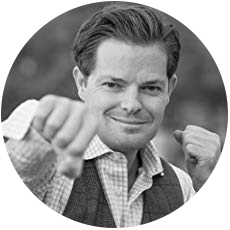
Geoff Blades
Geoff Blades is a former Goldman Sachs investment banker and Carlyle Group investor who now advises senior Wall Street executives, chief executives, and chief financial officers on strategy, leadership, and personal development. He combines more than fifteen years on Wall Street with years of researching personal development to help clients get what they want in their careers and lives. Originally from Australia, he is based in New York. He is the author of Do What You Want and Do What You Want on Wall Street.
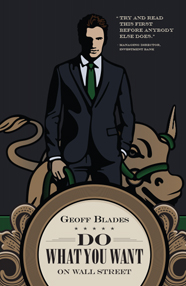
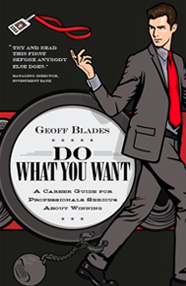
📚 Books by Geoff Blades

Transcript
[0:00:23] Charlie Hoehn: You’re listening to Author Hour, enlightening conversations about books with the authors who wrote them. I’m Charlie Hoehn. Today’s episode is with Geoff Blades, author of Do What You Want. Do you still want to make your dream career a reality? Every college grad has big plans for their life, but most of us don’t accomplish those plans. Geoff knows that working harder is not enough when your career isn’t working out for you. In today’s episode, he’s going to show you how to cast aside the work you hate, establish a new system of success, and take control of your career once and for all. Now, here is our conversation with Geoff Blades.
[0:01:21] Geoff Blades: My book came out a couple of years ago, so late 2015. Yet if I go back to the origination point, it was in 2000 and I was in Menlo Park, California. I was working for Goldman Sachs. I loved it. I loved the firm. I thought I’d be there for the rest of my life, and I had no reason to question my career at all. I literally just imagined that this would be the career I would be in for the rest of my life. Then everything changed, everything shifted, and what really changed was that on March 10, 2000 was the top of the NASDAQ, at least internet bubble number one, and the bubble burst and the business started to tank and over the course of the next 19 months, half the office got let go. It was in that point, Charlie, that I stepped back and I said, “What do I really want? Is this in the career and life that I truly want?” I looked at this pie chart that I’ve drawn out with my life and this tiny sliver labeled “not work”, and I asked myself, “Is this is the life I’ve dreamed off as a kid? Is this is what I truly want? I didn’t know. I had no idea. That question became the next 10 years of my life. Over that time I read thousands of books and kept making moves in my life, and then the real definitive moment was that kind of 9, 10 years later where I woke up one morning, having literally asked this question, “What do I want? What really matters to me?” I woke up one morning and I realized that for nine years I’ve been focused on it. These topics that overcome my life, the notion of how we create the lives we want, how we build the careers we want, how we become the person we dreamed to be had become so important in my life that nearly everything else had faded. Certainly, my career and certainly a lot of other things and I resolved at that point to do something that back then was even crazier to me, which was to leave Wall Street and to go share all these ideas even though I had no idea how. That was really the transformation point for me. If that make sense?
[0:03:48] Charlie Hoehn: It does. Where did you start? How did you really begin in figuring out what you wanted? I know you said you read thousands of books. When did you feel like you were getting closer to the answer?
[0:04:06] Geoff Blades: I didn’t. I didn’t, really. In all seriousness, I kept reading and I kept reading. I’m an obsessive personality, so I was working 80 hours a week on Wall Street and spending all my time reading these books. I actually have one of them in front of me, which is one of the earlier books I read, which is a book called Ask and It Is Given, by Esther and Jerry Hicks.
[0:04:27] Charlie Hoehn: I know that book. Yeah.
[0:04:29] Geoff Blades: Right? The short answer to your question is I went straight into new age self-help, and it’s a very odd answer, because I was on Wall Street. I’m at Goldman Sachs, but the truth is that I’d never picked up a self-help book to get to Goldman Sachs. I wanted to say that was easy for me, but it was formulaic, which is "put your head down and work hard”. That attitude, that approach had taken me from working class nowhere Australia to the only job that Goldman Sachs offered in Australia. To me, I thought success was actually quite straightforward if you’re willing to put your head down and work hard, but the hard part for me was, “All right. I’ve run this track out. I got a great career at Goldman. But man! What do I want now?” Where I started to go was books like new age self-help, and that led me to go deep into Eastern philosophy. That led to a lot of other esoteric literature over the years, and then I came back and filled in a lot of the other pieces, the old school self-help, the more traditional success literature, autobiographies and whatnot. But I was seeking an answer that I didn’t expect to find in any one book. What I was looking for was how could I aggregate all of these clues and try and figure it out for myself? Over that time, Charlie, in many ways, I got myself wrapped up in all of that as well. It became more confusing. I had more questions overtime, but I just kept reading until that point where, literally, I woke up with an answer. Over that period, by the way, I was making massive changes in my life. From the first day I started reading books, I resolved to make changes in my life, and those changes permeated in the way I drove my career and the way that I thought about the world and the sorts of things that I did and the people I associated with. It really created two tracks for me. The first track was; what do I want? I didn’t know what that was. I just kept researching. The second track was; how do you get it? One of the early decisions I made, which turned out to be a really smart decision, but honestly I just get there through luck, was that I just realized that no matter what I wanted, Charlie, it was only going to come to me one way. It wasn’t going to come for me sitting around gazing into the space imagining this is an amazing life. It was going to come through action. What I resolved was that I needed to drive my career from where I was, because all of my opportunities would be created through that. So I really focused on the theoretical, the Esther Hicks of the world, which by the way was very bizarre to me, right? it was a whole different world. I also made it very, very practical. What specifically can you do today to keep advancing in the right direction?
[0:07:28] Charlie Hoehn: You said that you woke up one day and you knew what you wanted. What did you want?
[0:07:37] Geoff Blades: You never really know in the mind, right? We all know that memory is highly plastic. What I recall as waking up was just this massive epiphany, and I even feel it in my body going back into it now. It was, “I got to share this stuff.” That was it. That was it. I’ve got to share it. I’ve got to go out and take all these that I’ve researched for myself and share it with other people, because this had become the most important and interesting and fun and cool thing in my life. All the other things didn’t really matter so much to me, and I just — It was just these clear instruction, if you will, from the unconscious or from some other part of me that said, “You’ve been searching this long. Now, go share this. This is what you’re here to do.” I know that sounds grandiose, but that was the feeling and that’s what’s driven me ever since.
[0:08:35] Charlie Hoehn: Yeah. Geoff, before we talk about what you did learn and what you decided sharing your book, why do you think it matters to know what we want? If you think about it, humans are sort of prewired to be unsatisfied, because it keeps them moving in doing things. Why do you think it matter for us to want something to do if, theoretically speaking, we might just automatically be driven to do stuff?
[0:09:12] Geoff Blades: It’s a great point, and I think that there’s a lot of layers to that, Charlie. There’re a lot of layers to that. One of them is in that prewiring, a lot of my work today is about rewiring, which is the prewiring the biology, the social conditioning mostly keeps us in a place of discontent. How do you change that? How do you find that content every day? My answer to that is; ultimately, rather than seeing at life like an endpoint, like somewhere that we want to get to, which is to find that thing that you just want to do every day, the thing that you love and enjoy doing and just do it. The second part I would address is that, actually, one of my realizations, Charlie, over a decade of all that research was actually we don’t need to know what we want. I’m not even sure that many of us will ever know. In fact, one of my realizations was that question in itself is what traps a lot of us. In some ways it’s an excuse. We say, “Well, I don’t know what I want.” Honestly, nearly everybody does. Most of them don’t believe they can have it, so they block that answer or they’re not willing to do what it takes. That question in itself becomes the governor, versus what I discovered and what I frame in my book is you don’t need to answer that question. If you read all the literature of self-help and success and whatnot, they start from the idea that you’ve already got a goal, versus that’s what traps a lot of us, that we don’t know what their goal is. What I discovered and what the way that I frame it these days, Charlie, is that you don’t need that answer. In fact, your life is the process of discovering that question. In many ways, that question; what do I want? Is a call to yourself, to challenge yourself, to ask, “Are you going to go life that journey while you live that question?” Each point in time as you keep asking yourself, “What really matters to me now?” Are you going to follow it? As you follow that and it opens up new ways of thinking, do you keep living and evolving that question or do you do what most people in life do? Choose something and stay stuck for the rest of their lives.
[0:11:29] Charlie Hoehn: Right. This conversation reminds me, Geoff, of Buddhism, and that suffering is ultimately caused by desire, right? Does this fit with that?
[0:11:43] Geoff Blades: There are some parallels in all of that and, personally, I don’t bind to any one philosophy. I don’t want the labels. The notion of Buddhism that life is suffering and therefore train yourself so that you can live a full life is a very powerful idea. To me, though, the real topic in this, right? If you come back to the notions of grasping or drivenness, if you come back to it in a very simple level, they come at it — It’s an energy. Desire isn’t the problem. Wanting isn’t the problem. The problem is if you take that brain, if you take that conscious mind notion and convert it into an energy that makes your life worse, if you will. It’s like your book, Charlie — I love your book so much, because it says, “Hey! Have goals! Have dreams, and play with it every day.” It’s not the desire that’s the problem. It’s the energy, the stress, the anxiety, the fear, the grasping. That’s what screws us all up.
[0:12:46] Charlie Hoehn: Right. It’s the spirit with which you bring to whatever moment you’re in.
[0:12:52] Geoff Blades: Beautiful.
[0:12:53] Charlie Hoehn: Yeah. Tell us about some of the changes that you made after you had this realization and you started — You decided you wanted to share it with the world. How did that hit you and how did your days change?
[0:13:11] Geoff Blades: You’ve reminded of one of the most fascinating phases of my life, which led me into the hardest time in my life, easily the hardest time in my life. That was when I reached that realization and I just started to wind it up. I said, “All right. So I’m going to go out and share this with the world. What does that even mean?” Then I started to write. I started to write the future blog posts. I started to write short form, long form. I started to flesh out what I thought would be the first book. One of my buddies was a good web designer. He started building a website for me. We literally just started spinning it up, and we did that for about nine months. That was the timeframe from which I reached that realization to when I knew I was going to resign from my job. Many people who know Wall Street know that it’s a bonus-driven business. When I made that decision, I said, “After my next bonus, I’m going to leave and go do this.”
[0:14:14] Charlie Hoehn: Why don’t more people working on Wall Street do what you do?
[0:14:19] Geoff Blades: Do what they want?
[0:14:20] Charlie Hoehn: Yeah.
[0:14:22] Geoff Blades: I think it’s a great question. I would ask you the same thing, which is I don’t think it’s just Wall Street, Charlie. By the way, I would say a lot of people on Wall Street love the profession. They love the business, and I think your question is exactly the right one, which is what keeps people in places that they don’t want to be in? What do you think?
[0:14:39] Charlie Hoehn: Yeah, because you loved your career, and then the major event happened and you were kind of forced to make a harder decision and to really reassess yourself in your decisions. I think a lot of people don’t stop to reassess, because it’s really difficult as you’ve found out. You spent a decade reassessing. It’s hard to have that feeling of insecurity in your life. As much as we know that security is an illusion, having a stable paycheck, that sort of thing. It’s still very frightening to assess your life what you really want, to untangle all the preconceived ideas that have been put in your head from society, it’s really hard. That’s my guess.
[0:15:38] Geoff Blades: Beautiful. Yeah, beautiful. I think that it’s Wall Street. It’s everywhere. If you had to put it into two big buckets, you would say one big bucket is uncertainty. The brain is not set up to deal with uncertainty. We’re certainty making machines. A conscious mind needs to be certain. The moment we open a doorway to uncertainty, that gets very hard in our minds. Then the second big bucket, which quite frankly uncertainty fits into, is fear. I’ve come to the view that ultimately there’re only two energies. There’re only two ways of being? You can either be living in fear or you can be living and in love. Even that word love just seems small, because I’m not talking about an individual love for a person. I’m talking about an energy, a broader energy of what is your overall energy in life? Do you live according to fear and being stuck and being trapped and worrying about what people think or worrying about what might happen in the future, or do you truly tap into that feeling that you know is right or you and then unlock it? You’re right on. It’s hard. There’s nothing about what I do that’s easy, and that’s why in all seriousness it’s not for many people. What I do is certain type of person. I like to be able to deliver it to as many people as I can, because I believe we all want to do what we want. We wall want to unleash ourselves in life, but very few people are willing to go on that journey. The Joseph Campbell Monomyth or Hero’s Journey I think is a great metaphor for life. The Hero’s Journey by definition is scary and dangerous.
[0:17:27] Charlie Hoehn: And unknown. I think that is the big thing that I think — Now that you’re saying, is people are uncomfortable with uncertainty. Life is unknown when you take this path, and there is no recipe, there are no clear steps in front of you. It’s hopping from one stone to the next and often falling in. Yeah, it’s hard.
[0:17:59] Geoff Blades: I would say it’s a perfect metaphor, which is five to six years after I started reading these books, I resigned from Goldman Sachs. Was the top of the credit market. I was very well positioned, and all my bosses said, “Why are you leaving?” The only answer I had was that I don’t know what I want, but I know this isn’t it. To your point, which is even when I left Goldman Sachs, I didn’t have an answer. I only had one answer, which is I was certain that that wasn’t what I wanted. The decision that I made, Charlie, was, “If this isn’t what I want, then I have to leave to go and explore what I do want.” I would tell you, by that way, that 18 months that I took after Goldman Sachs, it didn’t lead me to an answer. I thought, “I’ll leave. I’ll have time. I’ll figure it out.” It didn’t lead me to that. Again, that decision to leave fundamentally changed who I was. That period fundamentally shifted the way that I thought about the world, but it didn’t solve it for me. It didn’t lead me to some answer. It just enabled me to keep progressing the search.
[0:19:18] Charlie Hoehn: Author Hour is sponsored by Book in a Box. For anyone who has a great idea for a book but doesn’t have the time or patience to sit down and type it out, Book in a Box has created a new way to help you painlessly publish your book. Instead of sitting at a computer and typing for a year, hoping everything works out, Book in a Box takes you through a structured interview process that gets your ideas out of your head and into a book in just a few months. To learn more, head over to Bookinabox.com and fill out the form at the bottom of the page. Don’t let another year go by where you put off writing your book. Where are you today, Geoff? Where would you say you are versus where you started?
[0:20:07] Geoff Blades: This is too bold a way to put it, but it’s built, which is over the last seven years, and we skipped this whole period in between, which is when I actually resigned from the Carlyle Group and then this was going to be my life. That was the hardest phase in my life and it destroyed me, Charlie. It was too hard for me. It broke my mind. Writing that first book broke my mind.
[0:20:31] Charlie Hoehn: What do you mean by that?
[0:20:33] Geoff Blades: Well, this goes into real deep topics, right? Ultimately, what I realized, within kind of three weeks before I left Carlyle, which was where I was sitting was for six months or so I’d been writing all these stuff. We’ve been setting up the website and I was ready to push go. Then I started to print stuff out and read it and it was so bad, Charlie. It was unreadable. That was when I started to get what I just called the chest feeling. The chest and stomach feeling, someone might label anxiety, they might label it whatever. What that chest and stomach feeling was was just sheer terror. That sheer terror was, “This writing is awful and I’ve been at it for months and months. I can’t do any better than this.” But I had already decided I was leaving. I had already decided this was my path. This was the mission I was going to do in the world. So that’s started an entirely new phase for me, and that phase was I had to really go to rock bottom. I had to break the mind. It was a phrase I like these days, is that was the endville from which I got to forge Geoff Blades. It needed to be that hard, Charlie. It needed to force me to become the person who could actually do this job.
[0:22:01] Charlie Hoehn: You went through the adversity and you came out on the other side and now you have published three books, two in the Do What You Want series, and you’ve done what you set out to do.
[0:22:14] Geoff Blades: Correct. I’ve started, right? That to me is — That’s exactly it, which is I — Where I got very lucky, Charlie, was that I had no idea how to write. I couldn’t write. I didn’t even know once I wrote a book, what I would do it. It took me more than four years just to get that first book to an editor. Then it took me another year once it have been edited to even be willing to put it out, because I still wasn’t comfortable having a public brand and having a public profile and what not. Where I got really lucky, Charlie, was that when I left Wall Street, friends of mine started coming to me and asking me, “Well, do you think you could help me do this? Or do you think you can help me do that?” So I started taking on clients, which I had never even anticipated. That client business very quickly became a real business. I’ve set it up in a way where I only work on retainer. I don’t see people one off, and I work according to value. I was able to set up a great business that enabled me to keep figuring it out, that enabled me to keep figuring out the books, to keep writing, to keep getting better at that craft.
[0:23:26] Charlie Hoehn: Now, you’re able to help clients figure out what they want as well. That’s great.
[0:23:31] Geoff Blades: Absolutely. Now, look. This is where — As I said, it’s bold to say it’s built, but in many ways I went from having no idea what I was doing to where we have four books out. I’ve got private clients, which is where it started. We’re not building a consulting firm to do what I do on an institutional level, and we have a client of clients already. This manifestation of these ideas of how do you create the life you truly want? I’m really looking real in the world and it’s all because — Literally, many, many years of the search and then many years of really building myself into the person who could do it and to just keep going every day.
[0:24:15] Charlie Hoehn: Give us a crash course in what it looks like to work with you, Geoff, and to guide people on this journey for themselves. What are some of the questions that you ask your clients that listeners of this show can start asking themselves and maybe do some journaling around?
[0:24:36] Geoff Blades: Great. Great question. The one thing that I would say is that it’s very specific to all of my work is that it is highly practical and highly systematic. By that I mean, Charlie, over a decade of reading books, and I still read. I read obsessively and I love to accumulate knowledge. The challenge that I found in nearly every book that I read was it didn’t give me a systematic way to do it. When I step back, what I saw was, for instance, I’ve read hundreds of books on mindset and the mind and what not, but when my brain really went into that negative spiral after I left Wall Street, I didn’t have any tools or resources to actually change it. I’ve read plenty of books about positive thinking and mindset and whatnot, but I what I needed to do at that point was to tool up to get better tools and then to systematically figure out how you use them. That led me over years to build now what I call a system for your limitless mind, which is, systematically, how do you condition your mind every day to do things that are really hard for you? That’s a good metaphor for the work I do with clients, which is, you know, in my Do What You Want books, there’s a five-step system that I’ve build over many years of reading other books and writing thousands of pages of my ideas and it’s so simple, Charlie, because in my view, all of these needs to be simple, because it’s hard to do. You need your processes and your systems to be so simple that you can just focus on doing what you’re doing every day.
[0:26:15] Charlie Hoehn: Right. What are maybe the first three steps just of the five?
[0:26:22] Geoff Blades: This is what I roll out for clients, but with clients I also do it. It’s much more bespoke, right? Because the goal is simple. We just get to the heart of what they want and then we build a custom system around it. If you go into the books, I call the system for doing what you want, and the first step is define it. Now, we all know this, right? We know that we have to have a goal. We have to have a target, but as we talked about, the problem with that is that many of us just don’t know what want. If you have to wait till you figure out what you want before you can actually take action, you get stuck in that negative recursive loop, right? You basically don’t take action. You basically don’t make progress. In setting goals in that first step of the system, there’re two very simple processes. The first process is just to visualize it. You just imagine what you want. It doesn’t even need to be when. It doesn’t even need to be specific. It’s just this general overarching feeling of, “This is the life I imagine myself living.” Then you bring it down to the second step, Charlie. This will sound so basic. No matter what life you want to be living, 5, 10, 20 years from now, the only goal that matters is what’s that one specific goal that’s right in front of you? So if I’m at Goldman Sachs and I’m dreaming of doing what I want every day, all I need to be focused on is what’s that’s next step at Goldman that enables me to keep expanding my options? Does that make sense in terms of goals?
[0:28:01] Charlie Hoehn: Yeah, could you give a specific example to yourself what that would be?
[0:28:07] Geoff Blades: Yeah. Why don’t we do — Yeah. Okay, that’s a perfect example. Actually, let’s go into writing a book. Writing a book; why was writing a book so hard for me? Because I still had all programs or ways of seeing things in the brain that made it very hard. The task in itself isn’t — For a lot of people, it’s not that hard. For some people, it’s incredible hard, like me and many people I know.
[0:28:33] Charlie Hoehn: Most people. Yeah.
[0:28:35] Geoff Blades: Right. Some people can just jam out a book. If you go to one specific program in the brain and to go back to Eastern philosophy for a moment, it’s outcome independence. If you think about this construct of having a goal, the big overarching goal is I want to write a book. When you come back to what we said about Buddhism, the challenge is the brain then grasps on the outcome of write the book. Then the book becomes this big thing. For me, that was thousands of pages of mess that I developed over 10 years that I needed to then turn into a book. If every day I woke up saying, which I did by the way for years, Charlie, which is why it was so hard, “Got to write this book. Got to write this book. Got to write this book.” Versus, “Hey, I’m just going to write for five hours today.” Because if you write for five hours today, you’re going to get that book written. If you sit back and dream and think about writing the book, you’re unlikely to even take any action, because you drive overwhelm and anxiety and fear and gasping and all that other stuff into the brain.
[0:29:47] Charlie Hoehn: Right. What is the minimum amount of things that you can do today or the one thing that you can do today to move the ball forward within the process?
[0:30:00] Geoff Blades: Precisely. You can chunk it down, right? Chunk it down into a week. You can chunk it down into a month. You can chunk it down into a minute, right? What’s that minute-to-minute focus? There were times, Charlie, when my brain was still stuck in bad patterns that I literally was living to minute-to-minute. Hey, if I can just stay in the book for the next three minutes, great. That will pull me into the next three minutes. That would pull me into the next three minutes, and so on.
[0:30:26] Charlie Hoehn: Yeah. Another one of our authors, named Bob Bethel, he is a big believer in the 90-day plan. He would give that to businesses that were struggling on the verge of bankruptcy, and he would come in and he would say, “We’re going to create a 90-day plan. You’re going to have the goal for what happens at the end of 90 days. You’re going to divide that plan up into 30-day chunks and then you’re going to divide that plan up into one week chunks,” and he found that was the most effective way and it sounds super similar to what you’re talking about.
[0:31:01] Geoff Blades: Perfect.
[0:31:02] Charlie Hoehn: What is the third step of your five steps?
[0:31:07] Geoff Blades: That was the first step. That was defined in which —
[0:31:10] Charlie Hoehn: Oh, that was the first. Okay.
[0:31:12] Geoff Blades: Yeah. There are two chunks to it; visualize the goal, focus on that next goal right in front of you. The second step in the system, I call getting it, or in our institutional business I call 80-20 winning. Getting it is really the intelligence inside the system, Charlie. That’s where you have to step back and say, “This is my goal. What does it truly take to win at this?” If you go deep into all stuff related to success, you’d get a lot of noise. If you can drive that straight line through it, what you find is to use the Pareto principle, the 80-20, is that a small number of things truly matter to driving the success you want. Step two in the system of getting it is how do you get so smart, how do you get so thoughtful about what it truly takes to win?
[0:32:05] Charlie Hoehn: How do you?
[0:32:07] Geoff Blades: Well, as I said, all my work is incredibly systematic. Getting it chunks down into three steps. The first step is you role model it. This is very common in NLP. This is very common in the world of top performance. Find someone who’s already really good at it and figure out how they went at it. What do they do? Everybody in their work or in their life can find examples of people who are already good at stuff, and then you get very systematic about what is it that they actually do that leads them to success? By the way, with some of my clients, we role model their competitors. It’s the same notion, which is — Well, here’s a dumb example, because it’s too prolific. Why does Amazon win? Maybe it’s not a dumb example, because if you drill down into Amazon, you see a number of strategic decisions they’ve made over the years that have had a massive impact on their competitive position. Getting it all about drill down into your role models. The second step are understand the principles. See, a lot of the time, Charlie — And this is where I got stuck reading thousands of books, is there’s just far too many techniques out there. There are far too many tips and techniques. What you really need is what all those tips and techniques aggregate up into? They always aggregate up into principles. My belief is that you only need five principles to master anything. The key to getting it is to know what those principles are. For instance, in a career, there are five principles that I designed over many years on Wall Street. The first is performance. Now, that’s a big bucket in itself. Part of getting it is to know what truly leads to top performance in this environment. If you’re a sprint up, top performance is running faster than everyone else. That’s simple. If you’re in a career environment, top performance could be a whole mix of driving a commercial business, building the right relationships inside your firm, building external relationships that fuel your career. The key to that principle is to understand what is measures as performance and how do you deliver it?
[0:34:20] Charlie Hoehn: Love it. We’re going to save the remaining steps for people who want to read the book and actually learn the system. Geoff, tell me, what has been your favorite case study of either a reader or a client who’s used these principles and your steps to transform their life?
[0:34:40] Geoff Blades: That’s a great question. You know what? One of the things that I have in my daily exercises, which is a way that I train my mind, is that I remind myself everyday of why what I do matters to me and why it matters to the people who I do it for. It’s funny, Charlie, that in my private client business, my clients have had extraordinary results. Absolutely extraordinary results, and that in itself is very fulfilling, but the ones that I pay attention to when I go back through my notes are literally the random emails that I get from people. I got an email, this must have been a year ago where a guy said to me, “I was at the end of my rope. I had no idea what to do. My life was spiraling out of control, and your book helped give me a sense that I can do this, that I can take these ideas and actually keep creating the life I want.” Now, I’m paraphrasing. In all seriousness, to be able to have people that you don’t know who you’ll never meet perhaps, but to be able to do what I do and have that sort of impact on people is very meaningful to me, because that was what drove me to share these ideas, to spread what I call this mission, because I believe that well need it, because we all want to, and the world doesn’t prepare us for it.
[0:36:09] Charlie Hoehn: I agree with you. This is something that all authors can agree with, is those emails that you get, those conversations that you have with the people who’ve read your book really do make the whole thing worthwhile. Every now and then you’ll get a story like that of a real person who you pulled back from the edge of a cliff, a metaphorical cliff, and very few things in life feel more rewarding than that. That’s awesome.
[0:36:38] Geoff Blades: You’re right. Yeah, you’re right.
[0:36:40] Charlie Hoehn: Geoff, tell me. What is a parting piece of advice you have for aspiring authors?
[0:36:46] Geoff Blades: I have the cheesiest line, Charlie. Where there’s a will, there’s a way, which is in my case, writing the book broke me and it led me now for seven years to write the next book, which is how did I transform myself to do this job? One of the key learnings that I have is if I could do it, not able to write, my writing was awful. It was so hard for me for years, but if that book is in you and if it matters to you enough, keep going. Commit yourself to it and create a process even if it’s just sitting down and writing two hours every morning, but find that time, because if you are serious about it, if you have that will, there’s always a way.
[0:37:37] Charlie Hoehn: Agreed. Now, how can our listeners connect with you, follow you, possibly even get in touch with you about your services?
[0:37:47] Geoff Blades: Best place to do that is my website, geoffblades.com, spelled G-E-O-F-F B-L-A-D-E-S.
[0:37:56] Charlie Hoehn: Awesome. Geoff, this has been great. Thank you so much for being on the show.
[0:38:00] Geoff Blades: Thanks for having me, Charlie. Real pleasure talking to you.
[0:38:05] Charlie Hoehn: Many thanks to Geoff Blades for being on the show. You can buy his book, Do What You Want on amazon.com. Thanks again for listening to Author Hour, enlightening conversations about book with the authors who wrote them. We’ll see you next time.
Want to Write Your Own Book?
Scribe has helped over 2,000 authors turn their expertise into published books.
Schedule a Free Consult