Michael Fearne: Episode 554
Read the full transcript
Michael Fearne
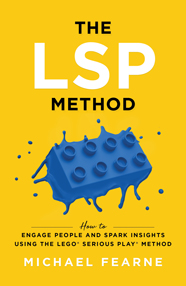
Michael Fearne is a LEGO® Serious Play® facilitator and the founder of Pivotal Play, a facilitation consultancy that specializes in the method. He has been an LSP facilitator since 2013 and has trained hundreds of consultants, coaches, academics, designers, and managers to run their own sessions. His clients have included KPMG, Ernst & Young, Google, and the innovation team at the LEGO Group. In The LSP Method, he lays out the practical steps for harnessing LEGO® Serious Play® to engage people and spark insights.
📚 Books by Michael Fearne
Transcript
[0:00:36] MR: For many people, meetings suck, they’re repetitive, the same people speak over and over again, and rarely do new ideas ever come up. What if you can change that dynamic? Imagine a meeting where that same group of people is engaged using their talents and producing quality insights that drive real business outcomes. Well, that’s what the LEGO Serious Play Method can do, and so much more. Yes, I said LEGO. In his new book, The LSP Method, expert facilitator Michael Fearne lays out the practical steps for you to harness this world-renowned method, and run your own Legos serious play sessions. Covering everything from key activities to customize sessions, this hands-on guide shows how the simple method can revolutionize your work and even change the way you think and in today’s episode, Michael shares with us how the LSP Method works, how it can be a vehicle for new and important conversations and how play can change how we think about business and life. Enjoy. Hey everyone, my name is Miles Rote and I’m excited to be here today with Michael Fearne, author of The LSP Method, how to engage people and spark insights using the LEGO SERIOUS PLAY Method. Michael, I’m excited you’re here. Welcome to the Author Hour podcast.
[0:02:09] Michael Fearne: Thanks Miles, excited to be talking to you.
[0:02:12] MR: Yeah, this is going to be a lot of fun. Before we jump in to even what the LSP Method is, tell us a little bit about you and what inspired you to write this book?
[0:02:22] Michael Fearne: Well, it all sort of starts back in childhood really, as it always does when I was just reading stories, love stories, like a lot of people. I used to really enjoy reading books and I don’t know if you know but there are these books called, “Choose Your Own Adventure”. And it was about you being the star of the show, it would read a part of the book and then you would go off into – now go to this page, do this, go to this page, do this. I just loved being part of that story and I think that’s what flowed through to where I am today, it’s – I sort of started doing, diving into story and started diving into groups and went to university and studied psychology and people and was just fascinated by it. It ended up as a facilitator, as a person that helps others. I mean, their conversations and through sort of stories and groups, ended up at this particular method I use and yeah, that’s what sort of led to the book. It’s been a long journey when you look back, you never sort of cast it forward but you always look back and think, wow, that’s how I got here so yeah, was – started all back in childhood.
[0:03:25] MR: I love that, I think you’re so right, I think so many of the things that we’re passionate about or do today in some ways is tied to our childhood. I love the Choose Your Own Adventure aspect of it though and I guess it surprises me as we talk about this. First, let’s dive into what it is we’re talking about, LSP – LEGO SERIOUS PLAY. It almost sounds counter-intuitive, putting LEGO and serious together, and serious and play together. Tell us about what LEGO SERIOUS PLAY means and how it is and can be like a choose your own adventure ride.
[0:03:59] Michael Fearne: Yeah. I just love the title, LEGO SERIOUS PLAY because it does, like you said, encapsulates so many things that seem sort of paradoxical as everyone knows, LEGO is a child’s toy and it’s normally used with children to play. Some adults get into it but the way this particular sort of method is used is more on the adult world, in the business world and essentially what it does is it uses LEGO, the child’s toy to help people have better conversations and they do that in both a serious and a playful way, it combines both of those to people to have sort of better conversations and it’s primarily used in the business world, although it’s dying to be used in the education world as well. Essentially it’s just using a tool like LEGO to help you have a better conversation. Yeah, we tap into that childlike play but in the end, we come out with a serious outcome from that.
[0:04:47] MR: Yeah, I think I have to be careful even when I’m talking about LEGO because I remember reading that LEGOis always singular, right? There is no plural of LEGO, is that right?
[0:04:58] Michael Fearne: That’s right, yeah. Particularly in America, they like to say LEGOs but the Danish are very particular about their grammar and so it’s definitely LEGO, the plural is LEGO also, it’s definitely LEGO SERIOUS PLAY. I guess how it fits into that, Choose Your Own Adventure is its technique in a method about telling stories and it’s about engaging people and sparking insights but ultimately, it’s using the LEGO to tell a story. With all those stories, whether, it’s a story about the past and where we’ve been, it might be a story that’s what’s happening at the moment and some challenges or something that’s happening for you or your team at the moment and then there’s also stories about the future which I love and I do a lot of work with, about that visioning and where people want to go and so, that’s where the choose your own sort of adventure vibe comes into it, it’s about people sort of understanding their own story, where they’ve come from but also writing their own story about where they want to go as individuals and as teams.
[0:05:52] MR: Right, I love that. You read about Choose Your Own Adventure as a kid and you're inspired by that, you take psychology in college and this whole story dynamic is really interesting to you. What is it especially about LEGO SERIOUS PLAY that really captivated you and brought you into that world when there are also so many other things that do similar aspects of those things?
[0:06:16] Michael Fearne: Yeah, it does and when serious play is interesting, it does tap into a lot of different other techniques but to your point Miles, I remember there was this one moment where I had been a facilitator. I’d gone out after studying psychology and I’ve become a facilitator at some of these big companies and learned my craft and eventually went out as an independent and I was a bit too – I wasn’t enjoying that sort of conservative space that sometimes happens in big organizations so I left and started my own business and became an independent facilitator. I remember there was this one moment where I was looking around for an activity to do and as you do as a facilitator and I came across a book around Lego serious play, it was actually the early stages, wasn’t called Lego serious play, it was just some sort of early experiments with it. It started to just fire off all these fireworks in my mind about all the things that I loved around psychology, around group dynamics, around story and using a hand and so that’s what really got me into it and then I started to test it and use it in my work and you know, it’s taken over my work now too, that’s all I do, I use it with clients and I teach to people and write a book about it. But I think for me, the reason why I like this LEGO method is that it taps into things like play, so it’s very playful which you're back in that childlike state, it uses your hands and so you're building and bringing those bricks together which taps into different parts of your mind and you get into this what I call, “flow states.” There’s all this underlying science that just builds up to make this method, I think some sort of supper method where it brings in a lot of these things that other methods are doing but it packages it up in this beautiful way and I’m just amazed when I run sessions. It’s almost like I sit back and I watch the method go and I see what it does to people and as a facilitator, it’s just amazing to sort of sit back and see it do its thing, it’s such a reliable method for me. I love going in and just knowing that the people are going to have these insights, they’re going to have these sorts of breakthroughs as individuals and teams and I think that’s what it does, it just brings a lot of this really interesting stuff. Science and techniques, it brings it together and yeah, it’s tough just talking about it because it’s so much easier to just show it, you put some LEGO in front of people and you get them to do it and suddenly, everyone just goes – that’s part of the book, it just gives people that moment of, “Wow, that’s not what I expected,” and does pretty amazing things.
[0:08:41] MR: Yeah, maybe you could paint the picture for us a little bit of what it looks like when you are facilitating one of these. Is it typically businesses or organizations and do you put the LEGO out in front of them and what does the whole scene look like and just to definitely come back to that question but I just wanted to underline what you said that I think is really cool to think about. About how Lego as you’re building it, you're using so many different parts of your brain that maybe you haven’t used in a long time, especially when it comes to work. With work, I’m sure that oftentimes, we can get caught up in the regular ways of thinking about our work, right? Or the regular ways of doing things and then we have LEGO in front of us and we’re thinking, perhaps if that worked, maybe not, but we’re forced to think in a completely different way and use our brain and our hands and totally different ways that I’m sure as you mentioned, that can really just bring whole new revelations and ways of thinking about things.
[0:09:41] Michael Fearne: Yeah, that’s a big part of it is it’s a different thinking, it’s almost like there’s a flow to why LEGO SERIOUS PLAY works have also, it starts with a 100% engagement so often, you get in a meeting and to your point about use cases, yeah, it started in business and I use it a lot in business because that’s my background but I’ve been teaching a lot of people in universities, academics, teachers, coaches and so it’s spreading out from the business world to other areas, it’s even signed to be used in therapy and other places as well. The use-cases are sort of broadening out but what you said about it, different thinking, it engages people, they think differently, they have a different conversation and then that produces different results. Really, a lot of the time, that’s what you’re looking for in business. We get stuck in that typical meeting mode so the classic which I’m sure a lot of people are familiar with is you’re going to a meeting, it’s dominated by use of the powerful, people have positional power like a leader, someone who just use a manager or someone who is more senior. Dominated by them, the extroverts, they always love meetings because you know, they get to shine. Usually analytical people in business so, factoring figures and all of the result to people dominate. And then obviously, with meetings and a lot of the way we interact like we’re doing now, it’s a lot of verbal and it’s a lot of order tree. Those sorts of people really dominate those meetings and those classes and those workshops. What LEGO SERIOUS PLAY does is it taps into a whole bunch of other different modalities so instead of just the powerful, you get everyone because there’s a method we use within LEGO SERIOUS PLAY where everyone gets a turn to have their say, everyone, that power sort of levels off, it’s – the introverts get a say as well so it’s a nice safer space for the introverts to sort of share their knowledge and their talent, it’s more creative so you get the creative people, bringing a lot more of their talents and then lastly, it taps into both the visual and the kinesthetic. It allows those people who prefer to work in those modalities to bring more of their talent and that’s what a big part of it is. It’s just – it’s tapping into the talent that’s like sitting next to you. I think that the formats that we use, whether it’s business, whether it’s education with classes, the format just let us down, they are like industrial age – hundred years ago – type formats and this sort of method really changes that so that you can think differently, bring everything that you’ve got. The creative introvert over there contributes just as much as the powerful extrovert over there. That’s a big part of it because what happens then is you get more ideas flowing, more conversations flowing and that’s what creativity and innovation is about. It’s about the connection between ideas. Normally, those would shut down and with a method like this, you allow it to shine and you allow the connections to happen and you say that all the time. That’s sort of the – how it runs in business and education as well. But another point you said Miles was about what does it look like? I just want to take you through like what happens when you walk in the room so you make sure that having the LEGO in front of you, it’s prepared beforehand so you have this – some special LEGO but there are particular kits you can use. You put that in front of people and you put it on the table, they come in, it’s very much about warming people up to this method because it’s like a new language, they use in the LEGO as a new language and what’s interesting is the group are building a new language together so the LEGO is almost like this blank slate and then what you do is you do some warmup activities and there’s a very set sort of 20 minutes, 25 minutes at the start when you’re first learning it that you’re learning in their particular way and then you build the language together and then you sort of ask questions, once they’ve started building these warm-up activities, you then ask the questions that you want. Now, the great thing about it, it’s a tool that has essentially no content like it’s not, you need to – it’s a team-building thing, it’s not this thing, it’s not a that thing. It’s whatever question you want to ask. Originally, it was questions that were asked around strategy, that was sort of the original use case. But now, you can ask any question you want and then people build their answers in LEGO using metaphor of story and things like that. Yeah, it’s just whatever question you want to ask and that’s the dynamic that I love, that’s like, I come with questions. The group come with answers and the LEGO just facilitates that and so that’s what it looks like, a bunch of LEGO it’s fun and it’s serious, it’s fun like everyone gets into it, even if you’ve never played with LEGO before. But then there’s that serious side and that’s what I love seeing, I love sort of footing around the outside of these groups, guiding them as facilitated but seeing it quickly change from a laugh to a really serious conversation as people sort of – their façade comes down and they’re just having more real human conversations about their business.
[0:14:35] MR: Right, what a cool way to enter into a serious conversation, right? Like through play, it’s almost like a back door that I’m sure most employees don’t typically engage in serious conversations for starting out through play.
[0:14:49] Michael Fearne: No, it’s like the play world and the work world got separated and we all play as kids, I’ve got a four-year-old and I just love watching her like the way she interacts with the world is through play, that’s the way that you learn about the world and then you know, school starts to separate it out a little bit and then by the time you get to the work world, work is Monday to Friday, you know, eight to five or how normal standard hours and play is you know, in the evenings if you’re not too tired on the weekend if you got some energy. What this does is it sort of smashes those worlds back together because we all have it. We all have played, we all have stories within us. It’s like this very ancient instinctual skills that we’ve developed in childhood that we sort of park and don’t use and so bringing that back in to then have a serious outcome, it’s what I’m interested in, it is, it’s like the back door into more interesting thinking and more interesting conversation.
[0:15:48] MR: You’ve been doing this for almost 15 years and in some capacity as far as my understanding goes, what has been one of the coolest things that you’ve seen or most unique thing that you’ve seen where you have a team or a person or a group of people doing LEGO SERIOUS PLAY and then having something evolve that you weren’t expecting?
[0:16:11] Michael Fearne: It’s interesting, a lot of people ask that question around sort of what’s the cause or most interesting things that you’ve seen happen and there are things, I’ll point out, I do remember some very vivid stories around this but the thing that I like about it is, it’s almost as too many to mention because it’s like I said, I remember there was one guy who asked, what’s been invented from this method like a bit of a cynic, which I love the cynic, there’s a lot of cynics that come in the room which we’ll talk about but he said, what’s been invented with the LEGO SERIOUS PLAY Method and I say well, it’s not about inventing the iPhone with it or the next big consumer product. I like to think of it as it’s all these little moments, these little insights, these little changes within each individual, it’s sort of like a groundswell of 1% changes that make the difference that build up. I’m very much, that rather a top-down, let’s invent this, it’s like okay if this person in this group sort of changes their thinking just a little bit and this person changes their thinking a little bit and suddenly you have this groundswell of change. For me, it’s like there are so many moments of those little things that people go, “I didn’t think of it that way or I didn’t know that you thought of it like that,” or, “That’s interesting, that connects with my idea.” Often, I’ll talk about some bigger things that had happened but often, it’s this little spark and then they go, they let it sink in and often, my role as an external facilitator when I use this, and it could be used just internally with an organization or like I do as an external consultant. My role I feel like is to come in and stir the pot and to get people thinking a little bit differently and then the change happens over the next days, weeks, and months as you sort of are setting people on a different course. The course that they choose but it’s you just sort of sparking it and stirring it. That’s the first thing that it sits just these little sorts of moments in this own mini – that’s what I love. But some of the bigger things I remember, there’s one group, it was actually at a big tech company and it was actually a group of their executive assistants, they’re actually, almost like a cross-functional team, there were all those executive assistance for all those different divisions within this big tech company and they did not get together. They came together and they focused on this one particular issue that we’re all struggling with and it was about – they were the interface between the organization and their leaders. They could see what was happening with the teams that would bring it to the attention of the leaders but the leaders, they were like, “Well, that’s not our priority, we know that that’s important.” What these executive assistants did was they came up with a metaphor for how they were going to address this problem and they use the LEGO to come up with this amazing metaphor which was called guerilla gardening. It came from, there was this monkey little figure that’s part of the DUPLO LEGO set and there were god figures and they had a long chat and then it came together as this approach was they called guerilla gardening. What it was, they would go out and they would do all of these small little projects, all these small little things, with all the teams they could see they needed help and their role was to grow that seed, their role was to sort of feed that satellite. You know it is almost like bypassing the latest – who is saying, “Well this is not an issue” and they could see it and they were just sort of feed, their role was to feed these little projects or these little sort of sparks and seeds. And so for them, it was a way to tackle a problem and then they went and they used that metaphor and they used that approach to address that companywide issue and to me, that was a perfect example of what happens with legacy. These parts like we change the thinking, maybe it is a new metaphor, maybe it is a new understanding of a problem and a different path you can take and then that unlocks a whole bunch of new tasks and new ways to do something. So that was a really interesting one and there've been many others from sometimes doing strategy work where it gets down your strategy and there is sort of new markets and new avenues there are all opened up. All the way to team identity I do a lot of, which is talking with a team about their vision and I love that. I love people dreaming of a future and moving towards it and I’ve had many, many sorts of sessions where they often come back and they say, “I didn’t know that you thought like that or it is similar but there’s enough difference.” I think that is some of the key things. That is some of the stories, there have been other ones where I had people. There’s this one lady who she is telling her story. Because one of the parts and method is you share the story of your model and she was telling that and she was fiddling with a bit of LEGO off to the side as she was telling her story and one of the techniques within LEGO SERIOUS PLAY is to ask questions and tell me more about this part of the model, what does this mean? Dive a bit deeper and I said, “Well, what is that thing you are fiddling with off to the side?” and she said, “Oh I wasn’t sure whether I was going to put this in on.” It was a little witch’s hat, a little sort of safety thing, and she said, “I wasn’t sure if I was going to put this in and this is what it represents,” and she started talking about her career and a different path that she didn’t go down when she was younger that she has been sort of doing on the side and she just went into a whole other story apart from her main model with the little brick on the side and by the end of it, the conversation she was saying, “Oh I needed.” She realized she needed to be doing this and so it was almost like she didn’t know what she was doing fiddling and then the story brought that out. So I mean this is just a couple of examples from teams and individuals but there is just so many more from years I have been doing this. It is very satisfying to see and hear in each moment these small changes happening.
[0:21:39] MW: I’m sure, and to kind of go back what you are saying about having meetings where you just have an extroverted person up there speaking and pointing to a screen in those meetings, whether it is the creatives or the introverts or really anyone, maybe if they had some things to say or some suggestions that might, I don’t know, feel awkward to bring up or they might feel like they can’t bring it up, whatever. But then you take a dynamic like this and as you are mentioning in all of these different sessions and ways to have LEGO SERIOUS PLAY, you have that same thing perhaps happen where someone comes up with an idea and expresses it almost through play and through LEGO and now those same people, those same bosses or executives are maybe listening in a different way and the person feels even able to speak about it in a different way for the first time.
[0:22:28] Michael Fearne: Yeah and it is funny, I was chatting with another legacy risk play by facilitator the other day and he was saying that it is when you look at the leader that it’s in the room and they’ve got LEGO around them, you know they just look more childlike. It is a lot easier to bring out issues when they’re just paused with LEGO around without those brilliant but it does, yeah. A lot of it is about psychological safety and that is a bit of a buzzword at the moment in dealing with groups. And Google has actually done a lot of work around high performing teams and they found the highest performing teams are the ones that have the most psychological safety and so LEGO series players are tools because what that does is it allows you to say what is on your mind and get that out and knowing that you won’t be judged for that in the meeting that is a big part of what psychological safety is about. It builds trust and that leads to high performance. And so that is what LEGO SERIOUS PLAY does, it just provides a little bit of psychological safety. It brings even more and allows the safest space and part of this is because you externalize your ideas. I mean what we are doing is we are basically getting what is in your mind, ideas, concepts, opinions experiences and you are putting them out into a LEGO model that is essentially what the method is about. It is you building these things from your mind. And so externalizing it means you can talk about it yourself easier and also other people can see it and so it is what we call object to mediated communication, which means you are talking through an object and that takes a lot of heat out of any conversation because it’s like to me it’s the model like consist the idea of sitting there and so that externalization, you know sort of physical form enables a lot of what you are talking about Miles, in terms of the conversation flow. The sort of leveling of the playing field, democratizing the conversation, there is a lot of ways to frame it. The other thing is about the leaders themselves. The person that chooses to use this method whether it is a team leader or whether it is someone who has a team who wants to sort of get more out of it like they have to brave for starters because they need to say, “Look, I don’t have all the answers,” like I want the team, us as a team, me as the team, part of the team to come up with the answers. And so he hands a lot of power over to the group and I think it needs to be firstly you’re a brave manager but also someone who wants to empower their team and I think if you get that dynamic, then the leader comes in just as one voice amongst the many and the conversation is sort of shaped by the group. I think that is an important point around this type of method.
[0:24:58] MW: Yeah, I am really stuck on something that you said that I think is so important or could be so important and integral in the way that we talk about so many things in today’s world. What was the term you use, object mediated?
[0:25:12] Michael Fearne: Communication.
[0:25:13] MW: Communication, I love that. Now you have already talked about all different types of modalities that LEGO SERIOUS PLAY can be used with and I want to talk about that more in-depth here in a second, but has this been used or have you tried this even talking about certain maybe touchy subjects like race for example?
[0:25:31] Michael Fearne: I haven’t, like what’s interesting in the work that I do is I because of my background and where I came from, I focus on a particular group of you know I use it with teams and team dynamics and innovation and collaboration. That is my seed but I teach it to people who have used it in a whole bunch of other ways and potentially in a whole bunch of other ways as well. So things like race, things like community engagement, it can be used in things like negotiation, conflict management. So it can be used in all of those things even in therapy where it’s something that is harder to talk about but you can use an object and a lot of the principles that underlie this method actually have been used in therapy for a long time as well. So you do think about therapy which is a similar thing where you are externalizing your inner world and it can be used with a lot of those touchy subjects because it creates almost like a third person in the conversation or third thing. Which allows the touchy subject – It just allows a more honest conversation, which is less personal because when it is you and me, we’re just talking at each other and with each other and if you bring in another party into that, the LEGO model then it does some very subtle things like you look at the model rather than just as the person and often we talk through the model. So like here is the model, these are the bits and the model helps you to tell the story. And then you look up and everyone is looking at the model and just that subtle shift can be huge when you are talking about those sorts of topics. So yeah, definitely. I don’t do it but that is just sort of the sphere that I work but yeah, it has been used in a lot of those other touchier subjects.
[0:27:10] MW: Yeah, I mean it just sounds like this as you mentioned and open a conversation with it had so much offerings in so many different ways and such unique tool in that sense but are there cynics and when you sit down and you do all of these meetings whether it is the leaders with the LEGO sitting in front of them or maybe the shy person in the room, are there cynics to this method both when you are running these or facilitating these workshops and or just outside of that in general with this kind of practice?
[0:27:39] Michael Fearne: Oh yeah, definitely and it’s a big feature of using this method is you have to sort of come to terms with the cynic or the people who don’t want to and it is interesting, I had a particular view of the cynic and my view of it is let’s just do it, see how it is and I’ve had plenty of people walk into one of my sessions, arms crossed, “Why are we doing this? I’ve got real work to do.” I remember one particular workshop, I was with a really big car company here in Australia. It is an international brand and they were doing a big transformation. So a big change project and I and the internal person brought in, of course, we had 30 people from the organization and big burly car guys come in and girls with crossed arms like, “Why are we doing this? I need to really work,” and I love it because I know that by the end of it, they’ll turn and they’ll say, “Wow, I want to do more,” and that is exactly what happened with this group. By the time they got to the end and have a three-hour session with them, which is quite a long one and at the end, the ones that have crossed their arms and saying we want to do more and a big part of that was because they start to realize it is not about the LEGO. People come in and thinking it is a fun team building LEGO thing, which you know it is fine that that has its place in the world but what it is it’s more about the conversation and the cynic starts to realize that they are having real conversations. And yeah, the LEGO sort of melts away by the end, or the novelty of it being a child’s toy sort of melts away by the end. So yeah, with the cynic I’ve liked to embrace recently because one thing I learned that the cynic is, is someone who is usually pretty passionate or they have been passionate about a topic and they have tried to change things and they’ve been met with resistance and so the cynic it is almost like harnessing the cynic because they are the ones that have the energy around it. It is just being directed in the wrong way because of the past and so what I find is if you – I go through a very set warm-up and from that you’re like 99% or 99.99% of the time you join the cynic. I think in the years I have been doing this, I think I had two people disengage from the process halfway through and this is like thousands and thousands of people and I’ve had people who have never touched a LEGO before in their life that come from countries that just didn’t have it and they didn’t do it. I’ve had cynics who just would not want to do it and they love it and want to do more of it and again, it is just because it’s your thought about the LEGO in the end. So yeah, the cynic one of the things is you need to get people doing it and I think that is a big part of why I wrote the book is so that people can just do it and see if it works for them or it works for the majority of people. It is about just doing it and experiencing it and once you do that you generally want to do more of it.
[0:30:30] MW: I love that and writing a book is no joke. So congratulations on finishing that. Where do you see the future of this going, of LEGO SERIOUS PLAY? It sounds like already there’s so many different modalities that it can change the way that people think even if they are cynics, what are the possibilities with this? Where do you see it going?
[0:30:50] Michael Fearne: Yeah, it is really interesting to look at the future of LEGO SERIOUS PLAY. It has actually been around as a method for about 20 years and so it is nothing new. People were like, “Well hang on, it’s been around 20 years,” like the LEGO group developed this in the early 2000s and the reason why it is still under a lot of radars like it is not that well alone. Part of it is because it started as a strategy tool and it is slowly working its way out of that to be more of a broad conversation tool. And back in 2010 LEGO open-sourced it and so that allowed the method to sort of be used by anyone and so the last 10 years, it’s been a slow build and there are people, passionate people using it around the world and it is starting to be used more and more. I think what we’re sort about the cusp of this really exploding as well because as well as my client workshops I train people in this as well and around the world and now I am starting to see more and more people sort of realizing that to get these different conversations. So it’s like the time is now for this method. It is almost like it was ahead of its time back in the early 2000s and people are starting to realize we really need this tool in a lot more areas. So part of the reason why I wrote the book is just to spread the method in the world. At the moment it is very locked away in a training, you need to go three days and learn how to do it and there are a lot of things to it. It sounds like a simple tool but there are a lot of subtleties to it. Which a lot of what I put in the book and so that was locking a lot of people away from the method and so I am happy with the book to really sort of open the method up, get a lot of people using it and in terms of the future, my vision always for LEGO SERIOUS PLAY has been you look at every office block, every office, every university, every cross room and you would see a bag of LEGO and people would know how to use the LEGO SERIOUS Method. So that when a topic came up, when an issue came up that they felt LEGO SERIOUS PLAY was good for that they could get out the LEGO and use it and it would be as ubiquitous as a posted note or as a whiteboard that you can use it just as a tool to enhance the conversation like that is my vision of LEGO SERIOUS PLAY and that’s what I am working towards. There are other cooler things as well as I am starting to experiment with doing LEGO SERIOUS PLAY in virtual reality. So that is the far future of it but the immediate future is making sure that everyone is across that method like I always say that once you do this and you see what it can do, how can you not want to have it in everyone’s hand. It is just the conversations that enable and then people everywhere should be using it and not for every topic but we haven’t – I talked a little bit about some of the best-used cases but it really is about when you want everyone’s engagement. At some meetings you don’t want everyone’s engagement, right? You just want to deliver information, you just want to do something like that but when you want everyone’s engagement and it is a complex topic and you need to dive into it and explore it, people need to feel ownership of the sort of the outcome. Those are really good topics to use Lego Serious Play with and my vision is yeah when people have that sort of issue or topic or conversation that they think: “Yeah, LEGO SERIOUS PLAY, I know how to do that. I want to be able to sort of enhance my conversation with that,” and go from there.
[0:34:06] MW: I love it. This has been such a pleasure, Michael. If people could take away one or two things from your book, what would they be?
[0:34:14] Michael Fearne: I think the first thing is around play, like thinking about combining those worlds of work and play and so for me, I mean the book is very much a how-to book. If I could just very, “do this, do this, do this,” find your own way in the method but very much do this. So people will get a lot out of it in terms of how to do this method but overall I love for people to just think, “Oh I can bring my play skills,” and the person sitting next to me their play skills to our work and make it better. Both on a human level, why not just feeling better about work but also on a results level. I think that is probably the biggest outcome that I want people to have is to know there is more within each of us and whether it is you bringing out, whether it is you helping to bring it out in your team or the people you are teaching or just the people around you and I have brought this up Miles but people are using this in families as well like I had one person that I taught in Switzerland. We sat down with his family and used LEGO SERIOUS PLAY to talk about whether they should move back to the United Kingdom or not and they used that as a way to engage his wife and his children in the conversation and so I think for me it is just realizing that there are other ways to have conversations and the tools that we fall into, the normal meeting like that’s just – yeah we do that well probably too well. I would use it too much to bring other stuff in and you’ll find that you’re having story-based conversations and it is so interesting. So that’s what I want people to take away that there is another way and it’s really fun and actually it is really good results.
[0:35:49] MW: Right. It’s like we got the serious aspect of it locked down, how can we grow and learn and transform while having fun at the same time and bringing more of that in.
[0:35:59] Michael Fearne: Yeah and getting better outcomes. I work in the business world and I want to see results and this does it really well and so I think that play is just an untapped potential talent that we all have so yeah, that’s what I am hoping for the book as well as a very clear process on how you can put this to your work and to your classes and wherever you want really.
[0:36:21] MW: Well I am so excited for people to check out the book. Everyone, the book is called, The LSP Method: How to Engage People and Spark Insights Using The LEGO SERIOUS PLAY Method, and you can find it on Amazon. Michael, besides checking out the book, where can people find you?
[0:36:37] Michael Fearne: Yeah, so they can also find me at a web address called lspmethod.com, pretty easy to remember because of the title of the book. So if you go there and you can even email me, michael@lspmethod.com, I love chatting about this stuff. I love enabling, I love empowering people with it. So if you want to give me an email, if you want to just go to the site and see some of the other tools it is interesting that we are doing a podcast. We are going to be launching a podcast in 2021, which takes you inside LEGO SERIOUS PLAY stations and so yeah, there is a lot more. We’ve got a community we have started. There are people around the world. So there is a lot of resources as well as the book community. There is just so much and it is like I said, it is time for it to really blossom and to see it everywhere.
[0:37:22] MW: Incredible. Thank you so much for helping us and enabling us to choose our own adventure through play and I am definitely going to be bringing this to Scribe and bringing the LEGO Method here.
[0:37:35] Michael Fearne: Well thanks. I also want to say play well like that is what LEGO, the word actually means. It is Danish for, “play well,” so I just want to go on to play well.
[0:37:44] MW: Okay, with that, everyone play well. Thanks again, Michael. Thank you for joining us for this episode of the Author Hour Podcast. You can get Michael Fearne’s book, The LSP Method: How to Engage People and Spark Insights Using the LEGO SERIOUS PLAY Method, on Amazon. You can also find a transcript of this episode as well as our other episodes on our website at authorhour.co. For more Author Hour, subscribe to this podcast, and thanks again for joining us, we’ll see you next time. Same place, different author.
Want to Write Your Own Book?
Scribe has helped over 2,000 authors turn their expertise into published books.
Schedule a Free Consult