Michael Lynch: Keep It Simple, Make It Big: Money Management for a Meaningful Life
Read the full transcript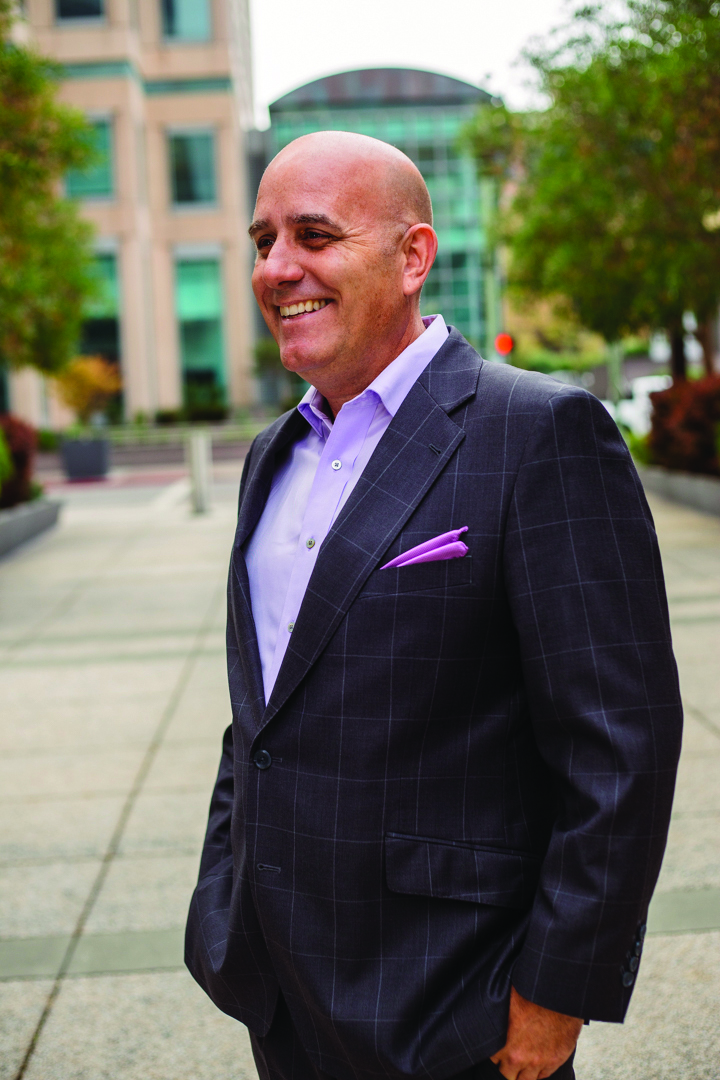
Michael Lynch
Michael Lynch is a Certified Financial Planner with nearly twenty years of experience working with American families to craft plans that fund their dreams, educate their children, and finance their retirement.
A former onsite financial planner at ESPN, Michael has contributed to The Wall Street Journal, TheStreet’s Retirement Daily, and Investor’s Business Daily, as well as hosting Smart Money Radio for a decade. He is a regular speaker and financial planning instructor for conferences and corporations alike, including Madison Square Garden, among many others.
Michael is a five-time recipient of Financial Planner of the Year for MetLife and a 2019 inductee to the Barnum Financial Group Hall of Fame. You can enjoy his latest articles and videos at
📚 Books by Michael Lynch
Transcript
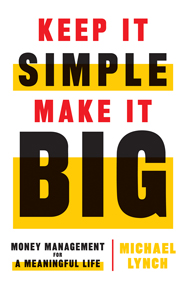
[0:00:29] DA: Has your personal finance plan become so complex, you can’t even understand it? Simplifying your plan and reclaiming what’s yours is easier than you think. In his new book, Keep It Simple, Make It Big, Michael Lynch uses nearly 20 years of practical experience to help you create, protect and enjoy financial success. You’ll learn how to recognize and overcome common financial mistakes from paying too much in taxes and falling victim to inflation to blowing your investments and failing to protect what you cannot afford to lose. Michael’s systems put you in the driver seat to enjoy a lifetime of tax efficient income, protect your family and retire on your own terms. His book aims to help you cut through the BS and help put you back in charge. Hey listeners, my name is Drew Applebaum and I’m excited to be here today with Michael Lynch, author of Keep It Simple, Make It Big: Money Management for a Meaningful Life. Mike, thanks for joining us, welcome to the Author Hour podcast.
[0:01:22] Michael Lynch: Well, it’s great to be here Drew, it really is.
[0:01:26] DA: Why don’t you kick us off by giving us a rundown of your professional background.
[0:01:30] Michael Lynch: All right, well I guess I stated my professional career as a construction labourer but I guess that would have been before I went to college so I out of college, I worked at a free market think tank and that’s where I started to develop writing skills and then from there, I covered deep them mesh, in Washington DC for five years as a Washington correspondent for LA Magazine and had a lot of fun. I really liked doing personal finance so I do that on the side, actually did this was pre blog really, believe it or not and I did, it was a personal finance commas for an early sort of web publication and then made some family moves and I said look, this is what I really want to do and so I made a big career change and career change was to become a financial planner, it was 19 years ago I think and I’ve been at it, doing the financial planning ever since.
[0:02:21] DA: Now, was there an inspiration behind the book, did you have an aha moment, why was now the time to write it?
[0:02:28] Michael Lynch: Well, that’s a good question. I actually did outline the book about 10 years ago believe it or not and I do a lot of consumer education. I teach soup-to-nuts financial planning for big corporations. Madison Square Garden is a client, ESPN had been a client, big hospital systems in the northeast and we take people through about eight hours of high level learning so I wrote this book to facilitate that and it was actually developed as a powerpoint presentation for us. It’s very visual and very bullet point oriented. What happened is because I’m licensed to do securities with SEC and FINRA. The company has to approve everything, it’s like our world is 1984. So anything a guy like me writes, has to be approved by lawyers, believe it or not. And they said if they approve it, we own it. I said, well you're not owning my intellectual property so I put it on a shelf. Lo and behold, the world changed a little bit, different back offices and I pulled it off the shelf two years ago and I said, you know what? This is good, let me turn it into a book and so that’s what I did, I went back, updated all the numbers and gave it a lot of narrative and turned it into a book. Since that last 10 years of course, plenty of stuff had changed so we updated that and we learned a lot and I think the real impetus though is what I’m passionate about and what I got in this business to do 19 years ago and really have done it, the same way in the same place ever since is to provide high quality, objective financial advice to really middle-class Americans. The kind of advice is that really, the elite gets and pays a lot of money for it, can we make this product, can we make this a service that's really affordable for people? Especially as they’re starting out their lives in their 20s and their 30s. That’s it, that’s the genesis of the book and it’s been a good ride.
[0:04:18] DA: Yeah, who would you say this book is for?
[0:04:21] Michael Lynch: You know, anybody’s got a checkbook and a smile and I think that’s kind of it. There’s nothing new under the sun believe it or not, they’re just really isn’t. What we want to do is we want to revisit the basics and the basics really are the basics. Rather, you’re starting out in your 20s or 30s or preparing for retirement in your 50s and perhaps 60s. I think who is this for is somebody who wants to spend two or three hours – I have clients that read it, read it soup-to-nuts, top to the bottom, enjoyed it and I said, how long did it take? My one client, the first one who read it said it took three hours. It’s for people to want to spend three hours to get a good education on some basics in financial planning so you can set big goals, you can put plans in place to fund those goals and then you can make sure that if bad things happen, you and your family are never ever poor, it’s like I used to say when I did a radio show, I’ve never had experience being poor but I’m told it sucks and I don’t want that for you. Don’t want that for you.
[0:05:23] DA: Sure. What financial questions does this book aim to answer?
[0:05:28] Michael Lynch: One of the big questions that everybody has and this is probably the biggest question that has answers is, how do you take lump sums of money and turn them into income. How much do you need in other words to retire? It’s a great conflict or it’s a great sort of new paradox. Financial planning is filled with a lot of paradoxes. One for example is retirement accounts, you love retirement accounts when you’re working but you hate them when you're retired so we can talk about that. But the other paradox is we consider wild to be what we own. If said Drew, what are you worth? You're going to click through your head, you’re going to be like wow, I got this bank account, I got this 401(k), I got this IRA and I don’t really care what the number is but it’s going to be some number represented as a pile of assets. But we don’t really live on our assets to do it, we live on our income. The question becomes, how do we turn those assets to income and what is real wealth? I mean, here’s another way to look at it. If somebody like Andy Grove who is an immigrant and helped found intel, if he walked through customs at JFK, with $15,000, he would have to declare it and they would make a big deal out of it, he had to fill out a gazillion different forms, who knows what would happen, right? If he walks through the customs with the idea for the microchip in his head and he asked, well what do you have, anything of value to declare, what does he say? I have nothing of value, right? It’s kind of the same thing with income. The idea in the old days, if you were to hear the novels and stuff like that, they would talk about wealth as income wealth. She was wealthy, she came with a dowry of 10G’s a month in today’s vernacular you might say, right? Well, it was actually considered what the cash flows were or as we look at it, today, we consider wealth to be piles of money. The big question becomes how do we turn those piles of money that we have accumulated, our 401(k)s, our IRA’s, our Roth IRA’s and how do we turn them into income so that that income can sustain us for an indeterminate retirement time, right? Because we don’t know how long we’re going to live, we don’t know what inflation is going to be. We really need to get to that. I think as a practical matter, we are not trained to think like that and it is not intuitive for most people on how it is we turn our assets in the income.
[0:07:54] DA: I love that you just said dowry and G’s in the same sentence.
[0:07:58] Michael Lynch: You like that, yeah, would that be eclectic. I mean, the book holds yogi bear and Aristotle, you know what I’m saying? You gotta keep it real, got to keep it real.
[0:08:08] DA: Continuing on what you just mentioned, why don’t’ people have retirement on their radar?
[0:08:13] Michael Lynch: I think they kind of do but it’s how to quantify it but to the average person’s time arises. Well, I learned as a young person that the further into the future you look, sort of the more successful you were, right? We think about time horizon as a heuristic for success. The longer you look, the more choices you make today to protect yourself sort of in the future, whether that’s health, not smoking, exercising, saving money for retirement. I actually don’t think there’s a retirement crisis. I think Americans actually do pretty well for retirement and I think our system is pretty cool because there’s a lot of different points to do it. That said, it is a self-serve system. If you want to take advantage of it, you can retire young and you can retire rich or wealthy, right? But you have to sort of put in the work. On average, I think people do look for, I think they’re very good at funding their 401(k)s now, I just don’t think they have an idea of how much they need to have at what point in their life to really be financially independent and that’s kind of what I see in my practice, people come in more often than not, thinking they can’t retire and I tell them, you could have been retired five years ago, you have enough, you have enough.
[0:09:23] DA: Right, could you talk to us about the range of possibilities from one person to another?
[0:09:28] Michael Lynch: In terms of like services offered, it terms of how much they could be retiring with, it seems like there’s a broad spectrum of steps they can go through and roads to go down.
[0:09:41] DA: Okay, the first thing that I really think people need to do.
[0:09:44] Michael Lynch: One of the things I like most about the book is I like asking the question. Don’t ask why, ask why not. I think people spend far too much time worrying about what they’re supposed to do, worrying about what other people think about them, worrying about either having regret and risk and they spend far too little time thinking about what do they actually want to do. The first one I really encourage the readers to do is set your goals, ask why not. Don’t let anybody push you around. Personally, I don’t want to retire, I love my work, I love it. I’m going to work forever but I’m going to pile a bunch of money where if I have to retire, I can retire, right? Also, I want a second career, I mentioned I work construction, well, when I worked in construction, I had a truck license and I love driving trucks. I love trucks, I love backhoes, I love tractors, I love all that stuff. What am I doing right now? I’m going to be a privately owned financial advisor in a year who writes a book and gets his truck license – go and get my truck license back.
[0:10:37] DA: Yeah.
[0:10:37] Michael Lynch: Why? Because I want to drive trucks. Will I ever do it, I don’t know but if somebody says hey, you need to drive a truck, I’m going to be able to go and drive that truck, right? And afford to do it and afford to pay for my own truck. The point that I want people to think is what do you want your life to look like? I just retired a woman, she was fantastic, asked her how old she was, she said I’m 81-and-a half. 81 and-a-half, I loved it, right? Now, I got other clients, they want to be out at 45, very different saving and spending patterns. The first time I think you need to do is there’s a large range and how we want to live our lives. This concept that you have to get for retirement is this. Which is really financial independence, it’s at what point is work optional and retirement possible. At what point do you have enough that you don’t need to turn your human capital into financial capital that your financial capital can just support you and tell your human capital goes, ka plunk, IE, assume room temperature. That is, while you are working, it’s your income that drives everything because your biggest experiences is what? Taxes, you make your income, that’s your taxes and then you fund your retirement plan 10% plus a match, if you listen to me, do 20% and then now you got the rest of this money and you build your house and your lifestyle around that, your vacations and at the end there’s some left that goes in the bank, if not, it’s fine. When you’re retired, it’s your expenses that drive everything. Two people that look very much the same live in the same neighborhood, have the same jobs, could have very different expenses, right? Therefore, very different retirement possibilities. Because once you're retired now, your expenses need to be met by passive income sources. Most of us or pretty much all of us in America have social security, we don't have social security, we have a government pension so there’s some pension coming in, that’s usually not enough. Now we have our pile of money, that pile of money is going to generate the rest of the income and so it’s really the expenses that matter and if we think about what I talked about earlier, how much assets do you need to generate income, there’s different opinions on this. I work in a four to 6% range which means you have a million dollars that generates 40,000 income to 60,000 income. Anywhere from 3,500 a month perhaps to $5,000 a month in income in addition to your social security. That’s one way I look at that.
[0:13:08] DA: Now, early in the book, you talk about potential roadblocks that can impede financial success. Can you tell us about a few of those?
[0:13:17] Michael Lynch: Big roadblock I think that prevents people, one of the big ones is taxes and that’s the number one, that’s the one that people really focus in on and in some senses is – can get wrong, it’s not what you earn, it’s what you keep, we’re an advanced economy and it’s a wonderful site image we live. The taxes are what make a large part of that to society there. This is not taxes are bad, it’s that, we want to minimize taxes because they’re like any other expense. One of the things you want to look at is how much money you have is not what’s in the account, it’s what you can take out and spend. For example, truth come to me, you're a proud man, you should be proud because you got a million dollars in your 401(k). You pull it out in front of me and you puff yourself up, you know like I got a $1 million and you look at me, I look at you and you’re like, “Why do you got that puzzled look on your face Mike?” and I’m like, “Well, you just said you had a $1 million” and you say I do and I am like, “Wait but I don’t see it,” and you’re like, “Well, you look, you point at the account and you said it is a $1 million.” I say, “Drew, take it out, spend it and see how much you have.” And you’re like, “Well what do you mean?” I said, “Well, if you have taken it all at once you are going to lose 40% so you really have 600,000” if you take it slowly, you might lose 20%. So you have 800,000, right? But the amount of money that you have is the amount you are going to spend not the amount of money that is on the account and so the old rules, I am not sure of your age. I am an old guy at 50 years old, so when I came out the rules was max out your retirement plan before you did any other kind of investing. Not right today, not right at all because while you’re young, you probably want really feed accounts like Roth IRA’s and even investment accounts that are going to be tax free or very tax favorable when you use them and when you get to your peak earning years, you are swinging the big wood. Your human capital has been expanded, you got all kinds of experience. You’re in your 40s and 50s that is your peak earning years for most people. Now that is when you want to stuff up the pre-taxed accounts because that is when the tax break is most valuable to you, right? And then when you take it out, well you want to make sure that you take out a layered cake so you don’t overpay for civilization. I mean often rental homes have taxes, they’re surprised to pay for civilization. I agree but somebody else once said he could just be in all out. You don’t want to overpay for it. Somebody else said it makes him patriotic and pay taxes but it could just be patriotic for half the price. So you know that’s how I look at it.
[0:15:43] DA: Are there any changes coming up on the horizon that we should be looking out for, any legislative changes, any changes in social security coming up in the future?
[0:15:52] Michael Lynch: A lot of changes, changes, changes. This year, massive change and it is one of the reasons why I believe in getting educated and or working with a great adviser that can help guide you because if we think in December we have what was called the secure act. Now personally, it wasn’t my favorite but it changed IRA rules in a big way. If one pushed the distribution age back to 72 from 70.5, which is mildly helpful for high asset high income retirees. But what it did do is it changed how people inherent IRA’s no longer can they stretch an IRA out of their life expectancy if they inherit it from a non-spouse. They have to take the money out in 10 years. Big game changer, always before Roth IRA’s could come out slowly. So we encourage clients do Roth conversions, get a lot of money there, you’d be able to pass intergenerational wealth. Not anymore. Now it has to come out over 10 years. So that was a big change. The second thing that happened, we had this thing called COVID-19, you’re familiar with that Drew?
[0:16:54] DA: Heard of it.
[0:16:55] Michael Lynch: Yeah, you heard of it right? We heard of it. Yeah, absolutely and then we had the CARES Act. A lot of things came into CARES Act. Now we have distributions and retirement accounts didn’t have to come out, which is kind of – so we were able to leave that in but more importantly, you had some trapdoors come in on 401(k) if you were COVID exposed or infected, shall I say affected and there is a list. You got look up in IRS what the list is you have to be able to certify one of these things. That basically affected your life, you could take a 100,000 out of your 401(k) and it was taxed over three years and you can put it back. It is like an interest free loan for your retirement plan. So that opened up a lot of possibilities for clients, a lot of possibilities. It has been very helpful with real estate I will just say that. Now if you looked down the road I think the general trend is going to be higher taxes only if we look at what the government spends versus what the government collects in taxes. You want to close that gap, they don’t seem to be too good at spending the last and that’s because every dollar they spend is meaningful to somebody. So it is not like it is easy to cut that, far easier to raise revenues once they can quite borrow. So that would be higher taxes I would think there overtime but who knows and then the other one is social security is just an absolutely fantastic program. It is going to go out of balance at some point in the next 20 years. Out of balance means that it will no longer collect enough money to pay the benefits and at that point, there could be a little bit of a reckoning and by reckoning I mean more taxes and less benefits for some people. So what I learned from COVID is we call it financial planning but what we are really doing is planning for resiliency. I didn’t realized this was a Yiddish saying but when I looked it up and put it in the book it said it is a Yiddish saying. So the old Yiddish saying, “Man plans, God laughs,” and yes but we want to plan for resilience. We want to have piles of money, we want to know how those money is going to be taxed, how we can use them. So that when we do get hit with something like COVID that we have the ability to keep our family and ourselves okay financially.
[0:19:02] DA: Are there investment strategies that many people overlook or simply don’t know about that you can suggest to make sure that they are ready for retirement?
[0:19:11] Michael Lynch: That is an awesome question. So keep it simple, make it big. One of my big, big things that I believe is that there is nothing new under the sun. Nothing new under the sun. So most new investment strategies, I am actually talking to a client about this today with these SPAC, Special Purpose Acquisition Companies, are most new things under the sun are old stuff repackaged and packaged perhaps dangerously with high fees like a transparency in a lot of this. So I think what we want to do is the opposite of looking for new investment strategies. I think we want to rely on the old ones and understand them and then understand that there is no such thing as not having this and what I mean by that is I am a big believer that all people need three things in their financial life. They need safety and principle, they need some money that is never going to go down and you’re going to have a dollar that is going dollar when you need to go get that dollar. That is our cash reserve when we are accumulating and then once we are on our investments for income and retirement, we have to have an income reserve, okay? We need reliable income. I mean I don’t know about you Drew but I prefer not to make a lot of money one day and nothing the next, right? You know a steady paycheck is a nice thing to have and people are used to that. So we need reliable income. But the third thing that we need is growth of income overtime because look back 20 years on what something costs and think about what it costs today, in a person’s retirement they are going to need to double their income and if they don’t double their income they are going to have to standard living and we don’t talk about being on a fixed income with a smile on our face. We think of a fixed income with a frown and why is that? If you’re income fixed high enough, you’d be a happy thing, right? So what I think we have is every asset pulls against each other, those things that protect principle do not get reliable income and they do not grow. Oh bank account, yeah, think about interest rates. This is a real story. A woman came into my office, she had a half a million dollars. She was an immigrant, worked in a factory her whole life. She had half a million dollars, she never made a mistake then married and having kids and that’s true, those life mistakes that get you financially but they’re rewarded otherwise.
[0:21:32] DA: Sure.
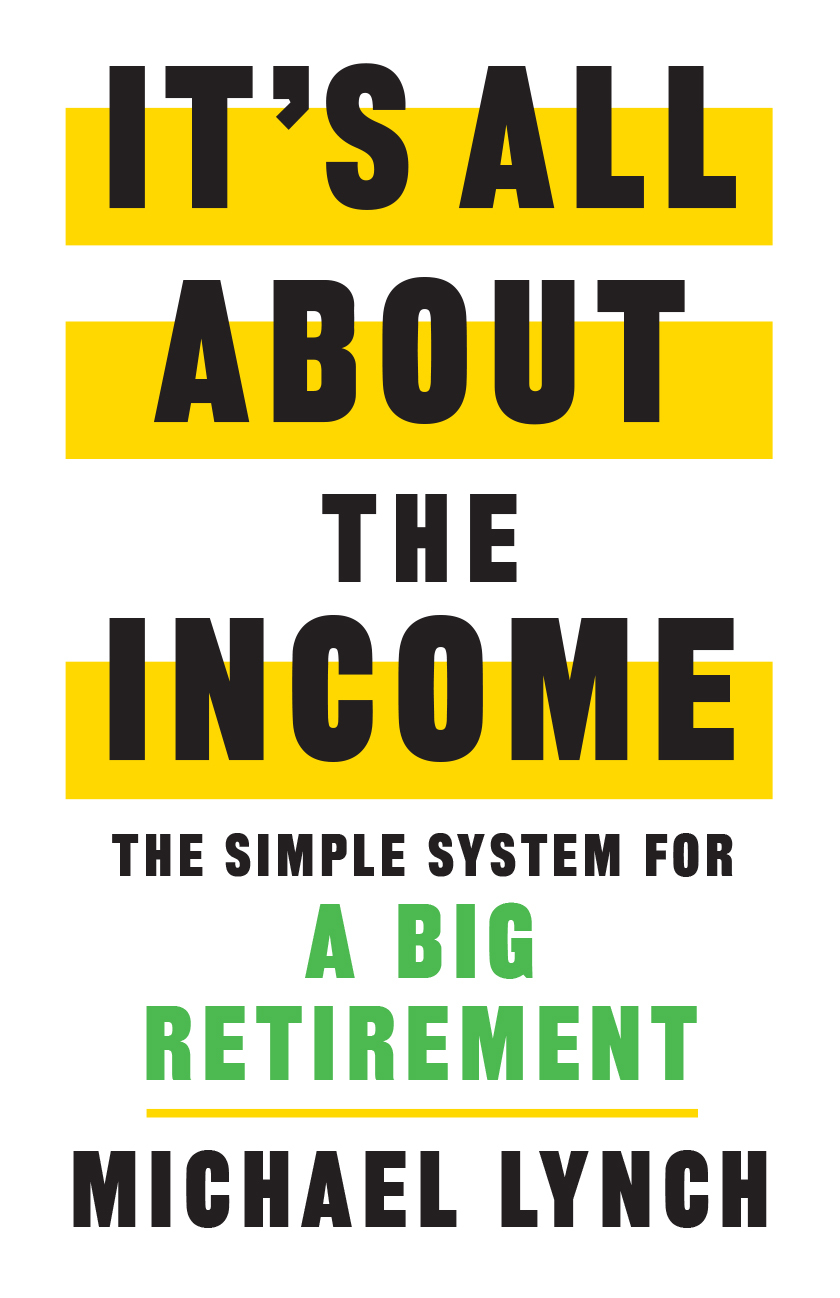
[0:21:32] Michael Lynch: She had a $2,000 social security check and she was getting prior to the great recession 2,000 a month, 24,000 a year, offered to half a million dollars. Due to government policy and a general belief that interest rates to be low, her income by the time she’s 70 was 2,000 a year. It dropped and it has never come back. So people that thought it was safe to never touch the principle and just live off the interest they got killed when they found there was no more interest. So things that protect the principle do not generate reliable income, rule number one. If stocks ever fluctuated as much as interest rates fluctuated, nobody would ever own them. Nobody would ever own them. Second, those things that give us reliable income, social security, annuities, annuities being income annuities like corporate pensions and private ones you can get, they tend not to grow much overtime. So social security does have a cost of living. So it is very powerful that way but you are not going to get over inflation growth out of it but you might get under inflation growth depending on the index inside too. Also it is not liquid, you can’t get in advance. You got to wait for the next month. Now those things to grow your portfolio, equities, stock, mutual funds, balance mutual funds. We talk a lot about this in the book, those things grow overtime. They actually grow income overtime at greater pace than inflation. Historically absolutely but they shrink, they do not provide stability of income and given dividend cuts and stuff. They might not provide reliable income. So the right trick, the art to financial planning is getting the right mix of stable principle, growth of asset and income and reliable income for the right client and you know last night, I was doing a webinar for clients and I say I was taking to my income systems it is going to be my next book. It is the income stupid, you know where that’s from, it is economy stupid right? And I had somebody on the call who’s all fixed, why? Because she can’t handle any fluctuation. So I know, I got to do different strategies for her. So other people might be so aggressive and their assets are such, they might have somebody in the bank and it would be almost all equity but the basic idea outside those extremes were working with those things. Safety of principle, asset income reserves, investment accounts and then things that generate income and the final thing I’ll say on this and this is why your listeners got to get the book, read it, get an adviser. If you do it yourself, do it yourself like it’s your hobby that is how I got into this so you can definitely do it yourself if you want but if you don’t love it, get somebody like me to help you do it because it is an art as much as it is a science. I was dealing with a client, he is a surgeon and I was doing college financing and I was recommending very traditional financing with 529 plans, you know? That is like recommending a car to drive down the street. It is the vehicle that is designed for that but there are other ways to do college financing and advisers love to come behind other advisers to say, “This guy is ripping you off. You should be doing my thing” so you got to inoculate clients against that a little bit. So you know since he’s a medical professional I say, “Look, here is why. Here is why we are doing it, here is why things are going to do for you but there is other ways to do this and they are this, this and this” and he said to me, he said it is the same way I feel and I said, “Wait, wait, wait” this guy is like a world famous orthopedic surgeon for kids and I said, “So you mean to tell me that my kids on a slab in front of you with a broken bone and there is five of you surgeons here and you’re all going to do the surgery different? He said, “Absolutely,” I said great. I said even science isn’t science. So there is a lot of art to it but that is the way I look at it, that is the way I communicate it and that’s I think once people get that it gives them a lot of confidence because now they know they can use their money for whatever goal they want be it college, retirement, second home, they know what they got and what they can use it for.
[0:25:33] DA: Michael there is so much more in the book, you go into final estate planning and even had to choose the right nursing home but I just wanted to congratulate you on writing a book like this and especially one which will help empower so many people. It is no small feat to finish this so congratulations.
[0:25:49] Michael Lynch: Well, it is nice for you to say that Drew, I appreciate it. You know, it feel good when it came. I got to admit, I have published a lot of my life. I have never done a book, it was a good process but time consuming and there were times of frustration and I almost said, “You know what? This thing doesn’t have enough oomph to it,” so I was very happy when it came. Yellow is my favorite color, it is all over the book and yeah, I am pleased with the product. So I appreciate you said that.
[0:26:12] DA: Well, it is a great read and this has been a pleasure. I am so excited for people to check out this book. Everyone the book is called, Keep it Simple Make it Big, and you could find it on Amazon. Where else can people find you?
[0:26:21] Michael Lynch: So a couple of places, my website at michaelwlynch.com. So everything is spelled traditional, Michael W. Lynch. It is my financial planning page and if you go to the Mike’s insights that is my writing if you like those or anyway, maybe you’ll like them, I don’t know. I write them. I am like most financial professionals, I actually do my own writing. A lot of people they make sense to have to be approved they buy it from services. The second one is you go to the media insights page. I do a bunch of YouTube videos there and we can have some fun with those two. So eventually there will be a simple and big www.simpleandbig.com, where we will have book stuff and blogs that’s going to come out. That will be out with the launch of the book. So I think that’s www.keepitsimple.com or simpleandbig.com. I am not quite sure of the URL but if you Google it, it should come up.
[0:27:10] DA: Awesome Michael, thank you so much for coming on the show today.
[0:27:13] Michael Lynch: All right, thank you Drew, you have a good one.
[0:27:15] DA: Thanks for joining us for this episode of Author Hour. You can get Michael Lynch’s new book, Keep it Simple Make it Big, on Amazon. Also, you can also find a transcript of this episode and all of our other episodes on our website at authorhour.co. For more Author Hour, subscribe to this podcast on your favorite subscription service. Thank you for joining us, we’ll see you next time. Same place, different author.
Want to Write Your Own Book?
Scribe has helped over 2,000 authors turn their expertise into published books.
Schedule a Free Consult