Trey Taylor: A CEO Only Does Three Things
Read the full transcript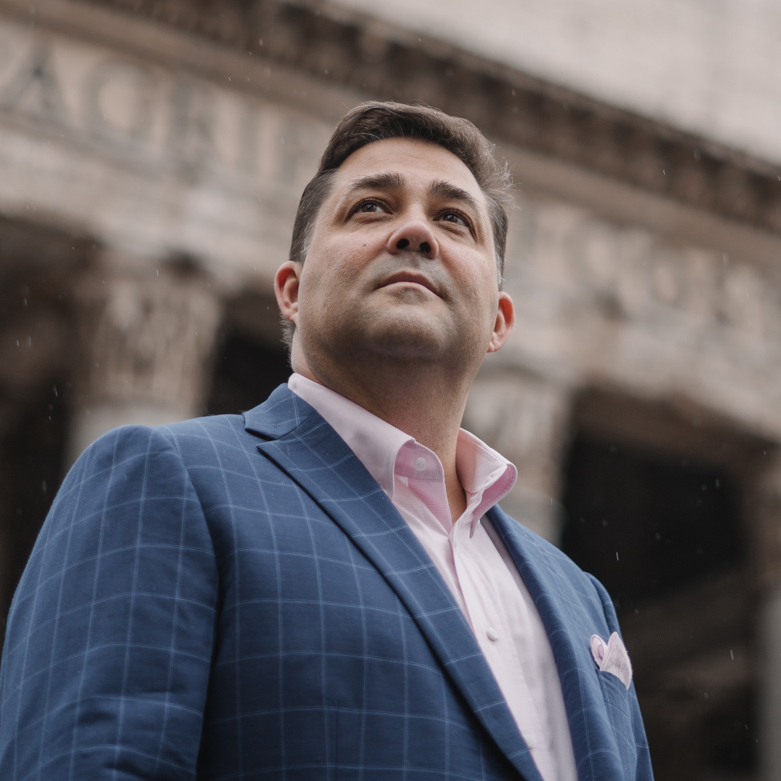
Trey Taylor
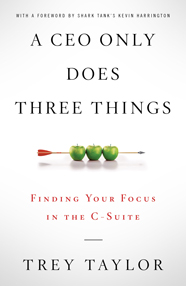
Trey Taylor is a lawyer by training and a venture capitalist by career, with experience across technology, financial services, venture capital, and commercial real estate. He is the chief executive officer of Taylor Insurance Services, managing director of trinity | blue consulting, and a founding partner of Ascend Partners. A frequent keynote speaker, he wrote A CEO Only Does Three Things to show leaders how to focus on culture, people, and numbers.
📚 Books by Trey Taylor
Transcript
[0:00:37] DA: Whether you're a new CEO trying to navigate chaotic workdays, or a veteran of the C-Suite, trying to reignite your passion, focus is your most important asset. Many owners and CEOs think they need to be involved in every aspect of their business. But before long, they’re overworked and burned out. Instead of doing everything, it’s time to focus on the right things. Trey Taylor’s new book, A CEO Only Does Three Things. zeroes in on the three pillars of business, culture, people, and numbers. Steep in 20-plus years of practical knowledge, training, and consulting with some of the world’s largest companies. He shows how to articulate the right culture for your business, hire people with the right mindsets, and inspired his team to produce optimal results. Hey listeners, my name is Drew Applebaum and I’m excited to be here today with Trey Taylor, author of A CEO Only Does Three Things. Trey, thank you for joining us, welcome to the Author Hour podcast.
[0:01:31] Trey Taylor: Drew, thanks for having me, I’m a big fan of the podcast, it’s on my favorites list in the podcast app that I use to listen to podcast. Really, a thrill to be here with you.
[0:01:40] DA: Trey, you flatter us, just 10 seconds in and I’m already excited. Let’s kick this off, can you give us a rundown of your professional background?
[0:01:48] Trey Taylor: Yeah, sure. I did my undergraduate work in business, economics, and history, a little bit of political economy, I studied overseas for a little while at Oxford and came back and finished up in University of Atlanta and like a lot of people sort of try to figure out – where do I want to go from here – and ended up in law school and Tulane in New Orleans where I studied tax policy, complicated transactions, negotiations and things of that nature. Just as I was getting out of law school and sort of figuring out where I wanted to go next, we were in the middle of the .com bubble and one of my mentors had just recently taken a position at a company that they came with WebMD. I joined this root business and that ultimate office and a legal office which were combined at that point of Web MDs, it was a really early person here. It was like a graduate education all on its own, we did the largest private placement of US equity in history while I was there and it was a team of like four of us doing it, you would do a deal on Monday, it would be the front page of Wall Street Journal on a Tuesday, that sort of thing so it’s really good sort of education coming into it and I did that kind of work for a little while and then really got interested in the venture capital and investment space. I got into that space, helped raise a small fund, do some venture consulting in a small boutique firm, that sort of thing. I did that until 2001, 9/11 when that industry effectively was erased from the map for a couple of years. I went in-house at that point at a couple of large internet companies. Earth Link, AOL, those kinds of companies and then sort of a personal family tragedy brought me home to where we live now and I ran our family business for 15 years until I sort of have moved from that up into a family office and consulting role, to that business and some other businesses. The common thread, through all of my career, has been, I’ve always been either the CEO or sort of the in the CEO’s orbit and so I really been able to study the challenges, the techniques, the mindset of what makes a CEO effective and not effective which is an only measurement that really matters.
[0:04:05] DA: Now, what was the inspiration for the book? Did you have an aha moment, why was now the time to write it?
[0:04:12] Trey Taylor: Yeah, it’s a great question. I was in a mastermind of a lot of people from my industry, my core businesses, employee benefits and I was in a mastermind with a lot of those folks. All of whom were exceedingly high performing professionals with businesses that didn’t match the energy they were putting into the business and what I mean by that was, effectively, they were good salespeople – they were good technicians. But when it came to running a business and acting as the chief executive, as the place where the final decisions rested on all the important questions, there just wasn’t a mindset where people thought that they should be doing that. CEO sounds like an awfully corporate title and most people didn’t want to run businesses in a corporate manner. That was one thing that sort of popped up and then in the consulting that I do and a lot larger it is what I noticed in the super big businesses were – it was just a lot of burnout early stage, long burn out from these high executives and I noticed that those two roles sort of shared a frontier in the challenge on that front tier was, what exactly am I supposed to work on any given day. I began to ask CEOs that. And the fact that I never got the same answer twice, showed me that there was a need to sort of take a sharpie and outline that order and say guys, this is what we’re supposed to focus on.
[0:05:39] DA: Who is this book for? Is it for current CEOs, is it for folks who are starting a business soon or is this for folks who want to be in the C-suite one day?
[0:05:51] Trey Taylor: Yeah, we wrote the book primarily for people who are in the job today. So that they get sort of a dunk in cold water, they get an awakening that says my mission has creeped over time. I started out as the CEO and now I’m doing a whole bunch of stuff that other people in the organization are capable of doing, are compensated to do but, I find my hands on those things for a lot of different reasons and most of them frankly are valid reasons but we wanted to remind people in the CEO’s chair that you really only have three reasons to show up at work every day and here are those three reasons and focus on those. What we found though, since we began to introduce this information into the market and especially through our consulting clients is both CEOs and the people who want to be CEOs want to learn this type of information so that they can either be a better CEO or be the best CEO hire, once that job is offered to them. What we’ve seen is even CEOs who mentor other people deep in the organization are using the book and the material, to share with those people so that they know how to develop the right skillsets to take the top job.
[0:07:09] DA: Now, the foreword in your book is by Kevin Harrington of Shark Tank and Infomercial fame. I have to ask, how do you two know each other?
[0:07:16] Trey Taylor: Kevin and I are in a mastermind group together called Board of Advisors, Kevin is one of the obviously, the big names in the group; it’s a group of very accomplished business people and that sort of thing and, I was shocked when I first walked into the room and I looked and I said hey, I’ve seen that guy on TV. You wouldn’t think that somebody of his stature would go to mastermind events and spitball business ideas, help entrepreneurs with their businesses and do the work and Kevin was right there with the note pad, writing down answers to questions, he takes the floor in the same way that any other member of the group does and that sort of thing. He and I had lunch one day and he was asking me what are you working on, that’s his stock question, what are you working on he asks everybody that. I told him that I had a little passion project in this book and he was very interested in it because as somebody with entrepreneurial ADD, a term that he uses, we get very excited to work on whatever the shiny object is and instead, what we should be doing is focusing on the three things that drive our businesses that we can control the CEOs. He really liked that. He asked me to send him a draft of the book, I did – he read it and in a couple of days, I got a note back from him the next day or two days later and said, this is great, I wish I had had this book when I was starting out. I said, well if you really feel that way, why don’t you write the foreword for it. And so he did, he wrote it himself and it really expands on his idea that this is a necessary book for CEOs to have and so I was quite gratified by that, very proud of it and really happy to have him on the team there.
[0:08:56] DA: Now, you had a pretty big pivot earlier in your career that came out of a really unfortunate event. Can you tell us the story of how you ended up in your family business?
[0:09:06] Trey Taylor: Yeah, my family business is an employee benefits and financial advisory firm, headquartered in rural Georgia and, it's a multigeneration business, lots of the family has worked in it, my grandfather founded the business in the 60s and it sort of, business as always, been there for us and my dad and my brother were running the business and I was working in the internet field, had just accepted a job with AOL and it really was a dream job for me. They wanted me to come and head up their divestitures arm. Because they had acquired lots and lots of companies over the years and the idea upon acquisition was, this is going to be helpful for us but in reality, a lot of those companies were never integrated and, the shine had come off and, maybe it was time to move on from those and they had so many brands that were just really, in a conglomerate, we’re not being realized of their full value. They hired me to come in and develop a plan to raise a billion dollars in invest capital by selling off these businesses, they would then take that billion dollars and put it into whatever growth initiatives they thought were on the horizon. I was really excited to sort of have that job, it was the first evidence to me that that the work that I was doing inside corporate entities was important and working and a billion dollars was a lot of money and it was just really good valuation for me. They wanted me so bad that they bought my house in Atlanta, they said, look, we’re not going to wait on you to sell your house, we’re going to buy it, we’ll sell it later, you just get to Virginia as soon as you can so one Saturday morning, moving trucks, they were on the way, they called me that morning, said we’re headed that way to load you up and I hung the phone up and almost immediately, I mean, within 40 seconds, the phone rang again, I figured it was them and it was my mom. My mom and dad were in Vegas, they had gone, this was right after the new year, they had gone to have a good time and see some family and friends that we had there and my mom said hey, your dad is in the hospital and we’re worried, it doesn’t look good. I said, gosh, please let me know how that turns out, let me get my stuff done here and then I’ll see what I can do to come home as soon as possible. She said, no, Trey, you don’t understand, you need to be here now. I called the movers back and said, turn the truck around, I flew to the airport as soon as I could and jumped the plane and unfortunately, we didn’t get to bring my dad back the way we wanted to and so two weeks later, I was sitting here, running a business that I had never wanted to be in, had never trained to be in, and in a role specifically where I was the head person in business which is a recipe for disaster really. The need for the book is really born out of the need that I needed that day, be kind to the earliest version of yourself, hit some list and the people will stay from time to time and I needed this book at that point to save him. I had no idea what to do, what’s the first thing that I tried to do today. I had no idea what that is. That’s how I got into business and then have matured business and have bene able to increase top line and bottom line and all those things that are important in business but really, I learned how to be a CEO from doing the work inside this business.
[0:12:31] DA: Yeah, that’s my next question. Is the book done with any outside research or is it all based on the wisdom that you’ve lived and lessons you’ve learned as a CEO?
[0:12:40] Trey Taylor: Yeah, my mind works in such a way that I need the outside research, I need the benefit of other people’s experiences all the time. As I was going through the process of learning how to run the business, I was constantly in search of you can call them sort of mini networks. I would have a problem, I would go find people who were going through that same problem, discuss with them how they are resulting it, watch their results, all of that sort of thing, and then, I’m a pretty strong reader I try to read about a hundred books a year and I would always just turn my brain to whatever the problem that I was facing in that time. It was really lucky to get some intellectual mentors in that timeframe. Ron Willingham who had a company called Integrity Systems. He and I sort of coauthored a book, summarizing his philosophy, the book was called Authenticity and we put that material together but we put it together because I needed it at that point is how do you authentically run a principled and ethical business structure that still is capable of growth and that sort of thing. I constantly rant and try to – you know, as I was living a problem, I try to go find others living the same problem with the answers to it. I think the answer to the question is that its’ born out of practical experience but also, the theoretical that I used to get over various humps and hurdles, that’s what we’ve tried to put into some very usable models in the book.
[0:14:09] DA: Now, you have a lot of historical examples in the book which are really fun by the way. I have to ask, are you a history buff or did these just fit the narrative that you were writing about?
[0:14:18] Trey Taylor: Yeah, history nerd is the term there for sure.
[0:14:21] DA: I didn’t want to say it, I didn’t want to call you a nerd.
[0:14:24] Trey Taylor: Yeah, my undergrad degree is in history and like I said, I had done some time overseas and every time I was overseas, I’m always going to the battlefields or going to the cathedrals and that sort of thing, it doesn’t make it a lot of fun for my traveling companions sometimes but yeah, I draw a lot of wisdom from history, from how the greats in our past have solved certain problems, I extrapolate models from that and use that. And people tend to love it, when I speak about the material in the book, I always use the story of Julius Caesar crossing the river Khan and machining that first really big choice that defined who he was throughout history. I find that if we use examples of stories like that then people can relate to what otherwise could be really dry material.
[0:15:13] DA: Yeah, they are really interesting and so compelling and just fun facts along the way, like a really fun read. I have to ask you, what are some of the big mistakes that CEOs are making today?
[0:15:25] Trey Taylor: It’s really interesting you ask that because I just hosted a round table with this discussion, at an event a couple of weeks ago and the wisdom on that panel accorded 100% with my beliefs and what’s in the book which obviously makes it a good panel to be a part of. The number one management sin that we see today is people not tackling the really big amorphous challenges in the business so that they can attack the small, tactile, the things you can touch and feel. That’s a problem. The other problem is this concept of the book stops here which means that the CEO has to be responsible for everything in the building which is not necessarily wrong on his face but in application, it’s extremely wrong. What happens there, what becomes of that is that CEOs become involved in decisions that have absolutely no strategic importance to the business whatsoever. I think I tell the story in the book about a friend of mine who chooses the kind of coffee creamer available in the break room. There’s no value to that whatsoever and PS, he chooses the wrong one, right? He doesn’t choose the one that the people want, they go to the grocery store and buy their own and bring it in. It’s a little micro chasm of the wasted time, his decision making time on that is probably quick but it would be better placed somewhere else and so, I don’t think CEOs think in terms of levels of work nearly enough and so what I like to do is to make sure that when I’m structuring my day and my week, that I am spending time on the really big sort of why based questions that only I can have informed opinion on. Everyone else has literally multiple tax of attack on their job but really, my job should be to sit back at least a large portion of the week and naval base to some extent to say, knowing what I know about the business today, where does that take us to the future, is that place desirable, what course corrections do we need to make today? That was sort of the big management send that the panel agreed on and that I have been seeing in my consulting practice for the last five or six years.
[0:17:43] DA: Now, what are the issues that could arise when the CEO is unfocused or if they’re overworking themselves?
[0:17:49] Trey Taylor: Well, I use sort of mental image of, if you have a concrete parking lot and you’re doing all of the things necessary around the parameter of that parking lot to keep the weeds paired back and keep it looking clean on the outside but you never go into the parking lot to make sure that the spaces are painted correctly and that the weeds are killed and the cracks and that sort of thing. If you do that long enough, then the parking lot takes over itself. It doesn’t matter what you’ve done on the parameter. Well, the same thing happens in our businesses, if we are not focused on the things that only we can focus on as CEOs, those three magic things that I call The Trinity. If we’re not focused on those three things, then the question becomes, who is going to focus on them, the answer is no one. What you get happening there is that the weeds are taking over the parking lot. In other words, these sort of bad ideas were the ideas that you wouldn’t necessarily support that sort of thing began to produce sort of the lowest common denominator of culture and it is very hard to build a highly productive business on lowest common denominator cultures.
[0:18:58] DA: What would you say to the CEO who is wearing many hats in an effort to stay lean, which is the buzzword of startups these days?
[0:19:08] Trey Taylor: Yeah, for sure and one of the things people would question me on this, the title says, a CEO only does three things and then you sort of look at your to-do list and there is always more than three things on it. Yeah, it is a bit of a sleight of hand title. Of course, a CEO operating a company does more than three things a day but in the process of reductionism and in the process of removing everything that someone else could do what are you left with. And those are the three things that we are talking about in the book but that doesn’t mean that you don’t have other things on the to-do list especially the earlier stage of your businesses. So if you are the only person in the business and you only do these three very, very high-level things, you will not have these. You need to do everything in that business at some point. The challenge for startup CEOs of course is to figure out how do I automate the things that can be automated and done for me, right? How do I delegate the things to other people maintaining a good balance of workload productivity and that sort of thing and then how do I outsource other tasks that people can do far better than I can do in a shorter period of time probably less of an investment and that sort of thing and so the earlier stage of the organization, I think the CEO really has to be focusing on automation, delegation and outsourcing.
[0:20:30] DA: What would you tell a CEO that is struggling with the world right now. How has 2020 really changed the life and business for a CEO?
[0:20:41] Trey Taylor: So without a doubt 2020 has produced its own set of challenges in every frame that we would put it in from politics to business to family life to school, everything. We obviously know that it is such a trite thing even to point out but that is obviously the case. The amazing thing to me is across all of the businesses that I am exposed to. About, it is not scientific numbers but just my feeling is about 15 to 20% of the businesses are struggling. That 2020 has thrown them some sort of curveball that has really made doing business a lot less profitable and less efficient thing to do. Well that leaves 80% of businesses that are either doing the same thing that they were doing before maybe in a different way and a whole lot of businesses that will be much, much better than they were before. I think some of that comes down to the fact that there is a shared understanding in our country and maybe around the world right now that things are topsy-turvy and then everybody gets a second shot at the app. We are a little bit more forgiving when it comes to that but to the CEO who is struggling, my analysis, my recommendation, all of that sort of thing would come back to the idea that you have to re-evaluate the businesses if it was a startup today. You have to make those changes necessarily to be competitive today. Sometimes the answer to that is this business is no longer a fit for the world and that is unfortunate but that is the case. And so I have a client who we have been in business with for several years. They run a cruise based travel agency, no one is booking cruises in the past six to seven months and so they have made the very difficult decision to close that business because it is not going to exist in the same way in the future and so they don’t want to ride that horse again through that same rodeo if the rodeo moves different and then we have clients who are in the e-commerce space. And their challenges are different challenges but still existential challenges. So if you go from an average of 12 orders a day to an average of 1,200 a day disappointing that customer base, not having the infrastructure built to handle it, those kinds of things are very challenging things to do and you could just as easily go out of business if you can’t meet the demand adequately as well. So my first thing is to say is: If you started this business today what would you build to make it viable and what is the now normal and start building that today or make the decision not to build it and go find something else to do.
[0:23:19] DA: You and the book speaking about great leaders having two abilities that set them apart from others. Can you tell us what they are?
[0:23:26] Trey Taylor: Yeah and this is a lesson that I have learned from watching the really good CEO’s in my orbit over 25 years and even back to when I was in middle school and high school, I tell the story in the book of Mrs. Brownley, who was 7th grade algebra teacher and she was head of school for the small school that my brother and I attended and she was a legend. She was a really older lady, very, very tough, tough as nails, she wore these polyester suits from the 60s and 70s. That were sort of bulletproof, they could shoot at them and they would arm the fabric and suit and all and she was just a quirky character but we all respected her a lot and what Mrs. Brownley taught me was that great leaders have the ability of perception and invocation and perception means that you can see and other people the strengths that they cannot quite see for themselves yet and then invocation is when you call those strengths out of them into the world. So that they can use them to achieve their highest potential and I saw her doing that. She did it for me when I was just sort of a rudder kid going into high school and then I have seen great CEOs time and again say, “You know, I know that you have the strength, I know that this is something that you can do, go and do it and show us how well you could do it,” and then sort of drop the mike and walk off and that person is left there with a little bit of the fear and angsts about disappointing somebody. But a whole lot of confidence in the ability that they kind of know they have but didn’t know that it was valuable or recognized from other people in the same way. So it is a complete skillset that the naturals have and I think that you can always teach what the naturals have if you put it out there and that’s why I wanted to end the book on that and there’s a homework assignment that goes with it in the book, it’s go find someone that you can precept an ability in and then you invoke that ability out and shower it with praise so that it can grow.
[0:25:35] DA: Now we have to dig in because it is the title of the book, the CEO only does three things, what are those three things or those three areas, those three pillars that a CEO should be focusing on?
[0:25:46] Trey Taylor: I thought you’d never ask. So the three things are culture, people, and numbers.
[0:25:52] DA: Now, culture is another buzzword for startups these days and how does a CEO help form the culture for their company?
[0:26:01] Trey Taylor: Yeah, in my argument in the book and in all of the material that we sort of talk about is that the CEO is really the only one that can define the culture. So I want to be really specific on that. So culture is a definition, I like Emmett Shay’s definition, it is the water and the fish tank that we are all swimming in and if we alter that water PH or cleanliness or put some food in it or we introduce another fish in it that sort of thing but culture itself can change over time. And so we need someone who is paying attention to the culture, as a result, to be achieved on its own and so we then look as I often to it the language behind a concept and the word culture shares the Latin word for other words that we would recognize like cultivated and so a culture is a business environment that we care enough about to cultivate. So with that definition in mind, it becomes clear as to why the CEO who sits at the top of the organization, who is tasked with moving the organization through time towards a vision that hopefully he or she is shared with the rest of the people and the company, it becomes a sole providence of the CEO to define that culture. Now, we talked a little bit a second ago about the parking lot metaphor that I like to use. You can have a lowest common denominator culture. You can have a culture where the CEO doesn’t focus on what the culture, the business looks like. It doesn’t cultivate it, it doesn’t remove the things that are bad for and encourage to consider, look for it that sort of thing and so delegating culture development in effect to everyone else produces what I call the lowest common denominator culture. That culture benefits the individual at the expense of the group and so what we like to see is a CEO to take and benefit the entire group as a whole with a culture that everyone can sort of enthusiastically support. And it becomes the number one strategic advantage over competitors completely. My very first interview that I do with any candidate is a discussion about our culture and how they may not fit into that culture and we need to be very careful on that. That is before I talk compensation, just before I talk actual do needs of the position, anything and then at the end of that conversation, I send them out. We don’t bridge into other things, I send them home after that. That is the first that they will be able to do that is how important a culture is to a CEO.
[0:28:41] DA: Yeah, let us dig a little bit deeper into that because it seems like one of the first things a CEO would look to outsource or pass along to someone in the company is the hiring and hiring process but people are such a huge part of culture. So your stance as a CEO should be in that room for every hire.
[0:29:01] Trey Taylor: I think the CEO should have the ultimate hiring decision for sure. I don’t know that you need to be in every single interview, in every single answer of a question or anything of that nature as a matter of fact, when I hire somebody here, I let other people of course in the organization interview the person. They are interviewing for technical know-how in positions where maybe I wouldn’t know the answer to that scheme of things. They interview also for cultural fit and personality fit and that sort of thing as well, that sort of thing but when it comes down to it, if I am the ultimate arbiter of who I want in the culture or not then I have to be the one that makes the final hiring decision. I do let myself be over-ruled in that decision from time to time with my team that feels very strongly that this person is a good fit but I don’t let that happen if they are not a good cultural fit. So if we have a question about their ability, maybe that is the case and if you look at really high-level CEOs the singularity page at Google, reviewed resumes for all the first sort of 25 to 35,000 people that hired at Google. My point has always been if Larry Page is running Google, which is this monolithic company that came out of nowhere, less than 20 years ago I guess, if he has the time to dedicate to that then somebody who is running a 20 person organization or 500 person organization, we should be able to find the time to hire a team that carry out the vision.
[0:30:32] DA: Right, now moving on to numbers, I have to ask this question due to some startup experience I have. How does a CEO avoid the trap of vanity numbers and vanity metrics?
[0:30:44] Trey Taylor: Oh man, is that not be a challenge.
[0:30:47] DA: It’s the biggest pitfall.
[0:30:49] Trey Taylor: It certainly is and so much of that is because of misaligned symptoms. So many startups are built to appeal to investors and so in order to appeal to investment dollars, you have to fit an investment formula and so you build your company to fit that. I will comment on whether that’s the right thing or the wrong thing because I think it is both. I think sometimes it is the right thing and sometimes it is the wrong thing and I think sometimes it is both the right thing and the wrong thing at the same time. But with that said, I think that that’s where the banking of vanity numbers come about. I love the idea that there is only one vanity number that matters and it is profit in what you do with it. So I would always rather brag at the country club or wherever I might socialize about how much profit I made rather than how many widgets I sold or how many I guess the new widget is how many like I got on something. So it is a real issue and we face it often. And the way that we and consulting use it or attack it is to use very simple profit-first mentality of what’s your revenue, what are your expenses, how can you increase one, decrease the other and produce more profit and then what do you do with that profit becomes the most important question.
[0:32:06] DA: Now moving forward with the numbers, you say that opportunities are actually hidden in the numbers. What areas should a CEO look in to find these hidden opportunities?
[0:32:16] Trey Taylor: So a key point to me with numbers is transparency. I see so many of my clients who have almost a double set of books, one that really matters for them and one that they share with certain members of the team but definitely not the whole team and I am completely indebted to a book called Ownership Thinking by a guy named Brad Hams, which really exposed this concept for me. So we are entirely transparent on our numbers and all of our businesses. So anybody that works for one of our businesses, how much profit did we earn last month and what was that profit spent on and sometimes it is a first-class flight for me or sometimes it is a nice dinner somewhere for a sales guy or something of that nature and people may have opinions on those things but it is much better to have those things out in the open where those things can be questioned than it is to not have them and so we really believe in transparency. And transparency creates the opportunity in numbers so you could bring your team around a set of numbers and say, “I want to increase the top line. I am going to decrease the expenses so that the bottom line increases. That makes more profit for everyone.” One of the things we can spend that on is better business operations, better people, better benefits for our people that are here, whatever that happens to be. And what I have seen time and time again is if you are open to the feedback and can get over the natural reluctance to be transparent on the inner workings of your number then your people will astound you with the amount of opportunity they tell you is in the business you have no idea about.
[0:33:57] DA: Trust your employees in a way, right? Why is that so hard?
[0:34:03] Trey Taylor: It is hard and I don’t mean to diminish anybody who has reluctance on that because I had with the same reluctance you know? You begin to worry that if you pay yourself a certain salary and salary is an exception of this by the way. So we don’t say, “Jamie makes X amount of dollars but Jamie down the hall makes less than her,” we don’t do that. We involve salaries into one different category because that can create problems that are hard to a certain amount. Although some businesses do navigate that properly but the point is that, you can be reluctant to share data that is extremely personal and so you can make that choice and it is absolutely fine but you are missing opportunities and business that only your employees know about. I’ll give you a great example for one of Brad’s case studies, the author of Ownership Thinking. He did a consulting project with a carpet manufacturer in Georgia. And he went and interviewed the guys on the line and showed them, “Here is the numbers that we are trying to hit. We think that there might be some opportunity in your job, how would you contribute to help us hitting these numbers?” and the foreman who have been there for 30 years or whatever said, “Well, we have this brand new machine, Japanese machine, very highly engineered thing that does XYZ on what we do on a daily basis but our protocols on how we operate the machine were not updated when we bought the machine.” So the protocols, the instruction manual is still how we run and how we schedule shifts is still from the 1968 machine that was replaced over 10 years ago and an example is that when we finish one run on the machine, we then let the machine cool down for an hour or two hours. Well this machine doesn’t need to cool down for two hours but we still take two hours off between every single shift. Well they may total those hours off over the course of a year. They found more than a million dollars in lost productivity. All they had to do was ask the guy who was running the machine and nobody ever thought to do that. That is the power of transparency that gives you those opportunities.
[0:36:14] DA: Trey, writing a book especially like this one, which will empower and educate is no small feat so congratulations on putting this out.
[0:36:21] Trey Taylor: Thanks so much. It was definitely a labor of love but a message that I really knew that people needed because I had needed it myself.
[0:36:29] DA: It’s been a pleasure to chat and there is so much more in the book. I am excited for people to check it out. Everyone, the book is called, A CEO Only Does Three Things, and you could find it on Amazon. Trey besides checking out the book, where can people find you?
[0:36:41] Trey Taylor: Yeah, the best place that we try to put a lot of our resources is our consulting company website, trinity-blue.com.
[0:36:49] DA: Awesome, Trey thank you so much for coming on the show today.
[0:36:52] Trey Taylor: Drew, thanks for having me. Always fun to do these things and to be with you especially on a podcast that I follow so regularly as well.
[0:37:01] DA: Thanks for joining us for this episode of Author Hour. You can get Trey Taylor’s new book, A CEO Only Does Three Things, on Amazon. Also, you can also find a transcript of this episode and all of our other episodes on our website at authorhour.co. For more Author Hour, subscribe to this podcast on your favorite subscription service. Thank you for joining us, we’ll see you next time. Same place, different author.
Want to Write Your Own Book?
Scribe has helped over 2,000 authors turn their expertise into published books.
Schedule a Free Consult