Charles Daly: Make Peace or Die
Read the full transcript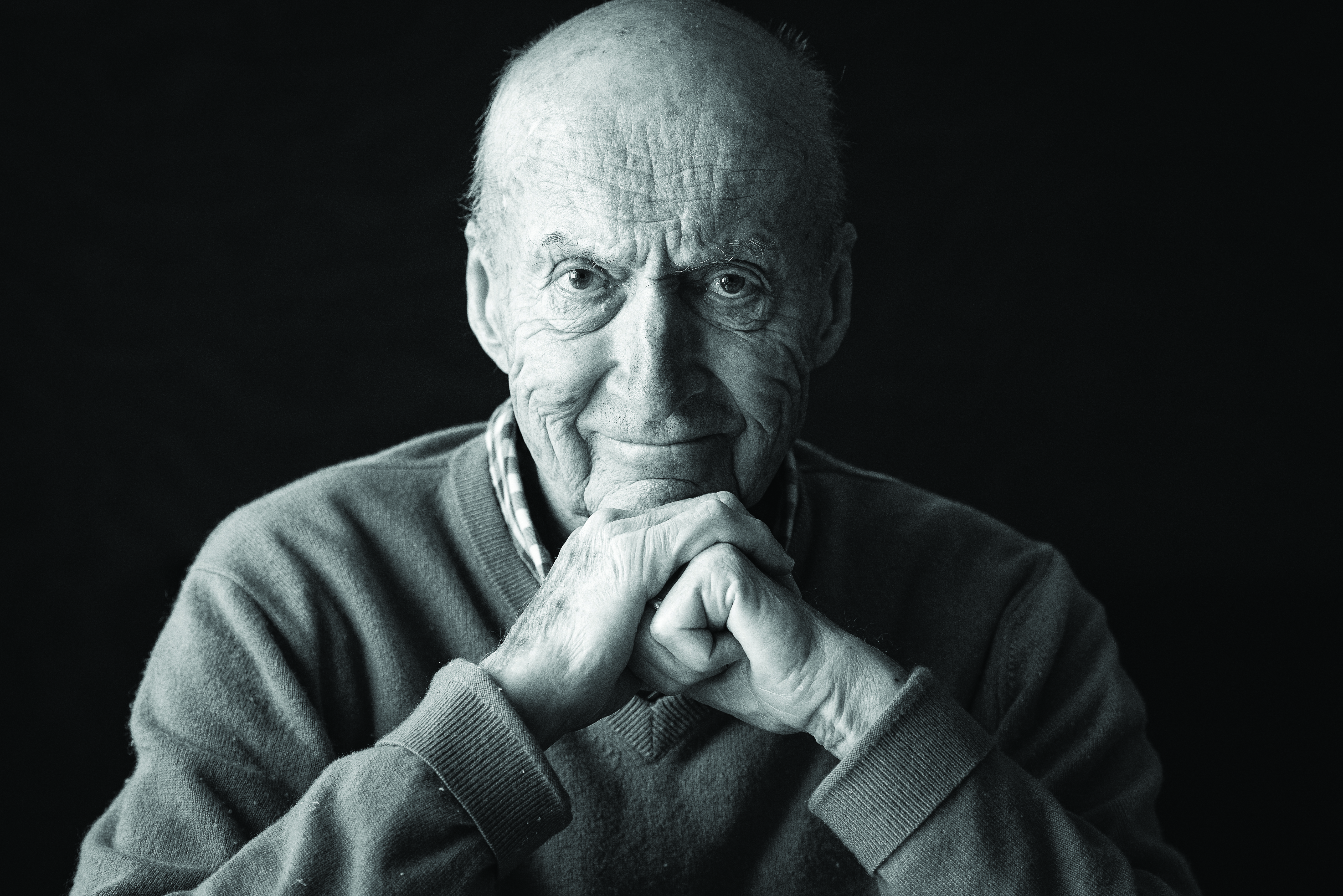
Charles Daly
Charles U. Daly is the last living member of John F. Kennedy's West Wing congressional liaison staff. Before that, he led a Marine rifle platoon through some of the most intense combat of the Korean War and was awarded a Silver Star and a Purple Heart. He helped run several American institutions, including the University of Chicago, Harvard, and the JFK Presidential Library. He has four sons, ages 28 to 69, and lives on Cape Cod with his wife, Christine. He attributes his long life to tennis, red wine, and Viagra.
★ Scribe Case Study
Charles Daly’s Life of Service Inspired a Book That Encourages People to Ask “What Can I Do For My Country?”
Charles Daly's book has inspired people around the world to live a life of service, even when it’s difficult. Read more on the Scribe blog.
📚 Books by Charles Daly
Transcript
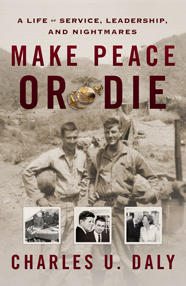
[0:00:27] MR: Wanting to live up to a family tradition of service and soldiering, Charles U. Daly joined the US marine corps. What he thought would be an adventure turned out to be much more than that. When he came back from the Korean war, decorated, wounded and traumatized, wondering what was next. His quest for a new mission took him to the White House where he worked with John F. Kennedy and Bobby Kennedy. As well as through a South African township devastated by the AIDS epidemic and so much more. Chuck’s life story is true and it’s a testament for living up to Kennedy’s challenge to ask not what your country can do for you, but what you can do for your country. At every juncture, Chuck had two options. Make peace or die. Chuck chose to make peace with fate every time and that decision led him to a remarkable life of service and it has now become the title to his new book about his life story. Chuck is also the last living member of John F. Kennedy’s West Wing congressional liaison staff and before that, he led a marine rifle platoon through some of the most intense combat of the Korean war and was awarded a Silver Star and a Purple Heart. He helped run several American institutions including the university of Chicago, Harvard and the JFK Presidential Library. In today’s episode, Chuck is joined by his son Charlie who helped turn Chuck’s writings and memories throughout the years into a cohesive, remarkable, moving book, I highly recommend. Now please be advised that Chuck opens up to some of his war experiences. This episode may not be suitable for every listener. With all of that said, I bring you, Chuck and Charlie Daly. Hey everyone, my name is Miles Rote and I’m excited to be here today with Chuck Daly, author of Make Peace or Die. A life of service, leadership and nightmares. We’re also joined by his son Charlie and this is our first father and son duo on the Author Hour podcast and I couldn’t be more thrilled about it. Welcome to both of you.
[0:02:56] Charles Daly: Thank you. Good to be here.
[0:02:59] MR: Yeah, Chuck, you have such a remarkable story and this book is a testament to that and I know writing it must have been hard and I know that you had a lot of support from your son but tell us what that was like writing this book and your desire to put it out into the world.
[0:03:18] Charles Daly: I’ll try to do that. I had bits and pieces of a life scattered through notes and thoughts but not of a book. I wasn’t sure how best to express this without being conceited but it was an old poetry – a poet in World War One who lost his son and so on and he wrote, when you can face triumph and disaster and keep those imposters just the same, it’s one way to look at it and that is helpful to try to accept what happened and not grandize it, not make it a history book. Just the fact that I see it in my life in hope that others will find it interesting but also use sort to their lives.
[0:04:17] MR: And really telling it how it is as supposed to as you mentioned, glamorizing it into something else and why do you think that’s important? Is this something that you want the youth to read or other people to read before they think about the military or what it’s like to be in combat?
[0:04:34] Charles Daly: I think there’s several questions, one the, what it’s like to be in combat is very difficult to describe, it’s an elementary fact that it is in combat entering a combat, first it is very hard to learn to kill someone. The marine corps can teach you how to kill, teach you how to get over it so that’s a bit of a struggle. The idea not trying to write a history book, writing the specific instances that occurred in my life, the idea for example that one day, getting a medal for an action and then later on when you work back through the dead as you’re required to do and look in the pockets of the man you killed in that one pocket is a photograph of a young woman and a baby and I think, that’s probably cause to playing this game, you can’t get over it.
[0:05:44] MR: Yeah, thank you for sharing that and I think that really has to do with those undying memories, you talk about in your book and nightmares which are in the title and I think, piecing this together and these moments as you’ve expressed and writing these throughout the time and then bringing this altogether into a book to share and even share moments like that I think is really important as much as it is difficult.
[0:06:09] Charles Daly: There was a movie called M.A.S.H on the television regularly, a very joyful thing and nurses and doctors and so on and treating, it was a serious and very interesting one and quite good. Having gone through the experience after being shot, the place that I was treated is called meatball surgery and it was just about like that, is get a man out of their alive and chop them up and fix them up as best you can and move on to the next player.
[0:06:43] MR: Wow, yeah, when you were shot, I know that you’d even ask the doctor, you know, about losing your arm potentially and he said, what was the line he said? Something to the effect of, we’ll wait and see.
[0:07:00] Charles Daly: First of all, I was happy to survive the initial moments and so on but then I also thought of my wife and a son I’d never seen and that didn’t want to go home outside so I said, “Please don’t take it all,” and he just said, “You know, we’ll just wait for it to fall off,” it was a miss.
[0:07:28] MR: Wow. What was that like after being shot and returning home to your wife and meeting your son for the first time?
[0:07:37] Charles Daly: The long trip home is several stop in Japan to get fixed up and then in Hawaii, et cetera. And flying into an ambulance plane of being three tier high and the stretchers. This particular one one and it was on land and didn’t – outside of Washington DC at Andrews air force base and that helped get out of my stretcher and got to the top of the steps that was helped down, I look down there and I saw my wife and the baby and I didn’t embrace them, I had a heavy cast and the nurses said, be careful with the cast and the baby. I said hey, there’s plenty more where that came from and all of us laughed and cried.
[0:08:43] MR: What was it like being back home after facing such a terrible time abroad and settling back into life in the United States and people living thess normal civilian lives, having really no idea what it’s like over there, what was that like trying to adjust?
[0:09:03] Charles Daly: Well, I was in the hospital for just over a year trying to keep the arm attached and so on. There was a rather sheltered atmosphere and then when you go outside, I don’t think anyone had really noticed or I know whenever when I was able to do it overnight, my wife and I went to dinner and people thought it had been a boating accident which I had been nearby in Virginia, the wreckage was mean off the boat, not from a bullet. Which is alright, I was happy to be out.
[0:09:44] MR: Right.
[0:09:46] Charles Daly: But it was bittersweet.
[0:09:50] MR: Well, the adventure didn’t stop there so I mean, even after that, it wasn’t long before you found your way to the White House and sitting with powerful congressmen and senators and even John F. Kennedy. Just tell us about that path from the hospital to the white house?
[0:10:09] Charles Daly: I went back to an old job I had and I went down to Central American, some other places as shipments of molasses, industrial molasses and went from that to I get to be 30 and it was kind of boring so I quit that and decided to try to be a writer and had a pension and tried that, was all right but then I took six months off with my wife and now two babies in Europe and sold a couple of stories to magazines about that time I heard about a fellowship in Washington, paid for one half of congressional session on the outside and the other on the senate side and those days, the congressman did very small staff and the idea getting a free person who knew what he was doing is very good. I hooked on with Stewart [inaudible 0:11:19] who later became who is a member of the house, who later became secretary of interior department which covered and a whole variety of things and I was there and nature and so on. The other side was Johnson or Kennedy who was a senator and his sole interest at that time was becoming president. I got to do odds and ends for him and then then they got elected and I weren’t home and said that too many weaving spiders here for me and we’re out of here. Because of my wounds, I can get free transportation on military planes and ships so I got a couple of rooms on the ship outbound from Brooklyn navy yard and went to Europe and stayed there and did some writing and then got a job coming back as a writer first for Stanford University and one day the phone rang, I was in the shower, my wife said, the White House is trying to call you. Yeah? Is that right? I said, was the number 456-1414? The call back number. He said yes. I figured someone was having a good time but wasn’t to be so when I answered it, they said, they needed to expand the liberal side of the congressional relations between the White House and the members of the house. He said, we’d like you to come work here so I talked to my wife. I said, I’ll tell you in the morning. Morning, we’ll give it a try and I’ll get a free plane ride which I could do, it’s like a military plane out of the California out to Tennessee to two paces and got a bus and went up to Washington and went to the executive office building and the guy said you’re not on the list, I said, well that’s easy, we call to need to get here. I figured that was just some kind of bullshit or said check in, in order for us to get into the White House itself, which is on the side of the block. They go in there and to negate and they said, we’re looking for you so I got up to the West Wing of the white house to my astonishment, that’s where I was.
[0:14:06] MR: That’s such a journey from word of the White House and now you find yourself in a suit surrounded by these folks and having these kinds of conversations, what was that like for you, was that something that you felt proud of, did it feel strange, was it exciting, what was that like?
[0:14:24] Charles Daly: it was interesting, there was not particularly intimidated but as it went on, everything, more interested in individual members and what I could do for them and what they had not been doing for Kennedy or could do more for him. It was interesting, exciting and in some cases, frustrating when they would not vote the way he wanted to vote and have to be reminded, we’re not emperors because we’re in the White House. They are members of the congress and they have to be reelected and we don’t have a vote to reelect him so better relax and learn how to work with the congress.
[0:15:08] MR: What was it like working with John F. Kennedy as far as him as being a man and some of you respected and worked with.
[0:15:16] Charles Daly: Well, I hadn’t, in certainty about the Kennedy’s because the old Joe Kennedy was at one point felt the Germans are going to win so he was not the popular, my family would – or out of other families but Kennedy himself became his own man, they were blunt, good and I didn’t see him much as people would imagine but every Tuesday, he would meet the key, buy in the head of the staff and then after that, come out and Brian wool report to us, what’s been going on there.
[0:16:01] MR: And then of course, John F. Kennedy was shot and you were actually at the White House during that time when you found out, is that right?
[0:16:10] Charles Daly: I was having lunch in the White House mess which is the place for senior members down in the basement of the White House. 1:30 in the afternoon
[0:16:20] MR: Wow, what was that like hearing that, what was the response within the white house?
[0:16:28] Charles Daly: At that time, it was only news we had was the first click over the wire, came into luncheon, very quietly said to those of us in the particular staff corner of the White House mess, and that he had been shot. I went back up to my office and waited for what else there was going on. Called home, tried to call my wife and I said, I’d been shot and I’m still here and she said, I think he was shot in the head. Few minutes later, I went down to the press office and there was came over. That was that.
[0:17:24] MR: Wow.
[0:17:25] Charles Daly: It wasn’t quite all that because the same bits and pieces of ceremonial and read about them and so on but only following morning, congressional mail applied to my area and it was delivered as usual and just except for one letter. That letter was dear Mr. President, and I read it and this guy must have been before the blood congealed in Portland Dallas, just reminded to now as Johnson that he had been for him and not for Kennedy at the convention. Other than that, there were a lot of sympathy.
[0:18:16] MR: Yeah, I’m sure, and they kept continuing for you too and then you started to work with Bobby Kennedy.
[0:18:25] Charles Daly: I never worked with him, I knew him well, I work with Johnson, he asked me to stay so the end of the unfinished business of the sitting congress and levers. He was ultra-kind to all of the Kennedy staff and, it was awful.
[0:18:51] MR: It such a story and for everyone listening, I want you to know that in the book, there is such detail from the wards to the White House and it is really fascinating to read and heartbreaking at times and revealing and inspirational in different ways and I highly recommend and, of course, just such a unique insight perspective to this time and what went on and when we first opened this conversation about how this book came about, over the years it sounds like you had just been – You were a writer of course but you had just been taking notes and writing down ideas and different feelings throughout the whole experience and then you were there with a big pile of all of these things. How did that turn into a book? I know that your son Charlie had a lot to do with that as well.
[0:19:39] Charles Daly: I had not intended to write a book and I had bits and pieces of notes for example when Johnson became president and thought his conduct is so frightful, regarding warfare and all of that stuff and I kept some four-by-six cards just because I had to keep pretending to have so someone could believe all of this and then I realize that I was talking to the president and the commander in chief when I was making those notes. And that some people are going to be – some rings are going to be killed in the continuing war and if they knew what I knew about Johnson and their sons were killed, it must be very difficult for them. So I boxed up the 12-by-six cards and put them away and forgot about them. Then later on, the book developed a little bit. We just pressed by Charlie and others. Not really others letting I just ignored it but Charlie tried to say to me and as did Christine and my wife, Mary at that time. That time had passed and it was time to consider the book and Charlie said and then, now Christine said that we could do it, I said I don’t want to do it and then Charlie said, “I can help,” and from that moment we put the book together. It was somewhat difficult when they got to the particulars but it was not trying to be a history book. I was trying to be the experiences of one person, it may or may not be used for others. Charlie, could you talk that a little bit over to yourself, roll in that book a little bit? Yes, so we started with, like my father said, a pile of material. Notes he had been taking and my job getting to work on this was to start seeing how we could turn that into a book and we actually started with – there is something I learned from Steven Pressfield’s book, The War of Art, he actually was kind enough to blurb this book, which is a whole other story but he has something called the fool’s cap method and he believes that any book, the outline can fit on a single yellow legal page of lined paper and that is what we did. We sort of broke down the events of my father’s life because as you can hear, there is – he has lived a very full life with a lot of different episodes and twists and turns and we needed to make that fit into a coherent whole and we did that with that structure in mind and then we looked at a life of war and its aftermath and trying to live a useful life after war has change your sense of what that would even mean and I noticed in the original pages he gave me, it was as if the descriptions of Korea were like in high definition and then everything else was black and white and there was less of it. There are hundreds of pages about Korea and I mean I think it is working in the Kennedy administration in the first draft was like 10 pages or something and so we sat down and we talked about all of it and I took notes and we’re talking hours and hours of conversations and the war stuff was hard, going back over that there were days when we would talk for 10 minutes and that was he would say all right. I got to – that is enough and he would go for a walk and I wouldn’t see him for the rest of the day. And then there were other times where we’d go out and get breakfast or something and he would just start telling me a story of like when they were under fire and he would be talking faster than I could write and it was very rare that there was a comfortable middle ground but we got through the war with the other chapters in his life especially the ones where a lot of people are still with us who have known him. I have interviewed everybody I could get in touch with and we ended up with a thousand pages of interview notes. Just over a thousand pages Charlie, all your hours are remarkable and a great tale, very accurate. Some really amazing people came out of the woodwork. I got in touch with a man up in Canada who is a sapper in the Canadian Army and runs the legion hall in this town in Alberta who we had some information on this man, who in my dad’s platoon was Canadian, who was killed and this guy up in Canada, Kyle, had some of the other pieces about his life and what I am really proud of in this piece of research is through that, we brought all of that information together. And now they have put together a small memorial at the Legion Hall for this guy and they now have the whole story about this guy who left town one day and then came home with a casket with an American Flag. His name is David Ivans and he was standing beside me in my radio and who is beside me also in a burst of machine gun, killed them both.
[0:25:41] MR: Oh god, I’m sorry.
[0:25:47] Charles Daly: We were about halfway through the entire project just by total coincidence, my parents were cleaning out their basement and my mom was going through old family photos and that sort of thing and she found a box and in the box were these four-by-six cards that my dad described. We knew that these existed and we assumed that they were lost to history and after we had already written the chapter about the Johnson administration and my father’s time there, we found these note cards that were his – and hundreds of them – his notes and it starts with an account of what it was like in the White House immediately following the assassination and then it basically became a catalog of Johnson’s behavior and how different those two men were as presidents and as leaders and there is a line in there that was really striking where he said he used to sit in his office when Kennedy was still alive and know that it will all be over someday and he would move on to some other job. And he didn’t want it to end and then in the same office working for President Johnson, he would watch the clock and just wait until his last day in the White House.
[0:27:11] MR: Wow that is such an incredible snapshot of history from the inside to being in those rooms and in those places.
[0:27:22] Charles Daly: They were all going there all obviously by when I was getting out of there. You know Johnson wanted to keep me around and so he said that he called me and he said, you know that my airplane is Air Force One is going out to California to pick him up and would be empty, would the boys like to go home in Air Force One. So I said, I thought so. I’ll let them know, so I just told them the boys to go out there and they were thrilled and then I also told him that they had to come back by Greyhound bus because this is not the way we’re going to be living. So they had adventures in both directions. Those are my older brothers, Michael and Douglas, probably worth mentioning I am 31 years old and when I tell people my father was in the Korean war, I get these really strange looks sometimes and people will say, “I think you mean Vietnam or maybe the Gulf War,” and then when I tell them that my grandfather was in the First World War in the British Army they get very confused. Above all, this project to me even if it had remained a journal that nobody outside our family was going to read, this has been a once-in-a-lifetime project to work with my father on this. To have conversations we never would have had to ask him things I never would have asked him, and if there is one thing I learned by doing this project is that everyone should do this if you know someone who has lived through some interesting times or has some great stories and you never know sometimes the reason somebody doesn’t talk about their past or their experiences is that they might think you’d be interested but starting that conversation, you never know where it will lead. I mean this has been just and I can’t even describe what this has meant to me to be a part of this and there is an author I really admire who’s book we reference in the book, Carl Marlantis, who is a Vietnam vet and he dedicated one of his books to my children who grew up with the good and bad of having a Marine combat veteran as a father and I think that description is pretty right on.
[0:29:59] MR: Yeah and you know Chuck, I want to say thank you again for having these hard conversations with your son and sitting down to create something like this that can live on, that can inspire others that can educate people as to the truth and the reality of these things and not the glamorized version of them. I think it is so important. I think from the movies and even books, it can really be glamorized and people lose the realness of how messed up this can be. And how terrible it can be and how nightmarish and so you really taking the time to dive back into that history, it really helps the future and I can imagine how it must have brought you two so much closer.
[0:30:47] Charles Daly: We got some good advice from a friend of mine long ago who had said he was struggling with a book. He said, “If you can’t write the truth don’t write the book,” so we did our best we could do.
[0:30:59] MR: And you could see it throughout and I highly recommend everyone check it out. It is such a moving tale and as Charlie was mentioning, it is beyond even what we have talked about today. There is so much more even from Chuck’s childhood and how he came to America and so many other things. So I highly recommend it and before we end this podcast, there is another thing that I wanted to ask you Chuck, you know make peace or die is just a powerful statement that you use in the book. And not only is it the title but it is also the motto of the First Battalion 5th Marines. Tell us what this phrase means to you and really how it guided you throughout this journey?
[0:31:42] Charles Daly: Well, it was probably earlier than that. My uncle, my mother’s brother, was killed as an infantry officer in World War One believe it or not. My father’s brother was killed as an infantry officer in world war one and I don’t think that they chose to die but they chose to serve.
[0:32:09] MR: Well Chuck, if people could take away one or two things from reading your book after you’ve poured your heart and soul putting this out there, if people could take away one or two things from it what would it be?
[0:32:23] Charles Daly: I think that’s up to each of them. I found that say who needs to have a lift with this specific, why do I have to learn about meatball course surgically instead of [inaudible 0:32:38] . So I can’t tell, I just would hope that whoever spends the time to read this that it is something that they found useful or even something they disagreed with but something that these may think about their own lives and what they can do to strengthen it and be happier and be more useful.
[0:33:04] MR: Thank you, yeah I think that is the best answer you could give and I think you’re right. I think for each person it is going to be their own experience with this book. It is such an honor talking to you both and learning about all of this and reading the book honestly as a former Marine as well, it is even more inspiring and hits home in a lot of ways and I also lost some people in the Marines and so this matters a lot and thank you again for putting this out there. Chuck and Charlie, if people wanted to learn more about what you are up to now and things that you guys are doing, where can they find more information?
[0:33:44] Charles Daly: Well, one place to start is on Jocko Podcast episode 196, an early version of the manuscript was featured on there along with an extensive interview with my dad and that was pretty powerful stuff. It is funny. Dad, do you want to tell them a little bit about your recent experiences of podcast fame? There are two people, one was from a restaurant here. He asked, “Are you Chuck Daly?” I said, “Yeah, who are you?” He said, “I listen to this podcast and I can tell your voice,” and Jesus, I know I mumble and then I got a knock on the front door here and there is a policeman outside and he said, “Can I come in?” and I said yes. not enthusiastic so I let him in and said, “What about?” he said, “Well, I just wanted to tell you that I listened to this program, this Jocko Program and I am a deputy chief of police in this side of town that we live in. “And once we know that we use that material you had in some of our training of police officers” and I’m going to go up there.” He is a very nice fellow and I hope that is the only reason he has to come to my door. Well the book now has a website. It is makepeaceordie.com and I am on Twitter @dalyprose. We are going to be posting updates about the book and I think at some point, my dad is going to do some kind of an “ask me anything.”
[0:35:38] MR: That’s great. So everyone, check out the website and if you want to buy the book again it is called, Make Peace or Die: A Life of Service, Leadership, and Nightmares. You can also find it on Amazon in addition to the website. Thank you both so much and Chuck, I know you are just going to continue to inspire people and police chiefs and everyone that reads the book and thank you again for putting this out there and both of you for joining me on this podcast today.
[0:36:07] Charles Daly: Thank you.
[0:36:09] MR: Thanks again for joining us for this episode of the Author Hour Podcast. You can get Chuck Daly’s book, Make Peace or Die: A Life of Service, Leadership, and Nightmares, on Amazon. You can also find a transcript of this episode as well as our previous episodes on our website at authorhour.co. For more Author Hour, subscribe to this podcast and thanks again for joining us. We’ll see you next time, same place, different author.
Want to Write Your Own Book?
Scribe has helped over 2,000 authors turn their expertise into published books.
Schedule a Free Consult