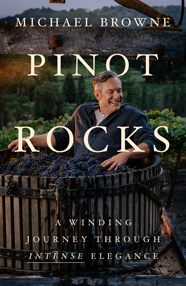
Michael Browne: Pinot Rocks: A Winding Journey Through Intense Elegance
Read the full transcript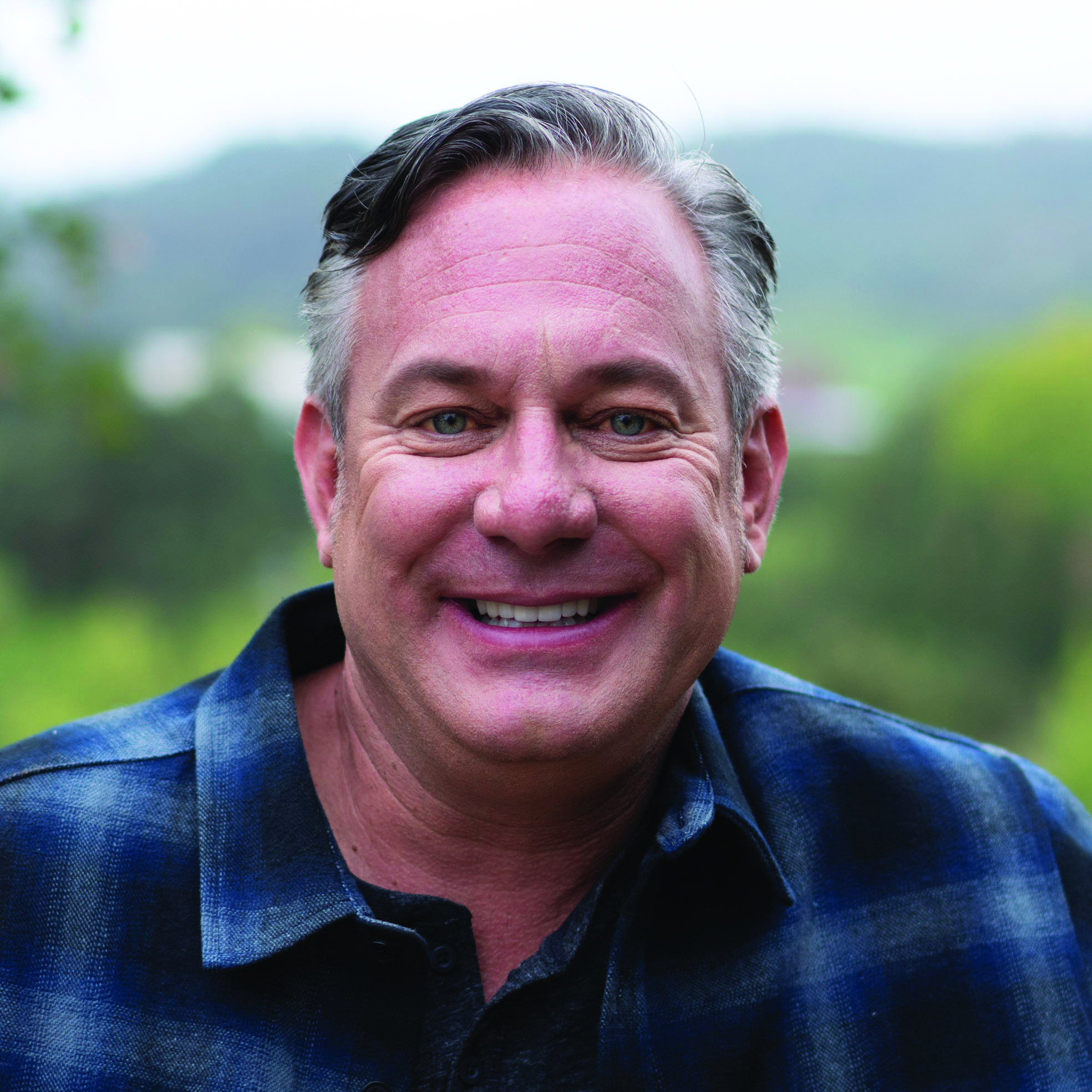
Michael Browne
Michael Browne is the founder and proprietor of CIRQ, a family-run estate winery established in 2009 by Michael and his wife, Sarah, in the heart of the Russian River Valley in Sonoma County, California. Inspired by their surroundings, their most recent pinot noir is a blend of Mother Nature’s offerings from vineyards around the region.
Michael, along with Dan Kosta, founded Kosta Browne Winery in 1997 with a used barrel, an old stem crusher, and six months of saved tip money. Since this humble beginning, Kosta Browne has been recognized by Wine Spectator as the #1 Wine of the Year in 2011.
When not crafting wine, Michael enjoys fishing, gardening, and spending time with Sarah and their children, Logan, Lauren, and Lyvia.
📚 Books by Michael Browne
Transcript
[0:00:27] DA: Intense but elegant, spirited yet refined. The complexities that describe Michael Browne’s wines describe his life experiences too. During his early work in the restaurant industry, he realized the simple beauty and potential of family and friends enjoying the perfect bottle of wine together. From there, Michael co-founded his first California winery, Kosta Browne, in 1997, with a few hundred dollars and a goal of helping people create meaningful moments with one another. In his new book, Pinot Rocks, Michael shares his journey and offers insight and inspiration for those who believe in the American dream and choose to never stop pursuing. No matter the goals you set for yourself, the book aims to motivate you to follow your passions and to turn your dreams into reality. Hey listeners, my name is Drew Applebaum and I’m excited to be here today with Michael Browne, author of Pinot Rocks: A Winding Journey Through Intense Elegance. Michael, thank you for joining, welcome to the Author Hour podcast.
[0:01:23] Michael Browne: Thank you, glad to be here.
[0:01:24] DA: Let’s kick this off. Can you give us a rundown of your professional background?
[0:01:31] Michael Browne: Sure, I started working in restaurants when I was 13, went through the restaurant business for about 25 years, that was in Washington State, and moved to Santa Rosa California in 87, continued on with the restaurant business and since I landed in the wine country which I didn’t really know at that time, I was exposed to wineries and vineyards and production and I grew up watching my father Bob Browne, he’s a craftsman and it really intrigued me, for some reason, I had a spark of entrepreneurship in my heart and my drive and I wanted to have a business as well so I wanted to be a craftsman and a businessman. Through my restaurant work, being exposed to vineyards and wineries, and I grew up in agriculture, it was tree fruit, not grapes but nevertheless, it intrigued me and I’d go to these wineries and I would see the vineyards, I would see the production facilities and I’d walked in to these barrel rooms which were filled with angels, you know, everything’s living there. I was very intrigued and I said, well, these people obviously have their businesses dialed in as well. It just kind of meshed, it kind of went together for me in my mind. I go, I want to do that and at a certain point, you know, kind of fumbling around in the world in my life, I decided, I’m just going to go for it and so I started volunteering at a winery called Deerfield Ranch in Kenwood California in Sonoma Valley. Not knowing anything about that, about wine, and I just said, I’m going to give this 10 years hard time, I’m going to study business, I’m going to study winemaking and see if it has some legs on it. And then, we got into business, we got in first barrel of wine and then we got into a real business, Custer Browne, I’m being very short here because it’s a long story but –
[0:03:25] DA: Yeah, there’s a lot.
[0:03:27] Michael Browne: Yeah, got into the business and we struggled for a few years, it was very difficult, just part of it, right? And then the thing started taking off and we just learned as we went, we were basically, what I tell people is we wrote the manual as we were going through it, day by day because there was no manual and the thing took off and then that was kind of the whole start. I mean, there’s plenty of other stories beyond that but that was kind of the start.
[0:03:59] DA: Sure, we’ll dig into all of that. Now, for the book itself, was there an inspiration for the book? Did you have an ‘aha’ moment recently or a few years back and so why was now the time to write it?
[0:04:10] Michael Browne: You know, it actually started four and a half years ago, actually before then, one of the main editors at Wine Spectator, a guy named James Lobby, I’d have lunch with him once or twice a year. We would talk about everything but wine, you know, fishing, family, travels, things like that. A really great guy and he goes, “Michael, you need to write your story,” and I go, “I’m not a writer, I don’t know how to do that.” He goes, “No, you need to write it, just do it this way,” and I go “Well, you're a writer Jim, I’m not a writer man.” He said, “Just dictate it and write it down at your time” and then I met Tucker Max from Scribe Media, right? And he goes, “Michael, you got to write your book” and I go, “I don’t know how to do that.” He goes, “That’s what I’m here for.” I said “Okay dude, I’m going to go for it.” So the inspiration, first of all, I had somebody that I could count on to help me write a book. My main goal was, I just want to write this down for my kids and my family. Because some of my ancestors and people in my family that preceded me, I wish I had their book, you know? I wish I had that. Just to know because it’s kind of like cave drawings at this point with some of these things. I just want to have it and I’ll give it to my kids and my family and maybe a few friends. That was my main goal, really. To just get the story down on paper and it took a while, but that was the inspiration for it, really. The seed that planted it.
[0:05:38] DA: Now, after finishing the book, do you still think it’s just for family or do you think it’s for people who are trying to break into the wine industry, do you think it’s for people who work in restaurants that they want to see a successful entrepreneur start a business and become successful?
[0:05:55] Michael Browne: That’s a good question, through the process, and I’m all about the American dream. I’m all about it and you know, that comes with hard work dedication, failure, risk, you name it, right? But it’s obtainable, it is obtainable and through the process of writing this book, I go, you know, this has an entrepreneurship side to it. I didn’t put a major stamp on that but it’s part of it. I’m not a big inspirational guy although I want to encourage people, you know? If you have a dream, if you think of something, and you have the wherewithal to get it done and you’re willing to work really hard at it, then you can get it. Doesn’t matter what it is, right? It’s just going to take time and it’s going to take dedication and practice. Practice is a major word for me by the way, you got to practice things. I wanted to put that in there and that comes towards maybe towards the end of the book or middle of the book but it kind of led up to that through this process of writing this book and it wasn’t my main intention but it came out because since I was a little kid, I wanted to have a business, I wanted to build something. I didn’t want to go work for somebody and do what they told me and have – I have no problem with that but I wanted to build something from scratch, make something, and it kind of turned into more of that sort of a book in my opinion anyway. Not by intention, just it was just kind of the ebb and flow of how it went.
[0:07:30] DA: Yeah, you actually tell some really interesting stories about your childhood and you were doing normal childhood things which is blowing up things around the neighborhood and being a little rascal but there’s an underlying narrative that you really seem to be into business and entrepreneurship. Is there someone that you looked up to in that world and can you tell us about those early days and maybe why the business and entrepreneurship stuck with you?
[0:07:52] Michael Browne: Well, there are certain people, you know, I used to pick up books of different people that had run companies or were building companies and I didn’t quite understand it too much but I took inspiration from that and that was from the 30,000-foot view so to speak. One of the guys that really helped me with entrepreneurship was Robert Rex at Deerfield Ranch. He taught me a lot about making wine, he’s a winemaker and he’s got a really cool winery. But he taught me a lot about just the persistence you have to have to run a business. That was very, very helpful and I have a few other friends that some of them are investors in my new business and some of them are not but they’ve built massive businesses and they’re open to discussion anytime. Yeah, I’m not going to name their names but they built some of the biggest companies in the country and we’ll sit down and have conversations and they all kind of say the same thing. One of my buddies, he told me this one time he goes, it’s all about concept, people, capital. You have a concept, you work on that concept, you have to capitalize that concept into business and then you get the people around you to help you with that business. Another one of my partners, I said, “How do you build a company like this man, how many employees do you have? This is crazy.” He goes, “Well systems, keep it simple, quality and then you pour rocket fuel on it” and I go, “What is the rocket fuel?” He said, “It’s the people” and it was very profound to me and I took that to heart and at this point, we have a great staff and without them, I couldn’t do anything I’m doing, really.
[0:09:40] DA: Sure.
[0:09:42] Michael Browne: It’s huge. Many different people and whether it’s through a book or through a video or through in-person conversations, they’re out there and it’s very interesting and the most successful people I know have the most humility and I think that is really cool, you know?
[0:10:05] DA: Now, you mentioned something before I want to bring up again and that’s practice. A lot of the early part of the book, you talk about your days in the circus which started from you know, being an assistant and then you practice your way up to X from riding a unicycle and being involved in fire acts. Can you tell us about your time in the circus and what lessons you took away from it that helped you later on in life?
[0:10:29] Michael Browne: Absolutely. It was one of the best times in my life and I grew up in a town, like I said, Wenatchee Washington and it was a circus, a youth circus, kids, you know? Wenatchee Youth Circus. This guy Paul Pew who really did wonders for me and there’s actually a statue of him in front of the YMCA in Wenatchee, and he’s since passed but man, what a wonderful guy. He was a principal of our junior high school. He started this thing, man, it’s got to be 75 years ago. Anyway, I was not into sports and I tried it all and one of my buddies was on the trapeze when I was 12 years old and he goes “Hey, join the circus, it’s really fun and it’s cool and there’s like 80 kids” and I go, “I don’t know how to do anything in the circus.” He goes, “It doesn’t matter. You just move mats around the show and then we have a good time before and after the show, right?” I go, “Okay,” I was very intimidated, I was like, holy smokes man, these guys are flying through the air and riding unicycles and doing stuff, I’m like, “How do you do that?” But I was intrigued by the unicycle act. They did this pyramid where like five people will be on the unicycles and then four people and three people and then one person and they would ride this unicycle pyramid. I go, “I want to do that.” So for Christmas that year, my parents got me a unicycle and I would ride that thing all over town, practicing, right? Up and down hills, on sidewalks, I would jump the thing. The next year, I was on the act and I thought, well, I got that done, what else can I do? I want to be on the fire eating team, right? Because that’s cool, you know? There’s part of the book in there that has some stuff about fire and explosives and things. But anyway, I practiced and I practiced and I practiced and they go, “Okay Michael, you’re on it” and my step mother at the time made my uniform for me, right? Big flame down the front and all that stuff. And then I said, “Well, I really want to be on the high wire” and we practiced on this wire about two feet off the ground and I learned how to do it and I’d ride the bicycle on it and everything and then the day comes where I had to go 25 feet in the air on this thing. There’s a net, but even still, it’s like, a little sketchy, you know? I sat there for 15 minutes and I know how to ride the bike on the high wire, or the wire, but now I’m on the high wire and but I practice hard and I said, “I’m just going to give it a go” and I went for it and then they said “Hey, what about the bullwhip Michael?” Then they started asking me, “You want to join this act?” I used to take a bull whip and crack things out of people’s mouths 15 feet away. Then I said, “I want to be on the trapeze.” But I’m not a flyer, I’m not an acrobat. I was more – not necessarily a strong man but a sturdy guy, you know? They said, “You want to be catcher on the flying trapeze?” I said yes. It took me about 10 months of practice to work on that and get my body in shape because it’s very physical and then I was on that. By the time I was 18, six years later, after I started, I was one of the main guys in the circus, I was doing quick changes and I was running around and I got to put this costume on, that costume on, and it taught me this lesson. It taught me about, again, hard work, dedication, failure, risk, reward, showmanship and again perseverance. I translated that into business when I had the opportunity. It was very similar within the wine business and I think within any business for that matter. Where you start – you know, “how do I do this, what do I do? What’s going on?” Well, you got to put both feet in and go for it and you're going to fail and that’s okay, you're going to have some success, that’s great and you do what is successful and you try not to do what’s not successful, but things are going to fail, anytime. Then you’re going to see some successes and I’ve witnessed that, I’ve been through that and to this day, I mean, hopefully everything works out but nothing is a slam dunk, nothing in life. Especially in business so that’s what I learned in the circus and it was extremely valuable to me and you're going to put that towards sports as well, right? Football or baseball or whatever, whatever you get into. It can be profound but it might be profound later in your life, you might not understand it when you’re doing it, right?
[0:15:10] DA: Now, you moved on in life after high school and after the circus, you went to LA and you started working in some restaurants and other places while getting your associate's degree and while you were working in the hospitality industry, it sort of opened up the world of wine to you. Can you tell us about the early days and how you transitioned from a weekend wine taster to somehow the lightbulb going off in your head and saying “Hey, I’d like to do this on my own.”
[0:15:35] Michael Browne: Yeah, there’s a lot of stories behind that but when I was a teenager, I worked in a nice restaurant in Wenatchee, The Thunderbird, it’s now redline. I saw this big wine cabinet and I was doing inventory with one of my buddies, and I couldn’t pronounce any of the names, anything. And I was like, “What is going on here?” I didn’t really dive into it but then when I moved to Santa Rosa, in the restaurant business down here, it’s a little different because there’s wine everywhere and great food everywhere. This was in the early 90s timeframe or yeah, something like that. Anyway. And then on Mondays, me and my buddies from the restaurant, we had the day off so we’d go on what I call the cannonball run. And we go, “Where are we going to go today?” Napa, Alexander Valley, Dry Creek Valley, Russian River and we’d go hit as many wineries as we could and you know, some days it was a little bit of a drunk fest, I gotta be honest and I’m not sure how we got home but you know, we were dumb kids at that point but it was really cool and it opened my eyes to it and my epiphany moment, I got to mention, you know. One of my good buddies, he’s still a friend of mine, he told me many, many years ago, probably 30 years ago, “Pinot Noir is the wine, the grape” and I said, “No it’s not, I like Zens and Cabs and Pinots are light and insipid and no character,” and this group of restaurant friends I had, there was like 25 of us, we’d go on the Russian River Barrel Tasting, it’s in March I believe every year and we’d always have a potluck at some winery and we’re at this winery having a potluck and Margie Williams showed up and she’s the daughter of Burt Williams from Williams Selyem. It’s hard to get William Selyem wines at that time, really hard. She brings out like six bottle of wine that she had from a tasting earlier in the day and I said, “Oh I want to taste these wines, I’ve heard about them,” and I tasted through a few of them and then one, it was a 91 Allen Vineyard Pinot Noir, out of Russian River Valley. I poured a glass and I smelled it and I’m like, “What the heck is going on there?” I’ve never smelled anything like that. It kind of blew my mind and then I put it in my mouth and how I explained it is, my head came off my shoulders, spun around, reattached in a different way. Because it blew my mind, right? I want to do that, I want to make that but I had no idea how I would get there to be able to make something like that. I pondered that for a long time and that’s when I decided again as I said earlier, I’m just going to give this 10 years hard time and go for it. That’s what I did and I’m not saying I made a wine like that. I‘m just saying that that was my goal, right?
[0:18:31] DA: Now, you had an internship at a winery, was this the main way you had your wine education? There’s a constant theme in the book, you said, “work hard, learn along the way, build lessons, make mistakes.” Was your wine internship the main way that you really learned how to make your own wine or was there other resources available, other mentors that you had?
[0:18:56] Michael Browne: The internship was the door that got opened and I took that, when I decided to make it, it’s like well, I can get an internship at some of these big wineries that I had connections with but there was this one guy, again, Robert Rex from Deerfield Ranch and Winery, I called him one day and I knew him through his son in law and I helped him pick some grapes one time and I’d go up there and help him make a little wine now and again and I really liked the guy, he had something about him, kind of a renaissance man, you know? I called him one day, I was living in Seattle back at that time, I moved back up there for a while and I said “Hey, I’m going to move back to Sonoma County, I want to make wine, can I make wine with you? Can you teach me some stuff?” He goes, “Absolutely but I can’t pay you.” I go, “I’m not concerned with that. I’m just asking, can you help me learn how to make wine?” He goes, “absolutely.” So I came down and I worked for a year for no money and I worked at the restaurants at night and he taught me a lot, you know? One of the things he taught me was, “Here’s how you do it, now go practice it”. I would ruin things and I would mess things up and he’s like, “Did you learn something?” I go, “I think so, I’m not quite sure, I don’t know. Sorry I messed something up,” and he was very supportive and he’s still a good friend today and I worked with him. The next year he started paying me and I go, “Oh my gosh.” My main goal at that point was just to get a business card that said assistant winemaker on it, right? If I can get that man, that’s a good goal because that’s unobtainable, right? In my mind. Anyway, I went for it, I got one eventually but it was more about just the practice and the effort and the hard work and the learning, right? Constantly. I worked for him for eight years and during that time, we had Kosta Browne going at the same time and I had a restaurant job and it was seven days a week, you know? And a new baby, right? He’s now 19 years old, there was a lot going on and at some points, I wanted to give up. I didn’t tell the story in the book, I should have but it is the rhino story. I wanted to give up so bad and I lay in bed at night going, “I want to give up. I just want to go back to something normal” but then I go, “I can’t. I got to keep moving forward” so I would envision myself in a rhinoceros suit and I am not talking about a Halloween style costume. I am talking about a real rhino because a real rhino can bust through any wall, right? Any obstacle. I still use it to this day and I will envision that and it helped me through a lot of hard times as far as obstacles go, right? And I just kept learning and kept learning and the business kept growing, our business kept growing and then eventually I can just do our business without having other income and then we just kept moving forward. And then there was also other people when we were making a Deer Field Wine at this winery, a custom crust facility in Santa Rosa and there were other winemakers there, a lot of really great ones, Jeff Bezone, Andy from Dumal, a bunch of people, Mike Officer from Carlisle, all of these really great winemakers and I had run around going, “Oh, how do I do this?” and I would just go, “Okay, I got this problem guys. How am I going to get through?” Adam Lee is another one, you know and I would call these people or talk to them and they would give me little tidbits of advice and I would take whatever made sense to me and apply that, right? Because you got to be your own person. You got to have your own thing and you got to kind of flow with the jive within yourself. So a lot of those people and there’s also friends today and really great people and one guy, this guy named Fred Scherrer. He’s got Scherrer Winery. I believe it is spelled Scherrer, something like that but anyway, a wonderful guy and he grew up on a farm in Alexander Valley and he has been making wine for ever – all the time and worked for Tom Dellinger and he’s still making wine and I asked him one day. It was probably, I don’t know, 12 or 15 years ago. I said, “Fred, you’ve been doing this for a long time, making wine, and I am struggling here man.” I said, “When did you get it? When did you understand it?” And he says, “Michael, I’ve come to figure out it takes two consecutive adult lifetimes to figure it out” and I go, “Wow, nobody has that,” he goes, “Exactly.” And another quick story, I was down in Australia and I had dinner. I was at a summit in some wine symposium or something and the first night, we had dinner with 10 people and O’Bare from DRC was there. I was sitting right next to him and I go, we’re talking and small talk and I go, “I’m just going to turn around and talk to O’Bare Dave Lin,” right, why not? I asked him a similar question, I said, “O’Bare, your family has been doing this a long time. You had the best Domaine in the world and you do amazing things” and I said, “When did you figure it out?” he goes, “Oh Michael, no. You never figure it out” and I’m like, “Okay,” and I found great comfort in that, both of those guys, you know? I go okay, it is a constant pursuit and I believe you take that within any business. Any business, right? You’re never going to figure it out, you just gotta keep moving forward and keep trying things and keep practicing you know?
[0:24:40] DA: Now but there are successes along the way and you mentioned you were working multiple jobs, you had started Kosta Browne but something happened at one point that made your product skyrocket from the scramble to make 30 cases a year to producing over 3,000 plus, just a few years later. What was that transition like?
[0:25:00] Michael Browne: It was awkward, in one word. Awkward. So we are doing our thing, I am just figuring out how to make wine and this is the same time period I was telling you about, what these guys are telling me they can’t figure it out or I can’t figure it out. I’m like, “Oh okay, all right well I am going to try to figure it out.” It was a 2003 vintage and I picked too late and it wasn’t by design. It was just I didn’t know what I was doing and the pickers were all taken. So I made some pretty big wines, fairly high in alcohol and I go, “Oh man, I’m going to get murdered for this and oh god” because they got to be a certain way and oh, they had to be this way or that way and then I started tasting people on them. They’re like, “Whoa, this are good! Wow!” and I go, “Hmm, I might be onto something here.” It was intensity but it was lacking some elegance, right? But people are into it and we brought those wines to World of Pinot Noir and this is in 2005, right? When just after Sideways, the movie hit right?
[0:26:01] DA: Oh yeah.
[0:26:02] Michael Browne: The Pinot Noir movie, it was just the same timeframe. We started getting a lot of attention on the blogs and all of these things and people are like, “Oh wow, what are these wines all about?” and they were really digging them and in my mind, I’m like, “Oh gosh, I screwed this up” you know? But people are really liking them and then there’s one day that I went to a meeting with my two other partners, Chris Costel and Dan Kosta, because we were trying to figure out, because this thing took off, started taking off. I get to Chris’s front porch at 7:30 in the morning and Brian Lauren calls me. He says, “Congratulations” I go, “For what?” he goes, “You just got the highest rating line of the Pinots ever in the Wine Spectator” and I said, “What? What do you mean?” and they were like blown out scores and I go, “Oh my god” and then I felt like I was alone in the middle of a stadium, I couldn’t see anybody but all the lights were on me because I then had to do it again, right? You can’t be a flash in the pan and that is when it started taking off. Then the next year, ’04, I did the same mistake, picked too late. I’m like, “Oh my god, another hot vintage”, I’m like, “Dang” and I worked those wines and it took forever to ferment them and I’m like, “Oh god, I hope this works” and then Spectator comes out and gives them better scores, and one of them was 98 points. There’s only been two 98 points of Pinot in the Spectator you know? I’m like, “Holy smokes,” and then the next year we got number seven top 100 and then we got number 11 and then number 20 or something like that and then we got number four and then in 2009 vintage in 11, we got number one wine of the world in that magazine. I’m like, “How is this happening?” you know, we’re just a bunch of amateurs here but I said I am going with it. I am just going to go with it and we kept going and you build confidence and then you study your craft. You study your craft, you detail your business, you get your finances under control, which is key, key in my opinion and then you get the right team around you and so we’ve been doing that ever since. Then onto the next phase was Cirq and Chev, you know, my two new brands. So anyway, different subject but it took off pretty quickly and it was like a tiger by the tail for a while but we managed to pull it off. We built a really cool winery in Savast Full, which Kosta Browne still has. Duck Horn owns it now but really great place and again, we started in a little tiny building way back when.
[0:28:45] DA: Now you get a lot of questions from people who want to get into wine. Can you tell us some of those burning questions and maybe why you tell some folks not to get into the wine business?
[0:28:57] Michael Browne: Yeah, for sure. I’ll preface by saying that I used to encourage a lot of people to do it because that’s what I did and then you kind of see them go different ways and all of these different things and then you see some of them succeed but it is a hard road and some of them crash and burn and it’s a tough road and I’m just like, “Hey, it worked for me. Why don’t you do it?” and then I kind of backed off that for a while and I said, “Here’s what you want to look out for.” It was a different tone. Here is what you want to look out for, go for it but here are some pitfalls. The winemakers for example, study your craft, find somebody or people that can help you in your craft because say you’re a Luthier, a guitar maker, you want to learn from somebody who knows what they’re doing and then you want to take it on your own at some point but it takes time. You have to have patience. You can’t just come out there and take it. And so I still encourage people to do that and we have some great people that work with us and other people I know that’s like, “Go for it. It is just going to be a long road.” There’s nothing wrong with that, it is actually very enriching, you know? And then there’s people that they come in and they just want to, it’s maybe a vanity project for example, right? Well, get ready to waste some money, get ready because it is really hard to make money in the wine business. Some of these people, they come up to me and they say, “Hey, I am going to buy a vineyard. I want to make wine” and I go, “That’s great.” Immediately I say, “Do you know what a sailboat is?” They go, “Yeah, it's something you dump money into” and I say, “A vineyard is something you dump sailboats into.”
[0:30:35] DA: Sure.
[0:30:36] Michael Browne: I say go for it. There are pitfalls in this whole thing, like any other industry, but it is a tough one and there is lots of competition and the market fluctuates and everything and again, it comes back to quality and branding and marketing and all sorts of things but you have to – you know I’ve heard this one guy, what’s his name, he used to run Kenwood Winery many, many years ago. His first name is Mike. Anyway he said, “Don’t take a shotgun approach, take a rifle approach.” You don’t want to have 20 different wines out there, just focus, and that made a lot of sense to me as well because then the market understands who you are and how you do it and then you can focus on that in your winery, right? I was like, “Well, I’m going to make Riesling and Cabernet and Merlot and Chardonnay and all of these different wines.” Well, what are you really focused on, you know? And some people can do that, there’s no doubt but you look at the great brands in the world, they’re pretty much singular focused and that is what I take influence from so to speak, are these brands that you know what, we make Cabernet or we make Merlot but we’re Chardonnay producer or we’re a Pinot producer and nothing wrong with branching out and doing a bunch of other stuff. It’s just a little more hard to deal with, you know? So yeah.
[0:32:01] DA: Now towards the end of the book, you really dig into the business of wine and do you feel like you’re giving away your sort of secret recipe for success in the book or is the wine industry really where peers really help others trying to come into the business?
[0:32:17] Michael Browne: I’m not telling all of my secrets in that book. Yeah, that is just a broad overview from my opinion. There’s lots of other things to talk about but one thing that is really cool about the wine business is yeah, we can – especially with the growers and the winemakers, we share everything. Nobody hides any secrets, I mean some people do but very few and then marketing is marketing, right? Everybody is kind of out there to do themselves or do what they can. It is pretty cohesive. I didn’t get into the super highly detailed aspects of winemaking or business management in the wine business. It was just an overview in this book. Kind of like, “Here’s some do and don’ts” right? Here is how we did it and here is how I kind of look at it and you know that is just my point of view. I didn’t give up any secrets at all. I mean they’re all out there. I mean people that have worked with us know the same thing. We have talked about it and they kind of go off and do their own thing and there’s plenty of people out there that, they know all the stuff already. So again, there’s no secrets or nothing, there’s a few like I said but what I wanted to do and it is focused on the wine business because that is the business I’m in but I wanted to kind of hopefully translate that. It doesn’t matter what business or industry you’re in, here are some fundamentals the way I see it. Just the way I see it, right? Again, then I get into some of the things about do’s and don’ts and I would be careful and there is these kind of people that get in for this reason or that reason, but you just got to be careful, that’s all.
[0:33:57] DA: Yeah, now I want to flip this around for one moment. For the amateur wine drinkers out there, do you have any pro tips for them or anything that you wish that they knew, anything that you think they should know or should look out for?
[0:34:12] Michael Browne: Yeah, absolutely and a great question. It can be a very intimidating world out there. You go to a grocery store or a wine shop and there’s hundreds of bottles. “Oh, what do I pick and how do I pick something?” and a lot of people are intimidated to ask a question. At a grocery store for example, it would be hard to find somebody that’s going to direct you to what you want. So what I always suggest to people in whatever town they live in or city, go into a wine shop. And you can go in a grocery store and just grab a bottle of wine. It will be a good bottle of wine typically, you know? Nothing is going to be rancid but if you are interested in it and you want to learn and you want to explore, go into a wine shop and ask the person that’s working there, “I am looking for a wine, not sure what I want” and the person working in there will most likely be very knowledgeable,”what kind of wine? White wine, red wine, let’s start there. Do you like dry, do you like tart? Do you like sweet, do you like robust? Do you like lighter reds?” And then they’ll qualify you and they’ll go, “Okay, well try this out. This might be up your alley.” You take it home and then you go back to the place and you go, “You know I like that but it was missing this or had too much of that” and then the person will say, “Okay, let’s try this one” because then they’ll build on, they’re are starting to learn what your pallet is and then before long, they are going to call you and go, “I got something right up your alley, check this out.” Then overtime, it doesn’t happen overnight, but overtime, “Man, check out this Alsatian Riesling or this Montrachet or this Chilean Red” or something, you know, because the world of wine is vast. Vast and that’s the cool part about it. There is something for everybody but it takes a bit of exploration and then on the flipside, if you just want a glass of red, go to the grocery store and just look at, “Oh that looks kind of good, maybe I’ll take a Merlot home or a Cab or something or a Pinot” or whatever it may be. And “Wow, I like that. That was cool. It added something to my evening” you know? That’s as simple as it gets and that’s a beautiful thing, beautiful thing and then on the other side, you get people that really study this stuff, really get into it, which is also really cool and they dive into it hard because it is a very interesting intellectual process, not only sensory but in your mind. What’s this really doing? Where did it come from? Who made it? What’s happening here? But what it really breaks down to is, do you enjoy it? Was that an enjoyable experience? Did that taste good? It’s like, “Well, you know that chicken dish was lousy” or “This chicken dish was great.” There’s different analogies we can use on that but yeah, I just suggest people, if they are really into it and they don’t know anything or they know a little bit, jump into a wine shop and make your relationship and if the guy’s a jerk or you don’t vibe with him, well then go to a different wine shop. It’s a free world.
[0:37:27] DA: It is a great tip, talk to the wine shop employee and write things down and remember what you liked and what you didn’t like. Now, one last question for you and I have to ask this as a successful winemaker, how do you feel like the Rose revolution that’s happened over the past few years?
[0:37:44] Michael Browne: I love it. It’s awesome.
[0:37:47] DA: Nice, have you made your own?
[0:37:49] Michael Browne: Oh yeah, we had a commercial Rose for Kosta Browne for a few years. It didn’t make economic sense the way we make wine but I love Rose’s. Rose sparklers are my favorites and Rose wines, there’s something about them. It is a white wine basically but it’s got a little different kick to it and yeah, they have different flavors, very refreshing, delightful wines, delightful wines and you don’t have to think too hard about them. It’s just something to enjoy on a warm summer evening, so to speak, right? Yeah, I think it’s a wonderful thing. I think Rose’s should be way out more in front than they are now but they’re getting out there, you know? My wife and I just had a lunch up at a restaurant in Hillsburg and they had a Rose lunch and it was wonderful, beautiful thing.
[0:38:41] DA: And that’s wine drinking is supposed to be about, right?
[0:38:44] Michael Browne: Exactly, enjoying it and what I say, I’ll just finish with this unless you have something else but you know I talk to people quite a bit about our kind of, one of core foundations as far as philosophy and what I like and I think it is within all of our primal DNA is you know, we sit around a fire, we maybe put on some good music, we have some kind of food perhaps, right? And then maybe a bottle of wine but all of those things add up to one thing in my opinion. They add up to good conversation and I think that is very, very important especially in these days when we are all on our phones, our devices and all of these different things. It is very refreshing to be able and right now it is kind of hard because of the pandemic and all of that stuff but I think it is very important for us to sit down and have a conversation and all of these different things I just mentioned can lead up to that and it could be one of them, it could be none of them. It could be just a conversation. It could be all of them, which to me is like the best thing because you got all of these different elements and to me, a bottle of wine and you know, a bottle of our wine, I don’t think it needs to take center stage. It is just an accent to an evening, right? It is just an accent. It opens it up for people to sit back and relax at the end of the day, have a really good conversation and listen. Feel the warmth, taste something good and again, have a good conversation. I think that’s it.
[0:40:17] DA: Michael, thanks so much. Writing a book especially like this one, which is super entertaining and also really educational about the industry is no small feat so congratulations and this has really been a pleasure. I am excited for people to check out book. Everyone, the book is called, Pinot Rocks, and you can find it on Amazon. Michael besides checking out the book, where can people find you?
[0:40:39] Michael Browne: I have two different brands, Cirq is one of them based on my circus days. I’ve had that for about 10 years and that website is cirq.com. My new brand is called Chev, it’s got a different spin on it. It’s more regional in approach and that is chevwines.com and there’s also brownefamilywines.com and that’s where the book resides and so Browne with an E familywines.com and they are all tied together. It’s just some different elements you know? So that is how they do it and on those websites, there is a direct line into our office and I’ve got a great staff, a very small staff but they’re at the ready anytime, whether it is email or phone calls or whatever people need, you know?
[0:41:32] DA: Awesome, Michael thank you so much for coming on the podcast today.
[0:41:35] Michael Browne: Thank you, I appreciate it.
[0:41:38] DA: Thanks for joining us for this episode of Author Hour. You can get Michael Browne’s new book, Pinot Rocks, on Amazon. Also, you can also find a transcript of this episode and all of our other episodes on our website at authorhour.co. For more Author Hour, subscribe to this podcast on your favorite subscription service. Thank you for joining us, we’ll see you next time. Same place, different author.
Want to Write Your Own Book?
Scribe has helped over 2,000 authors turn their expertise into published books.
Schedule a Free Consult