Patty Beach: The Art of Alignment, A Practical Guide To Inclusive Leadership
Read the full transcript
Patty Beach
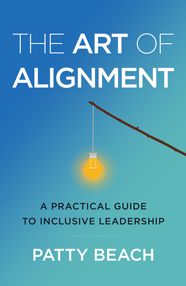
Patty Beach is the founder and CEO of LeadershipSmarts, a master certified coach, and a TEDx speaker who has helped thousands of leaders align diverse teams, build psychological safety, and inspire lasting commitment. Her leadership development approach has evolved over twenty years of designing award-winning programs for companies, universities, nonprofits, and government agencies. She earned a Master of Science in Organizational Development from Pepperdine University and is an ICF Master Certified Coach, and she previously worked as a geologist and manager in the energy industry. In her bestselling book The Art of Alignment: A Practical Guide to Inclusive Leadership, Patty offers real-life stories, proven principles, and step-by-step advice for getting any group to agree and commit.
★ Scribe Case Study
Patty Beach’s Book Tripled Her Coaching Income and Carried Her Message Across the Globe
After 25 years in leadership development, Patty Beach provides business leaders a new model for success. Read more on the Scribe blog.
📚 Books by Patty Beach
Transcript
[0:00:31] DA: Leadership often seems like an uphill battle. The problem is most leaders don’t know how to get people aligned behind a good idea. It could be practically impossible to get everyone on the same page, much less moving forward together. But, imagine if you were a leader who could? In her new book, The Art of Alignment. Patty Beach aims to help business leaders move projects, initiatives, strategies and ultimately, the mission and vision forward. The step by step guide explains how to introduce new ideas and to get any group of any size to agree and commit. You’ll even learn how to get your team members back on track when things fall off the rails. Hey listeners, my name is Drew Applebaum and I’m excited to be here today with Patty Beach, author of The Art of Alignment, A Practical Guide To Inclusive Leadership. Patty, thank you for joining, welcome to the Author Hour podcast.
[0:01:24] Patty Beach: Thanks Drew, I’m excited about this.
[0:01:27] DA: Let’s kick this off, can you give us a rundown of your professional background?
[0:01:30] Patty Beach: Yeah, I am a leadership development consultant and I provide executive coaching, leadership training and professional facilitation for leadership teams that are trying to make decisions and come together as a team. I’ve been doing this work for about 30 years, prior to being a coach and working as field, I was a geoscientist so I used to be an earth scientist and now I’m a social scientist so there was switch in my career back quite a ways ago but for many years now, I’ve been coaching leaders, CEO, emerging leaders or yeah, all day every day.
[0:02:08] DA: Now, was there something that inspired you to write this book? Did you have an aha moment? Why was now the time to write it?
[0:02:16] Patty Beach: Well, I have been using the facilitation technique to help leaders come to agreement, especially in situations where it’s like sticky or politically sensitive or difficult, they would call me in as a facilitator to support them in making decisions. What my style is, whenever I’m working with leaders is not just come in and facilitate but actually to teach them a technique and then use it live so that later on, after I leave, they have that competency baked into the team and they’re able to work at a higher level. It’s not just never satisfied with just come in and facilitate and leave. I developed this technique many years ago and then I started using it in coaching. One to one with leaders, I would help leaders learn how to rank teams together and to create alignment. Alignment is one of those universal tools, it’s kind of like the basics of leadership, you can‘t get people in its room to get on the same page and come to agreement, take action together, you’re not really leading because in the end, leadership is not about what you do, it’s getting other people to do things, move toward a goal. This basically the heart and soul of leadership, a lot of the leaders I was working with them to be useful. I started writing the book actually several years ago, just to put it down on paper and to be able to share it with more leaders beyond the people who happen to be working with me personally and also to teach coaches how to use it, that might be working with their clients but I have to say, right now, it’s such a timely thing because there is so much disruption going on, there’s new technology, there’s social justice movement and there’s all these disruption and so leaders really need to learn how to quickly align and realign you people around these new pressures that they’re facing. That feels really timely even though this is a universal skill and need all time, all day every day. In a way, it feels just almost serendipitous that happens to be coming out 2020 when you know, this is one of the critical skills of leaders need to have in order to get through the pandemic and reorganize their office and the constellation of how they’re different employees are working together because they’re not collocated, it’s consider it to be a lot more intentional about creating alignment.
[0:04:30] DA: Now, who is this book for? Is it strictly for business leaders or could this be for cultural leaders as well?
[0:04:37] Patty Beach: Well, I wrote the book for business leaders because that’s primarily my market, most of the people that I work with are either leaders in business or they’re a nonprofit organization, which you know, basically you have that organizational structure of your senior leader and then your mid-level management and compound leaders at the bottom. What this does is it teaches people how to work top down, bottom up or cross the organization so it’s ideally suited to that but the concept could be used for alignment with anybody that could be used with sisters trying to decide what to do with grandma’s house or it could be used for people trying to get their kids to do chores or it could be used to claim your funeral against your family to understand what you're wanting. It could be used for any of those purposes and I actually really hope that it’s used for the purposes of the causes I care about like climate change or we see a lot of these things like climate change, social justice, poverty, hunger, these are ginormous issues and we can all talk about the problem but there aren’t that many people talking about the solution and settling on a solution, getting action towards a solution. This is a perfect vehicle to support people who are trying to move things together that they don’t have power of authority over each other like you’re needing to get volunteers to do something or you’re on a board and you share power equally. It’s useful really in any scenario. I like to say, now, what it does is you’re driving toward one goal which is alignment, could be around anything, strategic plan, decision, could be like I said, we’re going on vacation so you want alignment when everyone agree and feel good about it and that’s not a selling and telling proposition that is a co-creative process where people are so involved in helping you take that idea which maybe your idea or maybe I get a merch from the group and come to such a level of agreement that they feel jazzed about it, fire to do it. If one person walks out of the equation, it still happens, that’s alignment. You have one goal alignment between two or more people that could be you and one other person could be you and 2,000 people and how do you do that? In my book, we outline three principles, four steps and five Cs, so it’s 1,2,3,4,5 and basically, what it does is it codifies, it demystifies how do you get all these people in a room and get them to make whatever idea it is that you need to get agreement around stronger, better and have it be co-owned by people so that they’re as jazzed about it as anybody in the room. That’s basically the premise of the book. The other part of this book in addition to giving you a formula, what I call a memorable success formula so that you, once you learn it, it becomes almost like a road map that you use in your mind so you maybe use it implicitly, kind of behind the scenes, nobody really knows you're using it or you could use it explicitly, like you can put a big poster on the wall, here’s the four steps and what to do so that everyone can follow that structure so it’s useful that way but it also includes tips on how to handle what happens when you’re trying to get people to come to agreement as often times they get kind of triggered by things, you know? I’m trying to get people to decide for example how we’re going to change the compensation structure and organization, that can be really hot topic, Anytime you bring people into that conversation, you need to create the right environment, the psychological safety so that everyone is able to bring their voice in the room and become transparent and when it happens, then you can see where you have alignment, where you have misalignment and as a leader, you need to be able to handle those different variables so the process supports that but additionally, have tips and advice for what to do with those invariably one or two people kind of fall off the rails so to speak, you know? They do disruptive behaviors which can prevent alignment so it gives you some ideas how to handle that and that shows up.
[0:08:40] DA: Now, were there any learning’s you had during the writing of the book? Maybe through research or the introspective journey?
[0:08:48] Patty Beach: Yeah, as I was writing the book, as I said, primarily, I started this with just like here’s the facilitated technique, the four steps of alignment, the five C’s for gathering feedback and I knew that this formula generally would work like you could get people here in continuous relationships and get them to talk about those series of contention in a respectful manner so they could come to agreement. But then when I started to translate that and how do we take this process and then use it for any leader to create alignment without a facilitator, self-service so to speak. I came to realize that one of the key issues is that leader’s egos can get attached to the idea they want to move forward. They’ve been so socialized that the way to get alignment is to you know, top down command and control, old school or to get buy in for their ideas. You know, they were starting to break loose of the idea that had to be my idea but we get attached to their idea and when that attachment is they’re early in the process then it hampers the co-creator process for people to come in and help you improve it and get it better. As I was writing the book, I was doing a lot more elaboration on that topic, how do you work with your own self, right? So that you’re prepared to work co-creatively and inclusively with people and that it’s not about whether your idea is the one that comes out at the end, it’s about, what everything I did is the goal that we’re trying to move toward, how can we get an idea out there and engage this brain trust to make it better. You have to have faith that you put an idea out there and it is sound it will move forward, if it’s not sound enough, it will get better, or if it’s unsound, you’ll discover it’s unsound and you have to just let go of it, go okay, well, you know, great. I’ve moved a bad idea off the table. You know, that’s kind of one of the outcomes that you know, it’s hard to think about as a positive outcome because we’re so socialized that you only win by convincing other people your idea is the right idea. This book is basically kind of turning that part on its ear and say no. As a leader, that’s not your job, your job is set the goal, vision on where you’re going, get ideas out there and then get people working co-creatively until it’s gone from divergent thinking to enough convergence that we can take clear action based on what we’ve been talking about. It’s a paradigm shift really from how a lot of organizations operate.
[0:11:17] DA: Now, what will readers not get from your book? Because you mentioned this early on.
[0:11:25] Patty Beach: Yeah, I mean, they won’t get like how to win every – how to – they’ll have their power of influence if their ideas take hold and they get momentum behind them but they won’t learn how to make things happen in a New York minute. If you’re going to work inclusively, you’re going to bring diversity of opinions into the room, you have to be patient, you have to understand that it’s an iterative co-creative process, it’s not a one-and-done and most people that work in organizations know this. They know that you know, you get everybody in a room, it’s not likely they’re going to come to agreement that one time they’re in the room, they’re going to have to come back in the room, you know, et cetera, I think there’s that – it’s not going to give you that sort of silver bullet that okay, take your idea and it’s going to take hold in a big organization tomorrow or create a whole organizational change in a shorter period of time. But the premise of it really is not so much speed as not – you know when you are trying to get a lot of people to do things it is not usually a fast process. I mean there is this African proverb that says if you want to go fast, go alone and if you want to go far, go together. So this is about going far together. It is not going to tell you to have force change into organizations. It is not going to give you something that will allow people to do things they’re not really wanting to do so.
[0:12:47] DA: You use an interesting term in the book that I have never heard before, could you tell us what a goat rodeo means?
[0:12:54] Patty Beach: Yeah, so a goat rodeo I mean I am sure like everybody experience this, you get into a meeting and somebody says, “Hey, how about this?” and then people just jump in and they talk randomly about it, you know? Like, “Oh it’s a good idea. That’s a bad idea. Well, we already talked about that, we made that decision a long time ago,” you know? So things just bounce all over the place. So I just imagine like a goat running around in the arena. But you know a similar analogy is the pinball machine like you get an idea out there and everybody is batting around the pinball and then the balls fall down the hole and then where did they go? And so that is usually what happens in a meeting. Most of the time, meetings are not where decisions happen. It’s either the meeting before the meeting or the meeting after the meeting. You know the actual meeting where decisions is supposed to happen, I mean half the time you are sitting in there. And like, “What did we decide?” even when something is decided, people aren’t clear what got decided. So they walk out of there more frustrated than when they came in thinking, “Great, finally we’re going to make a decision,” but then that happens over and over and over again in organizations that decisions get kicked out to further and further because you don’t have the right people in the room or they are not talking about it in the right way or so and so is the heavy in the room. And so we can’t really talk about that because there is the elephant in the room, which is towing around. So this book gives you lots of practical tools and models, what I call memorable success formulas so that you can create the right environment to bring the right people in the room, distribute the authority accordingly. So that some people may just be giving a voice about what should happen and other people may have a vote of what happens. So not everybody gets a vote, an inclusive process. We are putting as many people as possible, how do we do that efficiently and how do we do that in a manner that allows people to tell the truth because there are just so many ways that people hide out. You know they sit on the sidelines, they nod their head. I saw your just nodding, it means nothing. It doesn’t mean yes, it doesn’t mean I agree, it doesn’t even mean I heard you, right? It is just what people do, right? So how do you make visible what they are thinking in that room? So you get those ideas out there because you want them. Everybody’s reaction, their opinions, what’s getting them their heart beating faster because they are excited about it, you know you want that to be elaborated on. I always say that good leadership is about healthy deliberation on topics that matter. So how do you create that environment for healthy deliberation?
[0:15:31] DA: No matter how hard you try, I think you are going to run into people who take things off track and you talk about them as disruptive behaviors. Can you tell us what some of these disruptive behaviors are and what to do about them?
[0:15:46] Patty Beach: Yes, so first of all I like to say that these disruptive behaviors come from an unmet need. So when people get into a room and they are going to make decisions, there is a lot at stake for them. You know their personal reputation, their credibility in the organization, they may have resources they have to give up. So there is a lot that is going on under what is visible. So as a leader, you want to identify when people have an unmet need. And instead of getting in a healthy manner in participating and bringing their voice in the room, they’ll try to get that need met in an unhealthy way and so examples of those disruptive behaviors are grandstanding that’s where somebody may be dominates the conversation so that all of the voices are being heard or you might have the opposite, somebody who sits on the sidelines and they don’t say anything. You may think, “Oh great, we’ll get to learn it faster when they don’t talk.” But actually, you don’t get to line it faster because you have no idea what is going on with that person. It may not be considered as disruptive behavior, it doesn’t slow things down but in the end, it disrupts the process of alignment. If you don’t have everyone transparently bringing their full selves into that conversation and who knows if you have alignment? So what I always coach leaders to do is if you identify people who have these disruptive behaviors and how to handle it compassionately. You don’t necessarily handle it in the room full of all the people because often times that would embarrass the person. If you embarrass the person then good luck ever creating the psychological safety you need in the future. Not only for that person but for everyone else in the room. So ideally you would handle that offline, maybe inquire with the person and there’s more specific tips in the book about what I call the top 10 disruptive behaviors that as a facilitator, I would deal with this all the time. Where you would have people come to me and say, “Hey, so and so is doing this thing. Can you get him to stop?” And so I learned on how all the tricks to do that and I put those in the book to help the leader with those when they show up and also to different proactively not to just one, go on too long because there’s a price to pay for a lot of disruptive behaviors go on too long.
[0:18:00] DA: Now towards the end of the book, you bring up a really interesting point that’s maybe you are the problem and you list some of the most common reactive behaviors that you might need to manage in yourself. Can you talk us through some potential toxic issues that you might have and not know about?
[0:18:21] Patty Beach: Right, so I have identified that a lot of times I am coaching leaders and I see patterns where they say, “Well, nobody listens to me about this” and you know they inquire on what’s going on. When I start to see a pattern there I’m like, “Oh that is one of those things that comes out then out there. It’s something you are doing as a leader.” We try to help them identify and pinpoint it and an example of something that I have seen happened quite often is where leaders are so excited about something they want to move forward that they get way out in front. You know it is like they are going faster than the people that they are trying to lead and they forget what they didn’t know. Let’s say maybe I might have studied for example a new software platform that I wanted to introduce it to the organization and I am all excited about it. I spent hours and hours studying that software platform. I just know it is the most marvelous thing and then as a leader, I am putting it out there as something for people to opt into or to agree with and we should adopt this. But I am getting reticence from them. Well, you are getting reticence from them because this is the first time they have heard for it. They don’t understand it on a level you are. So we have to sometimes walk backwards and just say, “Okay, what is it that they need to know?” How do you set context for them so that they’re in a place where they are caught up to you to make things happen? So that is an example of one. Another one that I see very commonly is what I call the clueless manager syndrome. This is where let’s say for example, I am trying to socialize something to a senior leader who is mean to me and I start feeling like, “Well, they are not listening to me. They just don’t understand stuff” or maybe it’s people that are reporting to me and I think of them as this coolest thing where people who won’t get this. Every time you have that attitude, you are not creating an environment where people are actually going to want to listen to you. So you have to respect people in order to help them understand what it is that they need to engage around. So you decide that attitude of like, “Oh my gosh, these people, they are just so difficult” you have to really come back to what I call the Shuva Principle, which is one of the principles of alignment. We see, hear, understand the value and appreciate the person. So when you do that, when you put that Shuva environment, it creates the pathway to alignment. But if I have disrespected you, I thought I sent you a signal even if I haven’t said it, inside I am thinking that you’re too stupid to get what I am talking about, it is almost impossible to align you. You know you are not going to want to come in and be a part of my equation now and that happens all the time. It’s just arrogance. A lot of times it’s because the leader that is trying to lead the alignment is insecure and so they feel like if they shop in a superior way that people will adopt the idea that that factor works against them every time.
[0:21:07] DA: Now you actually offer a lot of tools and resources on your website and you mention them as you go along the book. Can you tell us what’s available and what readers can expect when they head over there?
[0:21:18] Patty Beach: Yeah, so we have templates for running meetings. It might be an agenda if you wanted to do a meeting where you are gathering people to make a decision. So it would be a sample agenda or an invitation you might send to people to do alignment or a cheat sheet that has the four steps and the five C’s of alignment. That is like a one page, you can print out and give to people as a handout. We also have a list of these disruptive behaviors. That is something else that we can hand to people if we are starting to see people fall out of the pattern looking for, you can use this as a tool to say, “Hey, you know let’s make sure we don’t fall into any of these disruptive behaviors” it is kind of uploading the system some information about how to show up in a healthy manner around to one. So we are developing tools all the time. In fact, we are in the process right now of developing a software platform. We are calling it the Art of Alignment Online and what that will be is like a wizard that if you are leading alignment at a complex change process, you could put a proposal into this software and then invite people to give you feedback and follow the four steps of alignment like, I propose pros, they propose first and so this software platform will just make it a lot easier to automate some of the difficult things of getting people to come to agreement because you could do some of the pieces offline in a virtual environment and not always have to convene everyone then.
[0:22:40] DA: Now Patty, writing a book especially like this one, which will help so many leaders and just make so many meetings so much more effective is no small feat. So congratulations.
[0:22:51] Patty Beach: Thank you.
[0:22:52] DA: Now, if readers could take away just one thing from the book, what would you want it to be?
[0:22:58] Patty Beach: Yeah, I think the one thing that I want them to take away is that really anyone can be a leader. If you have a vision or a dream of making something happen, it is possible to get people in a room, to get them to come to an agreement and the more people that you get to come to an agreement, the faster it will happen. So that’s the main thing I want them to do is to believe in themselves. To believe in the things they want to create. If you have been thinking some days somebody should do X, maybe that somebody is you. Maybe you are the one who needs to do to move it forward and if you have the right tools and the right resource and the right attitude then it is not that hard. It doesn’t have to be that hard. It is a lot about having faith in people.
[0:23:40] DA: Patty besides checking out the book, where can people find you?
[0:23:44] Patty Beach: They can go to leadershipsmarts.com and also if they’d like to book some time with me then go to pattybeach.com and just grab at this bottom and calendar so we can talk alignment in their organizations or if they need coaching. It is always easier to grab time and get the conversation going.
[0:23:59] DA: Absolutely. Patty, thank you so much for coming on the show today.
[0:24:03] Patty Beach: All right, thank you Drew. I really appreciate it.
[0:24:06] DA: Thanks for joining us for this episode of Author Hour. You can get Patty Beach’s new book, The Art of Alignment, on Amazon. Also, you can also find a transcript of this episode and all of our other episodes on our website at authorhour.co. For more Author Hour, subscribe to this podcast on your favorite subscription service. Thank you for joining us, we’ll see you next time. Same place, different author.
Want to Write Your Own Book?
Scribe has helped over 2,000 authors turn their expertise into published books.
Schedule a Free Consult