Isabelle Nüssli: Episode 584
Read the full transcript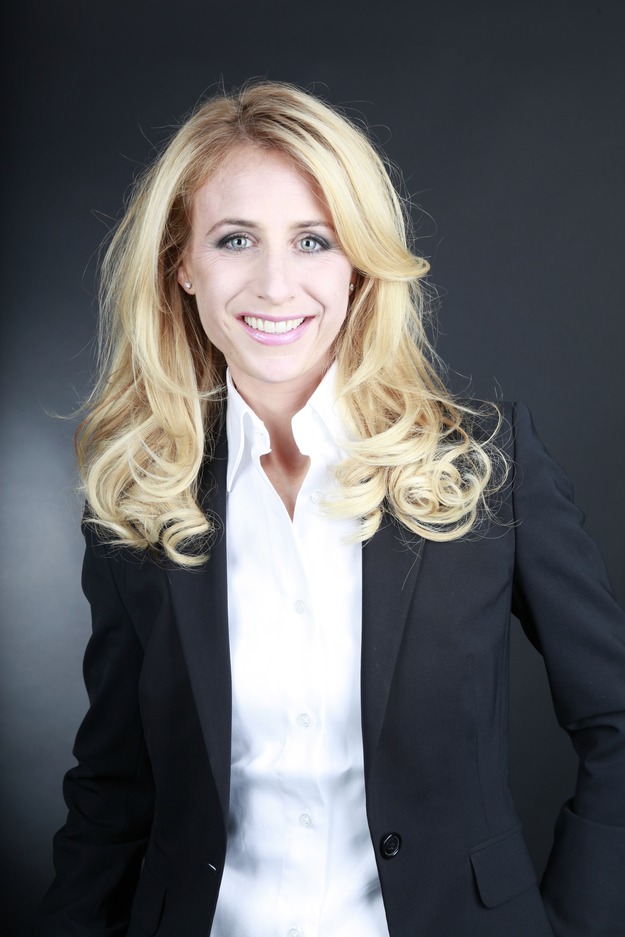
Isabelle Nüssli
Amazon bestselling author, Isabelle Nüssli, is an international senior executive specializing in business strategy, crisis management, and corporate innovation. As the chief energizing officer of Leverage YourSelf AG and the co-founder/chairperson of Responsible Leadership AG, she coaches business leaders and startups in capitalizing on their full potential. Isabelle’s focus areas include navigating change and developing strong organizational dynamics at the individual level. She is the former chairperson of the NUSSLI Group.
Isabelle holds master’s degrees from Kellogg School of Management at Northwestern University, INSEAD, and the University of St.Gallen.
📚 Books by Isabelle Nüssli
Transcript
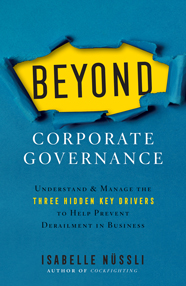
[0:00:14] DA: Conflict, scandal, derailment — these are the last words you want to hear as a shareholder, board member or CEO of any organization, especially if you expected corporate governance to prevent these crises. But the business world is volatile and complex and as humans, we are volatile and complex. The mechanisms of corporate governance alone are not enough to ensure us or our business, against inevitable change and challenges. In her new book, Beyond Corporate Governance. Isabelle Nussli shows you why the processes you rely on are a flawed safety net and how you can learn to navigate change, no matter the ambiguities or uncertainties you face. She gives you tools to identify the red flags and hidden dynamics of organizational and personal derailment to push beyond the concept of corporate governance as your best and only solution. Things change and they change quickly. Learn what you could do to help future proof your business and sleep better at night. Hey listeners, my name is Drew Applebaum and I’m excited to be here today with Isabelle Nussli, author of Beyond Corporate Governance: Understand and Manage the Three Hidden Key Drivers to Help Prevent Derailment in Business. Isabelle, thank you for joining, welcome to the Author Hour podcast.
[0:01:27] Isabelle Nüssli: Thank you Drew, for having me.
[0:01:27] DA: Let’s kick this off, could you give us a rundown of your professional background?
[0:01:31] Isabelle Nüssli: Sure. So today, I’m a performance and leadership coach with an entrepreneurial vein, I would say, and I work with boards, management and startups and help them navigate change and tap their potential. But at the same time, together with other partners, I’m building an online, offline education platform on responsible leadership, with the focus on self-leadership. But how did it all get started? I grew up in Switzerland in a 600-year-old flower mill and was born into an entrepreneurial family. So, my father was running a construction company and at that time, only boys were considered potential successors — so today we smile at these – let’s say outdated worldview, and so my husband actually hired me away if you want so, from a previous employer and asked me to join his family business which was also in construction but in temporary modular structures, we were building stadium, grand stand stages for large events. I thought it off as a controller for the art fare Miami Beach or {inaudible} and I helped build the US subsidiaries, professionalized key account managements and t hen I quit to pursue my dream which was a full-time NDA in the US at Kellogg School of Management. I’ve done exchange there, had an internship in China and just thought I would not come back to Switzerland anytime soon but I did the math without my husband. It was really interesting. I did not expect that so in during the second year, he asked me whether I wanted to follow in his footsteps. Join the board and then become chair person two years later. I thought, well, okay, jump. Actually I did ask the former dean of Kellogg and laid out my options and that’s what he actually recommended. Jump. Because he said, join the company and then you can grow with the company and I knew the company already and the staff, I knew the market. I knew the clients. But it was then and a period of my time I would say in hindsight that was on one hand very inspiring so we’re requiring projects for Olympics, and world comps and common world games and US, in Europe, in Asia. And on the other hand, how should I say — my experience is in both leading an international company through change and crisis management, not only based on business and market to relay the challenges but also based on organization of power plays that could be traced back to basic drivers of human behavior. Also, organizational dynamic. So, in hindsight, I would say my learning curve was almost vertical and I was left with questions. You know, how – why would a person go out of his or her way to hold on to power or achieve power but also what could I have done differently? And then I was pondering the questions, joined them consulting company but kept pondering the questions. And then I’ll learnt that that was far from alone. That many others had had similar experiences with regards to turmoil but never spoken about it. It almost seemed as if it was considered a taboo. So, I decided I wanted to understand that at a deeper level and that was already equipped with an MBA and then I went on for Masters, studies in corporate governance and then change management and suddenly, things fell into play. This is when it clicked — with regard to the books.
[0:05:20] DA: Now, why was now the time to write this most recent book? Did you have an ah-ha moment, was there some inspiration you found out there or did you simply have more time on your schedule because of what’s happening now in 2020.
[0:05:34] Isabelle Nüssli: I didn’t choose the timing. It happened I would say. It’s a mix, it’s kind of a combination of my personal experience with the one of others, mixed with the acquired knowledge from education and business, in law and social science. Which allowed me to investigate the background of widespread derailment and of my experience and explain it in a more scientifically based, but easy to read books. I wanted to contribute to responsible leadership and as mentioned when someone asked me, “What would you recommend a person that would like to become an author?” I would say, it’s a wrong question to ask — What impact do you want to make? What message do you want to contribute? That’s a question you might want to start off asking yourself and that’s what I had. So, I think the consciousness of people with regard to derailment has always been there, but it has gained momentum since COVID started. So, derailment is present and there’s just probably the right and the wrong are always a good time to tackle it and I just wanted to – it’s been a five-year journey. No specific timing.
[0:06:53] DA: Yeah, what’s different in this book than in your previous books and if I’m correct, this is your third book published, correct?
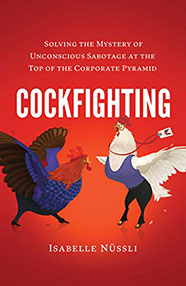
[0:07:02] Isabelle Nüssli: Two in the hub. Actually, it’s my third but one I wrote under a pen name. It’s actually my second business book if you want so, the previous book lies focus on power plays between boards and management, specifically between chair persons and CEO’s and it’s based on interviews. It’s also founded — it is scientifically founded and it’s different from this one. This one is different, it’s much broader, it’s also deeper, so it’s even more research based, consists of more real life cases and it focus on my corporate government task fallen short. It looks at legal frame and then it looks at the key drivers that underly, these falling short of corporate governance.
[0:07:53] DA: Now, while you’re writing the book, did you have any big major learnings or break throughs while you were writing it?
[0:08:02] Isabelle Nüssli: Yes, absolutely. First of all, I once heard that it’s a saying. When you work on the words, you also work on the content concurrently. This is so true. You know, sometimes they have a concept in your mind but when you write it down and you see it’s black on white, it sounds different so that was a big – that was an epiphany but also it’s the alignment of my own interest with one of the readers. Not everything that I found important or interesting, would have been interesting or important to the reader as well. So, I tried to look at information through different pair of glasses and really helped me objectivize data and information. But also, for sure, it helped me analyze and understand and explain my personal but also other’s experience and understand them at a deeper level but also widely held perceptions and that’s last but not least, I would say, it brings measurable tools and concept into play. Yeah, there’s one more that was actually point of no return. I have come so far. I think in year four, I thought, my goodness, I could have studied or learned Chinese, I just have to finish it but it’s not easy to really get the last 5-10% done so I just had to do it. Lots of learning and lots of interesting moments.
[0:09:34] DA: Now, when you were writing this book, what were the audience that you had in mind?
[0:09:40] Isabelle Nüssli: Definitely it’s for owners and shareholders because they select board members and sometimes senior management and that’s why it’s also for board members who recruit CEO’s and who bare most responsibility and liability for their action. Furthermore, it’s for CEO’s and management teams so also potential future CEO’s. Since it sheds light on important elements of the assessment and installment of top leaders, it’s also of interest to executive recruiters and search firms and in general, when you look at consultants or practitioners, anyone seeking to reduce derailment and improve performance could be general councils, could be HR. Yes.
[0:10:32] DA: Let’s dive into the book and just start real bottom floor. What is your definition of derailment?
[0:10:39] Isabelle Nüssli: Derailment can be considered as an obstruction that divert an organization or company from its intended course. For example, conflict, excess, froth, candle, what goes off the rails, you know, derailment, what goes off the rails is often the mission and the performance of the business. And the focus of this book is to figure out what triggers derailment and how can you be prevented.
[0:11:10] DA: Yeah, what exactly does derailment inside an organization look like?
[0:11:14] Isabelle Nüssli: Often you see the results which is fake revenues or inflated profits or false transactions or bribes, redirection of company funds and all of the list is long so sometimes even hundreds of millions of billions of dollars. When you look at the corporates, these famous scandals of the 90s. Those are the ones that usually look at the results but they can get personal front or the organizational front, can be really the end of an organization, can be the end of a person’s position with the company. It has different shades.
[0:11:53] DA: Now, you talk about corporate governance in the book and that’s supposed to curb some of the issues you just talked about but what other goals does corporate governance have and what is its purpose?
[0:12:06] Isabelle Nüssli: Corporate governance is considered soft law. You have company law, hard law and corporate governance in concretizes fundamental principles that are described by the law and it has the goal to balance the sharing of power among different stake holders so shareholders, boards, management members, with the goal to reduce conflict of interests and at the same time, protect the interest of other stakeholders.
[0:12:36] DA: What are the failures of corporate governance? And why hasn’t it led to a reduction of severe conflict in business?
[0:12:43] Isabelle Nüssli: First of all, I found that the corporate governance did have several flaws. For example, usually the frameworks are reactive. It’s corporate governance gets adjusted after a scandal or crisis has happened and not practically but also, there’s these so called principle agent models and I think it’s applied in a too simple way so it’s foundational to many corporate governance models, yes. Because it assumes that shareholders, owners act as principles and managers as agents, we tend to be self-centered and use company resources to satisfy their own interest. But the theory assumes that these interests, the interest of all these groups of principles and of the groups of the agents are the same and that’s not true. I argue that the perspective must be more differentiated and there must be an emphasis on the circumstances of diverging interests that impact company strategy and formulation processes. Meaning there’s different, there are different interest among owners so there is family businesses, the family that owns versus institutionally masters, they have merging interest and the same holds true for the management level. You have entrepreneurial, CEO’s, but then you have business nurseries, they all have different interest and that’s another reason why I think corporate governance is flawed. But then furthermore, when you look at how certain actors twist or try to twist rules to suit their agenda, I would say it’s another flaw of corporate governance. So more and stricter laws and regulations lead to another effect. So the kind of opportunity to use them to support one’s own story because I remember I speak about the case, the former CEO of Volkswagen. So during the mission scandal he can get into you and he tried to downplay the scandal. And then he said, “Where do lie, which is misinterpreted American law?” but they didn’t get away with it but that’s another reason to see how you can sometimes at least try to twist rules or these our article act in good faith, what does it mean, you know and to whom? And then there is the three hidden key drivers of course that also play an important role with regard to why corporate governance fall short.
[0:15:26] DA: Yeah, let’s dig into that because the books talks a lot and analyzes the three hidden key drivers of conflict. So can you talk about what they are?
[0:15:35] Isabelle Nüssli: Yes, first of all the first one is change as a triggering element as I call it, the second one is human nature as the root cause and the third one is leadership as accelerator because when you step back and look at corporate governance, it just has not much contributed to the reduction of negative outcomes and instead more stricter on more regulations. They have to increase pressure more also high label to coverages and the questions does not lie in the strength and weaknesses of individual corporate governance systems, but in these three underlying conditions or key drivers that cause and increase conflict.
[0:16:23] DA: Now can you talk about the role that leaders in a company play or just as employees play and during change how they could potentially derail a company during these changes? I think a lot of times we like to see it that the problems are coming from the outside but sometimes they happen from inside.
[0:16:44] Isabelle Nüssli: Yes, absolutely. So we talked about the whole kind of world, volatile, uncertain, complex, ambiguous and then of course, COVID has accentuated these fast-paced into the connected world. So when you look at these external change or changes, they often require changes inside the company. So a change in the board of director, in management, organizational structure can easily shift people’s position and responsibilities and such changes can cause the organization power balance to shift unexpectedly. So watch out for these shifts and the consequences. While the business world is constructed as irrational system, it’s practical functions are full of irrational behavior and when we speak about change, change involves people and it can trigger emotions, uncertainties, contradictions. So it is not enough just to manage change. Successful change process involves forward looking leadership and the perception I think that’s interesting — The perception still exists that successful changes is a matter of executing a straightforward plan to get from a clearly defined starting point to the targeted objective — so it’s rational and then leaders wonder why the subordinates don’t get tasks accomplished. Why deadlines are missed, why costs get out of hand — but it is not necessarily change that people oppose, but it is the fear of the loss that comes with change and against the common belief, people are not stuck in their minds. But in their hearts and stomachs. So usually you try to explain them in a rational way why change is needed but you have to meet them where they are knowing there’s emotion and there’s fear. Fear of loss, of identity or position or whatever. You just got to get them and as I mentioned, meet them where they are. So the challenge does not lie in the change itself but in successfully leading people through transition and the transition phase is not equal to change. Because change itself focuses on the external like structure and strategy but the transition focuses on the internal. So it is more of a psychological realignment or adjustments that employees need to undergo before change can be successful. So take apart your world then comes to neutral zone and then only then it comes to moving forward.
[0:19:34] DA: Yeah, why have you found that some people act in harmful ways or they are more prone to act a certain way when they are faced with turbulent environments over others?
[0:19:45] Isabelle Nüssli: Excessive narcissists who bring — or one of my professors, he came up with the term SOB, seductive that doesn’t mean what we might think it is but seductive operation of bullies and I think it really brings it home nicely. So most often, it is demonstrated by excessive pride, excessive confidence, selfishness, the ego, we all need a bit of ego otherwise you couldn’t survive but there is way too much ego and with these people, it is excessive. The same holds true with narcissism, a little bit we all need otherwise we wouldn’t survive. But with these people it is excessive. So hubris or SOB’s refers to excessive pride or selfishness and they consider themselves god-like and this makes them feel an unlimited pride that is not even reduced when they become aware of their weaknesses and failures and by the way, in ancient Greece hubris is considered a crime. I think that is a thing. So hubris for example it’s not present before the person reaches a powerful leadership position. So it is developed during childhood but it is like the dormant seats and power only provides fertile ground prior for its growth.
[0:21:19] DA: So what are the other benefits that leaders or CEO’s can find just by learning about their own behavioral patterns?
[0:21:26] Isabelle Nüssli: So we’re all as human beings, we tend to act on impulse. So as just mentioned, if you learn about negative behaviors that we are prone to, we can make an informed decision and change our actions. It takes practice and patience but it works but the first step really is to bring a pattern or behavior into the consciousness, and decide whether it is productive and then the second step is to learn about the origin of these behavior and the third step is to rewrite the so called inner script around that behavior and you can see the script to change actions. But as it is with change in general it is impossible to press the button to change. So the process demands trust and patience, mainly with oneself, but also with others and it doesn’t happen in a single moment of awakening but it merges gradually through questioning long term beliefs and yes it is not always comfortable but neither is running a marathon or preparing for a marathon and it is really is powerful. It is awareness of human drivers of conflict will permit these leaders to lead change by anticipating its impact on people and power bonds. Within dimensions it is legal framework but it also facilitates self-awareness, which is a keyword, I call it my gold standard. It is a keyword because it is crucial for better management of self and others. So being proactive and learning about their own behavioral patterns and how they play out on the pressure, it will allow them to stay ahead and better deal with potential conflict and with change in general.
[0:23:24] DA: Now let’s say you’ve read this book and you have dealt with the emotional side, the planning stages and put together all the processes to avoid harmful outcomes and to improve performance but how can derailment and prevention really be measured?
[0:23:44] Isabelle Nüssli: It is not an easy question to answer. It is not an exact science however there are few indicators. So for example of course you can compare pre and intervention and look at the rates of recorded frauds and conflicts, compare and contrast, but also you can ask the board, you can management, you can ask the different protagonist what has happened ever since you started with the derailment prevention. Furthermore there is surveys I call them 729 degrees plus feedback and just to see where people are in their belonging process and how far they’ve come — but also it’s look at corporate governances system and make sure it is proactively adjusted. Make sure it’s lift usually corporate governance defines the what, what the roles is or what the role is but not the how, how roles are implemented, how roles are assumed. So make sure you look at role clarity. And again, compare and contrast or take a survey. Furthermore, it can definitely – it is one of the measures is the checks and balances you have in place. Is there a cultural trust, do you have good governance, is the board diverse enough, are the committees established, what about size, diversity, tenure, structure, etcetera, is there whistleblowing in place? So you have where of the harder and others and you have the hard and the soft indicators if you want to. But there is a bunch of indicators at which we can measure it. As mentioned, it is not hard science but it is definitely worth the effort versus not doing anything.
[0:25:42] DA: Isabelle, writing a book especially one like this, which will help so many business professionals but also is so detailed, I mean we really just scratched the surface of what’s in there is no small feat. So congratulations on putting the time in and publishing this new book.
[0:25:59] Isabelle Nüssli: Thank you very much Drew. It’s been a pleasure and I am excited and I can’t wait to hold it in my hands.
[0:26:06] DA: Now, if readers could takeaway just one thing from the book, what would you want it to be?
[0:26:12] Isabelle Nüssli: Can I have two quick ones?
[0:26:17] DA: You can absolutely have two.
[0:26:18] Isabelle Nüssli: So one of them is the, I call it LOCC. It is leader’s oral collaboration contract. So it is another written contract. It is an oral contract. I came up with it, it can be downloaded for free but it is about two leaders or more that discuss the important discussion points that just trust how is trust build, how does each of them build trust, how do they want to move forward with regard to trust building. Second discussion point is role clarity or how should the roles be assumed and executed. The third one is power, you know what shall the power division look like going forward, how does it look like now. All of these relevant leadership topics that shook your lines should be discussed and shape your lines. So that is one important thing and the second one is just the question – no it is not a question, it’s a food for thought. One day your life will flash before your eyes, so make sure it is worth watching. Make sure it is worth bringing the popcorns out and look at your own life movie.
[0:27:31] DA: Isabelle, this has been a pleasure and I am so excited for people to check out this book. Everyone the book is called, Beyond Corporate Governance, and you could find it on Amazon. Besides checking out the book Isabelle, where can people find and connect with you?
[0:27:43] Isabelle Nüssli: I am on LinkedIn, I am on Twitter although not active but mainly on LinkedIn. I have a website, www.leverage-your-self.com or www.selfleadershipdays.com and that’s mentioned on LinkedIn. I look forward in connecting and interacting with the community. Thank you.
[0:28:09] DA: Isabelle, thank you so much for coming on the show today and best of luck with your book.
[0:28:13] Isabelle Nüssli: Thank you Drew. It’s been a pleasure.
[0:28:16] DA: Thanks for joining us for this episode of Author Hour. You can get Isabelle Nüssli’s new book, Beyond Corporate Governance, on Amazon. Also, you can also find a transcript of this episode and all of our other episodes on our website at authorhour.co. For more Author Hour, subscribe to this podcast on your favorite subscription service. Thank you for joining us, we’ll see you next time. Same place, different author.
Want to Write Your Own Book?
Scribe has helped over 2,000 authors turn their expertise into published books.
Schedule a Free Consult