Sabreet Kang Rajeev: Episode 585
Read the full transcript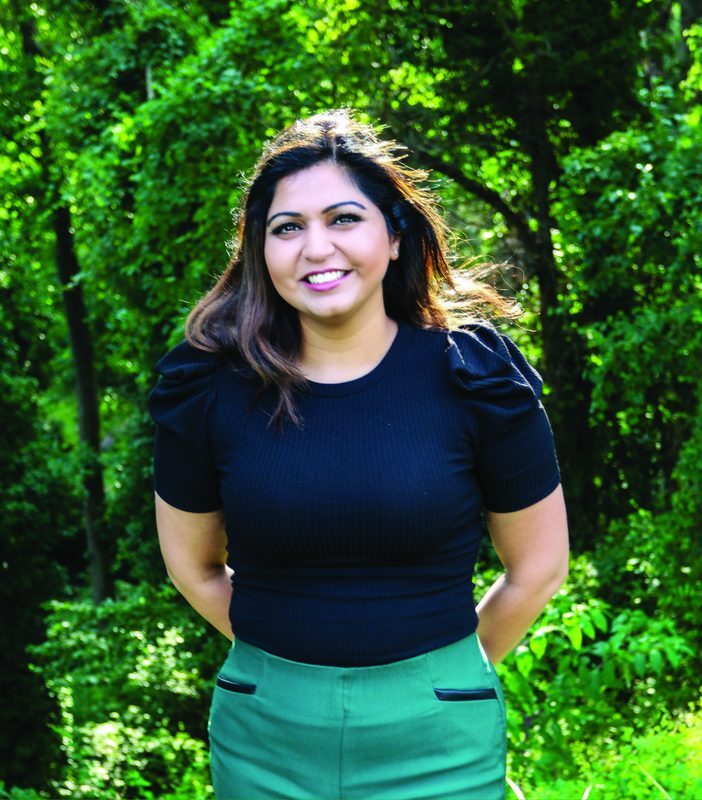
Sabreet Kang Rajeev
Sabreet Kang Rajeev is a first-generation Indian American of Sikh descent. Sabreet is a full-time Social-Science Researcher and holds an MA in Sociology from the University of Maryland, Baltimore County, and BA in Sociology from the University of Maryland, College Park. She is currently completing her doctorate at the University of Baltimore.
Throughout her life, Sabreet experienced the beauty and struggle of being part of a blue-collar immigrant family, and she is driven to raise awareness and empathy for a minority group of Indian Americans who do not historically come from educational or economic privilege. Generation Zero is her first book.
You can learn about Sabreet by visiting sabreetkangrajeev.com
📚 Books by Sabreet Kang Rajeev
Transcript
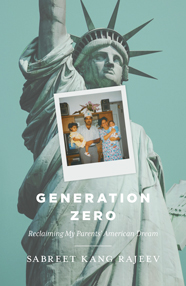
[0:00:19] DA: For most of her life, Sabreet Kang Rajeev searched to find meaning in her family’s immigration story. She read books about extraordinary immigrants triumphs and everyday tales of hardship. But the stories of her family and other generation zero families often felt invisible. If you're a first or second generation American, you know how hard it is to understand your reality but you also know there’s a great deal of beauty and strength to come from an immigrant family. Maybe your working class family sacrificed, maybe you’ve strived to accomplish your parent’s abandoned dreams or maybe you’re living a hyphenated identity, trying to make sense of the unique experiences that make you American. Either way, you’re not alone. Hey listeners, my name is Drew Applebaum and I’m excited to be here today with Sabreet King Rajeev. Author of Generation Zero: Reclaiming My Parent’s American Dream. Sabreet, thank you for joining, welcome to the Author Hour podcast.
[0:01:12] SKR: Excited to be here, thank you so much.
[0:01:14] DA: Let’s kick this off, can you give us a rundown of your background?
[0:01:18] SKR: Yeah, sure, I would love to. Background about me really, I think it just starts with the type of person that I am and what I do for a living. I’m super inquisitive, I’m a researcher and I’ve always been looking for how to answer questions that are deep in my heart and the way that I’ve started, I did that professionally is just figuring out how to do that by talking to consumers, whether it be anyone that really wants to have a conversation about trying to understand any kind of product or an experience. I just love asking questions, so my background really has – it is like I’m a researcher but furthermore, I think the biggest thing about me is just, I’m always curious. I love telling stories, I love connecting with people and in particular, I love talking to people that haven’t had the normal path of life if that makes sense.
[0:02:02] DA: Sure. Why was now the time to write this book, was there a recent ‘aha’ moment, did you have an inspiration or was it just you had a lot of time because of COVID?
[0:02:12] SKR: I think, it’s been a combination of a couple of things. I’ve had this idea to write this book, I want to say for the past two to three years. I’ve written this book, it’s really great timing I believe but the ‘aha’ moment that I had was when I didn’t see myself represented in media, whether it was in books or anything that I did where I was trying to interact with, within my community or you know, outside of my community, I always was searching for more answers. I didn’t feel like I felt that representation that I needed and even though there is like a representation of people that are – have hyphenated identities like, I’m an Indian American, I was born and raised here but my culture has really influenced who I am as an individual but when I would interact with these individuals that are also Indian American or South Asian Americans, I always was like, “I still have more questions, I feel like you fully don’t understand my experience, what’s going on here?” I think it’s that void and you’re feeling like I didn’t see myself in certain rooms was the reason why I even wanted to write this book. The ‘aha’ moment really was, I hate to sound super cliché, about to go to bed one day and I’m like, “I am going to write a book.” My husband’s like, “Okay, you’re now writing a book, we’ll talk tomorrow honey.” But really, I wrote a book.
[0:03:26] DA: Were there any learnings or breakthroughs during the writing of the book, whether it’s the introspective journey of your childhood or maybe researching how your parents came to America?
[0:03:39] SKR: I think that the writing process really, Tucker explained it really well but it’s just a journey and the one journey that you can explain in it is an emotional journey. I learned a lot about myself through the writing process but more importantly, it was a great way to reflect back on my life of like why I am who I am. It’s kind of since I’m really passionate about storytelling, I do this professionally for a living, love connecting with people, it was when I was parsing out these details in my story that I realized that I was actually starting to connect with myself for the first time. Which I wasn’t expecting. I wasn’t expecting to connect with myself, my identity, what moves me, what really hurts me and in such a deep way. When I do talk to consumers, when I talk to other people, when I talk to family members, friends, I just walk through the door and somehow, people just tell me everything about themselves and I’m just like, “Do I have that face?” But it was the first time in my life where I was doing that to myself, like truly understanding myself and that writing process was such an emotional journey that I feel like I am fully one with myself and I’m able to now help others understand that immigration history, their hyphenated identity. So far, I really think that you know, the biggest question I had in my heart is like, “Am I American or am I Indian or am I Indian American?” I just have struggled with this hyphenated identity, I feel like I have – I constantly play two different doors, what door do I want to enter today? Today I’m going to go into the American door, tomorrow I’m going to go into the Indian door. I’ve never felt like I could open both doors at the same time but writing this story, that doesn’t just begin with me, it begins with my parents. Then it starts with me and the journey that we both had together helps describe just know who I am as an individual and what we are as a family but taking it a step further is like what we are as a community so if you know anything about sociology, I’m a sociology, like a sociologist by nature. You try to look at the micro and the macro levels of any kind of human experience and you know, for most of my life, I’ve been looking at those human experiences from a macro level like, “Why is this happening to me, why am I not American, why am I not Indian? Why am I not Punjabi enough, why am I not –?” You know, trying to peel off the onion, trying to understand my identity and then realizing that hey, you know, I just need to look at the full onion sometimes and understand, this is like my collective experience as an individual and as together as a society of what it means to be an immigrant and what it means to be an American honestly.
[0:06:10] DA: Right, you mentioned earlier, you wrote this book because you couldn’t really find books or stories about the dual culture experience. Why do you think this hasn’t been written about before?
[0:06:21] SKR: It’s a great question, thank you for asking that. I think one of the biggest things about this dual identity that I hadn’t seen represented in the way that I want to feel seen is because I come from a background that we don’t come from like typical educational or financial privilege. Like, if you know, those stereotypical comments about any kind of community, the one that comes with my community is that usually, Indians are super smart, they’re rich and they just have their lives together. There’s even a movie about crazy rich Asians and there’s a reason that stereotype exists where you know, the model minority myth. You know, to understand that is you know, very complicated if you understand that that’s the main narrative that’s sold to the American public but the community has different experiences and if you have those different experiences, it’s harder to actually connect with your own community. Forget about even connecting with the American community. To truly answer that question is like, I haven’t seen that anywhere. When I will look at these books, when I watch TV shows, listen to music, I was always looking to see that one line about how hard my parents have struggled in blue collar jobs. How hard has it been to really just get educated, having just a blanket statement of getting educated and not being told that you need to be a doctor or a lawyer or something. You know, I never saw the representation, it was always like, “Yeah, you know, my parents pushed me to become an engineer.” I’m like, “Well, it’s nice to have parents that are engineers to push you like that”, you know what I mean? It’s because that representation doesn’t exist right now, if you think about from – like a macro level about that is you know, those communities and individuals in those communities, the types of jobs that they’re able to obtain and then what they do professionally for a living, really depends on how it is represented in media.
[0:08:15] DA: Now, you begin the book speaking about your father and how he was upset that his first born was a girl and can you talk about what having a daughter means in South Asian communities?
[0:08:28] SKR: Having a daughter in the South Asian community is for a lack of better words, seen as a curse. It just gives you pause, it’s not something that is celebrated, there’s a big move in the South Asian community to talk about gender norms and gender expectations around childbirth and what it means to have a boy and a son, there are differences. They still exist today. If you really think about being born and being told like, “Hey, something gave your parents pause because of the gender you came out in”, it’s natural for an individual, especially for me to ask myself what’s wrong with me, why have I, at the first you know, door of my existence, like already made my parents upset? But if you look at the Indian community and the South Asian community, in a large vacuum of what those experiences and why there are differences between a boy and a girl is because of, you just look at history. In history, girls come with dowries. They leave the family, they don’t carry the family last name, there’s a lot of things that happen about the Asian culture that are tied so strongly to like gender norms. When you have a boy, you know, he typically stays with you, carries your last name and so forth, also takes care of you in your old age. A daughter is always seen as a temporary guest and since she’s seen as a temporary guest, when you have a daughter, that’s how they’re treated but that’s very so much in the Asian culture and it’s just interesting to me to see the fusion of the Asian culture and the American culture in America and how that actually changes. You know, in my book, I wrote about how confused I was and I really didn't understand why this was happening to me. How can I make someone so upset by just being who I am? But I realized it’s like the ability for either your parents or the community to change that really determine why that need is still there and for me, you know, learning that there are differences between a boy and a girl in the South Asian community that I’m a part of, helped me really resonate more with my American culture because I’m like, regardless if you’re a boy or a girl, you’re supposed to do ABCD, you know what I mean? You’re supposed to love me, you're supposed to do all these things and I can be a very assertive individual, very assertive woman and it doesn’t essentially mean that I don’t respect you or respect our family because of my gender. That’s just my experience and you know, unfortunately to say, the experience of many women still today.
[0:11:00] DA: Yeah. Can you talk about what the definition of first generation American is, how you feel like you fit into this definition and why you chose to title the book Generation Zero?
[0:11:14] SKR: Thank you for asking that question because the whole concept of my book is like generation zero, I honestly don’t know what generation anyone belongs in, to be quite frank. I was researching this and I’m like, “Am I a first generation, am I a second generation?” Being the nerd that I am, looking online, trying to research all these scholarly articles about like what the true definition is, go to the Webster dictionary, they’re saying one thing. I go to the census bureau; they’re saying another thing. I ask like individuals that are living these experiences, they’re like, “I’m second generation because my parents came here and then they had me here.” Or, “I’m first generation because my parents immigrated over here and then they had me. I’m the first-born person here.” Long story is that what generation you are part of really depends on your understanding of your family and your experiences and your community. Because in the Webster's dictionary, it says that the first generation is someone to legally relocate to a new country, whereas the census says that it’s the first person to be born in that new country. I think there are two different reasons for that but what I’ve grown to understand is that regardless of being a first or second generation or a 20th generation individual,I think the immigrant experience really is you know, when you come over here with your family, whether it’s an Asian family or whatever, you’re generation zero together, you don’t really know what generation you fit in, you’re just trying to figure out if America is where you want to be for the rest of your life. If I unpack that a little bit more, the biggest reason I titled my book Generation Zero is because, the immigrant experience, you really have to understand is, you truly start at zero. You go to a country where no one knows you, depending on how much money you’re bringing over and you know, what type of social connections that you have, the ties that you have to the community. You have nothing, it’s zero, you might have a few hundred dollars, you might have a partner you’re traveling with, maybe your family but there’s nothing that you’re bringing over here, the only thing you’re bringing is yourself and your ability to succeed. That to me is what makes generation zero but also, why it’s so complicated because if you think about the duality of identity, when you’re an immigrant or you’re an American, you don’t really know what to do with the hyphenated identity and that also happens with how you classify yourself as a first or second generation individual.
[0:13:34] DA: Let’s start from the beginning. Can you tell us about your parent’s journey to America?
[0:13:40] SKR: It’s my favorite story. I feel like it’s like a true Bollywood movie to be quite frank. My parents came to America separately but you know, what really inspires me and gives me the courage to be the individual that I am today is my father and his journey and how he actually came to America. You know, back home, he’s from Punjab which is you know, traditionally Punjab is like an agricultural state and you know, being super educated and stuff isn’t really known to be a thing that’s really great about that state. There are several states in India and you know, every state has their own actual culture, religion and stuff like that so it’s like in Punjab, it’s all about agriculture and I know that my dad, when he was growing up, he was, I think in his 20s because the farming industry was you know, was lucrative, was declining, he started looking at abroad to how to make money and when you have a dream to make more money for your family if you live in a country that’s not America, the dream always starts abroad. So you think about, “Where can I go, how can I get there, how can I make my money that could help me where I’m going and also my family?” My dad dropped out of college, he started working at a cargo ship and the cargo ship really is, it goes to different parts of the world, it drops off either different spices or different types of materials to different countries and then returns back to its original destination and my dad was following the footstep of his brother and what he learned was that, sometimes, if you go on this cargo ship, depending on where you end up and who is looking, you can technically just walk off the ship and be in a different reality. That’s something that’s very different if you think about the legal process of actually immigrating to America, it’s very cumbersome, you think about the history of American immigration, 1965, there was an act that was passed that talked about opening up the gates to other ethnicities in the world and one of them was obviously Asian ethnicities but the reason for that was because they were looking for doctors and lawyers, there was a nationwide shortage of doctors and lawyers so they were looking for that and then they were looking for the smart Indians. If you don’t have those professional careers or you don’t have the money to come here, you can already understand that your path to go to America is already watered down a little bit. So with my dad, he chose a path that is not really talked about that much. He came to America illegally, made himself legal and worked his butt off to make sure that he was truly the best American anyone could ever see because he always felt like what he did in order to get there wasn’t valued, if that makes sense. Then after that my mom came, you know they got married and she also came later but it is just the courage to just be so fearless that you’re about to take on the greatest country in the world, America and go there and being like, “I am going to make myself and I don’t really care what you have to say.”
[0:16:41] DA: Your family certainly went through a lot of hardship and briefly you were even without a place to live but you persevered. Your family persevered and you eventually had an apartment, you started going to school in Flushing, Queens and eventually, Baltimore. What were the educational years and school years like for you?
[0:17:00] SKR: They were just very interesting and very different. I think the education system that I went through in New York and in Baltimore are very different. I think the biggest thing I want to focus on is just how everything in my life with my educational experience was just like a random occurrence. It was very serendipitous, by luck, by chance I just able to go to the right magnet school, you know be interested in the right majors and stuff like that. My favorite story of my education experience is really just talking about my mom and how she made sure that I was able to go to a better magnet school in New York. She just sees [inaudible] one day and goes there and just like, “Hey, listen I came to this country to just send my children to a better system and here I am. I hope you can hear me out,” and you know the superintendent actually did but the point is it’s just like taking it a step back and really understanding my community and what it means when you are not part of the smart Indian concept. Everything happens by chance and you only can do what you know best by whatever information and resources you have at that moment and for me and my family, it was whatever we researched, whatever we did at that given moment. Was it the right decision, was it the best decision? I am not quite sure but it was the decision that we needed to make because those were the resources that we had. I think the biggest, the most surprising thing about my education experience is that I went to a Catholic school. I am not Catholic. I am a Sikh individual but if you know anything about Indian culture and you know anything about India in itself, you know British came and ruled India for a little bit and when they came over, you know Catholic schools were really celebrated and you know back in India, you go to private school, you go to a religious private school and that is considered a better education. Because that’s what India has known to be best even though that’s not true. So in middle school, I went to a Catholic school because it was just understood that it was a better school in my community but I would like to disagree. It really depends on the student and teacher ratios, the community that you live in and you could go to private schools. There’s very good private schools, you just have to spend a lot of money to go to them. They’re more about educational rigor. But you know, thinking about, we did what we did with the information that we had because that was the best we could do and that really has shaped me for the rest of my life. I was always assertive thinking about what is the next best step, what can we do, like I said, I always have been inquisitive. It’s like I know this is the right decision right now but what’s the next thing that we could do? And my education experience has taught me that. But really if you look at it from a social perspective, you know being the only brown girl in an all Catholic school is kind of hard. People physically look at you and you don’t look like them and you’re kind of confused like, “How do they know?” Because my whole life I’ve been putting on a façade that I am American, even though I really am American but like I don’t think people view me as an American. So you know I first interacted with that and learned about that in school when I’m like, okay, well here I am opening the door opening my American door today and I am going to school and a kid is asking me, “Where do you come from?” I’m like, “Well Flushing, Queens, sir. Where do you come from?” He’s like, “No, I think your family is confused. Go ask where you come from,” and I’m like, “Oh my god they might know that I am not that smart Indian,” and so I felt like I was being outed in that experience.
[0:20:33] DA: Your mom is such a symbol of strength in the book. Can you talk about your relationship and the few times she literally whooped some ass?
[0:20:43] SKR: My mom is superwoman. Me and my mom are best friends. A lot of what I am as an individual today has shaped by what she has done for me but the biggest thing that I – I feel like when you grow up as an individual and after a certain time in your life you are like, “I like these values and I like these traits in my parents and I want to hold onto to them.” The one trait that I love about my mom is just she is truly fearless. I don’t care about what you have to say or when you have to say it, she will tell you what she needs to say and how to whoop your butt without a doubt in her mind and that is kind of an interesting – like if you really understand like South Asian women and South Asian identities, especially women’s identity, it is very peculiar. South Asian women are supposed to be very submissive, they don’t really speak their mind as much but you know I am talking South Asian that have come over here and they are immigrants themselves. They kind of just confide with the status quo. My mom has never been like that and she has always spoken her mind and that has been something that she’d learned because she lives in America and has obtained some American traits.
[0:21:56] DA: That is a very nice way of putting it.
[0:21:59] SKR: But my mom really is, she’s really my hero and what really always surprises me to this day like now, I am the same age my mom is when certain things have happened to her and I think about just how determined and how courageous she was. When you think about – if you know anything about blue collar jobs, they are hard you know? Your body is hurting, your mind might be free if you’re thinking about other things but your body is literally and figuratively working itself to death. And my mom has worked traditional blue collar jobs where she has been a cashier or manager for McDonald’s, Wendy’s, whatever you call it, whether that be a cashier at like an airport stop but what really has always determined how she has persevered through any profession is she’s never let that profession define who she is. She has let her personality and what she believes that she is, define who she is. My favorite story in the whole entire world is when my mom literally beat someone’s butt because they were trying to rob a McDonald’s. And you know, if you know anything about the immigrant experience and being an immigrant in America, you’re sitting there and whatever job you have and if you think about it from a blue collar perspective you’re just grateful for that job as putting food on the table for your family. You will do anything to protect that job no matter what. Because you are protecting that job no matter what, that job becomes your family and that is how my mom treated every single job she’s ever been in. And when someone came to rob her, she literally just kicked the crap out of them. Basically the gun was put to one side, she literally kicked the crap out of him and just like, he left. He was very scared because he’s never truly met a crazy woman like my mom and even to this day, you know I have never met someone like my mom. So what surprises me about her and I literally make sure it’s understood is the determination and the fearlessness that she has shown as a South Asian woman of an immigrant experience is truly bravery. It is not something that you typically hear about but it is one of those things like when she did interact with the police officer that came afterwards you know because they came when the store was getting robbed, they’re like, “Ma’am, why did you do that? He could have literally hurt you,” and she’s like, “Well, did he? He did not hurt me. I am still standing” and in that one statement, you can truly understand just how brave any immigrant that comes to America truly is. They try their best no matter what.
[0:24:23] DA: Now fast forward to today, you are successful in your career, you have a family, do you still struggle to identify and then find comfort in both Indian and American culture?
[0:24:35] SKR: I actually still do and I think that is the beauty of that whole experience in itself. There is a great deal of beauty and heartache that comes with being a hyphenated identity and when I talk about a hyphenated identity I am really talking about whether it is Indian-American or Vietnamese-American, any kind of American that you feel you just have to hyphenate and explain who you are, what type of American you are, that is a hyphenated identity. And I have struggled with that growing up a lot and I still currently struggle with that because you just don’t know what traits, depending on the person who you’re talking to, depending on the community that you are in, what traits are going to implicate you and what traits they are trying to elevate to think about are these the traits they want to pass on to their daughter or their coworker or something like that. Having a hyphenated identity, you are always really self-aware. Aware about who you are presenting and the community that comes behind you and regardless of everything that has happened in my life and like being successful and being professionally successful and everything like that, I’ve realized that regardless of my – the success that I have obtained and where I’ve come in my life, I always have to explain who I am first and that’s because I am truly never comfortable because I feel like people might just assume that I am that smart Indian. I’m like, “You know, you have no idea what I had to do in order to be here,” and I feel like because of that, I am still trying to understand those experiences but mostly, I think I am just ready to be that voice for that community that just doesn’t have that champion. It is hard, I mean the biggest thing I have to say is just like writing a memoir is probably one of the biggest taboos that you could probably do in the South Asian community. No one wants you to do that. They would rather you write fiction, they would rather you write poetry to express like someone might feel these ways. If the arts are encouraged, they are encouraged in a very fictional way. To actually have an individual that is okay to say that I’ve had these experiences and talk about being a woman, what it means to be a woman in that culture. Talk about how to be assertive, talk about how your parents have come here, you know people don’t really talk about. Regardless of there is a huge group of people that are here that are of the immigrant experience, they don’t talk about that. You are just always trying to one off another, be better than another person, which you’re not supposed to, I personally don’t feel like you should do but I feel like the last thing that I want to do in my hyphenated identity understanding is like be that person that I have seen so much in my life when I grow up. When I’ve been growing up, I just see people brushing off people that are marginalized like they think that they are less and the biggest struggle that you have with hyphenated identity I really think is just you don’t truly belong anywhere and I think you know it is okay not to belong anywhere. It is okay to be in that limbo between two cultures and feel like you can open this door or the other door. What you really have to focus on is you are in a house that you know you can choose to be in that house, open any door that you want and there’s some great beauty in that if you truly celebrated the way that we would like to. I have the opportunity to be whatever identity I want to be and they can co-exists because I am in my house, you know what I mean?
[0:27:54] DA: Now in America now, do you feel like the immigrant experience has changed or gotten better or worse since your family came over?
[0:28:04] SKR: I definitely think that the immigrant experience has gotten worse since, there’s been a lot of laws, a lot of media awareness around immigrant experiences. The biggest thing that I will like to say is that you know growing up, my parents have told me this story several times and it’s just like how they came over here and I hear about that in the media and school and stuff like that, it’s like not really talked about in the way that it is understood by me where it is just so heroic to be that fearless to come to a country. And not just to come there to do whatever, it is just like to try your best. I think at the end of the day, humanity is just trying to be the best person that they can be, you know what I mean? I think everyone is trying that but I never saw that and I think as time has gone on, it’s gotten much worse and I think about could this path that my father had taken and my mother had taken goes down today what would that mean? I think it would leave out a group, like it would leave out a family to grow. And I write about this in my book but I am proud to be an American. I am proud to be here because being here and seeing how my family has changed in their thinking in the cultures that they have adapted, what they believed to be true is so different than if we were still in India like we go back to India sometimes and you see that people are still standing still there. They aren’t changing and the greatest beauty about America is the diversity of thought and it is just so sad that instead of celebrating immigration, we are scared of people that are different than us and I don’t think we should be doing that.
[0:29:40] DA: Well, we just touched on the book a bit. Your stories are very rich with details and you are very honest in the book and so I want to say thank you for writing this and especially a book like this that is going to help so many people. So congratulations on finishing your book and publishing.
[0:29:56] SKR: Thank you so much, that means so much to me.
[0:29:58] DA: Now, if readers could take away only one thing from the book, what would you want it to be?
[0:30:03] SKR: It is okay to be authentically who you want to be. The immigrant experience, there is a thousand ways – the American experience, there is a thousand ways people will try to define who you’re supposed to be. Whether you are an Indian first, whether you’re a woman first, whether you’re an American second or whatever, I feel like our whole lives are just defined around the report card we carry with us. “Hey, I am X, Y and Z.” Just be who you want to be, you know what I mean? And just celebrate those differences within yourself in a way by showing courage to be just yourself. I think in the immigrant experience it is really hard to understand what identity you want to be and if there is anything that I could say to my readers is just regardless of what you think you want to be or what identity you’re resonating more with, it is okay to choose whatever you have chosen because that’s the beauty of being you, you know?
[0:30:57] DA: Sabreet, this has been a pleasure and I am excited for people to check out this book. Everyone, the book is called, Generation Zero, and you can find it on Amazon. Sabreet besides checking out the book, where can people find and connect with you?
[0:31:08] SKR: They can find me on LinkedIn with my name, Sabreet Kang Rajeev, Instagram, Facebook, just feel free to look me up and also, you can connect with me on my website at sabreetkangrajeev.com.
[0:31:22] DA: Awesome. Sabreet, thank you so much for coming on the show today and best of luck with your book.
[0:31:26] SKR: All right, thank you.
[0:31:28] DA: Thanks for joining us for this episode of Author Hour. You can get Sabreet Kang Rajeev’s new book, Generation Zero, on Amazon. Also, you can also find a transcript of this episode and all of our other episodes on our website at authorhour.co. For more Author Hour, subscribe to this podcast on your favorite subscription service. Thank you for joining us, we’ll see you next time. Same place, different author.
Want to Write Your Own Book?
Scribe has helped over 2,000 authors turn their expertise into published books.
Schedule a Free Consult