David Perry: Episode 586
Read the full transcript
📚 Books by David Perry
Transcript
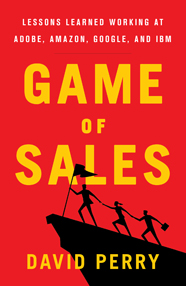
[0:00:16] DA: Are you looking to sharpen your skillset to gain an edge in the fast paced world of enterprise sales? Do you want to drive efficient, repeatable success without getting worn down? If so, David Perry’s new book, Game of Sales is for you. It’s the candid conversation you always wanted to have with a top enterprise sales person. He takes you behind the scenes of what he’s learned working for top companies like Adobe, Amazon, Google and IBM. David shares the tools, strategies and techniques you need to beat your number and create mega deals. You’ll discover the mindset needed to perform at the highest level and maximize earning potential over the long term. Hey listeners, my name is Drew Applebaum and I’m excited to be here today with David Perry. Author of Game of Sales: Lessons Learned Working at Adobe, Amazon, Google and IBM. David, thank you for joining, welcome to the Author Hour podcast.
[0:01:04] David Perry: Thanks Drew, happy to be here.
[0:01:06] DA: Let’s kick this off, can you give us a rundown of your professional background?
[0:01:10] David Perry: Yes, I spent the past 10 years or so working with world class brands while focusing on the technologies that they’re looking to adopt across marketing and advertising in particular. But also focused on helping them create digital experiences. You know, over the years, it’s been a really amazing experience to get to know these companies across various industries and figure out what really makes them tick and how can we bring our two companies together, so whichever company I’m representing and theirs, to really, to drive change and help to adopt technology that will make a large impact on their bottom line and ours.
[0:01:55] DA: Now, why was now the time to write the book? Was there an inspiration lately, did you have an ‘aha’ moment or did you just find some more time on your hands due to the COVID situation?
[0:02:06] David Perry: Well, the COVID situation actually didn’t help me very much in terms of time. The timing was actually the fact that I had a pretty good year and I started realizing that you know, over the course of the various companies I’ve worked at, that things started coming together and I wanted to make sure I could really share that perspective and writing a book is something that I’d always wanted to do.
[0:02:34] DA: Were there any learnings or breakthroughs during the writing of the book? Sometimes it’s by doing research or that introspective journey back to your past in some of these positions.
[0:02:45] David Perry: I mean yes, there was some incredible learnings over the course of writing the book and one of the things that I thought was pretty interesting is that as I was writing it, I became aware that there were some things that I was able to translate very easily like the basic mechanics of how to build a pipeline or you know, how to draw intelligence out of industry research, how to build credibility with executives, things of that nature but there are other things like the softer side or the – how to deal with the ups and downs in enterprise technology sales and I would imagine in probably just about any job that that stuff is a little bit more difficult to translate. It was a really immense learning progress, I mean, learning opportunity overall. Just having to articulate in great detail, all these elements and themes that I thought are really important for sales people to learn and a lot of the things that I’ve learned the hard way, which I’m hoping to help people short cut.
[0:03:51] DA: Now, who is this book for? Is it strictly for software salesman or can you find useful tips in here for other roles?
[0:04:00] David Perry: I wrote this book for a very specific person. It’s an individual that, they’ve been out of – let’s say they’ve been out of school for three to five years, maybe they’re making a hundred grand doing some type of technology sales and they want to really cement themselves in the three to 500K range. That is really the specific individual that I wrote the book for so what are the themes that they need to really dive into and kind of like the conceptual architecture that will help them get to the next level? What I found is that, while I do believe that that individual would benefit from the book, it’s been interesting in that I’ve had some early reviews of the book where undergraduates and some people that have – are just about to graduate from college or recently graduated or even MBA’s or people that are still like pretty early in their transition, they really – their transition into sales, they really enjoyed it but also, I found it that, also found that people that were much more experienced in sales also appreciate it, especially the back half of the book where I go into some of those more challenging topics that I mentioned a few moments ago.
[0:05:25] DA: Now, let’s dig into yourself a little bit David. How did you find yourself in sales?
[0:05:33] David Perry: It certainly was not a straight line for me. I started out as an analyst working for a startup and I did that for a few years and then I went to business school and it was really at the startup that I learned that I wanted to make sure that I was a little bit closer to the revenue generating side of the business and once in business school, I thought that it would be really great to focus on strategy consulting because that has a – you know, both a really fantastic business and revenue generating element to it, right? Because you’re pitching different projects and then you’re going in there and you’re working with senior executives at various companies and you have to get ramped up on and just [inaudible] really quickly to deliver strategy projects.
[0:06:26] DA: A lot of people write books and they write them for their former selves and usually there was some adversity along the way and they want to talk people through it who might find themselves in similar situations. Can you tell us about a few of the issues you ran into early in your career and maybe some of the lessons that were learned?
[0:06:43] David Perry: Yeah, it’s funny you say that because when I – after the project was completely done, I mean, in a way, I did feel like that. It felt like, as I mentioned, I wrote the book for that specific individual but once I really got down to it, I realized that, or once it was complete and I had read the whole thing, I realized that was a book that I really wish I had myself, right? It dawned on me that I was like, you know, I used to really look up to all these sales leaders and account executives that I thought that you know, it just seemed like they had everything figured out and I was like, how in the heck are they doing that? You know, they’re never going to tell – I mean, granted they might try to help a little bit but they’re not going to, they weren’t really going to share, they have no incentive to share in a really deep or profound way what they’re doing as a matter of fact, it’s probably, they’re just worried about hitting their numbers and getting things done for themselves. I think that’s actually what makes this book unique is that you know, it was a huge risk for me to write this book while doing my job. I don’t know if there are any other individual contributors out there that have written a book like this. I mean, usually it’s mostly consultants but that’s really what I wanted to capture, right? I wanted to capture that notion of being able to just ask a top sales person like – even someone that had a great year. “How did you do it, what did it really take to get there?” It’s funny how when you look at it on the surface, I see these guys and girls that have, they’re perennially, like year after year, they’re successful. They make it look so easy but it’s really not easy at all. They’re doing a lot and they’ve had a lot of lessons and so I wanted to make sure I really capture that and so when I got feedback from again, a couple of people that had read it – I think I had maybe just a few people read it before the book is launched. They felt like they were sitting down and having a beer with me and we were just talking about sales and so that was a really huge compliment I thought.
[0:09:02] DA: Can sales success be achieved with different approaches and by different personality types? And I ask because I’ve seen many people fail early in their careers with maybe their first sales job because they don’t know what to expect or they feel like they don’t have the right personality type for it.
[0:09:18] David Perry: I strongly believe that there are many, many different paths to success, that’s actually something that I do talk about in the book and I talk about how to build a dream team and I give several examples of sales leaders that I’ve worked with in the past and there really is no one specific personality type or even way to get things done. What I really try to do in this book then is give people like the general themes and commonality but I strongly believe that no matter what your personality type is, if you have a strong desire to be successful in sales that you can do that and part of what that comes down to is I think there’s this preconceived notion that sales people are all extroverts, right? Or they’re all really gregarious and outgoing and while that may or may not come through and you know, as we’re going through the sales process, it’s really the sales people that are really successful are the ones that they yes, you know, they can be outgoing or they can be direct and help to manage challenging situations but they also are incredibly empathetic and able to quickly assess situations and so those characteristics seem to me to be more along the lines with let’s say, you know, what you might normally see from introverts, right? It’s a real balance and I think that you know, people that are more introverted tend to flex their extroverted side and the people that are extroverted, you know, do the opposite.
[0:11:08] DA: Now, has the sales person mentality changed throughout the last few years?
[0:11:13] David Perry: I think it’s changed in a lot of ways, right? There’s been changes in technology that have made it much – you can do your outreach and have that supplemented with technology to help automate a lot of the outreach. The process of tracking and providing insight into your pipeline with your management team is getting a lot more streamlined, there’s a lot more data that you have on your buyers and how they’re interacting with your company’s website or even with other websites, there’s a whole industry that’s spawning there. There’s been quite a change there along that to mention. In terms of the actual process of selling, there are all sorts of methodologies that I think would become more and more ingrained and then the final piece is that the buyers have changed dramatically in that it’s much more of a team process, a lot of people that are involved, procurement is a lot more powerful within the process, legal is a lot more powerful with the process. So it is not – I think gone are the days where there’s just a single person that’s like, “Yes I want to buy this.” It’s much more consensus driven and so that means that as a sales person you have to be a consultant and you have to be an industry expert in order to win in today’s marketplace.
[0:12:43] DA: So no more steak dinner, steak and cigar dinners with the one salesman?
[0:12:48] David Perry: I mean I’m all for those, you know, that is something that obviously we haven’t had the opportunity to do with the advent of COVID but you know you can still do that. That’s still fun, you can still do the entertaining. I am not saying not to do that. I just think that that is not – that alone is not going to win you the deal.
[0:13:09] DA: Now, the last chapter of your book is about closing potentially career defining mega deals but you ask readers not to skip right to that section. So I will ask you, what is so important about the early sections that set up the foundation for that last section?
[0:13:24] David Perry: By the time you get to that last section there’s so many things and themes that I discussed that if you don’t have a grounding in those other themes, you will just never get to that career defining deal. There are just so many traps and pitfalls along the way to creating a really large transaction like that and so again, this book will help you to navigate some of those things and so for example, if you don’t have the right balance of deals that you are pursuing. Maybe you won’t even get the chance to pursue a really large deal or maybe you aren’t focused enough on risk and in the right way and also, through the lens of proper frameworks to give you the opportunity to identify and progress that deal or maybe you see a large deal but you aren’t able to build the right credibility with your executives internally and externally and figure out the value that you can deliver and translate into customer’s terms in a way that will allow the transaction to happen and make it so that it is more of an inevitability than something you are really selling through. So that is why I think it is so important to really go through the book as a whole and when I first wrote the book, I designed it from the standpoint of I wanted it, like I said, it would be really easy to read. I want someone to be able to – I mean granted we are not flying around these days but the initial vision was you know, take off from New York and by the time you land in LA, you are done with the book and you feel like you have some new focus and new ability to tackle these larger deals.
[0:15:14] DA: I’d like to dig in a little deeper to something you just mentioned, which you know there are a lot of sales books out there that talk about these hardball methods of winning sales but you prefer the easier, friendly and more productive method of capturing what you call hidden value. So can you talk about the definition of hidden value as you are using it and maybe where someone can find it in deals?
[0:15:34] David Perry: Yeah. So I mean it was certainly, the notion of hidden value is that I think, well to your initial point and this is something that sales people and also the companies you are working with can get trapped by really easily especially if it feels like it is a, if procurement is throwing your weight around. It becomes a zero sum game and they’re like, “You know, give me this and we’ll give you that,” and sometimes it is a horse trade or they might, procurement or someone might make a really unreasonable request that seems impossible to get around. So you know if you find yourself in that type, in that situation, you know it can be a symptom of yeah, every once in a while that there really is a blocker or some type of issue that you might not be able to get around. You can’t win them all but it is more likely a symptom that either you aren’t working with executives at a senior enough level or to your point like you mentioned, you are not uncovering or capturing hidden value and so the way that I talk about it in the book to find these things or to find that value is by thinking more broadly or as broadly as possible about what is the problem that you can solve for your customer. And so I have a whole list of things that you can do in the book to actually figure out like what different sources of value there are that you can also then translate into your customer’s language, so they can then take that back and use that in the internal business cases so you can actually get the deal done, right? And of course, you can create a business case for them on occasion. But what I find is that if you are not able to really translate that value into the customer’s terms, it becomes very, very difficult to get the deal done. So I’ll give you a specific example. So if you are working on, let’s say you are trying to close a marketing automation deal and they already have another solution in there and there’s all these other projects that are going on and they are incredibly worried about disrupting other projects while replacing the existing marketing automation solution. If you can prove – I mean first of all, that is something that you might not know if you’re not digging far enough. I mean that sounds like pretty commonsensical but you’d be surprised, like sometimes it’s difficult to uncover some of these other things that are going back in the background of the customer’s mind but if you do discover that that might be a huge source of value that it doesn’t cost you and it doesn’t cost you or your company anything to see that, right? But that could be the difference between you winning and losing a deal because you can then position and structure the implementation of the technology, of the market automation solution, such that it doesn’t interrupt or disrupt any of those other projects and potentially can even reinforce them. So you can work with the other partners or systems integrators that are working on those projects and just make sure that you’re completely dovetailing and integrating really well with them. So that is one of many, many examples of capturing hidden value for the customer that can help you get the deal done.
[0:18:59] DA: Now even the most successful salesman eventually will have horrible meetings and get some really tough no’s and be going through some dark times. Can you talk to us about maybe the dark side of sales and what you do to potentially lift yourself out of them?
[0:19:15] David Perry: Yeah, certainly. I mean so I call it the dark side of sales and it is supposed to – you know I am actually not sure how people are going to interpret that if they think it is something unsavory but that it is not at all what it means. It is really about the internal aspects and so really what it is to me, the dark side of sales is dealing with uncertainty and those things that you just might not have expected that just kind of nudge you into a dark place. And you know, in one regard it’s just an inability to properly react and deal with external stimuli and so I talk about that in the book. So you know early in my career, I would get thrown off by say if there was some type of merger happening or reorganization, I’d get just way too thrown out a whack by things like that. And so what I try to do in that chapter is and it really comes down to like I said, expectation. So you know for people that are coming up in sales, in enterprise technology sales. Or maybe just in the technology companies in general, I wanted to give them a road map of what to expect, like you have to expect that there are going to be difficult times, there are going to be reorganizations, there are going to be just a lot of change that needs to deal with and I try to give the reader ways to deal with that and get around it and I give examples of things that have worked for me really well even though it might sound very simple on the surface, they’ve made a huge difference.
[0:21:02] DA: Now, you created a lot of systems that you really fleshed out in the book. Are you worried about giving away your secret sauce? Have you just really opened up the competition here?
[0:21:12] David Perry: Oh man, I mean that is something that I definitely thought about and I just made the decision that I just, I don’t really care about that, right? Because I think that there’s all of these things that I put forth in the book, I think they can help a lot of people and make the process more enjoyable and I think that if teams are able to take advantage of what I put together here, I think it will just be a better experience for everyone, including myself. So you know my hope is that it’s going to be a win for all and not really anything at my expense per se.
[0:22:04] DA: You have small sections throughout the book on game changers. Can you talk about what these are and how you chose these game changers?
[0:22:12] David Perry: It is really important that I had kernels or ways to kind of summarize the core learnings that each of the chapters are about because again, I wanted this book to be consumed in multiple ways. I talk about the, you take off and you land so you read it in the evening instead of binging on Netflix, you read the book and hopefully you get a lot out of it, right? That is one way to read the book and then you have the game changers that kind of summarize the key concepts. And I have those listed throughout and also in the back of the book so you can help you remember all of the different, or the experience and lessons that you learned as you read the book. So that is a big reason why I have that and also, I wanted it to be a way for the reader to be able to go back and refer to certain sections. So that they could potentially use the book as a reference if needed and that was something that a few folks had actually mentioned that they liked about the book.
[0:23:16] DA: Yeah, those parts were definitely very helpful and David, writing a book especially like this one, which will help so many business professionals is no small feat. So I want to say congratulations on publishing your book.
[0:23:27] David Perry: Well thank you so much. It’s been a great process.
[0:23:30] DA: Now if readers could take away only one thing from the book, what would you want it to be?
[0:23:35] David Perry: That is going to be an individual experience and choice so what I wanted to be is that for each person that reads the book, I want them to take away one thing from the book that they are going to take action on the next time they go to work. That’s really, I haven’t considered that and if that has a positive impact for that particular individual, I consider that a huge one.
[0:24:02] DA: Yeah, absolutely. David, this has been a pleasure and I am excited for people to check out the book. Everyone, the book is called Game of Sales and you can find it on Amazon. David besides checking out the book, where can people connect with you?
[0:24:12] David Perry: You can connect with me on LinkedIn and also, you know I have a website for the book of course so either, or.
[0:24:20] DA: Awesome. Well David, thank you so much for coming on the show today and best of luck with your new book.
[0:24:23] David Perry: Thanks Drew, I appreciate it.
[0:24:25] DA: Thanks for joining us for this episode of Author Hour. You can get David Perry’s new book, Game of Sales, on Amazon. Also, you can also find a transcript of this episode and all of our other episodes on our website at authorhour.co. For more Author Hour, subscribe to this podcast on your favorite subscription service. Thank you for joining us, we’ll see you next time. Same place, different author.
Want to Write Your Own Book?
Scribe has helped over 2,000 authors turn their expertise into published books.
Schedule a Free Consult