Jared Graybeal: The Self Help Book: Six Practical Ways to Never Stop Growing
Read the full transcript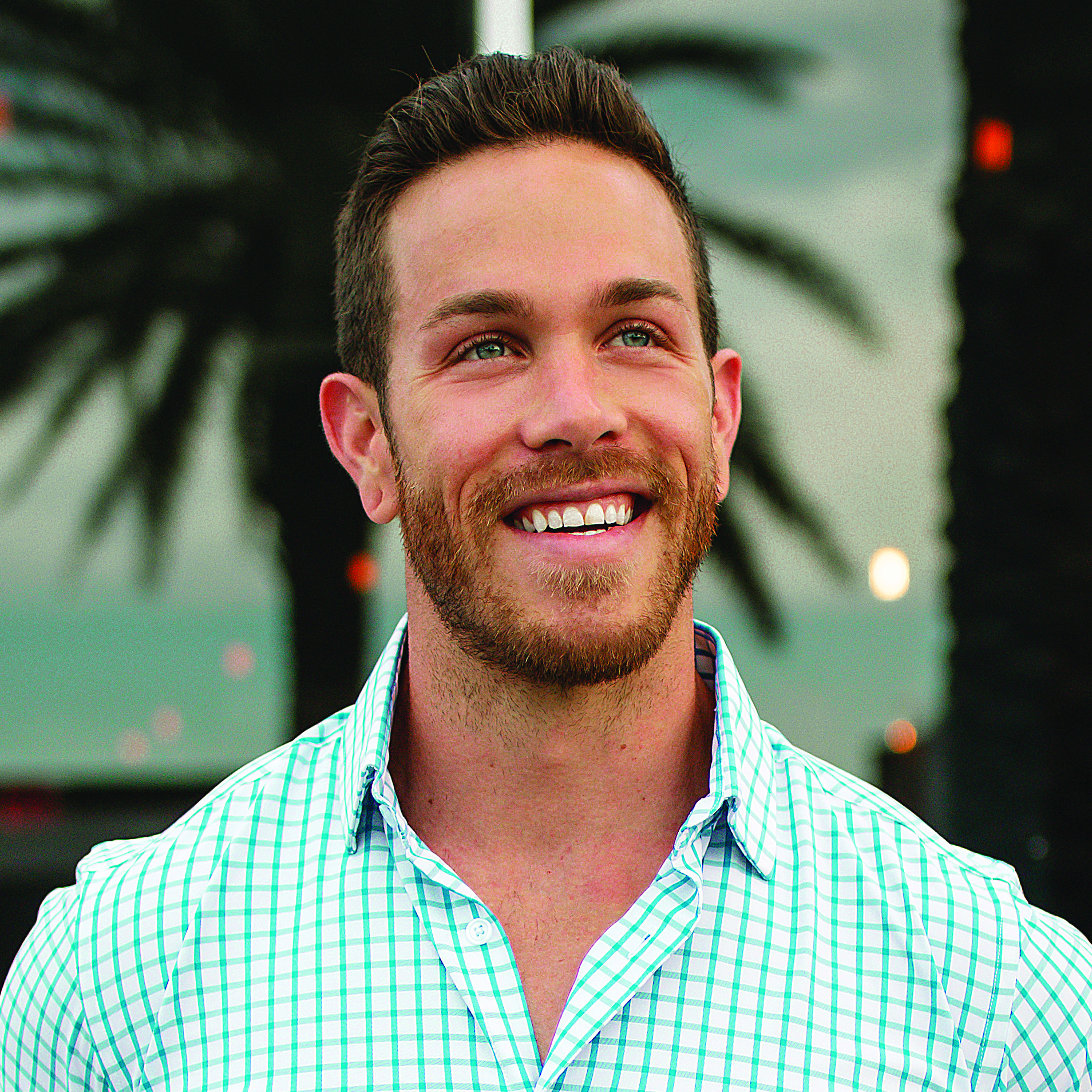
Jared Graybeal
Jared Graybeal is the author of The Self Help Book: 6 Practical Ways to Never Stop Growing. A coach and entrepreneur, he is a NASM-certified personal trainer, fitness nutrition specialist, and behavioral change specialist with a background in marketing and psychology from the University of North Florida. He owns and operates Superfit Foods, a subscription-based meal prep company, and E3, a business consulting and marketing agency, and has delivered a TEDx talk on nutrition and mental health.
📚 Books by Jared Graybeal
Transcript
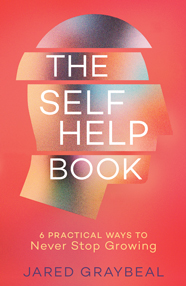
[0:00:31] DA: In his new book, The Self Help Book: Six Practical Ways to Never Stop Growing, author and coach, Jared Graybeal outlines six practical ways to live a life of constant growth while avoiding stagnation or burnout. Those ways: Confidence, competence, clarity, character, connections and commitment. The insightful guide is filled with inspiration and encouragement and is designed to give you the perspective you’re looking for, no matter what’s going on in your life. Every time you turn to The Self-Help Book, you’ll walk away encouraged, knowing that every day is an opportunity to grow and that you have the ability to do so. Hey listeners, my name is Drew Applebaum and I’m excited to be here today with Jared Graybeal, author of The Self Help Book: Six Practical Ways to Never Stop Growing. Jared, thank you for joining, welcome to The Author Hour Podcast.
[0:01:19] Jared Graybeal: Drew, thanks for having me man.
[0:01:20] DA: Jared, let’s kick this off, can you give us a rundown of your professional background?
[0:01:26] Jared Graybeal: Yeah, currently, I am the owner and CEO of a fully customizable subscription based, nationwide meal-prep company called Superfit Foods. That’s sort of the bulk of my weekly schedule. I also own and operate a boutique digital marketing consulting agency called E3 Business Solutions and E3 Business Solutions also houses, you know, some of the other projects that I do. Like I launched of course, this book that we’re going to talk about, there’s a journal that comes with it and a couple of other projects that I do as well. I guess you could say that I’m a social media influencer, I work with some fitness brands throughout the country that I align with from time to time. And I’ve got a podcast. The brand, Superfit Foods that I’ve built over the years has been featured in Forbes 30 under 30 two years in a row and I got to do a TEDx Talk a couple of years ago on nutrition and mental health. So as far as my professional resume, those are kind of the highlights.
[0:02:21] DA: You have seen success in so many avenues. Why a book — and why a book on this subject and why was now the time to write this book?
[0:02:31] Jared Graybeal: Since I was a kid, I was always in a desperate pursuit of something I didn’t know that I wanted and I think we’re all there, I’m just a little bit more self-aware than most people. I basically want it to be known, right? I wanted to – I thought a lot about death as a kid. Not in a weird way, just like “Okay, how do I make my life count?” I reads a quote by Benjamin Franklin, I think I was around 10 or 11 at the time and I’m going to paraphrase it, but he says, basically, if you want to be remembered or if you want to be someone that people remember you, they have to do things worth writing about or write things worth reading. I’m not that exciting of a guy, right? I’m not the next Red Bull guy, going to jump out of a spacecraft. I figured I should probably put out some quality content into the world. I’m naturally a teacher, like, that’s my passion, is to teach and of course I’m in the fitness industry so that’s usually my schtick but like, The Self-Help Book came from my desire to put out quality information into the world. But a little bit more of a backstory to that, I’ll try to make it short because I can tell these ridiculously long stories. About four years ago, I got asked to teach, I was part of a church at the time, still part of a church, just a different one. And I was asked to teach on biblical principles of entrepreneurship. As if I’ve mastered that, right? But anyways, I created a teaching called Taming the Lion and I began to write a book around it. That book was based off of a different quote and a totally different mindset but I’ e got writers block on that and the reason for that is because, I don’t really consider myself to be a super competent or talented writer. I grew up getting average grades in everything, English and literature wise. I was what people would call like a right brain thinker, you know, I’m great with numbers. I never really thought that I would actually be a good writer and so I struggled to write this book, Taming the Lion. But I’ve always put out blogs over the past two, three, four years. Whether it be fitness-related or faith-related or maybe even a bit of both and a buddy of mine encouraged me to start doing that a couple of years ago, and then, after I wrote a blog for his website, he said, it was really good, it was one of the top performing blogs on his website. He’s got a high-traffic website. That inspired me to keep writing and so long story short, early last year, I wrote a blog called “Six Ways to Never Stop Growing,” and it was one of those blogs that’s just way too long, I don’t know if you or the audience reads blogs but if you open one up and it’s just so long, you’re like, “This is ridiculous.” That’s how this one kind of turned out, right? I elaborated on the six things and I thought, you know, one, “This is way too long of a blog,” but two, “I held back on a lot of these concepts and if I were to elaborate, I think this could be my first book.” That’s what I did, I took another two, three months and elaborated on each concept and I had a goal of about a hundred pages because I didn’t want it to be too much but of course I didn’t want it to be too little. I didn’t think “Six Ways to Never Stop Growing” was a good book title so I sort of bounced around a little bit and landed on The Self Help Book. God would have it, to where nobody has chosen that yet and I got to pursue it. Here we are.
[0:05:31] DA: It’s such a great title but it’s just – it’s so genius in its simplicity.
[0:05:37] Jared Graybeal: I really appreciate that, I got really lucky. So, I guess that kind of goes back, I don’t know that I necessarily said, you know, “Early 2021 I want to publish one.” But like I said as a kid, I always knew that I wanted to put something out into the world and this is really just the beginning for me, I mean, I’m the type of person, I aspire to be a polymath, right? I’m interested in so many different things. I imagine I’ll end up writing multiple books about different things that I’m not even an expert in, but things that I’m interested in or I’m passionate about. I didn’t time this book, but like I said, early last year, I just happen to be in the writing space and felt inspired to write “Six ways to Never Stop Growing” and it transformed into a book and of course the publishing process takes a little while and so here we are.
[0:06:18] DA: Now, while you were writing this book. Maybe through some research or maybe just introspective journey of writing, did you have any major learnings or come to any breakthroughs while you were writing?
[0:06:32] Jared Graybeal: For sure. There was a couple of things that I recommend everybody try in life and none of them are easy. One of those is writing a book, but maybe an easier version would just be to generally try to teach more because the act of teaching helps you learn and grow yourself. But more importantly, the act of documenting your teaching strategy or content, helps you grow even more. You know, I’m a consultant, really, by nature, and so one of the business practices that I teach in the small business world is developing SOP’s or standard operating procedures for what you do because one, it does two things. One, it makes you better at what you do, because once you document it, you realize, maybe some things that need to change and some things you didn’t recognize. But two, it creates a strategy for your employees and maybe your independent contractors and things like that. In writing this book and coming up with six ways to never stop growing and elaborating on you know, confidence, competence, clarity, connections, character and commitment. It certainly convicted me not to use another alliteration but it sort of stretched me in those six ways because I’m teaching on these things and I have to sort of recommit to doing all the stuff I’m talking about in the book.
[0:07:43] DA: Now, who do you see this book for?
[0:07:49] Jared Graybeal: I sort of loath that question because I see this book for everybody, right? But I’m not ignorant to think that this book is for everybody. If I were to pinpoint you know, where we’re going to create a marketing strategy and spend some money on a particular demographic, I would say, you know, interest level is like entry level growth journey, relatively young people that are maybe in college, coming out of college, starting their first business or starting their first career role. And that’s if you back me into a corner and made me choose a people group. But again, I think, self-growth is a lifelong journey if you do it right. I would love for middle-aged people to find this book. I would love for people going into retirement to find this book, for our grandparents to find this book because I think true fulfillment and quality of life comes from the pursuit of self-growth. Setting goals, accomplishing those goals over time. In a perfect world, this book is for everybody. But again, to answer your question more specifically, young people that are just getting started or preparing to get started on their growth journey or their career track.
[0:09:00] DA: Tell us what’s different about The Self Help Book versus other and it’s funny to say this, self-help books.
[0:09:08] Jared Graybeal: Not egotistical enough to think that this book is any better or different than a lot of the other stuff out there and it’s probably not what you want to hear, the audience wants to hear and you know by now that I’m a Christian and so, the book of Ecclesiastes basically says that nothing is new under the sun. So, I honestly don’t think that I’m saying anything that somebody else at some point hasn’t already said. But I do think I’m packaging it in a way that I haven’t seen before. What I mean by that is that, I think in such a way, like for example, if you were to text me and ask me a couple of questions in one text, I’m going to answer you with number one, number two, number three. Because I think that people operate better that way, with more strategy and structure. The book is developed in such a way that I believe you can follow it better than a lot of self-help books, the chapters are orchestrated through that alliteration and I think that people are naturally attracted to alliterations. It’s created in such a way that again, if you read the whole thing but next year, you’re like, you’re normally struggling because I just moved to a new city, you can open it back up to the connections piece and just dive into that. Then there’s these tips, follow these five tips or six examples. I think that’s how a lot of people’s minds work. I don’t think I’m special in that way, I just think that this book is structured better than a lot of self-help books. Another thing, it’s right to the point. I mean, of course there’s fun stories in there about my life and about other people that I’ve encountered and there’s quotes from high level leaders and notable characters and stuff like that, that people can really draw on to and they’re attracted to. But I do think a lot of self-help books are full of fluff and you know, maybe they’re famous authors that have a page goal that they’re given to by their publisher. I don’t know how that world really works. But I just wanted to write what I felt was necessary for the book and I didn’t want to keep people longer than they needed to be. I think that’s another reason why The Self Help Book is a quality source.
[0:11:00] DA: I like how you start the book and you cite a study that says that majority of people feel trapped in their routine. Can you talk to us why it’s so important to break out and become unstuck if you will? Even if people claim to be happy in this routine?
[0:11:15] Jared Graybeal: Yeah, this is sort of two sided, right? Because throughout the book, I’ll talk a lot about habits and routines like establishing healthy habits and routines and strong healthy habits and routines in order to catalyze growth. But when we’re talking about this particular quote, where people are stuck in their routines, those are bad routines. Those are routines that are leading to stagnation and if you’re stagnant, that means you’re falling behind. Because nobody really stays the same. The reason why it’s important to shake things up a little bit from time to time is because, if you’re old enough to listen to this podcast, you know by now that life is constant change. We can either choose to catalyze and control that change or we can choose to let the world and those around us control and catalyze our own life changes and nobody likes that. Craig Groeschel, he’s a leader that I follow. He says that everyone likes change, they just don’t like the way that others try to make us change. And so, the reason why you need to mix-up your routine from time to time, shake it up and really create a routine that’s conducive to your lifelong goals or at least your short-term goals is because other people are going to make you change regardless, you might as well do it yourself.
[0:12:17] DA: Can you tell us the three main reasons why you found that people get stuck?
[0:12:23] Jared Graybeal: Yeah, I think that one is, people don’t set goals, for a couple of reasons and I think the main one is that we’re scared to fail at reaching our goals and not personally. We’re scared for other people to see us fail to reach our goals. A lot of us live life, at least in the early stages of our lives, of our adulthood, thinking that everyone’s focused on us and that’s just not necessarily the case. We need to let that go because when we fail at our goals, nobody else is really watching. As hard as that seems, you know, to say. But one of the other reasons is that when we do set goals, and this is just my opinion but it’s based off research. Most people suck at it and the data shows it, right? I don’t want to bore people with a ton of data but for those that do set goals, I think and I got to remember all of the statistics off the top of my head but I think 92% of them fail to reach the goals that they said at least in like New Year’s resolutions and things like that. Clearly, goal setting is broken for a lot of people and I think one of the reasons for that, I won’t dive too deeply into it is because a lot of people don’t quantify their goals, right? I have a couple of people on my staff and I said, “What are your goals for this year?” One person said, “I want to manage my money better” and I said, “What does that even mean?”
[0:13:34] DA: Sure, that’s very vague.
[0:13:36] Jared Graybeal: Another said, “I want to spend more time doing the things that I love.” Well, sure. We all do but like how much time, right? How much money do you want to save and how are you going to do that? Let’s break those down so you can really hold yourself responsible because next year, you are going to say the same thing because you didn’t do it, because you didn’t quantify, right? That is just an example of how people set bad goals. If you can’t measure it, it’s not really a goal. Western culture is fantastic and of course, I’m a product of it and I think our education system could be a lot better but it’s still great, right? We’re producing some really intelligent people in this country but one of the problems with it is, is that we are grown up and developed to be so reliant on others, again, to catalyze our own life change. For example, from kindergarten to the end of college, we are taught and told to learn so we can get a passing grade and eventually, get a good job, right? Most people by the time they get that job, whether or not it’s good, they stop learning because they’re like, “I got done with school so why would I keep learning?” Learning is attributed to so many things. One, longevity of life, people that continue to pursue learning usually live longer because they have more to live for but a lifelong pursuit of learning is tied to financial stability or even wealth, quality of life and things like that, right? But most of us don’t pursue it after college because we’re just not told we have to. Now, there’s a lot of great jobs out there with leaders and managers that promote growth and they reward it. Those people are in an environment where they’re led to learn but a lot of other companies and a lot of other industries and a lot of other people don’t pursue continued learning after traditional school. It’s just not the norm and so that’s the first reason why people stop growing.
[0:15:23] DA: Now, you mentioned it before and I’d love to go back into it. You list six areas of your life to focus on to help you live that life of never-ending growth and there are six C’s and you mentioned them are layer. Of those six, which do you think would be the most important to start with if you’re trying to change in 2021 and really grow?
[0:15:45] Jared Graybeal: I’ll honestly say that no matter, if it was 2021 or whatever but maybe even more so because of the political climate and the unrest and just everything that’s happened over the past year and even last night, I mean it is January 7th today so people can just Google that but the character chapter. That is one that I struggle with. It is one that I think if people are willing to be honest with themselves and self-aware then that’s probably the biggest one that we all need to work on. If 2020 showed us anything that we probably, you know, I don’t want to generalized the audience because I don’t know them but I know myself and I need to constantly work on my character. That’s where I would choose for the broad majority of the world to jump into if they were to choose one chapter in 2021.
[0:16:34] DA: Now, which one would you say is the trickiest and by that, I mean the one where people think, “Oh I got this,” and they might skip that chapter but really, they don’t?
[0:16:44] Jared Graybeal: I wish you could just ask me a specific person that I know but I would think commitment man. I know a lot of confident people, I know people that are smart, competent. I know people that are great at networking and they can connect and I know some quality people with great character but what I’ve seen a lot in my world of business and leadership and starting businesses and working with young people is you know, a lot of people don’t commit and I think that’s a big deal now. I don’t think if we were having this conversation 20, 30, 40 years ago it would be the same but of course, we live in the digital era where options for everything, whether it be a spouse or a pillow top-mattress are at the touch of our fingertips, careers of course, right? Everyone thinks there is always a better option and so it is really hard to get to people to commit. The commitment chapter is probably the answer to that question. If people would just commit then man, we would see a revolution of self-growth.
[0:17:46] DA: Are there questions you should ask yourself to find out how you’re doing in some of these areas? What could I ask myself to see really how my confidence level is or what are some questions I can ask myself to say like, “Hey, how are your connections now? Have you built connections recently?”
[0:18:04] Jared Graybeal: Yes, so you know, of course the book goes into that and that is one of the fun parts of the book I think and that is why the journal goes so well with it is that at the beginning of this chapter, I asked a couple of questions because you know, you might open the confidence chapter and you’re like, “Man, I’m good to go like I’m Joe Cool” but at the end of the day, there might be some discrepancies that you haven’t addressed in your life or in your competence world. An example of that, I think one of the questions for confidence for example is like, you know I say when you are in a group meeting, small group meeting with six to eight people at work and you have it every Monday but you just never speak up even though you have good ideas every week, you might have a confidence problem, right? Now, when you’re with your friends out on a Saturday night, you might be the coolest guy at the party but you’ve got a confidence discrepancy at work, right? It goes across all areas. You know, that is one of the questions I ask for the confidence area. One of the things I ask I believe going into the connection chapter is, “When was the last time you met someone new?” I’m a natural extrovert. I think over the years being an entrepreneur and of course, it’s work from home lifestyle has sort of evolved me into what we would call an ambivert where I can definitely be fine solo for a while. I stretch myself from time to time, but I make a point to meet someone every day — and so I don’t realize sometimes when I’ll ask somebody, “When was the last time you met a stranger? Like when you intentionally meet somebody?” They’ll say, “I honestly don’t remember,” and that is wild to me. I love meeting new people, right? The connection’s chapter, people might think, “Well, I have enough friends” and this isn’t about making new friends. It is about making connections. You might be one connection away from changing your entire life for the better and so that is one of the questions.
[0:19:41] DA: You’ve read this book and let’s say you see some gaps in your life. Some of these really hits home, and one of the parts I love about the book including the questions is that it is very specific and these questions are, you could ask yourself them and they are very specific to you and then there is changes that can be made that are also very specific. So what is the best way to start making these changes? If you read it and you see a bunch of red flags in your life, are you quitting your job and getting a divorce and moving to the desert or is the way to just dip your toes and work on these slowly?
[0:20:14] Jared Graybeal: Yeah, I don’t think drastic change is necessary unless you’ve taken some baby steps and you’ve set aside some time for strategy and so what I mean by that is, reflection is a huge piece of this whole journey. If people aren’t willing to take a moment to be self-aware, then this book isn’t going to help anybody, right? If you read The Self Help Book and all you think about is your friend that could use chapter one and your spouse that could really read chapter three. And then your parents who should read chapter four, it is not going to help you and this book is about you, right? So the first thing you have to do is make sure you’re internalizing this stuff and then if you decide, “You know, maybe I need a major change in my life,” I think the next step is setting some goals. You can’t just say, “Oh, this book has made me realize that I hate my job,” right? Because that is not what this book is for and if you hate your job, you got there somehow. Hopefully, you didn’t just take a job that you hated right away, you know what I’m saying? Hopefully, you didn’t choose to be in a relationship and the next day you hate it, right? Usually that stuff happens overtime and I am not saying to take the same amount of time to get out of it or to quit the job but you got to, you know in the job instance, identify well, what will I love. A lot of people bounce from job to job and they hate this job and they think the next one will be cool because maybe there is more money. Or maybe it is in a cool area of town and they take it and then they hate it again and then they find another job where they think they’ll be fulfilled and then they hate it because they are overworked and they find another job where they think they’ll finally have some less stress and they hate it because they are underworked, right? You got to find what that sweet spot is for you. You got to spend some time journaling and reflecting. Identify what the job is and then what are the steps to getting it. Do you need more confidence? Do you need more competence? Do you need more clarity in your life? Do you need more connections, right? The book is very practical and then you have to create your goals. If your goal is to get this next job at this next place, what do you do? Look them up on LinkedIn. Look up their website, see if they have any opportunities. Try to connect with an employee there. Try to connect with the HR manager, connect with the staffing agency that might have connections there, right? Then work on your resume. You have to create this checklist, the goal setting and then accomplish those baby goals so your big end goal is this new job and so I think again, I don’t promote or condone these leaps of faith without a bit of strategy because it just makes way more sense and you are going to be far more successful if you plan it out a little bit.
[0:22:40] DA: Writing a book especially like this one, which is going to help so many people look really inwards and hopefully change outwards is no small feat, so congratulations on writing this book.
[0:22:52] Jared Graybeal: I appreciate it.
[0:22:53] DA: Now, hot seat question, if readers could takeaway only one thing from the book, what would you want it to be?
[0:23:01] Jared Graybeal: You know, one of the first quotes is my palliative care nurse, Bonnie, I don’t remember her last name but she talks about the patients that she cares for and they’re all at the end of their life and one of the things that they talk about is that they wish they would have lived a life instead of pursuing things like money but pursuing things that really fulfill them and I think that’s one of the biggest messages I want to convey from this book is that. This book is not a 10x book, this book is not get-all-the-money-in-the-world book. This book is about optimizing your life, fulfilling your true potential and living out your God-given mission and purpose and I think that it’s much easier to find out whatever that is and to reach for it and to pursue it when you are constantly addressing these six C’s, right? Confidence, competence, clarity, commitment, connections and character but the main message is living a life of fulfillment and finding out practically how to do that.
[0:23:58] DA: Jared, this has been a pleasure and we totally just scratch the surface of the book. I am really excited for people to check it out. Everyone, the book is called The Self Help Book, and you could find it on Amazon. Jared, besides checking out the book, where can people connect with you?
[0:24:11] Jared Graybeal: I am super active on Instagram. It’s @jaredaxlgraybeal, my middle name is Axel from Guns and Roses and my website, it’s jaredgraybeal.com. You’re going to find everything that I’ve got going on either on my Instagram or my website.
[0:24:26] DA: Jared, thank you so much for coming on the show today and best of luck with your new book.
[0:24:30] Jared Graybeal: Thank you, I really appreciate the opportunity to be on.
[0:24:34] DA: Thanks for joining us for this episode of Author Hour. You can get Jared Graybeal’s new book, The Self Help Book, on Amazon. Also, you can also find a transcript of this episode and all of our other episodes on our website at authorhour.co. For more Author Hour, subscribe to this podcast on your favorite subscription service. Thank you for joining us, we’ll see you next time. Same place, different author.
Want to Write Your Own Book?
Scribe has helped over 2,000 authors turn their expertise into published books.
Schedule a Free Consult