Robert Althuis: Never Enoughitis: A Story of Success, Emptiness and Overcoming Myself
Read the full transcript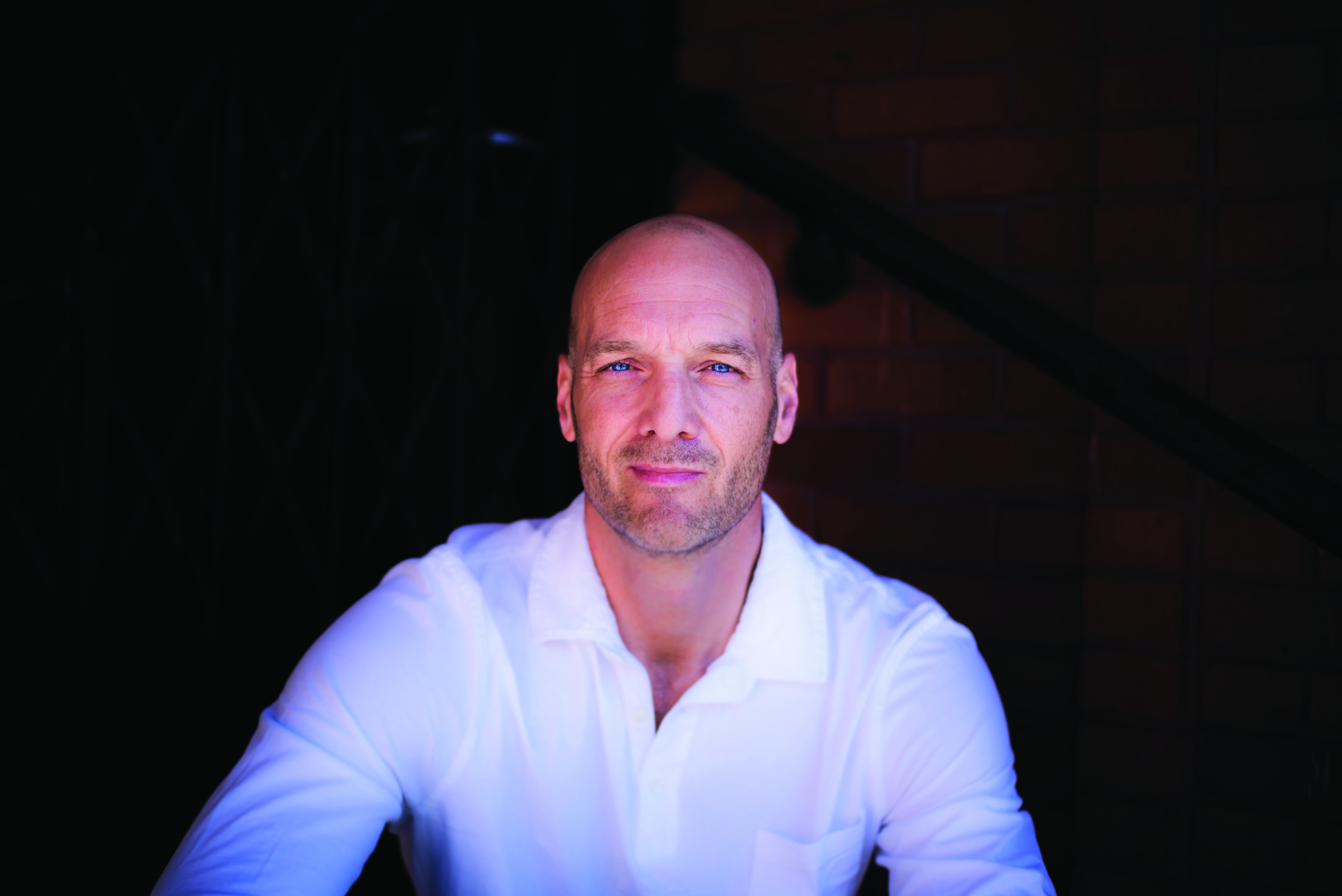
Robert Althuis
Robert Althuis is a spiritual coach, keynote speaker, and the founder of Sacred Wealth Collective, a holistic wellness organization dedicated to embedding Love+Truth as foundational spiritual principles for an awakened humanity rising to its full potential. A profound spiritual awakening experience in 2015 activated his intuitive gifts of claircognizance and clairsentience.
As a spiritual teacher, Robert is both a celestial philosopher and a renegade real-world change agent. A certified medium, he holds an MBA from Columbia Business School and was once a Fortune 100 executive and a successful real estate and private equity entrepreneur.
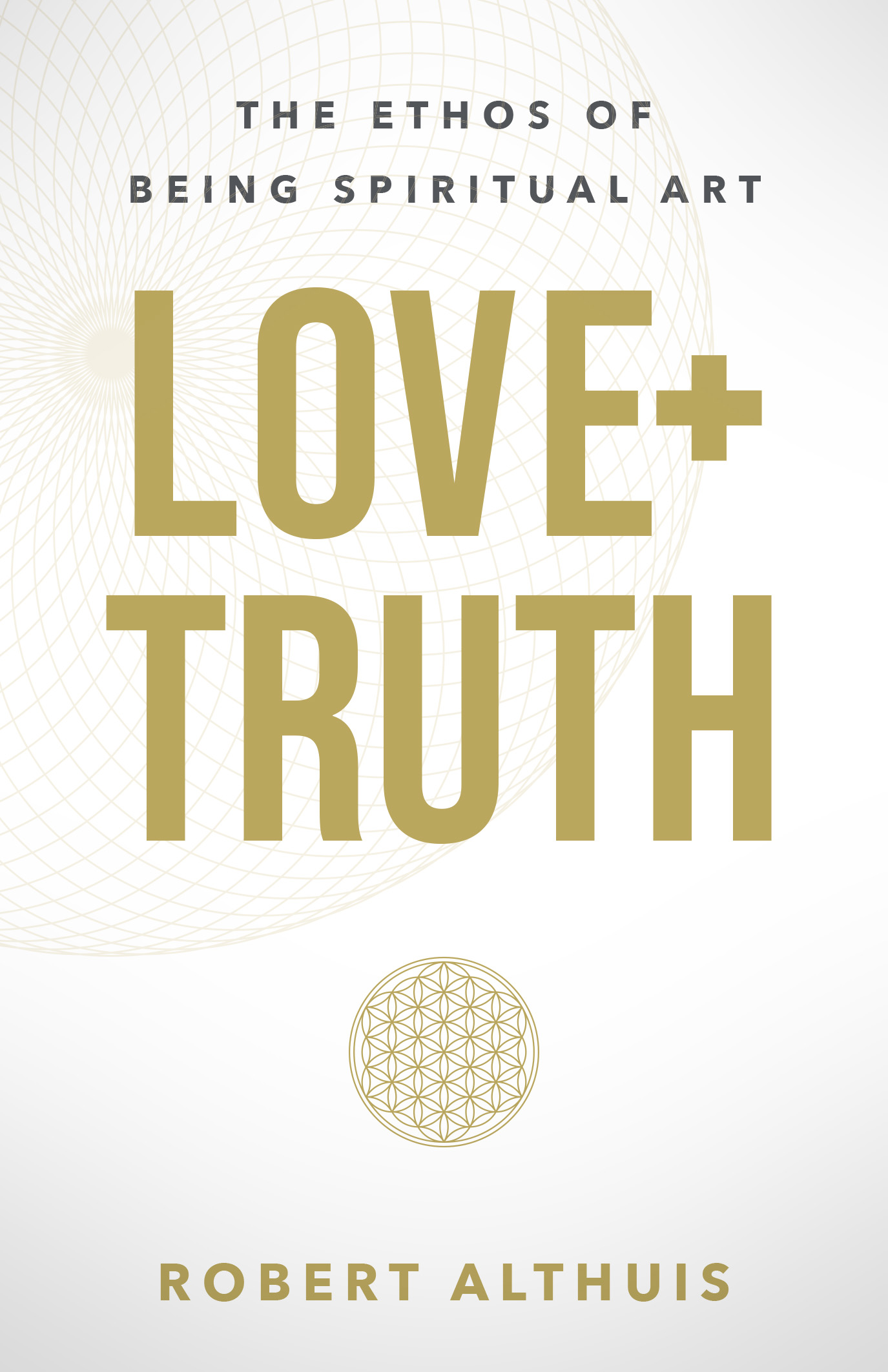
📚 Books by Robert Althuis
Transcript
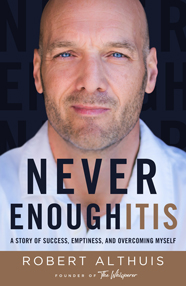
[0:00:30] DA: What happens if you have everything but you still feel empty? Robert Althuis’s life began as a fairytale, successful career, amazing wife, tremendous health, until it all fell apart. His relentless pursuit of more, ruined his life. His new book, Never Enoughitis, chronicles his wild rise to success and cataclysmic fall, with all the painful details and mistakes of that journey laid bare. It’s filled with stories of an idyllic childhood, youthful world travels, love and marriage, and then how it all went wrong. It also pivots to talk about transformation and is designed to help others avoid the same mistakes. If you feel stuck, empty, unfulfilled or at the end of your rope, Never Enoughitis aims to light your way forward, helping you unlock the true, “Why?” of your best life. Hey listeners, my name is Drew Applebaum and I’m excited to be here today with Robert Althuis, author of Never Enoughitis: A Story of Success, Emptiness and Overcoming Myself. Robert, thank you for joining, welcome to The Author Hour Podcast.
[0:01:34] Robert Althuis: Thank you, I appreciate it, Drew.
[0:01:36] DA: Let’s kick this off, would you mind giving us a rundown of your professional background?
[0:01:40] Robert Althuis: Yeah, sure. I’m originally from Amsterdam, I came to this country in my early 20s and I made my way into real estate, that was my original career, real estate development. I went to night school and I ended up, right on my 30th birthday at Columbia Business School in New York and then I had jumped to big corporate America and joined GE Capital. I was there for about seven years and rose through the ranks quite rapidly and traveled around the world. I was part of a unit that built infrastructure, airport infrastructure around the world and released aircraft around the world so I was traveling all the time. Then the financial crisis hit and that unit became toxic to GE Capital, the regulators came in and I bought out the unit for GE and then I bought out an orphan business and that’s how I really got started for myself and I was again, still building airport infrastructure around the world, doing private equity and venture capital, those types of things, for the better part of the last 10 years. Even though I have bought down most of those interests in the last few years but that’s in a nutshell my professional background.
[0:02:35] DA: Why was now the time to write the book? Did you have an “aha” moment or a moment of inspiration or did you simply have more time on your hands due to COVID or other situations?
[0:02:44] Robert Althuis: No, the background story to this book is, I sold a big part of my business in 2015 and I kind of reached that proverbial mountain top where I had all the money I thought I needed to be happy and I had a palatial house in an ocean front community, a beautiful wife and kids and toys and cars and I had everything but I felt completely empty and I had become – I swam with the shark in business and I had become a shark and I really become a monster. I was a narcissistic asshole, I really didn’t know where to go from there but I couldn’t stand myself, I couldn’t stand the man I had become and that was, you know, in hindsight, kind of my awakening and I don’t like to use that word too much but that kind of prompted me for a search, kind of a spiritual search [inaudible 0:03:24]. Then, when I went for a divorce in 2017, you know, it kind of burst my heart wide open. I just had so much repressed emotions and feelings and also about my marriage falling apart. I went into therapy and she told me to journal and I wasn’t that consistent at it and at one point, I asked her, I said, “Well what if I write a book, you know?” She said, “I just want you to write,” and that’s really where the book originated. I started writing about, it was self-help, it was therapy. I didn’t have any aspirations to publish it at that time, I was just trying to work through the big wounds I had in my heart and that had driven me to the behaviors and the way I showed up in life and you know, that’s what became the book. The book became this first part is the fairytale, I describe coming out of business school and meeting my wife and you know, double income, no kids and our corporate careers are taking off, this beautiful wedding, dream wedding and you know, life is just grand, right? Then the second part is I call real life where you know, some of this stuff business-wise, I had a lot of worldly success. I was making a lot of money but it was changing me, it changed my relationship with my wife and you know, I became a person that I ultimately wouldn’t really recognize and I told you, I had lost in the game or in the matrix if you want to call it. Then the third part is phoenix rising which is kind of my path out of it and just finding a different way to live life and you know, my life also kind of fell apart and I fall from grace, I had some natural disasters that wiped out a part of my business and I found myself on the edge of bankruptcy which, losing all that material wealth that had been so much a big part of my self-worth was kind of an interesting journey to go through but we get in life what we need. The book ultimately came together over those – the course of those years. June 2017, I finished it in April this year.
[0:05:09] DA: Now, who is this book for? Is it for men only, is this for millionaires only or can anyone take away some knowledge from this book?
[0:05:18] Robert Althuis: I think it’s for everyone. Any seeker, anybody that recognizes it of themselves and this concept of “never enoughitis” that we’re constantly chasing on this carousel of trying to fill ourselves up with stuff from the outside, whether that’s material stuff or relationships or anything else. I do think specifically, [inaudible 0:05:35] and it was very high performance and in the eyes of the world, I was extremely successful but no, I ended up being very empty. Ultimately depressed you know, I even had suicidal tendencies at one point, just my whole life fell apart. I do think that there’s lessons there for the masculine, right? I was a very stoic guy and repressed my feelings and I didn’t express myself. I had a big father wound, you know, my father wasn’t very expressive, I wanted him to be proud of me and you know, that kind of drove this ambition, relentless ambition that you know, pulverized everything in my path to gain his admiration and his pat on the back and you know, I never got it so I just kept chasing and I kept pushing myself and all the different things that came from that. I think people will find themselves in that, will find a story there that they might recognize.
[0:06:22] DA: Let’s start with a classic question. “Can money buy happiness?”
[0:06:27] Robert Althuis: No, I don’t believe so. I think money is important though, I live in this – living off the fat of the land, we’re here, obviously in this world and we’ve got bills to pay and money makes life so much easier. I always tell people, it’s very difficult to be spiritual if you don’t know where your work check is going to come from. Money is part of our life, a fabric of life and it can buy you wonderful experiences and it can give you beautiful things and comfort and honestly, you can sleep better at night if you don’t have any huge concerns. But money itself will not fill up that hole on the inside of you at all. Neither will a car, neither with a house, neither will a relationship, it all comes from within. That’s the kind of the essence of what I found. Because I was trying to fill everything up from the outside, I was trying to fill it up with more money, more prestige, more validation, more recognition and the more I changed it, the goalposts keep moving, right? You make your first hundred thousand, you think that’s going to make you happy and then you want to make 200,000 and then you want a million, so on and so forth. You end up in this carousel, getting these little dopamine hits but it doesn’t really truly fulfill you, it doesn’t really give you true joy.
[0:07:30] DA: Can you talk to us about the exact moment, if you remember or the time period where you realized, “I’m not happy,” and you think, “Okay, I’ve hit rock-bottom.”
[0:07:44] Robert Althuis: You know, rock-bottom is an interesting concept because you know, whenever you think you’ve hit rock-bottom, you haven’t yet. There were a couple of pivotal moments. One was, I sold this business interest, like I said, most of it was in Latin America in Bogota, where my headquarters are, and I was taking this last flight back from Bogota, just kind of closing this deal, you know, huge payday and I was flying back to Miami and I was like, “You know, I should be really ecstatic right now. I just sold a big part of my business, I mean early 40s, like, I made a lot of money and you know, why do I feel so empty? What is this?” I was really disillusioned by it, I was like, “You know, this is not what I was promised” right? It was like, “If I do all these things and I have this career and I go to an Ivy League business school, you know, I make all this money then I’m supposed to be happy.” And that was a really pivotal moment because I was like, “Well you know, what is this and what’s wrong with me?” Because everybody was looking at other people and I was like, “Why is everybody happy?” That kind of prompted the search. I think rock-bottom came a little bit later, you know, somewhere around 2016, early 2017. I lived in this very prestigious ocean front community, there was a guy that committed suicide. They woke up one morning, lived in a beautiful house, you know, kids, had his own construction business, it was a prestigious family here in Miami. He walked into the mangroves at 5:30 in the morning and blew his brains out and I don’t want to put it that graphic but that’s essentially what happened and I remember, everybody in the neighborhood was appalled by it, you know? “How could he leave his wife and leave his kids and how could he do that? It was so selfish and this and that.” I remember thinking like, I understood his pain, I understood his suffering and that he just saw no way out and that for me, I never got any closer to suicide than that but you know, I was like, “I understand this guy,” and I could just trace his steps and I could just feel his energy walking into the swamp outside of his home and just pulling that trigger and I was like, “Man, this is crazy,” and the only thing really that steered me in a different direction was I kept thinking about the kids. I was like, you know, “I just can’t do it to them,” but I would have had no problem. I remember flying, I was traveling so much. I remember flying around and people would say, “You know, safe travels.” I was like, “I don’t really care if the plane comes down.” I really didn’t. I was at this stage where I was like I was just in so much pain and anguish. Understanding what that guy went through was really a dark moment for me, I was like “Wow, this is like, I need to get some help, I need to start thinking differently, these are not healthy thoughts.” In hindsight, I think, you know, we get all these trials and tribulations on our path for a reason and today, you know, I’m more dedicated to helping other people in these situations and find their purpose in their life and I don’t think you can really teach this until you’ve been in the dark yourself. I could see a poetic beauty of it now but you know, obviously going through that experience was quite traumatic.
[0:10:44] DA: Now, what did you decide to do to come out of this state? You seem to have several moments where you’re saying, “Things are bad, I can now see it for what it is, I need to make some change”, what was that process like?
[0:10:59] Robert Althuis: You know, starting in 2015, I was still kind of doing my business but I had this other thing that kind of materialized. I had always had this “Midas Touch”, you know, everything that I always did in my life turned to gold and I started having this dry spell, you know? My heart wasn’t in it anymore. I was still pitching to the same investors and my decks were pretty good but you know, the deals weren’t happening and so that was really gnawing at me and then I had this overarching interest. I was just really getting interested in spirituality and I was reading books, I was going to workshops and retreats and I just was like, “There’s got to be an answer, there’s got to be like a different way,” and so, as I delved more into that in ancient wisdom traditions and went to various workshops, retreats, online courses and god knows, astrologists, tarot readers, I mean, I’ve been to everything, energy healers, everything under the sun, I explored and I did it with the same relentlessness that I pursued my career because I want to find a way out and you know, over time, I got a lot of intellectual knowledge about it and I started seeing a different way of looking at life and there was so much more to life than what I had understood reality to be. But that also opened up, you know, I still had to internalize it and I still had to embody it. That really came somewhere in the fall of 2017, you know, again, life gives you these gifts in sandpaper sometimes but you know, I finally decided to get divorced around Labor Day in 2017 and about eight days later, Hurricane Irma wiped out a business I owned in the Keys. That’s the only business I’ve ever done an unlimited personal guarantee on. By the end of that year, the insurance company didn’t pay out, we couldn’t get permits to rebuild this restaurant and so by the end of that year, I found myself meeting the divorce attorneys, you know, financial settlement that I didn’t have no idea how to pay it anymore and I was talking to bankruptcy boards and literally my whole life just fell apart in the course of three months and that’s of course where I committed to more intense therapy. But that’s really where things started falling into place because spirituality and these ancient wisdom traditions really started to anchor at that point. There was nothing of the old, I didn’t have anything to hold on to anymore. I wasn’t – I didn’t have the money anymore. I didn’t have the power. I didn’t have the successful business. That guy was just literally dying. He was gone, I was naked, I fell from grace and you know, it stripped me butt naked and now [inaudible 0:13:17] right? That’s kind of where I think it really opened up for me.
[0:13:21] DA: Now, you saw a therapist, she told you to start journaling and when did you decide that, “Hey, maybe this is a memoir, maybe I’ll put this out in the world,” and was it a good way to really get in touch with your emotions?
[0:13:37] Robert Althuis: Yes, it was very instrumental in processing my story and even just remembering my story and so I mean, “Where are all these holes, where’s all this pain that I experienced, where is this coming from, you know? What is driving this?” But I guess it was about two, three months in and I had written probably the first part of the book and I was like, “Well, if I’m going to write a book, you know, I want to publish it.” I started kind of calling around a little bit and I called one of two publishers and you know, they asked me to send a writing sample and it was really interesting because I got a really positive response, which kind of surprised me really because I’m not a writer, I mean that’s not really a skill of mine and since, it’s really become a passion of mine but I had no experience in any of this and it was really interesting because all of them said like, I was very raw in my book and I really exposed all the ugly stuff and the dirty laundry and then I talk a lot about love and compassion and you know, opening up your heart and being vulnerable and things like that, which all of them I wasn’t. All these publishers are was saying was, “This is such an interesting book because we get a hundred of these from female authors but we never get like an alpha male like you that talks about these things in such an open way.” And I was talking about so openly because it was therapy. I didn’t originally had in mind to put this out there in the general public. That encouragement was kind of huge and then to be honest, I finished the second part of the book and then I had some time lapse before I wrote the third part of the book. It was personal circumstances and I was busy with life. I was in a new relationship and all these things but I also was – I had some internal resistance because I really thought, “Who gives a shit about my story?” I didn’t really see the need or how this would benefit anybody. When I started sharing it with people and I started helping and mentoring some people, I got more and more people to urge me to like, “You know, you should put this out there and this could help someone else.” It took me a while to break through that resistance to actually do that. Obviously, I share a lot of things that I’m not that proud of either. I mean, you know, a lot of stuff that happened that you know, this isn’t the stuff you write home about to your mother. You know, to share it as raw and as ugly, you know, going through the editing process, it pushed me to really be raw and vulnerable about it. It’s one thing to live through it and acknowledge and own it yourself, it is another thing to put it out in the world. I had to overcome that a little bit.
[0:16:00] DA: Let’s get onto the title of the book. What is your definition of “never enoughitis” as you call it?
[0:16:03] Robert Althuis: Yeah, it’s never enough. That’s my definition. We live in this world, we’re on this carousel and you know, there’s lots of societal programming and pop culture and we believe we need to become something, you know, that we are not enough just being ourselves and so we pursue. You know, we get on this carousel and life just takes over and you know, we want to have a career. We want to become somebody. We want to gain material things. We want to have all of these, whatever it might be for us, right? Whatever our goals might be but we actually kind of forget about life and we’re trying to fill up and be something or be enough by all these external things and what I really found in all the ancient wisdom traditions when I found the spiritual path is likely it’s all within. There’s no amount of money that’s going to make you feel abundant unless you feel abundant inside. I’ve learned this the hard way because I had millions and millions and I felt poor, I mean and it is really hard to understand when you don’t have that kind of money but it’s true and you know, the same goes for love and the same goes health and all of those other things. I mean these are things that you have to cultivate within. We can’t fill that hole from the outside but our society, the way it’s structured and the way we pursue life and what we deem to be successful in life, right? We’re on LinkedIn profile and our social media profile and you know, it’s very outward focused but I think what we are seeking is within.
[0:17:27] DA: What happens to these folks? You mentioned how you get stuck in this loop, what are folks with “never enoughitis” that who have this, what are they really suffering from and what is the danger there?
[0:17:40] Robert Althuis: Well, at the very core it is perception of what we think we need to be in this world. I think a lot of people don’t live their authentic true self and true purpose. You know, they grow up, they have some societal programming, they have some upbringing, maybe their parents wanted them to be a lawyer or a doctor or whatever it might be and we have this sense that what we need to do and we need to get married and you know, we believe that we’re so, such freewill people but we are very much influenced by what we see. We’re very much influenced by marketing and what we’re supposed to be. That is what we try to create and we get lost in that. That is the structure and they want you to get lost in that. They want you to keep pursuing all these things, they want you to buy in on this thing. They want you to get lost in this stuff and you know, preferably pile a bunch of debt on it so you know, you’re really stuck in it because you know, you really don’t have that much freedom. You can’t just say, “No, I don’t want to work anymore,” because you know, you have bills to pay and mortgages and rent and all of this seriousness that comes into your life and so I feel like many people get lost in that and we forget about, “What is my true purpose, what am I really here to do?” And everybody has gifts and talents and superpowers. Everybody, I believe, has some secret mission that’s within them. Once we start aligning with that, you know life becomes a lot more flowing, life becomes about more in aligned and we get kind of off this carousel, just chasing all of this stuff that we think is going to make us happy but ultimately just gives us these little dopamine hits. It doesn’t give us that true fulfillment that we’re seeking within.
[0:19:10] DA: Now, you say everyone a lot so is this something that people of all income levels will go through or is this something once you tasted success or you’re at a higher income level that people perceive as success that you kind of then go down the rabbit hole?
[0:19:26] Robert Althuis: I think it’s for all levels and of course, everyone in this, I am sure there’s people that might not experience it this way but there’s a very interesting story. There was this billionaire in Germany, and he was the richest man in Germany and something happened to his business empire. He lost a couple billion dollars, he committed suicide but he still had about $12 billion or whatever. A god-awful amount of money, right? By all means, he still had everything but you know in his mind, you know, he didn’t have enough, right? He wasn’t the richest man in Germany and so I think this is pervasive. I think money is an amplifier, you know this kind of fear-based behavior is everywhere and I can tell you from being fairly high up in the business world, the greed is insidious and you know, you would expect from people that have so much at some point that would somehow taper off. But I actually think it gets amplified. The kind of moral corruption, I don’t say that all wealthy are bad people but I’ve just seen what it does to people. The wealthier people are, the more successful they are, they actually have a higher probability to become a victim of this and we’ve even seen this with celebrities, right? I mean they self-destruct eventually because of that, you know? Whether that’s musicians or actors or it could be anything. Because the way we deal with this dissatisfaction is we find displacement activities and and we numb ourselves with alcohol and drugs and nicotine and gambling and TV binge watching or sex or porn or having affairs and these all displacement activities that we get our, you know, because we are trying to just numb this pain. This undercurrent that we don’t know how to satisfy.
[0:21:05] DA: Talk to us about, let’s call it the “new Robert” that you had a transformation and you’ve written this book. It’s been five years you said since, you know?
[0:21:14] Robert Althuis: Six almost, yeah, six years.
[0:21:17] DA: Almost six years now.
[0:21:18] Robert Althuis: No, 2015 right. It was January 2015 so it was six years since I had that first flight back from Bogota, you know?
[0:21:24] DA: Talk to us about the changes you could make even if you find yourself really, really deep in the well. You’re not happy, things start to go wrong. You keep grabbing the things and nothing is coming from it. You know, we joked about rock-bottom but you are close to that giving up point but you decided to make the transformation. You put years, you dedicate time, what can you see at the end of that tunnel?
[0:21:48] Robert Althuis: It helped me tremendously for a couple of things. First of all, seeing that everything happens to us for our greatest experience, greatest evolution and so whenever we find ourselves in that time and place in our lives, I mean it is there on purpose. It is all in perfect order and that’s really, really difficult to see when you’re in a tough spot because you’re like, “You know, this just sucks,” and the pain and the suffering but when you kind of look beyond that and you just start thinking, “Well, you know what’s the lesson here? What can I gain from this? What can I learn in the insights here?” You know that is a huge step. I think the second exercise is working on having a spiritual vision. I think most people are fairly aimless in life. They just kind of follow this roadmap that you know, the world tells us, “You know, this is a successful life,” but if you take a step back and you say, “Well, what do I really want to create in my life?” And if you opt-in on marriage or relationship, you want to do it with your partner. “What do I really want to do? What are my values? What is important?” I think now with COVID and what’s happened this last year, I mean we’ve all been kind of confronted with this because we’re more at home, we’re more with our families, we have more downtime. There is less distraction and that restaurant or the bars might not be open or parks or some of this stuff that we keep ourselves busy, right? Some of this busyness is kind of locked out and now we’re confronted with ourselves. This is a great time to ask yourself, “What am I [inaudible 0:23:07], and what do I want to create?” and I think a lot of people are doing this, I think there’s a lot of people moving out of cities and accruing different types of lifestyles or even like, you know, switching careers and switching the way they work around and I think those are all really, really valuable things because once we get clear on what we really want to create, it becomes a lot easier to see what part in our life is not in alignment. That could be a job or career. It could be a relationship, it could be toxic people that we have in our lives, that we spend a lot of energy on. It could also just look at our own behavior and you know, where are we spending our time and energy and is that really in alignment with what we want to create? I think there’s any one of these, you start finding that rope, finding that well and kind of start climbing up a little bit.
[0:23:50] DA: The final chapters of your book, they’re there to help and I wonder, how do you feel like your story and your approach, how does that differ from other self-help books or approaches that are out there today?
[0:24:07] Robert Althuis: Well, one of the things I talk a lot about is we have this notion in the world that’s very self interest driven. It’s a lot of the greed and I talk a lot of it. I think our innate nature and our real desire is to be of service to others, I think that is a big part of where joy comes from and true fulfillment. Most self-help is about how to become more efficient in the matrix but we are not really changing the world that way. I do really think the world needs to change, I mean, there is a lot of things that we could see. There’s wars, you know, hate, violence, inequalities, injustices, pollution. I mean there’s so many different things that we see today in the world that we’re sort of numb to but you know, when we change within that is how we change the world. Most of the chapters that I have in that self-help part is to help people relate to how we show up in the world and the ripple effect that it has. You know, our true enjoyment and true joy really comes from being a service to the world and somehow seeing ourselves as contributing to this world in a meaningful way and that could be anything. I mean that could be a school teacher doing a great job. It doesn’t necessarily have to be that you’re a big powerful person who changes and touches millions of lives. It could be, you know, could be a mother at home and the way she raises her kids with love and care. It could be in any way but I think my chapters and what I really talk about is you know, finding those things that really give you purpose and I give honestly, a perspective on some views on how you could look at the nature of reality and you kind of start looking, observing yourself [inaudible 0:25:41]. I talk about the nature of reality, which we believe this world that we see with our five senses is the real world but you know, there is actually, if you strip that back a little bit, you get some really profound insights. Also, how you could change it and how you can change your own world.
[0:25:57] DA: It is not straight memoir, the book. Again, we talked about the self-help section but you have sections of the end of each chapter, which are really great because you put the spotlight on the reader and you ask them to look inwards and to ask themselves some questions. Why did you choose to do this and if you recall, what are a few of the questions that you really hope readers will ask themselves and dig into?
[0:26:21] Robert Althuis: Yeah, thank you for asking that because that was part of, as we were going through the editing process and in discussions with the editing team, we needed to connect the third part of the book better with the first two parts and so we did a little bit of retooling on the third part to make it more relevant and have more examples. I think it ended up being more powerful and we are really happy that we did that. I didn’t have that original insight. We worked really hard, you know, getting these questions because I can talk about these things intellectually at length but you know, unless you can connect it to your personal life and know, “What does this mean to me and where does this come into play for myself?” You really don’t like internalize and you just put the book away and say, “Okay that was a nice read but you know, what am I going to do with it?” You know, each chapter has three of these questions. We are just prompting this introspection, right? Where, how do you see yourself in the concepts that we describe? I don’t know which one, I think they’re all very powerful but one of the chapters – and I like all of them, but one of the chapters was a huge help to me, it was chapter “forgiveness,” because I never understood these concepts of forgiveness, I was really hard on myself. Even as I was going through my healing process, I was just so disappointed and so, you know we beat ourselves up. We do this generally, a lot of self-criticism but usually, we are our own worst critic and you know, forgiveness and forgiving situations or forgiving things that you know, we have done in the past and when you screw it up and when you royally screwed up. There’s things in my life that I’m not proud of. I wish I could undo them but we can’t. But we can’t move beyond it because you know, there’s no point in keep carrying it with us. This process of forgiveness and the questions that are asked at the end of the chapter is you know, what kind of unhealed wounds do we have, where do we carry these things? And this is just like rocks in a backpack that we lug around and just keep beating ourselves up. What I was misunderstanding, what I was taught about forgiveness, I always thought that forgiveness releases the person that’s forgiven. But what it really does is it heals you for carrying it around because that person might not even know, they might have offended you in some way and they’re never even aware of it or you know, that person could even be dead. Even after the death of my father in 2017, you know, I went through some processing on that with some of that grief but I also forgave him at one point and that was to free me up, not to free him, he was gone. I had to let go of this anger that I had towards him, this disappointment that I had, like why could he never express himself? And when I went through that process it was really interesting. I started putting myself in his shoes and you know, I started living his life and this was a guy that was born in World War II in Holland when it was occupied by the Nazis, he had German soldiers in his home when he was three years old, his father died when he was four, in the war. He grew up with hunger, he grew up with scarcity, you know, Holland was annihilated after the war, it took the better part of 10, 15 years to rebuild the country, with the martial plan. He grew up and that was his world that he grew up in so this guy grew up with scarcity, he grew up with fear and he was unexpressed and he was driven by fear his whole life, he was always afraid to lose everything. In a way, he taught us, you know, I had two older brothers, he was always teaching us to be tough, he was teaching us to have jobs and make money and like, he was just doing the best he could and you know, forgiving him for that which really released me of that burden I was carrying around. I think that’s one in particular that I really like because it’s a very easy one to get your head around once you understand that forgiveness is really for you, it’s not for the other person.
[0:30:00] DA: Yeah, I mean, that’s still really powerful. Writing a book, especially like this one, which you look so inwards and you talk about your intense emotional journey, I think will help so many people look inwards themselves and be able to change outward and it’s no small feat to write a memoir like this so I just want to say congratulations on publishing this book.
[0:30:20] Robert Althuis: Thank you. Yeah, it was self-help and writing this book really shifted a lot of things for me so it was extremely helpful and if it can help one other person gain some insight from this or some relief or you know, some other way of looking at life and it opens something up for them then [inaudible 0:30:36].
[0:30:38] DA: This has been a pleasure and I’m really excited for people to check out this book. Everyone, the book is called Never Enoughitis and you can find it on Amazon. Robert, besides checking out the book, where can people connect with you?
[0:30:48] Robert Althuis: I have a website for the book, it’s www.neverenoughitis.com, there’s more information on my bio as well and then there’s a website and it’s going to go live next week, at the launch of the book which is “Whisper.” That is www.thewhisper.com and that’s where I have more on science, more teachings, my coaching offerings, what I really focus on these days and tools and techniques and strategies to help people, mainly alpha males, highly driven alpha males and corporations to change to become a force of good. On Instagram, I’m @thezenwhisperer. I post there almost daily about various aspects of life and my teachings and some of these wisdoms that I love sharing.
[0:31:28] DA: Wonderful Robert, thank you so much for coming to the show today and best of luck with your new book.
[0:31:32] Robert Althuis: Thanks so much, I really appreciate it.
[0:31:35] DA: Thanks for joining us for this episode of Author Hour. You can get ’s new book, Never Enoughitis, on Amazon. Also, you can also find a transcript of this episode and all of our other episodes on our website at authorhour.co. For more Author Hour, subscribe to this podcast on your favorite subscription service. Thank you for joining us, we’ll see you next time. Same place, different author.
Want to Write Your Own Book?
Scribe has helped over 2,000 authors turn their expertise into published books.
Schedule a Free Consult