Jeremy Keeshin: Episode 611
Read the full transcript
Jeremy Keeshin
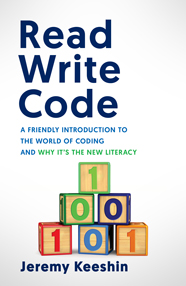
Jeremy Keeshin is the CEO and co-founder of CodeHS, a coding education platform used by millions of students in schools. Before starting CodeHS, he taught computer science at Stanford, and he has visited hundreds of schools around the world. In Read Write Code: A Friendly Introduction to the World of Coding, and Why It's the New Literacy, he explains the basic building blocks of modern technology, from programming and the internet to data, apps, the cloud, cybersecurity, algorithms, and artificial intelligence. He lives in Chicago.
📚 Books by Jeremy Keeshin
Transcript
[0:00:28] DA: Today, reading and writing are foundational skills and in the digital world, coding is too. But coding can be intimidating to learn, what is code, where do you start? In his new book Read, Write, Code, Jeremy Keeshin demystifies the world of computers, starting at the beginning, to explain the basic building blocks of today’s tech. Programming, the Internet, data apps, the cloud, cyber security, algorithms and more. Jeremy has helped teach coding to millions of students over the last decade. Complex concepts are explained in a friendly and engaging way and there are interactive examples and practical tips. The book is a must read for modern educators and anyone who wants to understand why code matters today. Hey listeners, my name is Drew Applebaum and I’m excited to be here today with Jeremy Keeshin, author of Read, Write, Code: A Friendly Introduction to the World of Coding and Why it’s the New Literacy. Jeremy, thank you for joining, welcome to The Author Hour Podcast.
[0:01:28] Jeremy Keeshin: Thank you, I am excited to be here.
[0:01:31] DA: Let’s kick this off. Can you give us a rundown of your professional background?
[0:01:35] Jeremy Keeshin: Yeah. I’m Jeremy, I’m the CEO at CodeHS and what we do at CodeHS is comprehensive platform, helping schools teach computer science and we started CodeHS in 2012 and since then, we’ve had millions of students on the site, all over the world and yeah, really trying to make computer science fun and accessible in schools, you know, focusing on middle-schools, focusing on high schools. Helping to make curriculum to train teachers, to build the software and yeah, we’ve been doing that for you know, almost a decade. We started doing that after myself and my co-founder, we were both computer science students and NTA’s at Stanford and taught the intro computer science classes there and at the end of college, we started doing CodeHS and we’ve kind of been doing it since then.
[0:02:29] DA: Now, why was now the time to write this book? Did you have an inspirational moment, an “ah-ha” moment or just more time on your hands?
[0:02:38] Jeremy Keeshin: I’ve been wanting to write this book for a number of years. I think it just got to the point where I was like, “Okay, I’m going to do this, I’m going to make this happen,” and I felt like, obviously, there’s so many books, but I felt like there wasn’t a book like this out there and what I’m going for is really trying to make things around coding and computer science really friendly and accessible. That’s the idea of the book, that’s the idea of what we do with CodeHS. I think there’s a lot of people, whether they’re teachers, whether they’re just adults in the – just general adults like, anything with coding or computer science, it just sounds kind of scary and intimidating and people are like, “I just don’t know that, like I have no idea,” you hear somewhere and you’re like, “Cybersecurity hacking? I don’t even know what that is” AI? “What even is that?” I think part of the idea of the book is this is something that’s really important for people to understand. Whether you’re a teacher who – you’re teaching it, or it’s just like, you’re interacting with technology every day, on your phone, understanding what that means, understanding how things work. There’s a lot of more technical books, once people have maybe decided that they’re interested in computer science but really saying, “Hey, how can you make coding friendly and accessible?” That’s the number one goal with this book.
[0:04:02] DA: Now, clearly, you’re a professional in this space but while you were writing the book, did you have any major learnings or breakthroughs?
[0:04:11] Jeremy Keeshin: Right, it’s pretty hard to write a book, it was definitely a learning experience and a challenge for me. An attitude that I try to take that we also try to teach is just around growth mindset and like the idea that things are learnable if you put the effort in and I think something like you know, coding, people think, I can’t do that, you know? But okay, what’s up, what’s a path to doing that. You know, there’s a topic in the book which I talk about, which is very relevant to writing a book. But talk about problem decomposition. You know, you have some program or some project you're trying to create and how do you take that problem and break it into smaller problems and break those problems into smaller problems, using something like top-down design. What’s the overall project you want to do and then how do you break that down into smaller pieces or then you get to pieces that are smaller and smaller, at the point where, “Okay, you can just go and solve it.” The book had a lot of those elements so you know, beforehand, figuring out, “Okay, well what are the steps?” You have to create the outline, you’re going to write chapter one, you’re going to write chapter two. Okay, “You’re going to do this edit you’re going to create the layout” and you take each step and then you break down that step more and more and more. I think there are analogies in the book to the writing process but it was definitely a learning experience in a lot of ways, it was a challenge to write it but I hope that it can be something that articulates concepts that last —where it’s more foundational. Because things with technology, they change pretty quickly but I think the basics last for a while.
[0:05:43] DA: Now, who exactly is this book for?
[0:05:46] Jeremy Keeshin: The book is geared towards educators. It could be someone who is a teacher, it could be a computer science teacher or a technology teacher, it could be a school administrator but I think primarily, for educators. Whether or not they teach coding or something with technology, that’s I think the primary audience of the book. But also, you know, it’s written in a way where it can be read by students. It’s also in a way where it can be read by someone who is just interested. It might be — if you wanted to know things like, “How does the Internet work, what are the pieces that make up the Internet?” I explain that. Or you’re wondering, “Okay, what’s going on with AI like I’ve heard that term, what does it mean?” I do think it has a lot of value if you’re just generally interested in this topic and I think that there’s really good reasons why this is something everyone should know. I really believe that and I think you’ll see more and more schools teaching it, the trends are just moving that way. But I think primarily, it’s written for teachers and we work with a lot of teachers, you know, we work with tens and tens of thousands of teachers and I think having this as a book — whether you’re new, you know, if you’re really new then maybe these are things that you’re hearing for the first time or maybe you’ve been teaching it for a while, it just, you know, another resource to kind of show how you can connect the dots between areas.
[0:07:03] DA: What can readers really expect from this book? What makes it different? Because it’s not a coding book. What should they be prepared for?
[0:07:14] Jeremy Keeshin: Yeah, I guess it’s a question like, is this book – you know, the book’s called Read, Write, Code, is it teaching you how to code, not exactly. It does teach a little bit of coding like, “What is coding, how does it work, how do you get started in doing it?” But the analogy that I make in the book, is it’s kind of like a map. I think if you say, “Okay, what’s going on with coding, with computer science, what are the pieces, how does it work, how is it put together?” I think for many people, it’s just like, I don’t even know where to start.
[0:07:39] DA: Sure.
[0:07:39] Jeremy Keeshin: Where do you start? I mean, that’s actually a challenge because a lot of the concepts depend on each other. So, to give you an idea of what some of the topics are that are in it, it’s you know, okay, “What is coding, what is programming?” Coding is giving instructions to a computer. How does that work, can we look at some simple examples? How does everything digital work? I kind of explain how you get from binary, from like bits, from ones and zeroes to how things are represented in computers and how does that connect to different programming languages or different examples. But then it kind of hops around to just put all these things in context. Explaining how does the Internet work, what are all the pieces that make that up, explaining different basic programming concepts, explaining, what is data, you know, what is the cloud, what is open source, what is cybersecurity, what do you need to know about cyber security, about phishing, cryptocurrency, about algorithms, about A.I, which is artificial intelligence. Then a little bit about computer science education — how does computer and science education work, what are different ways you can go about learning things. In a lot of ways, to continue learning. It’s really meant to be like an introduction, a survey but to connect and show how all the pieces fit together. Because a lot of times, you may want to learn about one area but it has some sort of prerequisite knowledge where you need to understand something else. I think it’s a baseline, to give people a baseline understanding of things around coding and around computer science. Those are a number of the high-level topics in the book.
[0:09:13] DA: How hard was it for you to take these concepts and really break them down to a granular level so that they’re easily digestible and in little bite-sized portions?
[0:09:23] Jeremy Keeshin: Right. Yeah, I think that’s a big challenge in the book with every topic that I have, there are so much more to it. You could have books just on any topic that maybe I talk about in a chapter or a paragraph but I try to come up with very – I’m not trying to explain things using complicated words, which you can just do. I’m trying to say, “Okay, how could you explain something complicated in a simple way, in a paragraph, and then use that to see how all the different things link together.” I think someone who feels like, “Okay, hey, yeah, coding’s intimidating, I don’t know what that is,” I think if they read this book, they’ll come away being very pleasantly surprised, how much that all that kind of puzzle pieces put together. Then they can see, “Oh yeah, here’s how code fits in, here’s how that – what that looks like with data, here’s what that means with different considerations.” And I think — you see topics in the news now and I think there’s a real difference if you understand what’s going on behind it. That could be – you’re talking about hacking is in the news all the time now, right? Something’s being hacked. “What does that mean? How are things getting hacked? Hospitals are getting hacked, schools are getting hacked, there’s phishing attacks. You know, what is a phishing attack, how do I protect from that?” Yeah, a lot of people know these things but many, many people don’t and there’s just I think a basic foundation of concepts that you know, that this allows you do – you know, connect the dots between them. I do try and simplify it, but give you enough that you can really work with and there’s obviously for each topic, there’s a lot more to dive in but I hope to distill it to a lot of the – like essential beginner kind of concepts.
[0:11:02] DA: Yeah, I looked at it myself and it was very easy to take in, you broke it down really well.
[0:11:09] Jeremy Keeshin: Thank you.
[0:11:10] DA: I would like to talk about cybersecurity though.
[0:11:14] Jeremy Keeshin: All right.
[0:11:15] DA: What do you think the average person needs to know about how much risk is actually out there and maybe what are some steps that you would suggest they take right away that maybe they have never even thought of that are pretty easy to do today?
[0:11:30] Jeremy Keeshin: Right. It’s hard to generalize but I would say that — you know, thinking about how much people might use their phone, use their computers, have different accounts for personal information, private information, bank accounts. You know, you have a lot of data out there, that’s important for work info. How is it being protected, how are people trying to take advantage of it? People who are hackers, the tactics that they have evolve pretty quickly and it’s hard to keep up but I would way that I think most people probably aren’t taking even the most basic security precautions — just because maybe they don’t think it matters or makes a difference but there are pretty simple things you can do that I think really help. You know, some people know this but not everyone does, you know, about whether that’s how you’re setting up your passwords or two-factor authentication or using a password manager or what does it mean to have a secure password. What are the types of attacks that people might be susceptible to? There’s a type of attacks call a phishing attack and the phishing attack, someone sends you, you know, maybe they send you an email and they’re impersonating someone else or they’re impersonating someone you know and there’s kind of creating a sense of urgency. And they’re trying to get some information from you or get your password and take over your account or sell you something or get a credit card. A lot of people fall for this, a lot of time it could be a tech-unsavvy user. You could also be a tech savvy user and fall for phishing attacks because they’re just, they’re pretty tricky. But just knowing, “This is what a phishing attack is, this is what I can look out for. These are the types of things that matter.” If you have a password and say, you keep all your passwords on all your sites are the same, then, if one site that you use is hacked, which happens all the time, and now I go and I’m a hacker and I get access to that database of passwords, I can go try that password and your username on all the other sites and that’s how a lot of accounts are taken over. If people just know that they should have different passwords on different sites and they can do that with a password manager or setup two-factor authentication. You now suddenly become so much more secure and maybe your account is less likely to get taken over. Especially if someone’s trying to take this over in mass. Again, that’s just one way but I try and illuminate in the book what are the different types of attacks that are out there. It can be a little bit intimidating but I think yeah, I think there’s the individual, “What did you do?” But then there’s like the organizational level and I think to see that like, you know, we work with schools. There are schools that get hacked or they got ransomware attacked. You know, a ransomware attack is like something that hackers done an attack and now they’ve encrypted or kind of locked up something on your computer or the network or whatever it may be and then they’re demanding a ransom to get it back and that’s crazy, and that’s happening and it’s happening in hospital systems and I think you need both individual level and organizational level knowledge about this and how to be safe. I think, you know, again, cybersecurity topics and cybersecurity education, that’s not going away, we have a bunch of these courses on CodeHS and they’re getting more and more popular to understand and I think it connects to – yeah, I like to connect and contextualize the information that people are learning. You could try and take one of these topics and look at it in the news and I think if you read that news article today, you don’t know kind of about these foundational topics, you go, “Okay, like, something bad happened to cybersecurity, someone was attacked, I don’t know what that means, I don’t know what we should do.” But I think you understand the concepts a little bit more and you know, it really gives you a better idea of what happened and how you might mitigate it, how you might mitigate it for yourself or within your own company or organization or school. Even to the level of like, people are thinking about, “How do we regulate the internet and net neutrality?” And all these things. I think the people who are legislators have no idea about these concepts I’m writing within the book and the impacts to our general population are hugely negative because I think that the next generation can be much more educated about these coding and computer science concepts — then you’ll have, hopefully, laws related to the Internet privacy, safety that will make a lot more sense.
[0:15:52] DA: I like to bring up the example of the fact that we all had to be subjected to George W. Bush painting in his tub, which is a photo that was grabbed off of his own personal computer and email because he wrote a memoire and gave up his password security questions. They had his mother’s maiden name and they had his street address, so they recovered his password and stole all of this stuff. You never want to see that burning image in your mind again, tighten up that security, folks.
[0:16:23] Jeremy Keeshin: Right. I think again, I think that you read about it online, you read about it in the book and you spend 30 minutes, an hour on this. It’s way better to do a little bit of proactive security than to get hacked and deal with that after the fact and I think it’s probably, you know, it’s very, very common. It’s very, very common and I think these topics, cyber security, privacy online, these aren’t going away. We are going to be debating these topics for years and years. I think, again, I think the education here is foundational. I think people really need to learn this stuff.
[0:17:02] DA: Talk to us about starting a career in computer science.
[0:17:06] Jeremy Keeshin: Sure.
[0:17:07] DA: What can someone expect, where can they go and where should they start?
[0:17:12] Jeremy Keeshin: Right, that’s a great question. I talk about that a little bit in the book under the computer science education section and it depends. Again, the audience like, who is the person listening to this. You know, if they’re a student I think if you’re a student in high school or middle school, you know taking a class is a great place to start. A lot more schools are offering classes but most students still aren’t even taking the classes. A very small percentage are taking them and I think also that’s why the accessibility part is a big part of the book. People have this preconceived notion about what coding is, who can do it, who it’s for and that has to be a certain way, but if you are a student and you can take your first class and create a cool project and kind of show that impact, I think that’s huge and middle school, in high school I think take a class, try it out, see what’s it’s all about. That’s the first place and then if you’re in college, you could still take a class. You could take an introductory class and then it depends if you are trying to get into it professionally. You know, we offer classes for teachers, for students. There is also a lot of different online classes depending if you just want to explore it, if you want to make a certain project. If people are trying to get into it later in life or as a career change, you know there’s coding boot camps, which are more intensive ways to do it. Maybe over a few months, you know, a few months or a year where people try and make a career change and so there is a lot of different places to start. I think, and I have seen a lot of success with — the people that are interested like starting, start small. Start with a really small project and I think if people get over that “ah-ha moment” of coding that it really opens the door in a huge way, and that’s the first place I would want to get people to and that’s what’s the Hello World Program is. It’s just like, “Okay, your first program,” but then, there’s the kind of cooler version of that, which is, what’s that first thing that you’d say, “Oh wouldn’t it be really cool if I could make this?” And when you see that, “Oh hey, I have this idea. I can create it and put it together,” that’s one thing I think for me, I am learning this over, you know many years now was very motivating. In high school and college, I was really interested in comedy and ran a comedy newspaper like The Onion and would build the website for it. That was a way to kind of learn about how do you make websites and apply it to something I am interested in. That’s how I would really recommend for someone. It’s like, “Oh, I am interested in…,” again, you could pick any area. You could pick any area, I’m interested in any area and how do I apply that with computer science. I am interested in biology, I am interested in economics, music, audio — there’s connections there and you can bring that idea. So, I think connecting into what you are interested in starting with something small and then depending on your age, you know, taking a class but figuring out if you can, you know, can you make a project, a simple, simple project and then go from there. That’s how people start. We start in the book and in the courses we teach, we start with something called Carol the Dog. Carol is this dog who lives in a great world and knows four words. The dog can move and turn and put down a tennis ball and take a take a tennis ball, that’s it. It’s super easy, as a way to start. It is not intimidating, we do it with middle school, high school. Again, we do it also with adults. We taught this way at Stanford too, and you can start small and then you could build up and the people who were programming, you know, whatever the latest app is, many of them learned this way. There is a path to getting more and more advanced but I think you got to get started. You got to start small. Friends of mine and people I know from college created some of the apps that millions, billions of people are using and they started in just the way that we’re talking about in this book.
[0:20:45] DA: Yes, so is there an age group where you should get started on computer science? You’re just, what you’re saying is it’s never too late but can kids start doing this? Is this like karate classes when you’re young?
[0:20:57] Jeremy Keeshin: Right. We do, at CodeHS, we do middle school and high school and we’ll probably go even younger soon. It looks different at the younger grades. You know, it is maybe not that they’re – but you mean you could do different types of coding but there’s something called like block coding earlier on and block coding is like instead of doing the typing where you are typing out the exact code, you kind of drag and drop these visual blocks, which makes it a little bit – It’s like bumpers, you know in bowling. It’s like a little bit easier. It prevents some of the mistakes and so there are different visual ways or even like online/offline ways or kind of ways where kids explore some of the concepts. It is definitely being taught in elementary school. It is very different but yeah, I mean you can get started earlier on but for me, the approach that I think is important is if students are learning it earlier on, you want to make it fun. You want to encourage them to keep learning because if someone takes their first class and they’re in middle school and they don’t want to take a class again, that’s not helpful, but I think exposing students to it early is really key especially because again, if you know then you know but if you don’t know, most people don’t even know what coding is. That’s the idea of this book. If you know, you know but most people really, really don’t know and there’s so much opportunity with it. The way I start the book in the analogy that for the book, for the title, Read, Write, Code, you know I talk about why sent the new literacy and the analogy that I use is reading-writing. Those are core foundational skills. You expect students to know and you expect people who graduate high school to know reading and writing. You use those every day, you know you’re not going to be a professional writer or a professional reader. You know, you use reading and writing every day as part of just being an educated citizen. I would say that today, 2021, you know with how much technology impacts our world coding is another one of those foundational skills. You know, you don’t need to be a professional coder for it to make a really big impact and then part of that analogy also is 500 years ago. Most people can read and write now but 500 years ago, that was – you know, most people couldn’t read and write. That was actually just reserved for a very small group of people and then I explained with the printing press, you know with changes in literacy that really, really changed and so what I argue in the book is I think we are at the printing press moment for computers and for the Internet and that you know, there is a small group of people who know what you can do with coding and that opens up a whole set of opportunities just like literacy was reserved for a very small group of people many, many years ago. Now, it is something that everyone knows. I think you’ll see more and more people learning coding and applying in all sorts of ways.
[0:23:41] DA: Being a professional in this space, can you talk about maybe your experiences with getting started and then maybe a few of the accomplishments that you are most proud of in your computer science and programming career?
[0:23:52] Jeremy Keeshin: I am not doing as much of the programming now as I used to just because I am more on the business side but I still use it quite a bit. I got started in, really in middle, I think in middle school. I tried to make my first website, which just had some random text or jokes with friends. I took a class in high school, I studied computer science in college and I built a lot of different projects along the way. Initially when we were started CodeHS, myself and my co-founder, Zach, you know we built the site. We built the curriculum and now we have a team that’s building a curriculum and building that, building the website but I think still being able to understand all of those concepts and how, again, what’s the architecture of this site, how does that determine what we can build for teachers and for students. I think in organizations that build software, there’s just a huge communication gap between the different parts of the organization for understanding on what’s possible and how you can manage your software engineering teams and all of that. I think for myself, you know, the coolest accomplishment I think we have in terms of what we built is the CodeHS site and website. I mean we have been building that for, yeah again, like nine – about nine years now and so sometimes I’ve visited schools and kind of students have sometimes asked like, “Is the website done? Is it done?” I think the programming projects they’re not really done. You’re always iterating, you are always improving and you know, we start with the simple prototype. That was a really kind of basic page that didn’t do much and just let these dudes kind of code online and build these simplified programs and now we have built this into a whole online coding editor and learning management system and assignment builder and a way for in millions of students interact with it. I think that all of these concepts that you learn along the way, you know we have been able to apply them and I think it’s allowed us to build the site. I think computer science is a great way to get into like entrepreneurship too because a lot of people maybe they have their idea. Again, someone else can build it but if you can build it that’s a way to get started. I think there is so much, so many more ways to continue to apply it but that’s a little bit. I think, yeah, I think the actual website that we created is the coolest program but I built a lot of projects as well just for fun of all sorts of different things but I think this is by far the most substantial thing we’ve coded.
[0:26:23] DA: Now, what is the website of your first website so we could check that out but you know, what’s –
[0:26:30] Jeremy Keeshin: Well, it’s changed a lot. I have my – the domain I got many years ago it was – my last name is Keeshin, the blog that I have is at thekeesh.com and so that was like my first random website and now it’s like a blog and has different projects and all sorts of other things but I have a lot of websites and domains at this point in time, yeah.
[0:26:52] DA: What do you see the future of computing looking like?
[0:26:56] Jeremy Keeshin: Okay, that’s a good question. Yeah, you know, I talk about this a little bit in the book. I talk a little bit about crypto currency. You know, it is getting more popular, Bitcoin’s been in the news quite a bit now since it went up you know, whatever, 300 something, 400% in the last year but it is still a pretty fringe technology and so I think the crypto currency and Crypto Blockchain stuff is very interesting. I’ve been interested for a long time in self-driving cars. I’ve kind of explained a little bit of those. You know, they’re not really out to the general public but in Arizona now, they’re starting to test that with Google, the Google Waymo project. I think I don’t know what’s going – I don’t know, we’ll see with virtual reality. I mean I think that is one that a lot of people kind of wonder about and explore and there is different kind of smaller used cases. I don’t know if I can see that getting very popular or not, who knows? I think though if you look back on the history of how things have changed over whatever, 10, 20, 30, 50 years, I imagine that the people making predictions 10, 20, 30, 50 years ago could never have predicted the things that would have come over the next period of time. So, I have to imagine that over the next 10, 20, 30, 50 years that we’ll all be very, very surprised. I think you can kind of follow like what are some of these cutting edge areas but who know how it will develop? I like exploring and learning about these. I share a bunch of different topics in the book and encourage people to learn about it. I think with AI, you know there are so many different ways that that can go. I also tried in the book connect to different kind of like thought questions and ethical questions and especially from an education perspective, it’s like, “Okay, we have AI, what’s good about it? What’s bad about it? What should we consider when it’s being created?” A lot of these systems are very biased like if AI is being used in policing for example with those systems have been extremely biased and so I think there is an onus on the next generation of like educators and people learning this to say like, “Okay, how do make these technologies in a way that positively impact society and I mean even recently with all of the social networks I think, you’ve seen social networks be a force for good in some ways and then of course for extremism. I think that if someone is learning about computer science and they can think through these questions, I hope that people building the next generation of software, you know and tools that we all use brings that perspective. I don’t know, there’s a lot of areas but who knows?
[0:29:35] DA: Are there any resources that you offer readers of the book outside of the book?
[0:29:42] Jeremy Keeshin: Right, so there is a website that goes along with the book at readwritecodebook.com and it links to a lot of different interactive examples. Anything that has different coding samples, you can try them and explore them and then yeah, there is a lot of things that we have on our site at codehs.com. For teachers, for students, for anyone who wants to get started but yeah, there’s a companion website of course with the book. It shows you along the way like if you want to get your first webpage, if you want to get your first domain, you know I’ll walk you through how you do all of those things.
[0:30:14] DA: Jeremy, writing a book especially like this one and I know we just scratched the surface but the way you broke everything down is really going to help so many people understand the world of coding and it’s no small feat to do that, so congratulations on putting this together and publishing your first book.
[0:30:31] Jeremy Keeshin: Thank you.
[0:30:33] DA: If readers could takeaway only one thing from the book, what would you want it to be?
[0:30:38] Jeremy Keeshin: That’s a hard question.
[0:30:40] DA: Hot seat question, take your time.
[0:30:43] Jeremy Keeshin: Coding is new literacy, it applies everywhere in surprising places and it is something that you can learn and kids can learn and need to learn if you really want to understand the world around us in the modern digital world. I think it’s an essential foundational skill and I hope that it piques people’s interest in learning the basics and then learning a lot more.
[0:31:14] DA: Jeremy, this has been a pleasure and I am excited for people to check out the book. Everyone, the book is called, Read, Write, Code, and you could find it on Amazon. Besides checking out the book Jeremy, where can people connect with you?
[0:31:25] Jeremy Keeshin: They can find me online usually at my username, JKeesh. My website is jeremykeeshin.com and we have a lot of other websites but codehs.com is our main, is the main company website.
[0:31:41] DA: Wonderful, Jeremy thank you so much for coming on the show today and congratulations again for publishing.
[0:31:46] Jeremy Keeshin: Thank you. Thanks Drew.
[0:31:48] DA: Thanks for joining us for this episode of Author Hour. You can get Jeremy Keeshin’s new book, Read, Write, Code, on Amazon. Also, you can also find a transcript of this episode and all of our other episodes on our website at authorhour.co. For more Author Hour, subscribe to this podcast on your favorite subscription service. Thank you for joining us, we’ll see you next time. Same place, different author.
Want to Write Your Own Book?
Scribe has helped over 2,000 authors turn their expertise into published books.
Schedule a Free Consult