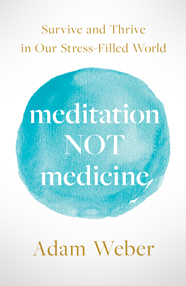
Adam Weber: Meditation Not Medicine: Survive and thrive in our stress-filled world
Read the full transcript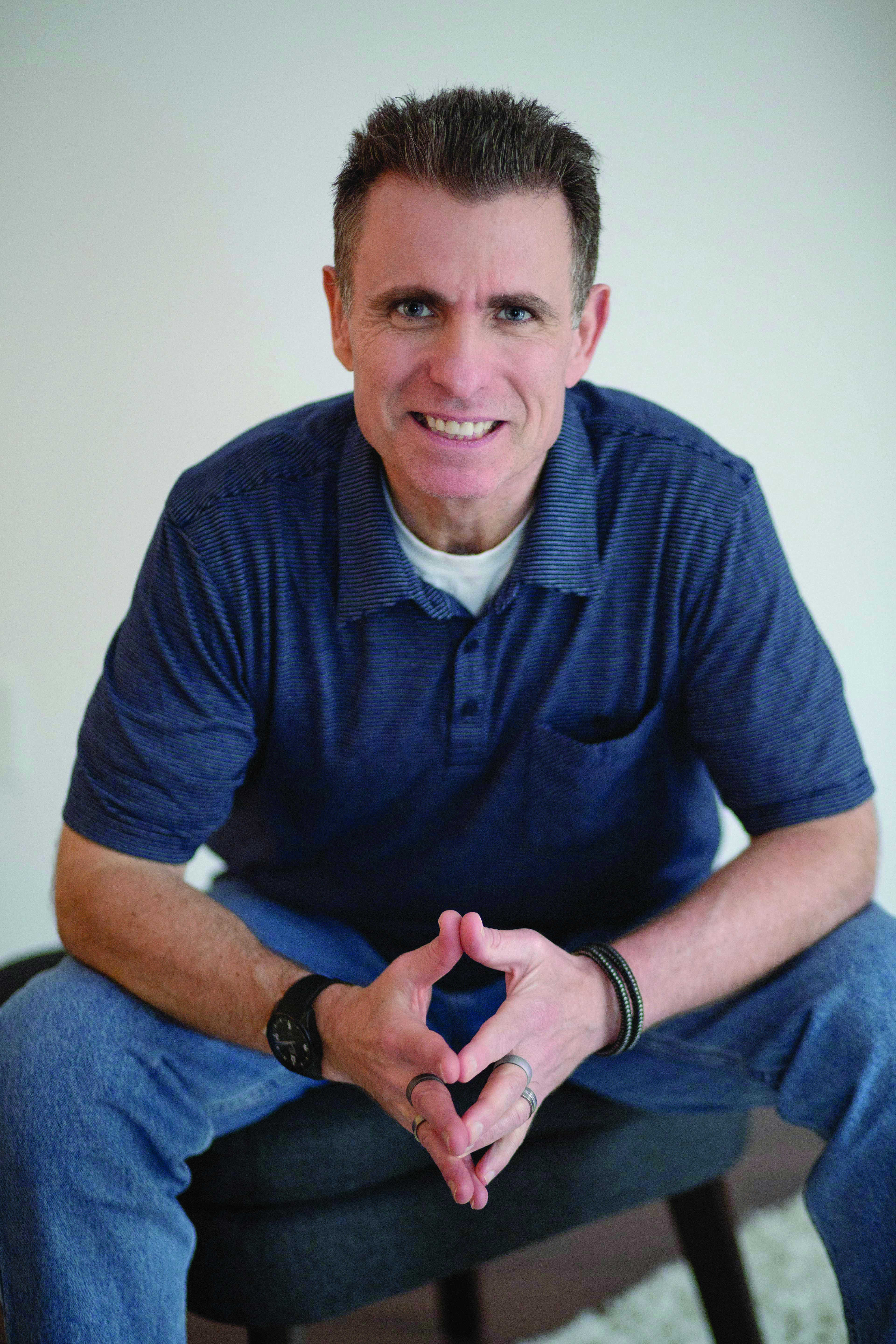
Adam Weber
Adam Weber was working in commercial real estate in New York City, an industry known for serving up stress on a silver platter, when back surgery led to a shocking diagnosis.
📚 Books by Adam Weber
Transcript
[0:00:28] DA: Adam Weber was working in commercial real estate in New York City in the industry known for serving up stress on a silver platter, when back surgery led to a shocking diagnosis. Adam, a husband and father of two young children had multiple sclerosis. Soon, Adam was unable to walk without falling and life became a blur of anxiety and depression as he struggled to meet the overwhelming demands of day-to-day life. That’s until he discovered meditation. Through the daily practice of meditation, Adam was able to calm his mind, reduce his stress and see improvements in his pain and other symptoms. In his new book Meditation Not Medicine, Adam simplifies meditation with an easy, practical approach that anyone can follow to get results, even in the most challenging circumstances. Hey listeners, my name is Drew Applebaum and I’m excited to be here today with Adam Weber, author of Meditation Not Medicine: Survive and thrive in our stress-filled world. Adam, thank you for joining, welcome to the Author Hour Podcast.
[0:01:27] Adam Weber: Thank you for having me, Drew.
[0:01:28] DA: Let’s kick this off. Why don’t you give us a little bit about your background?
[0:01:32] Adam Weber: Well, I worked in the corporate world for more than two decades, I worked in a fast-paced, highly-stressed environment in New York City where things never seem to slow down, and when you do that for more than two decades, stress builds up. Then along the way, I was diagnosed with a progressive form of multiple sclerosis. I knew I really needed to slow down and put the brakes on and deal with my stress and because I was already taking a lot of medication, I knew I needed to use something that didn’t involve a “take a pill approach” or “take an injection approach”. Meditation for me, having tried it before that was a natural fit and it was something I really enjoyed. Something that I started using, well, I use it every day. I haven’t missed a day in over seven years and I’d only missed a day because I was in a hospital and they asked me not to go to sleep because of what they were doing and they were scared that if I’d meditated that I was going to fall asleep because some people do.
[0:02:43] DA: Wow, why was now the time to write this book? Was there an inspirational moment, an “aha moment” or did you simply have more time on your hands now?
[0:02:53] Adam Weber: Well, a little bit of all. The reason I say that is, I was already in the process of writing the book and then I was going to turn it in for editing and COVID hit. I live in New York, that’s where I’m based and everything shut down, as in, many other parts of the world, parts of the country here in the United States and I knew that there was new stressors out there, there were new challenges out there. I actually went back and rewrote part of the book, thinking about COVID, thinking about the new challenges, the new roadblocks that people were facing and I knew people needed a simple and easy way to deal with their stress — to address it — without taking another pill. We were locked inside, some cases, they were urging you not to go out, not to do things, maybe a little overboard but you know, people were wearing masks everywhere and that’s not necessarily good if you’re going for a run down the road. I knew this was something that was needed and again, I had to rewrite part of the book and bring it to today. As it’s being released, it is still very, very relevant. Probably more so now than it was even then because we’ve also in the United States here, we’ve been through a tumultuous year. We’ve had to create, you know, not just with COVID, with kids being home from school, my wife is a special education teacher. She was teaching from home, one of my children is a special ed student. He was learning from home with new challenges, people working from home, just a lot going on. Then, as towards the end of 2020, we had presidential elections and it was just yeah, no matter which way you think, no matter who you vote for, it was a crazy time in the United States. The stress was everywhere. I mean, you can’t go to the grocery store and I would go to the grocery store and people would be worried about – they were looking at each other strange, you’d be – you know, 30 feet away from somebody at a gas station, they’d be looking at you as if, “Don’t walk over here,” again, then when you compound all these things, compound the US election, you end up with people really overstressed. More than – if this had been no COVID, no election year, the book would be very, very relevant but now, it’s really coming out at a perfect time as we having as I call the change of the guard here in the United States and a lot of change is happening and not everybody thinks alike, not everybody believes alike and the stress of now, the vaccine and when can I get it, where can I get it, will it work, we’re going to be going back to work. I’d worked in the commercial real estate world for you know, more than two decades and people are wondering, will they ever be able to safely go back to an office or to a retail center? You know, you’ve got a lot of your online services doing record numbers because people are scared to go out. People are scared to socialize.
[0:06:20] DA: Now, were there any learnings or breakthroughs during the writing of the book? Clearly, you have been doing meditation for a while, you are comfortable that you know what you're doing. But sometimes, during the writing process, you’ll discover new things, either about yourself or about the subject of the book?
[0:06:40] Adam Weber: Yeah, as I ran a couple of small focus groups, as I went into my research for the book and writing of the book, I found that there were a lot of people out there that were familiar with what a term – the “woo-woo” type of meditation and not that there’s anything wrong with that. But not every – meditation had been associated with the Far East or maybe somebody like Deepak Chopra or something along that line and people thought, “Well, that’s not for me.” Again, I come from the corporate world myself and a lot of people, to them, stress relief is going out after working and getting a drink. Maybe playing a pickup game of basketball or going to the gym during the week or on the weekends and they didn’t put it in the same. They didn’t frame it the same way. What as I found as I did my research and I talk to people and people would look at me and say, “You don’t look like the kind of guy I ever would have thought would have meditate,” because I don’t dress like it or I don’t look like it, I’m a big sports fan, I dress more like a teenager than I do an adult. Sometimes with the sports clothes and so people wanted to know, “So you mean I can – I’m like you” they say, I know – you know, they know, they like and they trust you because you're just like them. You know, I have kids like them, I have a dog just like them, I have a wife, I have all that’s just like them and a job and again, while I’m not in the corporate world per se. My real estate business helps support the corporate world. I found that avenue when I left the corporate world to support them, I found the niche that I could get into. That I really enjoy and I make a really good living with. People said, “Well, if Adam can do it, why can’t I do it?” It’s almost as if they had to prove themselves, and then, being associated with one of the bigger hospitals in New York City, because of multiple sclerosis, Mount Sinai. I had my doctors who were actually impressed. I found something that worked for me and that I was turning down prescriptions from them for the drugs to help calm you down and help you stay relaxed and I’d said, “You know, we could endorse what you’re doing” because although, I’m a son of a doctor and a nurse, not all doctors like to write endless prescriptions for everything. The doctors I deal with at Mount Sinai utilize a more holistic approach, whether it be through stress relief, through diet, through exercise, through work. All sorts of different things. They don’t look at it as say, somebody like my dad used to look at many years ago where it was the cut to cure approach. Doctors now are looking for a different approach and with the cost of drugs and the cost of insurance, it’s an alternative. Again, it’s a skill, once you learn that you can keep with you for the rest of your life, you don’t need to keep paying for it.
[0:09:45] DA: Now, you made a decision to say, “Hey, I’m going to write down my experiences with meditation and everything I’ve learned along the way” and while you were writing, who did you have in mind that this book was for?
[0:09:57] Adam Weber: Well, thank you for asking that because I thought of what’s often referred to as the avatar but my ideal person was probably a mother in her 40s with two kids that are now in their mid-teens, maybe going to go off to college. I kind of thought about people that I went to high school with or went to college with in the late 80s and early 90s. I found these people were having these challenges in their lives. In a lot of cases, people were getting divorced, remarried, all sorts of things were going on in their lives and so, I thought of somebody, was almost like looking in a mirror but seeing somebody like my wife because I found that moms tend to spend more time with the kids. Not always but in a lot of cases, I know my wife even does. My sister does. The moms – that’s what I pictured when I thought of who my ideal person that this would be written for but it’s very applicable to people in the business world, it’s very applicable to small business owners, the technique is not discriminatory in any way. It works for everybody.
[0:11:12] DA: Now, what does this book bring that other books on meditation do not?
[0:11:19] Adam Weber: I personally take a lot of the mysticism out of things. Again, I take no “woo-woo” approach to things and I take a very modernized approach to meditation as opposed to the “take a pill approach” or “somebody sitting there, cross-legged on the floor.” Meditation could be done with a mantra, without a mantra, what it really brings the way I teach it and the way I talk about it is that it’s a customizable practice for whoever wants to use it. There’s no one size fits all approach to meditation. That was one of the most important things I needed to get out there.
[0:12:04] DA: Let’s start with the basics. What is stress, what are the effects of stress on the body and the mind?
[0:12:15] Adam Weber: Well, as cortisol races through your body, which is the chemical that’s produced, it’s dangerous, it’s very dangerous to you. I don’t want to use the term, overstate it or understate it but it’s almost like poison running through your body. Because it does have negative consequences on you, especially when it’s running through your body the way it does. My doctors have even said, they feel that the stress that I went through with my extensive travel and my extensive time, working on high-profile assignments may have had an effect on my body. That stress was definitely having an effect on my body. Again, the one size fits all approach is to take a pill, or maybe take a pill and go to the gym as opposed to learning to meditate, helping to slow things down, not slow people down themselves but slow that stress down. It’s racing through your body and allows you to live a better and higher quality life.
[0:13:27] DA: Now, I think a lot of people listening, maybe they’re questioning and they’re saying, “I don’t know if this is for me yet, I have a tough job and I deal with it.” Can you set us up here, you talked about, you were working long days in the corporate world, you had some medical issues but what really happened to you, what was your breaking point when you said, “I know I need to make a change?”
[0:13:51] Adam Weber: I was having a problem sleeping, I was having problems with my relationship with my wife, I was having problems with my relationships with friends. I was having just problems in general. I was very restless and I knew something had to change.
[0:14:07] DA: Now, when you started meditating, what did that look like and how did you choose, there were many disciplines of meditations, many different ways to go about it. How did you choose which one was right for you and that you would continue to practice?
[0:14:23] Adam Weber: Well, I tried so many different – I purchased a number of courses, I go into a couple of seminars and a couple of sit-ins I guess if you want to call it, meditating. I live in New York and I’m based here and there’s a lot of people that are you know, quite a few people here to teach and study meditation. I was looking for something that would just work for me. I tried about a half dozen types, I wasn’t necessarily comfortable with most of it so when I decided to create my technique, easy to meditate, it was almost like a blended approach of them all, taking a little bit, almost like a recipe. A little bit from here, a little bit from there and putting it all together and coming out with what’s referred to was easy to meditate. It is coined what it actually is, it’s easy.
[0:15:11] DA: What are the expectations when somebody first starts out and starts experimenting with meditation?
[0:15:20] Adam Weber: Well, there’s some people that expect to sit down once and get all sorts of benefits and yes, there are some people who get benefits right away from the first time but you really need to be able to create the habit, the expectation of, the work right away is not a realistic one. The expectations are, “If I try for a while, if I try it for a week, if I try it for two weeks.” Now, not everybody responds the same way to it. Fortunately for me, I found response within the first couple of weeks. There are others that I’ve worked with that say they found it from the first time they’ve sat down and others who’ve said it’s taken close to a month or even longer. The expectations, they really vary from person to person so everybody’s expectations need to almost be tempered down until they take a seat and they try it and they learn and they experiment. Not everybody’s going to sit in the same place, not everybody is going to do it the exact same way. I recommend people do it first thing in the morning and there are benefits to do it first in the morning but there are some people who want to do it later in the day or feel they need to do it in the middle of the day, almost like at their lunch hour on work.
[0:16:37] DA: Now, do you have any other tips? I love the morning hours but do you have any other tips into helping just build that habit and to make it into a part of your daily practice?
[0:16:49] Adam Weber: What I used and what I recommend for some of my newer students is use a meditation log. That is a piece of paper. The Meditation Not Medicine, my firm, we do not publish any journals or anything like that. It is simply a piece of paper, where people can sit down and they can say, “I meditated Monday for five minutes. I meditated Tuesday for 10 minutes. I meditated Wednesday for seven minutes” and really help create their own practice that works around themselves. There are days I meditate longer than others but I meditate everyday but I make a point of doing it every day even if I don’t know I have a lot of time, for me it is at least 15 minutes but for some, they can only do it for three or five minutes. Now, I have – I’m part of easy to meditate. I teach people that what they can do also is even if you’re meditating in the morning or in the afternoon, a lot of us have crazy days at work, so why not take a few minutes on your lunch hour. Go sit in a room by yourself, go sit in a car, sit at your desk, if you work from home sit on the couch or wherever your meditation spot is, just meditate for a few minutes like a time-out meditation or release meditation and those are just terms for helping and those are the same kind of things that’s a portable skill. I found myself that I’m a parent and I have family and friends and for example, I hired somebody this morning who is just really trying to get me – I felt at least, they were trying to get me going as you would call it and I need to take a few minutes, sit down, close my eyes and meditate for an extra five minutes, knowing I was getting on a call today with you and I wanted to make sure I was in the right place. Not too slow, not too fast but kind of like they say your temperature, your normal temperature is 98.6, or something in that range there. You don’t want to be at 90, you don’t want to be at a 103, 105. You want to be at 98.6 so it is about taking a seat, slowing down and you were just taking a couple extra minutes. Again, whenever that time during the day is.
[0:19:07] DA: The number one excuse that people give to you to not start meditation is that they simply don’t have the time in the day.
[0:19:15] Adam Weber: I’m glad you mentioned that because what I found is you can make the time. If you can make the time to sit down and watch television, if you can take the time to work out or sit down at work and talk with people for a while, before you work, during you work, after you work, you could find a few minutes. I found it’s really nothing more than an excuse and as human beings, it’s natural for us you know, to make excuses to give us a reason not to do something that is beneficial to us. But what I have found is that when people create their own practice, they are doing it regularly, they don’t want to do the things that cause the extra stress. They just want to take a few minutes a day at least, sit down and meditate.
[0:20:11] DA: Now, you mentioned a really interesting situation this morning. Somebody was trying to rile you up, you took a moment, you collected yourself and meditated a little bit and you moved on with the day. Can you talk about how meditation can help in everyday situations like that and how it can impact many lives and many situations each day?
[0:20:33] Adam Weber: Well, I just want to make sure I am getting your question right. Again, meditation can impact so many in so many different ways everyday each day. It’s a matter of creating the practice and then following up on the practice and doing it every day. It’s important, it’s worth doing so it’s a matter of just telling yourself, “It’s worth doing, let’s do it.”
[0:20:55] DA: Yeah, I guess my question was I think people try to wait for big moments to say, “Oh, I’ve hit the wall. Oh man, I have this hugely stressful event in the world” but meditation can help with the little things on the day to day basis too.
[0:21:10] Adam Weber: It can help with the little things and the big things don’t seem as big when you actually find time to meditate every day because you know that you’re not stuck. You know that you can find a way around it or through it.
[0:21:26] DA: Now, you have a step-by-step approach in the book, which is incredibly helpful and I want to ask, why did you pick this particular approach and maybe if you can give us a little bit of an overview of that approach?
[0:21:38] Adam Weber: It’s a very universal-type approach and as the technique is called Easy to Meditate for a reason because you want to make it be easy. It’s a matter of taking time to sit down, relax for a few minutes, close your eyes, it’s important to breathe. A lot of people don’t think about breathing, it’s almost as if they’re holding their breath, breathe in through your nose and breathe out through your mouth and it’s important to do that. Then to just sit and to relax. I recommend you close your eyes that if you’re in a room with a lot of light, if you’re able to turn it down or turn it off. If you’re in a car or in an office, you’re not doing it in a busy place. Try to get to a place where there’s fewer distractions as possible. Try and take a seat, try and be comfortable or be comfortable and this is time for you and this is time for you to help yourself. There are so many benefits with it. That once you look at it from the benefit perspective, it’s definitely worth doing. It is sitting down, breathing into your nose, breathing out through your mouth, focusing on some place in front of you. If you decide, as when I teach it, if you need a mantra, something to help you focus, I can help with that. If you don’t, I don’t use a mantra personally, you can do it that way as well. It’s really what’s comfortable for you, it’s a very customizable practice and I found such success with that working for people because they feel they’re not stuck doing it one way. They may not be stuck listening to some sort of music that is foreign or weird to them and so they’re comfortable with the practice.
[0:23:30] DA: Adam, I just want to say writing a book, one like this one, which will just help so many folks de-stress and really make meditation more digestible like you said, less of the woo-woo, more of the here’s just what to do and here’s how to build a habit around it, is no small feat. I want to say congratulations on publishing this book.
[0:23:51] Adam Weber: Thank you Drew, I appreciate that. It is important especially at a time like now, it seems to be coming out at the right time. As we talked about earlier, so much divisiveness, so much craziness, kids are home from school, people are home from work and people that are at each other’s throats, people spending too much time in social media to people spending too much time on the Internet instead of taking care of themselves because they’re not out and about. They’re not doing the things. I’m a big New York Yankees fan. Well, this past year, there was no New York Yankees games for me to go. Well, there were games but I couldn’t go to any. I went to Ohio State, I usually go out for a game a year. There’s no ability to go out to a game this past year. Everything was done maybe some family, some friends in the stands of the players and that looks like what it’s going to be here in 2021, the same thing. A few of any Yankee games where you can go, a few of any college football games that you can go to, my kids, I mean it’s now as we’re speaking, it’s towards the end of January and 2021 and my son’s, both of them, they’re little league has already been cancelled for the year because there is too much liability in it for the people running the little league. I used to coach a little league baseball team, not anymore but those teams, but those kids are not playing. I know that they’re a bit wry. I am in New York, there had been a lot of lawsuits because people just want their kids to get out. They’ve suffered so much. My older son has had to see a therapist via Zoom once a week because he was a kid who spent so much time outside, riding his bike, playing with his friends in the neighborhood, playing sports, that sort of thing and he can’t do it. Parents are scared to let other people see, you know, their kids see others. Down the block I live in, in New York, my wife, our family and one other family are only two of 10 families on the block that have not been directly affected by a COVID-sick person. That is a small percentage.
[0:26:03] DA: One last question for you, if readers could take away only one thing from the book, what would you want it to be?
[0:26:10] Adam Weber: Give it a try. Give it a try, if you don’t, read, learn. It’s a short book for a reason. There are a lot of authors that write a lot of longer books. I personally and my research has shown some people prefer smaller. It is an easy to digest book. It’s an easy to implement book, so just give it a try. Give meditation a try. At the end of the day, what’s the worst thing? You don’t do it? I mean, I would recommend you’d stick with it but if you didn’t end up on a lifelong meditation habit, there are worst things that could happen. It’s just giving it a try, being open to the experience. Again, I teach no woo-woo approach and that’s how it’s laid out in the book. I think more people are going to be comfortable with that but if they’re not, pick up another book. Maybe the “woo-woo approach” is better for you, maybe somebody else is better for you. Maybe somebody else’s teachings is better for them but just give it a try.
[0:27:10] DA: Well Adam, this has been a pleasure and I am really excited for people to check out the book. Everyone, the book is called, Meditation Not Medicine, and you could find it on Amazon. Adam, besides checking out the book, where can people connect with you?
[0:27:21] Adam Weber: People can visit my website at www.meditationnotmedicine.com. We’re constantly looking to make little changes here, little changes there to help serve people who are visiting. There is no cost to visit the website. You will find a lot of great information. We are also available on most social media platforms, whether it be Facebook or YouTube. We’re working to get into these couple of the others, we’re on Instagram and Pinterest right now. Where you like to consume the content, we’re trying to be there. We’re not trying to be everywhere, just where you are. Some of these newer platforms that we’re hearing about during this whole political season Parlor and the others, we’re not there. I never heard of them even until this but you know, Instagram, LinkedIn, again Facebook, YouTube and Pinterest, those are platforms we’re on and we’re constantly putting out very good free content.
[0:28:27] DA: Well, that’s great that you’re out there and I really hope that readers will not only check out the book but will take you up and find you in the Internet as well.
[0:28:35] Adam Weber: If I can say, we have a podcast. It’s actually being released, Meditation Not Medicine Podcast at the beginning of February and I apologize by that. I don’t know how I forgot that but it’s actually, it’s just launching and it’s going to have free master classes every month to help you learn the easy to meditate technique.
[0:28:53] DA: Adam, I just want to thank you so much for coming on the show today and congratulate you again on writing the book and wish you the best of luck with publishing.
[0:29:00] Adam Weber: Thank you Drew. I appreciate your time.
[0:29:03] DA: Thanks for joining us for this episode of Author Hour. You can get Adam Weber’s new book, Meditation Not Medicine, on Amazon. Also, you can also find a transcript of this episode and all of our other episodes on our website at authorhour.co. For more Author Hour, subscribe to this podcast on your favorite subscription service. Thank you for joining us, we’ll see you next time. Same place, different author.
Want to Write Your Own Book?
Scribe has helped over 2,000 authors turn their expertise into published books.
Schedule a Free Consult