James Marotta: You're Not a Vanity Purchase: Why you shouldn't feel bad about looking good
Read the full transcript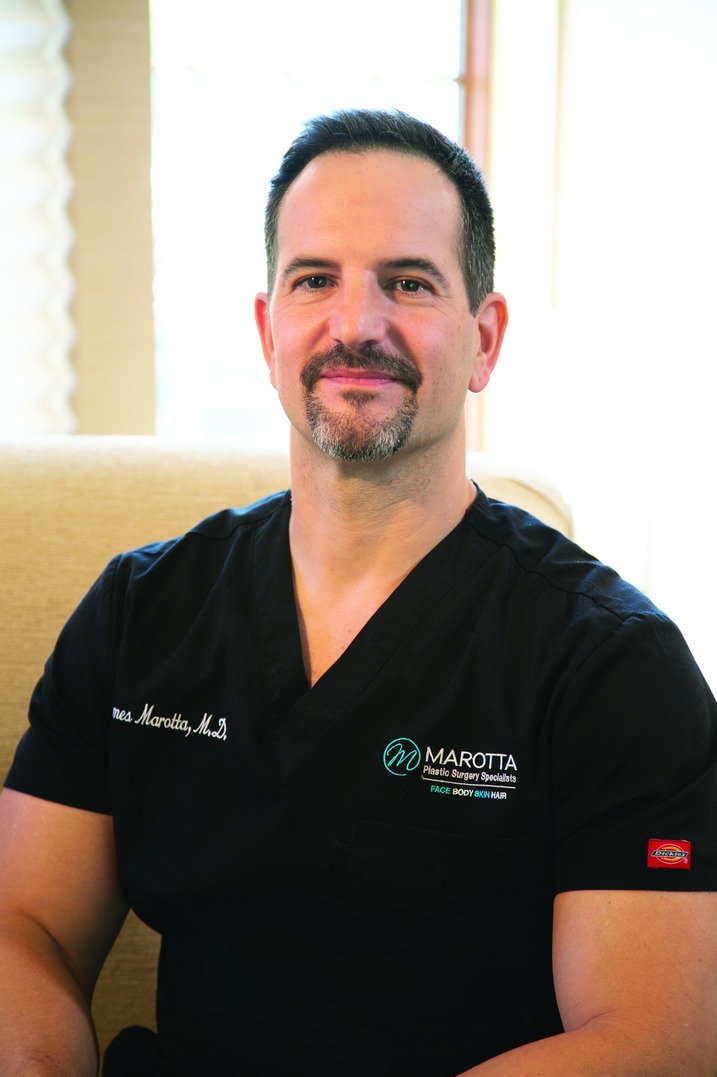
James Marotta
Dr. James C. Marotta is a dual-board-certified facial plastic surgeon on Long Island, New York, with degrees from some of the world’s finest institutions, including Columbia and Yale Universities. Dr. Marotta is a fellow of the American Academy of Facial Plastic and Reconstructive Surgery (AAFPRS), and since 2013, he has consistently been named the Best Cosmetic Surgeon on Long Island. Dr. Marotta has appeared in a variety of TV and print media, including Harper’s Bazaar, Huffington Post, and Fox 5 NY.
While he is deeply dedicated to his work, family remains the center of Dr. Marotta’s life. He enjoys spending time with his wife and two children, traveling, playing sports, and cooking.
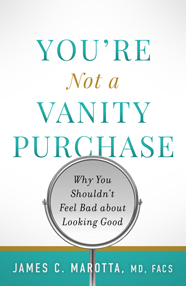
📚 Books by James Marotta
Transcript
[0:00:35] MR: Plastic surgery gets a bad rep in America. But did you know it’s celebrated in many different parts of the world? That humans have been performing acts of cosmetic enhancement since the beginning of recorded time? In his new book, You’re Not a Vanity Purchase, Dr. James Marotta offers a deep dive into history, sociology and psychology to show why plastic surgery is a form of empowerment, not pride. The drive to look good is about far more than vanity, it’s about being psychologically healthy, fulfilled and confident. As you’ll hear in today’s episode. Dr. James has repeatedly heard patients express shame and guilt about wanting to change their appearance. They second guess themselves and worry about coming off as superficial, they’re afraid of being judged by friends and family but Dr. James is here to say, you should not have to feel bad about wanting to look good. Enjoy. Hey everyone, my name is Miles Rote and I’m excited to be here today with Dr. James Marotta, author of You’re Not a Vanity Purchase: Why you shouldn’t feel bad about looking good. Dr. James, I’m excited you’re here. Welcome to The Author Hour Podcast.
[0:01:57] James Marotta: I’m excited to be here with you, Miles, thank you for having me.
[0:02:00] MR: Yeah, this is such an interesting topic and I’m excited to dive in. But before we do, tell us a little bit about your background and what inspired you to write this book?
[0:02:10] James Marotta: I’m a facial plastic surgeon. I’ve been in practice, private practice for 15 years and what inspired me to write the book was really my interactions with so many patients over the years and in particular, a few patients kind of stuck out in my mind that inspired me to write it. People dealing with the fallout sometimes from their loved ones, from their family, you know, from their friends, the doubt that people would always plant a seed of doubt. If somebody came in and wanted to have a procedure done or was interested in changing their appearance or it would always be – you know, “My friends think I’m crazy” or “My daughter has told me she’d disown me if I had a facelift” or you know, always some kind of negativity around it. Then, the patients who are coming in to see me, you know, they kind of firsthand had the experience, they had the consult, they had the information, they saw the before and after pictures, they saw that really, it’s not so scary in the end that you know, outcomes are overwhelmingly fabulous and people get what they want when they come out and they don’t necessarily have to worry about becoming a different person or altered or changed. There’s nothing freakish or macabre about plastic surgery, despite the general feeling out there. At least, from my experience and even you know, just kind of the elevator chat, you know, when I tell, I run into somebody and they ask me, “What do you do?” I tell them or even at, you know, cocktail party or something like that. Invariably, somebody will bring up something negative right after they had an initial kind of introduction. “Did you see XY and Z celebrity’s face, she looks strange or she looks altered.” It’s just always something like that. It’s partly, was dive into trying to help my patients navigate these kinds of issues because they really seem a little distressed over their decisions. It was really finding out, there was in particular, a very lovely, old, elderly patient who said to me: “You know, I’m in my 80s, my husbands passed away, I have no one who is looking at me but I just care, you know? I don’t know doc, am I vain, am I crazy, am I vain? What’s wrong with me, why do I care so much?” Those words just stuck in my head and I said to myself, “Why would somebody in their 80s be here, what is it about appearance that drives people to do these procedures well into their 80s with no prospect of romantic love or maybe she did, I don’t know.” There’s got to be something more, there’s got to be a deeper biological, neurologic drive that makes people so concerned about the way they’re presenting themselves to the world and I just needed to dive into that a little bit more and find out, not only from my patient but for myself, what those motivations were.
[0:05:30] MR: Yeah, you bring up such a good point because, well, first of all, let me back up a little bit. I’m one of those people that I don’t know much about plastic surgery and I do, I guess, take on that kind of negative connotation when I hear it. Because, as you mentioned, that’s kind of the pervasive sentiment of the American culture. I do want to talk about that and I do want to talk about how in other countries, that’s not really the case. But before we do, the story that you were telling with this woman and her desire to feel good, it’s not even necessarily just through plastic surgery, right? Because we always are looking for ways to feel good, we’re getting hair cuts and brushing our hair and putting makeup on and taking vitamins and going to tanning salons. How different really is plastic surgery than even what we do in our everyday lives?
[0:06:25] James Marotta: Yeah, I mean, I kind of… that’s one of the points I think I make in the book is that we do quite a bit of grooming to present ourselves to the world because we know how we present ourselves not only affects how others feel about us but how we feel about ourselves. Just as we wouldn’t walk around with hair that’s unkept and let our beards grow down to our knees or you know, women wouldn’t sometimes dare be seen without makeup on. When you have a facial flaw or something that really bugs you, you can’t get passed that for some people. The difference is, there is certainly, surgery is a little bit more intense than going to get a haircut but, in some aspects, it’s no different. No different part of maintenance than what a lot of things that we do ourselves.
[0:07:23] MR: Right, let’s set the table here and actually, even define plastic surgery because despite what people may believe, it really has nothing to do with the material plastic at all.
[0:07:34] James Marotta: Absolutely, yeah. Plastic comes from the word “Plastikos” in Greek that means, to mold or change. That’s really, I think, more of the kind of the PR problems that plastic surgery has because you think about plastic, fake, phony, material, I think that’s kind of rubbed off and gives the profession a negative connotation just by virtue of the name. I don’t think most people would really understand that and they might think it’s really more dealing with making people into a mold or a plastic mold or something like that, right?
[0:08:10] MR: Right. Yeah, it definitely carries that negative connotation. Even how I’ve conjured it in my brain, at least over the years. Why do you think it is that here in America, there is that negative stigma when it comes to plastic surgery where in other cultures, it’s actually celebrated?
[0:08:28] James Marotta: Some may say, it’s a stretch but what I go into in the book is that, really are roots in America or based in early Christian values and puritanical morays, you know, the quaker influences was great and we learned to basically hate the body. You may guess, I mean, in America, we’re a lot more prudish when it comes to things, even things regarding sex, you know? Topless beaches are a common thing in Europe, you know, they’re a lot more free with their – not in a perverted sense but they’re a lot more free with their – or open with their bodies than we are here. Whereas we’re somehow stilted or reserved when it comes to matters of the physical presence and I think it has to do with those roots. Beyond that, you know, most of the time, as we talked to a little bit, we touched on a little bit is that plastic surgery, when it portrayed in this country is kind of portrayed in a negative light, you know? That funny movie with Adam Sandler where he’s the plastic surgeon and he administers Botox to a patient, I forgot the comedian’s name, the female comedian but whatever. One of her eyebrows is like up at the mid forehead and the other eyebrows is down by her feet and it’s just hysterically funny but you know, in a way, that’s people’s general opinion of what plastic surgery does to you. The reality, in the media and in reality TV, on TV shows, it’s always portrayed kind of the Makkah, the really kind of bad parts of it are in. The reality is that 99% of people seeking these procedures and having them done are everyday normal people and the results are just undetectable, natural and something you wouldn’t necessarily even pick out of a room.
[0:10:38] MR: Yeah, that was something that I really took from your book of realizing that number and how most of them are completely undetectable. Whereas, as you mentioned, what we typically see in the media are those very rare situations where something goes very wrong and then it’s just everywhere in the news. It sort of reminded me the same way that we hear about plane crashes where it’s so rare but of course, it’s just ingrained in our brains and it’s all over the media when it does happen. Do you think that’s a big part of it is just the media’s portrayal of it in America?
[0:11:12] James Marotta: Yeah, I mean, I think it’s partly that people like – I mean, obviously, our brains are geared toward to pay attention to those things that inspire fear so we have the – the amygdala is the fear center of the brain and it’s the very reason why news casts will focus on the basically the negative happenings to them because they grab our attention. Just like a train wreck or car wreck that we can’t help but stare at, you know, the plastic surgery nightmares are the train wrecks or car wrecks of the medical world that people just can’t get themselves – that’s why a show like Botched becomes so popular because people just can’t stop watching that kind of stuff but is it the reality? I mean, I think people do have a good point. Sometimes they’ll say, “Well, look at the celebrities, you know? Celebrities who have had plastic surgery.” Well, if you realize, most of the people you’re talking about. I mention some of the names in the books. You might feel had bad plastic surgery like Kenny Rogers for example, like Mickey Rourke, like Donatella Versace. A lot of that work was done in the almost the infancy of plastic surgery. You know, in the 70s and 80s where techniques were evolving and they’re certainly not what we have today. Even some of those, people will say, you know, “They could afford to have anybody in the world and do their surgery [bulk 0:12:48.7]” Look at the more modern-day celebrities, look at some women who are clearly well into their fifth, sixth decade and look absolutely stunning, you know?
[0:13:01] MR: Right.
[0:13:01] James Marotta: That doesn’t happen by accident. It certainly had some work done but just good work and so it’s not as apparent.
[0:13:09] MR: Yeah, there’s definitely a connection between looking good and feeling good and this is something you talk a lot about through your book and that’s part of that impetus I’m sure that we have to put on a good suit, brush your hair and put makeup on. It helps us feel better. Tell us a little bit about that as far as what you’ve seen in patients and just in general, when people are looking better and how it actually makes them feel better?
[0:13:38] James Marotta: I mean, I have vivid memory of this younger guy I did, he’s probably about 18 years old and he had a rhinoplasty done and beforehand, he just was kind of this mousy guy, really didn’t have any confidence, he would barely make eye contact when he came into the office. After he had a surgery done, he said “Doc, my whole life changed.” He says, “I have a girlfriend now, my outlook on life is completely 180, I feel more confident, I feel like I can talk” I mean, just beaming from ear to ear, you know? That’s just one of thousands of patients that I’ve seen over the years, have that same story about how their physical flaw kind of held them back. They couldn’t get passed it. Once that was gone, it was literally a weight off their shoulders. They felt just so much better about life and that physical transformation led to a mental, spiritual transformation for many people.
[0:14:49] MR: Yeah, and in addition to the mental and spiritual transformation, there actually is a difference as you point out in your book even how you’re treated in the world and there is a term called the attractiveness advantage. Tell us what that means and how that affects people?
[0:15:06] James Marotta: Well, the attractive advantages is kind of a pervasive situation in life. I mean when, you know, people get promoted to jobs at higher rates because of their height for example, people who are above the average male height and then in six-foot range earn something like two to three percent more income annually than other people or get promoted then to CEO positions or elected presidents more often. People who are deemed, you know, younger and more attractive in the workplace got promoted to higher rates and certainly a lot of ageism plays a part in the workplace and holding people back. The attractive advantages essentially that, you know the more attractive you are, the higher advantage, obviously the greater advantages you have in life and those are really hard data that it translates to monetarily in terms of success. To make yourself as attractive as you possibly can be is not just vanity, you know, all the time. It’s also part of leading a healthy successful life and optimizing your potential, earning potential, optimizing your potential success not only with workplace but obviously socially, with a mate. It’s the reason that we, you know, I mean we’d pass on biologically our genes by seeking people who were attracted to and that’s kind of nature’s way of having us read somebody else’s genes. Somebody else’s DNA by analyzing and looking at the extent to which we’re attracted to them physically, emotionally and socially attractive and when you have a physical flaw, if you look rundown or tired or you just don’t look as good as you possibly can, social interactions are not as full because those negative visual cues have a feedback loop. They give people who are interacting with you a sense that, “Hey, this person might not be as vile as they are so maybe I should listen to them.” Then you internalize that because you might not be getting the reception you want from other people and there’s kind of a negative feedback loop in your life when you have that some of those issues going on.
[0:17:35] MR: Yeah, that your perception of self could be extremely skewed because you may think that they don’t like you when really subconsciously, it’s the cues that they’re receiving that influences them in ways they don’t even necessarily understand but it may have nothing to do with them as a person. I mean you bring up such a good point where this is not something that’s new and people have been – this is engrained in us to look good and to – As humans, when we’re looking at other people, we get bio feedback from them. How long has plastic surgery in some form been utilized by humans? Is this a newer thing or has this been going on for a long time?
[0:18:15] James Marotta: Well, it’s been going on for millennia. I mean plastic surgery was, you know, some of the earlier descriptions you can find from India, from Egypt. The first rhinoplasty surgery was in Germany hundreds of years ago, so it’s as old as time that people have been doing procedures to look better. Some of the references I make, historical references in the book, you know in ancient Egypt, adoring yourself with makeup and actually appearing was so important. It was actually considered a holy act, so a lot of times they were bury with that in their tombs, things that made them, beauty products to help them look better in the afterlife. You know, what’s been around as long as time and because from a biological perspective, it is engrained in our brains. We are visual human beings, we can’t help but subconsciously analyze and our brains do it automatically in essentially a blink. When we meet somebody new, there is all kinds of data going into our brains about physical characteristics that we interpret almost automatically subconsciously and so ignoring that that’s part of human interaction and just saying, “You know what? I don’t care what I look like or I am going to just go ahead and you know, is ignoring human evolution and human communication. I mean I think about there’s lots of times where we’ll have a patient. Who comes in and she, you know, may it’s usually say it’s an older female and she’s got really deep forehead furrows and creases between the brow or could be a male with a very heavy brow and the brow is kind of drawing down and inward and you look at the person and before they even speak, you think, “Wow, they’re a mean person” you know? You’re almost afraid to talk to them and then when they open their mouths, they’re like the sweetest kindest person you could possibly meet. That is just one example of how sometimes the visual cues and everybody would say that about them who laid eyes on that person and that’s what the patients come in complaining about saying, “Geez, everybody is telling me I look angry but I’m not angry. I’m very happy” you know? “Everybody is telling me I look tired or I look rundown but I feel great” but they have the big fat bags under their eyes. The interpretation of that visual information is happening whether you like it or not so.
[0:21:01] MR: Right, that’s probably where that old adage, don’t judge a book by its cover, comes from is because we do judge books by their cover and same thing with our faces, just naturally it happens without us even consciously processing it. Let’s talk a little bit about aging then and you know, some argue that we should just let nature have its way and we should look kind of older and then plastic surgery would be considered unnatural. But you make a great point in your book and say, you know cancer is natural process so we don’t think twice when we intervene with that. Tell us your perspective on aging and plastic surgery?
[0:21:41] James Marotta: I mean I don’t think there’s anything wrong. If you’re happy with aging, you know, the aging process, you’re happy with the way you look or they’re happy with the way you’re aging and that obviously, let that play out and don’t do anything. I mean I’m not here to coax, cajole or promote, intervene in any way, shape or form if you’re happy but if you’re the aging process is something that you are not happy about or you are picking up on these situations. Where, you know, the aging process is affecting your life, certainly there’s clearly things you can do and intervene in that “natural process” to reverse, stall and basically defy it because there’s no reason not to do it because you know, if you had, as I said in the book and as you mention, you know if you had something that – basically aging process is the physiologic degradation of our cells on a microscopic and macroscopic level. The cells themselves are becoming more senescent, more old. They are dividing over and over again, the DNA in them is becoming old and damaged. Our cells don’t produce as busy, you know, as much healthy material as we age and the cells themselves degrade and so you can basically intervene in that process by encouraging good cell turnover. You can, for example, one of the aging processes is loss of facial volume, bony volume, muscular volume, fatty volume. You can replenish those things using plastic surgery interventions, which are strangely natural. You know for example, one of the things that I do a lot of in facial rejuvenation surgery is fat transfer and fat has a very high percentage of stem cells and as we age, the number of stem cells that we have declines in our tissues and with fat transfer, I basically am harvesting a person’s own fat, putting the fat back into the facial fat pads where they used to have more fat. It’s the same exact substance and on top of that, adding a higher concentration of their own stem cells to reverse some of the aging changes in the face.
[0:24:13] MR: Wow.
[0:24:14] James Marotta: You don’t get more natural than that and so a lot of procedures in plastic surgery even facelifts, even facelifts can be extremely natural. Basically we’ll reposition the fat pads, the muscle tissue into those areas where they used to be and gravity is essentially taking hold or retightening those structures and then the natural healing process is basically what holds it in place. You know, as strange as people might think, plastic surgery is actually quite natural.
[0:24:42] MR: Wow, okay. I am learning a lot here. This is great Dr. James. Okay, so let’s say someone is considering plastic surgery and they’ve had their doubts because they’ve maybe had that those feelings of guilt or shame if they went through it but let’s say maybe after this conversation, they’re thinking about it more and more and they want to do some research and they want to find the right one. Do you have any tips or advice on folks looking for the right plastic surgeon?
[0:25:10] James Marotta: Yes, I go into a great detail in the book kind of almost like a guide to, you know, what you should – kind of what steps you should take. I mean, what you really should avoid. Essentially, you want a well-trained specialist who does the kind of procedure that you’re interested in all the time, just as you wouldn’t want somebody who’s going to build your house be the first house that they built. You want to make sure that that individual has done, if you’re looking for a facelift, on plenty of facelifts. I do not, you know some surgeons might do one or two facelifts a year and I’ll do two a day. You know, so you have to make sure that the surgeon that you are looking for have a specialist in that procedure. I conversely don’t do any – I’m a facial plastic surgeon, so I don’t do any tummy tucks or breast, if you want somebody who does a lot of those things. Number one, they have to do a lot of those procedure and have a lot of before and after pictures to show you in that particular procedure. They should be board-certified in their specialty. You know, they should be, I talk about there’s a course at the specialties that do the majority of cosmetic surgery in the country and generally, the training and background and the scientific knowledge is better in those course specialties. You should look for someone who is board-certified in that area. You know, do your homework. Obviously, you want to look at the online reputation. Online reputation is, you know, these days very important. They should have lots of good reviews. Of course, they are going to have a couple of bad ones for sure but they should have a lot. The good should outweigh the bad in terms of how they treat patients and the outcomes, et cetera. You should look at their before and after pictures when you go to their office and analyze them and you know I go into a lot more detail in the book on that stuff.
[0:27:11] MR: Yeah, it’s very detailed and helpful as I was looking through it but there is so much of your book that I found as a takeaway and things I actually wrote down. If you could recommend just one or two things or maybe just one or two things that you want readers to take away from your book, what might they be?
[0:27:30] James Marotta: I really think it is just essential theme in the book that it is not about vanity. Looking your best and feeling your best is so much more about making the best most of your life, out of your life and you shouldn’t have to have that remorse or guilt or fear when it comes to approaching your plastic surgical procedure and the book will really help you kind of guide you through that process of overcoming that. You know, if you’re running into a situation where other people are laying that on you, you know maybe give them a copy of the book too and have them read it and I think it will help, hopefully help some people to, you know, start on their journey if they are interested in doing that.
[0:28:18] MR: James, this has been such a pleasure. I’m so excited for people to check the book out. Everyone, the book is called, You’re Not a Vanity Purchase: Why you shouldn’t feel bad about looking good, and you can find it on Amazon. Besides checking out the book, where can people find you?
[0:28:33] James Marotta: They could also find us on our website at www.marottamd.com.
[0:28:43] MR: Dr. James, thank you so much and for shining light on this subject.
[0:28:48] James Marotta: Miles, thank you so much. It’s been a real pleasure.
[0:28:51] MR: All right, thanks again. Thanks for the work that you do.
[0:28:54] James Marotta: It’s been awesome. Thank you so much.
[0:28:58] MR: Thanks again for joining us for this episode of the Author Hour Podcast. You can get Dr. James Marotta’s book, You’re Not a Vanity Purchase: Why you shouldn’t feel bad about looking good, on Amazon. You can also find a transcript of this episode as well as our previous episodes on our website at authorhour.co. For more Author Hour, subscribe to this podcast and thanks again for joining us. We’ll see you next time, same place, different author.
Want to Write Your Own Book?
Scribe has helped over 2,000 authors turn their expertise into published books.
Schedule a Free Consult