Dr Wilfried R. Vanhonacker: Rough Diamonds: Rethinking How We Educate Future Generations
Read the full transcriptDr Wilfried R. Vanhonacker
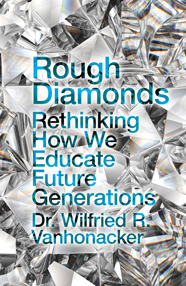
Dr. Wilfried R. Vanhonacker is an academic, author, entrepreneur, and thought leader in education. He has served as a professor of business at Columbia University, a professor of marketing at INSEAD, and a professor of marketing and department head at the Hong Kong University of Science and Technology, and he became a dean at the Moscow School of Management SKOLKOVO in 2008. He has managed complex projects across China, Russia, and the Middle East, and has consulted for governments, international organizations, and corporations. He is the author of Rough Diamonds, which challenges conventional thinking about formal education and calls for a new paradigm.
📚 Books by Dr Wilfried R. Vanhonacker
Transcript
[0:00:36] DA: Today, formal education is not focused on learning. Instead, it’s focused on efficient delivery. It’s become a machine that increasingly shuns its core responsibilities. And reality is about to hold it to account. In his new book, Rough Diamonds, Wilfried Vanhonacker, offers personal observations that challenge every aspect of formal education, all with the aim to inspire thoughts on a new paradigm for education and to amplify the momentum for change. The future of formal education is about enabling and supporting lifelong learning for students. Hey listeners, my name is Drew Applebaum and I’m excited to be here today with Wilfried Vanhonacker, author of Rough Diamonds: Rethinking How We Educate Future Generations. Wilfried, thank you for joining, welcome to The Author Hour Podcast.
[0:01:26] WRV: Okay, welcome, Drew.
[0:01:28] DA: Let’s kick this off, can you give us a rundown of your professional background?
[0:01:31] WRV: It’s quite a long one so I will try. I mean, you know, I spent more than 40 years in higher education so I’m trained as an academic with a PHD, started my career at Columbia University, then moved to [inaudible 0:01:47.7] view in France, then to Hong Kong, eventually China where I was the co-founder and dean of China’s leading business school. Then I moved to Russia where I was the founding co-dean of the leading private business school in Russia. Eventually I ended up at the American University of Beirut in the middle-east so you know, completing my learning journey a little bit around the world. My background is a little bit unusual for an academic but at the same time, I have very rich experience and exposure to different education systems around the world.
[0:02:26] DA: Now, I’m sure you had the ideas about the book and for the book in your head for a while but why was now the time to write the book?
[0:02:34] WRV: Well, I mean, this book should have been written 50, 60 years ago. I mean, last week, I was reading Richard Feynman’s book again, the great physicist, where he talks about in his days, in the 50s and the 60s when he was teaching at Cal Tech and complaining about what, sort of, the fragility of learning of their students in the education system and then, you know, every time I read that book, [inaudible 0:02:59]. Here we are 50, 60 years later and we haven’t really made any progress. In that sense, you know, it should have been a book that should have been written a long time ago. Why did it happen now? For the simple reason that I – you know, the COVID-19 pandemic, I was locked up in my home in the French countryside last year and that gave me some time to finally structure my idea. The questions and some of the reflections that I cover in the book had been percolating for a long time and particularly with my experience, you know, the experiences and attempts to change education from the inside. The ideas are not novel in my head but finally, I had, sort of the pandemic gave me an opportunity to sit down, relax and structure my thoughts. Unfortunately, at the same time, the pandemic is sort of what I call an education moment of an [edu 0:03:58.6] moment because as every crisis, ultimately is some opportunity for change so on the one hand, it gave me an opportunity to write. At the same time, it’s a good time to sort of roll-up our sleeves and actually do something about it.
[0:04:11] DA: Now, while you were reflecting on these thoughts that you had in your head, you’re finally putting them down on paper, were there any major learnings or breakthroughs during the writing process, maybe by doing some research or just by really digging into some of the ideas that you already had in your head?
[0:04:28] WRV: There’s always breakthroughs, right? First of all, writing is always therapeutic, parts of, during my career I’ve often taken time off to reflect and roll back the tape and often, to help me sort of reflect and learn from my experience, I write. In that sense, just the writing process itself, very enriching. It also forces you to be very clear because all of a sudden, I mean, you know, as long as you kick ideas around in your own head, I mean, they don’t have to be all that well-structured or well thought out but once you start thinking about writing to an audience, you have to be a little bit clearer. Since I had on and off taken notes, the other sort of “aha moment” I had was that finally, I could sort of put pieces of a puzzle together. I could sort of link thoughts, questions, observations that I had made and gave me some answers. Wow, you know, having time to sit back and read all this gives you a broader perspective and an opportunity to link random thoughts in the most structured ways. In that sense it was quite a rewarding experience I must say and, you know, I’m of course assuming and I’m hoping that the readers will feel the same way when they dive into the book.
[0:05:51] DA: Sure, who is this book for? Who is the goal reader in your mind, is it for all teachers, is this directed towards faculty in higher education?
[0:06:03] WRV: Well, I mean, most of my experience is in higher education. That’s obviously the lens through which I look at education but I reflect on education from when we’re born all the way through to when we retire and so it’s sort of at all ages, comments and reflections that I’m making. In that sense, it’s not confined just to higher education and learning experience and, you know, directly answering your question on the audience and this has been little bit of a challenge with sort of marketing in the book was that I am writing to everybody who has a stake in education and that’s not only the teachers obviously, the administrators and public policy makers that are in charge of sort of regulating the education center but also the parents. The parents have responsibility, also the students and certainly, one of the changes I see going forward is that [inaudible 0:07:05.2] which they do not at all. Today, they have absolutely no control over it. I have a number of audiences in mind and all of them will find something that speaks to them. You know, yes, of course the primary target is people who are in the education system. Often, those are the people that don’t see the forest from the trees and might be a little bit bewildered by some of the reflections I make. The whole idea is that they – I want to force them to take a step back and really critically look at, “What the hell are we doing and why are we doing it this way?” There is a primary audience, but ultimately, we all have a stake in education and if we can think of a paradigm that would really benefit future generations particularly as we look into the future, a future that is going to be very different from what we think of today [inaudible 0:08:04.8]. We all have a responsibility to reflect and think so we – we will all benefit from it in the end. That’s sort of, you know, a specific audience, yes, I have a couple of profiles that I targeted as I was writing but at the end of the day, I think we would all benefit from it. In the end, it’s a book that everybody would enjoy. I mean it’s not an academic piece, it’s very different from all the other writing I’ve done in my academic career. It’s funny, it’s witty, it’s humorous, it’s controversial. I’m really an out of the box guy. That’s what we need. If you want to change a paradigm, you really need to get out of the box and given my experience and perspective I can credibly give, raise interesting questions, make interesting observations and give inspiring examples and show the direction on where we might, or perhaps, should look and go.
[0:09:06] DA: Now, to just start at the bottom and to sort of address the initial question here. Why are we worrying about education right now? For the people who can’t see that there might be issues in education and they’re saying, “Hey, there are still people that are getting a lot out of school and higher learning, there are still incredible rock stars out there doing really great things, isn’t school okay?” What do you say to them?
[0:09:32] WRV: Sure, I mean, you know, one of the things I was thinking about when I was writing the book is, you know, “Wilfried here you are raising questions but you are a product of the system yourself,” and I actually thought of writing about that. Clearly, I mean, people benefit but the people that benefit from education are the ones that have a learning mindset, an internal curiosity and are self-motivated. Because we have created a system that’s outsourced learning. Unless you are individually motivated and driven to learn, you can through the school system without learning anything and of course, what I need to clarify here is, what do I mean by learning? It’s not just knowing. You go to school, you come out of class, you remember a few things that the professor said. That’s knowing, that’s not called learning. Learning is really integrating [inaudible 0:10:24] yourself. That requires stepping back, reflecting, taking the time and creatively playing with the knowledge that was conveyed to you. In that sense, if I look at the system, we are graduating lots of students whose knowledge is very fragile and this is going to become a problem going forward. That’s sort of how I’ll answer that. I mean, sure everybody benefits [inaudible 0:10:49] and I benefited greatly. I mean after all, it gave me a fabulous career. I mean, I got to build leading business schools in the world, that’s living a dream. In that sense, it is rewarding for many people but it is a system that has become sub-optimal. I’m sure Drew, you feel the same and people that are listening to the podcast, we all run into people that you feel at some point, that they are just not running on all cylinders, they were just not – they didn’t go through the right program. They didn’t get the right education, they just had the brain power that they could have done much more with it. And part of that is that we have an educational system that focuses primarily on the lower tail and not on the upper tail.
[0:11:38] DA: Now, what I really liked about the book is that, you know, you put yourself in it, this is your story, this isn’t a “how to fix education manual.” I really like the parts where you talked about how you came to realize that the education system was broken. Can you talk about those early days when you just looked around and you said, “This needs to change.”
[0:11:58] WRV: First of all, if you talk to any teacher at any level and you ask them, “Can you name five things that you would like to change if you had an opportunity to change.” Everybody would have five things, they would have 10 things. Anybody who is being in the system can see on the margin, you know, things that need to change. What I write about is more totally rethinking our approach to pedagogy. How do we think? And actually, my biggest objective is to change mindsets and have people ask the right questions. This is sort of, you know, overtime you see things, right? At some point, I mean, I’m trained as a mathematical statistician and so the concept of variance is something that I play with and I write about it in the book, which is because you know that all learning originates in variance. One day I was sitting, I said like, “Why do we go to school with kids of all the same age?” We basically have an educational system that we cut out variance, which is a rich opportunity for sort of co-learning and the future is all in co-learning ecosystems. This question arose from, you know, looking at young kids. I mean and anybody who has been a parent [inaudible 0:13:19.1] we watch how they learn and how they play. They very rarely want to play with kids of the same age. In fact, most children will not play with kids of the same age until the educational system conditions them to do so. We’re actually born being, sort of data scientists, inherently in our DNA, we know that we need to look for variance because that’s where the learning is. We’re not going to go for somebody who is like us. That’s sort of one realization. Another one that you might recall reading in the book is, I was at the end of my career a couple of years ago, I spent some time at MIT. My strategic partner in Russia, closely collaborated with a number of colleagues there and they invited me to just spend the sabbatical. Just sit around. I was probably the only one in Cambridge that didn’t have everything that didn’t have to [inaudible 0:14:16.5] that just had free time. I would sit in the cafeteria of the Sloan School, the business school and just watch what was going on. It all of a sudden dawned on me that, you know, there’s so many people running around. It’s like a busy beehive. How can an educational institution that is a busy beehive be conducive to learning which requires, you know, quiet reflection? And clearly, it reflects that we are more and more driven by the business model, we need numbers and it indicates a system that focuses on efficient delivery and not on effective learning and we need to get it back online. It’s sort of, you notice a few things, it raises a question, then it links to something else and that’s sort of how the whole book came together and, as you say, I sort of string together a number of stories and experiences in life and it fortunately gave me a rich perspective from which I can take the reader through my thought process on how perhaps we should think of education, what it should be about.
[0:15:35] DA: Now, many schools are for-profit institutions. They are a business and they – it’s very known that they are. Should they be held to a business standard which is normally profit or should they be held to a different standard because they are also an educational institution?
[0:15:56] WRV: Well, I mean, you know, they are for-profits in business education and to me, I don’t quite – to me, it’s just sort of an oxymoron. You can kind of put yourself into this framework of how I think about education and learning. How learning for an individual [inaudible 0:16:14.6] at the end of the day, it should be profitable for the individual. We are in the business of education and because we have responsibility to prepare the future generations for, you know, the environment in the future, that they will have to operate and be functional in. At the same time, education has become extremely expensive and one of the things, you know, when you read the book, you saw it. One of the things I do get into is business models. I mean it’s just not sustainable, it makes no sense. Just imagine, if you look at college education, higher education, how expensive it has become, even at a non-profit university. The private universities that have rich endowments but even then, it’s very expensive. How are we going to make lifelong learning affordable if we start from a model that is already very expensive to give basic education? Clearly, we have to rethink this and as I mentioned earlier, the other problem with the business model is it puts dynamics in motion that forces educational institutions to take their eye off the ball. I mean, you know, many education institutions are driven by their business model and they should not be. They should be driven by, you know, the learning of the students. And of course, this then raises us to the next question of, “Can we find a mechanism that holds these institutions accountable?” It can be clearly specified first of all what their responsibilities are, which is what I do in the book because that’s where we should start from. I mean, what is their responsibility of the parents and what is the responsibility of the students, what’s the responsibility of the education and can we hold them to account? We have a system today that doesn’t hold them to account. Now I think fortunately, with technology and with the smart technology, intelligent technology, you will be able to create intelligent and learning journeys that are fully adapted to the individual that if there are educational institutions that are involved in the process that we will be able to hold them to account. With that, we will finally be able to have some kind of a scientific measure of what the impact of education is. That’s what the focus should be, so yes, we get into a discussion of, you know, endowment. This is not what education is. It’s ultimately about learning and preparing endowed individuals that have a skill [inaudible 0:18:54] and we give them an opportunity to develop and weaponize the skill and the gift that nature endowed them with so that they can maximize the employment opportunities, you know, in uncertain environments and that is sort of a more forward-thinking mindset that I want to bring to the reading audience of the book.
[0:19:16] DA: The book focuses on seven reflections that you had in order to inspire actions and to spark reflections for educators. Off the top of your head, can we dig into a few and talk about maybe why you chose these seven in particular?
[0:19:31] WRV: Sure. First of all, they’re not an exhaustive list. I write seven because I had to kind of cut it down otherwise the book would get a little bit long. Plus, I wanted to be, to keep a couple on the backburner because well, you write one book and then before you finish writing the first one, you’re already writing the second one. I had that sort of a process of productivity and creativity that I’ve sort of jumped into. You know, I already mentioned that one that immediately and I think it is the first one that I address in the book is variance, right? I mean ultimately – and I, you know, I write about the story when I came to China. The first time I came to China in 1985. I mean until I came to China, I have never really seen people eating with chopsticks and since I had never seen people not eating with a fork and a knife, it had never occurred to me that that is learned behavior and why am I eating with a fork and a knife and where, why would other people just eating with little sticks and how do they do this? When you see something different from what you’re typically used to, which is observing variance, with an inquisitive mind, that raises questions and that’s where the learning is and all learning finds its origin in variance. That’s sort of why it is so important. And the other aspect that I write about, as I mentioned earlier, you know, you look at the Harvard Business School. They admit about 900 MBA’s. They all go through the same cookie-cutter, so you have a high mean and a low variance and I mean it’s a very basic question. How much are you going to learn from people who are like you? I mean as I write in the book, one thing I have never done, I mean I worked in the Middle East because I was curious about the Arab world, I worked in Russia, I worked in China. I spent actually more time in China than any other country. I never ever spent any time with expats because I felt, well, you know, I’m Belgian. If I want to spend time with Belgians I should go to Belgium because then I am bound to find a few that I like to meet and to talk to. If I go into a typical expat bar anywhere in the world, you’re going to hear discussions about negative stereotypes and this is the wrong way to learn, right? I mean if I go to China, I want to learn about Chinese. I have to live with Chinese. I go to Russia, I am going to spend my time with Russians, okay? Again, variance. Another concept is distance, which particularly now is popular because we talk about distance learning, which of course is a joke because there is no such thing as distance learning. You know, there is distance speech and you can expose students at a distance to knowledge but the learning is something that you have to do yourself. This is a personal development process and you cannot [inaudible 0:22:17] with any platform. The concept of distance that I discuss in the book is one that if you look at the educational system and you can look at any culture, right? I mean you look at the, you know, the Greeks and the Romans and even in the Chinese culture and so on. You know, a long time ago, the teachers were also the creators of knowledge but if you look at our education system today, the large majority [inaudible 0:22:44] teachers and faculty neither created the knowledge they convey nor do they own it. That’s something very important to think about, particularly when we’re going to throw the technology into the mix. What has happened is that we’ve created a distance overtime, slowly our education system has morphed into something that is wedged in between the creation of knowledge and the dissemination and learning of that knowledge. When you look at educators, it’s a bunch of people repackaging. Translators repackaging and so on, so you have a huge system that we created in between. Now why is that important to think about? Well, by creating that we are depriving students from exposure to the passion for discovery and this is important because first of all, we’re born discovers and only when we get into the education system, they tell us, “No, no, no we’re going to tell you what you should discover.” And so they turn you from a natural discoverer into a student and you know, with regimented learning mechanisms. Being exposed to passion is very, you know, sort of inspiring and if you want to create a generation that is intrinsically and individually motivated to learn, which is what lifelong learning will require, it is very important to taste that passion. It is like when you go to a talk with a Nobel laureate, I mean most of them are on cloud 13, they’re typically not the best communicators. In a sense, they would not be very good teachers but they are so passionate about what they do that it is like a drug, right? You kind of get absorbed into it and this is sort of what we are missing. I mean you see remnants of it. I mean when I was writing the book, I don’t write about it in the book but I was thinking back in the days when I was doing my PHD. When you are trained as a scientist and there’s knowledge created. That’s what I was trained for. I was never trained to be a teacher and go and teach. I just had to do that to justify getting a paycheck at the end of the month. My interest was just the discovery when, you know, solving problems that no others could solve and I got to work with famous professors who were real knowledge creators and that is something that we have lost in the system. We have this distance that has consequences. Another one of the reflections is about habitat building and now we have sort of moved from the classroom to the glassroom with Zoom teaching but if you look at the design of a classroom, it is very indicative of how we think about education. I mean who is the center of focus in the classroom? It’s the teacher and today, it’s his or her screen. They are the master of ceremony. They create the learning environment and whether or not they’re successful, I mean that depends, some are and some are not. But you look at any PR brochure that education institutions bring out. They got all of these, “We focus on the student and the student and the student,” but go sit in the classroom, look at the classroom. Where is the attention? It’s on the teacher. It’s a teacher-centric system, it is not a student-centric system. It’s delivery centric. It’s not learning centric. I make that point in the reflection to say that, let’s think a bit about this. What we should have is, the student should be sitting in the middle, with all the teachers and all the knowledge resources all around them, into a, you know, co-learning ecosystem. This is not what we have but this is maybe what we should create. Of course, if you think of this model, for example, I mean [inaudible 0:26:58] and you start from the mindset of the system that we have. You say, “This is impossible.” Nothing is impossible. I mean, anyway, my view has always been that if you don’t try anything you shouldn’t be in education. I mean how are you going to instill values of learning in others if you are not willing to learn yourself? We have a system that cannot learn. It’s anchored in the past. I mean just look at what happened with the pandemic. Everybody went all of a sudden from in-class to online teaching and, you know, they carried the classroom with you. Classroom is a restriction in the physical space. When you go online, you don’t need a classroom. You can have thousands of kids sitting in your class. You can have multi-tier learning. You can have closed loop interactive networks in the background. No, we were just kind of, and in the process what we have seen is education institutions just in, you know, the knee-jerk. Of course, it’s always in the knee-jerk reaction to a crisis that we see how people think. Educational institutions are desperately trying to grasp on any shred of the past, holding onto the past. I mean, it makes no sense. What they should be thinking about is the future of the students, not their past. What should occupy them is the students and the future that those students will face. They took a responsibility in taking on the students, they should not be thinking about their past. To sort of visualize a little bit, the situation you’re in is that okay, the pandemic created a bit of a chaos. It knocked over a bunch of domino pieces and what I see education institutions doing is very busy trying to put the pieces back where they fell over. This is nonsense, pick up all the pieces and put them in a new pattern. This is an opportunity and this is why we are in an edu-moment. I mean this is, what the pandemic has done is show that basically that the existing system is very fragile and as I said earlier, it leads to fragile learning. Why not rethink? This is a golden opportunity. I think it is one of the US presidents who said it, “In any crisis there is an opportunity to waste,” and we are wasting it. And that's sort of why I am in a way happy that my book is coming out now and hopefully people, they’ll try to read it and think because what I want to do is think. It’s a cookbook and, you know, as I wrote in the book, I don’t believe in recipes. If you tell people, “You should do this and this and this,” they don’t think anymore and that’s why in my teaching, I never talk passively, right? I mean I thought that my responsibility was to make people think and that is what I want for the book. I want people to think and reflect and raise questions, that’s it. You need a change in mindset before we can start re-engineering business models and paradigms. Variance, distance, habitat, okay that’s three of the seven.
[0:30:15] DA: I’m glad you got a few in there. Again, we’re just touching the surface of the book here. There are so many concepts and so many more questions I have but I do want to say that, you know, you do say that you encourage discussion around this and you encourage actually in the book you say, “Hey, I would love for you to share your thoughts and to open up discussion around it.” Where can folks connect with you to do this or would you like them to just have a conversation with their colleagues or online somewhere?
[0:30:43] WRV: They should have a conversation with anybody, right? I mean of course obviously, I mean, I sent the book around to a couple of people and the ones that read it, they said, “First of all, it’s a page turner,” they went through, they couldn’t stop and they said, “It made me think,” and you know they said, “I discussed it with my spouse,” and this and that and before I sent them the book I said, “You know, when you’re finished tell me what you think and if you discuss it with somebody else, tell me what you discussed. You know, what did you discuss about with them?” Yes, you know, talk to people in your environment, questions you raised but ultimately I have already created, I have created an online community. The Rough Diamond Community that’s already on LinkedIn and Facebook already and because I want to create an ecosystem of changed agents, people who are committed to, we think, that are committed to kick around ideas, are not afraid to ask questions, run experiments because I don’t know all the answers. I mean I, well, one thing you learn as a scientist and as professors, you really don’t know all that much but you know, I think the book starts asking the right questions. Let us continue with that. That will ultimately inspire us, try experiments and we will fall into and find new paradigms. It is not about, you know, calling a meeting with your colleagues now and sitting, “Okay, here is the book, everybody reads it by next week. Next Monday we meet at 2:00 and everybody comes with an idea on how we’re going to change the system next September.” It is not going to work that way. It is going to take some time because we really need to question our own frame of mind and mindset. Yes, you know, discuss it with everybody around you but ultimately, share it online. You’ll find people that are like minded, interested, that are out of the box. Frankly, future generation students deserve it and, you know, they should hold us to account to really think of a paradigm that would benefit them and if it benefits them, it’s going to benefit all of us.
[0:33:06] DA: Right. Well Wilfried, writing a book especially like this one, which is really going to help education systems and spark conversations around the globe, is no small feat. So congratulations on being published.
[0:33:19] WRV: Thank you.
[0:33:20] DA: This has been a pleasure and I am really excited for people to check out this book. Everyone, the book is called Rough Diamonds and you could find it on Amazon. Wilfried, last question real quick, if readers could take away only one thing from the book, what would you want it to be?
[0:33:37] WRV: Something that might surprise you and that might surprise many people is that parents have a very important responsibility in the education of their children and that responsibility cannot be outsourced. It is absolutely crucial that parents understand that they are responsible to instill a learning mindset. The education system cannot do that. The education system should build on that to work harder and the reason that that is important is unless your kids have a learning mindset, they will not benefit from education. They will be lost when it comes to lifelong learning. Because ultimately, what will drive that lifelong learning is this internal curiosity and, you know, this learning mindset. That’s sort of something that I would want people to know about and walk away with.
[0:34:36] DA: Yeah, Wilfried thank you so much for chatting with me today and best of luck with your new book.
[0:34:41] WRV: Okay, thank you very much Drew.
[0:34:44] DA: Thanks for joining us for this episode of Author Hour. You can get Wilfried Vanhonacker’s new book, Rough Diamonds, on Amazon. Also, you can also find a transcript of this episode and all of our other episodes on our website at authorhour.co. For more Author Hour, subscribe to this podcast on your favorite subscription service. Thank you for joining us, we’ll see you next time. Same place, different author.
Want to Write Your Own Book?
Scribe has helped over 2,000 authors turn their expertise into published books.
Schedule a Free Consult