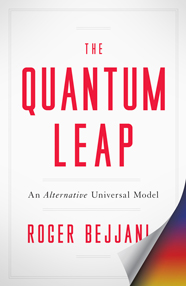
Roger Bejjani: The Quantum Leap: An Alternative Universal Model
Read the full transcript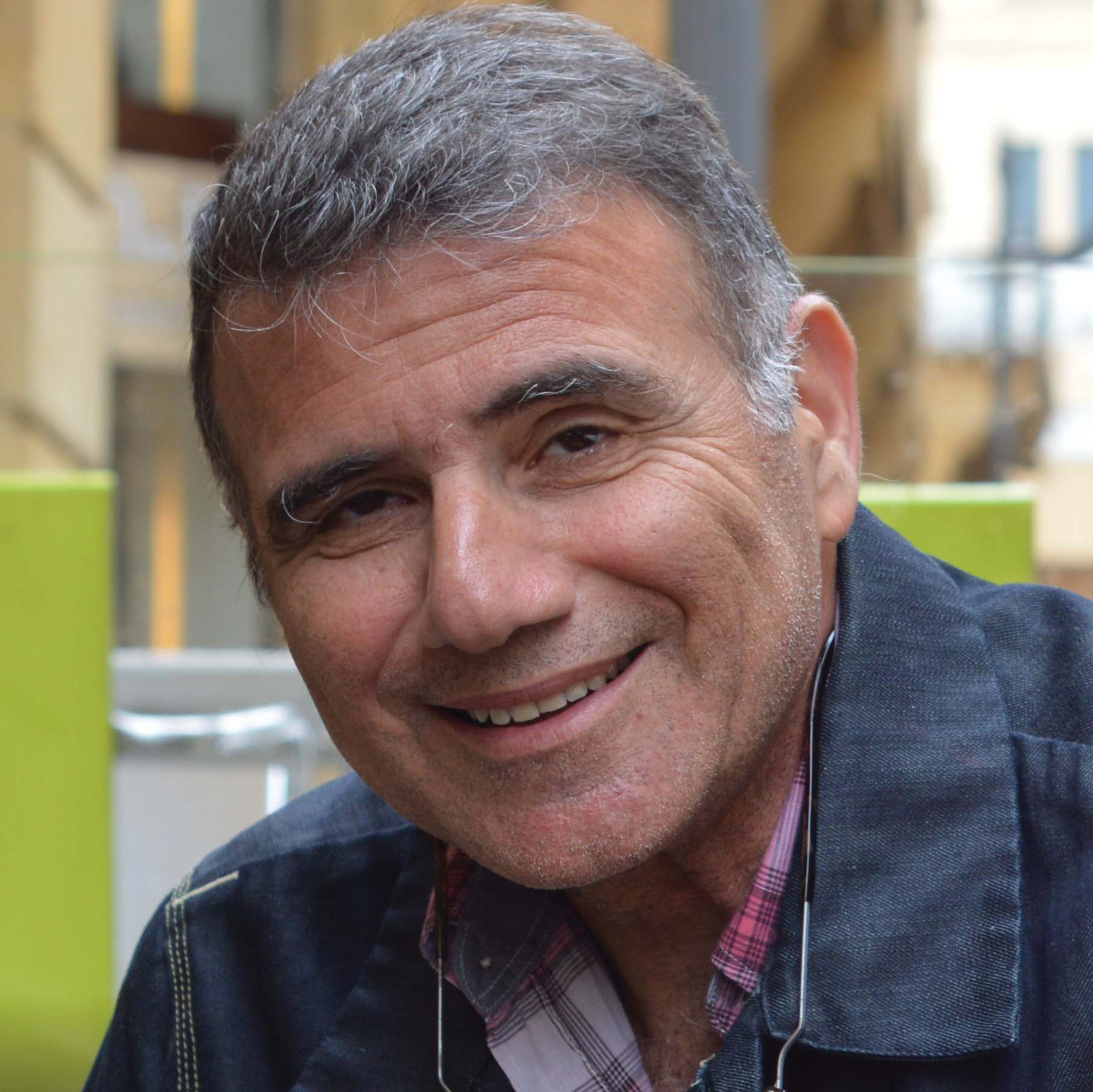
Roger Bejjani
Roger Bejjani is a veteran of the Lebanese Civil War, a dedicated marathoner, and an entrepreneur who has worked in health insurance management across the Middle East, Turkey, Greece, and Cyprus alongside German, French, Turkish, and American partners under MedNet and NEXtCARE. His son, Bachir, lives with Duchenne muscular dystrophy and has far outlived his projected life span. The Quantum Leap: An Alternative Universal Model grew out of years of conversations between father and son and their shared effort to contribute to a global dialogue for the betterment of humanity.
📚 Books by Roger Bejjani
Transcript
[0:00:28] DA: You don’t have to look hard to see it. Humanity’s dashboard is lighting up with warnings; environmental, financial, social and demographic. Our planet is on borrowed time. Intellectuals around the globe are sounding the alarm, building awareness of these catastrophic problems but we lack a consistent strategy to reverse our current momentum. Roger Bejjani’s new book, The Quantum Leap, presents a case study of a new model, a silver bullet that could change our trajectory, yielding intelligent, long-term solutions to all the threats we’re facing today. With a new universal model, we can prevail. Hey Listeners, my name is Drew Applebaum and I’m excited to be here today with Roger Bejjani, author of The Quantum Leap: An Alternative Universal Model. Roger, thank you for joining, welcome to The Author Hour Podcast.
[0:01:17] Roger Bejjani: Hi Drew, how are you?
[0:01:19] DA: I’m doing well, thanks for coming on the show today.
[0:01:22] Roger Bejjani: Thank you for organizing it.
[0:01:24] DA: Let’s kick this off, Roger, can you give us a rundown of your professional background?
[0:01:30] Roger Bejjani: Yeah, professional background, I’m not, you know, this would be my first book so I’m not a professional author. Have been all my life, mostly all of my professional life in the health insurance business. The book is not the result of my background but rather, the result of various diversified experiences I had in many parts of the world, not only in my home country, Lebanon, but I’ve been around everywhere and I had partners from the US, from Europe, from the Middle East. 35, 40 years of professional experience and life I have been through in many countries, have built up into this kind of line of thought, which is The Quantum Leap and as I written it as well, it’s a fruit of my conversations with my elder son. Has been unfortunately disabled most of his life but he’s a brilliant boy, he’s an exceptionally brilliant boy so it is also part of his, I think, I have properly represented his thoughts as well in this book.
[0:02:44] DA: Now, why was now the time to write this book? Surely, it’s such a big theory, surely you have been thinking about this for a really long time. What made you say, “I need to put this in a book now.”
[0:02:56] Roger Bejjani: True, in fact, we’ve been exchanging views, my son Bashir and myself for the past two or three years about, how can we go forward from here, as a humanity, as a whole world? Not as Lebanese or as us individuals. The COVID-19 lockdown gave me the time to sit and start punching those words into a computer. We have to thank the virus for giving us the time to do it but the thoughts and the ideas were there for a long time and due to my busy life, I’m also a grandfather so when I’m not working, I’m going and visiting my grandsons who I love, and I’ve never had really enough time for myself to write books. The idea of writing this book came with this first lockdown back in March or April 2020. I think I wrote it in what, two, three weeks, because all the ideas were there already.
[0:03:56] DA: Now, again, you had the ideas there, you had all the theories but while you were writing the book, while you’re actually putting pen to paper or typing this out, did you have any new learnings or major breakthroughs just by being in that headspace for that short a period of time?
[0:04:13] Roger Bejjani: Not really but in the background, the COVID 19 pandemic and the turbulence and the disturbance it has caused worldwide has been highly inspiring throughout the writing. Because I think this is not going to be the last virus or the last catastrophe that humanity will be facing. I think we’re very ill equipped, could be a virus, could be a natural catastrophe, it might be anything, we’re very ill equipped system-wise, model-wise today to confront or to defend humanity against these kind of attacks. The inspiration were there prior to the COVID-19 and it has been doped, if you want, by the pandemic, we have been all facing for the past 14 months now.
[0:05:05] DA: Now, what would you say is the goal for readers from the book? What do you want them to take away from this?
[0:05:14] Roger Bejjani: You know, I’m just sharing my thoughts. I wouldn’t say, belief, it would be pretentious. My thoughts about the rather impossible model that we have today. We can’t continue like that. It’s practically impossible in my opinion, we are going to hit the wall somewhere in about 20 or 25 years. We can’t continue doing what we have been doing since the 50s, since the past 17 years ago. The model has to be revisited and changed and I’m putting a lot of emphasis in my book to the fact that the models that were adopted by humanity has been altered many times in a very drastic, even more drastic manner than the one I’m suggesting. People have to start thinking, there is no easy solution. We can’t just push the ball of fire from one politician to another, they’re not magicians. I think a person today cannot make a difference, it’s a model that would make a difference and we really should think about changing the way we behave, we consume, we live, we earn, all these things have to be revisited. We’re now about eight billion people on this planet and the way we’re going, business as usual is not going to be sustainable for humanity and for earth where we are all living, if we all proceed this way. I am just laying down the – laying out ideas and thoughts and more than ideas, in fact, concepts on alternative where we can go, the alternative new model. This is what I’m trying to say, to do, share these ideas with as much people as possible. I hope that my book will be sold in millions, not in hundreds or thousands. This would be a platform to start debating and to start thinking seriously about where to go. I’m not the only one who has been raising these kinds of questions, all who are suggesting revisiting the model we are so well established in. There are many other authors or thinkers who have been addressing these issues and I think that the pace of writing books of this nature is going to pick up dramatically soon because mainly, of this staggering crisis that was caused by the C-19 virus that has disturbed the old way of living and economies and, you know, we had been living through hell, all of us those past 13 years, 13 months, excuse me. We need to really start thinking about how we can organize ourselves better for the future. This book is a tiny, modest contribution to this line of thought, to this effort that should be collective.
[0:08:15] DA: Now, let’s start right at the beginning and it’s actually the way you begin the book. You say, “The system governing humanity needs to mutate.” I have to ask, let’s dive in. What is wrong with the current system?
[0:08:31] Roger Bejjani: Well, you know, I have laid down all the threats and the problems that we are facing. There are so many of them but mostly, it is this incensed and this impossible Ponzi scheme that is currently ruling the world, which is the limited money but in fact, unlimited with the public debt because you know, public debt is unlimited in a way. It is governed by parliaments or in congress, by congress in the US or by other mayors. But effectively, it has been unlimited. Why do we have to continue this process of having an unlimited public debt, which is going to hit 75 trillion dollars in the planet, all countries combined if they aggregate, when we have the panel of making money, unlimited and to provide the necessary budget for our goals as countries or as humanity? This is a major issue that I’m addressing here. I don’t see why but nothing prohibits us from deciding, I’m talking about humanity, from deciding that money is from now on a single currency worldwide and it is unlimited. Every country, every human, every person, every contributor or even someone who doesn’t contribute, who is totally – who is unemployed, is going to live in a dignified manner and is going to be remunerated in a way that his dignity as a human being in Africa or in South America or in the US or in Europe or in the Middle East, will be remunerated with a basic universal remuneration that will preserve his dignity or her dignity. Depending on his or her contribution, he has a merit bonus, which is sizable, very sizable and depending on his or her behavior is going to have a behavior bonus that will complete his voter package. Since money is now unlimited, digital, there is no paper money anymore, nothing prevents us from doing this because by doing that, we can redirect humanity’s behavior and the whole approach to our current life, the way the planet and humanity needs. Today, we’re like going straight, all of us into a sort of mass suicide that we can’t continue living like this, it’s impossible. Even the unemployment, let’s say today with the COVID-19. It has caused tens of millions of new jobless people, unemployed. With the new modern, this wouldn’t be a problem. In fact, the more unemployed you will have, in the new model, on a macro-base, it will be better for humanity because there would be less consumption of CO2, because their dignity and their income is preserved because they have – you know, it’s a very complicated calculations that I am laying down for every person, for retired or not retired, early retired. Everybody is going to have his income secured. Of course, if someone works and produces and innovates and he’s an entrepreneur, he’s going or she’s going to earn much more than someone who is not working but if you’re not working, you will not be left behind. Your dignity is preserved, you have a decent housing, you have insurance, you have money to spend, you will be fine. The whole philosophy of humanity is going to change. On the other hand, the equal opportunity you give to everyone on earth is important because today, the justice, the word justice that we often use, all of us, does not exist and you can’t say that there is justice in the world when you have a baby in Bangladesh and another one in the Switzerland and you say that these two babies are going to have the same opportunity. It is simply untrue and it is unjust, so the system provides the same opportunity to all but not necessarily the same income to all because it will depend on how this person is going to contribute to society in the future and the income will be reward to his merit and the reward to his or her behavior. It’s a completely different philosophy and approach. Also saying that today, that the conclusion of the book is the enemies of humanity are not our neighbors or another country or another race or another religion, this is totally ridiculous. Our enemies are natural catastrophes, because the earth is warming up, and viruses. These things affect every one of us, everyone on earth. We really need to start building armies of responders to pandemics, armies of responders to natural catastrophe and we need to – we really need to invest in laboratories. This would be our weapons industry, the laboratories, in order to prevent us or to provide us with necessary cures or vaccines in a rapid time. We are really downsizing the nonsense, moronic conflicts worldwide between one country to another or one group of people against another and so on and saying, the bottom line, our destiny is one, we really need to know how we can work together as humans in order to preserve humanity and move forward in a safer future.
[0:14:28] DA: Now, in the New Universal Model, you just walk through a few of the points and they’re pretty major changes. How do you expect to get buy-in from other countries or all countries around the world?
[0:14:42] Roger Bejjani: The key of the success of such a, let’s say, chimeric kind of model I’m suggesting is that the G20 buys in. The 20 industrialized companies, the largest industrialized countries in the world. Because if they do, the rest of the world is going to follow suit because this G20, they represent 90% of the world’s economy. The thing is that those countries, they are in a catch 22 situation and they need to find solutions on how to move forward as well. There is not a single country that has – let’s say, that finances are balanced totally or their, the [inaudible 0:15:21] of their elderly is guaranteed or the retirement funds for the elderly is secured. None of those countries, starting with Norway, the richest country on earth or Lichtenstein or the US or wherever. None of those countries can claim having ready-made solutions for those very complex problems. You know, life expectancy, we are all aware and I am in the life insurance business as well and in the life insurance business, we are all aware that the babies that are born this year in 2021 are going to live 120 years. People are going to live much more every year. We have even in 2020, despite COVID-19, the life expectancy in the US has increased the debt 2020 in comparison with 2019. This is an unstoppable life expectancy increase that we are facing and this is going to cause a lot of problems for retirement, pension funds and for health, senior healthcare like the Medicare in the US or in other countries as well. No one can claim that they have a solution today and if you just make a projection with the present systems, all those funds are totally bankrupt. They can’t sustain the population that’s going to live 90 or 95 or 100 years in 20 or so years, it’s impossible. Each of those countries have, if not trillions like the US, billions and hundreds of billions of public debt that they are unable to reimburse. How are they going to do this? I think that the G20 are the most concerned in terms of finding the radical solution for the epic problems they are facing and to this catch 22 they’re in. The thing that the only way they do it is to change the system and not to increase the taxes or decrease the taxes or I don’t know what. Those systems have been used like all politicians that they all failed. There are issues, there are projections that it is clear that this present model does not carry any of the solutions needed and a new model has to enforce itself to those in the G20. Because the key issue with this G20 group, the group of 20 most rich countries in the world. I think that, I am not saying that these guys are going to read my book and they decide that they have to, “Okay, let’s do it.” This is a book that they have to take into consideration and I am sure that other books are going to be written addressing this issue in, not in the same manner that I did but in a manner that is, let’s say, very close to it.
[0:18:16] DA: Now something you bring up in the book that I found really, really interesting is that you say some decisions will be suggested by objective algorithms in the future, not by humans. Can you talk about what decisions those are and how you feel about taking the human element out of some decision making?
[0:18:35] Roger Bejjani: Yeah, but let us not forget that algorithms and artificial intelligence are built by humans as well. We are not taking fully – we are not taking off humanity or the human instinct or the human emotions from any algorithm because humans are building but at the same time, there are important decisions. For instance, let’s take the meritocratic approach that I am suggesting. You can’t continue, democracy is a beautiful concept. I am a convinced democrat. I love democracy. However, democracy has its weakness, which is it can be let’s say, taken for granted by popuist leaders who could come and say nonsense at a certain juncture in time to a certain group of people and they can be president or governor or prime minister of any given country without really being fit to handle their office or this leadership. Democracy should evolve in meritocratic system. This algorithm would select, let’s say you have the presidency in France. The algorithm would suggest that these are the candidates that are fit to be president of France. 80, 95, 100, 120 many candidates, not only one or two or three and then people are going to vote and select one of those. The states are so important and they are so sensitive that you can’t show weakness by being led by someone who is not fit to be a president of a country or even the mayor of a big city. They have to be fit and understand the issues and they should know what are at stake, the environmental issues, so many other issues and the people should select from them and not from someone who’s, I don’t know, who would come and say, engage in poulist theories and rhetorics and let’s say, charm a certain audience of disenchanted [inaudible 0:20:43] by being the president of the United States for instance. The world cannot afford these kinds of mishaps. Now, on the other hand, you have the crisis like the COVID-19 crisis. Although I don’t have an opinion about, let’s say, final opinion about how this crisis or this pandemic should have been handled, that should be handled today. I think that there are a lot of politics that took place in reaching decisions regarding the COVID-19, how to confront this virus. I am not sure that if the lockdown was the right approach or the wrong approach. I am not sure. What I am sure about is that many leaders were not sure about what they were doing and they were taking decisions that were politically driven most of the time and not driven purely by science or purely by figures or viral issues. We have to be fair with them because the virus was quite huge back in February 2020 and that they didn’t know exactly what to do. They had to really take extreme measures because they didn’t control the data yet. They didn’t know what age group was being hit by the virus or what would be the mortality rate and all of that stuff. By mid of April or end of April, things were clear and we had enough data to provide to an objective algorithm that would suggest not necessarily the same model of all countries but to suggest models per city, per state, per regions, per country. I’m sure that the virus has a different dynamic in Japan than it has in New York, the state. Totally different dynamic, so you can’t have the same model, the same approach to the virus everywhere in the world. Today, you have – I am not defending Florida and I don’t have all the evidence but I know that Florida’s death ratio is half, 50% of the death ratio of the COVID-19 related deaths ratio over the population than the one in New York City or in New Jersey. New Jersey is leading the US in terms of COVID-19 deaths ratio per state. Whereas Florida was permissive and they have it all of elderly in Florida as well and the gated compounds population, so they should have logically, because life expectancy plays a very important role in the number of the deaths by COVID, they should have had as much as New York, if not more, in terms of death. Nobody can give an affirmative answer to all of these things but I think that an algorithm would provide our politicians decisions, let’s say suggested decisions that we think that this is how this COVID-19 response should be in this given city or state or country or wherever and the politicians at the end of the day are going to decide. It is not that the machine decides everything but the machine should make decision making easier based on [inaudible 0:23:52], on data, on projections, on artificial intelligence, on objectivity and not on political panic. Sometimes, you know, some people do panic, some others are too relaxed. You need to have an arbitrator, someone to say, ”We think that this is how we should respond to the virus.” Now the politicians are, at the end of the day, they are going to decide. It’s not the machine that decides but the machine suggests the decision.
[0:24:24] DA: Another thing you brought up in the book is that yes, this is a bold idea. You know people are going to take a step back when they hear it. They might say, “Okay, we can’t have a revolution like this,” but you do list that there have been revolutions to this magnitude in the past. Can you talk about a few of those and a few of the major changes that had happened throughout history to make this one maybe a bit more realistic?
[0:24:46] Roger Bejjani: Yeah, in fact, you know, there have been so many quantum leaps in the past, in our history as humans and our history is not only 2,000 years. It is 500,000 years. Let’s say, I’m sure that you are now referring here to the banks. The banks would not exist in the new model. It is shocking, I agree, especially my clients, myself and my company’s clients are mainly banks so I’d be bankrupt if the model is implemented during my lifetime. The thing is that 300 years ago, we didn’t have banks. The world, it doesn’t have banks 300 years ago, so the banks have been around three centuries only, in a lifetime of 500,000 years, only 300 years. And then I’m giving examples such as colonialism. You know, in the beginning of the 19th century and even in the beginning of the 20th century, no sane person would have thought, in England or in France or in Portugal or in Spain or in the Netherlands, that one day colonies disappeared. They thought that it was there to stay forever, so they never thought that the era of colonialism would end, especially when I talk about Great Britain, they had an empire where the sun never set. They never saw it one second that they are going to lose this privilege they had and yet, colonialism has disappeared after the Second World War. It started disappearing after the First World War and then totally in the 60s. We are talking about a huge, major change and giving also other examples such as the empires. You know, our region here in the Middle East, we had an empire that has ruled the region for about 500 years, five centuries, which is the Ottoman Empire. This empire as well was considered as the voice of God, let’s say, on earth and whatever the Sultan in Istanbul would decide, it was implemented, no questions asked because we didn’t have countries at that point. It was one region and the whole region was ruled by the Ottoman Empire and now, we have countries, independent countries. Turkey became Turkey, there is no empire anymore and each of those countries that is independent and you know, major shift, major change. I will give you another example, which is slavery. You know in the 17th century, the beginning of the 19th century as well, we did have slavery in many countries, not only in the US. In many countries and it was considered as a very normal thing. If you were to come and to write a book in 1800 let’s say, eradicating slavery and ending this practice then you would have experienced a lot of resistance that, “What are you talking about? How could we manage our cotton field without slaves?” It would have been an impossible scenario for these people at the time and yet, still slavery was eradicated totally. We’re talking about many quantum leaps, many changes humanity has observed and has experienced and the good thing about it is that all of those major radical changes have brought humanity to a more human phase. We are getting better and better. It’s not that changes are bringing us back, we are being better people, better humans throughout those changes and we have never had a very serious setback other than the big wars, especially with the Nazis and [inaudible 0:28:44] of those horrors. Apart from that, we never really experienced any serious drawback because of the changes that we have experienced. I am confident let’s say, I’m confident that my theory and the concept that I am presenting in this book is going to be for the best for humanity. It’s not going to be a setback for humanity. At the contrary. It is radical and I do understand that some people are going to be shocked by what they’re going to read but if they think about it, let’s say, they get rid of the prejudices they have and they start thinking of, “Why not?” and they would ask themselves, “Why not? What would happen if we don’t have banks? Will be much happier. “ This is the only thing that will happen. I am not saying that that’s it, I am going to convince everybody, that everybody will be convinced and then quote my ideas but I think that it is going to give them a lot of material to think about.
[0:29:47] DA: Roger, honestly we just scratched the surface here. There is so much and it is such a revolutionary guide you’ve written for the New Universal Model and fingers crossed that we take that quantum leap as you call it and really make the step as humans to get there but I just want to say that writing a book and putting down just your theory like this is no small feat. Congratulations on taking the time and actually putting it on paper and hopefully, that message will spread.
[0:30:13] Roger Bejjani: Thank you Drew. Thank you so much.
[0:30:15] DA: Now, the last question I have for you is if readers could take away only one thing from the book, what would you want it to be?
[0:30:24] Roger Bejjani: You should have prepared me for that.
[0:30:29] DA: This is the hot seat question, it is the hardest question of the day.
[0:30:32] Roger Bejjani: Yeah, I understand, yes. The one thing I want them to look at is that you shouldn’t be afraid of change. Change has always accompanied us as humans. It has always been there. Changing has always been for the best so why don’t you just think about it twice? Once, twice, three times before saying, “No, it’s too drastic. Too radical.” It’s not. We have experienced changes that are much more radical than that and what we are proposing today, it is because we are facing serious problems that are insurmountable. I don’t know if I can say this in English [ansumortari 0:31:14.4], but that we cannot overcome. Those changes that we are facing today cannot be overcome by the present model. It’s impossible. I would like to really stress on the fact that change has always been there. It will always be in with humans and it has always been for the good of humanity.
[0:31:37] DA: Roger, this has been a pleasure and I’m so excited for people to check out this book. Again, it is just so interesting and you really go in detail and you could only hope that there is buy in from the world. Everyone, the book is called The Quantum Leap and you could find it on Amazon. Roger, besides checking out the book, where can people connect with you?
[0:31:55] Roger Bejjani: I have my – I think at the author portal there that is provided by Scribe and then at the same time, I will have this special website developed for this book, especially an Insta account, maybe Facebook but definitely an Insta account account and the website.
[0:32:12] DA: Do you know what the website is going to be called?
[0:32:14] Roger Bejjani: Not yet. I am going to check the availability of domain names but soon, it should be let’s say, it should be announced to be communicated properly.
[0:32:25] DA: Great. Well Roger, thank you so much for sharing your time and talking about your book today and I wish you best of luck with it when it publishes.
[0:32:33] Roger Bejjani: Thank you.
[0:32:36] DA: Thanks for joining us for this episode of Author Hour. You can get Roger Bejjani’s new book, The Quantum Leap, on Amazon. Also, you can also find a transcript of this episode and all of our other episodes on our website at authorhour.co. For more Author Hour, subscribe to this podcast on your favorite subscription service. Thank you for joining us, we’ll see you next time. Same place, different author.
Want to Write Your Own Book?
Scribe has helped over 2,000 authors turn their expertise into published books.
Schedule a Free Consult