Jake Harris: Episode 647
Read the full transcript
Jake Harris
Jake Harris is the founder and managing partner of a private equity real estate firm that has managed, developed, and acquired more than $200 million in assets under management in the last five years alone. Jake has a master’s degree in international real estate and is a licensed California broker and recognized expert in opportunity zones, infill development, construction cost-control systems, and the scaling of distressed investing business. To learn more about creating financial freedom through real estate investment, visit
📚 Books by Jake Harris
Transcript
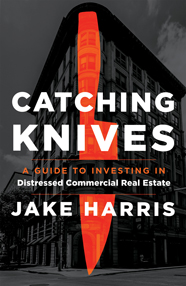
[0:00:46] Jane Borden: After becoming a millionaire and then losing more than he had, Jake Harris slowly built his portfolio and career back up by mastering the trade and art of investing in distressed commercial real estate. In his new book, Catching Knives: A Guide to Investing in Distressed Commercial Real Estate, Jake demystifies this specialized market and teaches readers all the [0:01:11 missing audio] low and sell them higher. He shares much of that advice with us in today’s episode, helping readers figure out how to catch falling knives without getting cut. Hi Author Hour listeners, I’m Jane Borden and I’m here today with Jake Harris, Author of Catching Knives: A Guide to Investing in Distressed Commercial Real Estate. Jake, thank you so much for being with us today.
[0:01:37] Jake Harris: it’s fantastic, I really appreciate the opportunity to spend some time with you.
[0:01:42] Jane Borden: Well, I’m excited to get into some of the nitty-gritty of all of the good advice in our book but first, can you tell our listeners just a bit about who you are and how this book came to be?
[0:01:53] Jake Harris: Yeah, really, I guess this is a little bit of a lifelong synopsis of the last 20 years of investing. The book kind of really starts out how I experienced my own kind of distress in the subprime meltdown, you know, the housing collapse in 2007/2008. What it was is I was sitting on a street corner up in front of a house in Tucson and I remember there, I was just kind of broken, you know? It was the stress of dealing with all of these things and foreclosures and I had a portfolio, which in the book, kind of dives into how I became a millionaire before 30 and achieved this, in my mind, this monumental kind of achievement and then here I am losing it all and sitting on that street corner crying and just praying to be worth no money, to go back to zero because of the way this portfolio has kind of eroded and I owe a lot more money and so that’s kind of the start of this book and so – But that is also my journey into distressed investing. On the flip side of that coin going from wishing and praying to be worth no money is to then rebuilding and making mistakes and over the last 12, 13 years of investing into distressed real estate, I’ve learned some things, made a lot of mistakes, continued to learn things every single day and this is an opportunity for me to throw down the rope to a couple other people to hopefully allow them to avoid some of those mistakes. They don’t have to reinvent the wheel, so to speak.
[0:03:38] Jane Borden: I love that. Tell our listeners, what is distressed real estate?
[0:03:44] Jake Harris: Yeah, distressed real estate, the topic of this book kind of dives into that. That can be a macro event. Here we’re living one right now. I mean we’re on the, hopefully, tail end of a pandemic, getting back to a little bit of normalcy but there’s something that has significantly happened that causes a disruption in the normal kind of economic cycles so you have distress. For instance, hotels are under performing, restaurants struggling to keep their doors open because of lockdowns and other things like that. That is causing macro-level distress in real estate so that also represents an opportunity to sometimes buy these at a discount. Obviously, there’s micro-level events. A lot of people are aware of Detroit and what happened with the auto industry and how the declining factories and the transitioning of that entire region caused distress and properties to go on sale for significant discounts. Then there’s also down to the very kind of almost nano is people are in individual circumstances in which they’re personally distressed. That can be from divorce or medical conditions and whatever reason that people are going through foreclosures or being disconnected to pay their bills. Then, obviously this book focused on some of the fundamentals of those macro-levels but they’re going to apply in every single aspect. The reason that I focused on the macro-levels of this is you have a lot more properties being distressed or in trouble during these large-scale kinds of events and it is, you know, the best time to get into commercial real estate, given the fact that the abundance of properties, it also causes some fear, people to kind of pull back from those markets. When you can buy things at a discount to its intrinsic value, call it less than the sticks and bricks value of a building, you have a little bit more margin for safety, room for error, you can screw up and still make money and so that’s why I believe it is contrarian but also the best time to actually enter into investing into real estate.
[0:06:17] Jane Borden: You say though that recession investing requires patience, tell us why?
[0:06:21] Jake Harris: It’s a combination of things, you know? You have to start preparing for recession before that happens. You have to prepare for evaluating properties, figuring out valuations. There’s, like I said, in these macro-events, there are sometimes a whole lot of deals that are presented to you and maybe not all of them are good deals and so you have to be able to develop a system that allows you to say “no” quickly so that you're not chasing down rabbit holes. Then also, that patience allows you to then jump on the opportunities that do hit and key off of the main factors that you’re looking for in an investment. It is, obviously depending on when somebody hears this or when they’re reading that book, you know, maybe the economy’s doing really fantastic and distressed is not the time for them but there’s things that you can start developing in your systems. The teams throughout that I kind of lay out in the book to give you and prepare you for the time to invest into distress.
[0:07:25] Jane Borden: Okay, let’s hear some of those.
[0:07:26] Jake Harris: Yeah, some of the systems. I’ve been a real estate professional, solely depending on my investment savvy or mistakes, for 20 years. I‘m still learning stuff every single day. Went to school, I have a master’s degree in international real estate finance and I’m still learning stuff. I feel like 20 years into this, I’m discovering all kinds of things. There’s just so many facets to real estate as a whole and so some of those opportunities is you don’t have to do everything yourself. You don’t have to even – myself being 20 years in and having a broker’s license and a master’s degree or a graduate degree in real estate, I don’t know all these things, and hiring people out. Filling out your team. And the reality is that real estate is a team sport. You’re going to have attorneys involved and inspectors and contractors, people that finance it, capital markets teams. Those are some of the things that you could start preparing for now, is figuring out where those relationships are, brokers that can maybe bring you deals. Networking opportunities because as you start becoming more known to the people in these networks, you also will find that there’s opportunity presented to you, the more kind of specific of the deal you’re looking for. I’d actually like to even take a step back on that, really what I started with in this book and what most people, they want to jump in to, “Where do I get those good deals, how do I start making offers, how do I do this?” and from what I found is, a lot of people that are starting out into commercial real estate investing or especially into distress is like I said earlier, chasing down too many rabbit holes and they just don’t know where to start. It’s like, I believe you need to start with the finish in mind, not just from a property perspective of what you’re trying to achieve out of this, and I actually kind of dive in a little bit of, to some levels of financial freedom. What does – what are you trying to achieve out of this investment, what is your “why” getting into? I’ll give you a little bit of a story, there was a guy that I know he was – he told his coach, “I want to make two million dollars a year,” and his coach was, “Well wow, that’s fantastic.” He said, “Well why do you want to make two million dollars a year?” “Well, because, it sounds like a lot of money,” is really what the definition was. “It sounds like a lot of money and I’ll be able to live my dream life if I’m making two million dollars a year.” He said, “Okay, let’s go through this exercise,” and so I’ve actually kind of laid this out a little bit in the book is, break down “What is your dream life actually cost? Have you quantified that?” Have you written down a list of all the things that you want in life? Do you want to own a villa in Italy, do you want to give a million dollars away to a charity or your church in one big check? That Publisher Clearing House thing. That might be – not a lot of people know about Publisher Clearing House giving away big checks but maybe that’s what you do, you have a vision of that in your life that you want to give that away. What you could do is, you could start defining, “This is what I want in my life,” and so that when individual, he was going through, he broke that down and so – well, maybe he want to have a villa in Italy, well he decided like, “I don’t actually want to own a villa in Italy, I just want a vacation at the highest levels for three months out of the year. The other nine months, I don’t need that villa.” He put it together and was like, “Well, what is that? $20,000 a month? Okay, I need to make $60,000 to afford that lifestyle of having a villa that I can go rent and hire a chef and do these other things.” “Do I want to own a jet or do I want to rent a jet and pay to fly private?” As he went through this activity, what he realized is that his dream life actually only was going to cost him $650,000 a year.
[0:12:09] Jane Borden: Only.
[0:12:11] Jake Harris: Only. Yeah and that’s one of the things. You think only $650,000 a year and for a lot of people, that’s a lot of money but the reality is that he is already making mid-six figures, he’s making half a million dollars a year, he’s almost there. What he was willing and what he was kind of lining up was a much more significant commitment to be away from his family, to go take on this other job opportunity that was going to get him closer to his two million dollars that he arbitrarily picked and it wasn’t – I’m not saying that making two million dollars a year is a bad direction or just being arbitrarily that you picked it because I think it starts with establishing where you want to go, it’s that – I always envision that Alice in Wonderland when she goes up to the Madhatter or the cat or whatever it was and asks for directions and he asks, “Well, where do you want to go?” She’s like, “I don’t know.” It was like, well, if you don’t know where you want to go then it doesn’t really matter which direction you go. I’ve just all use that fundamental thought process is first, you gotta figure out where you want to go. Even if it’s just arbitrarily picked as throwing a dart at a dartboard and that’s the direction you start heading, that’s better than nothing. But there’s some sequences of events that you could do to first figure out, “Hey, what the heck do I want in life?” Then if you can start defining that, that’s going to also help you fill out what type of real estate deals that you're looking for. It’s going to help define, if your goal is half a million dollars, you may look for different types of deals than small profit generating deals that will – maybe you want to do 50 properties that generate a thousand dollars each. That’s it, you're going to do that. Now you add that up to your half a million dollars a year or 650,000 in this month for this individual case. You’re like, “That’s a significant amount of work, I don’t want to do that.” It allows you to say no to more deals faster and then start defining your plan for the real estate investment deals that you really like or fire you up or excite you and how to tap into what are your skills.
[0:14:41] Jane Borden: Then of course you also want to know where you’re going with each deal and you give some great advice in the book about valuation. There is a lot going on, right? You have to know how much you’re going to sell it for eventually, how much it’s worth now regardless of what you are paying. How do you figure all of that out?
[0:15:04] Jake Harris: Yeah, so that is a complex process to figure out what commercial real estate is worth. You know you can walk downtown and what most people don’t realize is you go walk down and you see some buildings in downtown, wherever. They look pretty much the same, they might even have the same square footage. They might all be 50,000 square foot buildings but one is worth 20 million and one is worth 10 million, one worth five million. How do you determine which one’s worth what? Where are you buying? Where is that opportunity? That’s why first I kind of told you about getting the exit plan is, “Hey, what is it that you want to do with this property?” but you have to kind of pick a plan that aligns with the valuation and you might already have skills on kind of figuring out because you’re from that local town. You’ll maybe do a little bit of real estate so you already kind of know what some values are or maybe you don’t. That’s maybe where you fill in some of your different team members, brokers, appraisers, lenders, bankers tend to know those things. You can kind of come into that and figure out where valuations were in the past, where they are today and that is a very critical starting point because if you don’t know what things are worth, then again you can quickly be off-track and you make all of your money when you buy not when you sell. If you buy incorrectly, there is almost nothing you can do. It requires herculean-like effort to even just get back to breaking even if you don’t buy it correct. So that’s why it’s early on, one of the early chapters in the book, is going through those details and some of those steps for creating or figuring out that value. And then you mentioned one of the other important, crucial factors is, what is the pricing today doesn’t always matter. And I give you an example of this is Blackstone, which is for those who are not familiar, the largest private equity real estate company in the world. They came into the town that I was and you know, I was buying distress and we were doing deals, they came in and started buying properties for more than they were worth and so you know, let’s just use it for a quick kind of equation. The property that was worth $300,000 in 2012, they were coming in and buying it for $350,000. When I was looking at it, my plan was to immediately sell those properties and so if it was worth $300,000, I had to buy it at a discount under $300,000. I needed to buy it at $200,000 so I still had some room to fix up that property and then put it back on the market and sell it for that $300,000, which I was looking at what is today’s value. Well, what happened when Blackstone was coming in and they were buying these properties for more than what it was worth and I was just sitting there dumbfounded, I was just like, “I don’t understand what is going on, like how do you go pay more for a property than its worth?” It took me a little bit of time to dive into that and what they were doing is they were just playing a different game at a different time horizon than I was. I was looking at it and trying to transact and sell something in the next six months while they were looking at something as within the next five years and so when they were looking at it is they didn’t care what the value was today. They were looking at previous peak price on that particular property was a half a million dollars. They said, “Hey, we think it’s going to go up above half a million dollars again. It is just going to correct when the economy solves itself and figure things out and it will go up for more than half a million dollars, so we’re okay paying $350,000 for that property because we’re playing a different game.” The lesson I learned was also a very critical one to defining your exit plan and figuring out your evaluation is when do you plan to exit out of this property? And if your strategy is to sell something in the next six months, go buy that office building, quickly clean it up, put some new tenants in it and sell it in six months, the valuation that is today is much more critical but if you are looking at this over a three year or five-year time horizon, your projections of value is going to be vastly different and that’s one of the crucial things. You know, the title is Catching Knives is, the economy still might be going down. The advice most financial advisers tell you not to catch knives because it might continue to go down in value and you don’t want to get cut. Well, these systems of understanding valuations and understanding your exit plan, having your plan laid out gives you the opportunity to reach out and catch those knives even if the value goes down next year or the year after that if you’re looking at something that’s two, three, four, five years into the future, you can quickly move where other people are too scared to jump in and buy and purchase property.
[0:20:47] Jane Borden: Interesting. I want to also return to something you mentioned earlier, talking about investment teams and this, I found this so interesting just because I had assumed something different in my lack of expertise in the area but when I hear investment team or people coming to buy real estate I think, “People with money.” Hedge fund guys or venture capitalists or whatever and it’s like, “No, you need an inspector. You need a contractor, you need a lender,” and that’s like, “Oh of course.” It’s much more like building an Ocean’s 11 team and I thought that was interesting. Can you tell our listeners a little bit more about what a distressed commercial real estate investment team looks like and how it functions?
[0:21:38] Jake Harris: You know, I hadn’t heard or thought of it that way but that’s a fantastic analogy as far as like an Ocean’s 11. You know, everybody kind of has certain skill sets and depending on where you’re kind of coming into these deals, then you can fill out the other roles where you lack. And also someone still also has to kind of coordinate this and be the ringleader of this circus, the mastermind of the Ocean’s 11, you know? Maybe that is also your role, you may not fill any one of this. I mean obviously one of the critical components is, in commercial real estate, is money. You need investors. You need some way or forms of funds and so you can do that. You can syndicate it or put together a fund. What that is, for people that are not familiar, is you can gather a group of people to come together and invest into this building or this property or this apartment and so you may just create the structure and you’ll need to hire an attorney to help put those legal documents in place. You can then go communicate with your friends and family and that they believe in this idea that you’ve put together, that you are going to buy this building at this discounted price and then fix it up and then resell it at a higher price. Or you may already have money. I have a lot of clients, this is what I do all day every day is I run a private equity real estate company. Most of our investors are high net worth individuals. They’re doctors making six and seven figures a year but their day job kind of precludes them from actively participating in the management of a real estate but they have some funds that they can invest into that. Maybe if you are coming in from that, you may be that money and you need somebody else to be that operator or that sponsor. The person that’s coordinating and being the ring leader of what’s going on. One of the other really, really significant roles is a contractor. Contractors, which is interesting because this is how I just got started in real estate. I was out of the Army. I took a job bartending at a country club and I was like, you know, “I’m 23. I want to go grab the tiger by its tail. I want to get into real estate development. And what do I do?” And so I was asking the patrons, these rich guys that went to the country club and were playing golf. And the advice I got was, “Become a contractor,” and again, that was not the answer I was looking for. I was like, “No, I want to do real estate investment. I want to do that.” And so the thing that helped me and that became a light bulb “aha” kind of moment is, there is a contractor involved in everything real estate. If you’re fixing your kitchen, moving dirt, building a skyscraper, fixing an office building, there is a contractor involved in every single aspect of that and contractors like to make as much money as they can possibly make. They like to do these things and I don’t know other people’s experience. Mine of doing thousands of deals over, I think we’re up to 26 states now that we’ve done investments into. Contractors typically still kind of try to make as much money and take as long as possible and this is one of unique industries that the more work you give them, the higher the price gets and the lower the quality gets. And so it’s just like one of those unique things and so a contractor may be a really critical person to be involved in your team that gets you profit sharing. Maybe you can help align some of those interests, or if you’re a contractor, now you may be able to put together a deal, an investment into a property because you have the skill sets to fix that up at a good and favorable price. And so I dive into several others of these kind of people in your potential team. Like I mentioned earlier, brokers and lenders and inspectors and a combination of those. And we actually kind of put together a checklist in the book and we give that out as some resources as well to people that want to kind of fill out, “Hey, who is my attorney?” Well, those attorneys, they’re kind of like doctors. They specialize in specific topics. Some might be purchasing, reviewing contracts. One might be in setting up, like I said earlier, that fund, you know, how do you create that legal fund? That is going to be a different attorney than the one that is doing lease reviews. I wanted to try to cast a wide net to address a lot of different asset types and again, give some people some bandwidth to ultimately figure out where they fit in that equation.
[0:27:00] Jane Borden: Yeah and you definitely do and there’s so much other great advice in the book. For example, creative ways to finance purchases, red flags, deal breakers, properties you shouldn’t buy. Readers, there’s a lot more to learn here. Jake, it’s been such a pleasure speaking with you. Congratulations on the book. Again listeners, the book is Catching Knives: A Guide to Investing in Distressed Commercial Real Estate. Jake, in addition to reading the book, where can people go to learn more about you and your work?
[0:27:32] Jake Harris: Yeah, so we put together a website, catchknives.com. I’m pretty active also on Instagram, jake.realestate and then, you know, with that, we’re kind of rolling out this book launch. I’m pretty excited about that, I’ve not written a book before so I am taking the advice of people that are a lot smarter and better than me and so I think they are starting to release some things with key components, you know, some of those resource guides. All of those things and I think that is going to be primarily through that website, that’s catchknives.com.
[0:28:06] Jane Borden: Okay, great. Thank you so much.
[0:28:08] Jake Harris: Thank you, I appreciate it.
[0:28:11] Jane Borden: Thanks for joining us for this episode of The Author Hour Podcast. You can get Jake Harris’s book, Catching Knives: A Guide to Investing in Distressed Commercial Real Estate, on Amazon. You can also find a transcript of this episode as well as previous episodes on our website, authorhour.co. Make sure to subscribe to The Author Hour Podcast for more interviews and insights into life-changing books.
Want to Write Your Own Book?
Scribe has helped over 2,000 authors turn their expertise into published books.
Schedule a Free Consult