Jeremy Amyotte: Self-Assurance: Struggle, Confidence and Success
Read the full transcriptJeremy Amyotte
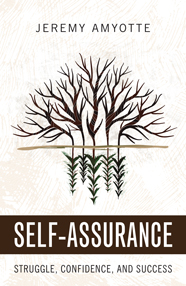
Jeremy Amyotte is an author, entrepreneur, and investor who leads one of the highest-producing real estate sales teams in his territory. He moved out of his parents' house at fourteen and barely earned his high school diploma, convinced he was doomed to struggle. When he began his real estate career, he found advice that changed his life and became obsessed with philosophies that could make life more fulfilling. His book, Self-Assurance: Struggle, Confidence, and Success, is an introspective look at life through the lens of a skeptic.
📚 Books by Jeremy Amyotte
Transcript
[0:00:39] Jane Borden: After watching his family struggle both financially and personally, Jeremy Amyotte was determined not to repeat the pattern so he committed himself to the never-ending process of self-improvement. Years later, as a result of his commitment and tenacity, he’s now a successful real estate agent with a happy family and a stable life. Now, he synthesized all of the wisdom he picked up over the years, both form his own revelations and from the teachings of a variety of mentors into his new book, Self-Assurance: Struggle, Confidence and Success. On Author Hour today, Jeremy discusses the importance of exposing our insecurities, why we shouldn’t just let conflict go, and the power of putting pen to paper. Hi Author Hour listeners, I’m Jane Borden and I’m here today with Jeremy Amyotte, author of Self-Assurance: Struggle, Confidence and Success. Jeremy, thank you so much for being with us today.
[0:01:36] Jeremy Amyotte: Thanks for having me.
[0:01:37] Jane Borden: This book is about a transformation, a continuous, non-ending transformation. To get us started off, will you just tell us a little bit about who you were before you began this transformation and who you are now?
[0:01:51] Jeremy Amyotte: Sure, I’ll tell you a little bit about my story, which I guess I allude to in the book. The book actually wasn’t really intended as a memoire but it turned out to be partially that. I grew up in a pretty good family when I was younger, except that my dad had struggled with a drug addiction and it worsened as I got a little bit older. When I was about 10 or 11, things started to deteriorate and all of a sudden, went from pretty good middle-class family to one that really struggled and through that, I ended up moving out of my parent’s house about 13 or 14. I had to grow up really fast and I think partially because of that, I really struggled and I watched him struggle, I watched my family struggle financially in relationships and anything, you name it. I just kind of thought that because I was very much like my dad, I look like him, I act like him, we share a lot of commonalities that I was doomed to live that same life. In this journey of really not trying amass a bunch of success, it was just really, the run to not struggle. And so, over time, I think that kind of stumbled upon some advice. I had gotten into real estate when I was fairly young, it was the only thing that I could do with really, no schooling that I thought could actually work out well for me and I had hired a business coach who put out a CD at the time that was not so much business-focused, which I didn’t realize when I popped it in and it was more life focused than some of the advice that I had l heard. Just kind of completely changed the way that I think about life in general and in many different facets and it was really the start of a transformation for me. Through that journey of just kind of stumbling upon these little things where I would find a little bit more success and a little bit more success. I started reading a lot of books and when I came to writing this, it was just something that I felt like I had to do to – just to give back I guess, a little bit into almost make sense of it for myself.
[0:04:02] Jane Borden: Who is this book for?
[0:04:03] Jeremy Amyotte: That’s a good question. I think it’s for anybody that feels like they struggle. For me, confidence was a big issue for me and of course, that’s the title of the book is Self-Assurance, which is a close cousin to confidence. I didn’t have any, I really didn’t know how to build a negative – I just kept stumbling on these things. I think that it’s for those people, I think. That it’s for people who feel like, others have something that they don’t. Really, to be honest, I think that there’s something for anybody in there who is already kind of striving and running into issues or might have success in some areas and not in others. The advice that I had heard originally from my business coach, his name is Richard Robbins was that business success is one thing, financial success is one thing but really, what you want is whole life success and everything works better when you’re firing in all cylinders and they’re all integrated in one way, shape or form. Anybody that’s really, I think curious about life, I think too much. I think that – the deep thinkers or the overthinkers, I think would really appreciate this book because it does get quite deep.
[0:05:11] Jane Borden: There are so many wonderful nuggets of wisdom in here. But let’s just explore a few of them. You write, “So many of us are afraid of our deepest thoughts because they expose our insecurities,” and you say that we tend to bury them but instead we should uncover them, what do you mean?
[0:05:31] Jeremy Amyotte: Well, I think that a lot of the times, this is something that I learned from my family and I think that partially, the generation before me, that was a pretty common thing where blue-collar Alberta, which is sort of the Texas of the US. Mostly farmers. We were taught that having any feeling that is negative was a weakness and so we didn’t talk about it. That led to a lot of the issues that I watched in my family, suicide, a few times, there was drug addictions, there was depression. I think that a lot of the times, it’s because we try to bury something that was there rather than uncovering it because we thought it was a weakness. It’s funny, my business partner, he used to tell me all the time that my dad was carrying the cross so that I could be who I am and it’s true because all the pain that I watched him go through, it was really quite obvious to me that that, burying things wasn’t the path. While it feels like a weakness to talk about these vulnerabilities or at least, even to acknowledge them to yourself. It’s not, it’s really the path to healing it, to uncovering it and really, I think that once you actually learn how to deal with those things, that actually makes you stronger because the next time you’re faced with a challenge, now you know how to deal with it.
[0:06:54] Jane Borden: This would be an example of what you were saying earlier that it’s all integrated. If we can learn to be successful in life, that’s going to bleed over into business success as well.
[0:07:05] Jeremy Amyotte: Yeah, 100%. I think that the old way of thinking was that life is compartmental and I guess in some ways, it can be but we don’t really just have a business life and then a personal life, family life, it’s all part of one. You’re one being and I think that when you’re having challenges in one area, some way or another, it’s going to cross over into the other, right?
[0:07:31] Jane Borden: You write a lot about values and this line really stuck out to me. “When you aren’t happy with who you are, that might be your conscience telling you that your choices are out of alignment with your values.” Can you tell us a little more about that?
[0:07:46] Jeremy Amyotte: Yeah, thanks for bringing that one up. Values is something that’s really important to me, I think that your values are kind of your compass because when you don’t know what choices to make, when you feel a little bit lost, when you’re not sure if you're behaving properly or if something doesn’t feel right, it’s generally something deep inside of you that’s you’re violating your values and your values is essentially sort of your hierarchy of what is most important to you. Most of us have heard the analogy of the bigger ox and the smaller ox and I think that sometimes, we tend to be expedient, meaning that we’re chasing potentially something that might feel pleasurable in the moment but it usually ends up violating something that is ultimately more important to you and that actually starts to deteriorate on your confidence and sometimes if you're not actually aware enough, if you don’t reflect a lot on who you’ve been that day and how you're acting. You can really drift yourself off course, the next thing you know, you’re kind of lost, why am I not happy with myself or why am I not confident. It might just be because you’ve drifted off without even realizing that you’re not living your values.
[0:08:58] Jane Borden: How can we, I guess, figure out what our values are, if they aren’t so immediately apparent to us and then get back on course?
[0:09:07] Jeremy Amyotte: That’s a good question, I think that it takes constant reflection to be honest. I actually – in the last few months, I’ve been struggling with it and so it’s funny, a lot of the stuff, I was, I finally allowed myself to review my book here last night before this call. Because I couldn’t read it for the last while and some of the advice that was in there, it’s like, “Oh jeez, I needed to hear that,” because it’s a constant work to reflect and to think about who you are and what you want to be. There’s a lot of great programs, a lot of good coaches, there’s a lot of good material that you can get almost for free anywhere that it really talks about clarifying how things can be important to you. To be honest, I don’t think I actually did a great job of explaining that in the book. I did not want the book to be a how-to as much as sort of a philosophical storybook to reframe how you think about things but yeah, there’s a lot of great resources to help you through that.
[0:10:07] Jane Borden: You also write a lot about the ego. It can serve us and it can trip us up. Do you want to share some of your stories about your struggles with that?
[0:10:19] Jeremy Amyotte: Sure, we villainize it a lot, your ego is actually meant to serve you. It’s meant to protect you, it’s just – essentially, it’s your awareness that you are a separate from the world and if you didn’t have an ego, you really couldn’t survive. It can serve you in some ways but in other ways, if you’re not conscious of it like it can be your friend as long as you’re aware that it’s there. The story that I shared in my book was a super personal one, probably the hardest one to write, which was issues that I had in my marriage about – I would say, six, seven years into what was six, seven years into my marriage, I think it’s the seven year, which is they call it. That coincidentally was about six, seven years into my real estate practice, I was doing very well and I had really gotten on this path of success and I was happy with who I was and where I was headed, yet, the only thing that I found that wasn’t quite there was my marriage and as I try to make it better, it almost fell apart and the saving grace was actually realizing that the problem wasn’t my wife, it was actually me. Just because I thought I was a good person and I thought that she wasn’t being who she needed to be I assume, that actually turns out that it was my ego, it was my problem and once I realized that I had to adjust myself and realize that I’m the one who is not perfect and even though I’m striving to be better all the time, clearly, there was something that was missing there and I think that that awareness, that it’s not always somebody else’s fault, it’s super powerful.
[0:12:02] Jane Borden: Yeah, on the topic of relationships, I also want to ask you, you write that when you’re having conflict, your advice is not to “let it go” but tell us what you mean about that?
[0:12:17] Jeremy Amyotte: Well, I think that a lot of times in conflict we think that to be the bigger person, you just walk away and that might be the best thing to do in the moment if you can’t handle your own emotions but just like burying a feeling, you know when we talked earlier about burying your own insecurities, this is the same concept is when you don’t actually resolve a conflict, it can fester and grow if you don’t really talk through it. Yeah, it really comes back to communicating what the issue is and how you feel and I think that a lot of my success and I think anybody’s success is really dependent on the relationships that you have with other people. If you don’t know how to have great relationships with people, I think you’re really going to struggle in life whether it’s business or friendships or you name it, you need other people to feel fulfilled and whole in life I think whether you’re an introvert or an extrovert. I think that a lot of us don’t – we don’t really learn how to deal with conflict because it’s going to happen like no question is going to happen especially when you’re striving to do more and to do hard things and to do hard things with other people, businesses is a great example. Married is probably the best example that you can’t expect it to be perfect but you can’t sweep things under the rug and just pretend that they don’t exists and so for me especially when I was younger. I think as I’m trying to grow, I’m getting better at being able to actually verbalize it but when I don’t have control of my emotions and my feelings, I can’t let a conflict just sit and kind of go away because I know that it doesn’t actually go away. It will blow up at some point or another could be years down the road and in another fight and so what – the tool that I use was writing. I had done that with my mother. My mom and I didn’t get along very well as a teenager, as I mentioned I moved out very young. What we would do is because we didn’t feel like we understood each other is we would write each other letters and it always seemed to – it gives you that space to write out what it is that you think and feel and mean and before you send it off, you get to reread it and a lot of the times what you write is not even what you mean and I think that that it’s a really good test of self-awareness because you think about that as when you’re speaking in the moment. It’s like no wonder fights can arise or conflict can happen because you’re not even actually really seeing what you mean and so writing gives you that ability to edit to look back and say, “Wait a minute, this isn’t really what I mean” and I think that people understand each other a whole lot more when you can do that. It’s worked really well for me. It saved my marriage, it saved my business, it saved my relationship with my mom and many other things and my dad as well actually.
[0:15:08] Jane Borden: Wow, that’s great advice and also, it’s just kind of mind-blowing to think that we aren’t actually very good at saying what we mean.
[0:15:22] Jeremy Amyotte: It’s true. I think it doesn’t even matter how articulate you are. Emotions are so powerful that when you are at a high emotion circumstance, it’s like you don’t really have control over yourself and I think that you can get better at it for sure but what’s what I mean by conflict and by removing yourself from the situation maybe potentially in that moment because you’re probably going to say something you don’t mean but I know especially in like probably the most heated one I’d ever had, it was in my business relationship, in a new business relationship with my now partner, Ron. We had had some really big challenges, challenges that we did not expect and it did turn into a verbal fight and not that I mean that I stayed up all night and I wrote a letter about everything and I clarified what our vision was. I clarified what he meant to me good and where I was struggling. And that letter, that really saved our business and I realized like, “Geez, there is no way I could have had that conversation with him face to face at least not in the moment or in the near future.”
[0:16:33] Jane Borden: There is another quote here that I highlighted that I loved. “When we believe that other people and obstacles have enough power to determine our fate, we inadvertently allow them to do just that.” Tell us more about that.
[0:16:46] Jeremy Amyotte: Yeah, our minds our very powerful. You go to work to prove yourself right on whatever it is that you believe and so, your actions kind of tend to follow your beliefs and it is one of the reasons it’s so important to have positive self-talk and talking yourself through certain things and seeing if you’re actually being logical about certain things. I’m in sales and so it happens all the time. If I’m not in a confident state, if I think that you know, somebody with a higher status is smarter than I am, I literally like my physiology weakens, my language changes, everything changes and all of a sudden, I am not the same person that I am with somebody that I believe that can actually help. And so, the only difference is not the person. It’s my belief about the person or what I think that they think of me and so you know, there’s so many times even I like to challenge myself with things that I’m not necessarily good at and that can be physical goals. It could be anything. I think that when I actually can visualize and see myself doing it and see myself actually winning, it’s like all of a sudden, my physiology changes and I go to work to prove myself right. It’s absolutely crazy how powerful that can be.
[0:18:01] Jane Borden: I got to start doing some of this stuff, Jeremy.
[0:18:05] Jeremy Amyotte: We all do. I do too.
[0:18:08] Jane Borden: Yeah, I want to ask you one more question about some of the advice you give or ideas you explore. What is and I’ll need to explain this to our listeners, when he writes about responsibility, it’s two words, response-ability. Tell us about this idea?
[0:18:26] Jeremy Amyotte: Yeah, I love playing with words because if you really look at the English language and you breakdown certain words, they start to mean something a little bit different, and so, responsibility is it’s your ability to respond and so this is, you know I actually got this from Jack Canfield, who says event plus response equals the result. And so, a lot of the times we tend to blame the circumstance that we’re in or we tend to blame the people that we’re involved with for the result of the lack of results that we want but it is really all about our ability to respond. I think that because that’s a big part of the equation is that that’s what we have full control over is how we deal with certain things and when you stop trying to control the things that you can’t control, all of a sudden life seems a whole lot easier. And I think that a lot of the times you tend to blame things like what’s going on right now with the pandemic but we can’t change that. It’s like playing chess and wishing that the rules were different. You got to play by the rules, right? But you can always change what you’re going to do with your pawn or your rook or your knight and I think that sometimes we’re so rigid on our strategy for whatever it is in life and we get frustrated when we don’t get our results but when you step back and you take that kind of 20,000-foot view and you look at the bigger perspective, all of a sudden you realize that you can change the way you play the game. I think that a lot of the times it has to start with changing the way you think about the game. You know again, I think that is why this book should hopefully resonate with deep thinkers like myself, where I almost confuse myself sometimes and it is the reason that I write is that all of a sudden, I can talk myself through a situation or through how I look at a situation and I always end up coming back to the realization that it’s like I am a piece of the puzzle here and I can change that.
[0:20:21] Jane Borden: You credit this work with success in all areas of your life. I mean I imagine the people who work with you have probably been inspired to some of this work themselves seeing the success you’ve had in real estate.
[0:20:37] Jeremy Amyotte: I hope so, yeah. I mean I think that I don’t want to put myself on a pedestal because I still struggle with this every day and I think that like the realization that that is the part of life is that we’re all still trying. We’re all still feeling, we’re all still going through the motions no matter where you are in life and I think that when we look at people place that we would like to be, we think that they have it all together and we realized that it’s like no, they still struggle too. I struggle through a lot of this as well but that was actually the reason for writing the book is I don’t – I think that I actually articulate myself better in writing than I do in words and sometimes it’s just you know, in terms of acting and hopefully, acting I don’t mean acting, I mean I’m still being me but I mean actually taking action because I think that who you are and who you’re being is typically the biggest influencer and I would like to hope that I think that I influence people in my life. The people that work with me, that have worked for me and my company, you know, friends and family and we definitely got some great people in our lives that they inspired me as well.
[0:21:52] Jane Borden: Well, Jeremy as you say, there is no destination. The work is never done, so I ought to let you go because I think you probably got a lot of self-work to go to and maybe there will be another book about everything you’ve learned after this one. It’s been such a pleasure speaking with you. Congratulations on the book. Again listeners, it’s called Self-Assurance: Struggle, Confidence and Success. Jeremy in addition to reading the book, where can people go to learn more about you and your work?
[0:22:20] Jeremy Amyotte: Well, this is not my full-time thing. It was a passion project that I felt compelled to write and so I don’t at the moment have a whole lot of material but if you want to follow me on Facebook, it’s just my name, Jeremy Amyotte on Instagram, same thing and if I get the feedback that people want me to be posting more material about these things, I certainly will start but as of right now, if you want to just connect with me as a human being, that’s where I am.
[0:22:48] Jane Borden: Great, I think a lot of people after reading this will probably want to connect with you as a human being. Thanks so much, Jeremy.
[0:22:55] Jeremy Amyotte: Thank you so much.
[0:22:57] Jane Borden: Thanks for joining us for this episode of The Author Hour Podcast. You can get Jeremy Amyotte’s book, Self-Assurance: Struggle, Confidence and Success, on Amazon. You can also find a transcript of this episode as well as previous episodes on our website, authorhour.co. Make sure to subscribe to The Author Hour Podcast for more interviews and insights into life-changing books.
Want to Write Your Own Book?
Scribe has helped over 2,000 authors turn their expertise into published books.
Schedule a Free Consult