Michael Hasz: Episode 657
Read the full transcript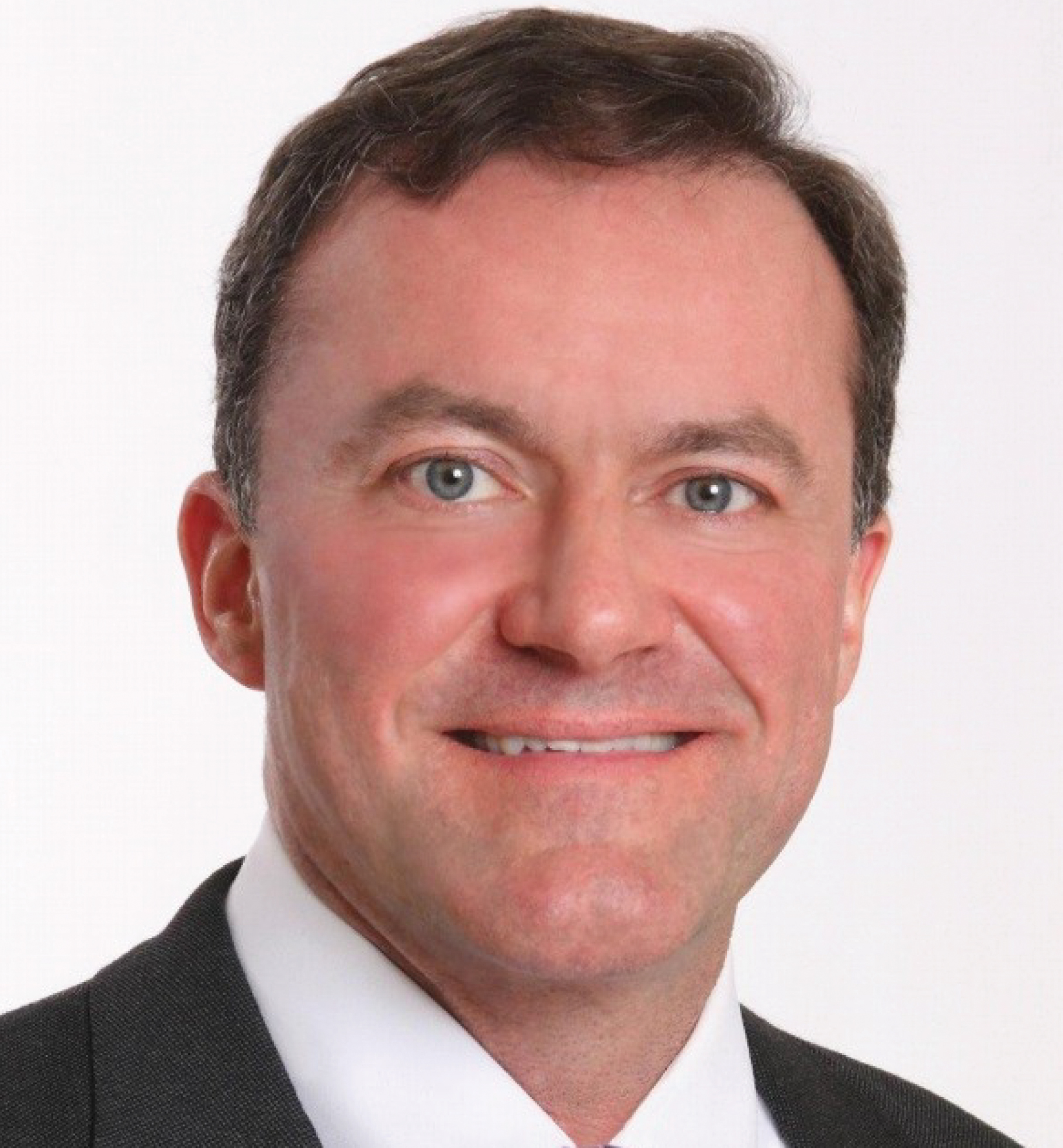
Michael Hasz
A nationally recognized spinal specialist, Michael Hasz, MD, FACS, is a spinal surgeon at the Hasz Spine Institute in Reston, Virginia, and was listed among the country’s top 1 percent of physicians in his specialty by US News & World Report. A former major in the US Air Force, Dr. Hasz was chairman of the department of orthopaedic surgery and director of spinal surgery at the Andrews Air Force Base/Malcolm Grow Medical Clinics and Surgery Center. He currently holds an appointment as clinical instructor of orthopaedic surgery and assistant professor of surgery at the Uniformed Services University of Health Science in Bethesda, Maryland.
📚 Books by Michael Hasz
Transcript
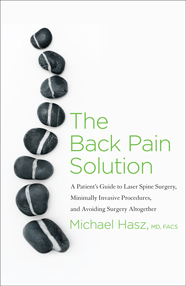
[0:00:30] JB: Dr. Michael Hasz is a nationally recognized spinal specialist and surgeon. As such, you might be surprised to hear that most of the time, he doesn’t do surgery. Through a curious mind and a dedication to the health of his patients, he’s constantly investigating the latest research into the causes of back pain and, as a result, has developed treatments that enable him to avoid surgery 80 to 90 percent of the time. Now he has put his decades of wisdom and practice into a new book, The Back Pain Solution: A Patient’s Guide to Laser Spine Surgery, Minimally Invasive Procedures and Avoiding Surgery All Together. On Author Hour today, Dr. Hasz discusses developments and regenerative therapies, how much less invasive surgery is these days when it does happen, and the enduring importance of good old fashion nutrition. Hi, Author Hour listeners. I’m here today with Michael Hasz, author of The Back Pain Solution: A Patient’s Guide to Laser Spine Surgery, Minimally Invasive Procedures and Avoiding Surgery All Together. Michael, thank you so much for being with us today.
[0:01:37] Michael Hasz: Thanks for inviting me.
[0:01:38] JB: First of all, reading your book, I am floored by how far back pain treatment has come in the last 30 years, it’s incredible.
[0:01:45] Michael Hasz: It is pretty amazing, I was reflecting on that earlier and noted that when I actually chose to get into this line of work and this line of care, I was at the cusp at the beginning of this change in the treatment for back pain and for surgery altogether. It’s a big wave that has continued my entire career.
[0:02:02] JB: Well, I guess that made your career very different than maybe you expected it would be when you went in.
[0:02:08] Michael Hasz: It was very — it’s been very interesting to see it continue to grow and develop and many of the things that I learned at the initial training gradually evolved and grew to be something that has metamorphosized into almost something not even imagined even during my initial training, back then.
[0:02:27] JB: Well, let’s get into how things have changed. I read that — you write in your book — that 80 to 90% of the patients you see don’t need an operation. Instead, you fix their problems with a more holistic treatment approach, using for example, diet, weight loss, exercise and kind of lifestyle changes. I mean, first of all, you’re a back surgery and is that bad for business? I mean, I’m kidding, I’m kidding — but that’s incredible, I mean, that’s like a completely different job I guess than what you expected to do.
[0:02:59] Michael Hasz: It is completely different. It’s interesting that I think some numbers I read years ago was that one out of four or five people that end up going to an orthopedic surgeon in general need a procedure or surgery and here I am, one out of 10, one out of 15 end up having a surgery where many people can be improved non-operatively. Now, that doesn’t mean the patient isn’t going to have to do some work and it doesn’t mean that I’m not going to do some other treatments but we can avoid surgery in a lot of people these days.
[0:03:32] JB: I know that is welcome news to your patients. It just goes to show, so much we’ve learned about nutrition in recent years. Can you tell us a little bit about I guess the effects of inflammation is what I’m getting at and how some of these holistic treatments can help?
[0:03:50] Michael Hasz: Well, inflammation, it has its good and bad points. Inflammation, when acute, let’s say after you’re playing baseball and a baseball hits you in the arm, you’re going to have some swelling and that’s the signal our body has to do some acute healing. However, if it becomes chronic and long-lasting, then it starts sending mixed messages throughout your body and can lead toward increasing pain when pain isn’t the usual signal anymore and once we start learning and our body starts receiving that information of that pain, we start interpreting other things that shouldn’t be painful as pain. When we start looking at inflammation, we can be set-up with inflammation with some of the things that we do on our regular daily lives. Our exercise patterns, what we eat, the type of nutrition we have, beyond that and even the timing of our sleep and of our – actually, eating patterns. A lot of those things can affect our baseline inflammation and then on top of that, we have our lack of exercise or our inability to recover from minor injuries that can actually add-up over time. Inflammation is one of the underlying things that we need to address and we need to take care of that, even if someone needs surgery so that we can help try to address the inflammation so that healing is even better.
[0:05:18] JB: What would be an example of some diet changes that a patient could make that would help solve them some back pain down the road or even in the present?
[0:05:28] Michael Hasz: Well, some of the initial dietary recommendations that I give end up being almost the opposite of what the food pyramid has told us to have and what we should be eating. There’s a lot of inflammation that happens just because of some of the excess sugars that we have and the gross amount of grains and glutens you may have heard other people talk about of winning sugars and also avoiding grains and with that, gluten-free diets and so on, that a lot of that does lead towards inflammation in our bodies. With that, each of those lead us to be in the situation of what’s called Hyperinsulinemia, which most sugar as well as grains rapidly increase our blood sugar levels and our body tries to keep our blood sugar to a certain level and over time, the insulin response to try to balance that out ends up becoming somewhat blunted to the point where it starts needing more and more and more insulin. Where we now are being to note that many of the diseases that we’re having are directly associated with too much insulin and are – it’s sort of like becoming desensitized to insulin. We start getting to the point where 10, 20 years down the road, after this is going on, then we start getting diabetes. Then we start having poor wound healing and many other diseases including just becoming overweight. A lot of that is due to mismanagement of the energy that we have going in. It takes a while for us to learn about a lot of these things. Years ago, if you went into a restaurant and you wanted some gluten free meals, people would look at you like you're really weird but now, almost everywhere you turn, you can buy something gluten-free. It does take 10 or 15 years or more for this information to come about but those are some very simple ideas we have that can help decrease inflammation in our bodies by limiting the amount and definitely avoiding excessive grains, glutens and sugars.
[0:07:37] JB: Now, of course sometimes, some of your patient’s problems can’t be fixed with diet and weight loss or can’t be fixed only by that I should say. But, unlike in the past, there are now a variety of – a wide variety of imaging techniques that are leading to more precise diagnosis and you write about many of these. Can you tell us about some of them?
[0:08:04] Michael Hasz: It’s very important to try to figure out as best we can what the pain generator is or what the major cause of your symptoms are. For example, if someone has a rock in their shoe and they have foot pain because of the rock in their shoe, it you can’t take the shoe off, how are you going to find out where the rock is? We might have pictures, we can x-ray and if the rock is radio opaque, we can see that there’s a rock in the shoe and then we can make it a decision that we’re going to take this out. In the similar fashion, if someone is having pain that sounds like it’s a pinched nerve like what grandma called sciatica, the pain that shoots down your back with pain and numbness and tingling. It sounds a lot like disc herniation or it sounds at least like the nerve is being pinched and one of the potential causes is that of a disc herniation and a disc is being the shock absorber between the bones of your back that gives us the ability to move and cushions a lot of our work. So, by being able to look at images, including an x-ray, which helps look at the bones better. As well as an MRI, which helps look at soft tissues like discs and nerves. We can narrow down our suspicions and confirm that there may be a disc herniation in the lower back that’s pinching on a nerve. If the nerve continues to hurt and cause pain, just like having a rock in your shoe, maybe doing a small surgery to take the pressure off the nerve and removing that part of the disc herniation — will make a big difference in their lives to help with their pain improvement.
[0:09:26] JB: I remember when my dad had back surgery when I was a kid and I’m not sure they even knew what the problem was before they went in. Now, there’s so much we can learn before going in. It’s wondrous and then once you do go in or sometimes you can fix it without going in, which is what I want to ask you about next — or at least going in but not operating and I want to ask you about regenerative therapies in a minute but first, what are some of the other non-operative treatments? I mean, it seems like there’s more than a dozen I didn’t count. Can you tell us about some of them and how they work?
[0:10:06] Michael Hasz: Are you referring to like I talked about exercise, how important exercise is to strengthen the core which is the large muscles of the legs as well as the abdomen and trunk, in order to take a lot of pressure off the back. The stronger your core is, the stronger that is that helps take pressure off the spine just imagine the core to be like a beach ball and that this big beachball is filled with air, you can sit on that and it can actually hold you up. If my core is strong and the rest of my body weight is through that core, I can relieve a lot of pressure on my back just by having the strong muscles that go along with either the back and the legs and again, the core exercises. In fact, that’s lead to a revolution of how the understanding is for sports because the core helps connect your arms and your legs through the core and through your spine. The stronger the athlete has for their core muscles, the more likely they can perform better. They can throw their basketball better, they can kick a soccer ball better as well as decrease their rate of injuries. As a non-operative treatment, exercises are very important. Other non-operative things that we can do include even injections, if putting ice on a sprained ankle helps, sometimes putting medicine close to an area of injury, like some of the joints in the back are called facet joints, putting some medicine directly in or around the facet joints through using a very, very small needle under x-ray or ultrasound guidance can help calm down local inflammation and maybe allowed to heal. It can also help diagnose and find that pain generator by doing specific injections at various places around the back, including in the discs near nerve, around the nerve in areas called the epidural space by the facet joints and other places.
[0:12:01] JB: Okay, the goal of injections is to reduce the inflammation, is that right? So the body can start healing itself?
[0:12:07] Michael Hasz: Yup, that’s correct, we want to try it to start healing itself and actually, what we inject and you referred to this a little earlier as well, what we inject sometimes changes things as well. We may just want to inject some local anesthetic just to see if we can block some pain to confirm a diagnosis. For example, if somebody has some retained hardware in their back or in their leg or somewhere, if I put a little numbing medicine around that hardware and it gets in, it no longer hurts then it’s a pretty good clue that that hardware is causing some irritation and if it’s not needed anymore, we can take it out. On the other hand, maybe after we confirm our diagnosis better, we can then do some of the regenerative treatments that you inferred earlier. Things like concentrated platelets from our own blood cells or concentrated stem cells that if we put down in areas that have inflammation, we can increase our body’s response and increase the healing rate, which can often help with pain as well.
[0:13:04] JB: Wow and how are stem cells used? How does it work?
[0:13:09] Michael Hasz: Well, imagine that first of all, stem cells, which we normally if we take it from our own body can be found from our iliac crest, which is from our hipbone area up by where our belt is not down by actually our hip joint but up by our belt. That is an area where there is a lot of stem cells and actually there are cells that are basically stem cells. They are called pluripotencial cells that are around all of our veins and are hard to restore our body. Basically, all of our veins have these cells around them that are just waiting ready to heal something. If we can harvest some of these cells and concentrate them and then give them the right stimulus, then we’ve got a pretty good chance that they may start turning into the cells that actually can help with healing. Right now, if you had ended up getting a cut in your finger, it is going to turn a little red. It is going to bleed some and the redness is the sign of the inflammation — which are the signaling processes to our body if something needs to heal. The veins are going to have these parasites or these pluripotencial meaning it’s got lot of opportunities to turn into all different types of cells and these cells are going to go over to the area to try to heal and then they’ll get a signal to say, “Hey, we need to do some healing here. First, we need to stop the bleeding and then we need to maybe regenerate into some collagen or maybe we need to try to heal this tendon,” or whatever else is in that local area. When we take these stem cells ourselves and we actually harvest some and we can concentrate some of them down to a more concentrated fashion, then we can jump start that healing process and maybe move these cells into an area of our body that normally wouldn’t have that many cells there and stimulate growth to the point that the body may actually heal in that area and we can do the same thing with the platelets. You may be aware that platelets are one of the types of cells that frequently used go around in our whole blood stream and the platelets help with clotting and so on but platelets also have a lot of growth factors in there. They are one of the signaling mechanisms that signal these parasites or these stem cells to come to the local area and do some healing. Another way to engage this healing process is to concentrate these platelets in a form called PRP or platelet rich plasma. We can concentrate these platelets as well as a bunch of growth factors, concentrate them and also put them in different areas of our body. For example, along tendons or in joints or extinerves or inside discs, many, many places and we are finding that a lot of people can feel a lot better. It actually rejuvenates some of the collagen. It can rejuvenate some of their tissues and actually have decreased pain when these are placed in judicious place and we have a good idea where their pain is coming from. Stem cells and PRP are a couple of the resources we have in the field of regenerative medicine that can help with a lot of these.
[0:16:12] JB: I also wanted to ask you about nerve ablation and I believe there is a couple of different kinds. What is that and when is that helpful?
[0:16:23] Michael Hasz: Well, if you talk about nerve ablation, the common forms that are used in around the role of back pain or neck pain for example is that there are some times when the specific nerves that are pain-receiving nerves are now not giving you any really good information anymore — they’re just hurting and these are not the nerves for sensation. These are not the nerves that signal your muscles to work and so on, but if you have a joint in your back like a small facet joint or some other areas that is injured, has some early arthritis, it has ongoing pain, it improves with some injections but not long lasting. If it is not bad enough that requires the joint to be actually taken out, and fused, or replaced, then the nerve ablations or Rhizotomy can be used to actually stop those pain fibers from actually feeling the pain of that small little joint. It doesn’t cause instability at these facet joints for example. It just helps numb up the area in a longer term basis. It’s a good intermediary before someone has surgery and if they are not getting better with other non-operated treatments.
[0:17:36] JB: Interesting. If they do need an operation, there are now minimally invasive techniques and laser technologies that make it all sound like a walk in the park. I mean again, I mentioned even my dad had surgery. He was in bed for weeks. What’s it like now?
[0:17:53] Michael Hasz: Well, I wouldn’t call it a walk in the park.
[0:17:57] JB: Fair enough.
[0:17:58] Michael Hasz: However, the walk through the park is much better now. Let’s say even very relatively larger surgeries now, you’re rarely in the hospital more than a couple of days. You are not moving right away. These world of multiple days and weeks of bed rest really doesn’t happen anymore only with rare exception. Most of my folks that are having surgery, we may actually have a surgery that would be small incisions and maybe we need to make two small incisions rather than one bigger one. Which allows me to precisely go where I need to be and I may not have to move as many tissues around or elevate muscle around as much if I do a couple of different incisions for different approaches to for example replace a disk or to put some screws inside the spine in order to help hold everything in place and it sounds like it’s really scary to have a couple of screws put in but that would replace someone having to wear a cast or lying in bed forever. Not forever but for weeks at a time, we wouldn’t have to put someone in a big long cast that have to be in for six or eight weeks because we’ve got internal fixation that will act like a cast and it can hold things in place and get someone up, moving, and being much more active while everything else heals. I would say that the vast majority of people go home either the same day or within a couple of days even with two or three level type of scoliosis surgeries or even 10 or 12 levels have gone home in these days. Because not only do we have less invasive surgeries, we have techniques these days that often will have much less blood loss and we also plan in advance with nutrition so that healing would be better. We also plan in advance a multi-model meaning different medication used in combination that can work synergistically together. If someone isn’t overdosed with – not overdosed but having a higher dose of one medicine versus another. By planning the nutrition, the medications, the physical therapy or the exercises beforehand so their blood flow is already moving to their muscles and their tendons so that way they’re muscles are already juiced to heal afterwards. Put that all together then afterwards recovery is much faster.
[0:20:17] JB: Wow, so even the surgery itself is approached from a holistic perspective.
[0:20:23] Michael Hasz: Yeah, the smaller the surgery, sometimes a surgery still needs to have an opening of a certain size but like one of my mentors once said, everything heals side to side but the key for this is the muscle, if we can elevate it or go between certain muscle plains by knowing our anatomy better, we don’t have to cut as much. We can actually move and shift and work around the way the structure is already are there so that way, there’s less inflammation, less healing necessary. Even if we have to do the things we need to do and also, the other option is or the other option we have is, just because somebody has an x-ray that suggests a lot of arthritis throughout the entire spine, we can often narrow down and choose one or two of those that are likely the cause of most of their symptoms and address those and it is so much easier to recover from a smaller surgery and if we can help with 80 or 90% of their pain with a smaller surgery, then it heals much faster. Even if they have to come back six months, a year or two years, five years down the road, it would be a couple of smaller surgeries that they bounce back faster than having a larger surgery that takes six or eight months to heal from.
[0:21:39] JB: Seeing the problems your patients come to you with and in seeing their reactions to the information you give them, what’s like the one or two things that you really want people to know? Readers of your book, listeners of this podcast kind of takeaway from all that you’ve learned and practice in this area.
[0:22:00] Michael Hasz: Well, there is a lot of things that can be done but number one is the patient, the person that comes in needs to know that they need to do their part of the job. They can’t not have good nutrition, they can’t not exercise, they can’t expect that this is just coming in, you put a band aid and then it goes away. They really have to realize that they are part of the equation and they have to enroll in all of that. That way, they understand that by the time we end up getting to possibly having surgery, they have actually gone through the steps that allow 80% of the people to avoid surgery, that sometimes it does take time to reverse some of the bad habits or the environment that they have grown up with to get them to be optimized to have the type of treatment that they need to have and I think that’s the first key. The second key, I just had another one but it will come back to me. I just forgot.
[0:23:09] JB: Well, I’m really thankful for all of the work you’ve done to kind of lead all of these expansion of this knowledge and putting it into practice and especially thankful that you have put it all in into a book. I hope our listeners will check it out especially because as you said, almost everybody will face some kind of back pain at some point in their lives. That is the curse of being human and standing up right I guess.
[0:23:38] Michael Hasz: Yep.
[0:23:39] JB: Michael, please yes –
[0:23:41] Michael Hasz: One thing. I would suggest one thing is that different people have different trainings and different experiences and if you’re not quite sure, don’t be afraid of bringing all of your x-rays and MRI’s and everything else you have in getting another opinion. Just this past week, I saw two people that have procedures elsewhere and after those procedures they still weren’t doing well and they were told there was nothing else that could be done. You know, the honest thing that most people think is these are good doctors. They are board certified, everything else that they have the qualifications for and that’s what they told me. That must be it. However, sometimes just a fresh way of looking at things can give more opportunities to feel better and these two, they had the opportunities and they needed something else done and they’re better already. Don’t be afraid of getting second opinions.
[0:24:42] JB: Well, Michael, it’s been such a pleasure speaking with you. Congratulations again on the book. Listeners, it’s called, again, The Back Pain Solution: A Patient’s Guide to Laser Spine Surgery, Minimally Invasive Procedures and Avoiding Surgery All Together. Michael, in addition to reading the book, where can people go to learn more about you and your work?
[0:25:01] Michael Hasz: Well, they can get a hold of me or at least get a rudimentary idea of contacting me through my website. It’s rudimentary right now but it’s growing, it’s at haszmd.com and through that you’ll be able to have contact be it by either email or phone numbers but the website is probably the best way.
[0:25:22] JB: Great, thanks so much.
[0:25:24] Michael Hasz: You’re welcome.
[0:25:26] JB: Thanks for joining us for this episode of The Author Hour Podcast. You can get Michael Hasz’s book, The Back Pain Solution: A Patient’s Guide to Laser Spine Surgery, Minimally Invasive Procedures and Avoiding Surgery All Together, on Amazon. You can also find a transcript of this episode as well as previous episodes on our website, authorhour.co. Make sure to subscribe to The Author Hour Podcast for more interviews and insights into life-changing books.
Want to Write Your Own Book?
Scribe has helped over 2,000 authors turn their expertise into published books.
Schedule a Free Consult