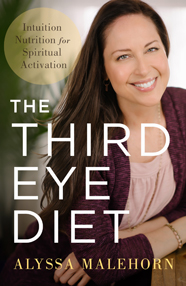
Alyssa Malehorn: The Third Eye Diet: Intuition Nutrition for Spiritual Activation
Read the full transcript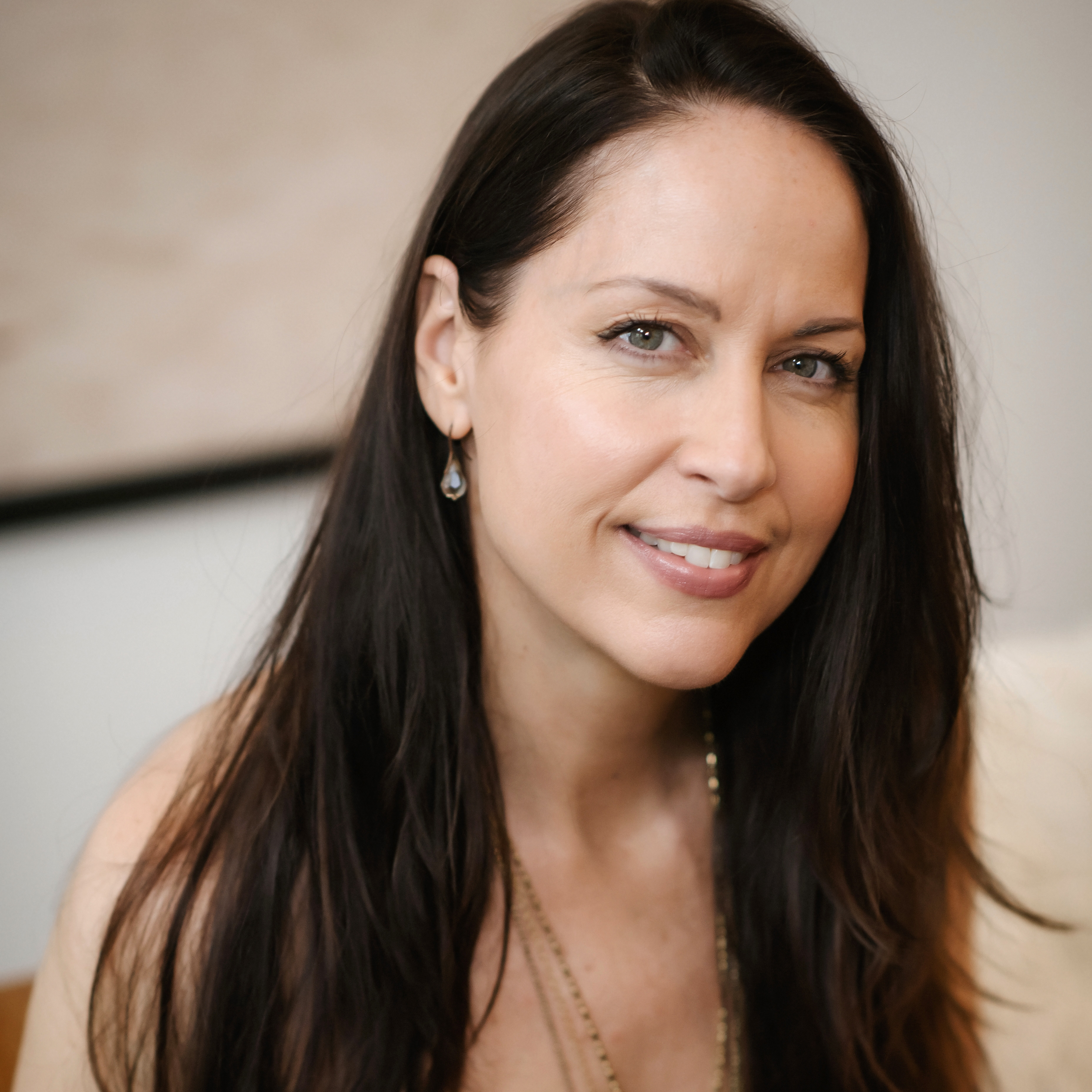
Alyssa Malehorn
ALYSSA MALEHORN has been an intuitive channel her entire life. Learning how to function with that level of sensitivity taught her how to thrive in the physical world while living multidimensionally. Now, Alyssa serves as a spiritual teacher and ascension guide who supports higher-consciousness awakening in others through live events, retreats, courses, and coaching. She is the creator of Channeled Light Healing—an ever-expanding energy healing modality that is twenty-five years in the making—and a mentor for others in the holistic, healing, and intuitive arts. She is the cohost of the Raw Spirituality Podcast and author of the book How Old Is Your Soul?
📚 Books by Alyssa Malehorn
Transcript
[0:00:27] JB: Spiritual awakenings, the heart-mind connection, and theories of vibrations in the body: Sometimes the work of energy healers can be difficult for the uninitiated to approach, but that’s not the case when Allyssa Malehorn explains it. In her new book: The Third Eye Diet: Intuition Nutrition for Spiritual Activation, she tells readers what they can do to help live in a more natural state led by intuition instead of fear. On Author Hour today, she talks about the difference between ‘constriction’ and ‘expansion’, the importance of intention and awareness, and the power of the healing heart. Hi, Author Hour listeners, I’m here today with Allyssa Malehorn, author of The Third Eye Diet: Intuition Nutrition for Spiritual Activation. Allyssa, thank you so much for being with us today.
[0:01:27] Alyssa Malehorn: Thank you, I’m happy to be here.
[0:01:30] JB: I have so many questions. Let’s start with: can you just tell our listeners a little bit about what you do and why clients come to you?
[0:01:37] Alyssa Malehorn: Okay, well, I’m a spiritual teacher, intuitive medium, energetic, healing arts practitioner and teacher, awakening guide. It’s hard, I think, for those of us who are in the healing arts or the intuitive arts to categorize ourselves, so we end up with this long list of things. I’ll just say, in general, people generally find me when they are spiritually awakening - whatever that looks like for them! We can talk about that in a little while if you like? In general, the idea is that by the time people find me, they typically are either just starting to become more aware of their spiritual lives or they are really both feet in, fully experiencing their lives from a spiritual perspective. So, either way, whether they’ve just awakened or whether they’re fully immersed in their spiritual life, the work that I do, and the classes, and all of that, generally, the idea is we kind of meet people where they are.
[0:02:55] JB: And help them deepen the experience?
[0:03:00] Alyssa Malehorn: Yes, exactly.
[0:03:03] JB: This is maybe impossible to answer, I don’t know, but what do you mean when you say ‘spiritual’?
[0:03:09] Alyssa Malehorn: When we look at the aspects of ourselves, we have a complex system: We have the mind, the body, the soul, the spirit. When we’re operating with focus on one of those areas and not developing other of those areas, we tend to move into a lack of balance. When we look at the spiritual aspect, what we’re looking at is the aspect that is beyond the physical, and intertwined with the physical, but beyond the physical, beyond the emotional, but again, intertwined with the emotional, and same thing with the mental. Thoughts are part of spirituality, it’s all intertwined. But, when I’m approaching spirituality as it’s integrated fully within my life, I’m looking at the overarching umbrella that holds those other aspects and we want to have a balance of those aspects. Eventually, what tends to happen - in natural evolution or what we can also call ‘awakening’ or ‘ascension’, - what tends to happen, is your spiritual life becomes your day-to-day life. Meaning, everything in your life starts to resonate with that energy of spirit, with that overarching energy of what we could call ‘unity’ or ‘oneness’ or ‘peace’, or however one experiences one’s spirit, which can be lots of different ways.
[0:05:00] JB: Okay.
[0:05:02] Alyssa Malehorn: It’s a very difficult question to answer. That was probably an insufficient answer but –
[0:05:10] JB: No, that was very helpful. I’m interested in what you said about balance and I think that your book talks about balance as well. You’ve brought up this term ‘spiritual awakening’ and I do want to know: how does a person find themselves experiencing that kind of ‘awakening’? Is it something you can try to do? Or does it just start to happen and then you recognize it and follow it?
[0:05:38] Alyssa Malehorn: I would say, in most people, something happens in their lives that is a trigger event; that yields a way of looking at life that can feel kind of like a ‘reset’. Sometimes it’s something traumatic (like the loss of a loved one or a divorce or something like that), sometimes it’s something wonderful (a graduation of something, or the completion of something, or a new chapter). Many times, people will have a trigger event that will allow them more easily to sense beyond the physical world. You know, I hear this with clients that, for example, if someone has been very financially successful and they’re still unhappy and they thought that being financially successful would bring them great happiness and peace, that can be a catalyst for a spiritual awakening. Even asking oneself, “Well, if I have everything that I want in the physical and I’m still not happy, what’s the problem?” Even something like that just opens you up, opens you up to just the recognition that we are not one-dimensional, that we’re not just existing in the physical world. That’s really what I’m meaning by ‘spiritual awakening’: When we recognize that we’re not just physical beings having this physical earthly experience. We’re multidimensional beings, we’re existing on multiple dimensions at the same time, we’re experiencing our emotional bodies, our mental bodies, our physical bodies, our energy bodies. Of course, quantum physics is explaining a lot of this to us now. The overall idea that it’s a natural process that many times we come upon, through a catalytic-type event, some sort of catalyst. There are people who actively seek out awakening and that’s just another avenue. Seeking out awakening just means looking for more of whatever it is, you know? Some people would say, “I’m looking for more peace” or “I’m looking for more sense of wholeness” or I’m looking for whatever they’re looking for. They may not even realize that what they’re really encountering is a desire to awaken more, spiritually.
[0:08:18] JB: Okay, that’s some helpful groundwork. Let’s dig into the book. How did this book come to be? Or, I guess I’m asking: what does this book aim to help readers achieve?
[0:08:34] Alyssa Malehorn: This book is about making the choice as to how you want to live, whether in a ‘constricted state’ or in an ‘expanded state’, and finding ways to support that state of being. What I mean by ‘constricted’ or ‘expanded’ is when we are in fear or worry or overwhelm. Many people can relate to with 2020 and early 2021, how that’s been shaping up, a lot of people feeling those types of lower vibration emotions. Those energies, those emotions, those feelings tend to cause constriction in the physical body and the emotional body and the mental body, and a lack of coherence between the heart and the brain. When we start to make the adjustment to move into an expanded state of being, we feel our heart center expand; we feel more openness, mentally, we feel more open emotionally. Through that process, we open spiritually. That tends to, not just bring more peace and more feelings of stability and more feelings of connectedness with others, but also that ‘intuitive awakening’, that awakening to the highest self. Awakening to those aspects of self that already have the answers that those natural gifts that we all have. This book is really about understanding that process of ‘constriction’ and ‘expansion’, knowing the steps to take to move into a coherent expanded state, what to expect, and then how to support that. How to support that in your day-to-day life, how to support that in your relationships, and what you ingest, what you consume media-wise, all of the things.
[0:10:55] JB: Being ‘constricted’ and filling ourselves with unhealthy things we consume, whatever that might be, that’s sort of like gumming up the works of our intuition?
[0:11:10] Alyssa Malehorn: Yes, that’s one way to put it for sure. We naturally are all gifted with different intuitive gifts. Different people may have strengths in one area over another, and we talk about that in the book. When we are in an ‘incoherent state’, when we’re in an energetically constricted state of fear, worry, not feeling safe, whatever it is, anxiety and a lot of these, of course, have been normalized in our culture. When we’re in that state, we’re not able to access our higher-level intuition, and if we are accessing some type of intuitive energy, we’re not really able to trust it. It’s extremely important in accessing your own intuition and moving through your awakening process - which always opens up more of your intuition just as a side effect, kind of as a byproduct - it’s really important to start to know what state you're in. Many people aren’t even aware of the level of constriction. So, that’s one of the aims of the book is to help to highlight what we’ve normalized and what our truly natural state would be. I actually give an example in the book: When I was growing up, I’ve seen people who have passed on, who were on the other side since I was very small. My earliest memories are of people who have crossed over. At the time, I didn’t know that that’s what was going on but I was really scared. I normalized that baseline anxiety level. That was just enough anxiety where, especially if it was nighttime, I was going to be- just this anxious feeling was just going to always kind of be there. Because I normalized that, I didn’t even realize that I was anxious. That’s a really common thing that, you know, the way that we’re raised, or the family of origin, or whatever it is, creates kind of a baseline way of being that. Then, as we mature, the idea is that we pull back from that a little bit and witness it, so then we can start to make conscious choices as to “Does that really feel supportive?” You know, I have three favorite words: Is it ‘appropriate’, ‘supportive’ and ‘beneficial’? If it doesn’t feel like that then we can realize, “Okay, that’s just something that I took on. That’s a pattern or program that I took on to survive, or to emotionally feel safe, or just as a result of reaction or response to my environment.” I took that on, I normalized it, but now, I’m in a place where I can make a conscious choice to unwind that and then replace it with what would be more of my natural state. So, the book is part of that process. It’s intended to support through that awakening process of, “What have I normalized? What feels true for me?” You know, the idea is we all are our own self-authority but sometimes it takes a little ‘doing’ to get back into that state of remembering that we are our own self-authority, that we are our own gurus, so to speak.
[0:15:06] JB: Wow, okay. What are some other ways we can work to be less constricted? Or maybe ‘work’ is the wrong verb there, I don’t know?
[0:15:19] Alyssa Malehorn: It’s funny because even when I talk about doing my ‘work’, I shifted phrases over the last few years and now I call it ‘my contribution’, because I had in my own life, you know - because it all is very personal - I had some energies attached to the word ‘work’. So, maybe not everyone has that? Different people feel differently about things, but I realize if I think about going to ‘work’ that has one energy, if I think about going to ‘contribute’ or going to ‘be in service’, that has a different energy. It’s funny you mention the verbiage. Words have a lot of significance when we’re getting into those specifics. One of my favorite ways to move into a coherent expanded state - and I go into detail about this as well in the book - is moving into ‘heart coherence’. ‘Heart coherence’ means, in really general basic terms, that your heart and your brain are communicating well, and that there is balance, there is harmony between those two. It’s funny too, how often we say, “My heart is saying one thing and my head is saying something else.” That would be a great example of incoherence. So, when we have the heart and the brain working together, the physical body starts to relax and it starts to do its own self-healing. Also, we start to have access to our own wisdom and our emotional intelligence and, you know, whatever it is that we’re wanting to tune into, our intuitive gifts start to unfold. It definitely is part of the process and heart coherence is actually really, really simple to do. And free! No equipment required. All you do is you focus on the center of your chest just behind your sternum, and you can close your eyes. When you’re focusing on that space, there are sensory neurites that live in that area. You just, kind of, focus on that area and when you focus on it, we know that what we focus on changes in response to our observation. As we are focusing on that area, you can imagine or intend that you are breathing directly into your heart center, into that space, and breathing directly out of that space. And you know that you’re breathing in through your nose so it is not a literal thing! You’re just imagining that you are breathing in, and you can even imagine, if you are very visual, in your mind’s eye, you can imagine you are breathing light into your heart center and then breathing out of the heart center. Then, from that point, let’s say you’ve done, I don’t know, five or six breaths, and just noticing your breathing, then you bring up an elevated emotion. So an elevated emotion for me, I choose gratitude and or love. It can be for anything or anyone. In the mornings when I’m in bed and I am about to get up and jump into my day, I am breathing in and out of my heart center. I am just feeling, and that’s the key word, ‘feeling’ so grateful for my soft bed, and for my pillow, and I am so grateful for the dogs, and I’m so grateful for my partner, and just so grateful for the day. Grateful to have clean water and hot water to take a shower, and grateful for clean food. It just doesn’t matter what it is, or it can be a person, it can be a place, whatever. And as you bring in that elevated emotion, while at the same time you are focusing on that area behind the sternum, you are actually building your field. And this is a measurable electromagnetic field that the HeartMath Institute - ‘HeartMath’ like ‘mathematics’ - The HeartMath Institute has, since 1970s, been measuring this field. When you build this electromagnetic field through doing this process, your heart and your brain start to work together, your nervous system gets a reboot and gets a little upgrade, and it’s like you’re firing on all cylinders when you didn’t even realize you weren’t before that. That’s my favorite way and it is really simple and easy. You know, I say ‘easy’, it does take practice because you’re generating a feeling from thin air. You know, it’s not like you just won the lottery and you’re like, “Oh, I am so grateful, I won the lottery!” You’re having to reach, at first, and kind of think to yourself, “What do I really feel grateful for?” Because it is not the thought that pulls you into the coherent state, it is you allowing yourself to really feel it. And you will start to even- Some people who are very sensitive will feel warmth in their chest, and really feel those sensory neurites getting into alignment.
[0:20:36] JB: Wow, I feel like so often when I hear my friends - my friends who would call themselves ‘spiritual’, or who ascribe to a lot of the practices that you promote - I hear them, and I am hearing this from you as well, talk about ‘intention’ and ‘awareness’ and kind of making a ‘choice’ to live through the world, or experience the world in a certain way, and that’s so powerful! I mean, obviously, science has also measured the effects of intentional actions and living. I just think that that’s so important to think about. I think so often certain people can approach this realm of ideas with a lot of skepticism, and skepticism is a healthy thing, but I think talking about it in terms of ‘intention’ and ‘awareness’ can be really powerful as a way to, sort of, ‘bridge the divide’, I guess.
[0:21:43] Alyssa Malehorn: Absolutely! And, you know, when we talk about ‘intention’ and ‘making conscious choices’, one of the things that comes to mind, for me often, is that when we look at our natural state we are all 100% empowered already, we’re just in various stages of remembering that empowerment. When we look at most culture, most culture is based on a disempowerment-type system. It can feel to someone who is deeply immersed in culture, it can feel - whether that’s family culture, or where you’re from, or whatever it is - it can feel like, well, all the intention and the spirituality and all that stuff is just, you know, that it’s just ‘woo-woo stuff’ and that doesn’t have anything to do with real life. When we, again, take a step back and witness how we’re interacting in the world, when we choose an intention consciously, we are activating that natural empowerment. When we make a decision to become more aware, then that’s activating that natural empowerment and life changes. That’s the bottom line. Anyone who has even kept a gratitude journal can likely testify that they – that their life has changed just through being aware of their blessings every day. It’s totally understandable that it either wouldn’t make sense or it would seem unimportant to some who haven’t taken a step in that direction, even the step of just saying, “You know what? I am going to start my day with an intention. I intend today to be in service in this way,” or “I intend to leave every situation better than I found it,” or just some intention that feels aligned with your beliefs, or with your goals in life, or whatever. Even just doing that for seven days creates a shift: It creates a shift in your energy body, it creates a shift in your heart center, and you do start to witness the world - which includes you - differently. That is the idea. We are wired to be compassionate, to hold space for others to be able to experience their lives the way they want to, in other words, ‘being very open’. I mean, we are naturally wired for that, we see that in children. Anything that has dampened that ‘naturalness’, - you know that natural light, that natural openness, that sense of emotional vitality - anything that has dampened that, we could say is kind of an ‘unnatural state’. In my experience with myself, with plants, with students over the years, we all are ‘naturally’ - without having to force it - naturally on our way back to our naturalness even if we have never experienced it in this lifetime.
[0:25:18] JB: I mean that sounds great, Allyssa.
[0:25:20] Alyssa Malehorn: That’s why we love nature. That’s why – well, I say ‘we’ - that’s why so many people love to be in nature because we get to reclaim our own natural rhythm through that. You know, it is like one of the things that I’ve told students for years is that we know that anxiety and stress are not natural states for us because they are not health-promoting. Even just kind of recognizing, “Okay, so maybe I’m super-motivated and I’m super driven but I’m translating that in an anxious way. Can I be super-motivated and super-driven and do it maybe without the anxiety? Just do it with excitement perhaps? Can I shift just a little bit and enjoy it more and my body will start to respond to it? My physical body will feel healthier and my emotional body, et cetera.” Sometimes it’s even just a slight tweak in the energy, which comes through awareness, comes through that self-questioning, and just noticing ourselves, that makes the big difference.
[0:26:33] JB: The book is full of so much practical advice of things we can do, in addition to the ones you discussed with us today, to be less constricted, get more to our natural state - I want to make sure I am getting all your language right - access our intuition. You say it has a detoxifying effect and not just things you can, kind of, consume or not consume but also the ways in which to do it to be more intentional, as you said. I wish we had more time to get through it all, it’s really interesting. But Allyssa, it’s been a pleasure speaking with you. Congratulations. Again, listeners, the book is The Third Eye Diet: Intuition Nutrition for Spiritual Activation. Allyssa, in addition to reading the book, where can people go to learn more about you and your work?
[0:27:27] Alyssa Malehorn: The easiest way is alyssamalehorn.com and that’s alyssamalehorn.com, I know that’s not easy. That’s the easiest way. We also have a community that is called ‘The Raw Spirituality Community’ and that’s at rawspirituality.com. That’s a free community for people who are on an awakening journey of any type. It doesn’t– It is not religious based, it’s not- There isn’t any belief system that’s adhered to it. It is just about wanting to, kind of, wake up to your own spirit, so that’s it rawspirituality.com.
[0:28:15] JB: Okay, great. Thank you so much.
[0:28:18] Alyssa Malehorn: Thank you.
[0:28:21] JB: Thanks for joining us for this episode of The Author Hour Podcast. You can get Allyssa Malehorn’s book, The Third Eye Diet: Intuition Nutrition for Spiritual Activation, on Amazon. You can also find a transcript of this episode as well as previous episodes on our website, authorhour.co. Make sure to subscribe to The Author Hour Podcast for more interviews and insights into life-changing books.
Want to Write Your Own Book?
Scribe has helped over 2,000 authors turn their expertise into published books.
Schedule a Free Consult