Kevin McCarney: Big Brain Little Brain: How to control which one speaks for you
Read the full transcript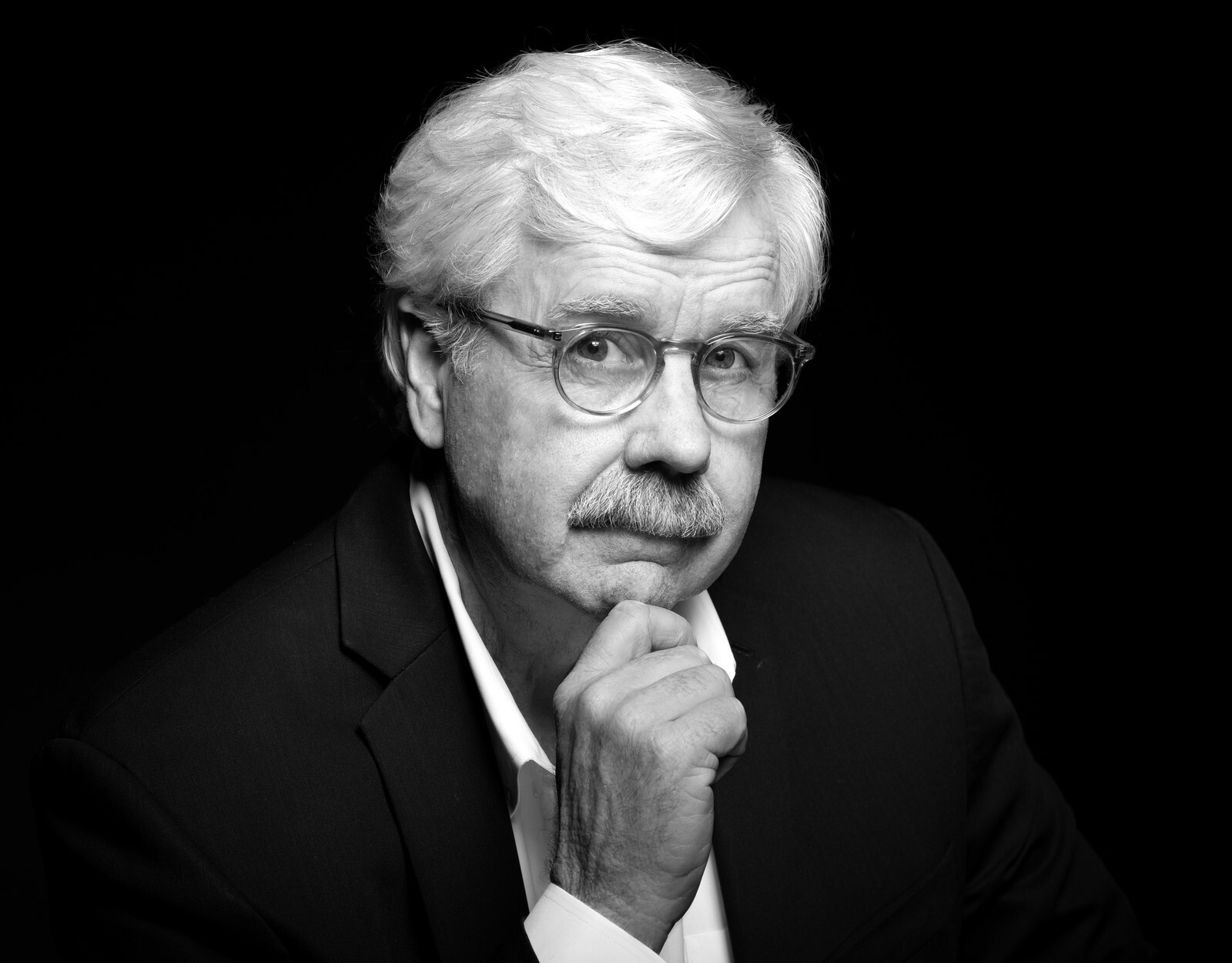
Kevin McCarney
Kevin T. McCarney spent several decades managing customer and employee relations across a wide range of industries and organizations. He has been a guest speaker at the USC Marshall School of Business, the UCLA Anderson School of Business, and Woodbury University, among many others.
A successful entrepreneur, speaker, mentor, husband, and father, Kevin has served on the board of directors of the California State Compensation Insurance Fund, the California Restaurant Association (Chairman 2014), the Burbank Arts in Education Foundation, the Boys and Girls Club of Burbank, and the Universal City North Hollywood Chamber of Commerce.
📚 Books by Kevin McCarney
Transcript
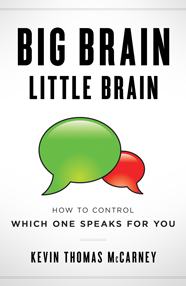
[0:00:34] DA: In a world where anything you text, post or just blurt out can go viral instantly, having control over your words is critical to your success. Whenever we’re frustrated, angry, or under stress, those negative influences try to control what we say next. Fortunately, there is a way for you to take charge. Kevin McCarney’s new book, Big Brain Little Brain, distills all communication into simple and accessible tools you can use immediately. It identifies the 21 tools your big brain can tap into for better communication, as well as the 14 avoidable traps that your little brain will constantly set for you. The book will show you how to find your neutral, giving you the time and focus you need to find the right words, even at the most pressure-filled encounters. Gafs will become a thing of the past and great communication will become your trademark. Hey Listeners, my name is Drew Applebaum and I’m excited to be here today with Kevin McCarney, author of Big Brain Little Brain: How to control which one speaks for you. Kevin, thank you for joining, welcome to The Author Hour Podcast.
[0:01:31] Kevin McCarney: Drew, thank you.
[0:01:32] DA: Let’s kick this off, can you give us a rundown of your professional background?
[0:01:36] Kevin McCarney: I have been in the customer service business all my life. I am in the restaurant business; I’ve always worked with people. I have my own group of restaurants for 37 years now. Before that, I worked in the corporate restaurant training world and I’ve spent multiple times sitting on different boards and helping other organizations build themselves.
[0:01:59] DA: Now, why was now the time to share this story in the book? Was there something really inspiring, did you have an “aha moment” or did you have a lot of time on your hands because you were home because of COVID?
[0:02:11] Kevin McCarney: Now, this is the second in a series of the books that I did, the first one was a great introduction and to your point, why did I start is because we’ve been training people for so long and I’ve been training myself on how to communicate with different people and different situations and I’ve watched so many different situations occur and then when I became a dad, I had to learn how to communicate with my little daughters. I realized there’s so many different nuances to communication, I really had to study them all and what really brought the book to life was a situation at one of the restaurants where we had trained everybody on the big brain, little brain concept and the big brain, little brain concept basically is the neocortex of big smart part of the brain, kind of having a little war with reptilian part of the brain, you know, the implosive part over the different situations in your life. The situation happened at one of the stores that somebody came in and was just so livid because they thought that they had gotten the enchiladas cold on purpose and came back up and threw them down on the counter and screamed out as loud as she could, “These enchiladas are cold.” The manager who has just been through our training looked at her and just said, “You know, I’m so sorry, let me take that back and I’ll bring you some out and I’ll take care of it right away.” Now, this is a restaurant that holds about 60 people and everybody was watching every word that was going on. As this elevated, got her a new enchilada, she came back to the counter five minutes later, slammed them down again, screamed out loud again, “You did this on purpose” and it was really an amazing thing to watch. Again, the manager sort of calmed her down and got her some of that food and took it over to her. Everybody was watching this, it was like a soap opera. About 10 minutes later, she comes back up and she grabs the manager on the shoulder, she says, “I’m so sorry. I just came from the hospital, my husband’s not doing well, I haven’t eaten in days, I haven’t slept, I didn’t mean to take it out on you.” With that, it was obvious to me that the principles of the training were important enough to put it in a book. That’s when I put them down and I’ve been doing different trainings with different groups for the last 10 years.
[0:04:38] DA: Now, when you say, “Okay, I’m going to put this in a book” you might have the idea of the book rattling around in your head, you might even have an outline, the beginning, middle and end but sometimes during the writing process, just by digging deeper into some of the subjects, you have some major breakthroughs and learnings. Did you have any of these major breakthroughs or learnings during your writing journey?
[0:04:56] Kevin McCarney: Well, I think my major breakthrough was that I’m extremely dyslexic so I know that I can’t read as well as other people and so when I started writing things down, I used three by five cards and I filled up our entire living room, no place else to walk but three by five cards with all the notes that I made on communication and I started organizing them into different groups, which ones went with what. Then, I began to see a pattern, established itself amongst these different situations that I had observed and that’s when I broke down that pattern into the seven principles in the book and by breaking them down into that pattern, it was so much easier than to explain the different situations and how to communicate in different situations.
[0:05:41] DA: When you were writing the book, in your mind, who were you writing it for? Is it for folks in the service industry only or what about people who are now behind a computer every day? Can they have takeaways from the book as well?
[0:05:53] Kevin McCarney: Thank you for asking that. It’s for everybody and the restaurant business is just a microcosm of life. It’s people every day interacting with people on a one-to-one basis and I think that when I wrote the book it for was for anybody that was having difficulty communicating. I had seen so many relationships over my life get destroyed because somebody overreacted in a particular moment or because they used the wrong word or the wrong tone. They didn’t mean to, they just didn’t know and there’s a lot of people that, depending upon where you grow up or who you go up around, some people grab around people who are great communicators and they learned that. A lot of people grew up around people who aren’t necessarily great communicators and so they have empty places where they don’t know exactly what to say. Sometimes they’ll grab a cliché and throw that out there and then maybe the wrong cliché for the moment but what I noticed is, everybody, I don’t care if you’re in the restaurant business, if you’re a CEO of a Fortune 500 company, if you’re a firefighter and training other people in any situation. These principles are basic to human nature and one of the – I do a lot of presentations at high schools and colleges. I think one of the things that came clear was that even in the school world, they don’t necessarily teach interpersonal communication skills. They teach psychology and they teach mass communication skills. I was looking for a way to fill in the gap of that basic interpersonal communication skills so that people could have different – sort of a guide in communication as they grow up, as they grow into the working world. And in the working world, for the people who are established, it would help them identify some of the traps that they would fall into accidentally.
[0:07:41] DA: I want to dive into the book and you actually start with your own life and you talk about a young Kevin and you had this epiphany while you were working as a tour operator in an extremely hot day at Universal Studios. Can you tell us about that moment and maybe what changed from that moment?
[0:07:59] Kevin McCarney: Yeah, that was another pinnacle moment for me that I’d kept track of and I made notes all the way along and then this was one of the bigger notes is that, I grow up in a big family where winning the argument was the rite of passage. You learn when you have seven kids and two adults in a family. You're always constantly trying to win the argument and I got good at it and yet, when I was this 19-year-old kind of a snarky teenager and I was a tour guide at Universal Studios, it was a hot day, the trains were breaking down and it just happened to be that this one day that got up to almost a three hour wait, if not longer, for people that were waiting in line except for tour guides, we were sitting in a cool, air-conditioned office. Well, I got the message. “Kevin, tram on the right, take it, it’s a group from Europe, they’re not very happy, do the best you can.” I got on there, the tour operator for this group, grabbed my arm and said “No, you can’t treat us like this, take us back to our bus” and I looked at him and I said, “Sir, you’re going to have to sit down, we’re going to start moving” and the driver caught on and started moving the tram. At that moment, I sat in my seat, getting ready to give this tour for an hour and a half, thinking, “I have 128 people here and they all hate me.” I said, “This isn’t my fault, this is – I shouldn’t be blamed for this.” My 19-year-old snarky self said, “I’m just going to give them the worst tour I possibly can.” Because they don’t have the right to treat me like that, I was trying to get back, which is one of the things we talk about in the book and it’s like, “Oh my gosh.” Then, I didn’t even notice it but in the front row of the second car, there had been this family from the Midwest, all their little T-shirts from the Midwest football team they liked. They were stuck in the middle of this group somehow and they had the biggest smiles on their face and so, I’m in this frame of mind where I just wanted to get back at this group for yelling at me and I see these smiles. In a split second, I changed myself from being a snarky little 19-year-old to being somebody who had a responsibility to give a really good tour to this family that was having a good time and they were there to have a good time. I didn’t realize I had that in me, I had no idea. As the tour began, I started giving the best tour possibly could to this family, only looking at them, ignoring all the negativity around them. Sure enough, about 15, 20 minutes into the tour, everybody came along, everybody started enjoying except for maybe the group leader, he was identifying somebody who always likes to be grumpy but everybody else came along on the tour and had a good time. At the end, a completely unexpected round of applause and as the group got out, they were kind enough to thank me and the funniest thing is, this snarky 19-year-old, almost lost his job because in the very last row of the tram, one of my supervisors was getting off. I was being audited on this tour. You can imagine, if the 19-year-old snarky guy had won and the family from the Midwest waited for everyone to say their goodbyes and then they came up to me and I just – I looked at them and the dad said, “you really turned that group around” I said, “Well, you know what? I was going to give a completely different tour, I saw your smiles and I just couldn’t do it, you were having a good time, if it hadn’t been for your smiles, I would not have given that tour” I would have given a completely different tour, more negative. To this day, I feel the mother’s hand on my shoulder and she looked at me and she said, “We want to thank you so much for choosing to give that tour, because this is our only time we’ll ever be in California and it just made our vacation.” Well, in that moment, there’s something that clicked in me that I had no idea that I had that much power in the way I responded to a situation. That lady, that woke me up and was like, “Woah” From then on, I asked for the toughest tours that I could to see if it would work and it worked every single time, you just look for the one or two people that are having a good time, give them a good time and everybody else started coming along and it worked really well.
[0:12:16] DA: Now, fast-forward today or fast-forward five years from then, 10 years, 20 years, how did that moment affect how you handled yourself in the business world or even in your personal life from there, how much do you think it contributed to your success today?
[0:12:30] Kevin McCarney: Immensely because in any business, any customer service business, you’re dealing with different situations every day and you have to motivate your team to handle those situations, you can’t simply tell them “The customer’s always right” because quite honestly, this is probably going to reverberate with a lot of people is the customer is not always right. You don’t want to throw your team under the bus by saying the customer is always right. No, sometimes, the customer’s not right but you don’t have to tell them they’re wrong, you have to find a way to bring them back and especially in the food environment, one of the things I talk about is that when you're in a restaurant business, you're essentially in the business of serving people with low blood sugar because by the time they get to you, they’re starving. They’re so hungry. If they’ve been thinking about a steak burrito for the last two hours on their way to lunch and then you give them a chicken burrito by mistake, it’s not just a simple mistake in that moment. The physiological aspects take a hold and people really get upset. You can see people getting upset all the time on the Internet for the craziest little reasons, so we had to teach everybody how to handle that person who has gone into what we call little brain mode and how to bring them back. Because our job is to bring them back and we do successfully, almost every single time because customers can someday have so many things going on in their life, we don’t know what’s going on in their life. We don’t know what else is influencing them but we know that if there’s a mistake, you fix it but you fix it with a smile and you let them go on and I really appreciate the staff I had because they’ve been able to execute that really well.
[0:14:07] DA: You just mentioned it and I love to dig into it more. Can you talk more about the title of the book and what you mean by big brain versus little brain and kind of what’s going inside our mindset at any given moment?
[0:14:19] Kevin McCarney: Yeah, I think that I’d asked a physician friend of mine a long time ago because I use the story in my training about people acting differently as if there is some sort of a control panel in our heads and there’s two different people trying to manage the control panel. The person who is handling the big brain gets control over when we’re speaking fine and friendly and when the person that’s handling the little brain gets control, we go negative, we go snarky. What I noticed is, and what I’ve researched, is that the theory out there is that the trying brain theory was just you have the neocortex, which is the big thinking part of the brain where the smart stuff that you collect, all the information collected with time then you have the reptilian brain that would bring that basically is the – I think in the psychological world, they talk about fight or flight and it’s sort of like that instinctive reacting brain, that impulsive reaction brain. Then you have the limbic system in the middle there, which is the emotions, so it is kind of like those two worlds fighting for the emotions of the moment and one of the things that I really study on this stuff is that you have control. I use the word activator in the book, I don’t use the word trigger because the difference is trigger sounds like you don’t have any more control over the situation. When something does happen, when somebody, you know, one of your pet peeves or somebody talking too loud on a movie theater or somebody is cutting you off in traffic, you have time to respond to that instead of simply react with the little brain and the big brain is going to take the time to respond correctly what’s best for that moment. The little brain is going to do whatever feels good in the moment and say the wrong thing or do the wrong thing just because that’s what the little brain instinctively does, it’s the more primal component of the way we communicate and so the idea behind Big Brain Little Brain and the one thing that we’ve added to the book here is you know, the fight or flight thing is really good but I think that there is another component and that is called neutral, you know? Neutral is the little bit of time you have before you make your comment or before you make your words and it is backed up by a man named Victor Frankl who is a neuropsychologist from the 40s and lived all the way into the 80s, a brilliant man who wrote a book called Man’s Search for Meaning and when I talk about neutral when I was giving presentations, somebody came up and gave me this quote from Victor Frankl about there’s a little bit of space between the time something happens to you and the time you react to it or respond to it. In that little space is really going to determine a lot of what happens to you and the moments after that and so we have a whole section in the book on neutral and how to get to neutral and how to quickly access it so that you can kind of corner the little brain and won’t let it say something and give the big brain the chance to find the right words to say.
[0:17:10] DA: Now, you also talk about the seven principles of communication in the book. Can you talk about maybe what they are and maybe go into how you identify these seven principles and feel free, you don’t have to say all seven if they’re not top of mind right now.
[0:17:24] Kevin McCarney: Yeah, that’s all right. You know, the seven principles, you know there’s control, tone, words, time, responsible, power and awareness and what I did with all the notes is I broke everything down to where there are certain components of each one of these areas and then everyone of these there is a little bit of an overlap with several of them at any one conversation but I broke down the ones that have sort of the ones that stick out the most and I think that I’ll just go over tone right now. I think that is one of the most important aspects of a conversation. The tone really is the message that you’re having. This was taught to me by my five-year-old daughter when I was underneath the Christmas tree trying to put up some lights and I can see her little steps, feet, going up the ladder and I said, “Kaitlyn, get down from there” right? Parental voice and she didn’t, she kept going up and I went to parental voice number two, “Kaitlyn, get down from there” and you know, I raised my tone. She said, “But-but-but” and then she started going up the ladder more and this is not like her. I was so surprised, so I get out from under the tree. I am ready to launch with a complete little brain thought of you know, “I told you to get down from there” and I realized she’s got a little angel in her hand and she wants to put it, obviously she wants to put the angel on top of the tree and surprise me and I could assess this right away so I knew what was influencing her. She looked at me and this five-year-old daughter says, “I like that” I said, “Kaitlyn, you got to get down from there. It’s dangerous” and she goes, “I like that tone better daddy” and it kind of blew me away that my five-year-old is teaching me about communication. This was before I had written the book and it was one of those notes I took like, “Wow” and so you look at tone and how important tone is to any aspect of communication and the same words and the different tone means something entirely different and we do a little bit of tone training on that. Where we have people make a comment and see if they can make a sound angry, the same words and it works all the time and so it really helps people focus. If I say, “I thought I told you to do your homework” it’s a little bit upset. “I thought I told you to do your homework” you know, there’s that now you’re almost on their team. A lot of it comes down to how you tone things is how people receive them and whether that’s going to have an impact on them. The tone is incredibly powerful and I think the other key ones are words. We have to get to neutral and choose the right words and words are so important I think because people don’t realize how often their words are repeated to others and we have a concept of look, we talk about good gossip and how if you say something nice behind somebody’s back, it is actually going to travel. It is going to – everybody will hear that you said something nice about that person and it builds trust and whoever you’re talking about will eventually hear it but when you say something nice when somebody is not in the room is so much more powerful than if you are just complimenting them while they’re there.
[0:20:28] DA: Now, what is the end goal that you are looking to get for readers? They get through the book, what would you like them to do as the next step?
[0:20:37] Kevin McCarney: I think the next step is to help others. Help themselves first create really good moments and a good legacy set of moments because we describe in the book where every moment has its own legacy, its own ripple effect. If it’s good, it is going to be a positive ripple effect. If it’s negative, it could be a very nasty ripple effect, so the idea is to control those moments so that you could have more positive ripple effects. It’s so important in any relationship to realize that a relationship is one long conversation. It is not about winning arguments. It is about winning the moment that you’re in with that person and getting people to understand but I think whether it’s a work relationship or a personal relationship, the goal always has to be to understood and to understand and at the same time, the tools you can use to make that happen and that’s what I think I want to see. I want to see relationships lasts, I want to see training for a frontline staff get there so that even if a customer is overreacting that that staff doesn’t follow them and I think that in all of these situations, if you can train people as you’re growing up especially how to use these different tools that we put in the book that it is going to make it a much smoother legacy effect and most smoother ripple effect for them.
[0:21:56] DA: Now, besides the book, are there any resources that you offer for readers and listeners here or any other resources that you could suggest that readers go to?
[0:22:06] Kevin McCarney: Yeah, I have a website for the book called bigbrainlittlebrain.com and what we’ve done there is we’ve added several different sheets that people can download to help with some of the tools that we’ve talked about. There is a sheet for how to get to neutral and how to identify your neutral word, which we talk about in the book and there is also a whole activator worksheet. We even made a list of all of your pet peeves so you can see the things that you know might put you into a little brain mode and kind of steer around them before they happen.
[0:22:37] DA: Kevin, we just touched on the surface of the book here but I want to say that writing a book is going to help so many folks just really learn to communicate better is no small feat, so congratulations on having your book published.
[0:22:47] Kevin McCarney: Well, thank you so much and listen, whatever we can do to help with everybody’s verbal intelligence, I am happy to do whatever I can and I enjoy meeting with the groups and enjoy having these conversation, thank you.
[0:23:01] DA: I do have one question left, it is the hot seat question.
[0:23:03] Kevin McCarney: Okay.
[0:23:04] DA: If readers could take away only one thing from the book, what would you want it to be?
[0:23:09] Kevin McCarney: That’s a tough one but I would say tone. Understand, I think tone is a very serious component. That and learn how to get to neutral so you can choose what you want to say instead of letting the little brain choose it for you.
[0:23:25] DA: Kevin, this has been a pleasure and I am excited for people to check out the book. Everyone, the book is called Big Brain Little Brain and you could find it on Amazon. Kevin besides checking out the book, are there other ways or places that people can connect with you?
[0:23:36] Kevin McCarney: Well, there is a connection on the website. You can find out how to connect with me if they want to and I respond to my emails personally.
[0:23:42] DA: Well Kevin, thank you so much for coming on the show today and best of luck with your new book.
[0:23:47] Kevin McCarney: Drew, thank you so much. What a great conversation.
[0:23:50] DA: Thanks for joining us for this episode of Author Hour. You can get Kevin McCarney’s new book, Big Brain Little Brain, on Amazon. Also, you can also find a transcript of this episode and all of our other episodes on our website at authorhour.co. For more Author Hour, subscribe to this podcast on your favorite subscription service. Thank you for joining us, we’ll see you next time. Same place, different author.
Want to Write Your Own Book?
Scribe has helped over 2,000 authors turn their expertise into published books.
Schedule a Free Consult