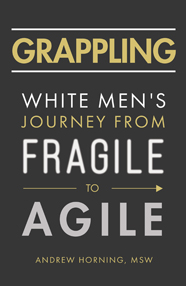
Andrew Horning: Grappling: White Men's Journey from Fragile to Agile
Read the full transcript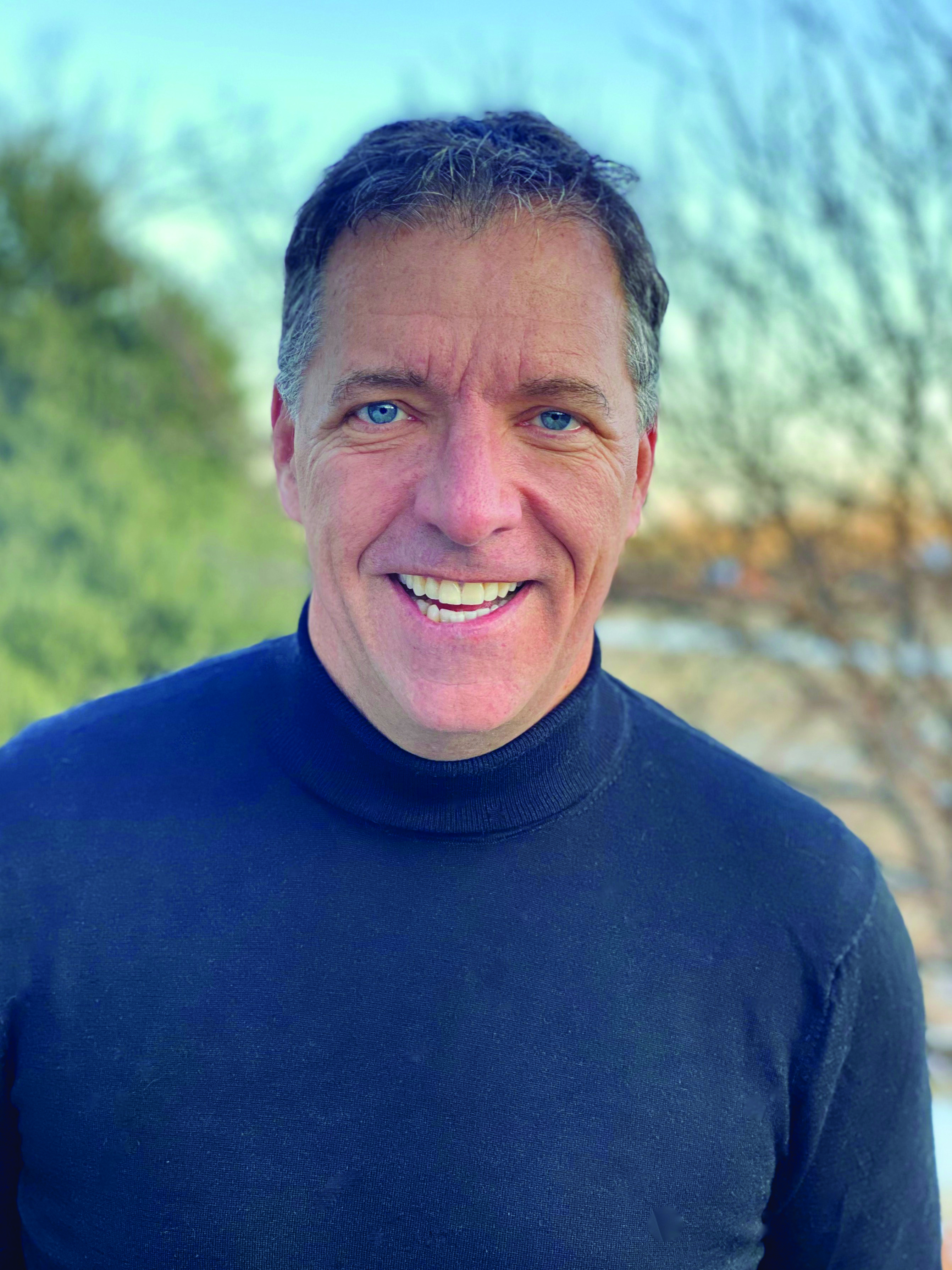
Andrew Horning
Andrew Horning is the author of Grappling: White Men's Journey from Fragile to Agile, a call for men to face their own resistance and take their place in the movement toward social and racial justice. Drawing on both intrapersonal and interpersonal work, he offers practical tools for balancing masculinity with accountability and for using compassion and courage to understand one's true strengths.
📚 Books by Andrew Horning
Transcript
[0:00:34] DA: White men have found themselves entrenched in a privileged status quo for centuries. Old patterns and learned behaviors have contributed to their success, but things are changing and our world is evolving. We're tackling racism and sexism head on and white masculinity as we know it, is in the midst of a revolution. In his new book, Grappling, Andrew Horning helps you identify the best man you could be in a rapidly evolving world. By focusing on intrapersonal and interpersonal elements, he provides you with practical tools for navigating today's complex issues and balancing masculinity with accountability. Learn to utilize the compassion and courage to rewrite your story, understand your true strengths and realize the freedom that comes with self-discovery. Hey, listeners. My name is Drew Applebaum and I'm excited to be here today with Andrew Horning, author of Grappling: White Men's Journey from Fragile to Agile. Andrew, thank you for joining. Welcome to the Author Hour podcast.
[0:01:30] Andrew Horning: You're welcome. Great to be here, Drew.
[0:01:32] DA: Let's kick this off. Can you give us just a rundown of a little bit about your background and who you are?
[0:01:38] Andrew Horning: Yes. So, I am a Hoffman Process teacher. I have been doing that for just about 10 years. Prior to that I was a therapist and counselor working in private practice doing psychotherapy. I've coached high school basketball, and volunteer with Intercambio. I'm a dad of two kids, been married for just about 20 years. Now, I'm an author, apparently. I'm really excited to add that.
[0:02:11] DA: Yeah, for sure. Congrats. Now, why was now the time to share the stories in the book? Why was it time to become an author? Did you have an “aha” moment? Was there something really inspiring out there? Maybe you had a little bit more time on your hands because of COVID?
[0:02:24] Andrew Horning: Yeah, it seems like I've been writing this book for about five years. So, basically, I've always been fascinated with the internal world, the feeling world. I was a middle child and spent a fair amount of time in reflection and feeling. And then I became a therapist and I was fascinated with the couples, because how people interacted was fascinating to me and the dynamics in the therapy room, in relationships, were very compelling. And then, so much started happening in the external world, the Me Too movement, George Floyd's murder, which is in May 25th, it'll be the one year anniversary of his death, his murder. What I saw was a through line between the internal, the relational, and what was happening around us in the social, political, sexism and racism world. This book is really an attempt to make that connection for people, that what is happening inside of us relates to what is happening between us, and is very fundamentally relatable to what's happening around us in the world.
[0:03:43] DA: You said the book is a long time coming, and a lot of time authors have the idea of the book rattling around in their head and maybe an outline or a beginning, a middle, end. But during the writing process, just by digging deeper into some of the subjects you're talking about, come to some major breakthroughs and learnings. Did you have any of these major breakthroughs and learnings during your writing journey?
[0:04:03] Andrew Horning: Yeah, I think a couple. One is that if we can pay attention to what's happening inside of us, we can learn how to navigate the world around us. So, there is a lot in this book that helps people build the muscle of how to navigate complicated, nuanced, provocative subjects. The world is changing. I think COVID has it changing at even a higher rate. We've got to be able to build the resiliency of managing and learning to be with our feelings. White men in particular are not so good at that, haven't been good at that. So, what I learned was this idea that white men are the people who can do a better job at leading and listening, rather than trying to prevent change. We got to be agents of change not preventers of change.
[0:05:10] DA: Now, in your mind who are you writing this book for? Is it only for white men who can have takeaways? Or can women and can people of color have takeaways from the book as well?
[0:05:21] Andrew Horning: Absolutely, I think there is something for everybody and it's also about change, and how do you navigate change? I think we all can answer this question, what is your relationship to change? Do you relish it and enjoy it and seek it out? Or are you the kind of person who avoids change, who likes what they know, is a creature of habit? This book is really an invitation for anybody to step into change, and be more comfortable in the uncomfortable that is so fundamental to change.
[0:06:01] DA: So, let's dive in a little deeper. You start the book, you say you're white, you're male, you’re Christian, you're straight, your family's wealthy, you’re educated, you live in the US, you won the full privilege bingo card, for sure. So, the question I have is, coming from this place, or privilege, why did you feel like you needed to write this book and why you're qualified to write this book?
[0:06:23] Andrew Horning: Years ago, I had a buddy who came from a meeting, he's the head of a nonprofit, and he's one of the few white people in the meeting. At the end of the meeting, they turn to him and they say, “You gotta speak up. You gotta use your voice. When we speak up, people don't listen to us as much. And as a white man, you have to speak up.” He called me after that meeting and he said, “I didn't realize this.” We both kind of – this was years ago, and we both understood in a new way how important our voice was in the conversation, and how when women speak up, or black and brown people speak up, their voice gets marginalized. People consider that, “Well, of course, they say that because they're just trying to advocate for their point.” But when a white man speaks up, it's seen differently. That's the idea that I understood in that moment and that's part of the reason I'm writing the book, as a person who has those privileges, and therefore can say it and speak it in perhaps a different way.
[0:07:40] DA: Now, some people would call that privilege a blessing and should people feel guilty about their blessing?
[0:07:48] Andrew Horning: No, I don't think so. I think this is a key piece of the book and that is that there are feelings, like guilt, and in particular, there can be something as potent as shame. When we see a white male without an expression, put his knee on a black man's neck for upwards of nine minutes, and that man cries out for his mom, cries out for oxygen, air, breath, that can cause any number of feelings, as we witnessed that. The point of Grappling is we have to do a better job of navigating those feelings, of feeling them and not rejecting them. Because if we don't allow them to exist inside of us, we will not know how to be in a world that is changing rapidly around us.
[0:08:50] DA: Now, you say that you personally struggled with some side effects of your privileged life. Were they the same that you just mentioned? Or did you have other feelings and side effects as well?
[0:09:04] Andrew Horning: I think one of the things about therapy and my therapist psychology background is that the most fundamental aspect is the unconscious. The goal of doing work is to make the unconscious, conscious. To become aware of what we're not aware of. Part of the book is about helping people be learners. I think we all love the feeling of learning something. Unfortunately, what we remember about learning is the knowing, and we get stuck in the knowing and what we don't realize is before the learning, there was not knowing. So, part of what the book helps people do and helps them embrace is that we have to be learners. And part of being a learner is that there's things we do not know. Some of it might be unconscious and some of it might be blind spots. We all have blind spots. So, one of my learnings is that my whiteness and my maleness informs a lot of my behavior and my thinking and I have to come to terms with how that shapes me every day. That requires a lot of humility, a lot of courage, and ultimately, one of the hardest things for men is self-compassion, kindness. That I'm not going to get it right, I am going to mess up a lot. But I have to still step in and learn and listen and be an ally, and an amplifier of people who are marginalized, so that we can help the world be a better world for all of us and not just for people who look like me.
[0:11:02] DA: You make interesting points in the book, including that white men really have no idea how to be in a world that's unjust, when they're actually benefiting from that injustice. But the change happens when the grappling begins, and you do the work that really develops the “you” inside. So, can you talk about what exactly you mean by grappling?
[0:11:24] Andrew Horning: Sure. The definition is engaging in a close struggle without weapons. And oftentimes, our privilege, this kind of potent, and yet problematic privilege of being both male and white leaves us with the privilege of not having to deal with uncomfortable stuff. We can maneuver our way through our day without having to face uncomfortable things, uncomfortable issues, challenging subjects in the world, challenging feelings inside of us, challenging relationships between us. Grappling is this idea that you can actually seek out struggle. Most people say, “Why in God's name, would I want to struggle?” Well, it's an important piece of showing up in the world because there are struggles and so we can bring some courage and compassion to the struggles that exist inside of us, between us and around us, and we are the beneficiaries of that. We develop. We talk about fragile to agile, we present as a bit rigid and stoic and stonewalling. Yet, if we can move under those defense mechanisms, those defensive moves, we can build the muscle that is our internal grappling muscle, and we become stronger at navigating our internal world, our external world, which is, we're better off for it and the world's better off for it.
[0:13:12] DA: Can you dig a little deeper into your own personal grappling with your white male identity? Is this something where you really dug in once and then you move on? Or is this something you have to revisit and grapple with often?
[0:13:26] Andrew Horning: Yeah, just recently, just last weekend, in fact, I had a colleague call me up and say, “Hey, can I give you some feedback on a workshop we were in a couple of weeks prior?” And I said, “Sure.” I took a breath and it's like, “Okay, what am I going to –” at first, I feel a little scared, then I feel defensive, and then I feel kind of righteous. All those feelings are moving through me at lightning speed. And then I can come to this idea that there is something that I wasn't aware of, and I'm going to learn. So, I embrace a feeling of humility, humbleness, and we have the conversation. And she says, she gives me this feedback around how I showed up as a white man, that the impact of what I said had a negative impact on her. I got it. I didn't see it that way then. I'm so grateful that she gave me that feedback, because I see it that way now. I'll say, that kind of thing happens a lot, where I get called out with love and I'm a learner in that process. It happens professionally. It happens in my marriage, where my wife will sometimes give me feedback about how I show up. My kids are adolescents now and so their voice is very strong. Yeah, I'm a part of some close friendships where I make mistakes. I must be the kind of guy who either makes a lot of mistakes, or cultivate a lot of friendships where people feel comfortable sharing the impact of my behavior on them, because those kinds of courageous conversations happen a lot and they aren't easy. But I'm always, always grateful for them on the other side.
[0:15:36] DA: You actually mentioned it earlier, but can you talk more about what the Hoffman Process actually is, and how it helps people kind of transcend their issues and helps them become less alienated from their inner selves?
[0:15:51] Andrew Horning: Sure. So, this book is unrelated to the process. I wrote this independent from my work as a Hoffman Process teacher. I will say that, as a therapist for 15 years, I loved the work I was doing. The one on one work, the couples work. But then a friend recommended the process. I took the process. Specifically, it's a week long, immersive experience. It's not for people who struggle with addiction. You have to be sober to take it. You're not committed to a mental health institution. It's really for people who want more joy, more happiness, more meaning, less depression, or sadness, or struggle in their life. And it's an immersive experience. There is something about that experience where you go to an environment where you're all in it together, your work is very independent, but there's a shared collaborative spirit, to people doing their work in an environment where other people are also doing their work. It's very experiential, in addition to being immersive, where you don't have to return emails, or make meals, or do dishes, or even make your bed. You're in this fully. It's also experiential. So, we are so up in our intellect, 24/7, analyzing things, using our intellect, and the value of an experiential process is that it allows you to get in your body, in your heart. These exercises, these experiences we lead people through, drop them more fundamentally into the core of who they are. It's quite a deep and spiritual experience to connect with yourself on such a fundamental level, that the outer layers of who you are, the roles you play, the jobs you have, the titles, those fall away, and you get a deeper sense and a deeper connection to your essence. It's quite a powerful journey that people go through, quite courageous as they go through day-to-day experiences for seven days.
[0:18:25] DA: Beyond the method and let's say, even beyond personal grappling, is this the way that racism and sexism improve? Is this something where it's one by one or what are the ways that as a collective, we could really improve what's going on in society today?
[0:18:45] Andrew Horning: That's a great question. What is it? Do we step into the one to one journey and do the work internally? Or is it a kind of collective experience where white men come together? I mean, honestly, I would say, it has to be both. Change is hard. Transformation isn't easy. I just feel like day to day, not a day goes by where the events of what's happening in the world around us don't present us with challenges. I just think we're in a new era where, as white men, we have to stop fighting change. We have to stop throwing our hands up in the air and say, “I can't do anything about it.” We have to stop feeling like it's not our problem. We have to stop blaming women, and black and brown people, and we have to hold ourselves accountable. Just like we're accountable to what happens in our life personally and professionally, why can we hold ourselves accountable to what is happening in our society? That requires a hell of a lot of courage, because it asks us to transform. One of the points I make in the book is, people love to talk about companies as pivoting, and companies as changing and meeting market demand. Hell, if we can value companies that are agile, and show up and meet the changing marketplace, why can't we value that skill inside of us that we all have that ability to pivot and transform and change and grow and be learners? Wouldn’t that be a great skill to have inside of us?
[0:20:49] DA: Now, what is your goal of the book for readers? Do you have any steps that you hope that readers will take after finishing the book?
[0:20:57] Andrew Horning: Yeah, I think the first one is to see the connection. I said it a couple times. But to see the connection between the internal, the interpersonal, and the societal. There’s a lot going on to connect the dots, to see the through line, and to learn that by doing so, by seeing that kind of grappling triangle of those three, we can actually grow at a higher rate, we can become more powerful, and less afraid, and oblivious to what's happening in the world around us. The second thing is that there are some steps we can do. We can embrace courage and compassion. I call these keystone emotions. All emotions have value but those two emotions in particular, embracing courage, and allowing compassion, particularly self-compassion, that's a great way forward. The final thing is to see that life is a practice. I call it a moment muscle, that each moment in our day, right now, you and I are having a moment, that conversation with a colleague who gave me feedback, I took a breath and I said, “This is a moment muscle.” I’ve gotta want to build that muscle and flex that muscle, so that it doesn't become atrophied. I'm not going to ever be right. But I'm going to learn to get it right. I'm going to grow, and then I can let go of trying to be perfect or trying to be a performative ally. Instead, I can embrace the fact that I'm going to make mistakes. I'm going to say the wrong thing. As a white man, people are going to see me a certain way and that's okay. But if I can settle into the fact that I'm continuously learning and growing, life becomes a lot more easier and healthier.
[0:22:56] DA: Besides the book, where can readers or listeners find other resources on the subject?
[0:23:04] Andrew Horning: I think Kristin Neff does a great job of talking about self-compassion. self-compassion.org is her website and just the whole idea of self-compassion is somewhat marginalized. It's like, “You’re soft on yourself if you're compassionate.” So, it helps undo some of the myths around self-compassion. I also think the Hoffman Process, hoffmaninstitute.org is a place to check out their week-long experiences. We've got a long waitlist, but it's a well worth it journey out to California or Connecticut. We have two sites. So, those are two good places to start.
[0:23:50] DA: Well, Andrew, we just touched on the surface of the book. But I want to say that writing a book that really asks people to look inside and look at their life, and then look at how it affects the people around them and then ask them to make change is no small feat. So, congratulations on having your book published.
[0:24:07] Andrew Horning: Drew, thanks very much. Scribe has been an amazing partner in this journey.
[0:24:11] DA: This has been a pleasure and I'm really excited for people to check out the book. Everyone, the book is called Grappling and you can find it on Amazon. Andrew, besides checking out the book, where can people connect with you?
[0:24:20] Andrew Horning: They can go to andrewhorning.co or grappling.org. Either of those.
[0:24:27] DA: Awesome. Andrew, thank you for giving us some time and coming on the show today and best of luck with your new book.
[0:24:33] Andrew Horning: Thanks, Drew. I appreciate the time.
[0:24:36] DA: Thanks for joining us for this episode of Author Hour. You can get Andrew Horning’s new book, Grappling, on Amazon. Also, you could find a transcript of this episode and all of our other episodes on our website, authorhour.co. For more Author Hour, subscribe to this podcast on your favorite subscription service. Thank you for joining us. We’ll see you next time, same place, different author.
Want to Write Your Own Book?
Scribe has helped over 2,000 authors turn their expertise into published books.
Schedule a Free Consult