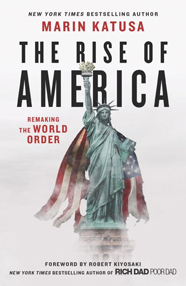
Marin Katusa: The Rise of America: Remaking the World Order
Read the full transcript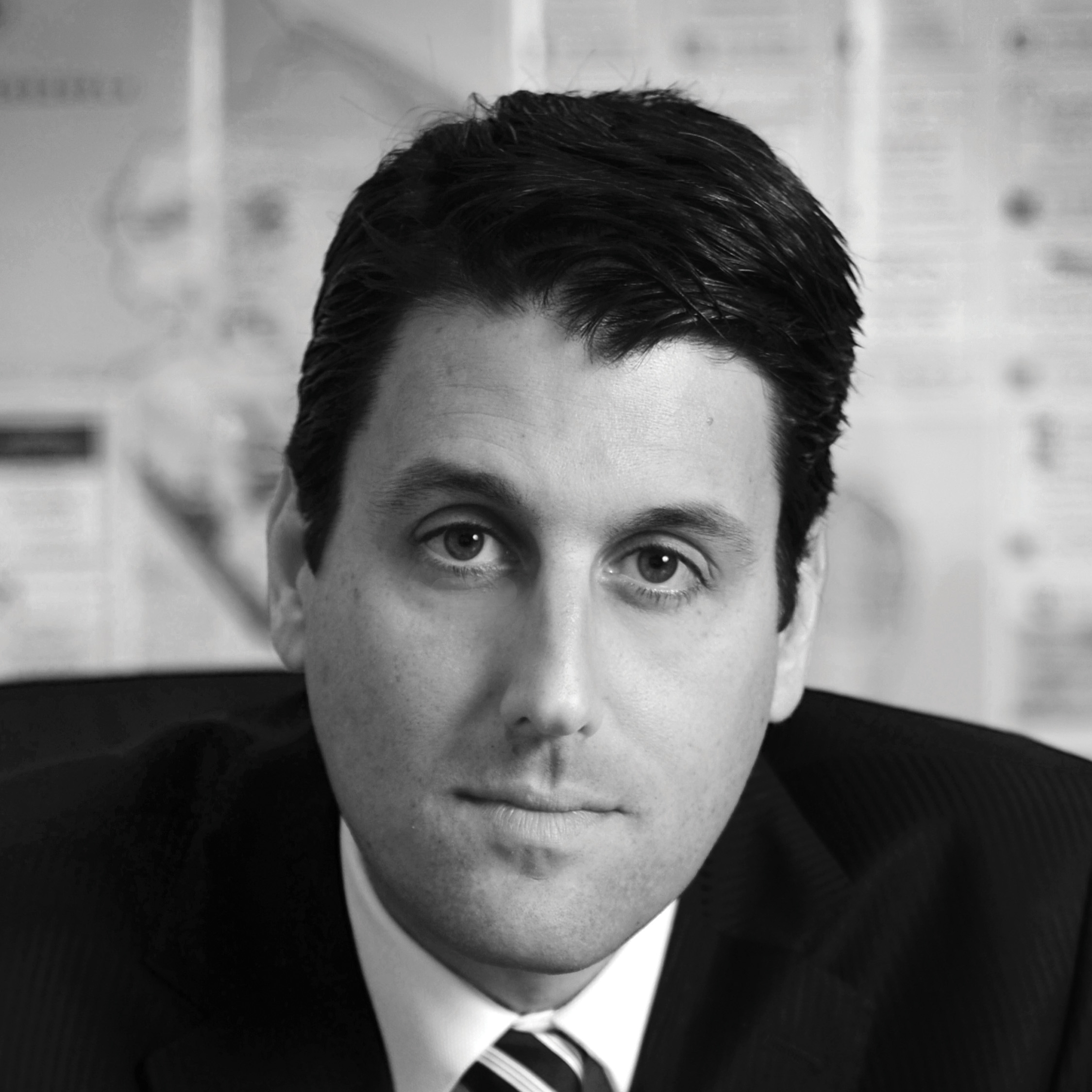
Marin Katusa
Marin Katusa is the author of The New York Times bestseller The Colder War. Over the last two decades, he has become the largest independent financier in the resource sector globally.
Katusa has visited over 500 resource projects in over a hundred countries. His insights have been featured in The Wall Street Journal, The New York Times, Bloomberg, and CNBC. He publishes his unique resource strategies and research at
📚 Books by Marin Katusa
Transcript
[0:00:25] DA: Doom and gloom is the predominant sentiment in America right now and it’s become widely accepted within the investment, political and media sectors that America is on the decline and China will drive the global agenda in the 21st century, but Marin Katusa’s new book, The Rise of America, he says, not so fast. The book carefully examines the trends and actual hard data from the economic, geopolitical financial, and demographic spheres and comes to an inescapable conclusion: America’s future has never been brighter. Forged in the 20th century, America’s leadership role will expand in the 21st century, resulting in a substantial rise in the standard of living, not just for Americans but also across the world. Hey Listeners, my name is Drew Applebaum and I’m excited to be here today with Marin Katusa, author of The Rise of America: Remaking the World Order. Marin, thank you for joining, welcome to The Author Hour Podcast.
[0:01:20] Marin Katusa: It’s my pleasure.
[0:01:21] DA: Let’s kick t his off, can you give us a rundown of your professional background?
[0:01:25] Marin Katusa: Sure. I started in resource development and through blood, sweat and tears, I became the world’s largest independent financier of resource projects around the world, starting with mining, and then I got into unconventional shale, and then we developed some of the largest green energy projects or, what they want to call, geothermal run of river. That led to me writing my first book in 2014, which cracked the New York Times bestseller list and this book is the follow-up conclusion to my first book. It’s all about traveling to over a hundred countries in the world over my 20-year career, financing projects, building companies, building these mines and energy operations, and seeing the world in a different light than what you read in the media, or what you’re told in the everyday from the politicians and from the journalists. This is from what I see on the ground and we’ve done billions of dollars of financing and it’s seeing how, in my opinion, how the world really is and where it’s going. There’s this misconception today, in my opinion, that America’s best days are behind it. I’m not American, I’m Canadian and there’s this belief across the world that it doesn’t matter if you’re in America, or Europe, or Canada, or in Asia, that China’s the rise of the dragon that it’s now the number one economy, it’s what China wants, build what China needs and there’s this negative sentiment against America from, “The US dollars going to be worthless,” to, “America’s best days are behind it.” This is where I’ve got a very unbiased view because I’m not American and I’ve done business both in China and America and what I’m laying down is, America has all of the ingredients, it has all of the DNA. It has all of the right things in its framework and it’s never been more divided than it is today. Doesn’t matter which side of the political regime you are from the media standpoint, families have been broken apart from this standpoint, and I’m saying, “Hey, from an outside view, the best days in America are in the future, not in the past” You can make a fortune from this by just being an unbiased and looking at the data. I break down those aspects in the book. This is not a political book, this is not a book about how the world is the way I want it to be, it’s just the way it is.
[0:03:59] DA: Now, what happened after book one that made you say, “Okay, I need to continue this and I need to make book two” and was there something really inspiring out there or did you find a little niche subject that you think you really need to educate the world about?
[0:04:16] Marin Katusa: Well, the first book, I’m not an author, I’m one of these guys that stumbled upon writing a lot because I’ve got a large following in the investment world and I like to write out my thoughts when I’m making an investment decision. Little by little, I built up a very large following and the way the first book came about was, I was traveling the world and when you have investments going on, whether it’s on media or a podcast like this or investment conferences, you present your ideas and people are like, “Woah, this guy is talking about things really outside the box!” At the time, I was talking about shale energy, how it was going to change the world and boy, did it ever! From politics, think about the geo pillar effect of America being the largest importer of oil to becoming a net exporter of oil, the flow of the petrol dollar and I talked about that in my book. America being at one point the world’s largest producer of uranium and now it produces nothing, it imports almost all of it from the former Soviet Union, its arch nemesis during the cold war. One in 10 homes in America is powered by Putin’s fuel. The former Soviet Union sources of uranium is what powers one in 10 homes in America. I laid all these aspects out and I left the book as the last chapter about the future’s going to be relied on America's foreign policy and it all depends if it continues its existing strategy back in 2013 when I wrote the book, or will it change? I guess the fundamental basis of why book two in my final book on this, The Rise of America is, America's gone from a cooperative engagement with China, endorsing it into the WTO in 2002, officially, Trump started rattling the cage with the competitive engagement with China, saying, “Hey, no more losing, we’re going to compete,” but he didn’t have a true strategy on executing that and he never had the time to execute that strategy. Biden taking over, President Biden taking over, their secretary, his chosen secretary of state, Antony Blinken is continuing that strategy of competitive engagement with China, and he solidified that, and I get into all the details of the book. What that means from an investment perspective from the stock market to the bond market, to the average American. Whether you’re in Iowa or Utah or New York City, in California, how this affects you. It’s going to affect people in a drastic way. How it’s going to affect companies like Amazon and Walmart across the board, how’s it going to affect the education system, all these different aspects, and that’s the framework for the next 20, 30 years. You see, for the last 40 years, specifically the last 20 years, America worked in a way to engage China in a cooperative statement. “Hey, we’ll setup your factories, we’ll bring you technology and you send us your gadgets and trinkets, and we’ll send you virtual US dollars.” That game is changed now and China has solidified its view with the first meeting with the new administration, did not go well in Alaska. It’s all played out, this is the new investment framework and this is stuff that you’re not going to read about in the media because the media has its own agendas for whichever media you follow and you have to follow the money to get the true story and that’s what I do.
[0:07:50] DA: When you sat down to write this book and tell your story, who in your mind were you writing this book for? Was it for investors, is it for the everyday American to hear the truth and what’s really going on behind the scenes?
[0:08:03] Marin Katusa: I wrote it actually for myself, for investments. I run the largest fund in our sector and I’m the largest investor in my fund, my family office so I don’t make any money on these books, this is just kind of something that I kind of stumbled upon and the publisher wanted to do. Jeff Bezos makes more money off of this book than I do so I don’t care about that aspect. My point with this is, when you do an investment decision, you think out your thoughts, and then I’ve got a whole team of analysts, and then we break apart my thoughts and, as I was publishing this, it’s picking up steam, whether it’s from the US dollar to Bitcoin and the cryptocurrency’s effect, and how that’s going to be played within all the different central banks. Gold, carbon credits is going to play a huge role moving forward, and how does that get played? How does that impact the different financial metrics for these companies? It ends up being – it started for the investors that follow what I do and my subscribers and I think this is going to get to a point where this is apolitical and it’s going to hit the core of every average Americans lifestyle and fundamentally, I write in a style that isn’t too technical and what I did was the first time a book’s done this, rather than having too much technical jargon, I kept the first 270 pages of the book enough that the average reader can understand. Then, for all the technical aspects, I threw it into the appendix so I don’t really boggle up the narrative. Then what I did that no one’s ever done before is I created a QR code for the final chapter for people who are really into it, and that’s where I update all my thoughts in real time. You can follow that in real time also because we are living in such a changing volatile world, look what’s happened in the last 14 months how the world’s changed? Not just COVID but the central banks printing unprecedented levels of money and debt and what does this mean? Are we going towards UBI or they call it universal base income? Is that where we’re going? How will that look? What are the impacts for that? What does raising the minimum wage across the board do to companies? How does green effect America's competitivity with China and other nations? All these factors I break down, whether the energy to fuel America and the reality is, there’s this misconception - I financed America's largest geothermal project and it was in Nevada - there’s this misconception that green energy is expensive, it’s clunky, it doesn’t work at night time. We’re at the cutting edge of this, we’re constantly decreased at 90 percent. Yes, Texas is the Saudi Arabia of wind energy, a lot of people don’t know that and you look at the cost of electricity in Texas, it’s competitive with anywhere in the world. Think about the robotic revolutions for factories, powered by green energy where there’s no carbon footprint. What that can do against, let’s say, the same manufacturer in China using Lignite coal and the dirty pollution there and not being as state of the art with robotic technology and artificial intelligence. All these things are at the cusp of making it economic and the time is now. Again, I don’t have the say in the politics in America, I can’t vote and I’m apolitical, I’m about making money and I’ve got the top track record in my industry over the last 12 years. I take out emotion out of it, whether you’re an investor or not, if you can just look at something pragmatically without emotion and see where in the - I’m from Canada so we always like using hockey analogy - go to where the puck is going to be, like Wayne Gretzky said, and most importantly, you miss a 100 percent of the shots you never take.
[0:12:00] DA: I mean, you mentioned it earlier but I think if you talk to or just have a sentiment of what’s going on in America, it does seem like the country was – has really been divided and that some would say the best days are behind them. Are you the only person that thinks otherwise? And is this a hard sell to people to make them stop and ignore what they’re hearing elsewhere and to really bring your argument into their world?
[0:12:28] Marin Katusa: Being Canadian, we’re very- Think of Canada kind of like California: We’re about being happy and the opposite of right wing, it’s a very socialist run government. That’s where Canada is at. Because of the Trump’s administration and his style of communication, the average Canadian really thinks America's gone backwards and its best days are behind it. In the international investing world, whether you're in China or in Europe, that’s my field. Most are focusing on what China needs. You look at you know, if you take just concrete for example, China consumes more concrete every year than the rest of the world combined, okay? If you take all the copper in the world, half of the world’s copper is China. If you look at the coal, over half of the world’s coal produced every day in the whole world goes to China. There is all these strong aspects that state, “sheesh, China is the engine fueling the manufacturing hub of the world”. My argument is, wait a second, that’s using old factories, it’s very pollutive, it’s using cheaper labor and with cheaper labor, you have to look at currencies, there’s an FX aspect to everything, whether it’s the won or the US dollar to the euro. The central banks have more say in the government now than ever before because of the printing presses. Yes, the majority people do feel that America's best days are behind it and the next or let’s say, the shadow on the American empire is upon us and that the next hundred years is about China. I remind everybody that it took over 400 years for the Roman Empire to fall and lose its power but for some reason, everyone’s comparing America to say, Great Britain and I think it’s very different. I think the US dollar, which is the king currency, even though the US is about 24, 23 to 24 percent of all global GDP, 88 percent of all global transactions are in US dollars. I’m arguing that the US dollar, even under all the pressure it’s been under, there’s something called the ‘reflation theory' and that’s what’s going on by the lumber prices and the copper prices. You look at the cost of everything has gone up. That’s pent-up demand and supply not coming on because of COVID and China going full-throttle with what their mandates are, but I remind everyone that America does best when its shoulders are up against the wall and when you look at the innovations, everyone thinks that, why would innovations not continue? We’re just getting there. The Internet innovations, these are American innovations, you look at the medical innovations, you look at it, just recently, just the pharmaceutical. You look in the crypto world, the D5 revolution that’s going on. At the end of the day, it’s this entrepreneurial spirit that is embraced in America going back to the American dream and those that have replicated that in China, what happened to Jack Ma recently, right? That’s not going to happen to you in the same scale in America, that will happen in China. Now, I’m not saying that it’s a bygone conclusion. China’s going to be a serious fight to get to supreme power in the world and they’re doing many things, right? This is a very smart government that has full power, not just with their media but their billionaires and all of the power behind the scenes. America is up against the wall but the strategy that can be deployed under President Biden. In 50 years this will be probably the most important administration and the foreign policy that they are doing under Blinken is going to show that the moves that I believe they’re going to make and that they’ve already telegraphed and that they are making will set America up for a much brighter future. I know that’s hard to take back considering there are still places under quarantine and, you know, the mask wearing debate and the political debate. There is a lot of frustration in America today. I think it’s golden years are still ahead and yes, most of the time when I say this to the large fund managers and investment community that I live in, they say, “Jeez Marin, you’re really outside the box on this one” bit that is usually when you know you’re onto something is when you’re much different than the herd being a contrarian.
[0:17:32] DA: Now, the military spending is another big debate here in America, so what role does the military play in all of this in the rise and strength of America?
[0:17:44] Marin Katusa: Incredibly important. You look at America’s made, I talk about these aspects in my book, if you just break American down, it’s geographically set-up so perfectly. You couldn’t create a better nation to be the most powerful nation in the world just from its geography. You know, with it’s oceans around it, a partner in the north that is very friendly. Even if you invaded it in the east, you got the Mississippi River, on the far west, you’ve got the Rocky Mountains. It would be incredibly hard to take this over from a traditional war. On top of that, you look at the military aspect, America is still by far the number one military power in the world. Now, that doesn’t mean that China and Russia are going to be putting hundreds of billions of dollars toward trying to compete with America but, more importantly, you look at Saudi Arabia and the Middle East, they are still a very, very important nation. Is it just coincidence that they’re still the ally with America hands down? Why? Well, that goes back to the petrol dollar days. You look at the relationship and the long standing allyship with Israel, the technologies. If you look at the publicly listed companies onto the Nasdaq, the technology companies, where is that source relationship? I break all of these aspects down into the book and then you look at something called US dollar swap lines. As much as people hate the US dollar, in March, there was a massive shortage of US dollars globally and the nations that are allies with America got swap lines. There is 14 countries that have - and I break it all the information down in the book - and those are countries that are true allies historically, present then and in the future and that’s where the investment dollars are going to be going from a corporate standpoint and right now, we are, you know, you can break it down that we are in a G2 world. You know, we used to – they call it the G20 but really, you got America and its allies on one side and then the emerging market team mainly China and Russia and its allies like Iran, and those countries, that are trying to fight the American dominancy, both on the foreign policy and the UN, the WTO and that’s kind of the world we’re living. My ultimate conclusion, and I use data, facts and demographics, that is something that a lot of people don’t talk about is the demographic advantage America has over China, over Russia, over the emerging markets and that’s just as important to the rise of America as the military power.
[0:20:31] DA: Now, what steps if any do you hope that readers will take after finishing the book?
[0:20:38] Marin Katusa: Well, hopefully they finish the book and when you – you know, that is the hardest part of anyone starting the book is finishing the book. The strategy that I had with the book is to just kind of lay down the facts and then ultimately show that ignore the naysayers. I don’t watch TV but when I do, I leave depressed. The news is depressing, it’s almost as if bad news sells and there is an incredible- Specifically if you are a young person listening to this right now, the new sectors that are going to be coming in the next 20 years from creating carbon offsets and the green clean economic future - remember I talk about it in the book, the three C’s of green energy, it has to be consistent, clean and cheap - We’re getting there. You think about the critical metals. America has an incredible land endowment but over the last 40 years because the dollar was so strong, it became a lot cheaper and easier for the corporations to get all of its rehearse from China. Well, in this robotic revolution, this techno world and if we want to go green, we have to have utility scale batteries so we can store the big clean green energy at night time when the solar panels aren’t soaking up the sun, when it’s not windy and you can store that energy for when you need it. But those critical metals, even though there’s mines in America and I break them all down, they haven’t been put into production because it’s been easier to rely on China and Korea and Japan, Russia for uranium. You know, you think about what an ironic result. Does the average person listening to this know that one in every ten homes is powered by former Soviet Union nuclear fuel? Probably not but yet, America invented these technologies, these unconventional technologies that the Soviet Union, the FSU’s like Kazakhstan have used ISR and [inaudible 0:22:44.4] recovery. That was invented in Wyoming. I have actually visited the mine where it was invented. America was the number one producer of uranium and they can be that again today but you have to invest in your country and what’s happened over the last 40 years is American corporations have invested in the rest of the world and a key part now is for America to invest in itself and the job creation from that, you know, we don’t need to send the people underground in these crappy coal mines. Now, the coal miners are going to be running robotics. The mines are going to be electric. You know, there is things called like road headers. You don’t need to blast rock underground now. You can have an electric vehicle, with zero carbon footprint, that has these grinders that soak up the rock underneath, crush it and bring it up to the mill and there’s no one underground working. That’s where the technology has taken us. Now again, you are not going to learn about that in the media but it is there and it’s operating and it is cheap to do and it’s clean so you don’t have these environmental disasters that you had 50 years ago. What I’m trying to get at is there’s two sides to a coin and for whatever reason everyone is talking about the bad things but I think that where things are going, technology, the Internet of things, artificial intelligence, the robotic revolution, the green revolution, the stars are lining up and you have an administration that is going to write trillions of dollars of stimulus checks that are going to stimulate the investment no different than what happened after World War two when the development of the infrastructure in the west, think about the Hoover Dam and how big of a project that was and spreading it to California. We’re coming back to that era and everyone talks about the happy days of America, the 1950s and early 60s were the glory days. I think when we look back at this time, the next 20 years are going to be more glory than the 50s were for America.
[0:24:57] DA: Now, you mentioned that you have your QR code in the book and I know we have a website as well. Can you talk about what other resources you offer besides the book itself and what the website is?
[0:25:09] Marin Katusa: Yeah, so every week I published a free just kind of like a – not really a blog but more of a missive on my thoughts and I publish charts, you know, just unique data that is more investment angle showing out the difference between the amount of oil imported versus domestic or uranium or copper, cryptos, different financial aspects that’s at katusaresearch.com. That’s all free but most of the stuff that I write about is apolitical. I don’t have a political agenda and I just talk about breaking down the numbers because that’s my background. I used to teach calculus at the university. I used to focus on the data and that’s my style, that’s my investment framework. I look at the numbers and then, when you pore through the data just the demographics, that’s an aspect that everyone who in the investment world just make the assumption that China is going to continue to grow the way it’s grown over the last 20 years but when you really peal back the onion and you look at the numbers, Americas growth rate is much superior to China’s or Japan’s or the European union. That demand, that American dominance in the marketing is going to continue and everything breaks down to supply and demand. You know, this rise of America isn’t just good for America. It’s going to raise the standard of living and I breakdown the numbers and the data why and ironically, the average standard of living of the average Russian and China implicitly has happened because of these revolutions and these advancements in technology that were created in America and that’s going to continue. The rise of America is good for the increase of standards of living across the world. You know, there’s this misconception out there that this US dollar is the enemy of the world. Well, imagine a world if America wasn’t there and you had China or Russia leading the way and what I’m saying is I’ve got nothing against China or Russia, I’ve been to both countries. Remember, I’m Canadian, we get along with everybody. I’m just a mathematician that looks at the numbers and I don’t have any emotion in this fight. The data tells me that America is far, far from its glory if anything, the world needs more America now than ever before.
[0:27:41] DA: Well, Marin, we just touched on the surface of the book here but I want to say that just writing a book that, as you just mentioned, it’s super straightforward and just you reading and analyzing data, and it actually takes some confidence to go against the narrative that we’re all being fed in America and that’s no small feat, so congratulations on having another book published.
[0:28:02] Marin Katusa: Thanks, you know when you put something out there, you’re going to have the people that love it, you’re going to have the people that say, “Yeah, it was okay” and then you’re going to have the haters. Anyone listening out there, don’t worry about the haters because they don’t matter anyways and I’ve had, because of the success of my first book many years ago, there is an old saying in university, “Publish or perish”, and the reason why I write for free is you wouldn’t believe some of the people you meet. You know, the individual that wrote my forward is a very successful author in his own right. His name is Robert Kiyosaki who wrote the book Rich Dad Poor Dad and it’s probably the number one selling financial book of all time, because of me publishing all of this free information, that’s how I meet guys like Robert Kiyosaki and all of these really interesting guys who have done it themselves. At the end of the day, just do it. Whether it’s me financing a mine or getting on an airplane and looking at projects, or Kiyosaki writing Rich Dad Poor Dad, nothing is easy. Just for anyone watching this, just do it. Why not educate yourself? It’s never been easier to Google something than now and it’s never been easier to get down to the nitty-gritty details, just be careful of getting into the fox holes of the media and TikTok and Twitter. In 45 minutes, you’ll be sucked into some hole and you’re like, “What did I just spend 45 minutes on?” There’s never been more distraction than today but it’s never been easier to find more information than it is today. It’s an interesting world that comes down to the where you want to land on things but I think the future is so bright, there is so much opportunity and I wish the universities would get into understanding more of these new opportunities and green energy in the carbon markets. The biggest takeaway of this COVID that no one is talking about is as horrible as this pandemic has been, more people die from air pollution, I call it the ‘airpocalypse’, than all of COVID. More people die every year from air pollution than any flu, any year in the last 20 years and even though the world shut down last year, the carbon emissions only got reduced by just under five percent and you look at the supply and demand, what happens when the permafrost area starts warming up and starts releasing the methane? You know, there’s much more carbon in the ground than there is in the atmosphere and we have too much in the atmosphere. Not just carbon equivalence, you’ve got the nitric oxides, you got the methane and that’s fast tracking the warming of the climate but if this permafrost start warming up, that is an issue for Russia, that is an issue for China, that is an issue for everyone in the world, whether you’re in Africa, South America or in Las Vegas, it affects everyone equally and there’s going to be solutions to these problems and there’s a fortune to be made. The first trillionaire is going to be made from solving these environmental problems and, you know, whoever thought that someone would be worth over a 100 billion dollars from creating a computer company that sells other people stuff online like Amazon. Well, the first trillionaire would be the one who solves these carbon problems and I believe it’s going to be solved by the American innovation by the technologies funded in America and it doesn’t have to be someone born in America. It could be someone who came to America because at the end of the day, the American dream is still real and it’s still alive.
[0:31:41] DA: Marin, this has been a pleasure and I am excited for people to check out the book. Everyone, the book is called, The Rise of America, and you could find it on Amazon. Marin, besides checking out the book, where else can people connect with you?
[0:31:52] Marin Katusa: My website, I also have a Twitter handle, just Marin Katusa and then the book’s in every major realtor whether it’s Barnes & Noble or A Million Books, it will be everywhere because of the success of the first book and it will be in libraries across America also. I was featured in my first book in the US Library, so I expect this book is a bigger book. It’s over 400 pages, so I do worry that a lot of people will be intimated by the size of the book but this is a really nitty-gritty breaks down things that the media should be talking about and eventually, will be talking about but for those who want to be ahead of the herd, I believe I presented a very mathematical case for The Rise of America.
[0:32:37] DA: Well, Marin, thank you so much for giving us some time today and talking about your new book, and best of luck with it when it comes out.
[0:32:43] Marin Katusa: Thanks a lot. Stay well.
[0:32:45] DA: Thanks for joining us for this episode of Author Hour. You can get Marin Katusa’s new book, The Rise of America, on Amazon. Also, you can also find a transcript of this episode and all of our other episodes on our website at authorhour.co. For more Author Hour, subscribe to this podcast on your favorite subscription service. Thank you for joining us, we’ll see you next time. Same place, different author.
Want to Write Your Own Book?
Scribe has helped over 2,000 authors turn their expertise into published books.
Schedule a Free Consult