David Meyer: Episode 699
Read the full transcript
David Meyer
David Meyer is the managing principal of Meyer Wilson, a national law firm he founded to represent investment fraud victims in their fight against deceptive brokers. Meyer Wilson is one of the nation’s leading investment fraud firms, recovering millions of dollars for clients throughout the last 20 years. David is currently the president of two bar associations: the Public Investors Advocate Bar Association and the Ohio Association for Justice. Included in The Best Lawyers in America®, David has also been twice named “Lawyer of the Year'' by the publication in his practice area and location. For more information about David’s investor claims law practice, visit investorclaims.com.
📚 Books by David Meyer
Transcript
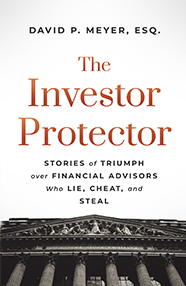
[0:00:33] DA: 40 years of work and one million dollars in savings, those are the lifetime accumulations for many of us when we retire, some of us have more, some of us have less but one million can become zero in an instant with one innocent error: Trusting the wrong person to invest your money. In his new book, The Investor Protector, David Meyer shares his stories of good people who trusted too much and endured unthinkable loss, these are stories of hard-earned success, unbelievable manipulation, changing times, and avenging triumph. You’ll learn not only how David has helped thousands of people regain their savings and peace of mind but what you could do to protect yourself and those you love. The future looks as bright as you planned it. Hey Listeners, my name is Drew Applebaum and I’m excited to be here today with David Meyer, author of The Investor Protector: Stories of triumph over financial advisors who lie, cheat and steal. David, thank you for joining, welcome to The Author Hour Podcast.
[0:01:34] David Meyer: Happy to be here, thank you.
[0:01:35] DA: Let’s kick this off, can you give us a rundown of your professional background?
[0:01:38] David Meyer: Sure, the law firm that I own is called Meyer Wilson and I’ve been a lawyer for about 25 years and most of those about 23 years or so, owner of my own law firm and I represent individual investors who have claims against financial advisors who lie, cheat and steal, which is how I got the book title. I’ve been doing this for a long time and I do it all over the country, I’ve handled over a thousand individual cases against financial advisors and recovered hundreds of millions of dollars for my clients.
[0:02:10] DA: Thousands of cases, you clearly been in the industry, you’ve seen some things but why was now the time to share these stories in your book? Was there something that was really inspiring out there for you? Did you have an “aha moment?”
[0:02:23] David Meyer: I wrote the book, the book took 18 months to write but I feel like it was 25 years in the making. I wrote the book so fewer people would ever need to hire an investment fraud lawyer like me. I actually wrote it to try to make my job obsolete. I know that sounds interesting or odd but when a client is referred to me for help for an investment loss case, they’ve already suffered a devastating financial loss. My job, my day job is to fight to recover their life savings that was lost at the hands of a bad broker and it’s rewarding to fix the problems and recover my client’s life’s savings but you know what would be even better? This is what is the whole purpose of my book, it would be better if I could help retirement savers before they are entangled with a bad financial advisor. I wrote the book to help prevent devastating financial loss before it happens. I fix the problem for cases that are referred to me. With this book, I try to prevent the problems and I honestly believe that if retirement savers and individual investors read this book and follow the basic steps I outline in the book, the chances that they will ever need to hire an investment fraud lawyer will be reduced substantially and that’s why I wrote the book. It’s body armor for retirement savers.
[0:03:50] DA: When you said, “Okay, I’m going to put this in book form” sometimes you’ll have the idea of the book rattling around in your head but during the writing process and yes, I know you have a ton of experience but sometimes by digging deeper to some of the subjects, you’ve come to some major breakthroughs and learnings. Did you have any of these breakthroughs or learnings during your writing journey?
[0:04:09] David Meyer: Well, the way I started it was to gather the lawyers and the staff in my office and say, “Let’s talk about some of the stories that were on one hand most devastating in terms of the financial loss suffered by the clients but also the most rewarding in terms of the client’s ability to overcome the unthinkable financial loss and also, what was most rewarding to us.” To me, what I got most out of this book was just being able to remember the cases we’ve handled over the last 25 years and what we’ve been able to do, the help we’ve been able to provide our clients and then really, as the book came together, I was just more convinced of how helpful this book can be to people before they even hire a broker. They would hopefully never need anyone like me and so it began as a journey to share the experiences of cases I’ve handled and really turned into what I refer to it as body armor that this is, this book can really prevent investment fraud from happening and it’s not a handbook or a reference guide because those are boring. I believe we learned best through experience sharing, not by listening to lectures and that’s what this book is full of is my experiences as investment fraud lawyer, representing the clients that I represented over the last 25 years.
[0:05:28] DA: Now, when you sat down to write the book, who in your mind were you writing this book for and when you talk about investors like you were just talking about, do you mean millionaires, can someone who invest $20,000 or has a life savings of $20,000 still have takeaways from the book?
[0:05:45] David Meyer: Yes, anyone who is saving money and I refer to them as retirement savers, whether you're 20, 30, 40, 60, 80, if you’re saving money with the idea that eventually, there will be a time when you're going to move from the income earning stage to the spending stage, then that’s the time in your life when you're going to need your nest egg, your life savings to be there for you. I think primarily, as we age and we’re in our 30s, 40s, 50s and 60s, we tend to think about that more. The idea is that, as people are approaching retirement and gaining assets and whether that’s 100,000 or 500,000 or 20 million, it doesn’t matter but the tools that I talk about in this book will help really, anybody who is saving money for retirement and is considering seeking the advice of a financial professional to help them manage their lifesavings.
[0:06:39] DA: Let’s dive into the book a little bit, let’s maybe set a base right here. You are an investment fraud lawyer, so why would someone need an investment fraud lawyer and what’s happening in the world to that your position exists?
[0:06:53] David Meyer: Well, the core of these cases is a breaking of trust. We all trust people in our lives to help us navigate the complexities of daily life. We go to our doctor and if our doctor does an examination and recommends medicine or a knee replacement, we generally follow the advice of professionals who are expertise in their area. That might be an accountant, whatever it is, we do that all the time because life is complicated and the investment world is no different. As we save money and we build up assets, then many of us, most of us will ultimately look to get some professional guidance because understanding investments is a scenario that requires expertise and training and education. Most of us are experts in whatever it is we do, we focus on other things and as approach retirement, we want to shift from working to whether it’s travelling, retiring, being with families, most of us don’t have the interest or the expertise or the time or the inclination to be able to focus on how to manage their life savings. There’s a need for us to rely on experts and you’ve got a big diversion of expertise between the typical individual investor who saved money for their entire life and then you’ve got the expert over here and money is, we all treat it differently but once we find somebody that we trust, then we often give them the access to our money and they controlled where our money is invested. Look, for the most part, most financial advisors in this country do appropriate jobs and comply with their obligations and there’s not a problem most of the time but with over a million advisors in this country, problems would just with a small minority of them unfortunately, can create devastating loss and that’s unfortunately where I come in is where someone has trusted just unfortunately, they trusted the wrong person and the advisor that they trust in their brokerage firm or they entrusted their money, something’s gone wrong. The broker or the advisor either lied, cheated or stole and then as a result, my clients have suffered significant losses and is the result of the misconduct of their advisor and unfortunately, there is a legal process available to pursue those claims. I mean, obviously, my preference in writing this book would be for people to minimize the chance that they’re in that situation but unfortunately, bad things happen to good people and although there are steps you can take to minimize the chance of being in that situation, nobody can avoid it 100%. In the unfortunate situation when that happens, there’s lawyers like me that can step in and help.
[0:09:33] DA: Now, is this happening on the local level or is this happening at national banks and big-name investment firms when financials advisors involve themselves in fraud?
[0:09:44] David Meyer: That’s a great question. The answer is, I’ve represented investors against advisors and brokers and firms of all sizes all over the country. We have a national practice, we have offices throughout the country and I represented investors from just about every state over the last 25 years and we’ve had many cases against the large brokerage firms and many cases against smaller brokerage firms, investment advisors. Unfortunately, the problem can happen in any location with any type of firm and there are some tips in this book that can again, by focusing on where you invest your money, who you hire, the type of firm with which they’re affiliated. Those are all things that if some additional time is taken on the frontend, you can reduce your chance of having a problem. Unfortunately, there’s no way, there’s no specific type of firm that I could point anyone to that would guarantee they wouldn’t have a problem.
[0:10:40] DA: Your firm or are you involved individually with over a thousand cases, you just said it’s widespread throughout big banks, small banks and every financial institution. Why don’t we hear more about these stories and why does it continually happening?
[0:10:55] David Meyer: Well, it happens because greed and fraud has been a part of our human nature forever. It goes back to the beginning of time and I don’t see it ending anytime soon. I mean, there is a tremendous amount of regulation in this industry and the larger brokerage firms and banks have gotten better over it. I mean it is much better now than it was 20 years ago. It is still a huge problem and as we age as a country, this financial exploitation of seniors is becoming a bigger and bigger problem primarily, because as a country, we’re getting older and as we age, we tend to accumulate money as we age so it’s a target rich environment unfortunately and that allows the bad actors to get through.
[0:11:38] DA: Is there anything about the – how the financial industry is designed that allows for this?
[0:11:46] David Meyer: Well, it’s the – Most folks who are saving for retirement don’t understand the structure of the financial services industry and I think that’s by design, it’s intentionally opaque. It’s very difficult to understand, really, are you working with a registered representative, are you working with an investment advisor? It’s complicated and then I go through in the book to try to explain that but because it’s complicated by design you know, that creates some confusion upfront because it is very hard to figure out sometimes the type of advisor you’re working with and again, that takes some work on the frontend. Another reason why this doesn’t get a lot of press is because of just the nature of the situation. We’re dealing with personal private financial issues, an interesting analogy that I like to make is, for those of us who are in a car accident, let’s say we’re in a red light and we get rear ended and we suffer some injuries and it’s clearly the fault of somebody else, none of us as a society we have no problem doing research, finding a lawyer to pursue a claim against the at fault driver for damages suffered as a result of that negligence. There is never – we don’t feel bad. We like, “Hey, I was injured, someone else causes it, there is a right cause of action, there are lawyers available, I’m going to do that” but what I found over the last 25 years is that when people suffer financial harm as a result of the misconduct of others, they internalize it. They’re embarrassed, it’s private, it’s money, they tend to blame themselves. We don’t see that, in my experience, we don’t see that in other areas. I believe that the majority of cases, the majority of the situations where somebody has suffered financial loss as a result of the misconduct of the adviser, most cases never get pursued and I believe a lot of it is for the reason I just explained that the folks internalized it particularly. I mean generally, they’re going to be older maybe more retired, elderly, they may be living alone. They may be suffering some cognitive decline, they’re going to be embarrassed, they’ve got a lot of pride, people just treat money differently than they do other things and I think as a result, that’s why a lot of this never even gets pursued. Also, and most people don’t know this but when you open up an account with a broker’s firm and this is any brokerage firm in the country and this has happened since 1980, their new account documents that you sign and on the back of page eight in small print that nobody reads, there is a provision where you agree by opening your account that if there is ever any dispute, you agree to wave your right to trial and to pursue a claim in mandatory binding arbitration. Cases against brokerage firms don’t go to court. You don’t see that they’re not publically filed in court, so the press doesn’t see them, it doesn’t get out. They’re filed in arbitration that’s administered by an organization called The Financial Industry Regulatory Authority known as FINRA and they administer the dispute resolution program and that’s a lot of what we do. We’re FINRA arbitration lawyers but to answer your question it’s private and it doesn’t get the public attention and that’s another reason. Those two reasons in my opinion are why this doesn’t get a lot of attention and because it doesn’t get a lot of attention that just allows it to breed more because it is not getting the attention it deserves in my opinion.
[0:15:12] DA: Anyone who’s listening, you’ve clearly raised their antennas for anyone who’s looking to invest especially with a financial advisor. What do you suggest that listeners and even myself look out for when looking for a new financial adviser?
[0:15:25] David Meyer: There are some simple steps you can take. Again, I believe this in my heart that if you follow the steps in this book and we’ll go through a couple of the items here, the chance that you’ll ever need to hire someone like me will go down tremendously and the first step, you can actually do in your pajamas sitting on your couch and you can do this for your parents, your aunts, your uncles and if you are a lawyer listening, you can do this for your clients. If you are an honest financial adviser, you could recommend that other folks you’re talking to can do this as well and that’s look up your broker. There is a process in this industry that it doesn’t exists as far as I know in any other profession. You can’t look up as far as I know a lawyer or a doctor and see if there has been prior complaints or any regulatory problems or if they’ve had any financial problems like bankruptcy but you can do that for brokers. You can go to brokercheck.org. It’s free, it’s available online, you can do it in your pajamas from your couch. You type in your broker, your location and then you can pull up the regulatory record of that broker. You can see if they’ve had any prior customer complaints, any regulatory problems if they’ve been in any employment issues. Now fair warning, it’s not 100% accurate. There is a process where brokers can go through to erase these regulatory records. I’m fighting hard with the SCC and congress and then lobbying efforts to try to stop that from happening but right now, it is happening. There are instances where these records get wiped clean improperly in my opinion, so it is not 100% perfect but brokercheck.org allows you to look up your broker. Whether it’s a broker or an investment adviser, that’s the first place to start and I honestly believe that if everyone did this before hiring their broker, particularly if we could fix this and make it more accurate and include all the complaints, then I would have 50% less cases come in to my door and that would be wonderful. That’s super easy to do and it’s free and you could do it over and over again and if you pull up your broker and you see they’ve got three customer complaints, I would run. I think it is something like less than 5% of the brokers have more than one customer complain and again, that’s easy to do. It’s free and you could do it over and over and I would certainly recommend you do that and all of your listeners do that. If they are working with their broker now, go do it right now. Let me tell you a funny story, this was just yesterday. My book comes out June 8th but I had some early release copies and my neighbor stopped over and she asked to read a copy and I just heard yesterday, my wife called to tell me here at the office that my neighbor went home, she read the book cover to cover and she called her husband and said, “Hey, we need to look up our broker.” They used the tips in the book, they looked up their broker, they saw something that was concerning to them, and so they fired the broker on the spot and hired a new one. I don’t know what I prevented, potentially bad from happening there but this is someone who is a smart sophisticated educated person who had worked for an adviser for a long time, neither she nor her husband had any idea that this was available and because she read in my book, she did it and they changed brokers and I mean, how wonderful is that resource?
[0:18:40] DA: Let’s talk about the flip side of that. Let’s say no one heeds your warning and you might need an investment for lawyers. Should you need it, can you explain some of the criteria that you would evaluate and maybe select the best investment fraud lawyer?
[0:18:57] David Meyer: Yeah, sure. It’s important to understand that all these steps in the frontend are great and they’re helpful and they will reduce your change but there is no guarantee. Even folks that do everything right and everything that could possibly do, unfortunately these can still happen. There is still no reason they should be shameful or scared or nervous or reluctant to pursue their rights. If they have a problem they think it was caused by misconduct and again, something else about this book, a lot of people will not even realize something is going on because they don’t completely understand their statements. They don’t recognize red flags, so this book I go through a lot of red flags that will help people and their trusted advisers and their family members will help people to look at what they have and one, maybe just make sure nothing is wrong or two, identify some potential problems but if they believe there is a problem, they could reach out and they need to go to somebody who’s been doing this work for a long time. You don’t go to a knee doctor if you need your shoulder fixed or whatever it may be. You go to this specific doctor that has expertise in that area and the same thing for a lawyer. You don’t go to a probate lawyer if you have an investment fraud case and someone wouldn’t call me for a probate case because that’s not what I do. You need to find a lawyer who focuses on this particular area, you know, investment fraud cases and they need to have done it for a long time. I mean it takes a long time to become really good and effective in this area because it’s complicated. It’s complex and there’s a lot of relationships to develop with the arbitrators, opposing council experts, so it’s somebody that does this work, been doing it for a long time but most importantly, has a large team with them. I always say that going up against the brokerage is fighting a war. I mean the brokerage industry has all the money it has because they don’t give it out easily. They’re not just going to hand over money, you can’t just write a letter or file a civil complaint and get your money back. It’s a battle and you need an army to win the war and what I focus on over the last 25 years is my first case was a big case. It ended up with a $260 million a class session jury verdict. I filed that when I was 29 years old, so I learned early. That was a seven year battle. I learned that it took an army to win these cases so we’ve built up, we have a team of lawyers, we have paralegals and analyst and access to the right experts and you can’t just see that on a website. Anybody can put a website and some fancy pictures and say, “Hey, we’re the best firm for you” so you got to peel back that homepage and really dive in and I go through some issues to spot in the book to really make sure that you just don’t get taken advantage of twice. If you are in this situation, you’ve had your trust broken once, you’d be very, very careful that it doesn’t happen again.
[0:21:54] DA: Now, besides the book, do you offer any other resources to readers and listeners?
[0:21:59] David Meyer: Well, the book is a great place to start. We also have a lot of information like this on our website. Our firm’s website is investorclaims.com. I had dozens of instructional videos, topical videos about the different types of investment fraud, the types of claims, we have videos about our lawyers and our staff. If they even have questions about particular investments, it’s likely we’ve got a video about that. For example, you got questions about a variable annuity, we have variable annuity videos and the ETFs. There is all kinds of subject matter videos that we have on our website. It’s investorclaims.com and that’s a great place to learn about the videos to learn about investments, other types of claims and between the book and the website will be a great start.
[0:22:45] DA: Well David, we just touched on the surface of the book here but I wanted to say that writing a book that’s going to help warn, you’re going to help educate investors to start looking at their finances that’s at all levels is no small feat, so congratulations on having your book published.
[0:22:59] David Meyer: Thank you very much, I appreciate it.
[0:23:01] DA: I do have one question left, it is the hot seat question. If readers could takeaway only one thing from the book, what would you want it to be?
[0:23:09] David Meyer: Spend a few extra minutes on the frontend before you hire an advisor and that effort will be very well rewarded for you and most likely by significantly reducing the change that you’ll ever need someone like me.
[0:23:25] DA: David, this has been a pleasure and I’m excited for people to check out the book. Everyone, the book is called The Investor Protector and you could find it on Amazon. David, besides checking out the book, where can people connect with you?
[0:23:35] David Meyer: Again, our website is investorclaims.com and I could always be reached via email. Again, my name of course is David Meyer, my email is dmeyer@meyerwilson.com.
[0:23:45] DA: Well David, thank you so much for coming on the show today and best of luck with your new book.
[0:23:48] David Meyer: Thank you very much.
[0:23:52] DA: Thanks for joining us for this episode of Author Hour. You can get David Meyer’s new book, The Investor Protector, on Amazon. Also, you can also find a transcript of this episode and all of our other episodes on our website at authorhour.co. For more Author Hour, subscribe to this podcast on your favorite subscription service. Thank you for joining us, we’ll see you next time. Same place, different author.
Want to Write Your Own Book?
Scribe has helped over 2,000 authors turn their expertise into published books.
Schedule a Free Consult