Brian Reese: Episode 701
Read the full transcript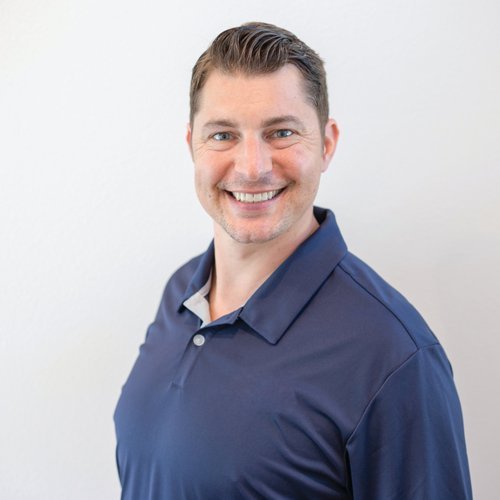
Brian Reese
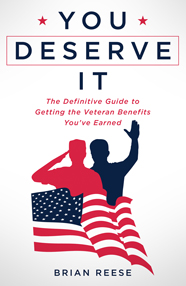
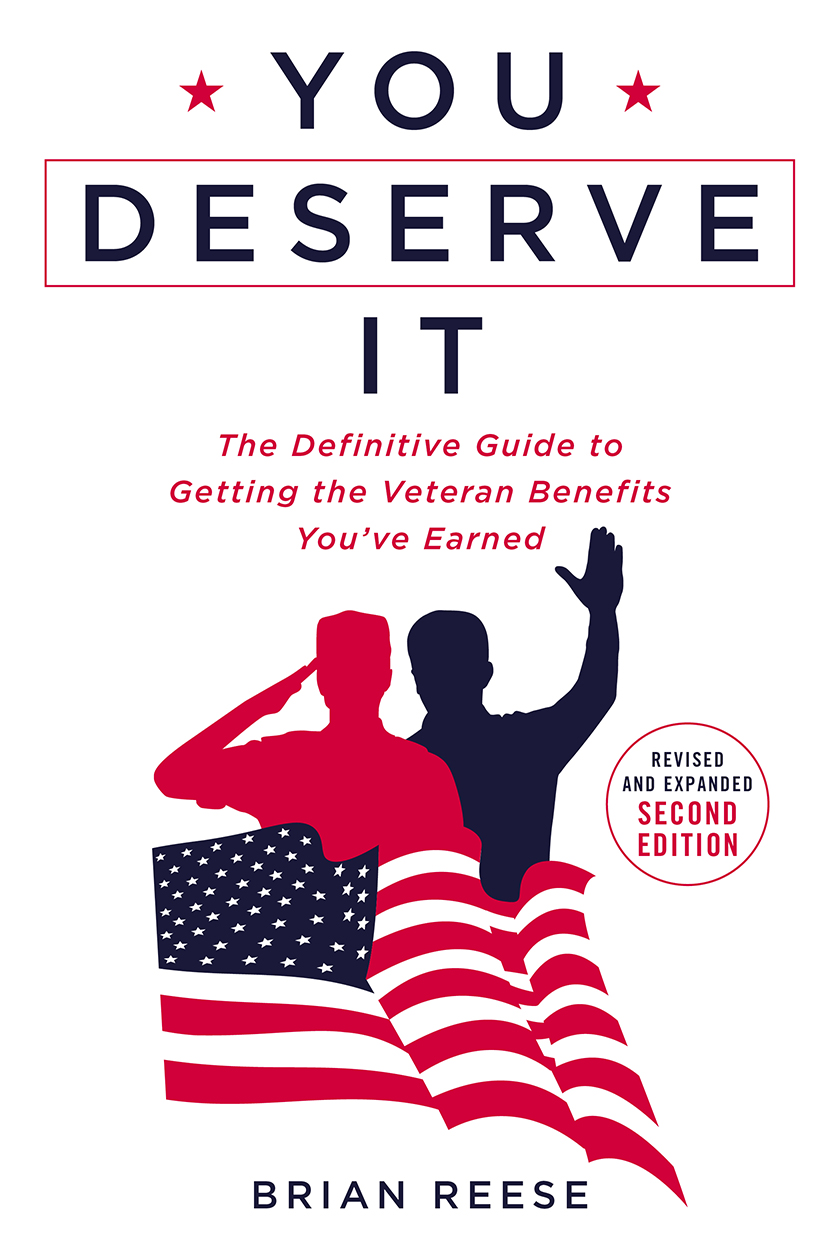
Brian Reese is one of the top VA disability benefits experts in the world and #1 Amazon bestselling author of You Deserve It: The Definitive Guide to Getting the Veteran Benefits You’ve Earned (Second Edition).
Brian’s frustration with the VA claim process led him to create VA Claims Insider, which provides disabled veterans with tips, strategies, and lessons learned to win their VA disability compensation claim, faster, even if they’ve already filed, been denied, gave up, or don’t know where to start.
As the founder of VA Claims Insider and CEO of Military Disability Made Easy, he has helped serve more than 10 million military members and veterans since 2013 through free online educational resources.
He is a former active duty Air Force officer with extensive experience leading hundreds of individuals and multi-functional teams in challenging international environments, including a combat tour to Afghanistan in 2011 supporting Operation ENDURING FREEDOM.
Brian is a Distinguished Graduate of Management from the United States Air Force Academy, Colorado Springs, CO, and he holds an MBA from Oklahoma State University’s Spears School of Business, Stillwater, OK, where he was a National Honor Scholar (Top 1% of Graduate School class).
★ Scribe Case Study
How Brian Reese’s Book Has Helped Over 60,000 Veterans Change Their Lives for the Better
As a former member of the Air Force, Brian Reese values being of service to others. Now, he's giving back by helping veterans with his book.
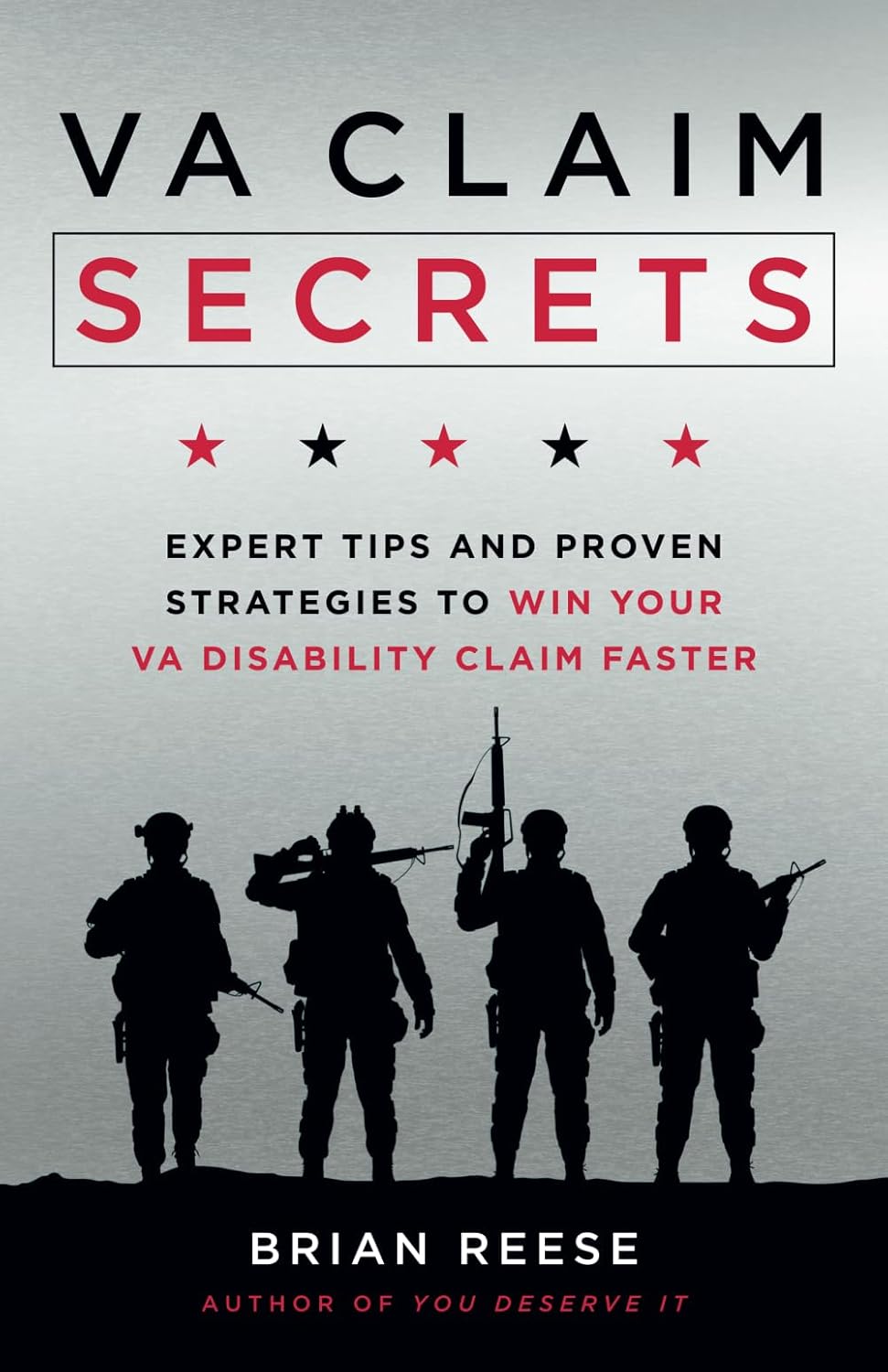
📚 Books by Brian Reese
Transcript
[0:00:27] JB: Veterans are four times as likely as civilians to develop post-traumatic stress disorder. That’s just one of dozens of service-related disabilities they might be dealing with. One study found that 70% of Iraq and Afghanistan vets are at risk for sleep apnea, something veterans may not even connect to their service in the first place. However, sadly, and here’s your last statistic, only about a quarter of all veterans are receiving disability benefits from the VA. Brian Reese is out to change that. A veteran himself who personally struggled with the disability claim system, he started a company that coaches veterans through the claim process. Now, he has written the book, You Deserve It: The Definitive Guide to Getting the Veteran Benefits You've Earned. On Author Hour today, Brian discusses the barriers keeping veterans from their benefits, shares some of the ways he and his team are helping veterans, and explains why it’s important not to be afraid to fail along the way. Hi, Author Hour listeners. I’m here today with Brian Reese, author of You Deserve It: The Definitive Guide to Getting the Veteran Benefits You've Earned. Brian, thank you so much for being with us today.
[0:01:46] Brian Reese: You’re very welcome. Thanks for having me.
[0:01:47] JB: First of all, I also want to thank you for your service. You were in the Air Force, is that right?
[0:01:53] Brian Reese: Thank you, yeah, it was my honor, I was in the United States Air Force from 2003 to 2012.
[0:01:59] JB: Okay, can you tell us just a little bit more about your military experience?
[0:02:04] Brian Reese: Sure, yeah, it was active duty, commissioned out of the US Air Force academy in 2007. I was a contracting officer, so involved in the procurement, acquisition and program management side of things. Spent some time at Luke Air Force Base in Phoenix Arizona, that was my first duty station, then went out to Boston, I was at Hanscom Air Force Base in Boston, Massachusetts. Did a deployment to Afghanistan in there as well in 2011 and then came home, I actually took of the uniform there and became a Department of the Air Force federal civil servant, and then at the time, I had ended up taking a career broadening assignment to San Antonio so I brought many JBSA Randolph in San Antonio, Texas. That was my last duty station on federal civil service and that’s the time that I took off the uniform and went all in and helping veterans with their VA benefits.
[0:03:02] JB: Okay, I’m excited to get into all of that. When you first left the service, you did not immediately start receiving VA benefits or even know that you had disabilities related to your career, is that right?
[0:03:15] Brian Reese: Partially correct. I knew about the VA because we were given that mandatory transition assistance program class called the TAPS class, which is a DOD mandate for retiring or separating service men and women but I remember, you’re so focused on getting out. You’re so focused on, “What am I going to do next as far as a job and my career and my benefits?” and all of that, that the VA was just kind of an afterthought and at that TAPS class in 2012, that was actually the first time that I’d even heard about the VA, I didn’t even know it existed before that presentation and it was way too late. Thankfully, I found a veteran service officer with an organization called American Veterans or AMVETS. He was pretty good, he helped me through the process, we did get my claims submitted, it took about 13 months but it was six years after that until I actually found out that I wasn’t getting the benefits that I deserve by law for my service and so the fact that I was underrated and didn’t know what to do or how to do it, didn’t have anyone to guide me, I was endlessly searching resources online and I still didn’t know what to do or how to do it. That’s when I made the decision that as an entrepreneur, there’s a solution here and I did something about it.
[0:04:45] JB: What does that mean, underrated?
[0:04:47] Brian Reese: Sure, when a veteran eventually receives their VA disability rating percentage, you’re rated on a scale of zero to a hundred percent in increments of 10%. The difference between say, 10% and 100%, exponentially different as far as the benefits you become entitled to, as well as the monthly tax-free compensations. For example, let’s say you’re at 10% and you get about 150 bucks a month tax-free, if you were a 100%, you’ll start getting over $3,000 a month, tax-free. There’s a significant difference in the amount of benefits that you're entitled to for you and your family, depending on your overall disability rating percentage. When I say things like underrated, what that means is, you have some type of rating but not what you should have by law. Look, if you stay underrated, you end up missing out on thousands of dollars of tax-free compensation and benefits that you're entitled to by law for honorable service.
[0:05:59] JB: Wow. I can see why people need some guidance and support to get through this system, I mean, it’s confusing.
[0:06:06] Brian Reese: Absolutely, it’s just the endless addendums, the case law precedent that changes decisions about particular disabilities or their rating percentages or entitlements for service connection, it’s really – the disability system is incredibly complex and it’s a weave of medical and legal jargon that is confusing to even for somebody who has years and years of experience. For the average veteran, they’re at such a significant disadvantage before the Department of Veterans Affairs because you’re not fighting a fair fight.
[0:06:45] JB: Okay, so you start this organization to try to help veterans navigate all of this. Tell us about VA Claims Insider?
[0:06:54] Brian Reese: Yeah, found the VA Claims Insider from my spare bedroom in San Antonio in the summer of 2016 and it was really born out of my own personal frustrations with trying to navigate the VA disability process on my own and you know, I mean I remember thinking to myself, it shouldn’t take an advanced degree and thousands of hours of research to somehow figure out how to get what you should have and what you’re entitled to by law. I remember thinking, if I’m stuck, frustrated and underrated, I wonder if other veterans are too. I started sharing my story on Facebook lives and started sharing this journey of my frustrations and some of the things that I have learned along the way, started being open and vulnerable about my mental health, about my physical pain and more and more veterans just kept watching, they kept commenting, they kept wanting to come back and then I was basically would turn a one-hour session into two to three hours, answering everybody’s questions. Figured out very quickly that there is a tremendous pain point for veterans and their families in a niche market and I’d had an opportunity to help fill that void and serve them.
[0:08:14] JB: You have helped a lot of people from what I understand and some of the testimonials in the book are really powerful. Along the way though, you found that the confusion or the kind of intimidating nature of the process is not the only barrier for people to come get the benefits that you say they deserve. What are some of the reasons why veterans wouldn’t take advantage of this?
[0:08:39] Brian Reese: Yeah, this is a really, really important one and there’s a lot to unpack with the question that you just asked. We’ve done surveys. I’m a data geek, I’d like to know the why and so, we ask our veterans fairly often through surveys, “Why they are underrated, when did they first try to file, how many times have they been denied?” and in our most recent survey, we asked about a thousand of our members who are receiving some sort of disability rating, “What was the one thing that held you back? What was it?” We actually had them ranked then a couple of different scenarios. What we discovered from over a thousand responses from veterans is that 87% of them were receiving some type of disability compensation but they were underrated, right? Basically, they said, 87% said, “I’m not getting what I deserved.” Then again, we went a little deeper and said, “Why is that?” What we discovered was the number one reason is veterans tell themselves they don’t deserve it. We tell ourselves that, “Somebody else has it worse off than me. They’re the ones who should get benefits, not me.” We sort of fall back to that suck it up and carry-on mentality that is indoctrinated into us in the military of “take care of everyone else except yourself”. One of the things we do at VA Claims Insider and one of my goals for the book is we give veterans permission. We tell them, “Hey, these are your benefits for you and your family, your benefits are mutually exclusive of any other veteran’s benefits.” It’s a personal choice to pursue benefits or not but what I let folks know is, if you choose not to get benefits, the only one that you're hurting and impacting is yourself and your family. That’s probably number one is it’s a mindset thing, of veterans tell themselves they don’t deserve it, when in fact, they do. The second thing, the second and third reasons that come up a lot are, “I tried before, Brian, and got denied so I gave up, I quit.” “I thought, I didn’t think I had any recourse. I thought that once you were given a decision, that’s it, you have to live with it, there’s nothing else you can do.” To me, that’s an education issue, that’s an education gap that we fill, it’s a void that we fill at VA Claims Insider. Then the other – the third reason we get a lot is, “Brian, I just didn’t know how. I started looking into things, you know, maybe I went to Google and typed how to file a VA claim or how to get benefits” and you find out very quickly that it’s extremely overwhelming. There’s so much information out there, there’s so much misinformation out there and there really wasn’t, there isn’t a simple straightforward guide to help you on your journey. Look, veterans are busy people. A lot of us have second and third careers and if it’s difficult to know what to do or how to do it, a lot of times you end up just quitting because other things take your time and effort and you just don’t get back to it. Those are the three reasons. Mindset, I’ve been denied before so I gave up, third, I didn’t know how to do it so started looking into it and just quit.
[0:12:10] JB: Then that research completely informed how you tailored your programs I imagine?
[0:12:14] Brian Reese: Absolutely. The interesting thing about our launch is we didn’t even have a product or service. A lot of entrepreneurs when they start companies, they don’t think about their market, they start thinking about, “What’s the product or service that I can create or perfect? Then I’ll bring it to market.” To me, that’s backwards. It’s backwards because first of all, you need to figure out who your market is and you need to figure out if those folks are even interested in the product or service that you might crave for them. What we did with VA Claims Insider was we were focused on building a movement, a community of veterans helping veterans prior to us even creating any products or services and it’s kind of funny when I talk to people about this because we didn’t actually have a product or service for almost the first year that we were in existence. We were focused on building a community of veterans who know, like and trust each other. Once we got to about 10,000 members that was the first time that I really started asking them, “What do you need now? What are the gaps? What are the struggles and frustrations that you’re dealing with and how can we best help you?” and that led to the first concept of the mastermind, which we still operate today that led to the VA Claims Insider mastery program, which is our online course and then that led to the creation of our coaching program, which is really our flagship program today called VA Claims Insider Elite.
[0:13:47] JB: Okay, so tell us, what is the mastermind?
[0:13:51] Brian Reese: The concept of a mastermind actually goes back to I mean earlier than Jesus and his disciples but the concept is that iron sharpens iron and if you’re around and in a community, whether it’s a small group of say five to ten folks or even larger than that, you can accelerate your results by sharing the knowledge with each other and things that you’ve learned along the way. I mean right now, I can tell you at the moment you and I are talking, we have a live 24/7 365 Facebook Group that’s run by some of our admins but it’s primarily answers given from our community. There’s over 13,000 members in this group and veterans can ask questions and they can get a faster, better answer by leaning on the entire crowd or the entire mastermind.
[0:14:45] JB: The community is such an interesting aspect to me because the actual kind of the resources for example listeners, VA Claims Insider can help clients fill out some of the specific forms for example if someone’s been denied, it’s not necessarily because the person doesn’t have a disability, it’s because the forms weren’t filled out correctly or they didn’t have everything that they needed. They didn’t check all the boxes and so your program Brian helps them kind of check all of those boxes and puts them in touch with doctors who are more familiar with the systems, et cetera. I’m so interested in how much of a role the community plays especially as someone who’s a procrastinator, that’s such a huge part of it is having other people check in on you, “Are you still doing it?” You know, the accountability aspect.
[0:15:36] Brian Reese: It’s so huge and to me that’s probably our biggest differentiator from anyone out there who helps veterans with their disability benefits is the community aspect is so vital because veterans are never alone and that’s a common theme that we hear and I experience that too. I mean I felt alone and when you take off the uniform, you sort of are looking around going, “You know, all these civilians they can’t possibly understand what I went through.” “They don’t get me, they don’t understand” and that leads to all sorts of terrible things. Typically fear, frustration, depression, anxiety and so the community aspect is really there to lift veterans up and to provide support no matter what they need and then of course with our coaching program, the entire idea behind coaching is accountability. I mean you said the right word, the buzz word there is accountability knowing that my brother or sister who is my coach, they’ve got my back no matter what, and yeah, we’re going to check in on you too and make sure you’re doing okay. Make sure that you’re taking action because we tell vets all the time, unless you take action you’re not going to get the result. If you’re sitting around waiting for somebody to do this for you, you’re wrong, it’s not going to happen. If you’re sitting around waiting for somebody from the VA to give you a phone call to let you know that you’re eligible for benefits or you’re underrated or hey, you should follow a claim for your headaches and your post-traumatic stress disorder, that call is never coming. It’s really helping veterans understand that this is their claim. Nobody should care more about this than you do but we got your six, we’re with you every step of the way and you’re never alone.
[0:17:29] JB: Would you be comfortable sharing some hard numbers maybe from your own experience or someone else’s? We touched on this a little bit earlier but the difference between even just a few percentage points in the disability rating has profound financial effects.
[0:17:46] Brian Reese: Huge. Yeah, I mean it’s huge and the difference between you not getting any benefits, I mean if you have never done this before, in fact, let’s take a 30,000 foot view of the whole system. It’s estimated that there’s about 20 million veterans alive today and according to the VA’s owns statistics, I mean these are statistics that are reported to congress about 4.9 million veterans are receiving any benefits at all and I mean that’s less than 25%, right? That literally means that 75% of veterans alive today are receiving no benefits from the VA and I had no idea it was that high so we started doing the research and you know look, I think it’s the three things we talked about before, mindset, confusing process, got denied before and gave up, third, I didn’t know how to do it. Just the lack of a basic education, knowledge and awareness of the fact that you are eligible and entitled to benefits and then what to do and how to do it but you’re absolutely right. 75% get nothing, right? They don’t get anything whether it’s medical care, disability compensation each month, access to VA home loan benefits. I mean there is a number of other benefits as well outside of the disability system that you can become eligible for and so the financial boost difference though is huge. It’s tremendous from you know, 10% you get 150 a month, 90% you get about 2,000 a month and then at a 100% or over that if you’re PNT, you start getting sometimes three to 3,500 or 4,000 a month. It’s a significant difference every 10% increase that you go and so you know, our entire goal here is to educate and empower veterans to get what they legally, morally, ethically and medically deserve by law.
[0:19:51] JB: Thank you for mentioning some of the other benefits because the book covers everything, home loans, pension, healthcare, including a section on various benefits in different states, businesses that offer discounts. I mean speaking of a 30,000 foot view but you go into most detail about the disability chapter because that kind of has a trickle down effect, is that right? Why is that part so important?
[0:20:17] Brian Reese: It absolutely does and for anyone who gets the book by the way, You Deserve It: The Definitive Guide to Getting the Veteran Benefits You've Earned, start in section one, start in chapter one because what we discovered along this journey is that your VA disability rating percentage, your VA disability benefits are typically the catalyst for a whole host of other benefits. Things like different priority groups of VA healthcare, right? Whether or not there’s copays or your care is free, if you have a 10% rating or higher you’re also eligible for the VA home loan funding fee waiver, which can save you thousands of dollars on the purchase of your home. There’s also education benefits that you can be entitled to and most of us, most vets are familiar with the GI Bill but there is all these other programs that you can become eligible for, for you and your dependents at various disability rating percentages and then I heard you already mentioned it, the state benefits. Really veterans are most familiar with federal level benefits typically delivered through the VA but they’re completely unaware in most cases to the benefits available to them in their state and so in the book, I break it down by all 50 states and probably the biggest benefit available in the states are property tax exceptions on your home. In your primary residence, most states, in fact 16 states offer complete exemptions on property tax for disabled veterans who have a certain percentage. Most states offer some type of exemption based upon your disability rating but absolutely, the VA rating percentage that you have typically serves as the catalyst for a whole host of other benefits.
[0:22:14] JB: Yeah, that’s important. When it comes to applying for disability or any of the other benefits you cover in the book, you advise readers not to be afraid to fail. What do you mean and why is that important?
[0:22:32] Brian Reese: It’s important because you can do everything right and still get denied and the biggest thing is just don’t give up. You can’t ever quit. It’s sometimes a slug fest and you know, the VA process it’s still managed. It’s still governed by various rules and regulations and legal case law precedent but the biggest thing you remember is that it’s run by humans, right? Guess what? There is an element of human error that can go into this process and I mean, I’ll give you an example. We’ve had veterans who received a denial letter for a different veteran. For example, they look at their VA rating decision letter and it states, “Hey, you’ve been denied benefits because of this, this and this” and the veteran would be like, “This isn’t even what I filed for. That’s not even my information, this isn’t even me.” There’s all kinds of things that can happen through the process. A lot of times it’s human error, of, sometimes the VA just flat out gets it wrong. If you don’t know any better, it kind of feels like a gut punch when you’ve been denied and if you don’t have somebody there fighting for you and encouraging you to get back up and get in the ring and throw another punch, you might quit and so that’s why we always tell vets that, “Look, you can do everything right and still get denied. It’s not your fault” there’s outlets. You have another avenue, there is another path here just don’t give up.
[0:24:09] JB: Important advice. Brian, thank you so much for speaking with us today and for doing the work you do. Again listeners, the book is, You Deserve It: The Definitive Guide to Getting the Veteran Benefits You've Earned. Brian, where can people go to learn more about you and your work beyond reading the book?
[0:24:29] Brian Reese: Sure, yeah if anybody needs some help or you just want to check out our website, we’ve got a ton of free resources across our blog. There’s a number of free eBooks and digital downloads. You can also follow us on YouTube but I think a great place to start would be at vaclaimsinsider.com.
[0:24:46] JB: Great. Thank you so much.
[0:24:47] Brian Reese: Thank you. I appreciate y’all having me.
[0:24:50] JB: Thanks for joining us for this episode of The Author Hour Podcast. You can get Brian Reese’s book, You Deserve It: The Definitive Guide to Getting the Veteran Benefits You've Earned, on Amazon. You can also find a transcript of this episode as well as previous episodes on our website, authorhour.co. Make sure to subscribe to The Author Hour Podcast for more interviews and insights into life-changing books.
Want to Write Your Own Book?
Scribe has helped over 2,000 authors turn their expertise into published books.
Schedule a Free Consult