Andrew YJ - Kim: Episode 705
Read the full transcript
Andrew YJ - Kim
Dr. Andrew YJ Kim is the Co-Founder of Culture ’n Strategy, an advisory firm that helps scaleups and fast-growing companies navigate their growth journey. He specializes in a synchronized approach to strategy and culture, a complex intersection between two advanced topics that few can navigate.
Drawing from his extensive experience in his own businesses and in guiding organizations through strategic culture transformations, his book will walk you through an extraordinary journey of reaching greater heights.
Learn more at
📚 Books by Andrew YJ - Kim
Transcript
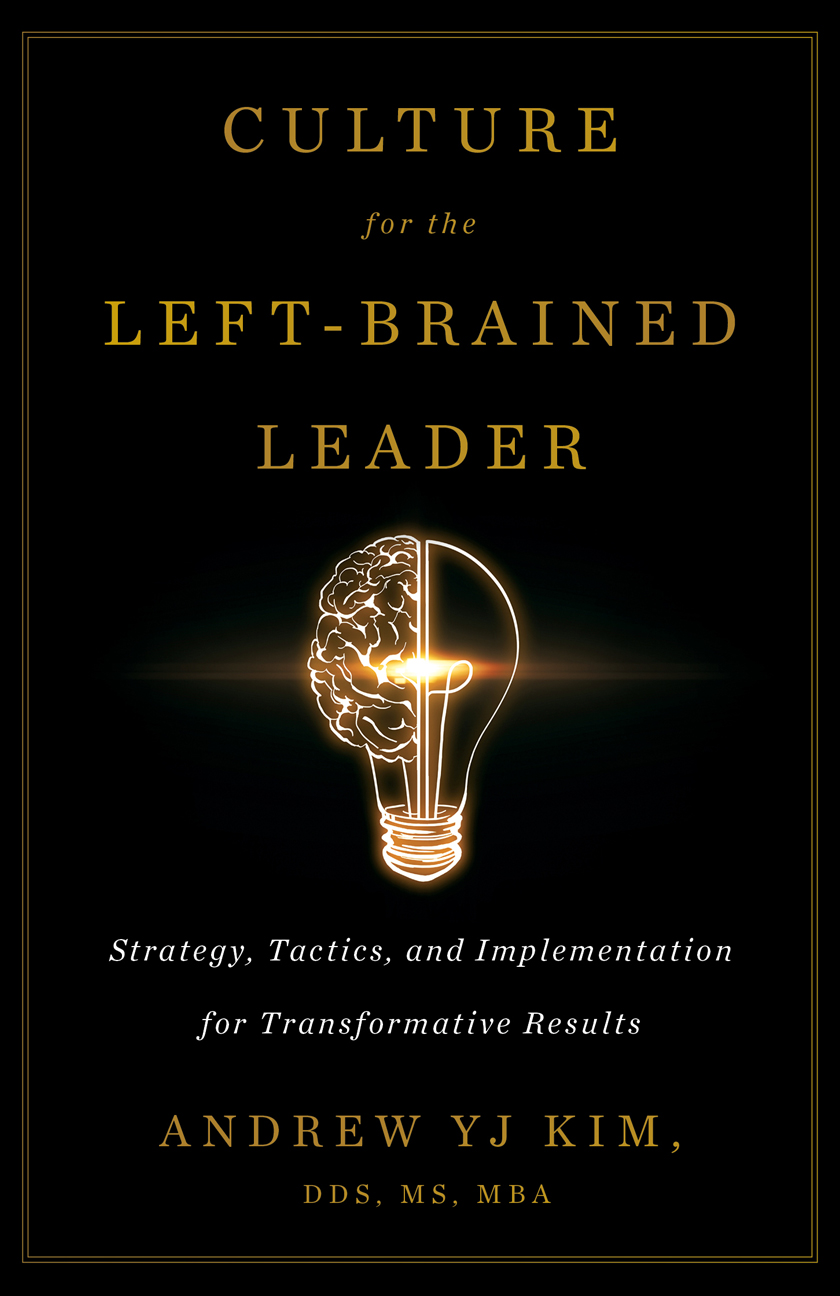
[0:00:27] JB: Business leaders have known for a while that the constantly shifting the landscape of our modern world requires them to be nimble. Okay, but how? How do you make a business able to pivot with speed and efficiency? Culture strategy. Okay, but how? Andrew YJ Kim has a very detailed answer. His new book, Culture for the Left-Brained Leader: Strategy, Tactics and Implementation for Transformative Results, turns the nebulous theory of culture strategy into a logical step-by-step breakdown. On Author Hour today, he discusses some of the unexpected problems that can be solved through culture, common challenges facing leaders trying to implement a new culture strategy, and common mistakes leaders make along the way. Hi, Author Hour listeners. I’m here today with Andrew YJ Kim, author of Culture for the Left-Brained Leader: Strategy, Tactics and Implementation for Transformative Results. Andrew, thank you so much for being with us today.
[0:01:37] Andrew YJ - Kim: Thank you for having me, Jane. Thanks for the opportunity to talk about a book that I enjoy very much. It’s a very important topic that I think always warrants a deeper dive.
[0:01:49] JB: Well, let’s do it, that’s why we’re here. Okay. First of all, can you set the scene for our listeners? What is culture strategy?
[0:01:56] Andrew YJ - Kim: Absolutely. Well, it’s a strategic approach for a company because a company always wants to push a strategy forward, right? However, one thing is, strategy has a lot of collaboration requirements in order to get it to move forward and that’s why we also have to look at the culture of the organization to actually move it forward and hence, why it’s – I believe that culture and strategy are not necessarily separate topics but actually run together.
[0:02:25] JB: Okay, and then what do you mean by left-brained leader?
[0:02:32] Andrew YJ - Kim: Well, a left-brain individual is someone who does seem to see things from a logical perspective. I myself am a left-brain individual. To talk a little bit about my story about why, why I came about writing this book is that I started out as an – my journey as a leader, as an entrepreneur and naturally, as a left-brain logical individual, well also, has a background in terms of like an MBA as well too is very focused on processes and systems, right? In fact, I think a lot of left-brain managers and leaders can resonate with that. The fact that they like to keep their world together with systems and processes. However, one thing that I’ve come to learn is that there’s a limitation to that. You plateau at a certain point and you can’t figure out how to get to the next level. In fact, we did very well with the systems and processes in the very beginning, until we hit that brick wall. Once you hit that brick wall, you’re in a situation where you can’t really figure out how to actually break through and one thing you realize is that people are very skilled in maneuvering around systems. Naturally, a left brain manager or a leader is going to introduce more systems around that. Then the thing is, that’s not where the issue really was. In fact, it actually took a business coach to help me see a different path and even as a different path was shown to me, I resisted because things needed to make sense to me. In order to break through, I needed to hit that brick wall, see that the limitations of my approach and reassess how I approach management, leadership and in essence, culture. It was a very painful journey and a very rewarding journey. That’s why I wanted to share this journey with others because I believe I’m not the only person who tends to see the world through a logic, systems and processes so that I can help them see a different side of the world in business.
[0:04:51] JB: Okay, and that different side is culture?
[0:04:56] Andrew YJ - Kim: Yes. That’s the thing, culture is such a very nebulous topic for many. In fact, when people talk about culture, the first thing that comes to mind for many people is not business, it’s about the various rituals and customs and different geographical locations. However, if you really look at an organization, the culture is – the best definition for in my opinion is what a group of people believe to be acceptable and unacceptable behavior. That’s a very profound definition because now there is a tie-in to productivity. Let’s take a step back for a moment and think about it. If we want to move the needle on what people believe to be acceptable and unacceptable behavior, how do we accomplish that? You see, that’s where people start stumbling a little bit. Especially if we’re trying to do that at scale, never mind the people that you have direct exposure to but at scale. How do we do that? That’s what I want, those were the questions I wanted to answer during this book.
[0:06:02] JB: Wow, okay. How do you do that? No, I’m just kidding.
[0:06:06] Andrew YJ - Kim: Well, you would have to read the book.
[0:06:12] JB: I do want to ask you a little bit about that. First, you have a strategy advisory consulting company. How much of what you do has wound up being about culture? It seems like people are starting to get wise to that and starting to seek help.
[0:06:27] Andrew YJ - Kim: Well, in terms of the awareness of the topic of culture. I think now, people are talking about it more so than ever before. In fact, there are many leaders who are attributing to the success of their businesses to culture that it was one of the most important, if not the most important component to their business ownership and success. Now, in terms of how strategy and culture come together, well, no one really came to me saying, “Hey, I want to help with culture.” They actually have a vision or strategy that they want to achieve but they’re struggling with it and if you look carefully within the organization, often times, there was something within the culture that needed to be looked at as well too. That’s the tie into it and that’s actually a very important thesis within the book, how culture and strategy come together, again, it’s another logical description and discussion regarding that and I think that’s a very important realization to make.
[0:07:30] JB: Okay. What – I mean, when I think about culture, my kind of basic understanding, I think about the company’s mission statement. I think about group meetings where leaders are kind of reasserting the mission statement and making sure people have buy-in. Is that connected to this idea of people understanding what is and isn’t acceptable behavior?
[0:07:56] Andrew YJ - Kim: Well, there is a component to that. However, that’s often times one step of it. In fact, I talk about six phases when we’re looking at taking a company through the journey of culture and sometimes a transformation and that is a component. However, there’s so many more, in fact, it involves discussions on what does the culture really mean. It also talks about the components and anatomy of self-directed teams. There also needs to be a discussion and understanding of change management and also how we approach management, leadership and navigate change. Besides that, we also need to reevaluate how we assess and approach strategy. What you mentioned is one component to that, to say the least, it is quite a journey. In fact, that’s what I wanted to do with this book. When people talk about culture, the topic of culture, oftentimes, people think about excitement, activation, leaning in, which are very important components, however, one thing I have seen is that a lot of companies actually fail in their attempts to move the needle on the culture. I decided to write a book about a more comprehensive approach to it. One that does the topic justice because I think this is a very important topic and one where we can accomplish a lot of things. Everyone’s goals and objectives as a leader are different. One type of leader, they want to grow and scale. Another type, they want to free up their time and find a balanced life. Another one wants to leave a legacy. The thing is, it’s very hard to achieve those things without looking at the culture because we’re going to end up propping everything up with our sheer will. You see, when we approach the organization from the standpoint of culture, we’re doing it together and when we’re doing it together, then we’re no longer alone in the journey. I think that’s a very important thing and that’s where we can actually achieve our dreams better.
[0:10:06] JB: Wow. Okay, when someone approaches you for – when you're talking to a client who wants to implement a new culture strategy, what’s the first piece of advice you give them?
[0:10:21] Andrew YJ - Kim: Well, first of all, very few people actually use that terminology. It’s a term that I like to put together because of the fact that I believe they go hand-in-hand. They actually have a different paint point. Sometimes it’s the fact that they’re stuck, they’re plateaued and the business is running them rather than the other way around. Other times, it’s a visionary leader who is having trouble getting people to look forward towards a vision with them. Other times, someone is responsible for leading a culture movement but they really don’t know how to do it because what the existing literature out there is very confusing, it doesn’t really tell them what to do, it gives them some motivational, inspirational advice but it doesn’t really talk about the strategies, the tactics and how to actually implement it. Those are the more common reasons people talk to me. They rarely come because, “Hey, I want to look at culture strategy or look at the culture.” It is actually, some other pain point that gets them to start asking questions, “I wonder why I’m stuck?”
[0:11:32] JB: I see, so they don’t know what the actual problem is and you help diagnose it.
[0:11:37] Andrew YJ - Kim: No, I can empathize with that because I was in that situation as well too. When I was stuck, culture was the last thing I was thinking of. In fact, even my coach was having me reassess how I approach things from like management and leadership. The word culture wasn’t really thrown at me. It was after I went on the journey and took a step back and tried to assess, “What did I just go through?” When I pieced things together as a logical person, I have to understand things, that’s just the way my brain works and I had to understand what I just went through. Along and besides that, I helped some other companies along their journey as well too and what happens is you start noticing trends and patterns, you know? Coming from an MBA background myself, I’m familiar with many of the existing business processes and systems out there as well too. You start piecing things together because an organization at a larger scale, actually has unique challenges and the fact that people don’t have direct exposure to everyone so they have to do things with organized efforts and I’ve tried. I tried, Jane, looking for existing material out there, I couldn’t find it and that’s why I wanted to write this book to help people because I – these are realizations that I’ve made. I wish I read this book when I embarked upon the journey and compartmentalizing the various moving pieces to this, I think would have helped me. I think it would have helped a lot of other people too especially if they tend to lean more towards the left brain logical side of things.
[0:13:22] JB: I want to ask you about something you mentioned earlier, the self-directed teams. You write quite a bit about that. What is that and why is that a goal?
[0:13:32] Andrew YJ - Kim: Well, that’s some huge building block of culture for an organization. In fact, so many of the more later and more advanced applications, for instance, I’m trying to get teams in together on the same page with strategy, it leverages off of our self-directed team. If we don’t have self-directed teams, then it’s very difficult to achieve that because there are certain collaboration and requirements that we expect our people to be able to move these strategies forward. In fact, that’s often times what strategic leaders, one of the biggest challenge is they have an amazing vision but the biggest challenge is the fact that they’re having challenges getting other people to see it and move with them on that. A self-directed team is an essential building block and we talk about the various components to it, what makes it, what kind of constitutes a self-directed team. I mean long story short I think will require a more in depth discussion and perhaps read in the book but there are different types of people that both in terms of their personality types, skills, et cetera that if we bring together a diverse perspective and be able to get them to move together in the same direction and the thing about diverse people is the fact that there’s an increased amount of tension points that exists between them because they’ve been differently. Now, we have to talk about the skills associated with bringing that together. Long story short, that’s what a self-directed team is and it is discussed further in the book.
[0:15:14] JB: Human beings are generally resistant to change, what are some of the common challenges when leaders faced when trying to implement a shift in culture?
[0:15:28] Andrew YJ - Kim: Well, that is a very true statement. Change in general, people find it to be sometimes a scary topic. Now, some people enjoy change but then in fact, some leaders enjoy and expect that that everyone else will enjoy this well too. The issue is most people aren’t built that way and so we have to facilitate change in a way that we achieve buy in. The book spends a good amount of time talking about the psychology of it and not only that, about the very nuances associated with the resistance regarding view points on culture. The reason why culture is a tough one to move the needle on is it runs deeper than processes and systems and procedures. Even with that, you are going to encounter resistance from people. However, culture is something even deeper because it’s their lifestyle, it’s their set of beliefs as well too. Now, talking about that at a deeper level would probably be involved multiple discussions but in essence, we have to understand the landscape where our people are, who are the various people that’s going to buy in early, who tends to kind of wait until we see others – Wait until others are buying or not and tag along and some who drag their feet and resists a bit more. There are various strategies and tactics in order to maneuver around that landscape as well too and some recommendations for that but long story short, this does not happen overnight. The smaller your organization is, it can move a bit quicker. There are ways to partner with the key people and also keep the doors open and keep the dialogue going for those who are not bought in quite yet and maneuver it in a way where it minimizes risk and moves it forward and tries to get as much value out of it as possible.
[0:17:38] JB: Okay, so when you understand it, you can anticipate it and when you can anticipate it, you can strategize.
[0:17:45] Andrew YJ - Kim: Yes and I think that is a very important piece because I remember the first time I had to do something like this, I was told, “Just do it. It’s going to be great.” I went it there, it wasn’t great. I remember that when I was trying to do something like this at first, one third of the room seemed excited, one third of the room seemed like they couldn’t care either way and one third of the room looked upset. Now, I wish I was told that it might look like this. It would have gotten me to approach it a little bit more tactfully. In fact, what I didn’t see everyone bought in right away, I was disappointed and along the journey, you know a leader, they need the emotional endurance to go through, right? I think it would have been helpful to know, “Hey, this obstacles may exists, these are the various things that you could do to kind of move around that.” I think it would have helped me a lot and in fact, when I’ve guided others through the same thing too, I believe it helped them navigate it in a way that just anticipating had helped them a lot. It doesn’t get rid of the challenges. It’s still going to be a challenging process but anticipating it puts you in a much better situation.
[0:19:03] JB: Yeah, to minimize mistakes, which brings me to my next question. What are the most common mistakes people make during this process?
[0:19:12] Andrew YJ - Kim: Well, I think one of the most common ones is they try to move ahead a bit too quickly. In fact again, one of the most common reasons people talk to me is the fact that they have a strategy that they want to move forward. One of the biggest mistakes is the fact that they push it forward when it’s not ready yet and so thereby, having a better appreciation to the fact that moving a strategy forward often times needs a culture to be at a certain maturation point really helps get the buy in and move the strategy forward in a momentum and direction that they want. The other thing that I’ve seen, a common mistake, is that there’s many layers to this onion. Now, every organization is a little bit different, right? One of the common mistakes is the fact that, “Oh, see these are various processes and I’m already familiar with” especially large organizations, they already have a lot of processes in place but one of the things that they often times forget is the heart component of it. Looking back at the people side of things. Smaller organizations often times they don’t have the things in place yet, so understanding the various strategies and tactics and how to put it together helps them a lot but then often times, the larger ones they have so much in place it’s mechanical, it’s too robust and sometimes the people and the heart component has been forgotten along the way.
[0:20:48] JB: Yeah, that’s important. You mentioned earlier that more companies are thinking about culture strategy now than they have been before. Why is that? Why are we just getting wise to this now?
[0:21:02] Andrew YJ - Kim: I think that’s a fantastic question. I think in today’s landscape, the market is moving around and pivoting quicker than it ever has. In fact, last year we all have to endure a pandemic and people weren’t used to having to pivot into that degree and even without that, the rate technology and innovation is coming about, the fact what worked just like even a few years ago may not be relevant anymore. Now, a lot of the “traditional businesses” they use business practices that almost came out from the industrial age and that worked very well for the greater part of history simply because of the fact that there wasn’t that much change happening in the landscape and in the market. However, in today’s landscape, if we want to be able to pivot and that means that we need people’s minds to be able to receive these changes, identify it, craft solutions around it, coordinate around it and execute it and that’s actually where no longer this bridge to stay in your lane top down approach is not as effective anymore. Those companies off on sometimes the ones that are struggling to adapt this current landscape, whether it’s resonance with the market in terms of their products and services or sometimes it’s their employees as well too. Because of this change in the landscape, there is a greater awareness because they’ve seen some of the other ones that haven’t follow suite not make it through and besides that, you also see it from especially the progressive technology companies at the rate that it’s almost common knowledge within that space that we have to hit the culture in order to maintain that innovative atmosphere so that we can adapt to the market place. Besides that, even traditional companies is very fascinating that even larger companies during the COVID pandemic that they actually use that as a chance to kind of regroup and also reassess their organizational structure and culture as well too. There’s greater awareness on that coming up for all of those reasons and I think it’s a fantastic approach because the truth in reality is that organizations have such a large reach and I believe that look at reassessing our culture and how it – and also looking at our strategy in that manner, it really does help the world become a more sustainable place. Because number one, it provides a home for our employees to grow and develop themselves and be a proud of their organization and besides that, they are continuous to adapting to the existing pain points and challenges to our customers. I think it’s a fantastic thing that will help the sustainability of the world as a whole.
[0:23:56] JB: Cohesion, it’s a win-win-win.
[0:24:00] Andrew YJ - Kim: Yes.
[0:24:01] JB: Andrew, it’s been a pleasure speaking with you. Again listeners, the book is, Culture for the Left-Brained Leader: Strategy, Tactics and Implementation for Transformative Results. Andrew, in addition to reading the book, where can people go to learn more about you and your work?
[0:24:16] Andrew YJ - Kim: They can find us at culturenstrategy.com and I enjoyed talking about this as well too, so they can email me at andrew@culturenstrategy.com. For the book, they can go to www.cultureleftbrainedleader.com.
[0:24:33] JB: Great and just to clarify, your business Culture N Strategy, it’s the letter N in the middle there, right?
[0:24:39] Andrew YJ - Kim: Yes, just the letter N.
[0:24:41] JB: Great, thank you so much.
[0:24:43] Andrew YJ - Kim: Thank you, Jane.
[0:24:46] JB: Thanks for joining us for this episode of The Author Hour Podcast. You can get Andrew YJ Kim’s book, Culture for the Left-Brained Leader: Strategy, Tactics and Implementation for Transformative Results, on Amazon. You can also find a transcript of this episode as well as previous episodes on our website, authorhour.co. Make sure to subscribe to The Author Hour Podcast for more interviews and insights into life-changing books.
Want to Write Your Own Book?
Scribe has helped over 2,000 authors turn their expertise into published books.
Schedule a Free Consult