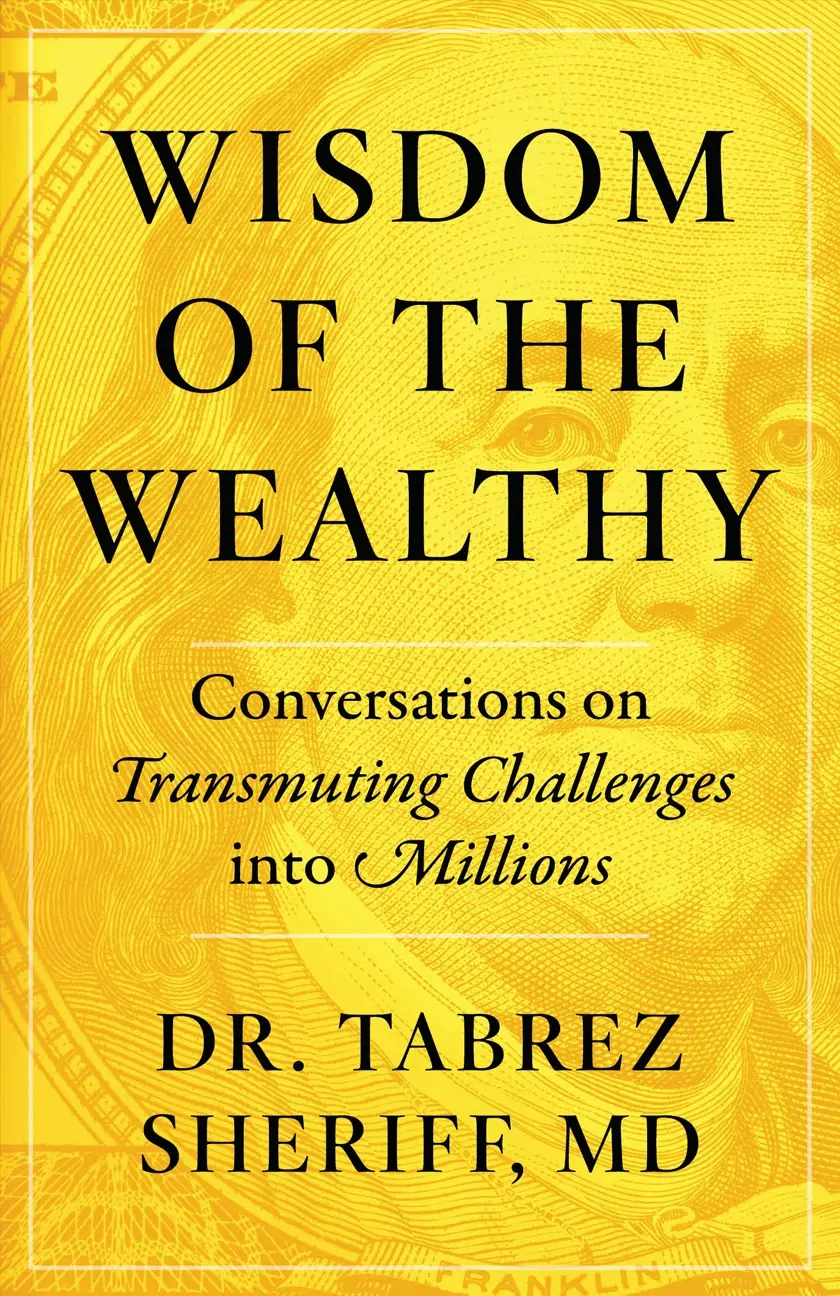
Tabrez Sheriff Ameerjan Nayaz: Wisdom of the Wealthy: Conversations on Transmuting Challenges Into Millions
Read the full transcript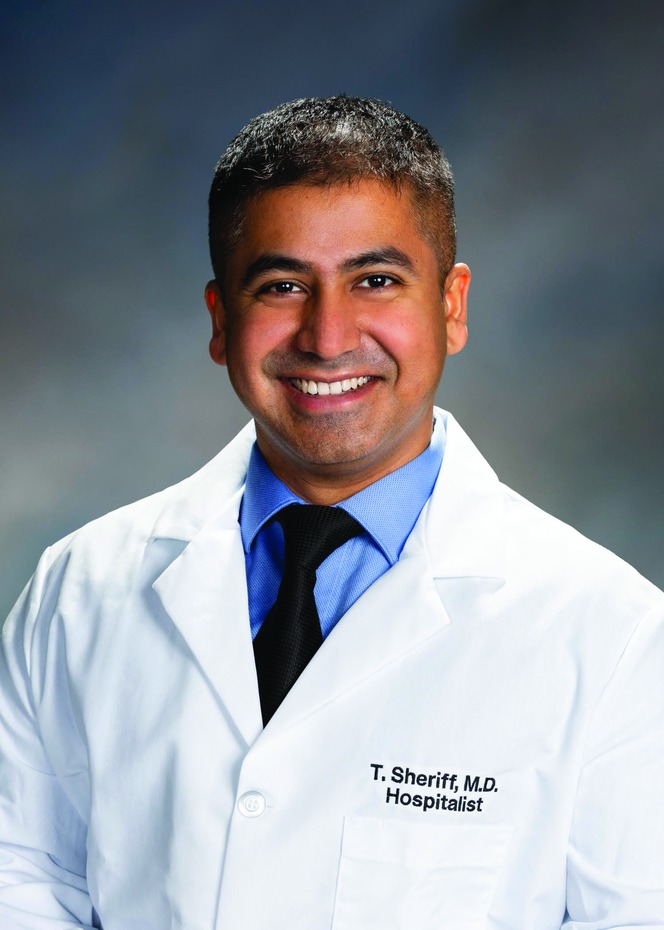
Tabrez Sheriff Ameerjan Nayaz
Born into a poor, struggling family in India, Dr. Tabrez Sheriff, MD, prevailed over impossible challenges to earn his medical degree, arriving in the United States with $177 to his name. His ultimate success was not a matter of luck but a combination of hard work, persistence, and a systematic rise to wealth.
Recognizing the same system in his friends’ stories, Dr. Sheriff decided to share their secrets with others who need them, walking them through their proven wealth-building process of entrepreneurship, real estate, and stock market investments.
“Now, holding those things I once imagined, I wish the same for you.”
—Dr. Tabrez Sheriff, MD
📚 Books by Tabrez Sheriff Ameerjan Nayaz
Transcript
[0:00:26] JB: Here’s a paradox of sorts, to have a lot of money, you’ll need to be motivated by more than just having a lot of money. In his new book, Wisdom of the Wealth: Conversations on transmuting challenges into millions, Dr. Tabrez Sheriff tells the stories of three immigrants who have built considerable wealth in America by harnessing their former hardships into creative energy. On Author Hour today, he argues that the American dream is still very much alive. He discusses the brain chemistry behind turning past trauma into future goals and he explains why it’s so important to develop a purpose in life, one that helps the greater good before embarking on your wealth building journey. Hi Author Hour listeners. I’m here today with Dr. Tabrez Sheriff, author of Wisdom of the Wealthy: Conversations on Transmuting Challenges Into Millions. Tabrez, thank you so much for being with us today.
[0:01:30] TSAN: Thank you, thank you for having me.
[0:01:32] JB: This book has an interesting origin story. Can you tell us a bit about yourself and your collaborators, slash, the other characters in the book?
[0:01:41] TSAN: Yes. I’m a foreign physician. I came here from India, I did my medicine in India and took my residency in the United States and I’m an internist. I practice internal medicine and I work as a hospitalist at several hospitals. It so happened that in my line of work, I met some other physicians and then we just kind of chatted and I found that some of them had similar challenges, challenges that were consistent with my own. I kind of got to know some of them very well and some of them became really good friends and kind of know their personal stories at their own personal level and found some common things among many successful people that I thought would be worthwhile sharing in a book.
[0:02:33] JB: You guys were on a camping trip together, is that right?
[0:02:36] TSAN: That is right.
[0:02:40] JB: And started sharing more of your stories and backgrounds. Tell me why are American immigrant stories well suited as case studies for American wealth stories?
[0:02:53] TSAN: Honestly, I don’t have an answer to that question but it seems like the American dream is still alive in the heart of an immigrant. I have several students that are born in United States and graduated in United States but they can’t see the other side of not having what they have. I hear people complaining about their student loans. When you look at the life of an immigrant, all he sees is good things about the United States. I still believe that the American dream is alive and I think the best place to find it would be in the heart of an immigrant who has left everything back home to come to this country.
[0:03:33] JB: Is this book written specifically for immigrants or are you hoping to reach – tell me about your audience?
[0:03:40] TSAN: My audience is everybody, any person who has a challenge and is looking to convert that challenge into something purposeful.
[0:03:54] JB: Well, let’s get into that, I mean, that’s really the crux of the book. How does one use personal challenges to build wealth or how did that work for you?
[0:04:05] TSAN: It started off like this, when the COVID-19 pandemic hit in the early part of 2020, it was almost unbelievable and nobody could really believe that his was happening and people were dying so fast and we hadn’t really started seeing that many cases yet. I called one of my trusted friends who is an infectious disease physician. I spoke to him over the phone and asked him, “Hey, is this real? Are all these people dying and are they dying so fast?” “What they’re talking about is real?” what he told me kind of got me thinking. He said that he was scared not because he would contract the disease or succumb to the disease but he was scared because he didn’t want to take this disease to his family and he was seeing all these sick patients infected with COVID on a ventilator. Every single day, he kept thinking to himself, “Oh my god, oh my god, I hope, I hope I don’t have this infection and I hope I don’t take it to my wife and children.” This got me thinking interestingly, there’s a quote by Oliver Wendel Holm that came to my mind and it goes something like, many people die with their music still left in them and when I listen to my trusted friend talking about this disease and thinking about life in general I said, “Well, there’s so many things about life that I know, so many challenges that I have faced and many people have faced and in spite of all those challenges that many of us have become successful.” I thought, “You know, I do not want to leave the planet without sharing these thoughts and without sharing these ideas with the world.” That was my inspiration to start off and write this book and share some of the challenging stories that people all over the world face. My perspective is kind of limited in the sense that I have seen different countries. I came from a developing country. I’m here in a developed country, I see the challenges that exist in developing countries and I see the beauty of a developed country. I don’t think many people are fortunate enough to appreciate because they’ve never had, they don’t really have the chance to step out of United States to see what kind of suffering leads in third world countries. I think it was important for me to point this out because many of the immigrant physicians who are successful have had very challenging lives and a lot of challenges that they face. There was a unique, common blueprint that existed among all of them. There was a particular way, a unique way that each one of them handled their own challenges to kind of move ahead in life and I was trying to get to the bottom of this. I said, “What is it that make people successful in spite of all these challenges in spite of not having money, not having food, not having clothes, none of it and in spite of absolute misery.” I mean, in spite of absolute – in the face of misery, some people were able to flourish while some people looked at the misery and said, “You know what? This is it, my life is done.” What was it that make people move forward in spite of all such misery? When carried down to the bottom of it, I realized that somehow, everyone who faced the devastating challenge was able to change the challenge, mold the challenge, somehow change that challenge into something productive. It was interesting to me to figure out how exactly did that person change that challenge into something productive. I kept thinking about it until I started connecting physiology and unique nature of our brains. A common example is, if a person lost something very profound or was hurt or had something that just devasted that person emotionally, then that memory takes up a significant part of the brain in the sense that the brain is constantly revisiting that memory and that memory has a strong connection of neurons. That’s a neural circuit that exists in the brains of human beings, that a person is able to revisit and relive that memory. It’s painful, when you ask people who have faced challenges in life, they still feel that pain because their mind is able to access that memory and memory circuit and that brings tears to your eyes. Somehow, everyone who made it past this challenge and was able to change this challenge into something purposeful was able to tap this energy inside that neural circuit and somehow channel it into the life’s purpose and most of their stories had a unique way of penetrating this neural circuit in the sense that they would create thoughts and they would focus on that talk when they were facing excruciating emotional pain from the memory of that loss and somehow connected that creative thought to that strong memory. Every time they have this memory of a past that came out and troubled them, that same circuit of neurons was also connected to this new part and have able to drive all that emotional energy into that new thought. That new thought was something that was purposeful, something that they wanted to do, something that they wanted to change and somehow channel this energy from absolute grief and taking grief as an emotional energy and channeling all that energy of grief into something productive. This can be explained scientifically. This phenomenon, I don’t actually have a name for it but I found that repeatedly, in stories of every single person who was successful, who has had a hard life, who has had, who have seen devastation, who has seen a lot of misery, seen a lot of pain. I found that this pattern of consistent exploitation of this energy of grief and was channeled into something productive. I’ve done my best to actually – I don’t have the exact word for it but you know, distil this concept in the easiest manner possible so that any person, any common person who is really good, who does not understand medicine, does not understand anatomy or physiology should be able to understand it and use it and turn their own challenges into something useful, something productive and persist so that the world can be a better place because of all of us.
[0:11:03] JB: Thank you for sharing all of that. We can find a silver lining in the challenges we face and we can do our best to transmute them as you say. There is a step before that happens, the book is full of lots of specific wealth advice the second part of the book, for example, investing in the stock market, real estate, money management but before that, there’s a step that you describe as being important, having a “why” finding your “why”. Can you tell us what you mean by that and why it’s so important?
[0:11:47] TSAN: Having a purpose in life, having a {inaudible 11.49} life is probably the most important thing that a human life can have. It is so important that everything else, the second part of the book about wealth creation is absolutely meaningless if the first part of the book, if somebody did not find the first part of the book useful. You know, the second part of the book is very easy. Creation of wealth is very easy but finding your why is the most difficult, it’s the most tricky part of life. Without a life’s purpose, there’s really no meaning to immense mortal wealth and that’s why the first chapter is so important that it turns that person who would have died with music left in them into something that the world will benefit from. Let me give you an example. I’m also an associate professor of medicine, so I talk to a lot of students and you know, some of my residents and things like that. I ask them a question, I say, “You know, what’s your biggest dream?” most of them come back and say, “Oh I want to buy this and this car and I want to live in such and such a mansion.” I said, “What else?” when I ask this question, “What else?” they stop, they think. They think that having a nice house, having a nice car and having a lot of money is life. They think that this is it. My biggest fear is somebody who is able to dedicate 20 years of their life to study, put in so much hard work to save somebody’s life and somebody who is so capable are more concerned if that person draws a target and hits that target, I’m more concerned. I want that person to aim so high that when that person comes and says, “You know what? I want to cure world hunger, or if that person comes out and say, “You know what? I want to eradicate child mortality.” “You know what? I want to make sure that the world is a peaceful place.” I want somebody to think so big that a common man listening to them would say, “You know, maybe this guy is crazy” and when somebody is able to aim for the stars, you know that person may not get to the stars but I’m pretty confident that that person will at least land in the clouds. I don’t want that person to climb a small hill, reach its peak and be happy and satisfied there. I want that person to give all the music that that person has in his heart so that the world can be a better place. The more people I can inspire to find their true purpose in life, something great or something beyond themselves, the better the world is going to be.
[0:14:39] JB: How do you advise readers to go about finding their why?
[0:14:47] TSAN: There are two ways this can be done. Number one, the way I find my why is my father. He took me to several hospitals and he showed me how people felt sick and how treatment was provided to people and I kept watching doctors treat patients and that is how I got inspired and that’s how I found my life’s purpose and I wanted to save lives, that’s it, period. I wanted to save lives, the more lives I could save, the better. There’s another way to actually find your why and this process requires a little bit of imagination and requires a little bit of reasoning. Not everyone is lucky to know that this is what they want to do when they grow up or this is who they want to be. Many grew up and many are into the young age and some of them actually hate what they do and some of them are still looking to find their life’s purpose. What I do is I ask them to have an imaginary conversation with themselves. I ask them, “What do you want? Tell me one thing that you want?” and usually they say, “Oh, you know I wish I did not have student loans” and I said, “Done, your student loans are paid. Tell me one more thing that you want?” and they say, “Oh wow, I wish I had a million-dollar mansion” and I say, “Done” I say, “Tell me one more thing you want” and they say, “Oh, I wish I was a millionaire” and then I said, “Done” and I say, “Tell me one more thing that you want” and they know where it’s going. Asking this question until they reach a point where they’re like, they’ve got everything they wanted. You know, a million dollars, a million dollars, a million-dollar company, a million-dollar mansion, whatever they want and if you take the mind to that level, they will usually come to one spot where their mind would just stop thinking and I don’t stop. I say, “Tell me about one more thing that you want?” so when they’re satisfied with everything that they want, I ask them, “Okay, is there anything that you want to do to make this world a better place?” Now, you don’t have any limit on the resources, you don’t need money, you don’t need a job, you don’t need anything and you have all the money in the world, is there something that you want to do to make this world a better place?” and usually, it’s at that point that their mind really starts thinking, you know, what is it that they would want to do for this world, for the people of this world, for this planet that truly give them joy, that would truly make them happy. That one thing, you know it’s different for each person but we as humans, we are so distracted with everything around us that we think that having such and such a thing that our neighbor has would make us happy or having such and such a thing that our friend has would make us happy but we’ve never really sat down to think what truly makes us happy. What is that that truly would be joined itself, doing that would be satisfying in itself. You know, take the money away, take the house away, take all of these belongings away and just put that person, ask that person, “What is that one thing that you would do to make this world a better place?” and usually, that one thing that people say is something beyond themselves. They would say, “I want to make this planet greener and I want to plant more trees” or they would say, “I wish I had all the money in the world to build hospitals all over the world where treatment would be provided for free to all the people who could not afford medical treatment.” That person will say, “Oh, I wish I could fund enough research that I could just cure cancer forever.” Things like this that come out of common people, of normal people who today have nothing but this is ultimately what they want to do. What I try to do is when somebody says something like, “I want to cure cancer. I want to have enough money to fund all the research possible that I would come up with the cure for cancer” or “I want to have enough money that I would just build hospitals across the world so every person on the planet could get free medical care.” When somebody thinks beyond themselves, a treatment that is so large, so huge, then it’s no longer about them and that is such a huge dream that this dream would probably take this person an entire lifetime to fulfill and moving towards this dream that they have seen for the betterment of all humanity, they will achieve so many things that by the time they are dead, they would have no more music left in them but that vision will be carried on and that’s the whole point. If somebody wants to build hospitals all over the world where free medical treatment would be provided, that somebody is not thinking about, “Oh, how can I make a million dollars so I can buy this mansion” or you know, that’s very small. Thinking about one’s self and thinking about how much money I can make, how much wealth I can create, that is very small and what I’m trying to do is help people think so big, so beyond themselves and thinking about the entire humanity, the entire world as a whole. When somebody has such a huge dream and they know that is what they truly want in life and I show them a path to persists towards it and I can tell them how they can use their challenges to make that a reality and I can show them how to build wealth, you know, they may not fulfill a 100% of that dream. I get it, we are human beings. We have limited lifespans but even if that one person fulfills 10% of this greater vision, okay, he could not build a 100 hospitals all across the world but maybe he built 10 hospitals that provide free healthcare in India. That is still a great achievement and a lot of skilled smart people expand their horizons beyond materialistic pursuits is extremely important. I think that if somebody can spend a significant amount of his life persisting towards a goal, that person has the energy to persist beyond for the greater good for all humanity not just for themselves and this is something that I realized when I spoke to my friend who has an infectious disease who said, “You should create a will.” I said, “Are you serious? Is this disease that serious?” I mean we take care of a lot of diseases and I see a lot of infected patients and that is not what I’m scared of. We see death pretty much every single day very often but it was a great sense of responsibility. It was like, you know, what have I don’t for the betterment of this planet? What have I given to this world that is going to make it a better place? I said, you know I have all these knowledge and all of these challenges that I have faced and many of my friends have faced and many people that I know have faced and I know that is a secret to persisting towards a vertigo, becoming successful. I think this is my gift. This is my gift to the world that I wanted to really tell the world, “You know, it’s not impossible. You can do this” look at many people who have done it. I mean I know people who came here with nothing. I know people who slept in their friend’s rooms, somebody they know and have made a great life for themselves in the United States. The American dream is still alive. I wanted to reiterate that point.
[0:22:43] JB: I can’t think of a better final though than that. Thank you for sharing your knowledge and thank you for speaking with us today, it’s been a pleasure. Again listeners, the book is, Wisdom of the Wealthy: Conversations on transmuting challenges into millions. Tabrez, thank you so much for being with us today.
[0:23:03] TSAN: Thank you, my pleasure.
[0:23:06] JB: Thanks for joining us for this episode of The Author Hour Podcast. You can get Dr. Tabrez Sheriff’s book, Wisdom of the Wealthy: Conversations on Transmuting Challenges into Millions, on Amazon. You can also find a transcript of this episode as well as previous episodes on our website, authorhour.co. Make sure to subscribe to The Author Hour Podcast for more interviews and insights into life-changing books.
Want to Write Your Own Book?
Scribe has helped over 2,000 authors turn their expertise into published books.
Schedule a Free Consult