Michele Graglia: Ultra: Top-Model to Top Ultra-Runner
Read the full transcript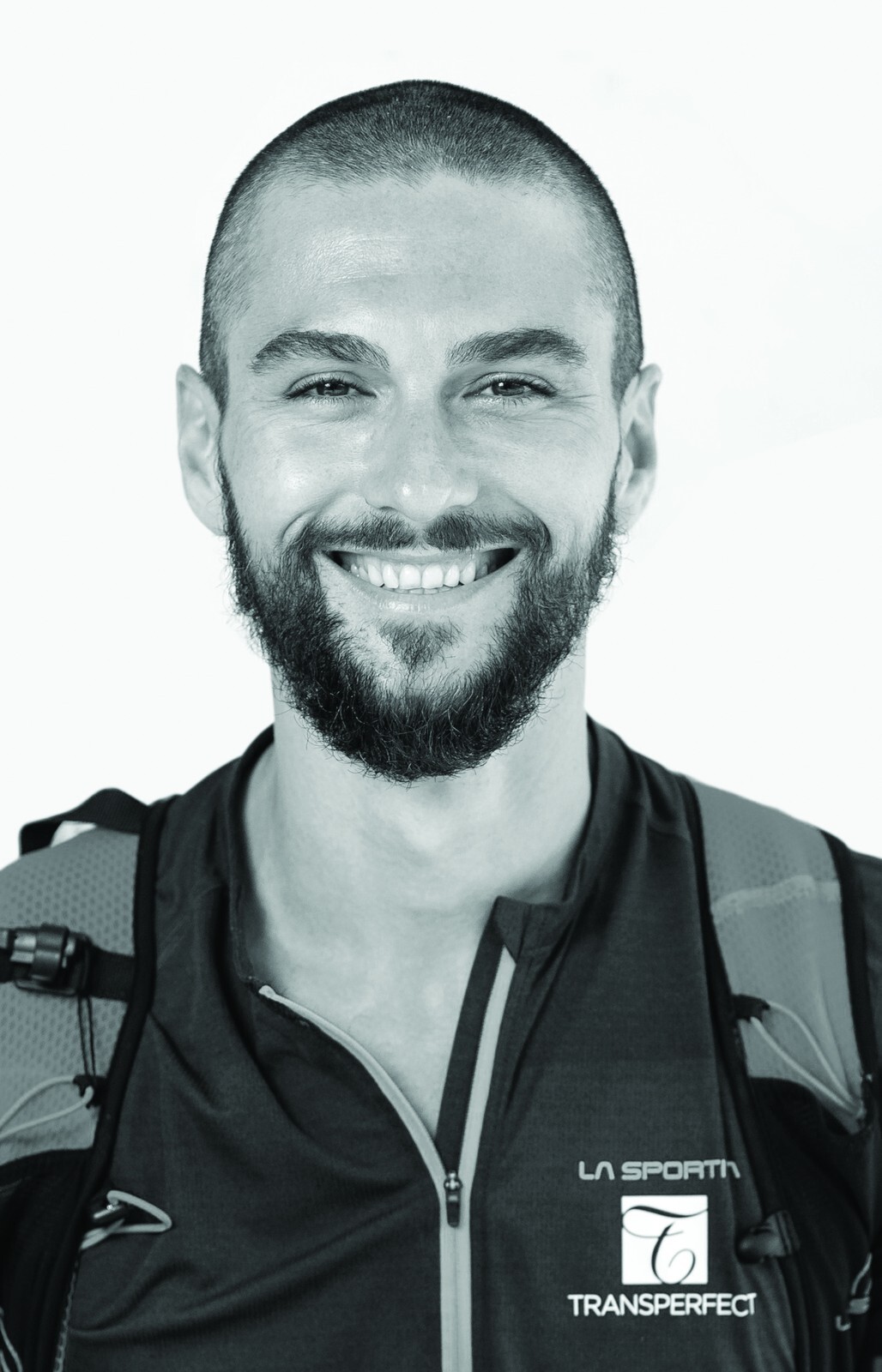
Michele Graglia
Michele Graglia is a former top model and is currently one of the world's top ultra runners. Since 2011, he has competed in over thirty ultramarathons all over the world, often winning and setting course records.
He has set Guinness World Records for his runs across the Atacama and Gobi deserts. His wins in the Yukon Arctic Ultra, with temperatures below -40ºF, and the Badwater 135 in Death Valley, with highs above 130ºF, made him the first person in history to win both the hottest and coldest foot races on Earth.
His motivational speaking has inspired thousands around the world.
[ADD PROMINENTLY IN LAYOUT: WEBSITE AND @mickeygraglia]
📚 Books by Michele Graglia
Transcript
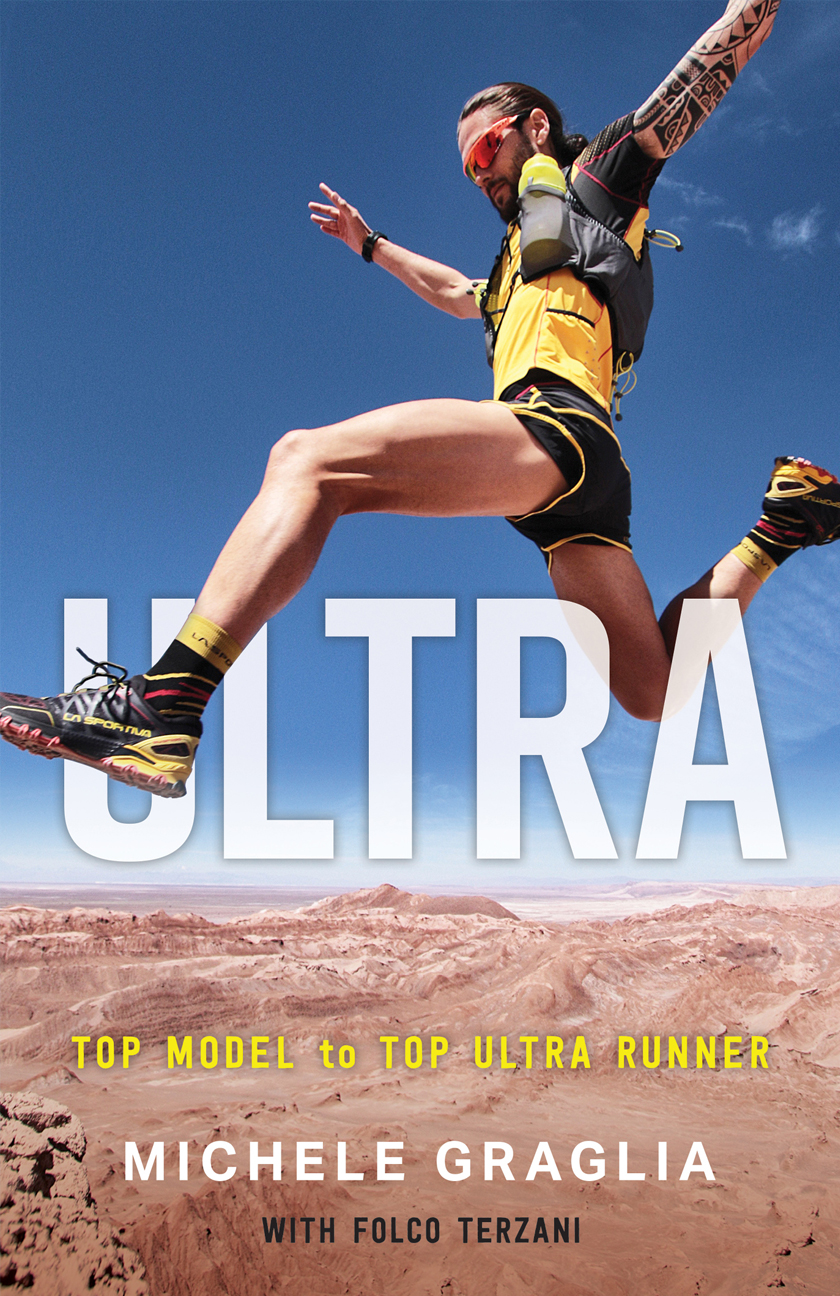
[0:00:32] JB: Michele Graglia hit the jackpot when he was discovered by a modeling agency inside a Johnny Rockets, shortly after moving to Miami from Italy. After a few years, though, it became clear that that jackpot was actually empty. His search for meaning in life eventually led him instead to ultra-marathon running. All of which he details in his new book, Ultra: Top-Model to Top Ultra-Runner. On Author Hour today, Mickey recalls the existential crisis that finally led him to leave modeling, explains why ultra-running is an exercise in understanding the limits of being a human being, or perhaps understanding that there are no limits. He describes what it feels like when you’re at mile 160. Hi, Author Hour listeners. I’m here today with Michele Graglia, author of Ultra: Top-Model to Top Ultra-Runner. Mickey, thank you so much for being with us today.
[0:01:37] Michele Graglia: Well, thank you so much for having me.
[0:01:39] JB: First of all, please tell our readers who might not be familiar, what ultra-running is.
[0:01:46] Michele Graglia: Yes, well, ultra-running comes ultra, comes from the Latin word which means beyond and it literally means any distance beyond a marathon, the classic 26.2 miles that we all know. Ultra-marathons include races that usually started about 30, 31 miles, then can go up to 60, 80, hundred, sometimes even 200 and sometimes even longer so it’s very much a journey into the potential of our, of the human – it’s a journey into the human potential, discovering what we are capable of.
[0:02:22] JB: Can you tell us a bit about your status within the ultra-running community, not to make you brag but you're not small potatoes if I understand correctly.
[0:02:30] Michele Graglia: Well yeah, I’ve been fortunate enough in these past few years to land some good results, among which some off the top ones can be named as Bed Water 135, I came up with the first place in 2018. That’s considered a top foot race on the planet. Just a couple of years probably at one, the Yukon Arctic Ultra, which is another grueling race up in the arctic circle, hundred miles through the frozen tundra where we reach temperatures of 40 below. Two big extremes right there and I came off with a win there too. The most recent one was the Moab 240 where I came off on top as well so throughout the years, I was fortunate enough to be able to get these good results and you know, now we’re here talking.
[0:03:14] JB: Wow, when you say the number 240, does that mean 240 miles?
[0:03:18] Michele Graglia: That’s correct.
[0:03:19] JB: My gosh.
[0:03:20] Michele Graglia: Yeah, that’s long, that’s a long race and I got to tell you, that was a big adventure for me as well because the longest I ran before that was 175 miles, so pushing an extra 65 plus was absolutely challenging but also, you know, an incredible experience because you absolutely throw yourself out there and pretty much the rawest of conditions and discover for yourself what you're capable of.
[0:03:48] JB: I’m sure you’re accustomed to people telling you that’s insane, how are you alive?
[0:03:54] Michele Graglia: I got a lot that I’m crazy, so I’m kind of used to that.
[0:03:58] JB: This is not where your story started, you’re from a small town in Italy and in 2007, you moved to Miami to open up a branch of your family’s business there but instead, something very different happened. Can you tell us about those early years in Florida?
[0:04:15] Michele Graglia: Yeah, absolutely. The very first week I landed in Miami, I was actually still crashing on a friend’s couch, still looking for an apartment and one day, strolling around Ocean Drive, got caught by a thunder storm, dove in the first place across the street and right there, I happen to meet this lady, which happened to be the director of one of the most famous modeling agencies in the world. Her name was Irene Marie and just a few looks here back and forth and all of a sudden she stood up, came to me and she introduced herself, she asked me if I was ever been a model and right out of that, sparked the opportunity of a whole – she offered me a contract right on the spot and basically my life changed that very day. A whole new career started off and this big wave came and 24 years old, find myself in a big city doing something that seems out of the movie and I felt absolutely – it was a big surprise of course but it was filled with excitement and opportunities and you know, that was my life for the following few years.
[0:05:27] JB: It was at first, fun and exciting and you describe it as kind of a rock and roll lifestyle?
[0:05:34] Michele Graglia: Absolutely. I come from a – as you said, from a very small town in Italy and I found myself in a big city working with big photographers, big clients and you know, I was working the family business. I was making this money before but this was a completely different game. On top of that, I was introduced to the social life and the socialites of the Miami scenes and so my life kind of spiral out of control, you’re introduced to – basically, everything is handed out, everything is given once you’re in that position because pretty much everyone wants that, to thrive off of that image. I started really live in a way recklessly like I would say most young people would do. I was just pursuing the dream, that’s what we see in movies and TV, the image of success, of the good life, hanging out with cool people and going to parties and having fancy things and all of that. Then came at the point, I felt like the king of the world. The other side of the coin though, presented itself a couple of years later when I came to the understanding that that lifestyle just wasn’t for me and so that’s when the need for a change happened.
[0:06:50] JB: I was struck by the chapter titled, Rich Kid Crying in the Bathroom. Somewhat of a pivotal moment. Can you tell us about that scene?
[0:07:01] Michele Graglia: Yeah, absolutely. As I mentioned, you know, I was introduced to very influential and successful people from celebrities, a piece of all sorts, owners of different clubs and restaurants and things like that. We started rolling in style and amongst some of these people, I got to make friends with this group of very wealthy – there’s always bigger fish out there, very wealthy people and it struck me how undriven and unmotivated they were in life. They had everything you could ever imagine, several parked outside, you know, the garage, filled with fancy cars and you know, the yacht parked in front of their big mansions facing the bay and you know, once you first enter the scene, you only see the – again, what we think it’s – what we think matters. You say okay, they got all the money, they got all the fancy thing, they got to live a perfect life. In the end, the more I got to know these people, the more I realized that you can have all the material things you want but if you don’t have any purpose and you don’t have anything that fulfills you in life, then you have nothing, you're left with nothing at all. It doesn’t matter how big your bank account is, it doesn’t matter how many things you got, it’s really a matter of what is your purpose in life and that one episode, that one party that you just mentioned in the chapter happened after yet another fancy party that cost hundreds of thousands of dollars for just for a few guests. In the morning, waking up and seeing this guy completely destroyed, completely hopeless in a way, it kind of rang a bell, it kind of changed me in that, like, right on the spot. I came to the understanding again that this wasn’t what I needed to pursue. I needed to find something bigger than myself and something that would give me the desire to wake up in the morning and to work on myself. In a way, I started to line up almost a whole line of thought that very moment and that’s what pretty much changed my life.
[0:09:13] JB: The seed was planted but you weren’t quite ready to walk away from modeling yet. You go off to New York and have another kind of life changing experience. Minus the freeze kind of, not sure why I said that. With the photographer, which was so upsetting, would you mind taking us through that?
[0:09:35] Michele Graglia: Yeah, that could be very much introduced as the – as part of the Me Too Movement. Though I never really brought it out that way but I was going through this – all these episodes pretty much happened around the same period of time so there was already the sense of dissatisfaction, there was already the sense of that understanding that I needed to change my life. This episode, you just mentioned with this photographer, it started off in New York but the shoot that we were – where we started working on actually happened down in Hollywood. Hollywood Beach, which is right in between Fort Lauderdale and Miami Beach. It kind of brought me back again to that environment but what happened there with this photographer was very unfortunate. I grew up all my life, even before I started modeling, he’s one of those huge iconic artists that whether you’re in the fashion industry or not, you know. It’s a big name, it’s almost like seeing Stephen Spielberg for movies, you know? That caliber. For me, it was a huge career opportunity. I got flown down there to shoot for Vogue Germany, which could have been a great trampoline on top of everything else that was doing that season. I went in, extremely excited, extremely thankful for the opportunity and not just work with the guy but to actually meet him to get to know this elusive character that everyone is looking for, everybody talked about and so we start shooting, everything is fine until it’s not. He basically started getting kind of excited and in the moment and he came up to me in a very unprofessional way and he tried to come very close to me and he tried to put his lips on mine and that, boy, you know, something inside snapped. I just couldn’t take it, there’s a lot of people like that being in that situation and I don’t – I cannot argue or discuss whatever decision other people made but that struck me as absolutely wrong because it doesn’t matter what position or power you hold, I think that taking advantage of other people because you know you can is absolutely wrong. In that very moment, I just understood that it wasn’t, this career wasn’t a matter of being professional, being on top of my game, working hard, it was really all about playing the game and doing what you needed to do in that moment. Something again inside of me snapped again, I picked up my stuff, I walked away. I wish I could say this thing ended there but the very following day, flying back into New York, my booker called me pretty upset and he asked me to go straight to the office. As I walk in, he breaks into this big talk, telling me that what happened here, what happened there, about this, about that, and I was like, “Well, I went there to work, I didn’t go up there to compromise myself” and so from that very moment on, basically, they put my whole career on hold just because I didn’t play the game the way they wanted. That brought an even more bitter aftertaste after the actual fact. Everything was just spiraling down at the moment, personal crisis, career crisis, everything was just coming to the breaking point, which I’m sure we’re going to be talking about shortly.
[0:12:57] JB: After that, you write about sitting on the windowsill of your 15th floor apartment building.
[0:13:02] Michele Graglia: That’s about what I was talking about right now.
[0:13:04] JB: Yeah, did you think about ending it all?
[0:13:08] Michele Graglia: It always gives me goosebumps talking about this because I think in a way or another, talking about ending your own life or contemplating suicide or just in general, thinking about your whole existence or questioning your whole existence is a very deep and difficult conversation but I think that in the end, I’m very happy and proud in a way that I opened up the way I did sharing the story because I think a lot of people come to think about it and not necessarily with the desire to do it but I think we all come to the question, it doesn’t what point in life. I think pretty much all of us come to their question of saying, “Who am I? What am I doing in my life? Is this worth it?” and so that happened to me. That question came sitting on the 15th floor of the window a skyscraper in New York on a brisky spring night-morning I would say because it was already close to dawn and you know, I just sat there for a very, very long time. As I said, I get goose bumps because it is still a very vivid memory. Just pausing time and not thinking about what do you need to do, what you’ve done, what needs to be done but just sitting there and listening to yourself and kind of addressing those existential issues and problems that I think humans have had since the beginning of time are a very difficult conversation to have within yourself. I think it was necessary for me at that point to confront myself, entertain that conversation and eventually understand that’s not the answer because once you end it, there is no going back. You just quit and that is not a resolution, you’ve just given up and I wasn’t ready to give up. I was 27 years old, I was having a massive, I would say, mid-life crisis even though it was pretty early but you know, coming to my senses in that moment, I understood that. I just came to understand that what I was doing wasn’t for me. That lifestyle, the whole career, the person I was with just wasn’t working and all I needed to do was to make a switch. I really had to dig in the depth of my not just on my mind but on my soul to figure out how to climb out of that pit and my family came to mind first of all and that gave me the strength not to give up. That gave me the strength to pick myself up to kind of change my perspective. To change my view of the world and that brought me to the understanding that I’m very young. I changed my life before and I can do it again, so that brought back hope.
[0:15:48] JB: Thank you for sharing that. You realize you have to make a change but you still don’t know what it’s going to be and then you receive a sign of sorts at a Christmas party in 2010. Tell us about that.
[0:16:01] Michele Graglia: I was out there in Union Square on the north end. I was waiting for my back then girlfriend, now wife Lauren. Once again, the weather influenced my path again. You know, often times I think about Sliding Doors, you know the movie like tiny decisions shape up a completely new path and so I was out there waiting for Lauren and this big blizzard started rolling in and I dove into the Barnes & Noble’s right there at the north end of the square and dove into the sports section. I found this book cover caught my eyes. It drew me right in. It was this strong runner popping out of the cover and bold letters saying “Ultra Marathon Man” and it kind of piqued my interest because we all know what marathons are but ultra, especially I’m talking about 10, 11 years ago almost, it was a complete concept for me and so I had just picked it up, opened up and read a few pages and it was so shockingly relatable that I bought it on the spot, brought it home, read it, reread it, reread it another time in just a matter of 48 hours. I was completely fascinated and hooked by this whole new concept. Ultra-running, what we said at the beginning, the physical term of the word is yes beyond the marathon distance but ultra-running has a metaphysical significance, which is truly going beyond the running, going beyond the physical and that transform a physical act almost in an introspective and spiritual journey. That was part of my interest. That’s what really tickled my appetite for pretty much what I was creating for. It was almost like a lightning bulb that went up. It’s just okay, this is – he is really answering to a lot of the questions I’ve had at another time and so, despite the fact that we came from completely different life paths, you know, Dean Karnazes is the author. He was a successful business man, worked for some of the Fortune 500 companies, he was about 30 years old when he came to this understanding that probably not material success and whatever sense of securities that we can, you know that we chase and careers like in regular careers, let’s say that were not the answer to his happiness or to find his purpose in life. He really spoke my language in a moment of self-doubt and a moment where I need to find something else. I told myself, if you work for him, you know he was able to change his life completely. He left that corporate job and he was able to transform his life through hard work and dedication, he became a professional ultra-marathoner and he’s been living the life of his dreams, you know living in adventures, exciting fulfilling life since then and that’s what inspired me. That’s what gave me the confidence that if he did it, then I could do it too. I started questioning my modeling career, the lifestyle that I was doing and I was willing to give it a try. I bought my first pair of shoes and started running laps in Central Park. Here, we’re talking about the beginning of 2011 and ten years later, you know, I’m very, very, very fortunate, privileged and honored to say that I did it. I was able to made that change and now I do live an intentional life that fills me with excitement and purpose.
[0:19:35] JB: You write that when you’re running, you’re not looking to be something. You realize that you already are.
[0:19:42] Michele Graglia: That’s a spiritual part of it. I think ultra-running truly allows you to go beyond the physical, this mental, the brain because we often talk about I think in everything we do in life, we talk about it’s a mind game. It’s the mindset but I think there is something much greater behind the mind, which is the true self, the inner self, the heart, the spirit, the soul, whatever you want to call it. When we say ultra-running is a mental game, it’s really about transcending the body. Transcending the mind to allow your inner self to truly come out to really speak. There is a very fitting saying that I really love and you know, the mind is a great servant but a terrible master and here comes into play for the fact that if we allow the mind to make decisions it will always take the easy way out but if you are able to control the mind to use it as a tool, not to guide it but use it as a tool, you can accomplish the impossible because once you’re driven by your inner self by heart, by your soul, by your spirit, you realize that you are infinite. You realize that you are capable of a lot more than what you think you can so you begin transcending all your boundaries. You begin transcending all your perceived limitation and you don’t only can achieve the impossible but you can allow yourself to live fully free.
[0:21:08] JB: What does it feel like when you’re at mile say 160?
[0:21:15] Michele Graglia: Well, I would like to tell you it gets easy after a while but it doesn’t. It gets exponentially harder. The one understanding of ultra-running is it’s a very clear metaphor of life. You cannot expect to be a smooth ride all the time and you cannot even, you know, you don’t even need to dwell on the fact that the tough times are going to go on forever. What happens in specific in these type of long events is understanding that you go through so many highs and lows almost like a rollercoaster. It is a continuous flow of highs where you feel like a hero that you can break through walls and then debilitating low is that you feel like everything is breaking down and you don’t have like an ounce of energy left in the body. Throughout those moments, those are life lessons that I think stay with people very much beyond the sport, beyond the discipline and they can be applied to pretty much any endeavor in life is understanding that you can regain your strength. You can get back on your feet. You can and you will find that spark again that will allow you to rise out of that crisis, out of that pit and will allow you to live incredible highs once again and when you’re on top, you appreciate them even more. I think there is also a great sense of understanding and gratitude towards the fact that whatever you’re doing, everything is temporary. That brings you back to your human self and it is a wonderful experience that takes you out of your comfort zone because that’s only when you find growth and expand your experience in life but it also allows you to really tune in into this understanding that once you break into this highs and lows pattern, once you understand this rollercoaster ride, then you can pretty much go on forever. It’s really about buckling up into tough times and be grateful and enjoying the good times.
[0:23:16] JB: Are you telling us that you’re going to run a 350 mile race, Mickey?
[0:23:20] Michele Graglia: You know it, it’s next. You know, I got to tell you, in everything that I do it’s pretty much a journey into pushing the envelope and finding out what I am truly capable of. I grew up in Italy, I was very much influenced by the Greek mythology that by the Greek literature and you know, I was raised with that idea of the poor Army guy, Pheidippides, running for marathon to Athens giving the good news and dying after this 25, 26 miles. To me, being raised in these environment where we are confined with the limitation that this is what’s possible, what’s humanly possible to achieve beyond that you would just die, then you know discovering that I can run four, eight, ten marathons in a row without stopping, with no sleep it just completely obliterated all the limitations with which I was raised. To me, this is not just a journey into a sport but it’s a journey into the understanding of human potential. This is what truly drives me. I am not interested in running a marathon fast. I’m not interested in running 100-mile fast. I’m interested in finding out where does the limit lie and as of right now, last fall, finishing the 240 miles in Moab through rugged desert terrain, high mountains, deep canyons, sand, rocks and all of that, I was able to run 60 hours straight without stopping, without sleeping. When I finished, I could have kept going. Now, I’m tickled by, “Okay, how far more could I go?” Now, that’s what drives me. That’s what tickles my curiosity and that’s what allows me to pretty much get up every morning with drive, with desire to push my limits a little further.
[0:25:21] JB: Well, thank you so much for sharing all of that with us. It’s been a pleasure speaking with you and it’s been a pleasure reading your book. Again listeners, the book is, Ultra: Top-Model to Top Ultra-Runner. Mickey, in addition to reading the book, where can people go to learn more about you and your work?
[0:25:37] Michele Graglia: Well, my website just launched. You can find it at michelegraglia.com, so my name and last name .com or I’m pretty active on Instagram as a platform on social media and my handle is @mickeygraglia.
[0:25:58] JB: Great, thank you so much.
[0:26:00] Michele Graglia: It’s been a great pleasure. Thank you so much.
[0:26:04] JB: Thanks for joining us for this episode of The Author Hour Podcast. You can get Michele Graglia’s book, Ultra: Top-Model to Top Ultra-Runner, on Amazon. You can also find a transcript of this episode as well as previous episodes on our website, authorhour.co. Make sure to subscribe to The Author Hour Podcast for more interviews and insights into life-changing books.
Want to Write Your Own Book?
Scribe has helped over 2,000 authors turn their expertise into published books.
Schedule a Free Consult