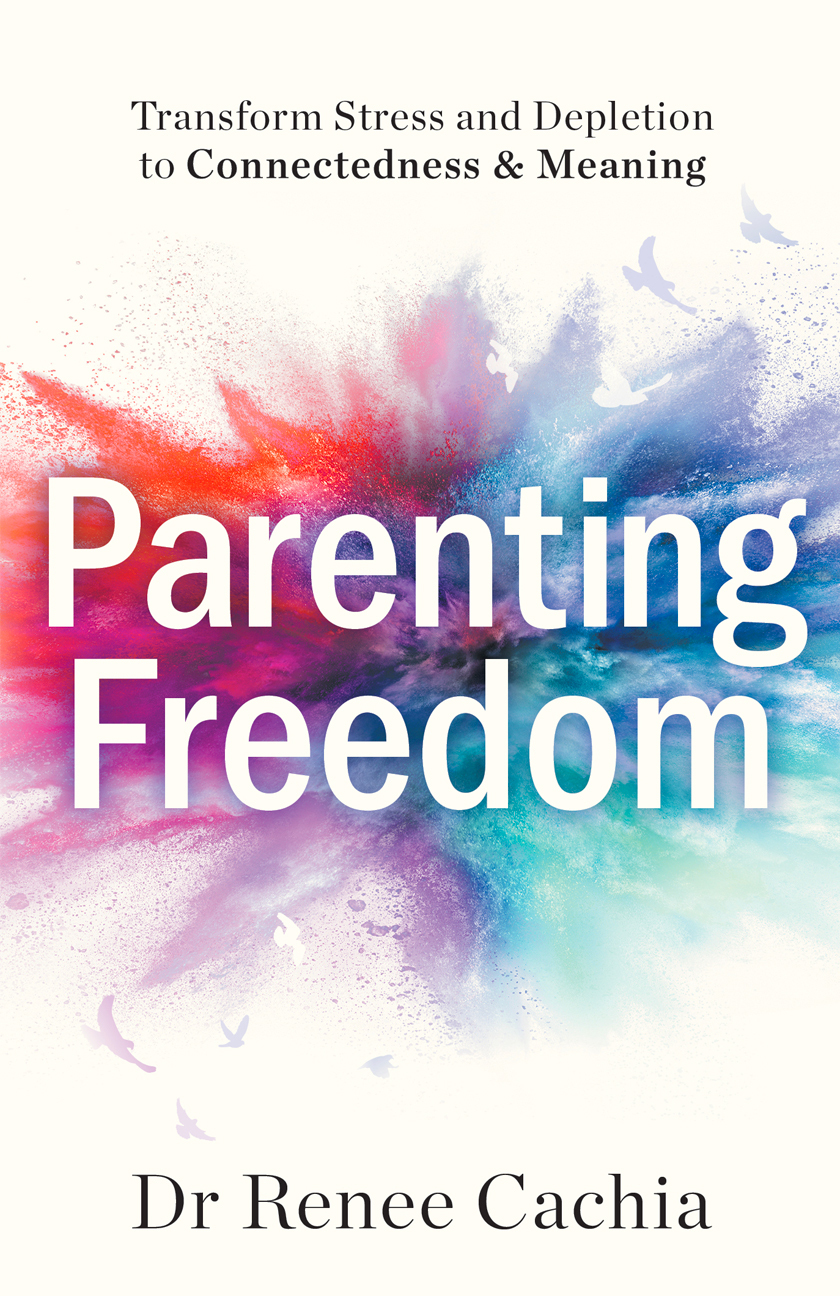
Renee Cachia: Parenting Freedom: Transform stress and Depletion to Connectedness and Meaning
Read the full transcript
Renee Cachia
Dr Renee Cachia is an experienced Australian psychologist with a passion for empowering children, adolescents, and their parents to reach their full potential. As a published academic author with a Ph.D. in psychology and her own private practice, she is best known for her ability to uniquely integrate her research and clinical skills to help change and enrich lives with compassion.
Parenting Freedom is the book she has long dreamed of writing. Learn more at
📚 Books by Renee Cachia
Transcript
[0:00:22] JB: Parenting is harder than it looks and it doesn’t look easy. We go into it thinking we’ll never scream or snap and definitely be better than our own parents were and we find ourselves doing the exact things we promise to avoid. Worse, it becomes a pattern from which we can’t escape. In her new book, Parenting Freedom: Transform Stress and Depletion to Connectedness and Meaning, Dr Renee Cachia reveals where these patterns come from and how to break free. On Author Hour today, she discusses the factors that perpetuate stress cycles, tells us how we can be more emotionally attuned to our children in the moment and explains why neuroscience suggests that self-compassion might be the key to unlocking the panic room door. Hi Author Hour listeners. I’m here today with Dr Renee Cachia, author of Parenting Freedom: Transform stress and Depletion to Connectedness and Meaning. Renee, thank you so much for being with us today.
[0:01:27] Renee Cachia: Thank you for having me.
[0:01:30] JB: First, to start out, please tell our listeners what does the phrase “Parenting freedom” mean? Because I’m assuming that perhaps to the disappointment of some, it does not mean freedom from parenting.
[0:01:44] Renee Cachia: Yeah, exactly. That’s a really good question. It’s really interesting because when we think about parenting or when we describe the parenting experience, I think many parents probably feel far from free. It’s quite ironic that the book is called Parenting Freedom. I think that many people are probably feeling intrigued about what that concept actually means. Part of the concept of Parenting Freedom in the context of my work is, freedom from the stress and the patterns that make parenting feel very difficult and as if we’re trapped in these cyclical patterns that kind of emerge over time and it’s more a sense of internal freedom that this book kind of talks about and covers.
[0:02:34] JB: Okay, we get stuck in patterns, what does that mean? What are these cyclical patterns?
[0:02:41] Renee Cachia: Yeah, I break down stress cycles into sort of four main areas in the book. I start with stress cycles, which is one of the first patterns that looks at or kind of explores how our stress responses and our fight or flight response that builds up in our nervous system, starts to impact the way that we’re parenting our children. When we react from stressor to stressor, parents often have the best intentions when they’re interacting with their children but they might not be able to translate this into sort of a solid positive behavior change and so they’re often showing up as a parent that they perhaps don’t want to be, they say things like, “I’m acting like my mother or I’m doing things that I didn’t think I would ever do.” Whether it be, “I don’t want to be one of those parents who yells at my kids” but then in the reality of everyday life and every day difficulties when this particular situation arises, I find myself reacting and highly triggered by my child. That’s an example of, when we are in this fight or flight stress response, it’s very difficult for us to have the freedom to choose how to respond to our children because our habitual way of functioning and operating kind of takes over our intentions a little bit. That’s just the introduction and one of the first patterns that emerges in our parenting.
[0:04:18] JB: Okay.
[0:04:17] Renee Cachia: In terms of another pattern. An example is when parents fall into autopilot. We hear about this when we hear people talking about mindless parenting or reactiveness and part of this comes from these patterns of stress and anxiety that build up over time when we’re not really present but it also can be associated with neural changes in our brain. There’s a default node network in the brain that actually makes us more susceptible to being stuck in reactive patterns where we might have a big reaction or have patterns of emotional disconnection with our child that makes it very difficult for us to change which sort of takes away that freedom to choose again.
[0:05:08] JB: In addition to being stuck in patterns that cause us to behave a certain way, we then get stuck in an additional pattern because we behave that way where we continue to behave that way.
[0:05:19] Renee Cachia: That’s right. Yeah, it’s very difficult to change in these situations and one of the things that I sort of dive into the book is this idea of our parenting schemas that we develop throughout our own childhood from our own interaction with our parents, they start to shape our reactions to our child. For example, there’s quite a lot of different schemas that we develop in life, in psychology. I’ll give some examples that are relevant to parenting. We might decide, “Okay, I’m not a parent who is ever going to smack” or “I’m not ever going to scream or shame my child because that’s against values of how I want to show up.” Then, when our child does something that we find incredibly triggering and it’s really difficult for us to self-regulate and to stay calm and to stay aligned with our intentions, then one of our parenting schemers can be activated when we’re highly triggered. An example of one of them might be the disciplinary parent mode or the punitive parent mode, which makes us then have a huge reaction, scream and shame them, send them to their room for a long period of time and reacting a way that we didn’t really want to react and perhaps feel guilty for later. These automatic patterns in our brain actually make it really difficult for us to have conscious control. When people say, “Just be more present with your children” one of the reasons why I wanted to write this book was to describe that it’s not always that simple and parents know that because they will tell you that. It’s also because their brain is shaped and framed and reinforced to react in these ways that their past and their upbringing and all of these different patterns and default modes have actually made them susceptible to react in this ways.
[0:07:25] JB: Wow, we’re up against so much.
[0:07:29] Renee Cachia: Yes.
[0:07:32] JB: You write that even just becoming aware of these patterns, much less breaking free of them, which this book, which I’m also having to talk to you about but even just becoming aware of them can start to help us, is that right?
[0:07:45] Renee Cachia: Yeah, absolutely. One of the very first things that we can do when we react or we sort of behave in a way that maybe we’re not proud of or we don’t feel good about, the very first thing that we can do is just pause and notice what’s happened. Let’s take a moment to notice what you’re thinking, what you're feeling, how your body’s feeling, your heart’s racing, what’s happening in your body and just taking a moment to sort of reflect on what your trigger was because when we want to make these changes, these process of our default happens so quickly that we often, five, 10 minutes later, we might be like, “What just happened?” In the moment, if we can pause and just notice what’s happening in our body and in our brain and or in our mind and our emotions, then we can kind of bring a sense of curiosity to what triggered us without going down that self-critical shame spiral straight away.
[0:08:52] JB: This self-critical shame spiral is another pattern that we get stuck in.
[0:08:58] Renee Cachia: Yeah, absolutely. So often, more often than not, I think it comes and is triggered by our reactions because often, parents might come and see me in clinical practice and you know and say really critical things about themselves and they’re feeling a lot of shame and a lot of guilt about the way that they perhaps are managing their children because it is so difficult and children have so many needs these days and life is hard and busy. I sort of always remind them that, “Well, if they were these horrible person that they’re making out, that they are, they wouldn’t feel all these guilt, they wouldn’t feel all this shame.” The reason why they feel these feelings is because they care, they have values that maybe they’re not always feeling connected to, they have a lot of good intentions. They just need a little bit of support in managing the day-to-day reaction so that they can connect with their values and come back to them and really show up as that parent that they want to be. When we do have shame spirals and we get stuck in those feelings of guilt, part of this sort of practice of learning to change and bring awareness is to bring a sense of kindness to ourselves in those moments and just acknowledging that these feelings are intense and that we are feeling a sense of suffering and that also many other parents feel the very same way in their day-to-day lives and after their interactions with their children, especially when they are really conscientious and they really want to do a good job.
[0:10:39] JB: Renee I’m so tempted right now to just turn this into a personal session with you, where you help me with me and my kid. This book draws on a lot of research, a lot of neuroscience and neuroplasticity work that’s been done. Why is kindness first of all and second of all, curiosity, something you mentioned earlier, why does having that approach to ourselves help us break free from these cycles?
[0:11:09] Renee Cachia: Yeah, absolutely. It’s such a good question. I think there are sort of layers to this response. Firstly, there’s a lot of really interesting research in the space of self-compassion. When we first get introduced to self-compassion or we first start to practice it, it’s a little bit strange because our default and our autopilot is to be quite self-critical and to use our self-talk in a way that sort of disciplines us and gets us to you know, make those changes and we’re sort of all sold on the importance of positive thinking and discipline and things like that. There’s a huge body of research that shows that people who are higher in self-compassion or people who learn to practice self-compassion are actually more successful long-term in many different areas of life, whether that be their workplace, test performance, their academics and even in pair or team and part of that is because it helps us to build resilience in our brain but true resilience, not sort of the never ending self-improvement that we’re kind of sold. It actually really does change our physiology in our body from our nervous system and our brain as well. Do you want me to talk more about that?
[0:12:35] JB: I mean sure, it’s fascinating.
[0:12:37] Renee Cachia: Yes, so in a situation, so for example, let’s say we’re in the midst of a big emotional storm and reaction with our child where we’re asking them to do something, they’re refusing with me to get dinner on the table. We have another child that needs us and that chaos is sort of going on in the home. In that moment when we notice that our stress response is increasing our heart rate, our blood pressure, we might get that tightening in the chest and those self-critical thoughts of, “Why is this happening to me? Why don’t you ever listen?” We kind of go down those thinking patterns. We can just pause as a circuit breaker for a moment and just bring a sense of kindness of ourselves like we would if we were sort of comforting a good friend so we could say something to ourselves like is this really hard? There’s lots of chaos? Just take a moment to breath and that’s sort of the first step and then the second step is if we have time in that moment, we can just acknowledge, “Wow, so many other mothers feel exactly how I’m feeling right now.” We’re all really in this together and then thirdly, we can just simply send our wishes. “I wish them all well. I wish myself well” and they’re kind of the three basic steps of a self-compassion practice in the midst of stressful moment and if we were measuring your heart rate and your blood pressure and your stress response and all the cortisol and adrenalin in your body, the studies actually show that all of those physiological responses would reduce when we do practice self-compassion. It very quickly brings us back into our window of tolerance where we can helpfully adopt to stressors.
[0:14:32] JB: Does it take us out of the reactive state and then when we’re not in the reactive state, we are less trapped by the cycles?
[0:14:39] Renee Cachia: Yeah, exactly. When we can get out of that reactive state, we have this ability to choose how we’re going to respond. Instead of falling into that pattern of going into a schema mode and punishing our child and sending them off or reacting or maybe swearing or something that we don’t want to do, we have a moment of empowerment where we actually have that freedom to respond. We can decide what do I want to do here and that decision might be, I’m just going to go into the pantry and take ten deep breaths. It might be a behavior management tool that we’re going to use with a child but it might not be as well. It is not always about the child. It sort of brings it back to empower us and say, “My state and my body is the most important thing that needs to be in balance” because the nervous system of the whole family relies on the regulation of my nervous system first.
[0:15:38] JB: What is emotional attunement? This is a phrase I found in the book, you say that it all comes down to our responsiveness to the child who is in front of us.
[0:15:49] Renee Cachia: Absolutely. When we look at the psychological research particularly in child psychology, the most important aspect or one of the very most important aspects of child psychology and parenting is this concept of emotional attunement, which means that we are able to really pick-up on our child’s emotional state. We’re able to tune into that, how they’re feeling, the mental state, what they might be thinking without sort of trying to read their mind but we are picking up on their facial expressions and their subtleties in their body language. We are sort of seeing what’s going on beyond the surface and this is something that many people really acknowledge when the child is really young, so we know that when we have a baby or an infant, it’s very, very important that we learn to pick up on their cues and when we become a parent, our brain actually changes to help us to pick up on those cues because our babies survival relies on it and their attachment bond also relies on it. I think what happens is as time goes on, we get busier and life gets so full. We have multiple children, we’re working, we have a lot of demands but children actually still really need this. They still really need us to be attuned to how they’re feeling and most of the time, they’re not going to tell us and these attunement changes as they get older. Even when they become adolescents, they might seem like they don’t want to connect with us or they’re rejecting us or they’re always moody or grumpy. It is really difficult for us to have those moments of picking up on their emotions and tuning in and acknowledging like, you seem worried or you feel – it seems like you’re a bit sad today, but when we do pick up on it and we learn how to kind of break through the façade, they really shine and you just have these beautiful moments of connection that sort of bring that real deepness back to that parent-child relationship that sometimes it can feel really hard to maintain overtime.
[0:18:08] JB: We can’t be emotionally attuned if we’re in a reactive place.
[0:18:14] Renee Cachia: Yeah, that’s right. I talk a lot in the book about empathy and everyone listening knows that empathy is important in life but also when parenting children but when we have big emotional reactions and we may be emotionally enmeshed, which means I catch emotions and you catch mine. There’s no sort of boundary or separation between your experience in this moment and my experience, then we can really easily get swept up and inundated by our emotions in any interaction. That means that we don’t have the internal resources or the psychological skills to actually have empathy for our child and that is not because we’re a bad person or because we don’t want to but it’s because we’re not regulated ourselves. When we understand that bringing this sense of self-regulation and well-being and balance to our own state first and foremost, then we actually can have much more empathy and attunement to that child without kind of making their problems our problems or their emotion our emotions. Such as when a child has anxiety, there is this almost as if a contagion between the parent and the child. If the parent has anxiety, the child can almost catch it. If the child has anxiety, the parent can almost catch it and we all know that from just being around that anxious person in our own life or whether we have experience that with someone else. We catch it because we’re empathetic social beings.
[0:20:03] JB: We should tell listeners that the book has lots of specific actionable advice about how to implement all these changes.
[0:20:13] Renee Cachia: Yeah, absolutely. One of my intentions was to really bring this research to life in case studies and there’s lots of stories about different parents and mothers with their children in particular and just different examples in day-to-day life of these patterns and stress cycles but also, practical strategies and examples of how these parents have implemented some of these skills to make changes in their everyday life and that’s kind of what the whole second and third part of the book are about. The second part is sort of understanding how to break these patterns and how to break free and then the third part is really focused on practical parent-child interaction skills, so that when our child has that, make a tantrum and we feel our chest constricting and our breathing change, there’s a step-by-step sort of formula that they can follow and reflect on. I come back to, to continuously make these changes because we know that it’s not going to happen overnight. It is something that is an ongoing practice that can improve overtime.
[0:21:29] JB: Well Renee, thank you so much for speaking with us today. Again listeners, the book is Parenting Freedom: Transform Stress and Depletion to Connectedness and Meaning. Renee, in addition to reading the book, where can people go to learn more about you and your work?
[0:21:44] Renee Cachia: Sure, the best place to find me is on my website, www.reneecachia.com, and I am active on social media @ReneeCachiaphd, so feel free to come and say hello and let me know what you think or any reflections on the book, I’d love to hear.
[0:22:02] JB: Wonderful and listeners, Cachia is spelled Cachia. Thank you so much.
[0:22:09] Renee Cachia: Thank you for having me.
[0:22:11] JB: Thanks for joining us for this episode of The Author Hour Podcast. You can get Dr. Renee Cachia’s book, Parenting Freedom: Transform Stress and Depletion to Connectedness and Meaning, on Amazon. You can also find a transcript of this episode as well as previous episodes on our website, authorhour.co. Make sure to subscribe to The Author Hour Podcast for more interviews and insights into life-changing books.
Want to Write Your Own Book?
Scribe has helped over 2,000 authors turn their expertise into published books.
Schedule a Free Consult